Een man van structuur: Yuri Sebregts vertrekt als Chief Technology Officer bij Shell
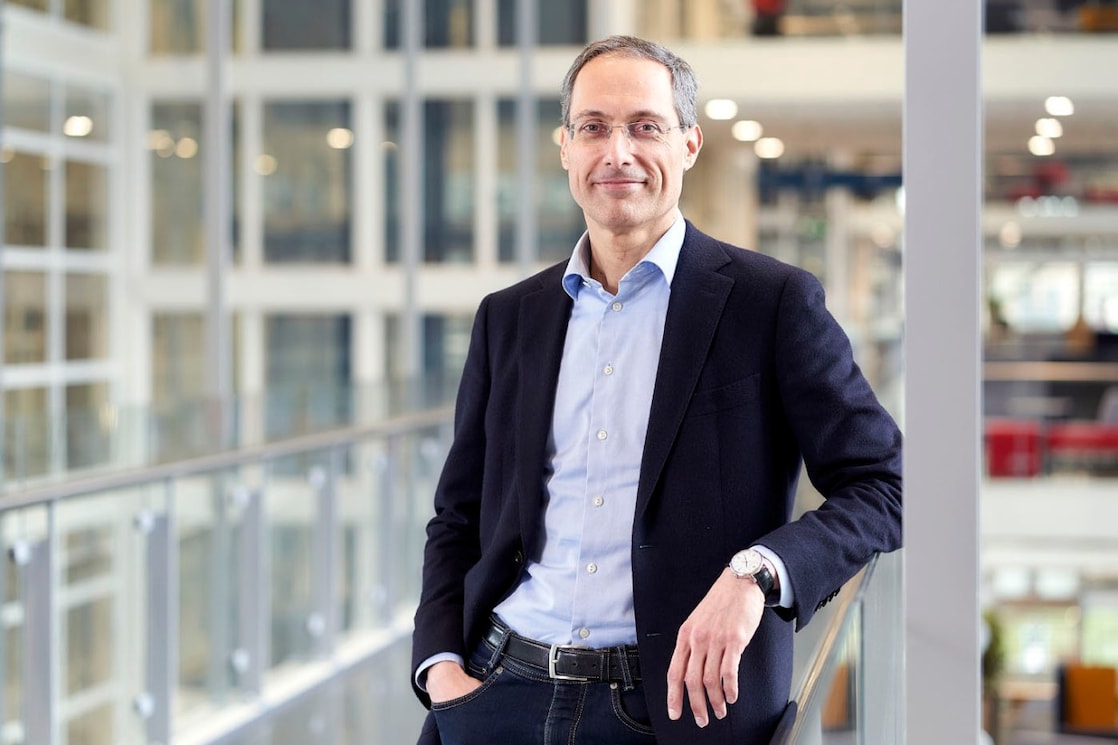
Na een dienstverband van 33 jaar neemt Yuri Sebregts afscheid als Chief Technology Officer (CTO) bij Shell. Ooit zei hij de universiteit vaarwel om te kiezen voor een tastbare maakbaan bij de chemie-installaties van Shell Moerdijk. Met zoveel succes dat hij uiteindelijk doorgroeide tot eindverantwoordelijke voor de technologieontwikkeling bij Shell. “Ik heb nergens spijt van.”

Tekst: Fleur Koene en Rob van 't Wel. Beeld: Shell Venster Archief.
For English, click here or scroll down
De lage wandkast recht tegenover het bureau van Yuri Sebregts staat bomvol met relatiegeschenken die hij in de loop van zijn 33-jarige loopbaan bij Shell heeft ontvangen. Sommige mooi, andere minder, maar allemaal gegeven en ontvangen met de beste bedoelingen.
De meest dierbare van die aandenkens heeft hij recentelijk al mee naar huis genomen, zo verklapt hij. De mooiste is wat hem betreft de zogeheten talking stick van inheemse bevolking uit Canada. Naar lokaal gebruik mag alleen degene die de praatstok vast heeft het woord voeren. Tot de stok wordt overgegeven aan een volgende spreker, natuurlijk.
“Ik heb iets met deze symbolische aanpak”, zegt Sebregts. “Op deze manier geef je iedereen de kans zich kwalitatief goed uit te spreken. Het voorkomt dat mensen door elkaar spreken of dat een gesprek een wedstrijd wordt. Wat een discussie had kunnen worden, blijft zo een open dialoog.”
Yuri Sebregts is een liefhebber van een duidelijke structuur. Niet dat hij thuis zo’n praatstok nodig heeft om orde te houden, maar hij hecht aan overzicht en duidelijke afspraken.
Het verhoogt volgens hem de kwaliteit van besluitvorming en de kansen op succes. Dat is precies waar je naar op zoek bent als eindverantwoordelijke voor vele honderden miljoenen aan investeringen in nieuw te ontwikkelen technologie. Maar hoe hou je het overzicht en neem je besluiten?
Een Chief Technology Officer krijgt ongetwijfeld ontzettend veel verzoeken om te investeren in allerlei soorten onderzoek en technologie. Hoe hou je het overzicht?
“Mijn eerste en allerbelangrijkste schifting is: is het een vraag voor mij, of voor iemand anders. Ben ik wel degene die hier een besluit over moet nemen? Je zult verbaasd zijn hoeveel vragen eigenlijk voor iemand anders zijn. Heel vaak weten andere mensen er veel meer van dan ik en heb ik bovendien niet eens het mandaat om hier een besluit over te nemen.”
Maar als dat besluit wel op het bordje van de CTO ligt?
“Dan neem ik een besluit, maar niet voordat ik de juiste mensen hierover heb gesproken. In alle gevallen stel ik mezelf wel de vraag of het verzoek belangrijk of urgent is. Theoretisch kan het natuurlijk beide zijn, maar meestal is het een van de twee.”
En dan?
“Dan vraag ik me af of een beslissing, een keuze, al dan niet onomkeerbaar is. ‘One or two-way door decisions’, om met Jeff Bezos van Amazon te spreken.
Urgent en onomkeerbaar is natuurlijk een nare combinatie – maar vreemd genoeg ook wat makkelijker. Belangrijk en onomkeerbaar is een heel ander verhaal. Daar moet je dus tijd nemen om tot een echt goede besluitvorming te komen. Dan is het zaak alle mogelijke alternatieven tegen elkaar af te wegen.
Dat element dreigt nog wel eens in de besluitvorming over het hoofd gezien worden. Logisch, want nogal wat besluiten worden zo aan je gepresenteerd dat het lijkt of er maar twee uitkomsten mogelijk zijn: wel of niet doorgaan."
CV Yuri Sebregts
- 2015 – 2024: Chief technology officer
- 2012 – 2014: Vice-president Manufacturing Excellence and Refinery Margin Optimisation
- 2009 – 2012: Vice-president Lubricants Supply Chain
- 2007 – 2009: General manager Stanlow-raffinaderij, Noordwest-Engeland
- 2004 – 2007: General manager Global C4 and C5 Olefins business
- 1991 – 2004: Diverse technische en managementrollen bij Shell
- 1991: Begonnen bij Shell in Moerdijk
- 1990: Militaire dienst
- 1986 – 1989: Universiteit Leiden – Msc Scheikunde
Wat nu als een situatie zo urgent is dat onmiddellijk een besluit genomen moet worden?
“Als voormalig directeur van een chemische fabriek weet ik wat het is om in het geval van een calamiteit direct te moeten optreden. Daar loop ik zeker niet voor weg.
Wat ik naar voren wil brengen is dat er bij het maken van keuzes over de ontwikkeling van nieuwe technologie meestal meer tijd is om tot een goed, afgewogen besluit te komen. En dat je niet bang moet zijn om die tijd er ook voor te nemen als daarmee de kwaliteit van de keuze verbetert en daarmee de kans op succes.
De afgelopen tien jaar van mijn loopbaan ben ik in banen gerold waarin je meer aandacht moest geven aan de ontwikkelingen op de langere termijn. Dat is anders dan bij productiebanen of commerciële functies die ik eerder heb vervuld.”
Ligt in die verbeterde besluitvorming het belangrijkste deel van wat je achterlaat?
"Het is in ieder geval hoe ik de rol van CTO operationeel heb ingevuld. Mijn nalatenschap ligt voor mijn gevoel vooral op een drietal vlakken.
Als eerste heb ik mij geconcentreerd op het creëren van opties voor het bedrijf in de energietransitie. Ik durf niet te stellen dat alles waar we nu in investeren er in 2030 of 2035 nog is. Maar ik weet zeker dat er gekozen is voor toekomstige kansen en mogelijkheden. Zaken waar nu nog geen klanten voor zijn, maar die wel het fundament bieden om hier later in de tijd op voort te bouwen. Ongeveer de helft van onze investeringen in onderzoek wereldwijd ligt inmiddels op het gebied van de energietransitie.
Een ander onderwerp dat mij nauw aan het hart ligt is diversiteit. Ik heb me hard gemaakt voor het creëren van een diversere technologieorganisatie in brede zin. Niet alleen het aantal vrouwen in de organisatie, ook op leiderschapsposities, is flink omhoog gegaan de afgelopen jaren. Ook op het gebied van bijvoorbeeld etniciteit en seksuele oriëntatie hebben we veel vooruitgang geboekt.”
En wat is het derde vlak?
“Dat gaat om het streven om onze wetenschappers een gecombineerde technologische en commerciële kijk op technologie te laten ontwikkelen. Dat is wat mij betreft van groot belang. De kennis en kunde om wetenschap en commercieel inzicht te verbinden overleeft schuivende bedrijfsprioriteiten en organisatiemodellen. Die kundigheid zelf heeft waarde en creëert kansen voor een bedrijf om succesvol te zijn.”
Niet het eerste waar techneuten mee bezig zijn …
“Mijn vragen over daadwerkelijke voortgang en mogelijke toekomstige kasstromen hebben echt wel tot gemopper geleid. Ik krijg dan soms te horen dat die zaken niet exact te berekenen zijn. Dat die berekeningen ook maar zijn gebaseerd om aannames. Prima, zeg ik dan, dan praten we eerst over die aannames en dan over de uitkomst.
Daarbij draait het niet om een exact juist getal. Mijn punt is dat je een beeld moet vormen over de commerciële waarde van een technologische ontwikkeling en van welke factoren die waarde afhankelijk is.
We zijn geen universiteit of overheidsinstelling. We zijn onderdeel van een bedrijf en kunnen technologie alleen toepassen nadat we die aantrekkelijk gemaakt hebben voor onze klanten en onze aandeelhouders. Dat is met name bij nieuwe technologieën voor de energietransitie vaak enorm complex.
Samenwerkingen tussen het bedrijfsleven en academici zijn en blijven cruciaal om tot de benodigde oplossingen te komen. Dit is waarom we in 2021 de Energy Transition Campus Amsterdam hebben geopend. Om partijen bij elkaar te brengen die onder een dak werken aan de energietechnologie voor de toekomst.”
Dat klinkt als tocht met soms stevige tegenwind. Nooit terugverlangd naar een meer tastbare fabriek met direct resultaat van wat je doet?
“Nee hoor. Ik heb de afgelopen negen jaar de kans gekregen een veel bredere kijk op het energiesysteem te ontwikkelen. Eerst werkte ik binnen dat systeem, nu heb ik een overzicht.
Dat was een fantastische aanvulling op wat ik eerder heb geleerd. Ik ben bevoorrecht met wat het leven en het werk me hebben gebracht. Ondanks dat de balans tussen werk en privé soms ver te zoeken was, heb ik nergens spijt van.”
Yuri Sebregts, Chief Technology Officer bij Shell"We zijn geen universiteit of overheid.
We kunnen technologie alleen toepassen nadat we die aantrekkelijk gemaakt hebben voor onze klanten en aandeelhouders."
Yuri Sebregts buiten werktijd
Meer nieuws uit Shell Venster

Yuri Sebregts leaves Shell as Chief Technology OfficerA man of structure
After 33 years of service, Yuri Sebregts is stepping down as Chief Technology Officer (CTO) at Shell. He once said goodbye to university life to opt for a tangible manufacturing job at the chemical installations of Shell in Moerdijk, the Netherlands. With success, as he eventually became the person ultimately responsible for technology development at Shell. "I don't regret anything."

Text: Fleur Koene and Rob van 't Wel. Imagery: Shell Venster Archives.
The low wall cabinet right across from Yuri Sebregts' desk is packed with business gifts he has received over the course of his 33-year career at Shell. Some beautiful, others less so, but all given and accepted with the best intentions. He recently took home the most precious of those mementos, he reveals. As far as he is concerned, the most beautiful is the so-called talking stick of indigenous people living in present-day Canada. According to local custom, only the person holding the talking stick is allowed to speak. Until the baton is passed to the next speaker, of course.
"I have a thing for this symbolic approach," says Sebregts. "This way, you give everyone the opportunity to express themselves well. It prevents people from speaking at the same time or from a conversation becoming a competition. What could have become a discussion remains an open dialogue."
Yuri Sebregts loves a clear structure. Not that he needs such a talking stick at home to keep order, but he values overview and clear agreements.
According to him, it increases the quality of decision-making and the chances of success. That is exactly what you are looking for as the person ultimately responsible for many hundreds of millions in investments in new technology to be developed. But how do you keep an overview and make decisions?
A CTO is bound to get a lot of requests to invest in all kinds of research and technology. How do you keep an overview?
"My first and most important selection is: is it a question for me, or for someone else. Am I the one who must decide about this? You'll be surprised how many questions are for someone else. Very often, other people know a lot more about it than I do, or I don't even have the mandate to make a decision about it."
But what if that decision is on the CTO's plate?
"Then I make a decision, but not before I have spoken to the right people about it. In all cases, I do ask myself whether the request is important or urgent. Theoretically, of course, it could be both, but most of the time it's one of the two."
And then?
"Then I ask myself whether a decision, a choice, is irreversible or not. 'One or two-way door decisions', in the words of Amazon's Jeff Bezos. Urgent and irreversible is of course a nasty combination – but strangely enough also a bit easier. Important and irreversible is a completely different story. So, you have to take the time to come to a really good decision-making process. Then it is important to weigh up all possible alternatives. This element is often overlooked. Logical, because quite a few decisions are presented to you in such a way that it seems as if there are only two possible outcomes: to continue or to stop."
Short bio Yuri Sebregts
- 2015 – 2024: Chief Technology Officer
- 2012 – 2014: Vice President Manufacturing Excellence and Refinery Margin Optimisation
- 2009 – 2012: Vice President Lubricants Supply Chain
- 2007 – 2009: General Manager Stanlow Refinery, North-West England, UK
- 2004 – 2007: General Manager Global C4 and C5 Olefins Business
- 1991 – 2004: Various technical and management roles at Shell
- 1991: Started at Shell in Moerdijk, the Netherlands
- 1990: Military service, the Netherlands Armed Forces
- 1986 – 1989: Leiden University – MSc Chemistry
That sounds sensible, but what if a decision is that urgent, it must be taken immediately?
"As a former director of a chemical plant, I know what it's like to have to act immediately in the event of an emergency situation. I'm certainly not running away from that.
What I want to point out is that when making choices about the development of new technology, there is usually more time to come to a good, well-considered decision. And that you shouldn't be afraid to take that time if it improves the quality of the choice and thus the chance of success.
Over the past ten years of my career, I've had jobs where you had to pay more attention to longer-term developments. That's different from production jobs or commercial positions that I've held before."
Is the improved decision-making the most important part of what you leave behind?
"Let's say, it's how I fulfilled the role of CTO every day. In my opinion, my legacy lies mainly in three areas. Firstly, I focused on creating options for the company in the energy transition. I don't dare to say that all technologies we invest in now will still be around in 2030 or 2035. But I am sure that future opportunities and possibilities have been chosen. Not all choices have customers yet, but they provide a foundation to build on in the future. About half of our worldwide investments in research are currently in the field of the energy transition.
Secondly, diversity is close to my heart. I have worked hard to create a more diverse technology organisation in a broad sense. There are not only more women within the organisation, but also more women in leadership positions. The numbers have risen sharply in recent years. We have also made a lot of progress in inclusion in the areas of ethnicity and sexual orientation."
And what about the third part of your legacy?
"The third part is the aim to have our scientists develop a combined technological and commercial view of technology. The capability to connect science with commercial insights remains relevant, even when business priorities and organisational models change. Being able to make that connection has value and creates opportunities for a company to be successful."
It's not the first thing scientists are working on ...
"That I question actual progress and possible future cash flows did sometimes result in some grumbling. I am sometimes told that these not everything can be precisely calculated; that those calculations are also based on assumptions. Fine, I say, then we first talk about those assumptions and then about the outcome.
It is not about getting to an exact number. My point is that you must envisage the commercial value of a technological development and on what are the factors on which this value is depending. We are neither a university, nor a governmental institution. It is part of a company and can only apply technology after we have made it attractive to our customers and our shareholders.
This is often an extremely complex challenge, especially in the case of new technologies for the energy transition. Collaborations between industry and academia are and will remain crucial to reach necessary solutions. This is why we opened the Energy Transition Campus Amsterdam in 2021. To bring parties working on the energy technology for the future together under one roof."
That sounds like travelling with sometimes strong headwinds. Never longed back for a more tangible factory job with direct results from what you do?
"Not at all. Over the past nine years, I have had the opportunity to develop a much broader view of the energy system. I used to work within that system, but now I have an overview.
Being Chief Technology Officers was a fantastic addition to what I learned earlier. I am privileged with what life and work have given me. Despite the fact that the work-life balance was sometimes hard to find, I don't regret anything."
Yuri Sebregts, Chief Technology Officer at Shell"The technology division of Shell is neither a university, nor government. We can only apply technology after we have made it attractive to our customers and shareholders."
Yuri Sebregts outside working hours
Piano: "I can play the piano a bit, which I like a lot. My New Year's resolution is to play more often."
Travel: "I love multi-day trips. I've climbed Mount Kilimanjaro, for example. And walked the Pennine Way in the North of England twice. I love being outside."
Art: "Anselm Kiefer in Wassenaar, the Netherlands, or frescoes from the 13th century in a small church in Tuscany, Italy. It's all wonderful. No, I don't have any artistic ambitions in visual arts myself. My talent lies in enjoying it. But if reincarnation exists, I would like to come back as a visual artist."