Hoe een nieuwe coating de glastuinbouw helpt te verduurzamen
Wie uit een glastuinbouwstreek komt of er wel eens in de zomer doorheen is gefietst, kent het vast: een inkijkje in hoe de planten erbij staan is vaak lastig door een dikke laag wit krijt op het glas aan de buitenkant. Die laag is er om groeiend groen te beschermen tegen het zonlicht. Als de herfst in aantocht is, wordt de kas schoongespoeld om weer meer licht naar het gewas door te laten. Tegen de zomer wordt er dan weer nieuw krijt op de warenhuizen gespoten. Fotoniq uit Delft bedacht dat dit anders kon, met een coating genaamd PAR+ die minstens acht jaar meegaat. Omdat mens en milieu hier ook bij gebaat zijn, krijgt deze innovatie een financieel duwtje in de rug van het Shell Impact Fund. Een interview met Willem Kesteloo, directeur van Fotoniq.

Tekst: Marcel Burger. Beeld: Christian Kalse.
Hoe is het idee van de coating ontstaan?
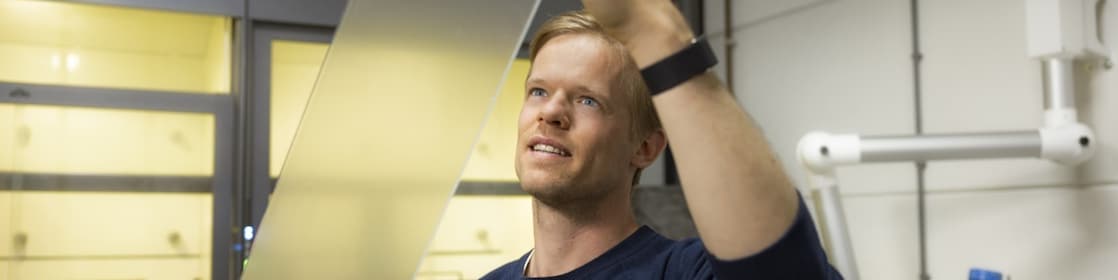
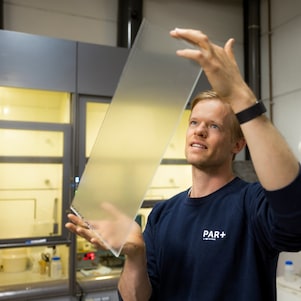
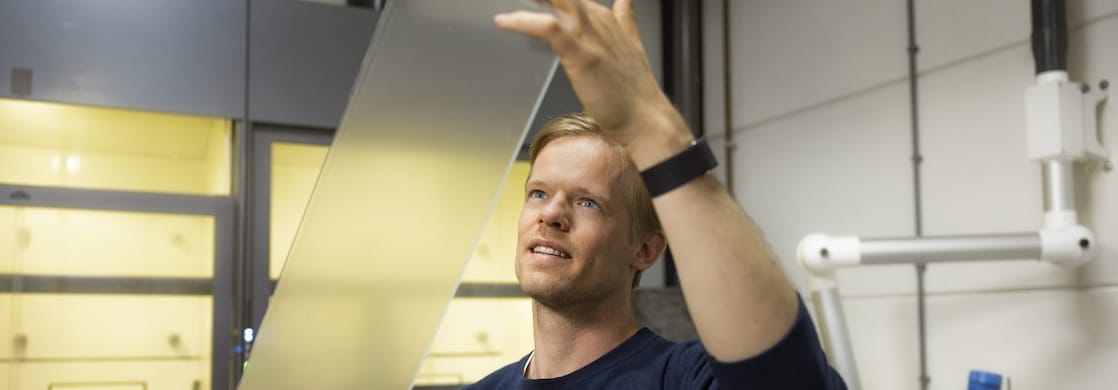
“Onze energiehuishouding is uit balans. Ofwel: we verbruiken meer van wat de wereld ons van nature geeft, dan er jaarlijks bijkomt. Dus naast de impact op het milieu, is onze huidige omgang met energie een eindig verhaal. Om het wat meer in balans proberen te brengen, ontwikkelde ik zo’n 10 jaar geleden met een studiegenoot van de faculteit natuurkunde een stroomopwekkend raam. Technisch gezien een fantastisch product, maar het bleek geen goede businesscase. We waren verliefd geworden op onze oplossing, maar eigenlijk was het probleem voor de klant niet groot genoeg. Toen we daar eenmaal achter waren, hebben we er een energiebesparende oplossing van gemaakt. Wat nu als we geen zonnecellen en geen stroomdraadjes in onze coating zouden verwerken. Wonderwel bleek onze coating ook heel goed in het breken van daglicht. Aangebracht op glas komt er niet minder licht naar binnen, maar wordt het veel beter horizontaal en verticaal in de ruimte eronder verdeeld.”
En dat bleek goed te werken in de glastuinbouw?
“Ja, want door het daglicht diffuus naar binnen te laten komen in de kas, is er minder stress in de top van de planten. En het zorgt voor een betere lichtverdeling langs de hele plant, zonder lichtverlies. Tot 5 jaar geleden was ik zelf nog nooit in de kas geweest. Ik kan je vertellen, er ging een wereld voor me open. Wat een ongelooflijke hightech-omgeving is de Nederlandse glastuinbouw zeg. Goed licht is een van de sleutels tot succes van gezonde groei van het gewas en daarmee de productie van groenten en bloemen. Daarmee helpt onze coating, telers in het verbeteren van drie zaken waarmee ze continu bezig zijn: hoe kan ik de productie omhoog krijgen, hoe kan ik de kwaliteit verbeteren, en hoe vergroot ik de energie-efficiëntie?”
Waarom is de coating PAR+ beter dan andere oplossingen zoals krijt of schermdoeken?
“Veel teelt kan veel zonlicht goed gebruiken, maar voor sommige gewassen blijft het blokkeren van binnenkomend zonlicht in de zomer nodig. De glastuinbouw gebruikt daarvoor nu vaak nog seizoensgebonden coatings op het glas, die met een reinigingsproduct aan het eind van de zomer weer van de kas worden gewassen. Coating en reinigingsproduct komen in de sloten en dus in het milieu terecht, en zijn daarmee de derde grootste bijdrage van microplastic die ieder jaar in Nederland in de natuur belandt. Onze PAR+-coating gaat zeker acht jaar mee, en daarna kun je het telkens met vier jaar verlengen door de toplaag van de coating te herstellen. Hiermee voorkomen we dat onze coating in het milieu terechtkomt. Eventuele slijtage van de coating ontstaat alleen door weer en wind, de zon doet er geen afbreuk aan.”
De duurzaamheidswinst van de langdurige coating
Volgens Willem Kesteloo van Fotoniq kan de diffuse coating die minstens 8 jaar meegaat de Nederlandse glastuinbouw 10% tot 12% duurzamer maken dan hij nu is. Voor kassen in het buitenland is dat volgens hem 20% tot 25%. Het verschil zit hem volgens Kesteloo erin dat de Nederlandse telers al heel erg ver zijn in de technologische ontwikkeling van hun bedrijven. De coating kan evengoed worden aangebracht op kassen in bijvoorbeeld het veel zonniger Zuid-Europa zonder dat de zon van invloed is op de afbreuk van de beschermlaag op het glas. Naast Zuid-Europa is ook uit de Verenigde Staten en het Midden-Oosten interesse getoond in de Nederlandse uitvinding.
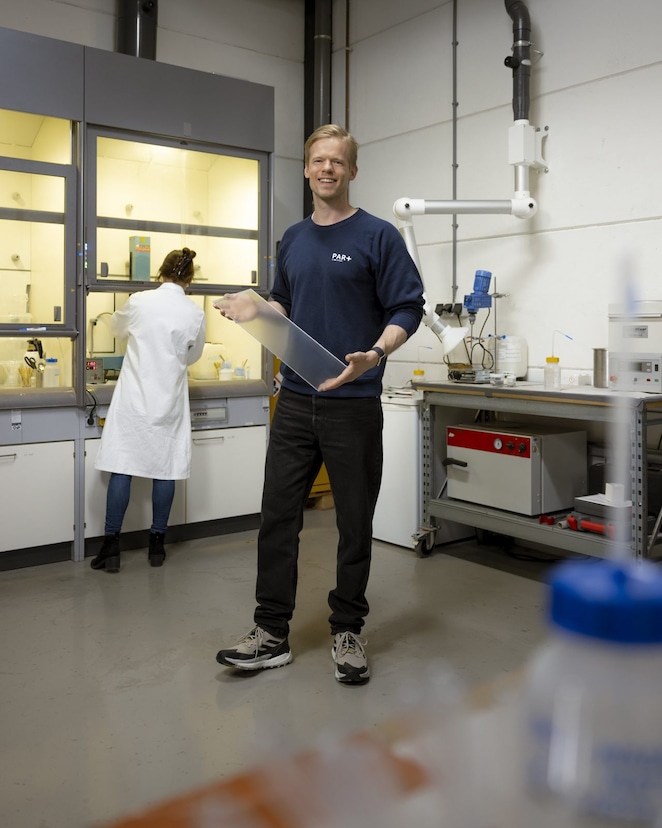
Willem Kesteloo, directeur Fotoniq"Voor ons betekent duurzamer ook dat zaken die eenmaal zijn geproduceerd langer meegaan, of dat er minder grondstoffen worden gebruikt voor eenzelfde doel."
Zijn de ingrediënten van de coating milieuvriendelijk?
“Alle bestandsdelen zijn onschadelijk voor mens, plant, en milieu. Verder zijn we continue opzoek naar nog duurzamere of circulaire ingrediënten om onze coating te verbeteren. Voor ons betekent duurzamer ook dat zaken die eenmaal zijn geproduceerd langer meegaan, of dat er minder grondstoffen worden gebruikt voor eenzelfde doel. Daar voldoet onze coating zeker aan. In het Engels zou je zeggen: sustainable and durable. ‘Durabel’ klinkt alleen helaas een beetje gek in het Nederlands.”
Waar wordt het geld uit het Shell Impact Fund voor gebruikt?
“Om de prijs te verlagen, en zo telers over de streep te trekken onze coating te gaan gebruiken. Seizoensgebonden coatings zijn in de aanschaf goedkoper, maar smeer je het uit over acht jaar, dan is onze coating weer goedkoper. Kom echter maar eens bij een teler aan met een hogere prijs voor een coating, en hij of zij kijkt je gelijk gek aan. PAR+ kost 6 euro per vierkante meter, wat neerkomt op zo’n 75 cent per jaar. Een seizoensgebonden coating kost 35 tot 50 cent per jaar, terwijl die er nog geen half jaar op ligt. Door met de investering van het Shell Impact Fund de verkoopprijs van onze coatings met een kwart te kunnen verlagen voor de eerste klanten, verwachten we de toegevoegde waarde van onze coating grootschalig aan te kunnen tonen. Zodat de Nederlandse glastuinbouw over drie jaar ook echt overstag is, en dat we wereldwijd een flinke voet tussen de deur hebben.”
Meer nieuws uit Shell Venster

How a new coating helps greenhouses become more sustainable
2 August 2024
Anyone who comes from an area with many greenhouses or has ever cycled through it in the summer probably knows it: it can be hard to spot the plants due to a thick layer of white chalk on the outside. This layer sprayed onto the glass windows is there to protect greenery underneath from too much sunlight. When autumn approaches, the chalk is rinsed off again to allow more light to reach the crop. The next year a new layer will be applied. Fotoniq, based in Delft, the Netherlands, came up with the idea that this could be done differently, with a coating called PAR+ that lasts at least eight years. As people and the environment benefit from this too, this Dutch innovation is supported by a financial boost from the Shell Impact Fund. An interview with Willem Kesteloo, CEO of Fotoniq.

Text: Marcel Burger. Photography: Christian Kalse.
How did the idea of the coating come about?
"Our energy management is out of balance. In other words: we consume more of what the world naturally gives us than we gain every year. So, in addition to the impact on the environment, our current use of energy is a finite story. In an attempt to balance things out a bit, about 10 years ago I developed a power-generating window. Together with a fellow student from the physics faculty of the Delft University. Technically it was a fantastic product, but it didn't turn out to be a good business case. We had fallen in love with our solution, but the problem we were trying to solve was not big enough for our potential customers. Once we figured that out, we turned our invention into an energy-saving solution. What if we didn't use solar cells or electric wires in our coating? Miraculously, our coating also turned out to be very good at refracting daylight. Applied to glass, it allows the same amount of light to enter a building, but the light is much better distributed horizontally and vertically in the space underneath."
And that turned out to work well in the horticulture industry?
"Yes, because by allowing the daylight to enter the greenhouse in a diffuse way, there is less stress in the top of the plants. And it ensures better light distribution along the entire plant, without the loss of light. Until 5 years ago, I had never been in the greenhouse myself. I can tell you, a whole new world opened up for me. What an incredible high-tech environment the Dutch horticulture industry is. Good light is one of the keys to success of healthy growth of the crop and thus the production of vegetables and flowers. In this way, our coating helps growers to improve three things that they are constantly working on: how can I increase production, how can I improve quality, and how do I increase energy efficiency?"
Why is the PAR+ coating better than other solutions such as chalk or screen installations?
"Many crops can make good use of a lot of sunlight, but for some crops, blocking incoming sunlight in the summer is still necessary. For this purpose, professional greenhouse owners often use seasonal coatings on the outside of the glass. At the end of summer, the coatings are washed off, using a cleaning product. Coating and the cleaning product end up in the canals and therefore in the environment, making them the third largest contributor of microplastics that end up in nature in the Netherlands every year. Our PAR+ coating lasts at least eight years, and after that you can extend its functionality by four years at a time by simply restoring the top layer of the coating. This prevents our coating from ending up in the environment. Any wear and tear of the coating is only caused by wind and the weather, the sun does diminish its functionality."
Sustainability gains of the long-lasting coating
According to Willem Kesteloo, CEO of Fotoniq, the diffuse coating that lasts at least 8 years can make the Dutch horticulture business 10% to 12% more sustainable than it is now. For professional greenhouses abroad, this is 20% to 25%. The difference, according to Kesteloo, lies in the fact that Dutch growers have already made considerable technological achievements, compared to their international peers. The PAR+ coating can be applied to greenhouses worldwide, including in the much sunnier parts of the globe, as the sun does not diminish the functionality of the protective layer on the glass. Entrepreneurs in Southern Europe, the United States and Southwest Asia have already shown interest in the Dutch innovation.
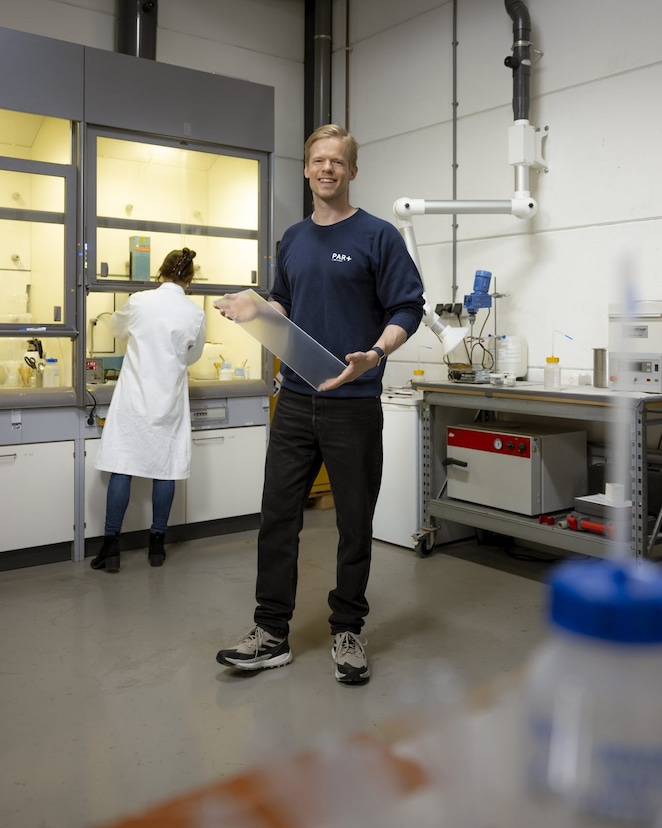
Willem Kesteloo, CEO Fotoniq"For us, more sustainable also means that once things have been produced, they last longer, or that fewer raw materials are used for the same purpose."
Are the ingredients of the coating environmentally friendly?
"All components are harmless to humans, plants, and the environment. Furthermore, we are constantly looking for even more sustainable or circular ingredients to improve our coating. For us, more sustainable also means that once things have been produced, they last longer, or that fewer raw materials are used for the same purpose. Our coating certainly meets these requirements. It is sustainable and durable."
What will the money from the Shell Impact Fund be used for?
"To lower the price, and thus convince growers to start using our coating. Seasonal coatings are cheaper to buy, but if you spread it out over eight years, our coating will be more economic. However, any horticulture entrepreneur will meet a higher price for a product with scepticism. PAR+ costs 6 euros per square metre, which comes down to about 75 eurocents per year. A seasonal coating costs 35 to 50 cents per year, while is used for less than six months. By using the investment of the Shell Impact Fund for reduces the selling price of our coatings by a quarter for the first customers, we expect to be able to demonstrate the added value of our coating on a large scale. To help the Dutch horticulture business change its mind about our coatings in the coming three years, and hopefully to make our first steps on the worldwide market.”