Megawatt-lader: Rogiers verhaal
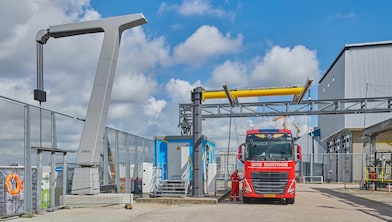
Aan de kade van de Energy Transition Campus Amsterdam bouwen we een megawatt-lader geschikt voor schepen en vrachtwagens. Rogier werkt aan supersnel laden voor vrachtwagens en schepen.
Transcript
Transcript
Titel: MWBattery| Wij bouwen 2024
Tijd: 01m06s
Beschrijving
Iedereen kent Shell van olie en gas. Intussen investeren we op steeds meer plekken in Nederland in schonere energie. Ontdek wat we bouwen om schonere energie bereikbaar te maken.
[video]
Rogier: Hier aan de kade kunnen schepen komen en ook vrachtwagens, en daarom is dit eigenlijk de ideale plek om deze nieuwe technologie te testen.
Voice-over: Hier wordt getest met een supersnelle lader van 1 megawatt. Deze is speciaal ontwikkeld voor grote schepen en vrachtwagens. Met deze lader willen we het voor zwaarder vervoer eenvoudiger maken over te stappen naar elektrisch om zo de uitstoot te verlagen.
Rogier: Ik zie het gewoon helemaal gebouwd worden. Dit is echt heel vet.
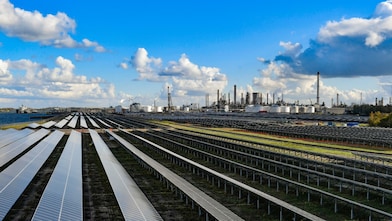
Voice-over: De energie die wordt gebruikt om op te laden, wordt onder andere opgewekt door de 3600 zonnepanelen op het dak. Met deze innovatie hopen we bij te dragen aan een nieuwe standaard voor snel elektrisch laden van schepen en vrachtwagens.
Rogier: Als het hier werkt dan kunnen we het straks uitrollen in heel Nederland en over de hele wereld.
Rogier werkt aan supersnel laden voor vrachtwagens en schepen
Een snellader is een uitkomst voor iedere elektrische auto. Maar voor een elektrisch aangedreven vrachtwagen of binnenvaartschip duurt het laden met een snellader nu toch net iets te lang. Technoloog elektrische mobiliteit Rogier Schoon werkt daarom aan een megawatt-lader. Hiermee kan bijvoorbeeld een vrachtwagen met een 1 MWh-batterij binnen 1 tot 2 uur* opladen. Aan de kade van de Energy Transition Campus Amsterdam kunnen straks de eerste schepen en vrachtwagens van stroom worden voorzien. “Het is een mooie stap om deze vormen van transport in de toekomst uitstootvrij te maken. Daar word ik blij van.”
Tekst gaat verder onder de afbeeldingen
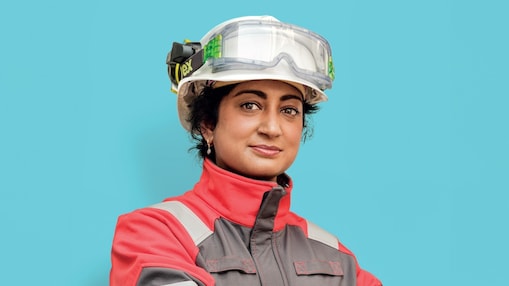

Voordat Rogier Schoon alle ins en outs van de megawatt-lader uit de doeken doet, wil hij graag iets duidelijk maken. Zo’n project als dit kun je volgens hem nooit alleen doen. Het is een teamprestatie. Alleen al om de verschillende onderdelen van deze nieuwe lader te ontwerpen en samen te stellen, werkt Schoon met allerlei leveranciers en bouwers vanuit heel Europa. Waaronder de leverancier van de megawatt-lader zelf, dochteronderneming SBRS. Ook binnen Shell is een team van specialisten uit uiteenlopende disciplines bezig met het project. “Die samenwerking is meteen ook het allerleukste. Samen bouwen!”
De megawatt lader en de hele keten
De megawatt-lader op zichzelf vindt Rogier Schoon niet zo bijster interessant. Aan alleen een supersnelle lader heb je niets. Er moet ook groene stroom zijn, een infrastructuur van kabels en leidingen, elektrische schepen en vrachtwagens, en klanten die hun lading duurzaam van A naar B willen brengen. In jargon: het gaat om de totale supply chain. En al die afzonderlijke stukjes helpen in het opbouwen van de hele waardeketen.
Een ‘simpele’ container
Rogier Schoon: “Het is een ogenschijnlijk simpele container, met daarin alle hardware die nodig is om het apparaat aan te sluiten op het elektriciteitsnet. En koeling om het erbinnen niet te heet te laten worden.” Uit deze container steken een aantal slangen met stekkers. Twee voor elektrische vrachtwagens en twee voor elektrische binnenvaartschepen.
De eerste keer
“Net als voor elektrische auto’s bestaat er voor een megawatt-lader een stekker. Dat is een flinke stekker hoor”, zegt Schoon. “Het is uiteraard wenselijk om overal in de wereld hetzelfde type te gaan gebruiken. Dit is ons eerste project voor schepen én vrachtwagens in de wereld waar we zo’n standaardstekker voor beide demonsteren. Hier in Amsterdam”, wijst hij achter zich naar het Amsterdamse IJ. Dat vindt Rogier Schoon een bijzonder aspect aan het werken aan de megawatt-lader; hij helpt mee aan schonere oplossingen in zijn eigen directe woon- en werkomgeving.
Een demonstratieproject
De megawatt-lader aan de kade van de Energy Transition Campus Amsterdam is een demonstratieproject, zo noemt Schoon het. “Dat wil zeggen dat we willen laten zien dat het technisch kan. En dat we onderzoeken of het commercieel interessant is. Van deze ervaring leren we.”
De markt moet zich ontwikkelen
Aan voorspellingen over de toekomst van vrachtvervoer en scheepvaart waagt Schoon zich niet. Hij ziet dat eerste elektrische vrachtwagens voorzichtig aan worden besteld. Elektrisch varen staat echt nog in de kinderschoenen. Schoon: “Langs belangrijke knooppunten voor vrachtverkeer zijn dit soort megawatt-laders natuurlijk hartstikke handig.” Ook de combinatie van laden voor trucks en schepen kan interessant zijn voor havengebieden. “Zeker tijdens het laden en lossen”, legt hij uit.
Binnenkort wordt de megawatt-lader in gebruik genomen. Dan kan Rogier Schoon de eerste pioniers voor supersnel laden verwelkomen. Hopelijk volgen er snel meer.
* Oplaadsnelheden kunnen variëren, afhankelijk van factoren zoals de conditie van de batterij, de omgevingstemperatuur, ander energiegebruik op hetzelfde moment en eventueel energieverlies.
Rogier is working on super-fast charging for trucks and ships
A fast charger is a godsend for every electric car. But for an electrically powered truck or inland ships, charging with a fast charger nowadays takes just a little too long. Electric mobility technologist Rogier Schoon is therefore working on a megawatt charger. For example, it allows a truck with a 1-MWh battery to charge within 1 to 2 hours*. The first ships and trucks will soon be able to power up on the quay of the Energy Transition Campus Amsterdam. "It is a great step towards making these kinds of transport emission-free in the future. That makes me happy."
Before Rogier Schoon explains all the ins and outs of the megawatt charger, he stresses that no one can never do a project like this alone. It is a team effort. For the design alone, several suppliers and manufacturers from all over Europe are involved. The same for the assembly of the new charger, which is provided by Shell subsidiary SBRS. Within Shell, specialists from a wide range of disciplines contribute to the project. "That collaboration is the best part. We are building it together!"
The megawatt charger and the entire chain
A super-fast charger alone is of no use, Schoon points out. Renewable electricity and cables are required. Moreover, electric ships and trucks need to find their way to the charger, as well as customers willing to transport their cargo the sustainable way from A to B. Connecting all these individual elements creates what energy professionals call the entire value chain.
A 'simple' container
Rogier Schoon: "It looks like a simple container. Inside is all the hardware needed to connect the device to the electricity grid, plus a cooling system. Four plug-equipped tubes come out of the container: two are to be used by electric trucks, the other two by electric barges.”
The first time
Just like for electric cars, there is a dedicated plug for a megawatt charger. “That's a big plug," says Schoon. "It’s of course desirable to use the same type all over the world. This is our first project for ships and trucks in the world where we demonstrate a standard plug. Here in Amsterdam," he points to the Amsterdam IJ River behind him. Schoon says working on the megawatt charger is special to him, as he lives and works in Amsterdam and helps finding cleaner solutions for his immediate environment.
A demonstration project
The megawatt charger on the quay of the Energy Transition Campus Amsterdam is a demonstration project. "That means that we want to show that it’s technically possible. And that we investigate whether it’s commercially interesting. We learn from this experience."
The market has to develop
Schoon does not dare to predict the future of freight transport and shipping . “Some companies are ordering their first electric trucks, while electric shipping is really still in its infancy,” Schoon says. "But megawatt chargers with a dual use can be very fitting to important hubs of freight traffic. The combined charger is especially handy during loading and offloading of cargo from ship to truck and vice versa.”
Shell’s first combined megawatt charger will soon be put into use, and Amsterdam welcomes the first pioneers of super-fast charging. Hopefully more will follow soon.
* Charging speeds can vary depending on factors like battery condition, ambient temperature, concurrent energy use and energy losses.
Cautionary Note
Cautionary Note
The companies in which Shell plc directly and indirectly owns investments are separate legal entities. In this webpage “Shell”, “Shell Group” and “Group” are sometimes used for convenience where references are made to Shell plc and its subsidiaries in general. Likewise, the words “we”, “us” and “our” are also used to refer to Shell plc and its subsidiaries in general or to those who work for them. These terms are also used where no useful purpose is served by identifying the particular entity or entities. ‘‘Subsidiaries’’, “Shell subsidiaries” and “Shell companies” as used in this webpage refer to entities over which Shell plc either directly or indirectly has control. Entities and unincorporated arrangements over which Shell has joint control are generally referred to as “joint ventures” and “joint operations”, respectively. “Joint ventures” and “joint operations” are collectively referred to as “joint arrangements”. Entities over which Shell has significant influence but neither control nor joint control are referred to as “associates”. The term “Shell interest” is used for convenience to indicate the direct and/or indirect ownership interest held by Shell in an entity or unincorporated joint arrangement, after exclusion of all third-party interest.
Forward-Looking Statements
This webpage contains forward-looking statements (within the meaning of the U.S. Private Securities Litigation Reform Act of 1995) concerning the financial condition, results of operations and businesses of Shell. All statements other than statements of historical fact are, or may be deemed to be, forward-looking statements. Forward-looking statements are statements of future expectations that are based on management’s current expectations and assumptions and involve known and unknown risks and uncertainties that could cause actual results, performance or events to differ materially from those expressed or implied in these statements. Forward-looking statements include, among other things, statements concerning the potential exposure of Shell to market risks and statements expressing management’s expectations, beliefs, estimates, forecasts, projections and assumptions. These forward-looking statements are identified by their use of terms and phrases such as “aim”, “ambition”, ‘‘anticipate’’, ‘‘believe’’, ‘‘could’’, ‘‘estimate’’, ‘‘expect’’, ‘‘goals’’, ‘‘intend’’, ‘‘may’’, “milestones”, ‘‘objectives’’, ‘‘outlook’’, ‘‘plan’’, ‘‘probably’’, ‘‘project’’, ‘‘risks’’, “schedule”, ‘‘seek’’, ‘‘should’’, ‘‘target’’, ‘‘will’’ and similar terms and phrases. There are a number of factors that could affect the future operations of Shell and could cause those results to differ materially from those expressed in the forward-looking statements included in this webpage, including (without limitation): (a) price fluctuations in crude oil and natural gas; (b) changes in demand for Shell’s products; (c) currency fluctuations; (d) drilling and production results; (e) reserves estimates; (f) loss of market share and industry competition; (g) environmental and physical risks; (h) risks associated with the identification of suitable potential acquisition properties and targets, and successful negotiation and completion of such transactions; (i) the risk of doing business in developing countries and countries subject to international sanctions; (j) legislative, judicial, fiscal and regulatory developments including regulatory measures addressing climate change; (k) economic and financial market conditions in various countries and regions; (l) political risks, including the risks of expropriation and renegotiation of the terms of contracts with governmental entities, delays or advancements in the approval of projects and delays in the reimbursement for shared costs; (m) risks associated with the impact of pandemics, such as the COVID-19 (coronavirus) outbreak, regional conflicts, such as Russia’s invasion of Ukraine, and a significant cybersecurity breach; and (n) changes in trading conditions. No assurance is provided that future dividend payments will match or exceed previous dividend payments. All forward-looking statements contained in this [report] are expressly qualified in their entirety by the cautionary statements contained or referred to in this section. Readers should not place undue reliance on forward-looking statements. Additional risk factors that may affect future results are contained in Shell plc’s Form 20-F for the year ended December 31, 2022 (available at www.shell.com/investors/news-and-filings/sec-filings.html and www.sec.gov). These risk factors also expressly qualify all forward-looking statements contained on this webpage and should be considered by the reader. Each forward-looking statement speaks only as of the date of this webpage. February 23 2024. Neither Shell plc nor any of its subsidiaries undertake any obligation to publicly update or revise any forward-looking statement as a result of new information, future events or other information. In light of these risks, results could differ materially from those stated, implied or inferred from the forward-looking statements contained in this webpage.
Shell’s net carbon intensity
Also, on this webpage we may refer to Shell’s “Net Carbon Intensity”, which includes Shell’s carbon emissions from the production of our energy products, our suppliers’ carbon emissions in supplying energy for that production and our customers’ carbon emissions associated with their use of the energy products we sell. Shell only controls its own emissions. The use of the term Shell’s “Net Carbon Intensity” is for convenience only and not intended to suggest these emissions are those of Shell plc or its subsidiaries.
Shell’s net-Zero Emissions Target
Shell’s operating plan, outlook and budgets are forecasted for a ten-year period and are updated every year. They reflect the current economic environment and what we can reasonably expect to see over the next ten years. Accordingly, they reflect our Scope 1, Scope 2 and Net Carbon Intensity (NCI) targets over the next ten years. However, Shell’s operating plans cannot reflect our 2050 net-zero emissions target and 2035 NCI target, as these targets are currently outside our planning period. In the future, as society moves towards net-zero emissions, we expect Shell’s operating plans to reflect this movement. However, if society is not net zero in 2050, as of today, there would be significant risk that Shell may not meet this target.
Shell expects to publish its 2024 Energy Transition Strategy on March 14, 2024, which will include an update on Shell’s energy transition strategy and set out Shell’s climate targets and ambitions for the future.
Forward Looking Non-GAAP measures
This webpage may contain certain forward-looking non-GAAP measures such as cash capital expenditure and divestments. We are unable to provide a reconciliation of these forward-looking Non-GAAP measures to the most comparable GAAP financial measures because certain information needed to reconcile those Non-GAAP measures to the most comparable GAAP financial measures is dependent on future events some of which are outside the control of Shell, such as oil and gas prices, interest rates and exchange rates. Moreover, estimating such GAAP measures with the required precision necessary to provide a meaningful reconciliation is extremely difficult and could not be accomplished without unreasonable effort. Non-GAAP measures in respect of future periods which cannot be reconciled to the most comparable GAAP financial measure are calculated in a manner which is consistent with the accounting policies applied in Shell plc’s consolidated financial statements.
The contents of websites referred to in this webpage do not form part of this webpage.
We may have used certain terms, such as resources, on this webpage that the United States Securities and Exchange Commission (SEC) strictly prohibits us from including in our filings with the SEC. Investors are urged to consider closely the disclosure in our Form 20-F, File No 1-32575, available on the SEC website www.sec.gov.