Paardenkracht
Bronnen van beweging. Paardenkracht is er zo een. De Schotse ingenieur James Watt krijgt zelfs de eenheid van vermogen naar zich vernoemd. Ongeveer 746 watt is 1 door hem bedachte paardenkracht. Ontleend aan de kracht van een paard, zou je zeggen. Maar nee. Het komt van een pony. En van de nimmer aflatende Engelse dorst naar bier.

Tekst: Monika Jak. Beeld: Getty Images
Scroll down or click here for the English version
De verklaring begint in de koper- en tinmijnen van Cornwall, in het zuidwesten van Engeland. Eind zeventiende, begin achttiende eeuw worden daar de mijnschachten, op zoek naar meer, steeds dieper. Sommige lopen ver onder de zeebodem door. Voortdurend moet het water uit de gangen gehouden worden. Dat omhoog hijsen van water wordt eerst en vooral gedaan door pony’s. Meer precies: shetlandpony’s. Krachtig, en door hun kleine formaat geschikt voor werk in de schachten.
Dan doen de eerste stoommachines hun intrede. Wie nu langs de kust van Cornwall toert, ziet nog altijd de oude engine houses, machinekamers. Midden achttiende eeuw huisden daarin veelal de stoommachines van Thomas Newcomen, die hij in 1712 uitvond.
Compleet nieuwe stoommachine
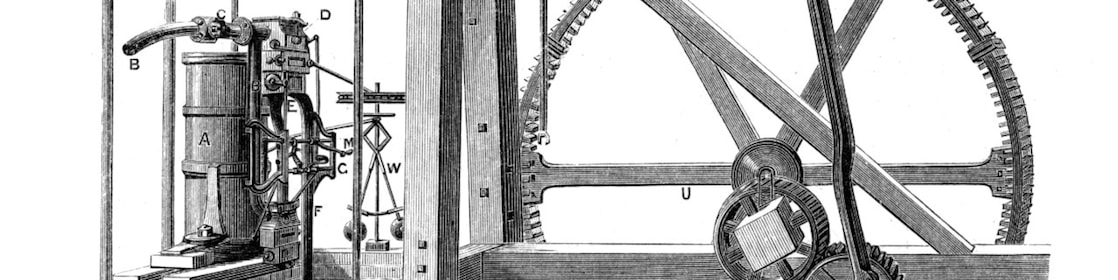
Precies zo’n machine moet de 27-jarige James Watt, toen instrumentmaker aan de Universiteit van Glasgow, de eigenaar van de machine, in 1763 repareren. Dat doet hij, maar hij doet meer. Omdat de inefficiëntie van de machine van Newcomen hem intrigeert, bouwt hij een compleet nieuwe stoommachine. Met als vondst een aparte condensatiekamer om de stoom te koelen. Dat scheelt een fikse hoeveelheid warmteverlies en dus steenkolen. Zijn machine doet het goed, ook in de mijnen. Watt blijft de machine verbeteren, inmiddels geholpen door kapitaal en ondernemerschap van zakenpartner Matthew Boulton.
144 keer molenpaarden
Ondertussen cirkelen in Londen 144 keer per uur molenpaarden rond een rosmolen van brouwer Samuel Whitbread, om het mout te malen voor zijn populaire porter bier. Watt is ervan overtuigd dat zijn nieuwste ‘roterende’ stoommachine de paarden er easy uitloopt. Maar hoe overtuigt hij de brouwer – en alle andere paardeneigenaars? Hoe peutert hij ze aan het – niet technisch onderlegde – verstand wat zijn machine kan?
Tel uit je winst
Watt bestudeert molenpaarden, mijnpony's, boerderijpaarden, telt de rondjes en concludeert met een ingewikkelde wiskundige vergelijking dat een gemiddeld paard per minuut een gewicht van 32.572 Engelse pond (zo’n 15.000 kilo) kan verplaatsen over een afstand van 1 foot (30,48 cm). Hij rondt het af: 33.000 pond. Dat is het: de kracht van één paard. Dat snapt iedereen! Aan brouwer Whitbread legt de ingenieur uit dat zijn stoommachine hetzelfde kan als 200 paarden. Maar dan zonder stal, voer en ander paardengedoe. Tel uit je winst. De brouwer is om en binnen een jaar verdubbelt zijn bierproductie.
Watt bedenkt niet alleen een nieuwe eenheid van vermogen, hij ontpopt zich tegelijkertijd als slimme reclameman. Marketing is van alle tijden.
Lees ook in deze serie
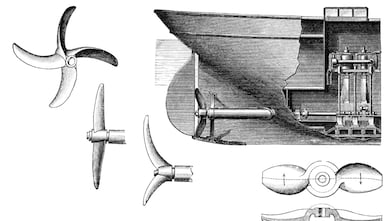
"Paardenkracht" is het eerste deel in een driedelige miniserie met het thema Bronnen van beweging. Het tweede en derde deel, "De scheepschroef" en "Peristaltiek" zijn ook online verschenen. De serie staat ook in Venster #1-2024.
Meer nieuws uit Shell Venster

Forces of movement - from a series of three stories published in Shell Venster Magazine #1-2024Horsepower
29 Jan. 2024
Forces of movement. Horsepower is one of them. The Scottish engineer James Watt comes up with this unit of power. He invented that about 746 watts equals 1 horsepower. Derived from the strength of a horse, one might think. But no. It comes from a pony. And of the never-ending thirst for beer.
Text: Monika Jak. Illustration: Getty Images
The explanation begins in the copper and tin mines of Cornwall, in Southwest of England. At the end of the 17th and beginning of the 18th century, the mine shafts were deepened in search of more raw materials.
Some of them run far below the seabed. The water must be kept out of the corridors at all times. Hoisting the water out is first and foremost done by ponies. More precisely: Shetland ponies. Powerful, and due to their small size suitable for work in the shafts.
But from the mid-18th century the first steam engines appear, invented by Thomas Newcomen in 1712. Anyone who tours the coast of Cornwell now, will still be able to see the old engine houses.
Completely new steam engine
It was precisely such a machine that 27-year-old James Watt, an instrument maker at the University of Glasgow, had to repair in the year 1763. He fixes the machine on the university grounds, but got intrigued by the inefficiency of Newcomen's design. So, Watt builds a completely new steam engine, with as a new discovery a separate condensing chamber to cool the steam. This reduces the heat loss considerably, and therefore reduces the amount of coal needed to power the steam engine. His machine works well, even in the mines. Watt continues to improve the machine, aided by capital and entrepreneurship from his business partner Matthew Boulton.
144 times revolving mill horses
Meanwhile in London, mill horses circle a horse mill owned by brewer Samuel Whitbread. The animals revolve 144 times an hour to grind the malt for his popular porter beer. Watt is convinced that his latest 'rotating' steam engine will make it easy for the horses to get out. But how does he convince the brewer – and all other horse owners? How does he give them the – not technically savvy – intellect of what his machine can do?
Count your wins
Watt studies mill horses, mining ponies, farm horses, counts the rounds and concludes with a complicated mathematical equation that an average horse can move a weight of 32,572 English pounds (about 15,000 kilos) per minute over a distance of 1 foot (30.48 cm). He rounds it off at £33,000. That's it: the power of one horse. Everyone understands that! The engineer explains to brewer Whitbread that his steam engine can do the same as 200 horses. But without stables, feed and other horse stuff. Count your wins. The brewer understands the language of money and within a year his beer production doubles.
Watt proves to be a smart inventor, as well as a clever advertising man. Marketing is timeless.
Also in this series
"Horsepower" is the first publication in a miniseries themed around Forces of movement. The second and third parts, "The ship's propeller" and "Peristaltis", have been published as well. The series is also featured in Venster #1-2024.