Pyrolysefabriek: het verhaal van Marinka en Paul
In Moerdijk bouwen we een installatie om vervuild plastic te recyclen. Projectmanager Marinka Remijnse en business opportunity manager Paul de Hoog vertellen erover.
Transcript
Transcript
Titel: Pyrolyse fabriek| Wij bouwen 2024
Tijd: 01m01s
Beschrijving
Iedereen kent Shell van olie en gas. Intussen investeren we op steeds meer plekken in Nederland in schonere energie. Ontdek wat we bouwen om schonere energie bereikbaar te maken.
[video]
Marinka: Wij zijn ontzettend trots dat wij deze fabriek hier mogen bouwen.
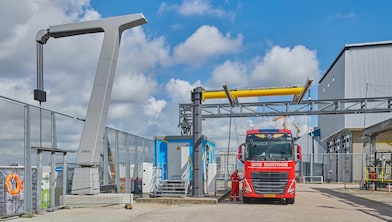
Voice-over: Meer dan vijftig procent van al het afval plastic in Nederland wordt verbrand omdat het te vervuild is om te recyclen. Dat kan anders met deze nieuwe installatie zuiveren we de olie van dit vervuilde plastic. Zodat er weer een schone brandstof ontstaat voor bijvoorbeeld verpakkingen van voedsel of ziekenhuisproducten.
Marinka: Dat is leuk om te zien zo.
Voice-over: De installatie verwerkt olie uit zeventig tot honderd kilo ton afvalplastic per jaar. Dat gelijk aan de hoeveelheid plastic afval van tweeënhalf miljoen Nederlanders dat straks niet meer verbrand hoeft te worden.
Marinka: We hebben heel veel zin om deze nieuwe techniek te gaan opstarten en zo een bijdrage te leveren aan een duurzamere toekomst.
Voice-over: Samen bouwen we aan schonere energie.
Hoogwaardig nieuw leven voor moeilijk te recyclen plastic dankzij nieuwe installatie
De technici wilden maar wat graag meewerken aan deze pyrolyseolie-upgrader fabriek op Moerdijk, vertelt projectmanager Marinka Remijnse lachend. Waarom? Omdat dit een nieuwe én essentiële schakel is in de circulaire economie. Samen met business opportunity manager Paul de Hoog vertelt ze waarom.

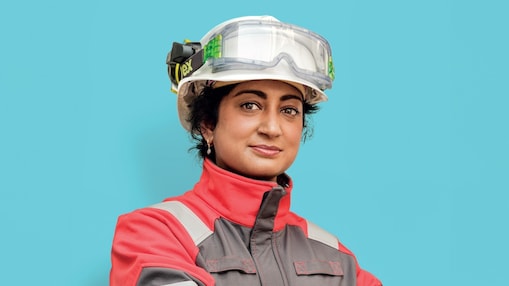
De Hoog en Remijnse gaan een paar jaar terug in de geschiedenis, toen het idee voor de fabriek ontstond. In 2019 groeide ook aandacht voor de circulaire economie. “Fossiele grondstoffen willen we gaan vervangen door circulaire grondstoffen”, legt De Hoog uit.
Moeilijk te recyclen plastic tóch recyclen
Enkel aandacht voor de circulaire economie laat de afvalberg moeilijk te recyclen plastic nog niet slinken. Sterker, die groeit nog iedere dag. Paul de Hoog: “Moeilijk te recyclen plastic; dan moet je denken aan de verpakkingsfolie voor levensmiddelen. Nu belandt pakweg de helft ervan in de verbrandingsoven en in de atmosfeer.” Daar moest dus iets op worden bedacht. En voor worden gebouwd.
Hoge eisen aan plastic
Er zijn al wel fabrieken die dit soort plastic recyclen. Maar dat gebeurt veelal mechanisch. Kortweg, door de shredder in kleine stukjes hakken en weer samenpersen. De Hoog: “Door mechanische recycling verliest het plastic altijd iets van zijn eigenschappen. Dan kan het bijvoorbeeld nog wel een tuinstoel worden. Bovendien worden aan plastic voor levensmiddelen of geneesmiddelen hoge hygiëne-eisen gesteld, waardoor het bijna onmogelijk is dit gerecyclede plastic hiervoor te gebruiken.”
De missende extra stap: extractie
Iets anders is dus nodig om van verpakkingsfolie weer verpakkingsfolie te maken. Breder: een proces om moeilijk te recyclen plastic weer klaar te maken voor hoogwaardige inzet. Dat kan via pyrolyse, een proces waarbij het plastic heet gemaakt wordt en uiteenvalt in de basisbestanddelen. Het wordt dan pyrolyseolie.
Vervolgens moet die pyrolyseolie verder worden schoongemaakt en opgewaardeerd. Zie daar de functie van de pyrolyseolie-upgrader fabriek waarvoor in 2019 de basis werd gelegd. Want schoonmaken en opwaarderen, dat is wat de nieuwe upgrader-installatie van Shell gaat doen. Dat gebeurt met een nieuwe extractietechniek, waarin een ‘tegenvloeistof’ al het vuil uit de ingebrachte pyrolyseolie haalt. Zodoende is het qua werking niet meer te onderscheiden van fossiele basischemicaliën en kan het moeiteloos het reguliere chemische proces in om er allerlei soorten plastic van te maken. En ja, dus ook die verpakkingsfolie.
De circulaire economie versnellen
“Met deze fabriek willen wij de markt voor gerecycled plastic stimuleren”, aldus de business opportunity manager van Shell. Hij legt uit: “Recyclingfabrieken kunnen pyrolyseolie kwijt aan een betalende klant. Dat kunnen wij zijn. En aan de andere kant helpen we levensmiddelenfabrikanten om gerecycled plastic op hoogwaardig niveau in te zetten.”
Barrières slechten
Dat is het plan. Vervolgens moet de fabriek nog ontworpen en gebouwd worden. Marinka Remijnse begeleidt dit gehele ontwerp- en bouwproces. De fabriek is de eerste in zijn soort. “Het chemische proces van extractie is helemaal nieuw. We hebben het uitgebreid getest. Gelukkig kunnen we binnen Shell gebruikmaken van alle beschikbare kennis en ontwerpprincipes”, vertelt Remijnse. En natuurlijk zijn er technische tegenslagen te overwinnen en barrières te slechten. Marinka Remijnse en Paul de Hoog werken al een poos bij Shell, en zien dat als vanzelfsprekend horen bij het werk. Alhoewel, denkt Remijnse na: “Het vergunningentraject was een uitdaging. Als je iets wilt realiseren wat er nog niet is, stuit je op wet- en regelgeving die hier nog niet op is ingericht. Dat geldt voor alle ontwikkelingen in de circulaire economie.”
Enorm veel plastic
Momenteel wordt hard gewerkt aan de bouw van de pyrolyseolie-upgrader. Als de fabriek af is, kan deze in totaal zo’n 85 tot 100 kiloton vervuild plastic verwerken. “Het is waardevol aan dit project een bijdrage aan te leveren”, stelt Remijnse bescheiden. De Hoog vult aan: “Het leuke is dat alles nieuw is, en dat het helpt op weg naar een circulaire toekomst.”
De circulaire economie: het is gewoon heel veel werk
Natuurlijk hoort De Hoog ook geregeld dat de transitie naar een circulaire economie zich te traag voltrekt. Hij denkt er tweeledig over. “Dit is uiteraard een mooie stap, maar er zijn meer van deze fabrieken nodig om echt het verschil op de afvalberg te zien. Aan de andere kant moeten we ons ook realiseren dat het ontzettend veel werk is, met een hoge complexiteit. Dat wordt nog wel eens vergeten. We zijn hier, met allemaal slimme professionals zoals Marinka, zo’n dikke vier jaar intensief mee bezig geweest.” Projectmanager Marinka Remijnse besluit: “En dan te bedenken dat we deze installatie door allerlei slimmigheden veel sneller dan normaal gesproken hebben gebouwd. Want we willen snelheid maken richting een circulaire toekomst.”
Cautionary note
Cautionary note
The companies in which Shell plc directly and indirectly owns investments are separate legal entities. In this webpage “Shell”, “Shell Group” and “Group” are sometimes used for convenience where references are made to Shell plc and its subsidiaries in general. Likewise, the words “we”, “us” and “our” are also used to refer to Shell plc and its subsidiaries in general or to those who work for them. These terms are also used where no useful purpose is served by identifying the particular entity or entities. ‘‘Subsidiaries’’, “Shell subsidiaries” and “Shell companies” as used in this webpage refer to entities over which Shell plc either directly or indirectly has control. Entities and unincorporated arrangements over which Shell has joint control are generally referred to as “joint ventures” and “joint operations”, respectively. “Joint ventures” and “joint operations” are collectively referred to as “joint arrangements”. Entities over which Shell has significant influence but neither control nor joint control are referred to as “associates”. The term “Shell interest” is used for convenience to indicate the direct and/or indirect ownership interest held by Shell in an entity or unincorporated joint arrangement, after exclusion of all third-party interest.
Forward-Looking Statements
This webpage contains forward-looking statements (within the meaning of the U.S. Private Securities Litigation Reform Act of 1995) concerning the financial condition, results of operations and businesses of Shell. All statements other than statements of historical fact are, or may be deemed to be, forward-looking statements. Forward-looking statements are statements of future expectations that are based on management’s current expectations and assumptions and involve known and unknown risks and uncertainties that could cause actual results, performance or events to differ materially from those expressed or implied in these statements. Forward-looking statements include, among other things, statements concerning the potential exposure of Shell to market risks and statements expressing management’s expectations, beliefs, estimates, forecasts, projections and assumptions. These forward-looking statements are identified by their use of terms and phrases such as “aim”, “ambition”, ‘‘anticipate’’, ‘‘believe’’, ‘‘could’’, ‘‘estimate’’, ‘‘expect’’, ‘‘goals’’, ‘‘intend’’, ‘‘may’’, “milestones”, ‘‘objectives’’, ‘‘outlook’’, ‘‘plan’’, ‘‘probably’’, ‘‘project’’, ‘‘risks’’, “schedule”, ‘‘seek’’, ‘‘should’’, ‘‘target’’, ‘‘will’’ and similar terms and phrases. There are a number of factors that could affect the future operations of Shell and could cause those results to differ materially from those expressed in the forward-looking statements included in this webpage, including (without limitation): (a) price fluctuations in crude oil and natural gas; (b) changes in demand for Shell’s products; (c) currency fluctuations; (d) drilling and production results; (e) reserves estimates; (f) loss of market share and industry competition; (g) environmental and physical risks; (h) risks associated with the identification of suitable potential acquisition properties and targets, and successful negotiation and completion of such transactions; (i) the risk of doing business in developing countries and countries subject to international sanctions; (j) legislative, judicial, fiscal and regulatory developments including regulatory measures addressing climate change; (k) economic and financial market conditions in various countries and regions; (l) political risks, including the risks of expropriation and renegotiation of the terms of contracts with governmental entities, delays or advancements in the approval of projects and delays in the reimbursement for shared costs; (m) risks associated with the impact of pandemics, such as the COVID-19 (coronavirus) outbreak, regional conflicts, such as Russia’s invasion of Ukraine, and a significant cybersecurity breach; and (n) changes in trading conditions. No assurance is provided that future dividend payments will match or exceed previous dividend payments. All forward-looking statements contained in this [report] are expressly qualified in their entirety by the cautionary statements contained or referred to in this section. Readers should not place undue reliance on forward-looking statements. Additional risk factors that may affect future results are contained in Shell plc’s Form 20-F for the year ended December 31, 2022 (available at www.shell.com/investors/news-and-filings/sec-filings.html and www.sec.gov). These risk factors also expressly qualify all forward-looking statements contained on this webpage and should be considered by the reader. Each forward-looking statement speaks only as of the date of this webpage. February 23 2024. Neither Shell plc nor any of its subsidiaries undertake any obligation to publicly update or revise any forward-looking statement as a result of new information, future events or other information. In light of these risks, results could differ materially from those stated, implied or inferred from the forward-looking statements contained in this webpage.
Shell’s net carbon intensity
Also, on this webpage we may refer to Shell’s “Net Carbon Intensity”, which includes Shell’s carbon emissions from the production of our energy products, our suppliers’ carbon emissions in supplying energy for that production and our customers’ carbon emissions associated with their use of the energy products we sell. Shell only controls its own emissions. The use of the term Shell’s “Net Carbon Intensity” is for convenience only and not intended to suggest these emissions are those of Shell plc or its subsidiaries.
Shell’s net-Zero Emissions Target
Shell’s operating plan, outlook and budgets are forecasted for a ten-year period and are updated every year. They reflect the current economic environment and what we can reasonably expect to see over the next ten years. Accordingly, they reflect our Scope 1, Scope 2 and Net Carbon Intensity (NCI) targets over the next ten years. However, Shell’s operating plans cannot reflect our 2050 net-zero emissions target and 2035 NCI target, as these targets are currently outside our planning period. In the future, as society moves towards net-zero emissions, we expect Shell’s operating plans to reflect this movement. However, if society is not net zero in 2050, as of today, there would be significant risk that Shell may not meet this target.
Shell expects to publish its 2024 Energy Transition Strategy on March 14, 2024, which will include an update on Shell’s energy transition strategy and set out Shell’s climate targets and ambitions for the future.
Forward Looking Non-GAAP measures
This webpage may contain certain forward-looking non-GAAP measures such as cash capital expenditure and divestments. We are unable to provide a reconciliation of these forward-looking Non-GAAP measures to the most comparable GAAP financial measures because certain information needed to reconcile those Non-GAAP measures to the most comparable GAAP financial measures is dependent on future events some of which are outside the control of Shell, such as oil and gas prices, interest rates and exchange rates. Moreover, estimating such GAAP measures with the required precision necessary to provide a meaningful reconciliation is extremely difficult and could not be accomplished without unreasonable effort. Non-GAAP measures in respect of future periods which cannot be reconciled to the most comparable GAAP financial measure are calculated in a manner which is consistent with the accounting policies applied in Shell plc’s consolidated financial statements.
The contents of websites referred to in this webpage do not form part of this webpage.
We may have used certain terms, such as resources, on this webpage that the United States Securities and Exchange Commission (SEC) strictly prohibits us from including in our filings with the SEC. Investors are urged to consider closely the disclosure in our Form 20-F, File No 1-32575, available on the SEC website www.sec.gov.