Ondergrondse opslag CO₂ krijgt eindelijk vaart
Jarenlang is er in Nederland vruchteloos en op hoge toon over gediscussieerd. Nu er daadwerkelijk wordt gebouwd aan het grootschalig afvangen en opslaan van broeikasgas CO₂ (CCS) blijft het opvallend stil. En het is pas het begin. “Ik had niet voorzien dat het positieve besluit over het CCS-project Porthos de ommekeer zou betekenen”, zegt Berte Simons van het Havenbedrijf Rotterdam.

Tekst: Rob van 't Wel. Beeld: Danny Cornelissen, Havenbedrijf Rotterdam, Marc Nolte, Ocean Energy, Porthos CO2.
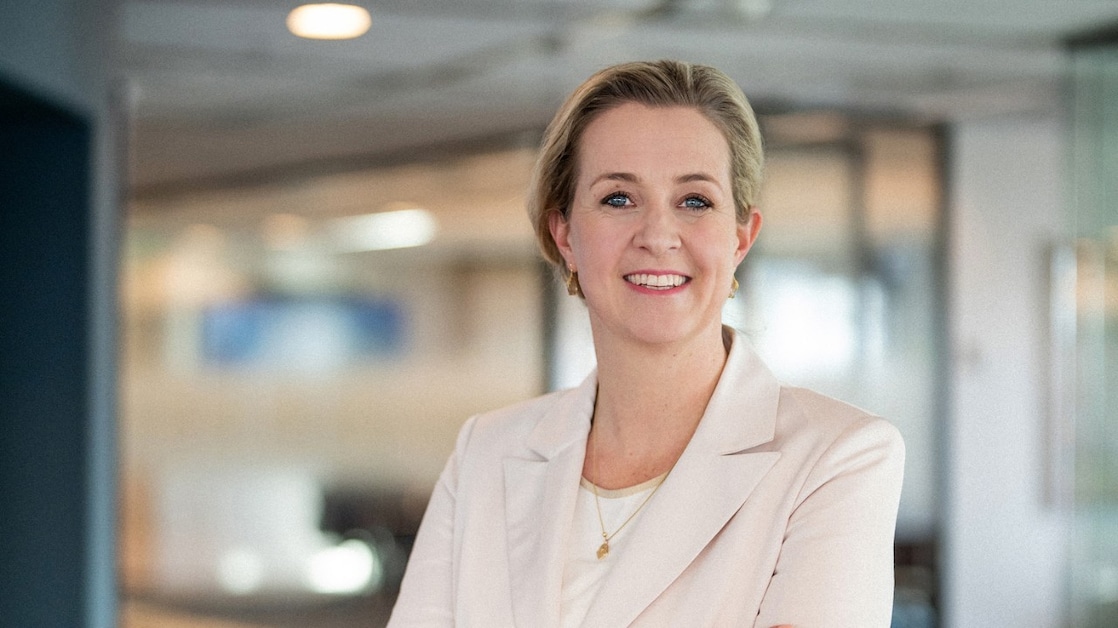
Het is haar eerste externe interview in haar nieuwe rol als Chief Operating Officer (COO) van het Havenbedrijf Rotterdam. Het gespreksonderwerp is Berte Simons echter niet onbekend, in tegendeel. Simons wordt in Nederland breed gezien als één van de leidende personen op het gebied van het afvangen van CO2 bij bijvoorbeeld fabrieken en het opslaan ervan in lege gasvelden.
Carbon capture and storage (CCS) is één van de manieren om de uitstoot van het broeikasgas CO2 te verminderen. Die daling is noodzakelijk om de wereldwijde temperatuurstijging tot maximaal twee graden Celsius te beperken. Om dat te bereiken is in Parijs in 2015 afgesproken om in 2050 de mondiale uitstoot van CO2 te beperken tot netto-nul.
Gevoeligheid en tussenoplossing
CCS kan volgens alle modellen helpen die doelstelling te halen. Tegelijkertijd is deze vorm van CO2-reductie lange tijd het onderwerp van een verhitte discussie geweest. Simons snapt de gevoeligheid en is er tegelijkertijd warm voorstander van. “Het is natuurlijk een transitietechnologie”, stelt ze. “En je wilt niet dat je door het gebruik van CCS andere oplossingen uitsluit.”
Anders gezegd, CCS is momenteel vooral een tussenoplossing voor de periode dat je nog wel fossiele energiedragers nodig hebt om industriële processen te laten draaien. Later kan het ook nog gebruikt worden om CO2 uit de lucht te halen, maar dat is nog toekomstmuziek. Vooralsnog mag het ondergronds opslaan van de CO2, zo meent Simons, de ontwikkeling van duurzame energiebronnen niet in de weg zitten.
Een heel andere kijk
Geen wonder dus dat CCS in haar woorden “lang een controversieel onderwerp” is geweest. Tegelijkertijd voegt Simons er aan toe: “Ik heb niet kunnen voorzien dat de doorgang van Porthos tot een heel andere kijk op - en acceptatie van - CCS zou leiden.”
Porthos is een van de drie CCS-projecten (zie kader) waar momenteel in Nederland aan wordt gesleuteld, gerekend of getekend. Voor de drie projecten is de Rotterdamse haven het startpunt. Porthos is de eerste en het verste.
Kort cv Berte Simons
1998 – 2003:
Hogere Zeevaartschool Vlissingen, werktuigbouwkunde
verder:
Advanced Management Program (IMD) en MBA (TIAS)
2003 – 2006
North Sea Port. Beleidsadviseur
2006 – 2021:
Royal Haskoning/DHV. Meerdere functies in binnen- en buitenland
2021 – 2024:
EBN. Directeur CO2-opslag en transportsystemen
2025 – heden:
Havenbedrijf Rotterdam, Chief Operating Officer
Meer dan tien locaties
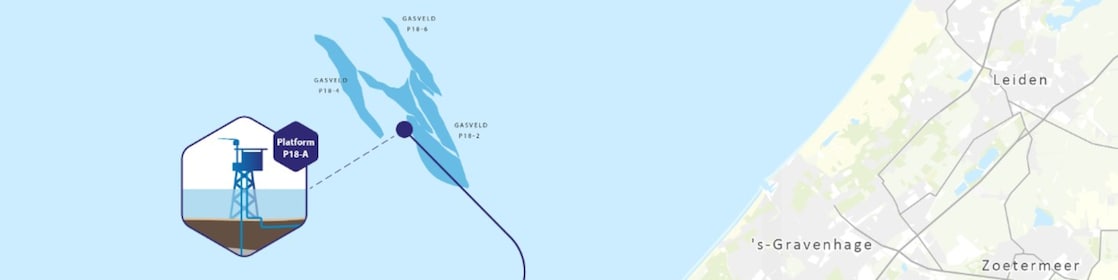
“Op meer dan tien locaties langs het traject wordt momenteel gewerkt”, zegt Simons. “Op land komt een pijpleiding van 30 kilometer. Bouwvakkers zijn druk bezig met de bouw van een compressorstation, klanten zijn zich aan het voorbereiden en dan is er de aansluiting richting een bestaand platform dat ongeveer 20 kilometer uit de kust ligt. Daar zijn inmiddels drie van de vijf boringen verricht. Het is nu echt aan het gebeuren.”
De infrastructuur wordt op de groei gebouwd, zo geeft de nieuwe COO van het Havenbedrijf Rotterdam aan. Porthos is voor haar het begin van iets groters en dus niet een proef van iets nieuws. “CCS is een bekend, vrij eenvoudige technologisch proces dat al lang op heel veel verschillende plaatsen op de wereld wordt toegepast, bijvoorbeeld bij de productie van aardolie uit oudere velden. In Noord-Amerika gebeurt die ondergrondse opslag vooralsnog op het land, in Europa vooral onder de zee.”
Die bestaande technologische kennis geeft een basis voor de uitrol op een veel grotere schaal. Maar dat betekent niet dat er geen uitdagingen wachten. “De schaalgrootte waar we nu aan werken is wel nieuw”, verduidelijkt Simons. “Daarnaast is de complexiteit nieuw. We zullen echt nog zaken moeten leren.”
Leeg gasveld
Met complexiteit doelt Simons niet alleen op de grote stromen CO2 die van industriële bedrijven in de haven naar het lege gasveld op zee getransporteerd moeten worden. De echte ingewikkeldheid zit in de verschillende kwaliteiten CO2 die aangevoerd gaan worden. Niet elke CO2 is hetzelfde als klanten met variërende samenstellingen met water of zwavel aanleveren. Die stoffen moeten er eerst worden uitgefilterd, voordat de CO2 getransporteerd en opgeslagen kan worden.
“We gaan van een overzichtelijke projectomgeving”, zegt Simons, “naar een complexe netwerkomgeving met veel meer spelers en variabelen. Dat kent uitdagingen, maar de opslag is een cruciale stap om de industrie in Europa te helpen decarboniseren.”
Porthos is voor Simons pas het begin. CCS-project Aramis moet een factor tien groter worden en ook CO2Next zou een schakel in de nieuwe industriële sector moeten worden. Simons weet dat ook nu CCS meewind heeft, er volgende obstakels zijn om overwonnen te worden.
“Netwerkcongestie, stikstof, noem maar op. Maar we hebben klimaatdoelen die we verplicht moeten halen, Nederlandse en Europese. Ook daarom moeten we met CCS aan de slag. Dat alleen als verplichting zien is echter te beperkt. Je kunt ook redeneren dat we door het starten van alle CCS-projecten ook kennis en industriële activiteiten in Nederland houden en ontwikkelen.”
Draaischijf
Het is geen toeval dat Rotterdam met alle petrochemische activiteiten de draaischijf van de nieuwe CCS-industrie is. En dus is het evenmin toevallig dat het Havenbedrijf Rotterdam zich als ontwikkelaar, regisseur en huismeester van het havenindustriële complex zich intensief met de ontwikkeling van CCS bezighoudt. De nog recent aangetrokken COO van het Havenbedrijf weet er dus ook alles van.
Die ambities zijn niet van gister of vandaag, maar gaan terug naar het begin van deze eeuw en het Rotterdam Climate Initiative. CCS, zo was toen ook al duidelijk, zou een belangrijk hulpmiddel moeten zijn om die ambities waar te maken.
Dat geldt zeker voor de Rotterdamse havenactiviteiten, met een groot petrochemische industrieel complex, dat nauw met elkaar verbonden is. Die installaties werken veelal met hoge temperaturen waardoor elektrificatie een lastige zaak is. Het afvangen en opslaan is vooralsnog een maatregel om zowel de uitstoot in de atmosfeer te verminderen terwijl de productie en bedrijvigheid gewoon door kunnen gaan.
Stroop mijn mouwen op
Simons herkent die logica maar ziet een werkelijkheid die gelaagder is dan dat. “Met de pijpleidingverbinding met het Duitse Ruhrgebied kan Rotterdam met de opslagmogelijkheden op de Noordzee een centrale rol gaan spelen in een hele nieuwe industrie. Dat is goed voor de industrie, goed voor Rotterdam en bovenal goed voor het klimaat. Nu we het tij mee hebben moeten we ook stappen zetten, samen met andere belanghebbenden in de samenleving. Ik stroop er mijn mouwen graag voor op.”
Berte Simons, COO Havenbedrijf Rotterdam"De schaalgrootte waar we nu aan werken is nieuw. We zullen echt nog zaken moeten leren."
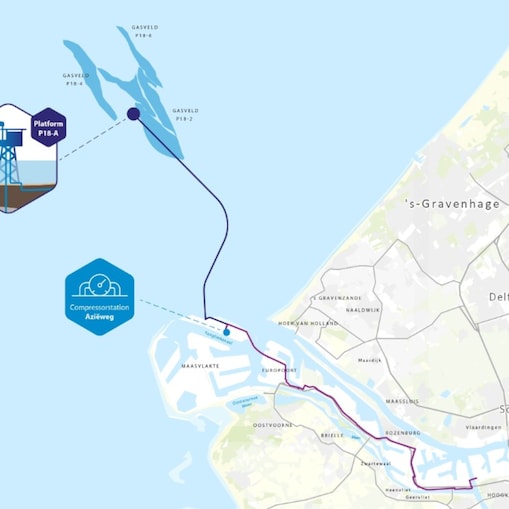
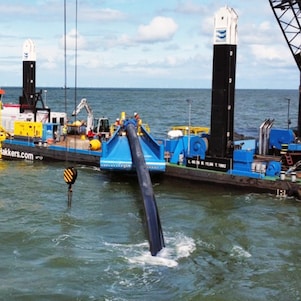
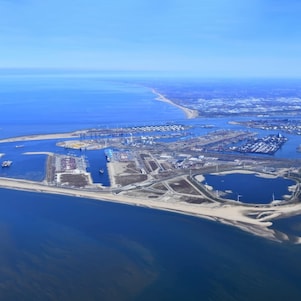
Werk in uitvoering carbon capture and storage (CCS)
Porthos
Soort opslag:
permanent onder zeebodem
Opslag per jaar:
2,5 miljoen ton CO₂
Totaal opslagvolume:
37 miljoen ton
Aandeelhouders:
EBN, Gasunie, Havenbedrijf Rotterdam
Klanten:
Air Liquide, Air Products, ExxonMobil, Shell
Start bouw:
2024
Operationeel (planning):
vanaf 2026
Aramis
Soort opslag:
permanent onder zeebodem
Opslag per jaar:
22 miljoen ton CO₂
Totaal opslagvolume:
meer dan 400 miljoen ton
Betrokken partijen:
TotalEnergies, Shell EBN, Gasunie
Investeringsbeslissing:
2025 of 2026
Operationeel (planning):
rond 2030
CO2Next
Soort opslag:
6 bolvormige tanks voor vloeibare CO2 op de Tweede Maasvlakte
Overslag per jaar:
van 5,4 miljoen ton CO2 oplopend tot 150 miljoen ton per jaar (Mtpa)
Betrokken partijen:
Gasnunie, Vopak, TotalEnergies, Shell
Investeringsbesluit:
mogelijk 2025
Operationeel (planning):
vanaf 2029
Cautionary note
Cautionary note
The companies in which Shell plc directly and indirectly owns investments are separate legal entities. In this announcement “Shell”, “Shell Group” and “Group” are sometimes used for convenience where references are made to Shell plc and its subsidiaries in general. Likewise, the words “we”, “us” and “our” are also used to refer to Shell plc and its subsidiaries in general or to those who work for them. These terms are also used where no useful purpose is served by identifying the particular entity or entities. ‘‘Subsidiaries’’, “Shell subsidiaries” and “Shell companies” as used in this announcement refer to entities over which Shell plc either directly or indirectly has control. The term “joint venture”, “joint operations”, “joint arrangements”, and “associates” may also be used to refer to a commercial arrangement in which Shell has a direct or indirect ownership interest with one or more parties. The term “Shell interest” is used for convenience to indicate the direct and/or indirect ownership interest held by Shell in an entity or unincorporated joint arrangement, after exclusion of all third-party interest.
Forward-looking Statements
This announcement contains forward-looking statements (within the meaning of the U.S. Private Securities Litigation Reform Act of 1995) concerning the financial condition, results of operations and businesses of Shell. All statements other than statements of historical fact are, or may be deemed to be, forward-looking statements. Forward-looking statements are statements of future expectations that are based on management’s current expectations and assumptions and involve known and unknown risks and uncertainties that could cause actual results, performance or events to differ materially from those expressed or implied in these statements. Forward-looking statements include, among other things, statements concerning the potential exposure of Shell to market risks and statements expressing management’s expectations, beliefs, estimates, forecasts, projections and assumptions. These forward-looking statements are identified by their use of terms and phrases such as “aim”; “ambition”; ‘‘anticipate’’; ‘‘believe’’; “commit”; “commitment”; ‘‘could’’; ‘‘estimate’’; ‘‘expect’’; ‘‘goals’’; ‘‘intend’’; ‘‘may’’; “milestones”; ‘‘objectives’’; ‘‘outlook’’; ‘‘plan’’; ‘‘probably’’; ‘‘project’’; ‘‘risks’’; “schedule”; ‘‘seek’’; ‘‘should’’; ‘‘target’’; ‘‘will’’; “would” and similar terms and phrases. There are a number of factors that could affect the future operations of Shell and could cause those results to differ materially from those expressed in the forward-looking statements included in this announcement, including (without limitation): (a) price fluctuations in crude oil and natural gas; (b) changes in demand for Shell’s products; (c) currency fluctuations; (d) drilling and production results; (e) reserves estimates; (f) loss of market share and industry competition; (g) environmental and physical risks; (h) risks associated with the identification of suitable potential acquisition properties and targets, and successful negotiation and completion of such transactions; (i) the risk of doing business in developing countries and countries subject to international sanctions; (j) legislative, judicial, fiscal and regulatory developments including regulatory measures addressing climate change; (k) economic and financial market conditions in various countries and regions; (l) political risks, including the risks of expropriation and renegotiation of the terms of contracts with governmental entities, delays or advancements in the approval of projects and delays in the reimbursement for shared costs; (m) risks associated with the impact of pandemics, such as the COVID-19 (coronavirus) outbreak, regional conflicts, such as the Russia-Ukraine war, and a significant cybersecurity breach; and (n) changes in trading conditions. No assurance is provided that future dividend payments will match or exceed previous dividend payments. All forward-looking statements contained in this announcement are expressly qualified in their entirety by the cautionary statements contained or referred to in this section. Readers should not place undue reliance on forward-looking statements. Additional risk factors that may affect future results are contained in Shell plc’s Form 20-F for the year ended December 31, 2023 (available at www.shell.com/investors/news-and-filings/sec-filings.html and www.sec.gov). These risk factors also expressly qualify all forward-looking statements contained in this announcement and should be considered by the reader. Each forward-looking statement speaks only as of the date of this announcement, November 12, 2024. Neither Shell plc nor any of its subsidiaries undertake any obligation to publicly update or revise any forward-looking statement as a result of new information, future events or other information. In light of these risks, results could differ materially from those stated, implied or inferred from the forward-looking statements contained in this announcement.
Shell’s Net Carbon Intensity
Also, in this announcement we may refer to Shell’s “Net Carbon Intensity” (NCI), which includes Shell’s carbon emissions from the production of our energy products, our suppliers’ carbon emissions in supplying energy for that production and our customers’ carbon emissions associated with their use of the energy products we sell. Shell’s NCI also includes the emissions associated with the production and use of energy products produced by others which Shell purchases for resale. Shell only controls its own emissions. The use of the terms Shell’s “Net Carbon Intensity” or NCI are for convenience only and not intended to suggest these emissions are those of Shell plc or its subsidiaries.
Shell’s net-zero emissions target
Shell’s operating plan, outlook and budgets are forecasted for a ten-year period and are updated every year. They reflect the current economic environment and what we can reasonably expect to see over the next ten years. Accordingly, they reflect our Scope 1, Scope 2 and NCI targets over the next ten years. However, Shell’s operating plans cannot reflect our 2050 net-zero emissions target, as this target is currently outside our planning period. In the future, as society moves towards net-zero emissions, we expect Shell’s operating plans to reflect this movement. However, if society is not net zero in 2050, as of today, there would be significant risk that Shell may not meet this target.
Forward-looking non-GAAP measures
This announcement may contain certain forward-looking non-GAAP measures such as cash capital expenditure and divestments. We are unable to provide a reconciliation of these forward-looking non-GAAP measures to the most comparable GAAP financial measures because certain information needed to reconcile those non-GAAP measures to the most comparable GAAP financial measures is dependent on future events some of which are outside the control of Shell, such as oil and gas prices, interest rates and exchange rates. Moreover, estimating such GAAP measures with the required precision necessary to provide a meaningful reconciliation is extremely difficult and could not be accomplished without unreasonable effort. Non-GAAP measures in respect of future periods which cannot be reconciled to the most comparable GAAP financial measure are calculated in a manner which is consistent with the accounting policies applied in Shell plc’s consolidated financial statements.
The contents of websites referred to in this announcement do not form part of this announcement.
We may have used certain terms, such as resources, in this announcement that the United States Securities and Exchange Commission (SEC) strictly prohibits us from including in our filings with the SEC. Investors are urged to consider closely the disclosure in our Form 20-F, File No 1-32575, available on the SEC website www.sec.gov