Anno 1925: de Shell-bootjes
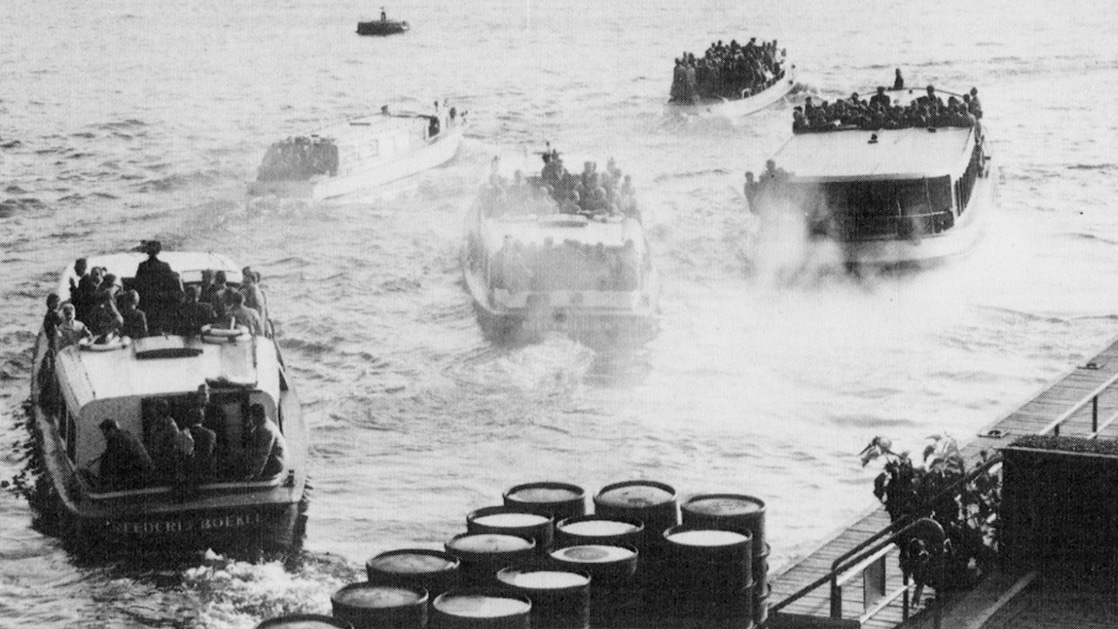
Witte bedrijfsbootjes varen jarenlang driftig heen en weer over het Amsterdamse IJ. Voor velen is de eerste kennismaking met het Shell-lab in Amsterdam Noord een schipper in uniform en een knusse kajuit. Al vanaf 1925 varen schippers Feen, Kramers en Bloem met medewerkers en bezoekers tussen het station en de wereld van wetenschap.
Beeld: Shell Historical Heritage & Archive. Tekst: Kirsten Gesink.
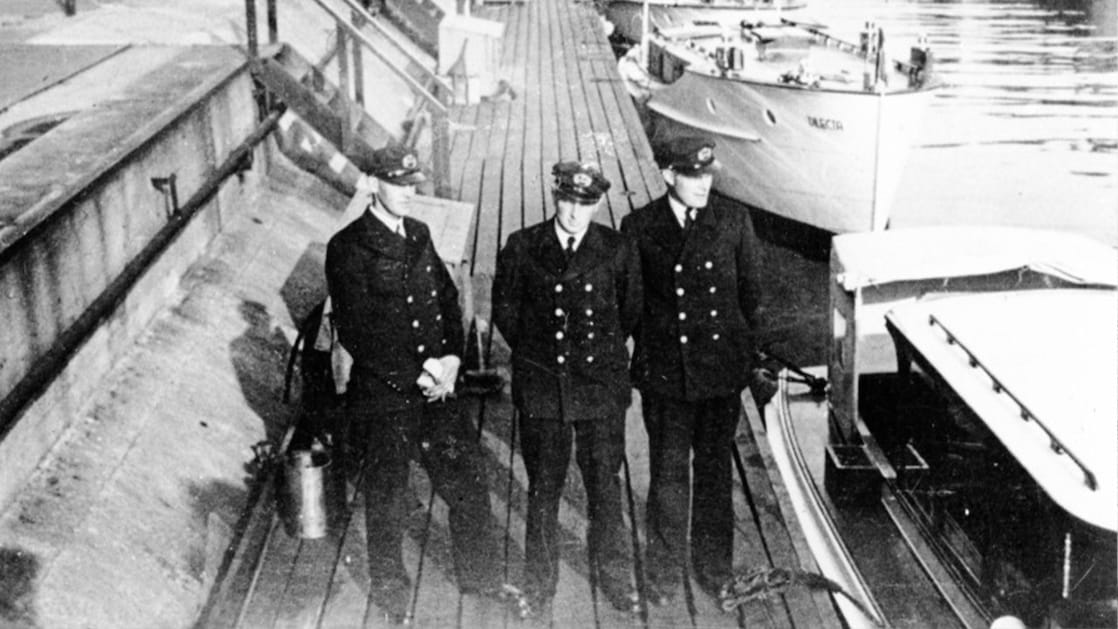
Het begint in 1925 met de boten de Dordt en de Kondor, maar de vloot groeit gestaag met de Labora, en begin jaren dertig de Dilecta en de Perfecta – een schip met een voor de die tijd moderne dieselmotor. De bootdienst is een paar decennia later niet meer vanzelfsprekend. Alleen medewerkers van het Shell-lab die voldoen aan ‘het getal’ – de som van leeftijd en dienstjaren – krijgt een felbegeerde bootkaart.
In 1955 ligt de grens op 63. Was je 45 jaar en had je 18 dienstjaren – geen uitzondering in die tijd – dan maakte je een goede kans. Kreeg je geen bootkaart, dan was je aangewezen op de gemeentepont, die meer tijd kostte. Later daalt het getal naar 50 en wordt de capaciteit van de Shell-vloot verder verhoogd door boten te huren.
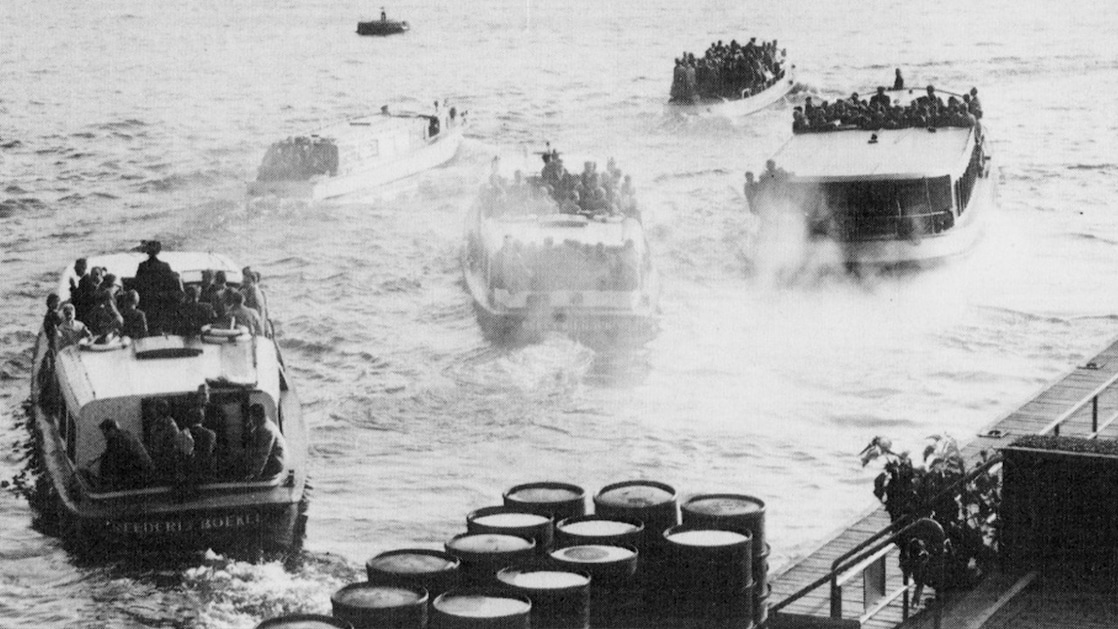
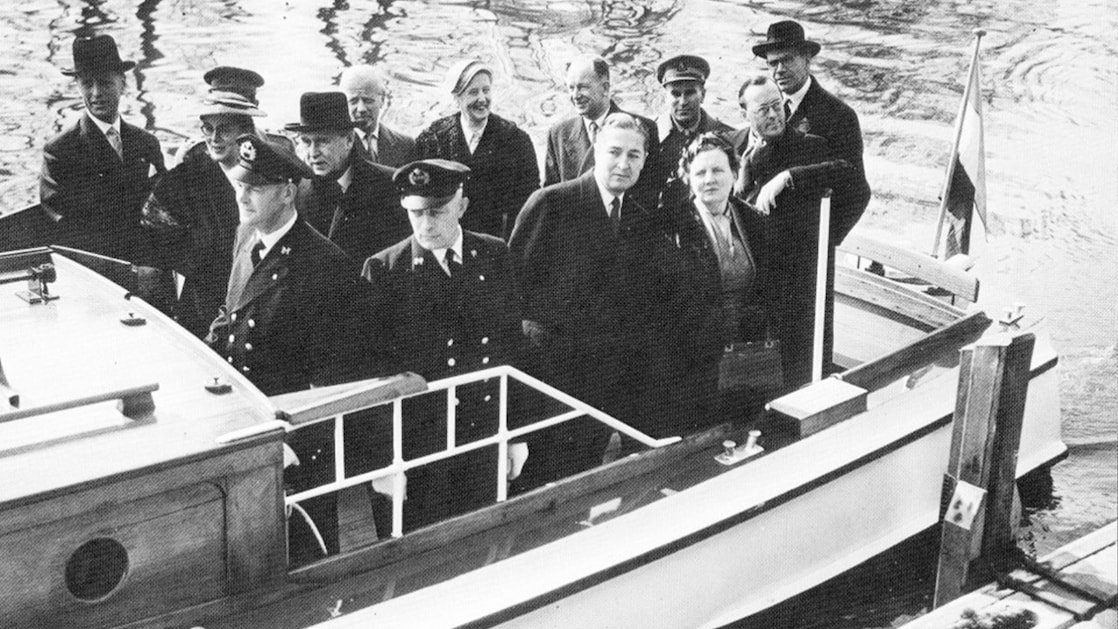
De bedrijfsbootjes zijn niet alleen praktisch, ze spelen ook een rol op bijzondere momenten. Voor de eerste keer in het 44-jarige bestaan wordt het lab in 1956 vereerd met koninklijk bezoek. Op 16 april arriveren koningin Juliana en prins Bernhard met de Dilecta voor een kennismaking met het Amsterdamse lab en het onderzoek dat er plaatsvindt.
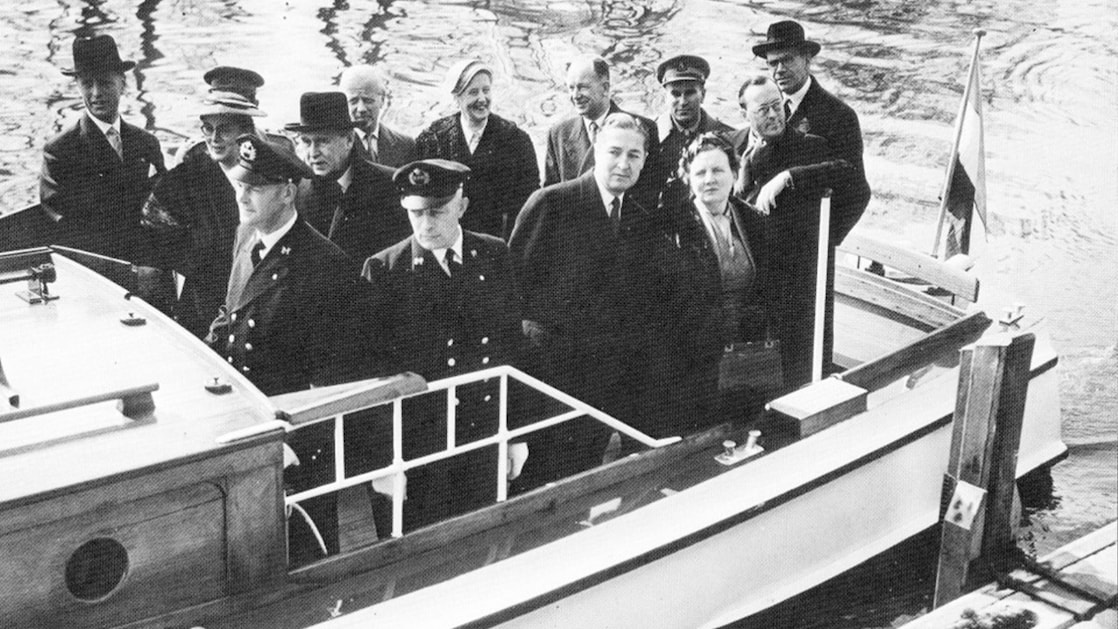
Toch komt er een einde aan het varende tijdperk. In 1984 wordt het bootvervoer definitief opgeheven. Er is gemor onder de medewerkers die dagelijks van de bootjes gebruikmaken. De ondernemingsraad buigt zich over de zaak maar het is onafwendbaar: in het jaarverslag van het Koninklijke Shell Lab Amsterdam (KSLA) staat: ‘1984, het KSLA heft bootvervoer over het IJ op.’
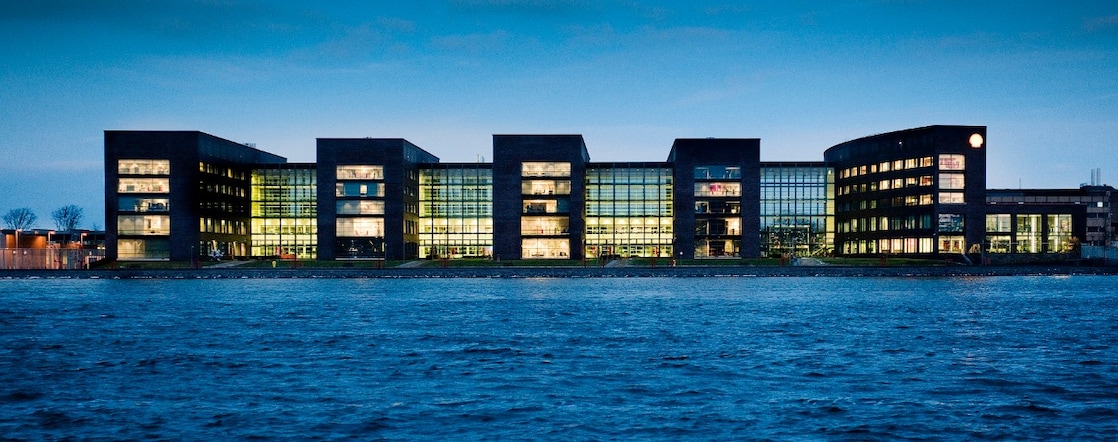
De steiger blijft leeg en de bootkaart verdwijnt in de la met herinneringen. Na bijna zestig jaar zijn de bootjes weg, maar hun verhaal dobbert nog altijd rond in het collectieve geheugen van wat we nu de Energy Transition Campus Amsterdam noemen.
Back in 1925: the Shell boats'
20 August 2025
For years, white company boats busily criss-crossed the waters of the Amsterdam IJ-river – the waterway separating the northern part of the city with the citycentre. For many, their first encounter with Shell’s laboratory in Amsterdam North was a uniformed skipper and a cosy cabin. Since 1925, skippers Feen, Kramers and Bloem have ferried employees and visitors between the station and the world of science.
Photography: Shell Historical Heritage & Archive. Text: Kirsten Gesink.
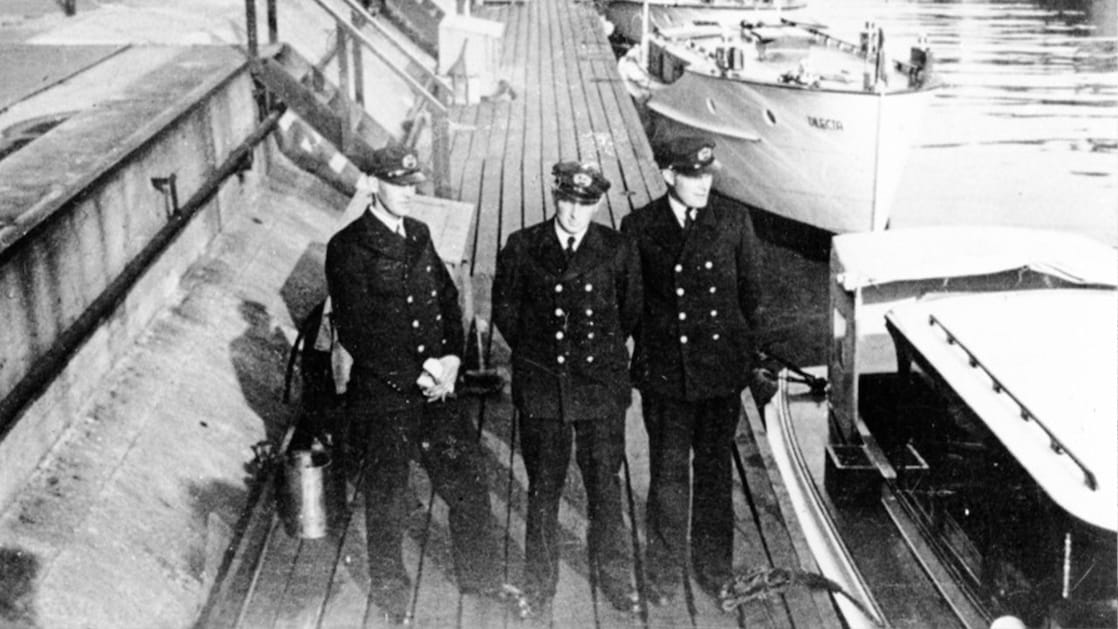
It all began in 1925 with the boats Dordt and Kondor, but the fleet steadily expanded with Labora, and in the early 1930s, Dilecta and Perfecta – the latter equipped with a – for its time – modern diesel engine. A few decades later, the boat service was no longer a given. Only Shell lab-employees who met ‘the number’ – the sum of their age and years of service – were granted a coveted boat pass.
In 1955, the threshold was set at 63. If you were 45 years old with 18 years of service – not uncommon at the time – you stood a good chance. Without a boat pass, you had to rely on the municipal ferry, which took more time and was a further walk. Later, the number dropped to 50, and Shell increased fleet capacity by hiring additional boats.
The company boats were not only practical; they also played a role on special occasions. For the first time in its 44-year existance, the lab received a royal visit in 1956. On 16 April, Queen Juliana and Prince Bernhard arrived aboard the Dilecta for an introduction to the Amsterdam lab and its research.
Still, the sailing era eventually came to an end. In 1984, the boat service was permanently discontinued. There was grumbling among employees who used the boats daily. The works council reviewed the matter, but it was inevitable: the annual report of the Royal Shell Laboratory Amsterdam (KSLA) stated, “1984, KSLA discontinues boat transport across the IJ.”
The jetty stood empty, and the boat pass was tucked away in the drawer of memories. After nearly sixty years, the boats were gone – but their story still floats in the collective memory of what we now call the Energy Transition Campus Amsterdam.