Hoe "Vikinggas" naar Nederland blijft stromen
Het is het jaar 990. Woeste golven voor de kust beuken tegen de Ormrinn Langi van Viking-koning Olav Tryggvason en zijn bemanning van 70 tot 80 koppen. Kracht en snelheid, daar staat het 45-meter lange schip om bekend. Wat de Noorse sterke man tijdens het doorkruisen van de kustwateren niet kan vermoeden is dat elf eeuwen later zijn schip tot de verbeelding zal spreken. En al helemaal onder ingenieurs. Want die brachten anno 2025 iets bijzonders tot stand dat nog nergens ter wereld is vertoond.

Tekst: Marcel Burger. Beeld: A/S Norske Shell.
Transcriptie in het Nederlands bij video "Breaking subsea records"
Transcriptie in het Nederlands bij video "Breaking subsea records"
00:05 Velen in de industrie vroegen zich echt af:
00:08 "Kunnen we dit doen?"
00:10 Zoiets is nog nooit eerder gedaan.
00:12 We hebben de grenzen verlegd van wat we dachten dat mogelijk was.
00:15 Wat we hebben gedaan is baanbrekend.
00:17 Dit is een wereldrecord.
00:21 Niemand heeft ooit compressie onder zee zo ver van de kust geplaatst op deze dieptes onder water.
00:24 [TITEL] Ormen Lange - Meer energie voor Europa ontsluiten
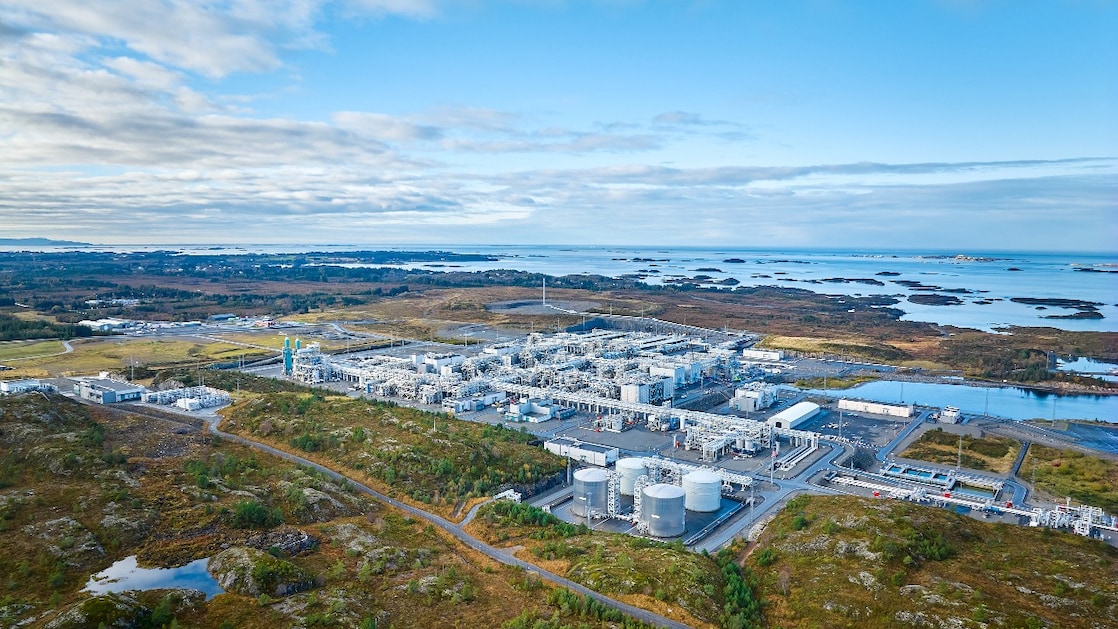
00:31 [Richard Crichton, projectdirecteur, Shell] Dit is de Nyhamna-gasfabriek.
00:34 Gas van het op één na grootste gasveld in Noorwegen, Ormen Lange,
00:38 reist naar deze fabriek,
00:41 waar het wordt verwerkt en vervolgens geëxporteerd naar Europa.
00:44 We hebben honderden miljoenen huizen en bedrijven van energie voorzien
00:47 in de afgelopen 20 jaar productie uit dit veld.
00:51 Dit was de eerste diepwaterontwikkeling in Noorwegen.
00:54 En sindsdien hebben we die grenzen verlegd
00:57 in technologie en menselijke inspanning.
[TELLER naar 120 km start, terwijl de camera van de kust wegdraait en verder de zee op gaat]
01:02 De productieapparatuur van Ormen Lange bevindt zich 120 kilometer uit de kust
[TELLER naar -1000 m start, terwijl de camera de zee in duikt]
01:08 bijna 1.000 meter onder zeeniveau,
01:10 aan de voet van een 800 meter hoge helling.
01:14 Het veld zelf is 40 kilometer lang en acht tot tien kilometer breed.
01:19 Het daadwerkelijke reservoir ligt nog eens 2,5 kilometer onder de zeebodem.
01:25 De apparatuur op de zeebodem omvat vier sjablonen,
01:28 waardoor verbindingen en pijpleidingen worden gemaakt.
01:31 Het gas wordt van nature naar buiten geduwd door de druk in het reservoir.
01:35 Het stroomt in de apparatuur bij elk sjabloon
01:38 voordat het wordt gemengd in twee pijpleidingen
01:40 die het terugsturen naar Nyhamna voor verwerking.
01:45 [Fredrik Danielsen, systeemingenieur, Shell] In de loop van twee decennia dat het veld in productie is geweest,
01:49 is de druk geleidelijk afgenomen naarmate er gas is geproduceerd.
01:52 Het verhogen van deze druk was een grote uitdaging.
01:57 Wanneer de reservoirdruk daalt,
02:00 is gascompressie een zeer aantrekkelijke oplossing
02:02 om de productie te behouden.
02:04 Normaal gesproken zou dit op een offshoreplatform worden geïnstalleerd,
02:06 maar hier hebben we het op de zeebodem geïnstalleerd.
02:09 Dit stelt ons in staat om de snelheid van het gas in de pijpleiding te verhogen,
02:13 waardoor de productie wordt verhoogd en we het maximale uit onze bron halen.
02:18 [Jen Carrano, manager Technische Integratie, Shell] Het hele onderzeese besturingssysteem wordt op afstand bediend
02:21 vanuit deze controlekamer hier in Nyhamna.
02:24 En de stroom die we vanaf hier sturen
02:26 gaat een recordbrekende 120 kilometer voor de kust naar onze compressoren.
02:32 De stroom vanaf land bereikt eerst de transformatoren.
02:36 De transformatoren verlagen deze stroom
02:39 en voeden hem vervolgens naar waar de magie gebeurt.
02:42 We hebben twee compressiestations van 800 ton op de zeebodem geïnstalleerd
02:46 en geïntegreerd in het bestaande productiesysteem.
02:49 De compressorunits zijn ontworpen
02:52 om bestand te zijn tegen de druk van de diepzee en ijskoude temperaturen.
02:54 In elke unit
02:57 drijven elektrisch aangedreven motoren de gascompressoren aan.
02:59 Deze verhogen de druk
03:01 en compenseren de natuurlijke drukdaling
03:03 in het reservoir in de loop van de tijd, waardoor het gas terug kan stromen naar Nyhamna.
03:07 Geavanceerde sensor- en besturingssystemen
03:11 maken realtime monitoring en aanpassing mogelijk,
03:13 allemaal op afstand beheerd vanaf land.
03:15 [Fredrik Danielsen, systeemingenieur, Shell] Dit zijn de diepst gelegen onderzeese compressoren ter wereld.
03:18 Het is efficiënter en over de levensduur van het veld
03:21 wordt verwacht dat het het winningspercentage verhoogt van 75% naar 85%, en dat is een klasse apart,
03:26 en 30 tot 50 miljard extra kubieke meter gas ontsluit.
03:31 De extra opbrengst is genoeg gas
03:34 om volgend jaar vijf miljoen huizen te verwarmen.
03:36 Dat is gelijk aan een stad ter grootte van Barcelona.
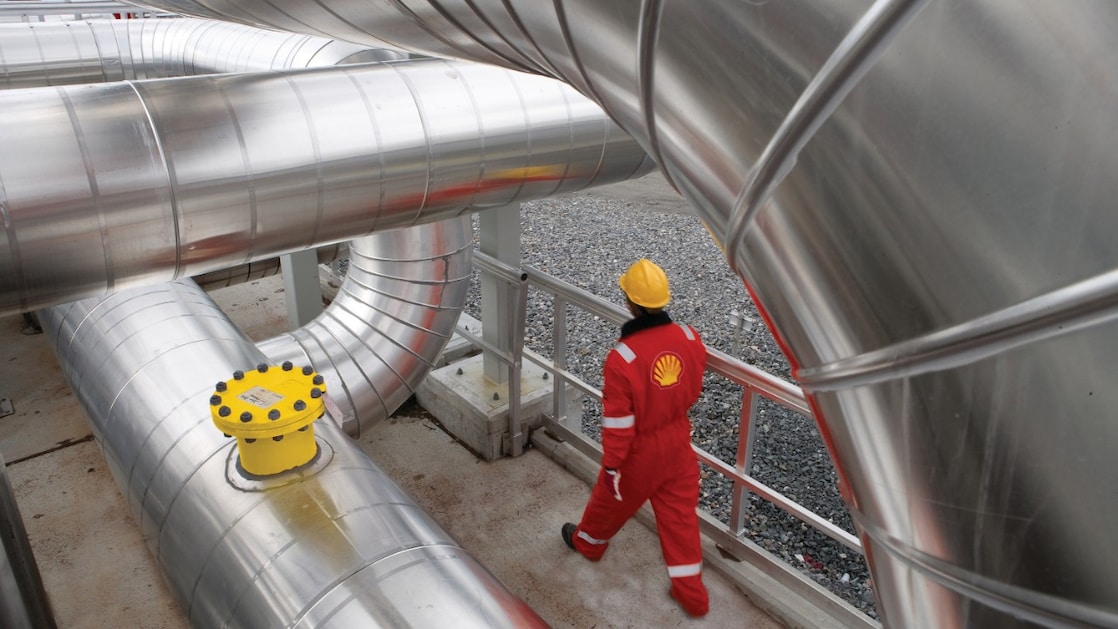
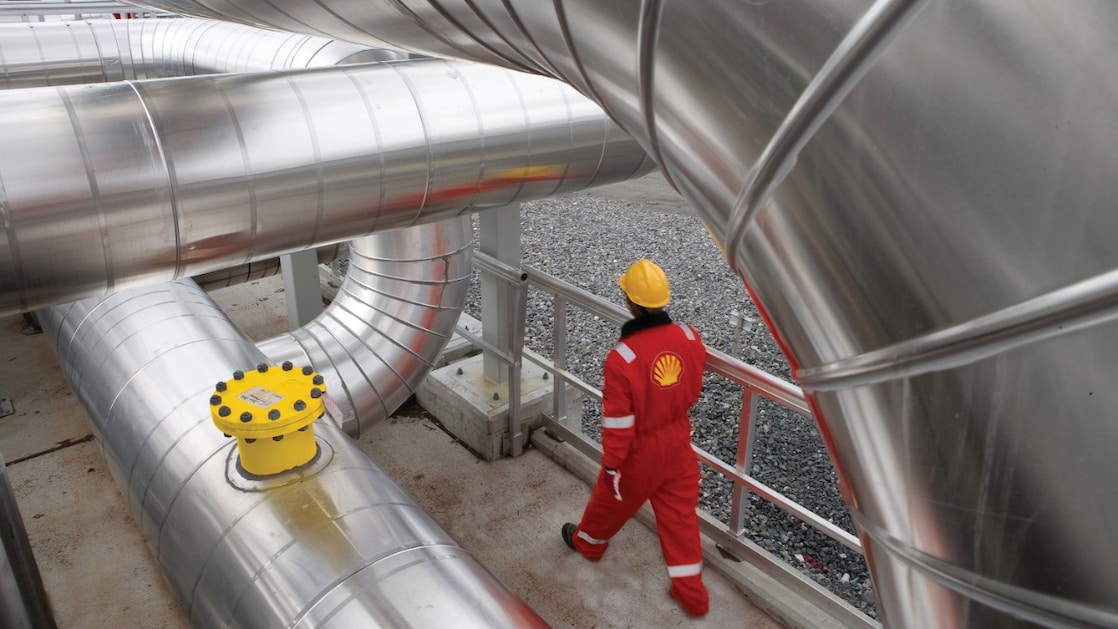
03:42 [Richard Crichton, projectdirecteur, Shell] Deze pijpen zien er misschien niet indrukwekkend uit,
03:43 maar ze zijn een essentieel onderdeel
03:45 van het energiedistributiesysteem binnen Europa.
03:49 Vanaf dit kleine, afgelegen Noorse "eiland"
03:52 stroomt gas duizenden kilometers naar Europa,
03:55 en levert betrouwbare energie, waarmee huizen en bedrijven worden aangedreven.
03:59 De CO₂-uitstoot van de productie
04:02 behoort ook tot de laagste op het Noorse Continentaal Plat,
04:05 omdat het Ormen Lange-veld wordt aangedreven door waterkracht
04:09 en het gas wordt verwerkt in een gesloten systeem in Nyhamna.
04:12 Dit stelt ons in staat om een groter volume te winnen
04:15 zonder extra uitstoot te veroorzaken bij de verwerking van het gas.
04:21 Dit project laat echt de strategie van Shell in actie zien.
04:25 We leveren meer waarde met minder uitstoot.
04:29 [Jen Carrano, manager Technische Integratie, Shell] Wat we hebben gedaan is een technologie naar een hoger niveau tillen,
04:32 bewijzen dat het werkt
04:33 en dat het toepasbaar is op veel verschillende projecten.
04:37 [Fredrik Danielsen, systeemingenieur, Shell] Het allemaal werkelijkheid zien worden, is een geweldig gevoel.
04:39 Het maakt me erg trots
04:40 om deel uit te maken van een team dat deze grenzen heeft verlegd.
04:44 [Richard Crichton, projectdirecteur, Shell] We maximaliseren de waarde van dit veld
04:48 en leveren betrouwbare energie aan Europa.
04:55 [eind jingle] Ontdek meer: shell.com/ormenlange
Vandaag de dag is Ormen Lange — zoals het in modern Noors wordt geschreven — in omvang het tweede offshore gaswinningsproject van Noorwegen én draagt sterk bij aan Europa’s energieleveringszekerheid. De productie wordt gerund door Shell Noorwegen (17,8% eigenaar), en Shell deelt de winningsrechten met partners Peterso (36,5%), Equinor Energy (25,4%), Orlen Upstream Norway (14%) en Vår Energi (6,3%).
“Verstopt” in het zandsteen
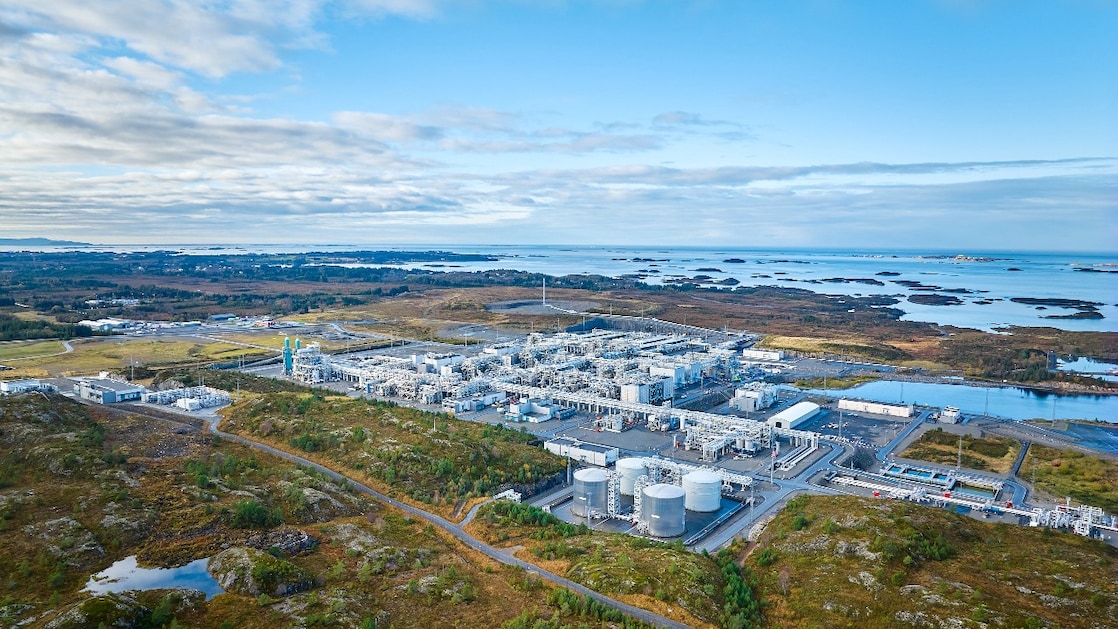
De Lange Worm of Lange Slang, zoals Ormen Lange zich naar het Nederlands vertaald, ligt 120 kilometer uit de Noorse kust, ter hoogte van het stadje Kristiansund. Het gas zelf zit zo’n 2,5 kilometer onder de zeebodem, “verstopt” tussen het zandsteen. Boven die bodem ligt bovendien de Atlantische Ocean — die hier Noorse Zee wordt genoemd — en die is hier een kilometer diep.
Al 20 jaar levert het Ormen Lange-veld (40 bij 10 kilometer / 25 bij 6,2 mijl groot) gas aan huishoudens en bedrijven. Via vier clusters van elk acht putten wordt het zeer droge gas — er komt weinig water en condensatie mee — via twee onderzeese pijpleidingen gepompt naar Nyhamna. Dat is het ontvangststation op het Noorse vasteland. Daar wordt het gas verwerkt en via andere pijpleidingen verder doorgestuurd, Europa in. Veel gas uit Ormen Lange gaat naar het Verenigd Koninkrijk, op piekmomenten leverde het wel 30% van de Britse gasbehoefte, maar ook Nederland en Duitsland behoren tot de importeurs.
Hoeveel Ormen Lange-gas voedt Nederlandse fornuizen?
Uitrekenen hoe vaak de gemiddelde Nederlander kookt op Ormen Lange-gas is niet zo gemakkelijk, maar het Noorse veld produceert wel ontzettend veel aardgas — naar verwachting in 2026 genoeg om 5 miljoen Europese huishoudens van energie te voorzien. Ter vergelijking: een gemiddeld Nederlands gezin verbruikt 800 tot 1.050 kuub aardgas per jaar. Ormen Lange zou theoretisch meer dan de tien grootste steden in Nederland kunnen volgend jaar van aardgas voorzien.
Waar komt Nederlands aardgas vandaan?
Nog steeds komt er veel aardgas uit de Nederlandse bodem, namelijk uit de zogenoemde kleine velden en uit de Noordzee. Maar we zijn voor aardgas steeeds meer afhankelijk van het buitenland. In 2024 waren de volgende landen de grootste leveranciers van geïmporteerd gas:
1. Verenigde Staten
- Volume: 14,43 miljard kuub (bcm)
- Type: vooral LNG (68% van de Nederlandse LNG-import)
2. Noorwegen
- Volume: 6,5 bcm gas (pijpleiding) en 1.34 bcm LNG
- Type: vooral als gas via pijpleiding (gasproducent)
3. Duitsland
- Volume: 5,8 bcm
- Type: als gas via pijpleiding (doorvoerland en direct als gasproducent)
4. België
- Volume: 4,2 bcm
- Type: als gas via pijpleiding en vanuit LNG-terminals (doorvoerland)
5. Rusland
- Volume, 1,92 bcm
- Type: LNG (toename van 68% in 2024, ondanks EU-sancties)
Bronnen: CBS, IEEFA
“Gewoon” op de zeebodem
Ormen Lange begon aanvankelijk met het leveren van nog hogere hoeveelheden gas, maar na twee decennia productie begon de druk in het reservoir af te nemen. Het stelde Shell-ingenieurs voor een uitdaging. Een enorm (en kostbaar) offshore-platform werd overwogen om meer gas te kunnen winnen, maar uiteindelijk werd gekozen voor het installeren van onderzeese gascompressoren — “gewoon” op de zeebodem. De Noorse overheid stimuleerde dit actief, ze drong aan op evaluatie van de uiteindelijk gekozen oplossing. Het idee was om maximale winning van aardgas te garanderen, maar wilde ook dat de innovatie inzet van compressoren zou bijdragen aan de technologische ontwikkeling van de gehele Noorse offshore-industrie.
Op papier was het een prachtig idee. Alleen: nog nergens ter wereld had iemand ooit eerder geprobeerd zo diep onder de zeespiegel compressoren te plaatsen. Bij Ormen Lange moest het werk worden uitgevoerd tot ongeveer 900 meter diepte onder de waterspiegel, waar de enorme druk en ijskoude temperaturen een flinke uitdaging zijn. Ter vergelijking: bemande (militaire) onderzeeërs gaan normaal niet dieper dan 600 meter, dus er moesten speciale schepen en onbemande duikapparatuur worden ingezet voor de installatie van de compressoren.
133 Afrikaanse olifanten
Elke compressor weegt ongeveer 800 ton. Natuurlijk zorgt de opwaartse kracht onder water ervoor dat het iets minder log voelt, maar het nog altijd over een gewicht per compressor vergelijkbaar met dat van 11.400 wasmachines, 30 betonmixers, of — voor de liefhebber — 133 Afrikaanse olifanten; al houden we die graag allemaal op het droge.
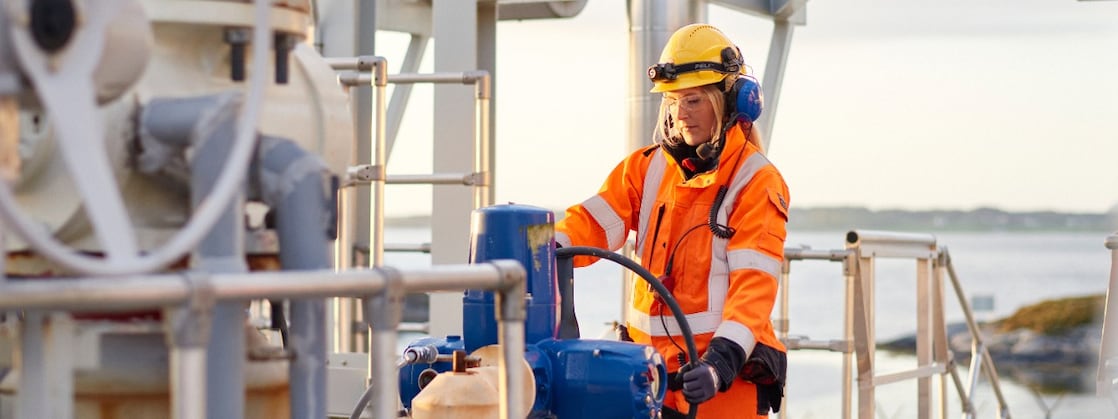
Na zes jaar voorbereiding en twee zomers werk op grote diepte — de omstandigheden zijn dan beter dan in de winter — was de installatie voltooid. De diepzeecompressoren werden in juni 2025 in gebruik genomen, dat in augustus werd gevierd met de officiële inhuldiging. De compressoren worden op afstand bediend, vanaf het land. De benodigde elektriciteit komt van Noorse waterkrachtcentrales en is dus volledig hernieuwbaar.
De compressoren verhogen de druk van het gas, waardoor het efficiënter door pijpleidingen naar de verwerkingsinstallatie in Nyhamna stroomt. Dankzij dit onderzeese proces kan Ormen Lange nu naar verwachting 85% van het aardgas winnen. Dat is 10% meer dan vóór de installatie van de compressoren, en uniek in de wereld van offshore gaswinning. In totaal wordt naar verwachting meer dan 30 miljard kuub (30 BCM) gas door de compressoren “ontsloten”. Dat is meer dan sommige andere middelgrote gasvelden kunnen leveren.
Van Noorwegen naar Nederland
Noorwegen is de op één na grootste aardgasleverancier van Nederland, na de Verenigde Staten. In 2024 importeerde Nederland meer dan 7,84 miljard kubieke meter gas uit Noorwegen. Dit Noorse gas komt voornamelijk via onderzeese pijpleidingen in gasvorm aan. Ter vergelijking: aardgas uit de VS wordt als vloeibaar aardgas (LNG) per schip aangevoerd naar havens zoals Rotterdam. Noorwegen zelf exporteert slechts ongeveer 5% van haar gas als LNG, via een terminal in Hammerfest, in de poolcirkel.
Ormen Lange, NoorwegenDe benodigde elektriciteit komt van Noorse waterkracht en is dus volledig hernieuwbaar
Is Ormen Lange “groen”?
De productie van aardgas is op zichzelf niet groen, maar Ormen Lange behoort tot de Noorse gasvelden met de laagste CO₂-impact als het gaat om de productie van aardgas. Experts denken dat Ormen Lange een lagere impact heeft dan veel andere projecten elders in de wereld, maar daarvoor zijn geen sluitende benchmarkgegevens beschikbaar om die bewering 100% te onderbouwen.
Wat in het voordeel van Ormen Lange werkt: niet alleen draaien de compressoren op hernieuwbare waterkracht, ook 93% van de faciliteiten op het vasteland maken gebruik van deze duurzame energiebron. Bovendien verwerken de meeste installaties op land het aardgas in een gesloten systeem. Er wordt niet afgefakkeld in Nyhamna, het gas wordt niet verbrand met zo’n zichtbare vlam uit de pijp, tenzij dit onder speciale omstandigheden nodig is. Bijvoorbeeld als een fabriek bewust wordt stilgelegd voor onderhoud.
Aardgas vergeleken met steenkool
Hoewel het nog steeds een fossiele brandstof is, blijft aardgas de minst vervuilende optie onder niet-hernieuwbare energiebronnen. Het verschil is enorm vergeleken met bijvoorbeeld steenkool, dat in veel landen de huizen verwarmd of voor de benodigde stroom zorgt — met Duitsland en Polen in Europa als grootverbruikers.
Volgens rapporten van de Amerikaanse Energy Information Administration stoot aardgas ongeveer 50% minder CO₂ uit dan steenkool. In hun streven om minder afhankelijk te worden van fossiele brandstoffen, proberen veel landen over te stappen van kolen naar gas, naast het aanleggen van zonne- en windparken. Dat is een van de redenen waarom de wereldwijde vraag naar aardgas aanblijft, en tot 2030 verwacht Shell zijn LNG-verkoop jaarlijks met 4 tot 5% te kunnen laten groeien.
Aardgas in Nederland
Nederland is al decennia geleden overgestapt van steenkool naar aardgas, dankzij de ontdekking van de gasvelden in Groningen, Drenthe en de Noordzee. Nu zit ons land in een tweede energietransitie: richting volledig duurzame energiebronnen — met nul uitstoot — tegen 2050.
Experts denken dat Nederland gas — aardgas of biogas — nog wel geruime tijd nodig zal hebben. De overstap naar groene energie kost tijd. Terug in die tijd zagen we Vikingen, die innovatief waren in hun zoektocht naar roem, rijkdom en stabiliteit. Dat is vandaag de dag niet anders. De technologie mag dan veranderd zijn, andere dingen veranderen nooit.
Voor dit artikel zijn behalve Shell-bronnen onder meer ook de volgende bronnen geraadpleegd: CBS, European Council of the European Union (Consilium), EIA, Reuters/Energy Now, Gassco, ICIS, IEEFA, Natural Gas Intel, Norsk Petroleum, OilPrice, S&P Global, World Population Review, Worldbank
Cijfers US Energy Information AdministrationHet verschil is enorm vergeleken met steenkool
Cautionary note
Cautionary note
The companies in which Shell plc directly and indirectly owns investments are separate legal entities. In this announcement “Shell”, “Shell Group” and “Group” are sometimes used for convenience where references are made to Shell plc and its subsidiaries in general. Likewise, the words “we”, “us” and “our” are also used to refer to Shell plc and its subsidiaries in general or to those who work for them. These terms are also used where no useful purpose is served by identifying the particular entity or entities. ‘‘Subsidiaries’’, “Shell subsidiaries” and “Shell companies” as used in this announcement refer to entities over which Shell plc either directly or indirectly has control. The term “joint venture”, “joint operations”, “joint arrangements”, and “associates” may also be used to refer to a commercial arrangement in which Shell has a direct or indirect ownership interest with one or more parties. The term “Shell interest” is used for convenience to indicate the direct and/or indirect ownership interest held by Shell in an entity or unincorporated joint arrangement, after exclusion of all third-party interest.
Forward-looking Statements
This announcement contains forward-looking statements (within the meaning of the U.S. Private Securities Litigation Reform Act of 1995) concerning the financial condition, results of operations and businesses of Shell. All statements other than statements of historical fact are, or may be deemed to be, forward-looking statements. Forward-looking statements are statements of future expectations that are based on management’s current expectations and assumptions and involve known and unknown risks and uncertainties that could cause actual results, performance or events to differ materially from those expressed or implied in these statements. Forward-looking statements include, among other things, statements concerning the potential exposure of Shell to market risks and statements expressing management’s expectations, beliefs, estimates, forecasts, projections and assumptions. These forward-looking statements are identified by their use of terms and phrases such as “aim”; “ambition”; ‘‘anticipate’’; ‘‘believe’’; “commit”; “commitment”; ‘‘could’’; ‘‘estimate’’; ‘‘expect’’; ‘‘goals’’; ‘‘intend’’; ‘‘may’’; “milestones”; ‘‘objectives’’; ‘‘outlook’’; ‘‘plan’’; ‘‘probably’’; ‘‘project’’; ‘‘risks’’; “schedule”; ‘‘seek’’; ‘‘should’’; ‘‘target’’; ‘‘will’’; “would” and similar terms and phrases. There are a number of factors that could affect the future operations of Shell and could cause those results to differ materially from those expressed in the forward-looking statements included in this announcement, including (without limitation): (a) price fluctuations in crude oil and natural gas; (b) changes in demand for Shell’s products; (c) currency fluctuations; (d) drilling and production results; (e) reserves estimates; (f) loss of market share and industry competition; (g) environmental and physical risks; (h) risks associated with the identification of suitable potential acquisition properties and targets, and successful negotiation and completion of such transactions; (i) the risk of doing business in developing countries and countries subject to international sanctions; (j) legislative, judicial, fiscal and regulatory developments including regulatory measures addressing climate change; (k) economic and financial market conditions in various countries and regions; (l) political risks, including the risks of expropriation and renegotiation of the terms of contracts with governmental entities, delays or advancements in the approval of projects and delays in the reimbursement for shared costs; (m) risks associated with the impact of pandemics, such as the COVID-19 (coronavirus) outbreak, regional conflicts, such as the Russia-Ukraine war, and a significant cybersecurity breach; and (n) changes in trading conditions. No assurance is provided that future dividend payments will match or exceed previous dividend payments. All forward-looking statements contained in this announcement are expressly qualified in their entirety by the cautionary statements contained or referred to in this section. Readers should not place undue reliance on forward-looking statements. Additional risk factors that may affect future results are contained in Shell plc’s Form 20-F for the year ended December 31, 2024 (available at www.shell.com/investors/news-and-filings/sec-filings.html and www.sec.gov). These risk factors also expressly qualify all forward-looking statements contained in this announcement and should be considered by the reader. Each forward-looking statement speaks only as of the date of this announcement, October 30, 2025. Neither Shell plc nor any of its subsidiaries undertake any obligation to publicly update or revise any forward-looking statement as a result of new information, future events or other information. In light of these risks, results could differ materially from those stated, implied or inferred from the forward-looking statements contained in this announcement.
Shell’s Net Carbon Intensity
Also, in this announcement we may refer to Shell’s “Net Carbon Intensity” (NCI), which includes Shell’s carbon emissions from the production of our energy products, our suppliers’ carbon emissions in supplying energy for that production and our customers’ carbon emissions associated with their use of the energy products we sell. Shell’s NCI also includes the emissions associated with the production and use of energy products produced by others which Shell purchases for resale. Shell only controls its own emissions. The use of the terms Shell’s “Net Carbon Intensity” or NCI are for convenience only and not intended to suggest these emissions are those of Shell plc or its subsidiaries.
Shell’s net-zero emissions target
Shell’s operating plan, outlook and budgets are forecasted for a ten-year period and are updated every year. They reflect the current economic environment and what we can reasonably expect to see over the next ten years. Accordingly, they reflect our Scope 1, Scope 2 and NCI targets over the next ten years. However, Shell’s operating plans cannot reflect our 2050 net-zero emissions target, as this target is currently outside our planning period. In the future, as society moves towards net-zero emissions, we expect Shell’s operating plans to reflect this movement. However, if society is not net zero in 2050, as of today, there would be significant risk that Shell may not meet this target.
Forward-looking non-GAAP measures
This announcement may contain certain forward-looking non-GAAP measures such as cash capital expenditure and divestments. We are unable to provide a reconciliation of these forward-looking non-GAAP measures to the most comparable GAAP financial measures because certain information needed to reconcile those non-GAAP measures to the most comparable GAAP financial measures is dependent on future events some of which are outside the control of Shell, such as oil and gas prices, interest rates and exchange rates. Moreover, estimating such GAAP measures with the required precision necessary to provide a meaningful reconciliation is extremely difficult and could not be accomplished without unreasonable effort. Non-GAAP measures in respect of future periods which cannot be reconciled to the most comparable GAAP financial measure are calculated in a manner which is consistent with the accounting policies applied in Shell plc’s consolidated financial statements.
The contents of websites referred to in this announcement do not form part of this announcement.
We may have used certain terms, such as resources, in this announcement that the United States Securities and Exchange Commission (SEC) strictly prohibits us from including in our filings with the SEC. Investors are urged to consider closely the disclosure in our Form 20-F, File No 1-32575, available on the SEC website www.sec.gov
How “Viking Gas” keeps flowing to the Netherlands
30 Oct. 2025
It is the year 990. Ferocious waves crash against the Ormrinn Langi, the longship of Viking King Olav Tryggvason and his crew of 70 to 80 men. Known for its power and speed, the 45-metre (148-feet) long vessel slices through the coastal waters. What the Norwegian strongman could not have imagined is that, over a thousand years later, his ship would capture the imagination—especially among engineers. Because in 2025, something remarkable was achieved, never before seen anywhere in the world, at the ship’s name successor.

Text: Marcel Burger. Photography and video: A/S Norske Shell.
Transcription of video "Breaking subsea records"
Transcription of video "Breaking subsea records"
00:05 Many in the industry really were questioning:
00:08 "Can we do this?"
00:10 Nothing like this has been done before.
00:12 We have pushed the limits of what we thought was possible.
00:15 It's groundbreaking is what we've done.
00:17 This is a world record.
00:21 No one has ever put subsea compression so far from shore at these water depths.
00:24 [TITLE] Ormen Lange - Unlocking more energy for Europe
00:31 [Richard Crichton, Project Director, Shell] This is the Nyhamna gas plant.
00:34 Gas from the second largest gas field in Norway, Ormen Lange,
00:38 travels to this plant,
00:41 where it's processed and then exported to Europe.
00:44 We've been powering hundreds of millions of homes and businesses
00:47 in the last 20 years of production from this field.
00:51 This was the first deepwater development in Norway.
00:54 And ever since, we have been pushing those boundaries
00:57 in technology and human endeavour.
[COUNTER to 120 km starts running, while camera pans away from the shore and heads further out to sea]
01:02 The Ormen Lange production equipment is situated 120 kilometres offshore
[COUNTER to -1000 m starts running, while camera dives into the sea]
01:08 nearly 1,000 metres below sea level,
01:10 at the base of an 800-metre escarpment.
01:14 The field itself is 40 kilometres long by eight to ten kilometres wide.
01:19 The actual reservoir sits another 2.5 kilometres below the seabed.
01:25 The equipment on the seabed includes four templates,
01:28 through which connections and pipelines are made.
01:31 The gas is naturally forced out by the pressure within the reservoir.
01:35 It travels into the equipment at each template
01:38 before being mixed into two pipelines
01:40 that send it back to Nyhamna for processing.
01:45 [Fredrik Danielsen, Systems Engineer, Shell] Over the course of two decades that the field has been in production,
01:49 as gas has been produced, pressure has gradually been declining.
01:52 To boost this pressure has been a tough challenge.
01:57 When reservoir pressure drops,
02:00 gas compression is a very attractive solution
02:02 to sustain production.
02:04 This would normally be installed on an offshore platform,
02:06 but here, we installed it at the seabed.
02:09 This enables us to increase the velocity of the gas in the pipeline,
02:13 boosting production and allowing us to get the most out of our asset.
02:18 [Jen Carrano, Technical Integration Manager, Shell] The whole subsea control system is remotely operated
02:21 from this control room here at Nyhamna.
02:24 And the power that we send from here
02:26 goes a record-breaking 120 kilometres offshore to our compressors.
02:32 The power from onshore first reaches the transformers.
02:36 The transformers step this power down
02:39 and then feed it to where the magic happens.
02:42 We've installed two 800-tonne compression stations on the seabed
02:46 and integrated them into the existing production system.
02:49 The compressor units are engineered
02:52 to withstand the deep-sea pressures and freezing temperatures.
02:54 Inside each unit,
02:57 electrically-driven motors power the gas compressors.
02:59 These increase the pressure
03:01 and compensate the natural pressure drop
03:03 in the reservoir over time, enabling the gas to travel back to Nyhamna.
03:07 Sophisticated sensor and control systems
03:11 enable real-time monitoring and adjustment,
03:13 all managed remotely from onshore.
03:15 [Fredrik Danielsen, Systems Engineer, Shell] These are the world's deepest subsea compressors.
03:18 It's more efficient and over the lifetime of the field,
03:21 it's expected to push the recovery rate from 75% to a world class 85%
03:26 and unlock 30 to 50 billion more cubic metres of gas.
03:31 The additional recovery equals enough gas
03:34 to heat five million homes next year alone.
03:36 That's the equivalent to a city the size of Barcelona.
03:42 [Richard Crichton, Project Director, Shell] These pipes might not look like much,
03:43 but they're an essential part
03:45 of the energy distribution system within Europe.
03:49 From this tiny, remote Norwegian island,
03:52 gas flows thousands of kilometres across to Europe,
03:55 providing reliable energy, powering homes and businesses.
03:59 The carbon emissions from production
04:02 are also among the lowest on the Norwegian continental shelf,
04:05 as the Ormen Lange field is powered as hydro-generated electricity
04:09 and the gas is processed in a closed system at Nyhamna.
04:12 This allows us to extract a larger volume
04:15 while not creating additional emissions in the processing of the gas.
04:21 This project is really showing Shell's strategy in action.
04:25 We're delivering more value with less emissions.
04:29 [Jen Carrano, Technical Integration Manager, Shell] What we've done is taken a technology to the next level,
04:32 proving it can work
04:33 and it can be deployable on lots of different projects.
04:37 [Fredrik Danielsen, Systems Engineer, Shell] Seeing it all come to life is an amazing feeling.
04:39 It makes me very proud
04:40 to be part of a team that's been pushing these boundaries.
04:44 [Richard Crichton, Project Director, Shell] We're maximising the value from this field
04:48 and providing reliable energy into Europe.
04:55 [end jingle] Discover more: shell.com/ormenlange
Today, Ormen Lange—as written in modern Norwegian—is Norway’s second-largest offshore gas production site and plays a major role in securing Europe’s energy supply. The operation is run by Shell Norway (17.8% ownership), alongside license partners Petoro (36.5%), Equinor Energy (25.4%), Orlen Upstream Norway (14%), and Vår Energi (6.3%).
“Hidden” in sandstone
The Long Serpent, as Ormen Lange translates into English, is situated 120 kilometres off the Norwegian coast, north-west of the town of Kristiansund. The gas reservoir is located about 2.5 kilometres (8,200 feet) beneath the seabed, “hidden” in sandstone layers. Above it lies the Atlantic Ocean—known here as the Norwegian Sea—which is about a kilometre (3,280 feet) deep at this point.
For 20 years, the Ormen Lange field (40 by 10 kilometers/25 by 6.2 miles in size) has supplied gas to homes and businesses. Through four clusters of eight wells each, the ultra-dry gas—with minimal liquid (water and condensate)—is pumped via two subsea pipelines to Nyhamna, the onshore receiving terminal on the Norwegian mainland. There, the gas is processed and sent on into Europe via other pipelines. A significant portion of Ormen Lange gas goes to the United Kingdom—at peak it supplied the equivalent of up to 30% of Britain’s gas needs—but the Netherlands and Germany are among the importers as well.
How much Ormen Lange gas fuels Dutch cookers?
It is not easy to calculate exactly how often the average Dutch person cooks using Ormen Lange gas, but it the Norwegian field produces enormous volumes—in 2026 it is expected to export enough gas to power over 5 million European homes. To put that in perspective: with an average Dutch household using 800 to 1,050 cubic metres of natural gas annually, Ormen Lange could theoretically power more than the ten largest cities in the Netherlands next year.
Where does the Dutch natural gas comes from?
After the closure of the main Dutch natural gas fields of Groningen and Drenthe, a lot of natural gas still comes from the Dutch soil—from the so-called small gas fields and from underneath the North Sea. However, the Netherlands is increasingly dependent on other nations for its natural gas. In 2024, the following countries were the largest suppliers of imported gas to the Netherlands:
United States
- Volume: 14.43 billion cubic meters (bcm)
- Type: Mainly LNG (68% of LNG imports of the Netherlands)
Norway
- Volume: 6.5 bcm (pipeline gas) and 1.34 bcm LNG
- Type: Mainly pipeline gas (gas producer)
Germany
- Volume: 5.8 bcm
- Type: Pipeline gas (transit country and direct gas producer)
Belgium
- Volume: 4.2 bcm
- Type: Pipeline gas and from LNG terminals (transit country)
Russia
- Volume: 1.92 bcm
- Type: LNG (68% increase in 2024, despite EU sanctions)
Sources: CBS, IEEFA
“Just” on the seabed
Ormen Lange started with an even higher peak production at the beginning, but after two decades of production, pressure in the reservoir was dropping. This posed a challenge for Shell engineers. A massive (and costly) offshore platform was considered, but in the end the choice was made for installing subsea gas compressors—“just” on the seabed. This was in fact actively requested by the Norwegian Government that such a solution should be evaluated. The idea was to ensure maximum recovery of natural gas, while contributing to the technological development of the offshore industry as a whole.
On paper, it was a a brilliant idea. But no one had ever attempted this at depths similar to the Ormen Lange seabed before. Down to about about 900 metres (2,950 feet) from the surface, the deep-sea pressure, and the sub-zero temperatures are all a challenge. Special vessels and submersible vehicles was used in the installation of the compressors (to compare: manned, military-grade submarines normally do operate below 600 metres (1,969 feet).
133 African elephants
Each compressor weighs about 800 tonnes. Sure, the buyance of things underwater make it somewhat less bulky, but we are still talking about the equivalent of 11,400 washing machines, 30 cement lorries, or—for the animal lovers—133 African elephants (though one would prefer to keep all of those safely on land).
After six years of preparations, it took two summers—when the conditions are better than in winter—to finish the installations. The deep-sea compressors were brought online in June 2025, with their official inauguration following in August. They are operated remotely, from land. The required electricity comes from shore-based hydropower plants, thus is fully renewable.
The compressors increase the pressure of the gas, helping it flow more efficiently through pipelines to the Nyhamna processing plant. Thanks to this subsea process, Ormen Lange is now expected to recover 85% of the natural gas. This is 10% more than before the installation of the compressors, and unique in the field of offshore gas extraction. The compressors are expected to unlock more than 30 billion cubic metres (bcm) of gas, which is more gas than some mid-size stand-alone gas fiels can provide.
From Norway to the Netherlands
Norway is the Netherlands’ second-largest natural gas supplier after the United States. In 2024, the Dutch imported over 7.84 billion cubic metres of gas from Norway. This Norwegian gas arrives mainly via subsea pipelines in gaseous form. In contrast, natural gas from the US is shipped as liquefied natural gas (LNG) to ports like Rotterdam. Norway itself exports only about 5% of its gas as LNG, via a terminal in Hammerfest, within the Arctic Circle.
Ormen Lange, NorwayThe required electricity comes from Norwegian hydro power, thus is fully renewable
Is Ormen Lange sustainable?
Natural gas production is not sustainable, but Ormen Lange is amongst the Norwegian fields with the lowest carbon emissions from production. And likely better than many similar projects elsewhere in the world, but conclusive benchmark data to support the latter statement is not available.
Not only the compressors run on renewable hydropower, also 93% of the onshore facilities make use of this sustainable electricity source. Moreover, most of the onshore facilities process the natural gas in a closed system. There is no flaring at Nyhamna, unless under special circumstances such as controlled shutdown when maintenance is needed.
Natural gas compared to coal
While still a fossil fuel, natural gas remains the least polluting one and a massive difference to when—let’s say—coal would be used to heat up homes. The difference is about 50% less CO2, according to reports by the US Energy Information Administration. Facing their ambitions to become less fossil, many countries try to make the switch from coal-power to gas-power, and sublement it with more renewable options such as wind and solar electricity. It is one of the reasons why the global demand for natural gas remains high, and Shell expects to grow its LNG sales by 4 to 5% annually through 2030.
Natural gas in the Netherlands
The Netherlands has already transitioned from coal to natural gas decades ago, thanks to reservoirs discovered in the north of the country and underneath the North Sea. Now, it is undergoing a second energy transition—towards fully sustainable, zero-emission sources by 2050.
Experts believe the Netherlands will still need gas—natural or biogas—for quite some time to come. The shift to renewable energy takes time. The Vikings of the past were innovative in their search for fame, fortune and stability. With the groundbreaking technology of today, this drive continues. Albeit differently, some things never change.
Sources used as reference for this article—apart from Shell sources—include: CBS (the Netherlands Statistics Agency), European Council of the European Union (Consilium), US Energy Information Administration (EIA), Reuters/Energy Now, Gassco, ICIS, IEEFA, Natural Gas Intel, Norsk Petroleum, OilPrice, S&P Global, World Population Review, Worldbank
Data US Energy Information AdministrationThe difference compared to coal power is huge
Cautionary note
Cautionary note
The companies in which Shell plc directly and indirectly owns investments are separate legal entities. In this announcement “Shell”, “Shell Group” and “Group” are sometimes used for convenience where references are made to Shell plc and its subsidiaries in general. Likewise, the words “we”, “us” and “our” are also used to refer to Shell plc and its subsidiaries in general or to those who work for them. These terms are also used where no useful purpose is served by identifying the particular entity or entities. ‘‘Subsidiaries’’, “Shell subsidiaries” and “Shell companies” as used in this announcement refer to entities over which Shell plc either directly or indirectly has control. The term “joint venture”, “joint operations”, “joint arrangements”, and “associates” may also be used to refer to a commercial arrangement in which Shell has a direct or indirect ownership interest with one or more parties. The term “Shell interest” is used for convenience to indicate the direct and/or indirect ownership interest held by Shell in an entity or unincorporated joint arrangement, after exclusion of all third-party interest.
Forward-looking Statements
This announcement contains forward-looking statements (within the meaning of the U.S. Private Securities Litigation Reform Act of 1995) concerning the financial condition, results of operations and businesses of Shell. All statements other than statements of historical fact are, or may be deemed to be, forward-looking statements. Forward-looking statements are statements of future expectations that are based on management’s current expectations and assumptions and involve known and unknown risks and uncertainties that could cause actual results, performance or events to differ materially from those expressed or implied in these statements. Forward-looking statements include, among other things, statements concerning the potential exposure of Shell to market risks and statements expressing management’s expectations, beliefs, estimates, forecasts, projections and assumptions. These forward-looking statements are identified by their use of terms and phrases such as “aim”; “ambition”; ‘‘anticipate’’; ‘‘believe’’; “commit”; “commitment”; ‘‘could’’; ‘‘estimate’’; ‘‘expect’’; ‘‘goals’’; ‘‘intend’’; ‘‘may’’; “milestones”; ‘‘objectives’’; ‘‘outlook’’; ‘‘plan’’; ‘‘probably’’; ‘‘project’’; ‘‘risks’’; “schedule”; ‘‘seek’’; ‘‘should’’; ‘‘target’’; ‘‘will’’; “would” and similar terms and phrases. There are a number of factors that could affect the future operations of Shell and could cause those results to differ materially from those expressed in the forward-looking statements included in this announcement, including (without limitation): (a) price fluctuations in crude oil and natural gas; (b) changes in demand for Shell’s products; (c) currency fluctuations; (d) drilling and production results; (e) reserves estimates; (f) loss of market share and industry competition; (g) environmental and physical risks; (h) risks associated with the identification of suitable potential acquisition properties and targets, and successful negotiation and completion of such transactions; (i) the risk of doing business in developing countries and countries subject to international sanctions; (j) legislative, judicial, fiscal and regulatory developments including regulatory measures addressing climate change; (k) economic and financial market conditions in various countries and regions; (l) political risks, including the risks of expropriation and renegotiation of the terms of contracts with governmental entities, delays or advancements in the approval of projects and delays in the reimbursement for shared costs; (m) risks associated with the impact of pandemics, such as the COVID-19 (coronavirus) outbreak, regional conflicts, such as the Russia-Ukraine war, and a significant cybersecurity breach; and (n) changes in trading conditions. No assurance is provided that future dividend payments will match or exceed previous dividend payments. All forward-looking statements contained in this announcement are expressly qualified in their entirety by the cautionary statements contained or referred to in this section. Readers should not place undue reliance on forward-looking statements. Additional risk factors that may affect future results are contained in Shell plc’s Form 20-F for the year ended December 31, 2024 (available at www.shell.com/investors/news-and-filings/sec-filings.html and www.sec.gov). These risk factors also expressly qualify all forward-looking statements contained in this announcement and should be considered by the reader. Each forward-looking statement speaks only as of the date of this announcement, October 30, 2025. Neither Shell plc nor any of its subsidiaries undertake any obligation to publicly update or revise any forward-looking statement as a result of new information, future events or other information. In light of these risks, results could differ materially from those stated, implied or inferred from the forward-looking statements contained in this announcement.
Shell’s Net Carbon Intensity
Also, in this announcement we may refer to Shell’s “Net Carbon Intensity” (NCI), which includes Shell’s carbon emissions from the production of our energy products, our suppliers’ carbon emissions in supplying energy for that production and our customers’ carbon emissions associated with their use of the energy products we sell. Shell’s NCI also includes the emissions associated with the production and use of energy products produced by others which Shell purchases for resale. Shell only controls its own emissions. The use of the terms Shell’s “Net Carbon Intensity” or NCI are for convenience only and not intended to suggest these emissions are those of Shell plc or its subsidiaries.
Shell’s net-zero emissions target
Shell’s operating plan, outlook and budgets are forecasted for a ten-year period and are updated every year. They reflect the current economic environment and what we can reasonably expect to see over the next ten years. Accordingly, they reflect our Scope 1, Scope 2 and NCI targets over the next ten years. However, Shell’s operating plans cannot reflect our 2050 net-zero emissions target, as this target is currently outside our planning period. In the future, as society moves towards net-zero emissions, we expect Shell’s operating plans to reflect this movement. However, if society is not net zero in 2050, as of today, there would be significant risk that Shell may not meet this target.
Forward-looking non-GAAP measures
This announcement may contain certain forward-looking non-GAAP measures such as cash capital expenditure and divestments. We are unable to provide a reconciliation of these forward-looking non-GAAP measures to the most comparable GAAP financial measures because certain information needed to reconcile those non-GAAP measures to the most comparable GAAP financial measures is dependent on future events some of which are outside the control of Shell, such as oil and gas prices, interest rates and exchange rates. Moreover, estimating such GAAP measures with the required precision necessary to provide a meaningful reconciliation is extremely difficult and could not be accomplished without unreasonable effort. Non-GAAP measures in respect of future periods which cannot be reconciled to the most comparable GAAP financial measure are calculated in a manner which is consistent with the accounting policies applied in Shell plc’s consolidated financial statements.
The contents of websites referred to in this announcement do not form part of this announcement.
We may have used certain terms, such as resources, in this announcement that the United States Securities and Exchange Commission (SEC) strictly prohibits us from including in our filings with the SEC. Investors are urged to consider closely the disclosure in our Form 20-F, File No 1-32575, available on the SEC website www.sec.gov