LeapSprong: krachten bundelen voor een duurzamere industrie
Innovatie, samenwerken, start-ups: de ideale ingrediënten voor vernieuwing. En die is hard nodig binnen een industriecluster dat nog grotendeels draait op fossiele brandstoffen, maar vastbesloten is om te verduurzamen. Acht start-ups staan in de startblokken om kansen te zoeken om de energietransitie in de regio Amsterdam te versnellen. Ze doen mee aan LeapSprong: een innovatieprogramma dat regionale uitdagingen in de energietransitie wil aanpakken.

Tekst: Kirsten Gesink. Beeld: Getty Images, Sebastian Vonmoos.
Het een typische druilerige maandagmorgen in november als op de Energy Transition Campus Amsterdam (ETCA) de tweede editie van LeapSprong Amsterdam van start gaat. De ETCA doet dit samen met de gemeente Amsterdam. Er zijn nog genoeg mogelijkheden voor de regio om te verduurzamen. Dat geldt voor de grootste benzinehaven ter wereld, de nationale luchthaven Schiphol, de staalsector in de IJmond en de voedselindustrie in de Zaanstreek is er genoeg te doen. Experts, mentors en uiteenlopende partners uit de regio denken mee om de juiste start-ups te selecteren voor het LeapSprong-programma, en die vervolgens vooruit te helpen.
Professionals die beoordelen en ondersteunen
Linda Boukhelifa is zo’n expert en weet alles van waterstof. Vanuit het Shell-lab van de ETCA leidt de Française een wereldwijd team dat werkt aan het technologisch opschalen van waterstofoplossingen – van productie tot infrastructuur. Bij LeapSprong is ze een van de professionals die de start-ups beoordeelt en ondersteunt.
“Als je al lang in een industrie zit, blijf je vaak op de gebaande paden. Start-ups brengen nieuwe energie en dagen ons uit om anders te denken”, aldus Boukhelifa. Ze waardeert het hoe jonge bedrijven gedurfde oplossingen bedenken. “De wereld verandert snel. Start-ups durven conventies te doorbreken en dat is precies wat nodig is om nieuwe alternatieven te vinden.”
Daarnaast vindt de waterstofexpert het interessant dat de regio en haven betrokken zijn. “Verschillende vakgenoten in de industrie geven je nieuwe perspectieven die creativiteit aanwakkeren. Samenwerking buiten onze vertrouwde omgeving is essentieel om de toekomst van energie vorm te geven.”
Wat is LeapSprong?
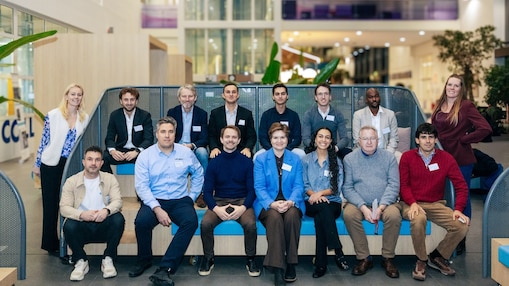
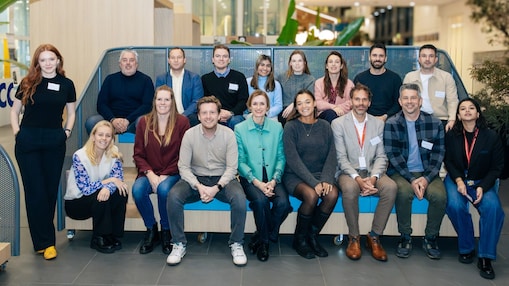
LeapSprong Amsterdam is een innovatieprogramma van de gemeente Amsterdam, start-upaccelerator Rockstart en de Energy Transition Campus Amsterdam (ETCA), waar Shell met ruim 30 andere partijen werkt aan oplossingen in de energietransitie. LeapSprong Amsterdam richt zich op de energietransitie in de haven en industrie. Start-ups kunnen hun oplossing aandragen en de beste ideeën worden geselecteerd om verder te ontwikkelen. De winnende start-ups krijgentoegang tot de laboratoria van de ETCA, begeleiding én kans op een proef in de regio. Aan de 2025-editie van LeapSprong — de tweede in het bestaan van het programma — doen de volgende acht start-ups mee: Hexwise, J4Energy, 0Plastic, H2Terminals, HyER Power, SeaO2, Upheat en Snerpa Power.

Een rode vlag en verzilveren
Boukhelifa let op duidelijke antwoorden tijdens de selectiegesprekken van de start-ups die mee mogen doen aan LeapSprong. “Lossen ze een probleem op dat het waard is om op te lossen? En kun je het opschalen? Klopt het technisch gezien? Begrijpen ze de waardeketen, de markt en de concurrentie? En, snappen ze waarom een potentiële klant hun product of dienst zou moeten kiezen? Als ze de concurrentie onderschatten, is dat voor mij een rode vlag. Je moet wel weten tegen wie en wat je het opneemt.”
Het netwerk versterken
En dan is het zaak om die kansen te verzilveren. En daarvoor is Amsterdam volgens Boukhelifa een goed begin. “De hoofdstedelijke regio is een aantrekkelijke broedplaats voor duurzaamheid en innovatie. Alles is er: universiteiten, bedrijven, industrie, ambities en uitdagingen. Als we met het slim inzetten van het enorme LeapSprong-netwerk enkele universele problemen kunnen aanpakken, kan wat in Amsterdam wordt bedacht een sterk voorbeeld zijn voor de rest van Nederland, of andere landen.”
Daarnaast gaat het in het samenspel tussen Shell en de start-ups voor Boukhelifa meer om kennis samen te brengen dan enkel adviseren. “We moeten ontdekken wat de complementaire vaardigheden zijn en samen een leercurve doorlopen om een gezamenlijk doel te bereiken.”
Gedeelde expertise
Boukhelifa noemt PropelH2 als een project waar dat goed is gelukt PropelH2. Het is een samenwerking tussen Shell en Woodside Energy — met Air Liquide, CB&I, and HD Korea Shipping and Offshore Engineering (HD KSOE) als ondersteunende partners. In PropelH2 wordt onderzocht hoe de hele keten van vloeibare waterstof werkt. “En of alles technisch en financieel haalbaar is”, zegt Boukhelifa. Volgens haar heeft één techniek ontwikkelen geen zin, als je het hele systeem niet goed begrijpt.
PropelH2 laat volgens Boukhelifa zien dat barrières kunnen worden doorbroken. “Iedereen praat veel over samenwerken, maar het wordt maar zelden bereikt. Elk bedrijf wil van nature haar intellectueel eigendom beschermen, wat kennis delen lastig kan maken. In dit geval hebben we een manier gevonden om waardevolle en aanvullende kennis uit te wisselen.”

Wie is Linda Boukhelifa?
Linda Boukehilfa heeft twee mastertitels: een MSc in werktuigbouwkunde en luchtvaarttechniek aan de Franse École Nationale Supérieure de Mécanique et d’Aéronautique (ENSMA) en een MSc in petroleumtechniek aan de Britse Heriot-Watt University. Ze begon haar carrière bij Schlumberger, een dienstverlener in de olieindustrie, waar ze negen jaar werkte voordat ze in 2009 bij Shell kwam. Nu leidt ze bij Shell een wereldwijd team dat werkt aan waterstoftechnologie, inclusief toonaangevende projecten als PropelH2.
Jongleren
Alessandro Sutto is een andere Shell-professional betrokken bij het LeapSprong-programma. Hij is expert in energieopslag. Voor zijn overstap naar Shell werkte hij jarenlang bij een Nederlandse start-up in flowbatterijen. Dat zijn batterijen waarbinnen elektrisch geladen atomen via een membraan van de ene vloeistof naar de andere vloeistof gaan en zo energie opwekken.
“De baan bij de start-up was de reden dat ik van Italië naar Nederland verhuisde. In een start-up leer je veel, maar het is net jongleren: de middelen zijn beperkt en connecties zijn moeilijk te maken. Daarnaast is het moeilijk anderen te laten geloven in je waardevolle oplossing als je geen grote naam achter je hebt. Programma’s als LeapSprong kunnen dan echt een boost geven.”
Klein en groot
Inmiddels werkt Sutto al weer drie jaar voor Shell, naar eigen zeggen omdat hij zich verder wilde specialiseren. “Start-ups zijn relatief wendbaar en nemen snelle beslissingen. Bij een groot groot bedrijf als Shell kun je enorm veel leren van eerdere projecten en ervaren collega’s. Toch is samenwerking tussen grote en kleine partijen cruciaal. Het helpt beide groeien én houdt ons scherp op wat er speelt. Bovendien is het inspirerend om die energie en focus van jonge ondernemers te zien.”
Offshore wind
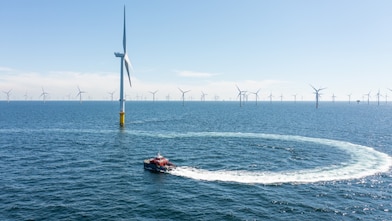
Sutto noemt CrossWind - een joint venture van Shell en Eneco dat het windpark Hollandse Kust Noord heeft ontwikkelt – als een goed voorbeeld van samenwerking binnen de energiesector. Bij CrossWind zijn nog veel meer partijen betrokken dan alleen de twee energieconcerns.
Innovaties laten landen
De uitdagingen zijn complex, maar de ambitie van LeapSprong is duidelijk: technologische innovaties laten landen in de Amsterdamse regio, en daarbuiten. Door de wendbaarheid en vernieuwende ideëen van start-ups te koppelen aan de schaal en expertise van gevestigde spelers, probeert LeapSprong kansen te ontsluiten voor een duurzamere industrie. “Het is inspirerend om die energie te voelen – en om samen te ontdekken hoe we elkaar kunnen aanvullen om echt impact te maken", sluit Linda Boukhelifa af.

Wie is Alessandro Sutto?
Alessandro Sutto behaalde zowel zijn bachelordiploma in energietechniek als zijn master in elektrotechniek aan de Universiteit van Padua in Italië. Na ervaring op te hebben gedaan bij een Nederlandse start-up in flowbatterijen, werkt hij nu bij Shell als expert in energieopslag. Zijn achtergrond combineert technische diepgang met praktijkervaring in innovatieve projecten, waaronder offshore energieopslag bij Crosswind.
Cautionary note
Cautionary note
The companies in which Shell plc directly and indirectly owns investments are separate legal entities. In this announcement “Shell”, “Shell Group” and “Group” are sometimes used for convenience where references are made to Shell plc and its subsidiaries in general. Likewise, the words “we”, “us” and “our” are also used to refer to Shell plc and its subsidiaries in general or to those who work for them. These terms are also used where no useful purpose is served by identifying the particular entity or entities. ‘‘Subsidiaries’’, “Shell subsidiaries” and “Shell companies” as used in this announcement refer to entities over which Shell plc either directly or indirectly has control. The term “joint venture”, “joint operations”, “joint arrangements”, and “associates” may also be used to refer to a commercial arrangement in which Shell has a direct or indirect ownership interest with one or more parties. The term “Shell interest” is used for convenience to indicate the direct and/or indirect ownership interest held by Shell in an entity or unincorporated joint arrangement, after exclusion of all third-party interest.
Forward-looking Statements
This announcement contains forward-looking statements (within the meaning of the U.S. Private Securities Litigation Reform Act of 1995) concerning the financial condition, results of operations and businesses of Shell. All statements other than statements of historical fact are, or may be deemed to be, forward-looking statements. Forward-looking statements are statements of future expectations that are based on management’s current expectations and assumptions and involve known and unknown risks and uncertainties that could cause actual results, performance or events to differ materially from those expressed or implied in these statements. Forward-looking statements include, among other things, statements concerning the potential exposure of Shell to market risks and statements expressing management’s expectations, beliefs, estimates, forecasts, projections and assumptions. These forward-looking statements are identified by their use of terms and phrases such as “aim”; “ambition”; ‘‘anticipate’’; ‘‘believe’’; “commit”; “commitment”; ‘‘could’’; ‘‘estimate’’; ‘‘expect’’; ‘‘goals’’; ‘‘intend’’; ‘‘may’’; “milestones”; ‘‘objectives’’; ‘‘outlook’’; ‘‘plan’’; ‘‘probably’’; ‘‘project’’; ‘‘risks’’; “schedule”; ‘‘seek’’; ‘‘should’’; ‘‘target’’; ‘‘will’’; “would” and similar terms and phrases. There are a number of factors that could affect the future operations of Shell and could cause those results to differ materially from those expressed in the forward-looking statements included in this announcement, including (without limitation): (a) price fluctuations in crude oil and natural gas; (b) changes in demand for Shell’s products; (c) currency fluctuations; (d) drilling and production results; (e) reserves estimates; (f) loss of market share and industry competition; (g) environmental and physical risks; (h) risks associated with the identification of suitable potential acquisition properties and targets, and successful negotiation and completion of such transactions; (i) the risk of doing business in developing countries and countries subject to international sanctions; (j) legislative, judicial, fiscal and regulatory developments including regulatory measures addressing climate change; (k) economic and financial market conditions in various countries and regions; (l) political risks, including the risks of expropriation and renegotiation of the terms of contracts with governmental entities, delays or advancements in the approval of projects and delays in the reimbursement for shared costs; (m) risks associated with the impact of pandemics, such as the COVID-19 (coronavirus) outbreak, regional conflicts, such as the Russia-Ukraine war, and a significant cybersecurity breach; and (n) changes in trading conditions. No assurance is provided that future dividend payments will match or exceed previous dividend payments. All forward-looking statements contained in this announcement are expressly qualified in their entirety by the cautionary statements contained or referred to in this section. Readers should not place undue reliance on forward-looking statements. Additional risk factors that may affect future results are contained in Shell plc’s Form 20-F for the year ended December 31, 2024 (available at www.shell.com/investors/news-and-filings/sec-filings.html and www.sec.gov). These risk factors also expressly qualify all forward-looking statements contained in this announcement and should be considered by the reader. Each forward-looking statement speaks only as of the date of this announcement, November 27, 2025. Neither Shell plc nor any of its subsidiaries undertake any obligation to publicly update or revise any forward-looking statement as a result of new information, future events or other information. In light of these risks, results could differ materially from those stated, implied or inferred from the forward-looking statements contained in this announcement.
Shell’s Net Carbon Intensity
Also, in this announcement we may refer to Shell’s “Net Carbon Intensity” (NCI), which includes Shell’s carbon emissions from the production of our energy products, our suppliers’ carbon emissions in supplying energy for that production and our customers’ carbon emissions associated with their use of the energy products we sell. Shell’s NCI also includes the emissions associated with the production and use of energy products produced by others which Shell purchases for resale. Shell only controls its own emissions. The use of the terms Shell’s “Net Carbon Intensity” or NCI are for convenience only and not intended to suggest these emissions are those of Shell plc or its subsidiaries.
Shell’s net-zero emissions target
Shell’s operating plan, outlook and budgets are forecasted for a ten-year period and are updated every year. They reflect the current economic environment and what we can reasonably expect to see over the next ten years. Accordingly, they reflect our Scope 1, Scope 2 and NCI targets over the next ten years. However, Shell’s operating plans cannot reflect our 2050 net-zero emissions target, as this target is currently outside our planning period. In the future, as society moves towards net-zero emissions, we expect Shell’s operating plans to reflect this movement. However, if society is not net zero in 2050, as of today, there would be significant risk that Shell may not meet this target.
Forward-looking non-GAAP measures
This announcement may contain certain forward-looking non-GAAP measures such as cash capital expenditure and divestments. We are unable to provide a reconciliation of these forward-looking non-GAAP measures to the most comparable GAAP financial measures because certain information needed to reconcile those non-GAAP measures to the most comparable GAAP financial measures is dependent on future events some of which are outside the control of Shell, such as oil and gas prices, interest rates and exchange rates. Moreover, estimating such GAAP measures with the required precision necessary to provide a meaningful reconciliation is extremely difficult and could not be accomplished without unreasonable effort. Non-GAAP measures in respect of future periods which cannot be reconciled to the most comparable GAAP financial measure are calculated in a manner which is consistent with the accounting policies applied in Shell plc’s consolidated financial statements.
The contents of websites referred to in this announcement do not form part of this announcement.
We may have used certain terms, such as resources, in this announcement that the United States Securities and Exchange Commission (SEC) strictly prohibits us from including in our filings with the SEC. Investors are urged to consider closely the disclosure in our Form 20-F, File No 1-32575, available on the SEC website www.sec.gov
LeapSprong: joining forces for a more sustainable industry
27 Nov. 2025
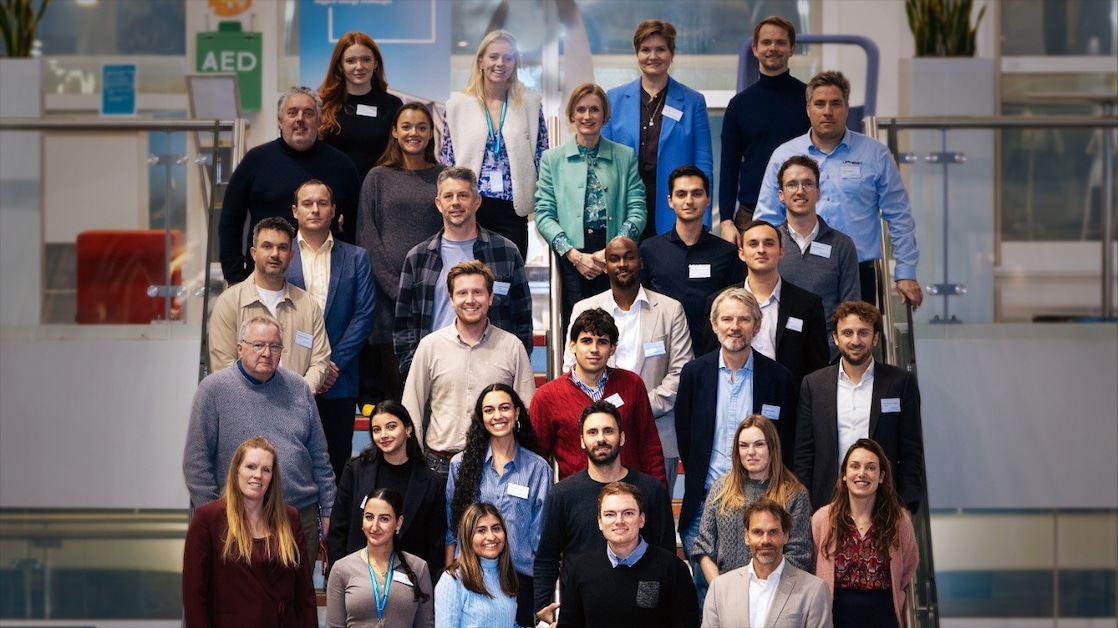
Innovation, collaboration, start-ups: the ideal ingredients for renewal. And that is urgently needed within an industrial cluster that still largely runs on fossil fuels but is determined to become more sustainable. Eight start-ups are ready to explore opportunities to accelerate the energy transition in the region of Amsterdam, the Netherlands. They are taking part in LeapSprong: an innovation programme aimed at tackling regional challenges in the energy transition.
It’s a typically drizzly Monday morning in November when the second edition of LeapSprong Amsterdam kicks off at the Energy Transition Campus Amsterdam (ETCA). The ETCA is organising this together with the City of Amsterdam. There are still plenty of opportunities for the region to become more sustainable. That applies to the world’s largest petrol port (Amsterdam), the national airport of Amsterdam-Schiphol, the steel sector in the IJmond area, and the food industry in the Zaan region—there is plenty to do. Experts, mentors and a wide range of regional partners are working together to select the right start-ups for the LeapSprong programme and help them move forward.
Professionals who assess and support
Linda Boukhelifa is a hydrogen expert. Based at the Shell lab of the ETCA campus, the French national leads a global technology team working on scaling up hydrogen solutions—from production to infrastructure. At LeapSprong, she is one of the professionals who evaluates and supports the start-ups.
“When you’ve been in an industry for a long time, you tend to stick to the beaten track. Start-ups bring fresh energy and challenge us to think differently,” says Boukhelifa. She values how young companies come up with bold solutions. “The world is changing fast. Start-ups dare to break conventions, and that’s exactly what’s needed to find new alternatives.”
She reckons it is great that the region and the port are involved. “Different peers in the industry give you new perspectives that spark creativity. Collaboration beyond our familiar environment is essential to shape the future of energy.”
What is LeapSprong?
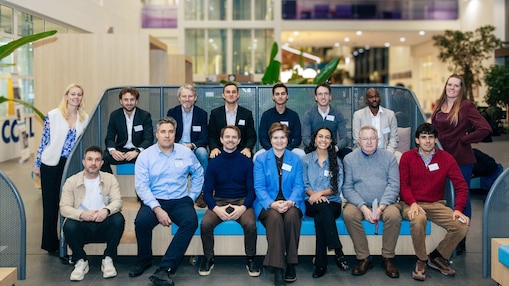
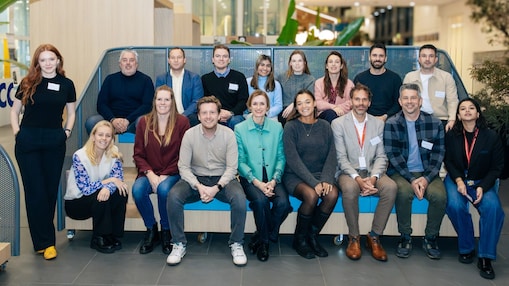
LeapSprong Amsterdam is an innovation programme run by the City of Amsterdam, start-up accelerator Rockstart, and the Energy Transition Campus Amsterdam (ETCA). At the latter, Shell cooperates with more than 30 partners on solutions for the energy transition. LeapSprong Amsterdam focuses on the energy transition in the port and industrial sectors. Start-ups can submit their solutions, and the best ideas are selected for further development. The winning start-ups gain access to ETCA’s laboratories, receive guidance, and have the chance to run a pilot in the region. The 2025 edition of LeapSprong—the second since the programme began—features the following eight start-ups: Hexwise, J4Energy, 0Plastic, H2Terminals, HyER Power, SeaO2, Upheat, and Snerpa Power.

A red flag and making the most of opportunities
Boukhelifa looks for clear answers during the selection interviews with the start-ups that will join LeapSprong. “Are they solving a problem that’s worth solving? And can it be scaled up? Does it make sense from a technological perspective? Do they understand the value chain, the market and the competition? And do they grasp why a potential customer should choose their product or service? If they underestimate the competition, that’s a red flag for me. You need to know who and what you’re up against.”
Strengthening the network
Turning those opportunities into reality is the next step. Boukhelifa hopes to see the LeapSprong network grow even stronger. “Amsterdam is an attractive hub with a focus on sustainability and innovation. It has everything: universities, businesses, industry, ambition and challenges. If we can leverage this network to tackle issues that aren’t unique to Amsterdam, it could set a powerful example for the rest of the Netherlands – and beyond.”
For Boukhelifa, interaction between Shell and startups is about more than advice. “It’s about combining knowledge, discovering complementary skills and sharing a learning curve to reach a common goal.”
Shared expertise
Boukhelifa cites PropelH2 as a project where this has worked well. PropelH2 is a collaboration between Shell and Woodside Energy — with Air Liquide, CB&I, and HD Korea Shipping and Offshore Engineering (HD KSOE) as supporting partners. PropelH2 explores how the entire liquid hydrogen chain works. “We explored the entire liquid hydrogen value chain to understand techno-economic feasibility,” Boukhelifa says. In her view, developing a single technology makes no sense if you do not fully understand the entire system.
PropelH2, according to Boukhelifa, shows that barriers can be broken. “Everyone talks about collaboration, but it’s rarely achieved. Every company naturally want to protect its intellectual property, which can make sharing difficult. In this project, we found a way to exchange valuable and complementary knowledge.”

Who is Linda Boukhelifa?
Linda Boukhelifa holds two master’s degrees: an MSc in Mechanical & Aeronautical Engineering from École Nationale Supérieure de Mécanique et d’Aéronautique (ENSMA) in France and an MSc in Petroleum Engineering from Heriot-Watt University in the United Kingdom. She began her career at Schlumberger, an oil industry service provider, where she worked for nine years before joining Shell in 2009. Today, she leads a global team focused on hydrogen technology, with notable projects such as PropelH2.
Juggling
Alessandro Sutto is another Shell professional involved in the LeapSprong programme. He is an expert in energy storage. Before joining Shell, he spent years working at a Dutch start-up specialising in flow batteries. These are batteries in which electrically charged atoms move through a membrane from one liquid to another, generating energy.
"The job at the start-up company was why I moved from Italy to the Netherlands. One learns a lot in a start-up, but it’s like juggling: resources are limited and connections are hard to make. Without a big name backing you, credibility is tough—even if your solution is valuable. Programmes like LeapSprong can really help and give startups a boost," Sutto says.
Small and large
Sutto has been with Shell for three years. He says he moved jobs as he wanted to specialise further in his field. “Start-ups are relatively agile and make quick decisions. At a large company like Shell, one can learn a lot from previous projects and experienced colleagues. Collaboration between big and small players is crucial. It helps both to grow and keeps us sharp. Plus, it’s inspiring to see the energy and focus of young entrepreneurs.”
Offshore energy storage
Sutto cites CrossWind—a joint venture between Shell and Eneco that developed the Hollandse Kust Noord wind farm off the coast of the Netherlands—as a good example of collaboration in the energy sector. Many more parties are involved in CrossWind than just the two energy companies.
Landing innovations
The challenges are complex, but LeapSprong’s ambition is clear: to anchor technological innovations in the Amsterdam region and beyond. By combining the agility and fresh ideas of start-ups with the scale and expertise of established players, LeapSprong aims to unlock opportunities for a more sustainable industry. “It’s inspiring to feel that energy—and to explore together how we can complement each other to create real impact,” Linda Boukhelifa concludes.

Who is Alessandro Sutto?
Alessandro Sutto earned both his bachelor’s in Energy Engineering and his master’s in Electrical Engineering at the University of Padua in Italy. After gaining experience at a Dutch start-up specialising in flow batteries, he now works at Shell as an energy storage expert. His background combines technical depth with hands-on experience in innovative projects, including offshore energy storage at CrossWind.
Cautionary note
Cautionary note
The companies in which Shell plc directly and indirectly owns investments are separate legal entities. In this announcement “Shell”, “Shell Group” and “Group” are sometimes used for convenience where references are made to Shell plc and its subsidiaries in general. Likewise, the words “we”, “us” and “our” are also used to refer to Shell plc and its subsidiaries in general or to those who work for them. These terms are also used where no useful purpose is served by identifying the particular entity or entities. ‘‘Subsidiaries’’, “Shell subsidiaries” and “Shell companies” as used in this announcement refer to entities over which Shell plc either directly or indirectly has control. The term “joint venture”, “joint operations”, “joint arrangements”, and “associates” may also be used to refer to a commercial arrangement in which Shell has a direct or indirect ownership interest with one or more parties. The term “Shell interest” is used for convenience to indicate the direct and/or indirect ownership interest held by Shell in an entity or unincorporated joint arrangement, after exclusion of all third-party interest.
Forward-looking Statements
This announcement contains forward-looking statements (within the meaning of the U.S. Private Securities Litigation Reform Act of 1995) concerning the financial condition, results of operations and businesses of Shell. All statements other than statements of historical fact are, or may be deemed to be, forward-looking statements. Forward-looking statements are statements of future expectations that are based on management’s current expectations and assumptions and involve known and unknown risks and uncertainties that could cause actual results, performance or events to differ materially from those expressed or implied in these statements. Forward-looking statements include, among other things, statements concerning the potential exposure of Shell to market risks and statements expressing management’s expectations, beliefs, estimates, forecasts, projections and assumptions. These forward-looking statements are identified by their use of terms and phrases such as “aim”; “ambition”; ‘‘anticipate’’; ‘‘believe’’; “commit”; “commitment”; ‘‘could’’; ‘‘estimate’’; ‘‘expect’’; ‘‘goals’’; ‘‘intend’’; ‘‘may’’; “milestones”; ‘‘objectives’’; ‘‘outlook’’; ‘‘plan’’; ‘‘probably’’; ‘‘project’’; ‘‘risks’’; “schedule”; ‘‘seek’’; ‘‘should’’; ‘‘target’’; ‘‘will’’; “would” and similar terms and phrases. There are a number of factors that could affect the future operations of Shell and could cause those results to differ materially from those expressed in the forward-looking statements included in this announcement, including (without limitation): (a) price fluctuations in crude oil and natural gas; (b) changes in demand for Shell’s products; (c) currency fluctuations; (d) drilling and production results; (e) reserves estimates; (f) loss of market share and industry competition; (g) environmental and physical risks; (h) risks associated with the identification of suitable potential acquisition properties and targets, and successful negotiation and completion of such transactions; (i) the risk of doing business in developing countries and countries subject to international sanctions; (j) legislative, judicial, fiscal and regulatory developments including regulatory measures addressing climate change; (k) economic and financial market conditions in various countries and regions; (l) political risks, including the risks of expropriation and renegotiation of the terms of contracts with governmental entities, delays or advancements in the approval of projects and delays in the reimbursement for shared costs; (m) risks associated with the impact of pandemics, such as the COVID-19 (coronavirus) outbreak, regional conflicts, such as the Russia-Ukraine war, and a significant cybersecurity breach; and (n) changes in trading conditions. No assurance is provided that future dividend payments will match or exceed previous dividend payments. All forward-looking statements contained in this announcement are expressly qualified in their entirety by the cautionary statements contained or referred to in this section. Readers should not place undue reliance on forward-looking statements. Additional risk factors that may affect future results are contained in Shell plc’s Form 20-F for the year ended December 31, 2024 (available at www.shell.com/investors/news-and-filings/sec-filings.html and www.sec.gov). These risk factors also expressly qualify all forward-looking statements contained in this announcement and should be considered by the reader. Each forward-looking statement speaks only as of the date of this announcement, November 27, 2025. Neither Shell plc nor any of its subsidiaries undertake any obligation to publicly update or revise any forward-looking statement as a result of new information, future events or other information. In light of these risks, results could differ materially from those stated, implied or inferred from the forward-looking statements contained in this announcement.
Shell’s Net Carbon Intensity
Also, in this announcement we may refer to Shell’s “Net Carbon Intensity” (NCI), which includes Shell’s carbon emissions from the production of our energy products, our suppliers’ carbon emissions in supplying energy for that production and our customers’ carbon emissions associated with their use of the energy products we sell. Shell’s NCI also includes the emissions associated with the production and use of energy products produced by others which Shell purchases for resale. Shell only controls its own emissions. The use of the terms Shell’s “Net Carbon Intensity” or NCI are for convenience only and not intended to suggest these emissions are those of Shell plc or its subsidiaries.
Shell’s net-zero emissions target
Shell’s operating plan, outlook and budgets are forecasted for a ten-year period and are updated every year. They reflect the current economic environment and what we can reasonably expect to see over the next ten years. Accordingly, they reflect our Scope 1, Scope 2 and NCI targets over the next ten years. However, Shell’s operating plans cannot reflect our 2050 net-zero emissions target, as this target is currently outside our planning period. In the future, as society moves towards net-zero emissions, we expect Shell’s operating plans to reflect this movement. However, if society is not net zero in 2050, as of today, there would be significant risk that Shell may not meet this target.
Forward-looking non-GAAP measures
This announcement may contain certain forward-looking non-GAAP measures such as cash capital expenditure and divestments. We are unable to provide a reconciliation of these forward-looking non-GAAP measures to the most comparable GAAP financial measures because certain information needed to reconcile those non-GAAP measures to the most comparable GAAP financial measures is dependent on future events some of which are outside the control of Shell, such as oil and gas prices, interest rates and exchange rates. Moreover, estimating such GAAP measures with the required precision necessary to provide a meaningful reconciliation is extremely difficult and could not be accomplished without unreasonable effort. Non-GAAP measures in respect of future periods which cannot be reconciled to the most comparable GAAP financial measure are calculated in a manner which is consistent with the accounting policies applied in Shell plc’s consolidated financial statements.
The contents of websites referred to in this announcement do not form part of this announcement.
We may have used certain terms, such as resources, in this announcement that the United States Securities and Exchange Commission (SEC) strictly prohibits us from including in our filings with the SEC. Investors are urged to consider closely the disclosure in our Form 20-F, File No 1-32575, available on the SEC website www.sec.gov