Plastic recycling, een nieuwe weg
Wist je dat het plastic van je flesje water, de verpakking van je eten en het interieur van je auto niet altijd even gemakkelijk te recyclen valt? Hoe het dan wel kan, weet Paul de Hoog, business opportunity manager bij Shell.

Tekst: Marcel Burger. Beeld: David and Lee Jacobs, Sebastian Vonmoos, Getty Images.
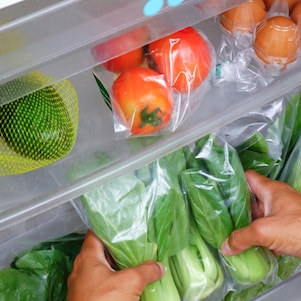
Plastic is een heel erg mooi materiaal, vindt De Hoog. “Je gebruikt het om bijvoorbeeld vliegtuigen lichter te maken, of voor autobatterijen, of voor medicinale toepassingen. Of voor het folietje om je komkommer, zodat die een week langer houdbaar blijft. Maar we gaan niet goed om met plastic.”
In veel landen is er al wel een prima afvalinzameling van plastic, maar wordt er toch nog steeds veel afval verbrand. In Nederland is dat meer dan de helft van al het ingezamelde plastic afval. “En dat is natuurlijk ook een hele berg CO2-uitstoot”, stelt Paul.
Scheiden is schoner
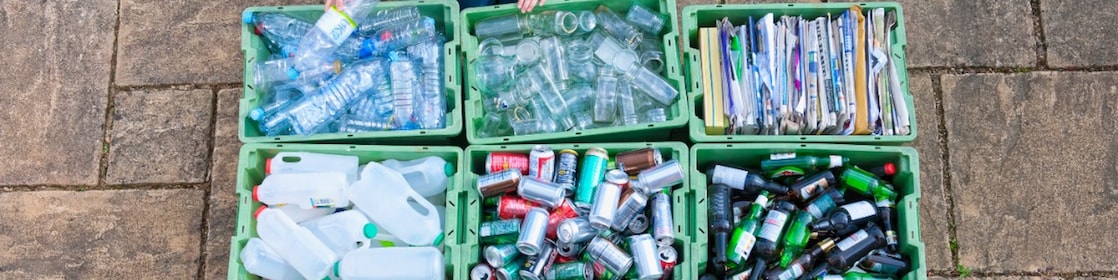
De meeste Nederlandse huishoudens scheiden het plastic van andere soorten afval, al wordt dit werk nu vaak ook door machines bij de afvalverwerkers gedaan. Waarom moeten we ons daar druk om maken? De Hoog: “Het gescheiden afval van de huishoudens is schoner dan wanneer het plastic uit de grote afvalberg moet worden gehaald.” Het kost dan simpelweg minder moeite om het recyclen te starten.
Dat omvormen voor hergebruik kan op twee manieren: mechanisch recyclen en chemisch recyclen. Het eerste bestaat al heel lang, het tweede is relatief nieuw.
Mechanisch versus chemisch recyclen
Om te beginnen: mechanisch recyclen, hoe gaat dat in zijn werk? De Hoog: “Je sorteert het afval op de verschillende types plastic. Bijvoorbeeld alle frisdrankflessen apart. De mechanische recycler wast het plastic en maakt er pellets – kleine plastic korrels – van. Van die pellets kunnen weer nieuwe flessen worden gemaakt.”
Bij chemisch recyclen ga je terug naar de basisbestandsdelen van kunststof, zegt De Hoog. “Je verwarmt het plastic tot heel hoge temperaturen. Daardoor valt het plastic uit elkaar in een olie. Dat noemen we pyrolyseolie. Die kan als grondstof worden gebruikt voor het chemische proces waarmee de bestandsdelen van plastic worden gemaakt.”
Shell heeft een aantal grote locaties waar basischemicaliën voor dagelijks gebruik worden gemaakt. Drie in Azië, vier in Noord-Amerika en in Europa drie: Rheinland in Duitsland, Mossmorran in Groot-Brittannië en Moerdijk in Nederland. En juist het Chemicals Park Moerdijk is de eerste die chemisch gerecycled plastic, in de vorm van pyrolyseolie, op schaal kan gebruiken als grondstof voor het maken van nieuwe bouwstenen voor plastic.
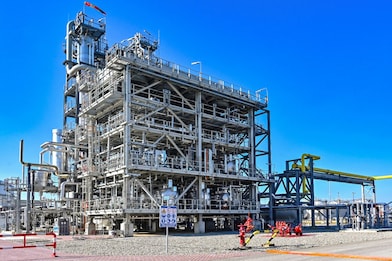
Chemisch recyclen door Shell
Hoe werkt chemisch recyclen van plastic? Wat is pyrolyse-olie? Wat doet de MDU op Shell Chemicals Park Moerdijk?

Voedselverpakkingen een uitdaging
Maar waarom is dit zo belangrijk? “Vooral voedselverpakkingen zijn voor mechanisch recyclen echt een uitdaging”, zegt De Hoog. “Zo kun je met mechanisch recyclen van gebruikt plastic geen folie meer maken. Mechanisch recyclen maakt de kunststof hard. Prima voor plantenpotten, bloembakken en tuinstoelen. Of, in theorie, frisdrankflessen.
“Maar omdat er nog veel kleurstoffen in mechanisch gerecycled plastic zitten, is het ook verboden ze opnieuw voor voedselverpakkingen te gebruiken. Je wilt die chemicaliën immers niet in je eten. Met chemisch recyclen kun je wel opnieuw folies maken van gerecycled plastic afval, en kun je er weer ook weer verpakkingen voor etenswaar van maken.”
“Een grote wasmachine”
Voordat er van pyrolyseolie, gemaakt dus van chemisch gerecycled plastic, nieuw plastic kan worden gemaakt, moeten eerst de laatste onzuiverheden er worden uitgefilterd. Daarvoor is er op Moerdijk in november vorig jaar de zogenoemde Market Development Upgrader (MDU) geopend. Die filtert het vuil eruit.
De Hoog noemt de MDU “een grote wasmachine” voor pyrolyseolie. Hoe dat in detail werkt, is te lezen op Shell.nl/circulairplastic
Waarom is Shell in plastic recycling gestapt?
Volgens De Hoog is Shell met de MDU op Moerdijk in chemische recycling gestapt om twee redenen. “Als eerste vragen onze klanten of wij ze kunnen helpen aan duurzamere bestandsdelen voor de soms moeilijk te recyclen plastic producten die zij maken.
Ten tweede krijgen onze eigen chemische processen nu nog vooral fossiele grondstoffen uit onze raffinaderijen. Die fossiele grondstoffen (nafta; red.) willen we vervangen door meer circulaire grondstoffen.” In jargon uit de industrie worden die grondstoffen overigens ook wel “voeding” (voor de fabriek) of “feedstock” genoemd.
“Oude” mechanische recycling opdoeken?
De mogelijkheden om de chemische recycling van plastic op te schalen zijn goed, stelt De Hoog. De MDU op Moerdijk kan nu al het plastic afval verwerken van circa 2,5 miljoen mensen. Met andere woorden, zet nog zes van zulke MDU’s neer in Nederland en je kunt de “oude” mechanische recyclingfabrieken opdoeken. Maar dat vindt Paul geen goed idee.
“Mechanische recycling is echt een heel mooie technologie waarbij het plastic als plastic blijft behouden en het relatief weinig energie kost om er nieuwe kunststofproducten van te maken. Daarnaast heb je chemische recycling nodig om die ruim 50% van het plastic dat nog niet wordt gerecycled uit de verbrandingsoven te halen voordat het erin gaat.”
“Plastic niet meer zien als afval”
Dus allebei laten bestaan? “Ik zie dat chemische en mechanische recycling hand in hand gaan. Waar ik naartoe wil is dat we plastic, net als metaal en glas, niet meer als afval, maar als recyclebaar product zien. Dus, als nieuwe grondstof. Dan worden Nederland en Shell voor hun grondstoffen minder afhankelijk van andere landen (of andere leveranciers; red.). En dan zullen we bovendien minder verbranden en dus ook minder CO2 uitstoten.”
Paul de Hoog, business opportunity manager bij Shell Nederland"Waar ik naartoe wil is dat we plastic, niet meer als afval, maar als nieuwe grondstof zien."
Cautionary note
Cautionary note
The companies in which Shell plc directly and indirectly owns investments are separate legal entities. In this announcement “Shell”, “Shell Group” and “Group” are sometimes used for convenience where references are made to Shell plc and its subsidiaries in general. Likewise, the words “we”, “us” and “our” are also used to refer to Shell plc and its subsidiaries in general or to those who work for them. These terms are also used where no useful purpose is served by identifying the particular entity or entities. ‘‘Subsidiaries’’, “Shell subsidiaries” and “Shell companies” as used in this announcement refer to entities over which Shell plc either directly or indirectly has control. The term “joint venture”, “joint operations”, “joint arrangements”, and “associates” may also be used to refer to a commercial arrangement in which Shell has a direct or indirect ownership interest with one or more parties. The term “Shell interest” is used for convenience to indicate the direct and/or indirect ownership interest held by Shell in an entity or unincorporated joint arrangement, after exclusion of all third-party interest.
Forward-looking Statements
This announcement contains forward-looking statements (within the meaning of the U.S. Private Securities Litigation Reform Act of 1995) concerning the financial condition, results of operations and businesses of Shell. All statements other than statements of historical fact are, or may be deemed to be, forward-looking statements. Forward-looking statements are statements of future expectations that are based on management’s current expectations and assumptions and involve known and unknown risks and uncertainties that could cause actual results, performance or events to differ materially from those expressed or implied in these statements. Forward-looking statements include, among other things, statements concerning the potential exposure of Shell to market risks and statements expressing management’s expectations, beliefs, estimates, forecasts, projections and assumptions. These forward-looking statements are identified by their use of terms and phrases such as “aim”; “ambition”; ‘‘anticipate’’; ‘‘believe’’; “commit”; “commitment”; ‘‘could’’; ‘‘estimate’’; ‘‘expect’’; ‘‘goals’’; ‘‘intend’’; ‘‘may’’; “milestones”; ‘‘objectives’’; ‘‘outlook’’; ‘‘plan’’; ‘‘probably’’; ‘‘project’’; ‘‘risks’’; “schedule”; ‘‘seek’’; ‘‘should’’; ‘‘target’’; ‘‘will’’; “would” and similar terms and phrases. There are a number of factors that could affect the future operations of Shell and could cause those results to differ materially from those expressed in the forward-looking statements included in this announcement, including (without limitation): (a) price fluctuations in crude oil and natural gas; (b) changes in demand for Shell’s products; (c) currency fluctuations; (d) drilling and production results; (e) reserves estimates; (f) loss of market share and industry competition; (g) environmental and physical risks; (h) risks associated with the identification of suitable potential acquisition properties and targets, and successful negotiation and completion of such transactions; (i) the risk of doing business in developing countries and countries subject to international sanctions; (j) legislative, judicial, fiscal and regulatory developments including regulatory measures addressing climate change; (k) economic and financial market conditions in various countries and regions; (l) political risks, including the risks of expropriation and renegotiation of the terms of contracts with governmental entities, delays or advancements in the approval of projects and delays in the reimbursement for shared costs; (m) risks associated with the impact of pandemics, such as the COVID-19 (coronavirus) outbreak, regional conflicts, such as the Russia-Ukraine war, and a significant cybersecurity breach; and (n) changes in trading conditions. No assurance is provided that future dividend payments will match or exceed previous dividend payments. All forward-looking statements contained in this announcement are expressly qualified in their entirety by the cautionary statements contained or referred to in this section. Readers should not place undue reliance on forward-looking statements. Additional risk factors that may affect future results are contained in Shell plc’s Form 20-F for the year ended December 31, 2024 (available at www.shell.com/investors/news-and-filings/sec-filings.html and www.sec.gov). These risk factors also expressly qualify all forward-looking statements contained in this announcement and should be considered by the reader. Each forward-looking statement speaks only as of the date of this announcement, May 22, 2025. Neither Shell plc nor any of its subsidiaries undertake any obligation to publicly update or revise any forward-looking statement as a result of new information, future events or other information. In light of these risks, results could differ materially from those stated, implied or inferred from the forward-looking statements contained in this announcement.
Shell’s Net Carbon Intensity
Also, in this announcement we may refer to Shell’s “Net Carbon Intensity” (NCI), which includes Shell’s carbon emissions from the production of our energy products, our suppliers’ carbon emissions in supplying energy for that production and our customers’ carbon emissions associated with their use of the energy products we sell. Shell’s NCI also includes the emissions associated with the production and use of energy products produced by others which Shell purchases for resale. Shell only controls its own emissions. The use of the terms Shell’s “Net Carbon Intensity” or NCI are for convenience only and not intended to suggest these emissions are those of Shell plc or its subsidiaries.
Shell’s net-zero emissions target
Shell’s operating plan, outlook and budgets are forecasted for a ten-year period and are updated every year. They reflect the current economic environment and what we can reasonably expect to see over the next ten years. Accordingly, they reflect our Scope 1, Scope 2 and NCI targets over the next ten years. However, Shell’s operating plans cannot reflect our 2050 net-zero emissions target, as this target is currently outside our planning period. In the future, as society moves towards net-zero emissions, we expect Shell’s operating plans to reflect this movement. However, if society is not net zero in 2050, as of today, there would be significant risk that Shell may not meet this target.
Forward-looking non-GAAP measures
This announcement may contain certain forward-looking non-GAAP measures such as cash capital expenditure and divestments. We are unable to provide a reconciliation of these forward-looking non-GAAP measures to the most comparable GAAP financial measures because certain information needed to reconcile those non-GAAP measures to the most comparable GAAP financial measures is dependent on future events some of which are outside the control of Shell, such as oil and gas prices, interest rates and exchange rates. Moreover, estimating such GAAP measures with the required precision necessary to provide a meaningful reconciliation is extremely difficult and could not be accomplished without unreasonable effort. Non-GAAP measures in respect of future periods which cannot be reconciled to the most comparable GAAP financial measure are calculated in a manner which is consistent with the accounting policies applied in Shell plc’s consolidated financial statements.
The contents of websites referred to in this announcement do not form part of this announcement.
We may have used certain terms, such as resources, in this announcement that the United States Securities and Exchange Commission (SEC) strictly prohibits us from including in our filings with the SEC. Investors are urged to consider closely the disclosure in our Form 20-F, File No 1-32575, available on the SEC website www.sec.gov