Verduurzaming van het wegtransport: hoe staat het ermee?
Op weg naar wereldwijde verduurzaming van de samenleving en de economie is het verminderen van de CO2-uitstoot van het transport cruciaal. Het Internationaal Energieagentschap (IEA) schat dat transport verantwoordelijk is voor 24% van de koolstofemissies. Daarvan is tweederde afkomstig van het wegverkeer. Kernvraag: is de voet wel van het gaspedaal af?

Tekst: Molly Lynch en Marcel Burger. Beeld: Jan Kasl, Eric van Vuuren, Shell plc.
Volgens Patrick Carré, Shells vice-president voor Mobiliteit in Europa, zijn Europeanen minder snel overgestapt op elektrische auto’s dan wat experts een paar jaar geleden dachten. “Dat heeft te maken met betaalbaarheid, financiële koopvoordelen van de overheid of juist het gebrek daaraan, en het ontbreken van laadinfrastructuur.” Carré zei dit in The Energy Podcast from Shell.
Laten juist glimmende, nieuwe elektrische auto’s – ook voor het zakelijk verkeer – bestelbusjes en e-truck nu net zijn wat mensen doorgaans in hun hoofd hebben bij energietransitie van het wegverkeer. Maar het beeld gaat voorbij aan het feit dat er de afgelopen jaren miljoenen voertuigen met verbrandingsmotoren zijn gekocht, door bestuurders en bedrijven die willen dat hun auto’s zo lang mogelijk meegaan. Uit cijfers blijkt dat de gemiddelde auto op de Europese weg 12 jaar oud is; gebouwd in 2013, vaak met een design van nog daarvoor, met de uitstoot- en efficiency-normen van toen.
State-of-the-art
Europese autofabrikanten willen graag dat de overheden ingrijpen. “We moeten veranderen dat verouderde voertuigen op de weg blijven. De politiek moet stimuleren dat state-of-the-art auto’s sneller hun intrede doen op de Europese wegen”, zegt Thomas Becker, vice-president voor Overheidszaken en Duurzaamheid bij de Duitse autofabrikant BMW Groep.
Hij noemt in The Energy Podcast from Shell niet alleen belastingen, maar ook beter beleid en uitgebreidere laadinfrastructuur als belangrijkste instrumenten van overheden om de verduurzaming verder op gang te helpen. En dat gaat in ieder land anders.
“In Nederland is overal laadinfrastructuur aanwezig, maar in Zuid-Italië is dat heel anders. Daar is nog steeds een enorm gebrek aan beschikbare laadpunten”, stelt Becker. “Een ander voorbeeld: door een actieve overheid zijn Portugese weggebruikers drie keer meer geneigd een elektrische auto te kopen dan in buurland Spanje.”
The Energy Podcast from Shell is een Engelstalige verkenning van vraagstukken in de energietransitie. In een van de jongste edities het complexe pad naar het koolstofvrij maken van het wegtransport.
Regelgeving in Nederland gaat veranderen
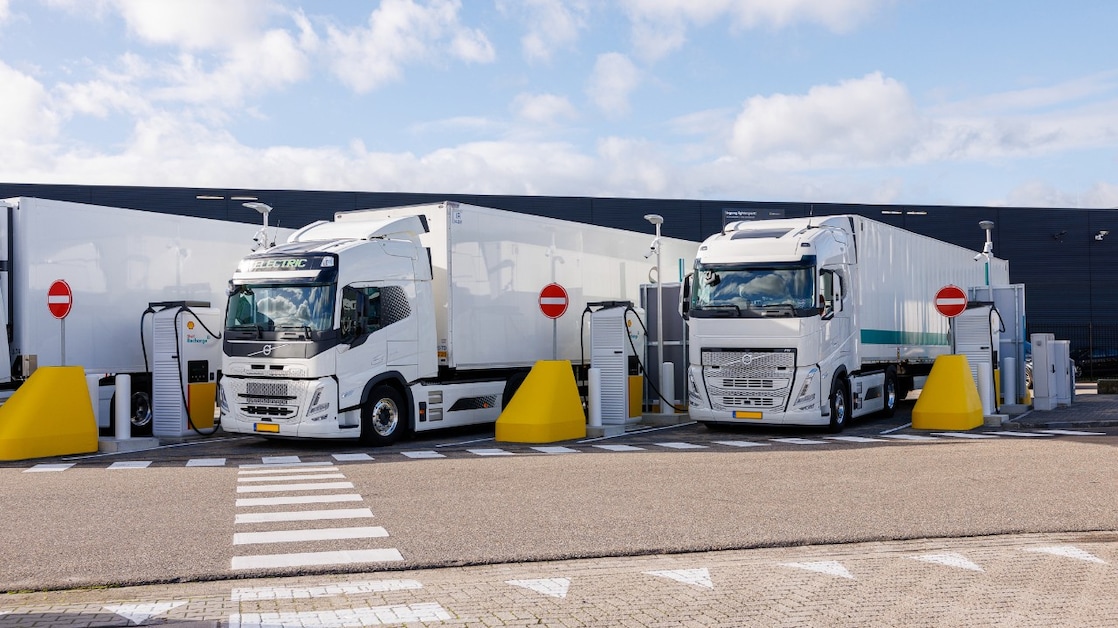
Overstappen naar elektrisch rijden, privé of zakelijk, hangt er dus sterk vanaf waar je woont of waar je bedrijf is gevestigd. Maar ook van het type ritten dat je maakt, en dus de beschikbaarheid van laadinfrastructuur en regelgeving.
En juist die regelgeving gaat in Nederland vanaf 2026 veranderen. Zowel belastingvoordeel uit de bijtelling, als minder korting op de motorrijtuigenbelasting maken de overstap naar de “EV” minder aantrekkelijk (zie kader onderaan dit verhaal). Voor wie een relatief kleine elektrische auto van zo’n 1.400 kilo rijdt, gaat de regionaal afhankelijke “wegenbelasting” omhoog van circa €240 per jaar (Zuid-Holland) naar tussen de €500 en €550 per jaar. Ruim een verdubbeling dus.
Meer dan elektrisch rijden
Echter, verduurzamen van het wegtransport is meer dan elektrisch rijden, zegt Sophie Moll. Zij is bij Shell hoofd Marketing & Business Development voor wagenparken in Nederland, België, Luxemburg en Frankrijk (Benefrux). “Shell levert alle energieoplossingen voor de zakelijke vloot; voor zelfstandige ondernemers tot multinationals, voor personenauto’s tot zwaar transport.”
Met zogenoemde “drop-in”-brandstoffen kunnen ondernemers nu al veel bereiken. Dat zijn brandstoffen die je gewoon direct kunt gebruiken, of bijmengen met traditionele brandstoffen. Kortom: er zijn geen aanpassingen van motor of voertuig nodig.
Opgeschaald naar energiebehoefte
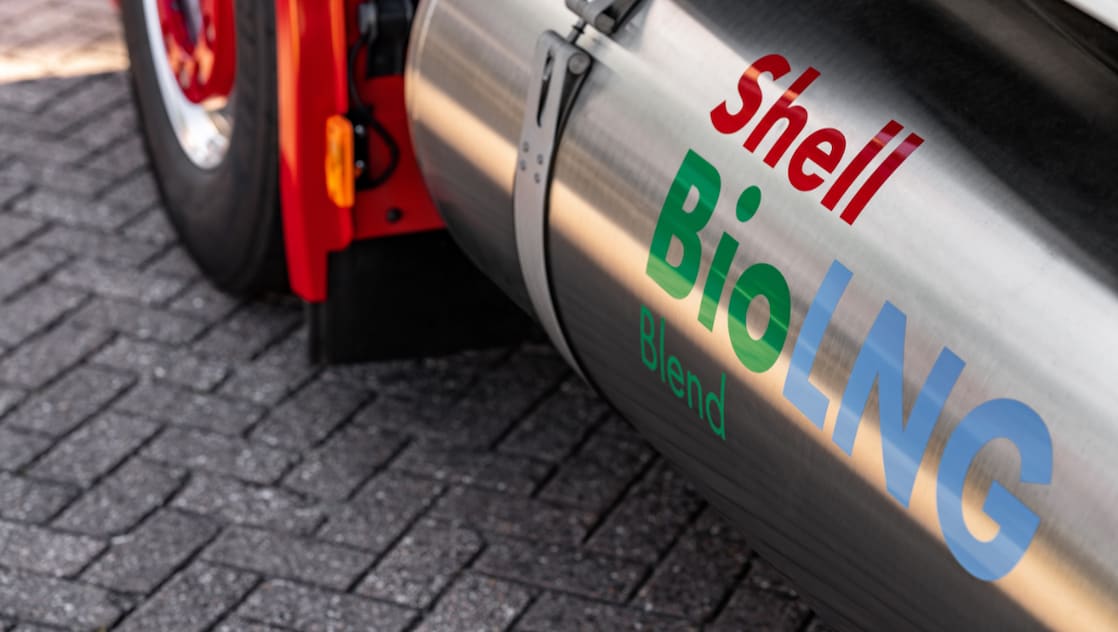
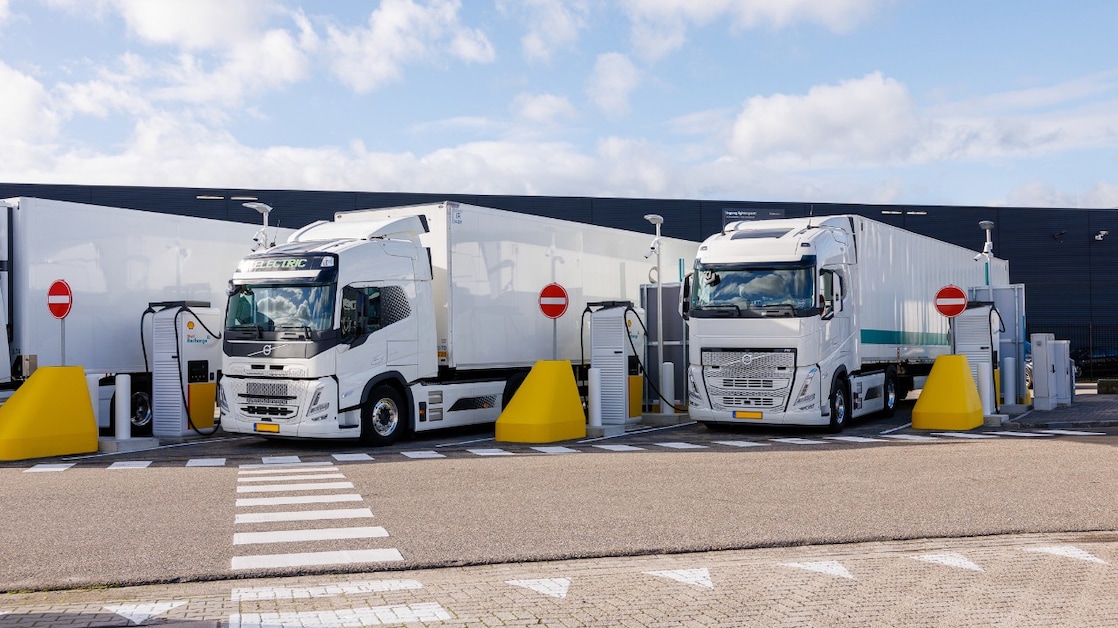
“Steeds vaker helpen we onze klanten om duurzamer te worden”, zegt Moll. “Zo leveren we onder meer Shell BioLNG, Shell Renewable Diesel, laadoplossingen onderweg, laadpleinen en zonnepanelen. We bieden zo een mozaïek aan oplossingen voor wat vandaag de dag nodig is en opgeschaald kan worden voor de energiebehoefte van morgen.”
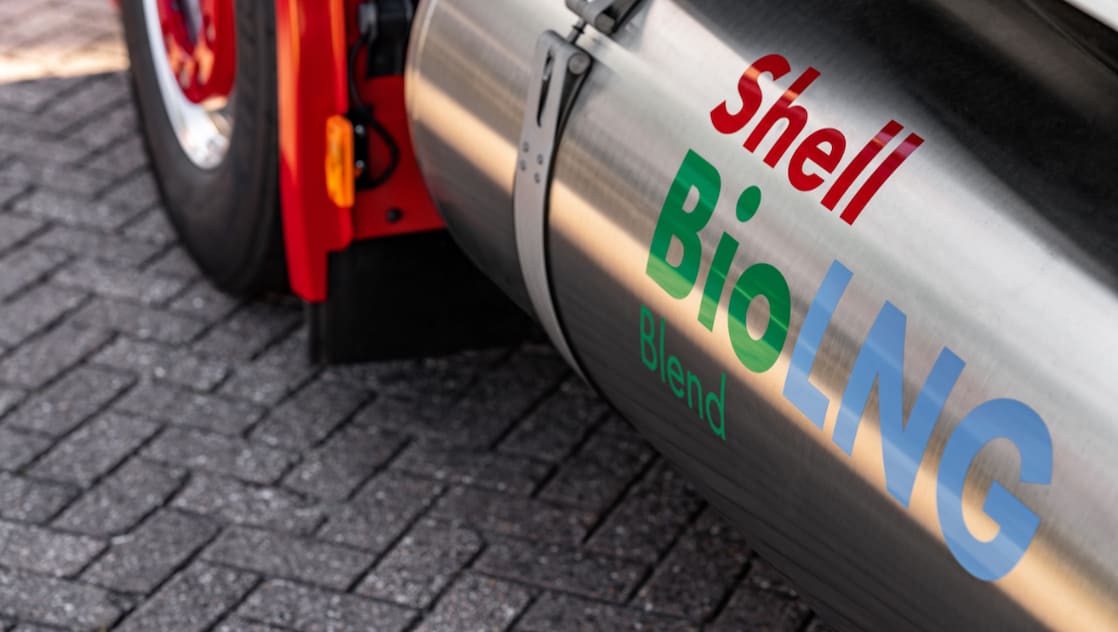
Met hernieuwbare diesel (HVO100) stoten dieseltrucks tot 90% minder CO2e uit dan wanneer ze op gewone diesel zouden rijden. En omdat bio-LNG is gemaakt van natuurlijk restafval en mest, komt er geen nieuw fossiel gas aan te pas om de LNG-trucks te laten rijden. LNG-trucks hebben een stillere motor en stoten minder CO2 uit dan dieselvrachtwagens. Daarom hebben LNG-vrachtwagens doorgaans meer bewegingsvrijheid in de Nederlandse steden om winkels te kunnen bevoorraden op plekken of op tijdsstippen dat dieseltrucks worden geweerd.
Sophie Moll, hoofd Marketing & Business Development Benelux en Frankrijk, Shell Fleet Solutions"Steeds vaker helpen we onze klanten om duurzamer te worden"
Shells eigen bevoorradingsvloot
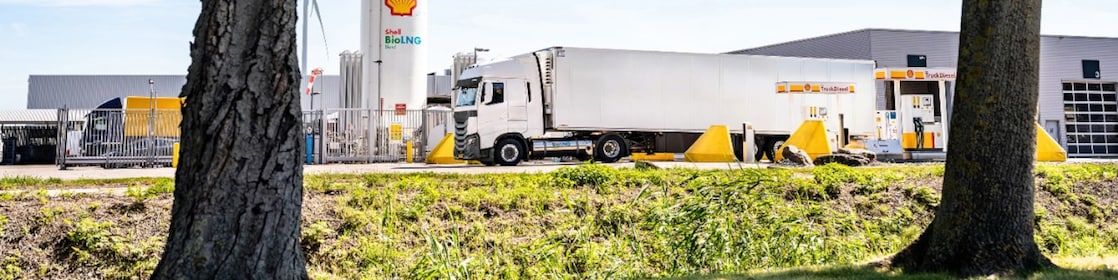
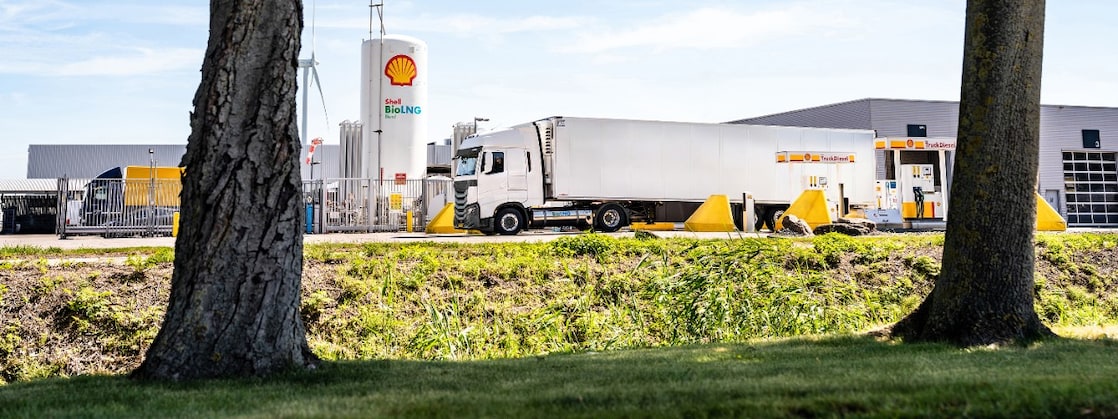
Ook Shells eigen bevoorradingsvloot van 80 vrachtwagens rijdt sinds winter 2024 grotendeels op koolstofarme brandstoffen. Op dit moment 52 op bio-LNG en 21 op hernieuwbare diesel. De zeven resterende trucks rijden op gewone LNG. Voor hernieuwbare diesel tanken de trucks op het Shell-depot in Arnhem, Tessenderlo in België, Shell Pernis of op de steunpunten in Oosterhout en Kampen. Voor alle trucks, dus ook niet-Shell, is Shell Renewable Diesel inmiddels beschikbaar op 59 stations in Nederland.
De bio-LNG komt uit een productie-installatie in Amsterdam, aangevuld met buitenlandse bronnen, en is op 14 locaties in Nederland voor alle, ook niet-Shell, vrachtwagens beschikbaar. De Shell-vloot neemt de bevoorrading van de Nederlandse tankstations voor haar rekening, maar ook gedeeltelijk die in België, Duitsland en Frankrijk.
Een logistieke puzzel
Freek Gieles is de contractmanager NSC (North Sea Cluster) Benelux en bij Shell verantwoordelijk voor de tankwagenvloot die vanuit Nederland de locaties bevoorraadt. “Het was best een logistieke puzzel om bijna geheel duurzaam te gaan rijden, want onze tankwagens zijn twintig uur per dag op de weg. De chauffeurs, die in twee ploegendiensten werken, moeten onderweg kunnen tanken om weer verder te kunnen. Op die locatie moeten dan ook de hernieuwbare brandstoffen aanwezig zijn. Maar het werkt goed en het halen van de uitstootreductie van onze eigen vloot was heel fijn."
Met drop-in brandstoffen, elektrisch rijden, infrastructuur op meer plekken en de juiste regelgeving lijkt de verduurzaming van het wegtransport op de goede weg. Al zijn er best nog de nodige kilometers af te leggen naar nul CO2-uitstoot op de weg. Het gaspedaal blijft nog best ver ingedrukt, maar wat er nu al door de motor stroomt, maakt al flink verschil.
Freek Gieles, contractmanager North Sea Cluster Benelux bij Shell"Onze tankwagens zijn twintig uur per dag op de weg"
Cautionary note
Cautionary note
The companies in which Shell plc directly and indirectly owns investments are separate legal entities. In this story “Shell”, “Shell Group” and “Group” are sometimes used for convenience to reference Shell plc and its subsidiaries in general. Likewise, the words “we”, “us” and “our” are also used to refer to Shell plc and its subsidiaries in general or to those who work for them. These terms are also used where no useful purpose is served by identifying the particular entity or entities. ‘‘Subsidiaries’’, “Shell subsidiaries” and “Shell companies” as used in this storyrefer to entities over which Shell plc either directly or indirectly has control. The terms “joint venture”, “joint operations”, “joint arrangements”, and “associates” may also be used to refer to a commercial arrangement in which Shell has a direct or indirect ownership interest with one or more parties. The term “Shell interest” is used for convenience to indicate the direct and/or indirect ownership interest held by Shell in an entity or unincorporated joint arrangement, after exclusion of all third-party interest.
Forward-Looking statements
This story contains forward-looking statements (within the meaning of the U.S. Private Securities Litigation Reform Act of 1995) concerning the financial condition, results of operations and businesses of Shell. All statements other than statements of historical fact are, or may be deemed to be, forward-looking statements. Forward-looking statements are statements of future expectations that are based on management’s current expectations and assumptions and involve known and unknown risks and uncertainties that could cause actual results, performance or events to differ materially from those expressed or implied in these statements. Forward-looking statements include, among other things, statements concerning the potential exposure of Shell to market risks and statements expressing management’s expectations, beliefs, estimates, forecasts, projections and assumptions. These forward-looking statements are identified by their use of terms and phrases such as “aim”; “ambition”; ‘‘anticipate’’; “aspire”, “aspiration”, ‘‘believe’’; “commit”; “commitment”; ‘‘could’’; “desire”; ‘‘estimate’’; ‘‘expect’’; ‘‘goals’’; ‘‘intend’’; ‘‘may’’; “milestones”; ‘‘objectives’’; ‘‘outlook’’; ‘‘plan’’; ‘‘probably’’; ‘‘project’’; ‘‘risks’’; “schedule”; ‘‘seek’’; ‘‘should’’; ‘‘target’’; “vision”; ‘‘will’’; “would” and similar terms and phrases. There are a number of factors that could affect the future operations of Shell and could cause those results to differ materially from those expressed in the forward-looking statements included in this story, including (without limitation): (a) price fluctuations in crude oil and natural gas; (b) changes in demand for Shell’s products; (c) currency fluctuations; (d) drilling and production results; (e) reserves estimates; (f) loss of market share and industry competition; (g) environmental and physical risks, including climate change; (h) risks associated with the identification of suitable potential acquisition properties and targets, and successful negotiation and completion of such transactions; (i) the risk of doing business in developing countries and countries subject to international sanctions; (j) legislative, judicial, fiscal and regulatory developments including tariffs and regulatory measures addressing climate change; (k) economic and financial market conditions in various countries and regions; (l) political risks, including the risks of expropriation and renegotiation of the terms of contracts with governmental entities, delays or advancements in the approval of projects and delays in the reimbursement for shared costs; (m) risks associated with the impact of pandemics, regional conflicts, such as the Russia-Ukraine war and the conflict in the Middle East, and a significant cyber security, data privacy or IT incident; (n) the pace of the energy transition; and (o) changes in trading conditions. No assurance is provided that future dividend payments will match or exceed previous dividend payments. All forward-looking statements contained in this story are expressly qualified in their entirety by the cautionary statements contained or referred to in this section. Readers should not place undue reliance on forward-looking statements. Additional risk factors that may affect future results are contained in Shell plc’s Form 20-F and amendment thereto for the year ended December 31, 2024 (available at www.shell.com/investors/news-and-filings/sec-filings.html and www.sec.gov). These risk factors also expressly qualify all forward-looking statements contained in this story and should be considered by the reader. Each forward-looking statement speaks only as of the date of this news story, December 18, 2025. Neither Shell plc nor any of its subsidiaries undertake any obligation to publicly update or revise any forward-looking statement as a result of new information, future events or other information. In light of these risks, results could differ materially from those stated, implied or inferred from the forward-looking statements contained in this story.
Shell’s net carbon intensity
Also, in this story we may refer to Shell’s “net carbon intensity” (NCI), which includes Shell’s carbon emissions from the production of our energy products, our suppliers’ carbon emissions in supplying energy for that production and our customers’ carbon emissions associated with their use of the energy products we sell. Shell’s NCI also includes the emissions associated with the production and use of energy products produced by others which Shell purchases for resale. Shell only controls its own emissions. The use of the terms Shell’s “net carbon intensity” or NCI is for convenience only and not intended to suggest these emissions are those of Shell plc or its subsidiaries.
Shell’s net-zero emissions target
Shell’s operating plan and outlook are forecasted for a three-year period and ten-year period, respectively, and are updated every year. They reflect the current economic environment and what we can reasonably expect to see over the next three and ten years. Accordingly, the outlook reflects our Scope 1, Scope 2 and NCI targets over the next ten years. However, Shell’s operating plan and outlook cannot reflect our 2050 net-zero emissions target, as this target is outside our planning period. Such future operating plans and outlooks could include changes to our portfolio, efficiency improvements and the use of carbon capture and storage and carbon credits. In the future, as society moves towards net-zero emissions, we expect Shell’s operating plans and outlooks to reflect this movement. However, if society is not net zero in 2050, as of today, there would be significant risk that Shell may not meet this target.
Forward-Looking non-GAAP measures
This story may contain certain forward-looking non-GAAP measures such as adjusted earnings and divestments. We are unable to provide a reconciliation of these forward-looking non-GAAP measures to the most comparable GAAP financial measures because certain information needed to reconcile those non-GAAP measures to the most comparable GAAP financial measures is dependent on future events some of which are outside the control of Shell, such as oil and gas prices, interest rates and exchange rates. Moreover, estimating such GAAP measures with the required precision necessary to provide a meaningful reconciliation is extremely difficult and could not be accomplished without unreasonable effort. Non-GAAP measures in respect of future periods which cannot be reconciled to the most comparable GAAP financial measure are calculated in a manner which is consistent with the accounting policies applied in Shell plc’s consolidated financial statements.
The contents of websites referred to in this story do not form part of this story.
We may have used certain terms, such as resources, in this story that the United States Securities and Exchange Commission (SEC) strictly prohibits us from including in our filings with the SEC. Investors are urged to consider closely the disclosure in our Form 20-F and any amendment thereto, File No 1-32575, available on the SEC website www.sec.gov.
EV-rijders gaan in 2026 meer betalen
Bijtellling
Ten eerste is het gedaan met belastingvoordeel uit de bijtelling. Dat is een bedrag dat de Belastingdienst int bovenop de winst voor wie privé rijdt met een auto van de zaak. Na 7 jaar minder bijtelling geldt voor elektrische auto’s vanaf volgend jaar dezelfde 22% als voor benzine- en dieselauto’s. Wie nog even voor het einde van 2025 een nieuwe elektrisch auto van de zaak op kenteken zetten, kan nog wel 60 maanden profiteren van de nu geldende 17% bijtelling.
Motorrijtuigenbelasting
Ten tweede gaat de motorrijtuigenbelasting (MRB) voor elektrische auto’s omhoog. Van vrijstelling in 2024, naar 25% van het normale tarief dit jaar, gaat het naar 70% volgend jaar. Tegen het einde van dit decennium wordt de korting afgebouwd zodat elektrische rijders vanaf 2030 het volle pond betalen van wat ook weggebruikers met traditionele motor in de auto betalen. Omdat de batterijen elektrische auto’s zwaarder maken dan een benzine- of dieselauto van dezelfde grootte, vallen ze voor de MRB doorgaans in een hogere gewichtsklasse en is een verhoging pijnlijker voor de portemonnee. De gedachte van de overheid is dat met meer elektrische voertuigen er meer gewicht letterlijk op de Nederlandse wegen drukt, en dat meer betalen voor het onderhoud daarvan dus logisch is.
Decarbonising road transport: a status report
18 Dec. 2025
On the journey to global decarbonisation, reducing carbon dioxide emissions from transport is crucial. The International Energy Agency (IEA) estimates that moving goods is responsible for 24% of CO2 emissions worldwide, and two-thirds of that come from road cargo. The key question: has the logistics sector taken its feet off the gas and what will it take to drive down emissions further?

Text: Molly Lynch and Marcel Burger. Photography: Jan Kasl, Eric van Vuuren, Shell plc.
According to Patrick Carré, Senior Vice President for Mobility and Convenience in Europe and South Africa at Shell, Europeas have switched to electric vehicles (EVs) at a lower pace than predicted a few years ago. “That is for a number of reasons – affordability, incentives or rather lack of incentives, infrastructure—including grid infrastructure—or the lack of grid infrastructure.” Carré expanded on this during The Energy Podcast from Shell.
While people might associate the on-the-road energy transition with shiny new EVs—including for the company—this idea ignores the fact that millions of combustion engines on the roads were bought by drivers who and businesses which want their cars to last for as long as possible.
According to data, the average car on European roads is 12 years old—built in 2013, often with an even older design, with the emissions and efficiency standards available at that time.
State-of-the-art
European car manufacturers would like governments to act. “We need to reverse the trend of vehicle ageing down, with a political framework that incentivises state-of-the-art cars migrating faster into the total fleet on the European roads,” Thomas Becker, Vice President for Government Affairs and Sustainability at BMW Group says.
In The Energy Podcast from Shell, Becker not only mentions taxes, but better policies and more charging infrastructure as important instruments the governments could use to move sustainability forward. However, each country acts independently.
“If you have a country like the Netherlands where charging infrastructure is just everywhere, you will behave completely different than in southern Italy, where there is still a massive lack of availability of EV chargers,” Becker says. Another example of an active versus a less active government: “Customers in Portugal are three times more likely to buy an EV than those in the neighbouring country of Spain.”
The Energy Podcast from Shell explores the challenges of the energy transition. In one of the latest episodes the complex path of decarbonising road transport is being investigated.
Regulations in the Netherlands are about to change
Switching to electric driving, whether privately or for business, largely depends on where you live or where your company is based. It also depends on the type of journeys you make, and therefore on the availability of charging infrastructure and regulations.
And it is precisely those regulations that will change in the Netherlands from 2026. Both the tax benefit on company car contributions and the reduced discount on vehicle tax will make the switch to an EV less attractive (see boxed sections underneath this article). For those driving a relatively small electric car weighing around 1,400 kilos (3,086 pounds), the region-dependent road tax in the Netherlands will rise from about €240 annually (South Holland) to between €500 and €550 per year—a more than twofold increase.
More than just EV
However, sustainable road transport is not just about EVs, says Sophie Moll. She is Head of Marketing & Business Development for fleets in the Netherlands, Belgium, Luxembourg and France (Benefrux) at Shell.
“Shell provides all energy solutions for business fleets—from sole traders to multinationals, from passenger cars to heavy-duty transport.”
With so-called “drop-in” fuels, businesses can already make significant progress. These are fuels that can be used directly or blended with traditional fuels. In short: no engine or vehicle modifications are required.
Scaling up to meet energy needs
“We increasingly help our customers become more sustainable,” says Moll. “For example, we supply them with Shell BioLNG, Shell Renewable Diesel, on-the-go charging solutions, charging hubs and solar panels. We offer a mosaic of solutions for today’s needs that can be scaled up to meet tomorrow’s energy demand.”
With renewable diesel (HVO100), diesel trucks emit up to 90% less CO2e compared to running on regular diesel. And because bio-LNG is made from natural waste and manure, no new fossil gas is needed to power LNG trucks. LNG trucks have quieter engines and emit less CO2 than diesel lorries. That’s why LNG trucks generally have more freedom to operate in Dutch inner-cities, allowing them to deliver goods to shops in areas where or at times when diesel trucks are banned.
Sophie Moll, Head of Marketing & Business Development Benelux and Frankrijk, Shell Fleet Solutions"We increasingly help our customers become more sustainbable"
Shell’s own supply fleet
Shell Netherlands’ own fleet of 80 lorries has been running largely on low-carbon fuels since winter 2024: 52 on bio-LNG and 21 on renewable diesel. The remaining seven trucks run on regular LNG. For renewable diesel, the lorries refuel at Shell’s depot in Arnhem—near the border with Germany, Tessenderlo in Belgium, Shell Pernis (near Rotterdam) or at support points in Oosterhout and Kampen. Shell Renewable Diesel is now available at 59 stations in the Netherlands for all trucks, also for non-Shell-owned.
The bio-LNG of the supply fleet comes from a production facility in Amsterdam, supplemented by foreign sources, and is available at 14 locations in the Netherlands for all trucks, including non-Shell vehicles. Shell’s fleet handles the supply of petrol stations in the Netherlands, and partly those in Belgium, Germany and France.
A logistical puzzle
Freek Gieles, Contract Manager NSC (North Sea Cluster) Benelux at Shell, is responsible for the tanker fleet supplying locations from the Netherlands. “It was quite a logistical puzzle to go fully sustainable, as our tankers are on the road 20 hours a day. Drivers, working in two shifts, need to refuel en route to keep going. Those refuelling locations must have renewable fuels available. But it works well, and achieving emissions reduction for our own fleet was very rewarding.”
With drop-in fuels, electric driving, more widespread infrastructure and the right regulations, the decarbonisation of road transport seems to be on the right track. There is still plenty of distance to cover before we reach zero CO2 emissions on the road. The gas pedal is still pressed hard, but what is flowing through the engine can already have a positive impact.
Freek Gieles, Contract Manager North Sea Cluster Benelux at Shell"Our fuel trucks are on the road 20 hours a day"
Cautionary note
Cautionary note
The companies in which Shell plc directly and indirectly owns investments are separate legal entities. In this story “Shell”, “Shell Group” and “Group” are sometimes used for convenience to reference Shell plc and its subsidiaries in general. Likewise, the words “we”, “us” and “our” are also used to refer to Shell plc and its subsidiaries in general or to those who work for them. These terms are also used where no useful purpose is served by identifying the particular entity or entities. ‘‘Subsidiaries’’, “Shell subsidiaries” and “Shell companies” as used in this storyrefer to entities over which Shell plc either directly or indirectly has control. The terms “joint venture”, “joint operations”, “joint arrangements”, and “associates” may also be used to refer to a commercial arrangement in which Shell has a direct or indirect ownership interest with one or more parties. The term “Shell interest” is used for convenience to indicate the direct and/or indirect ownership interest held by Shell in an entity or unincorporated joint arrangement, after exclusion of all third-party interest.
Forward-Looking statements
This story contains forward-looking statements (within the meaning of the U.S. Private Securities Litigation Reform Act of 1995) concerning the financial condition, results of operations and businesses of Shell. All statements other than statements of historical fact are, or may be deemed to be, forward-looking statements. Forward-looking statements are statements of future expectations that are based on management’s current expectations and assumptions and involve known and unknown risks and uncertainties that could cause actual results, performance or events to differ materially from those expressed or implied in these statements. Forward-looking statements include, among other things, statements concerning the potential exposure of Shell to market risks and statements expressing management’s expectations, beliefs, estimates, forecasts, projections and assumptions. These forward-looking statements are identified by their use of terms and phrases such as “aim”; “ambition”; ‘‘anticipate’’; “aspire”, “aspiration”, ‘‘believe’’; “commit”; “commitment”; ‘‘could’’; “desire”; ‘‘estimate’’; ‘‘expect’’; ‘‘goals’’; ‘‘intend’’; ‘‘may’’; “milestones”; ‘‘objectives’’; ‘‘outlook’’; ‘‘plan’’; ‘‘probably’’; ‘‘project’’; ‘‘risks’’; “schedule”; ‘‘seek’’; ‘‘should’’; ‘‘target’’; “vision”; ‘‘will’’; “would” and similar terms and phrases. There are a number of factors that could affect the future operations of Shell and could cause those results to differ materially from those expressed in the forward-looking statements included in this story, including (without limitation): (a) price fluctuations in crude oil and natural gas; (b) changes in demand for Shell’s products; (c) currency fluctuations; (d) drilling and production results; (e) reserves estimates; (f) loss of market share and industry competition; (g) environmental and physical risks, including climate change; (h) risks associated with the identification of suitable potential acquisition properties and targets, and successful negotiation and completion of such transactions; (i) the risk of doing business in developing countries and countries subject to international sanctions; (j) legislative, judicial, fiscal and regulatory developments including tariffs and regulatory measures addressing climate change; (k) economic and financial market conditions in various countries and regions; (l) political risks, including the risks of expropriation and renegotiation of the terms of contracts with governmental entities, delays or advancements in the approval of projects and delays in the reimbursement for shared costs; (m) risks associated with the impact of pandemics, regional conflicts, such as the Russia-Ukraine war and the conflict in the Middle East, and a significant cyber security, data privacy or IT incident; (n) the pace of the energy transition; and (o) changes in trading conditions. No assurance is provided that future dividend payments will match or exceed previous dividend payments. All forward-looking statements contained in this story are expressly qualified in their entirety by the cautionary statements contained or referred to in this section. Readers should not place undue reliance on forward-looking statements. Additional risk factors that may affect future results are contained in Shell plc’s Form 20-F and amendment thereto for the year ended December 31, 2024 (available at www.shell.com/investors/news-and-filings/sec-filings.html and www.sec.gov). These risk factors also expressly qualify all forward-looking statements contained in this story and should be considered by the reader. Each forward-looking statement speaks only as of the date of this news story, December 18, 2025. Neither Shell plc nor any of its subsidiaries undertake any obligation to publicly update or revise any forward-looking statement as a result of new information, future events or other information. In light of these risks, results could differ materially from those stated, implied or inferred from the forward-looking statements contained in this story.
Shell’s net carbon intensity
Also, in this story we may refer to Shell’s “net carbon intensity” (NCI), which includes Shell’s carbon emissions from the production of our energy products, our suppliers’ carbon emissions in supplying energy for that production and our customers’ carbon emissions associated with their use of the energy products we sell. Shell’s NCI also includes the emissions associated with the production and use of energy products produced by others which Shell purchases for resale. Shell only controls its own emissions. The use of the terms Shell’s “net carbon intensity” or NCI is for convenience only and not intended to suggest these emissions are those of Shell plc or its subsidiaries.
Shell’s net-zero emissions target
Shell’s operating plan and outlook are forecasted for a three-year period and ten-year period, respectively, and are updated every year. They reflect the current economic environment and what we can reasonably expect to see over the next three and ten years. Accordingly, the outlook reflects our Scope 1, Scope 2 and NCI targets over the next ten years. However, Shell’s operating plan and outlook cannot reflect our 2050 net-zero emissions target, as this target is outside our planning period. Such future operating plans and outlooks could include changes to our portfolio, efficiency improvements and the use of carbon capture and storage and carbon credits. In the future, as society moves towards net-zero emissions, we expect Shell’s operating plans and outlooks to reflect this movement. However, if society is not net zero in 2050, as of today, there would be significant risk that Shell may not meet this target.
Forward-Looking non-GAAP measures
This story may contain certain forward-looking non-GAAP measures such as adjusted earnings and divestments. We are unable to provide a reconciliation of these forward-looking non-GAAP measures to the most comparable GAAP financial measures because certain information needed to reconcile those non-GAAP measures to the most comparable GAAP financial measures is dependent on future events some of which are outside the control of Shell, such as oil and gas prices, interest rates and exchange rates. Moreover, estimating such GAAP measures with the required precision necessary to provide a meaningful reconciliation is extremely difficult and could not be accomplished without unreasonable effort. Non-GAAP measures in respect of future periods which cannot be reconciled to the most comparable GAAP financial measure are calculated in a manner which is consistent with the accounting policies applied in Shell plc’s consolidated financial statements.
The contents of websites referred to in this story do not form part of this story.
We may have used certain terms, such as resources, in this story that the United States Securities and Exchange Commission (SEC) strictly prohibits us from including in our filings with the SEC. Investors are urged to consider closely the disclosure in our Form 20-F and any amendment thereto, File No 1-32575, available on the SEC website www.sec.gov.
EV drivers in the Netherlands to pay more in 2026
Car surcharge benefit
First of all, the tax benefit from the company car surcharge is coming to an end. This is an amount that the Tax Authority of the Netherlands charges on top of profits for those who use a company car for private purposes. After seven years of reduced surcharge, EV will be subject to the same 22% rate as petrol and diesel cars from 2026. Anyone who registers a new electric company car before the end of 2025 can still benefit from the current 17% surcharge for 60 months.
Vehicle excise duty
Secondly, vehicle excise duty (VED) for electric cars is going up in the Netherlands. From full exemption in 2024, to 25% of the standard rate this year, it will rise to 70% in 2026. By the end of this decade, the discount will be phased out: in 2030 EV drivers will pay the full amount—equal to motorists with combustion engines in their cars. Because batteries make electric cars heavier than petrol or diesel cars of the same size, they usually fall into a higher weight category for VED, making the increase more painful for the wallet. The government’s reasoning is that with more electric vehicles, more weight is literally pressing on Dutch roads, so paying more for their maintenance makes sense.