Welkom in Sustañha, de duurzame stad van 2040
Hoe maak je een hele stad energie-duurzaam tegen 2040? Om te beginnen vereist het nieuwe technieken en oplossingen, bedacht door knappe koppen en vers bloed. Universiteiten lijken daarvoor een juiste plek. Zoals aan de AGH Universiteit voor Wetenschap en Technologie in Krakau. De Poolse universiteit is een van de Europese hogere onderwijsinstellingen die voor onderzoek en ontwikkeling van nieuwe concepten samenwerkt met Shell en de Energy Transition Campus Amsterdam (ETCA). Stap in de ideeënmachine.

Tekst: Marcel Burger.
Beeld: AI-gegenereerd beeld met Adobe Firefly (openingsbeeld), Marcel Burger (foto's Polen), ETCA.
“Het gaat niet om allerlei groene energieoplossingen of ideeën,” zegt een van de AGH-studenten Duurzame energie van de AGH in Krakau, “het gaat om een hele pakket. Ons concept is een compleet nieuwe stad, de stad van verandering, en we noemen die Sustañha.”
Samen met ongeveer 40 andere academici in opleiding bij AGH is de student academici al maanden bezig zich te verdiepen in de uitdagingen van de energietransitie. Samen met het ETCA in Amsterdam – waar Shell samenwerkt met 35 andere bedrijven en kennisinstellingen – organiseerde de AGH-universiteit in juni een tweedaags evenement voor de studenten. De opzet: hen uitdagen tot nieuwe ideeën te komen, afgewisseld met gastlessen van experts zoals over CO2-opslag door Shells hoofdwetenschappelijke expert Steffen Berg.
Terug naar Sustañha en het studentenplan voor deze toekomstige stad, waarvan de naam duidelijk is afgeleid van Sustainability - het Engels voor duurzaamheid. Om te beginnen zullen er geen automobilisten zijn. Voertuigen worden aan de rand van de stad achtergelaten. “Alle gemotoriseerde mobiliteit om de stad in en uit te komen zal worden uitgevoerd door AI-robots (kunstmatige intelligentie; red.). En die voertuigen zullen worden aangedreven door een brandstofcel met hernieuwbare waterstof,” aldus de studenten achter dit plan. “Maar de vraag naar dit soort geautomatiseerd vervoer zal klein zijn. Alles wat je in onze stad nodig hebt ligt binnen maximaal 15 minuten fietsafstand. Zo houden we ook de snelheid op de openbare wegen laag. Kortom: ons mobiliteitsconcept is goed voor de gezondheid van de burgers, voor de veiligheid en houdt de verzekeringskosten voor de inwoners laag.”
Afvalverbranders en energiegaten
Om energie op te wekken, zullen afvalverbrandingsinstallaties warmte leveren aan woningen en bedrijven. De student achter het Sustañha plan legt uit: “60% van de energie die in afvalverwerking wordt gestoken, blijf over als restwarmte. Dat kan door de stad worden gebruikt voor het opwarmen van gebouwen. Voorts kunnen zonnepanelen, windenergie en hernieuwbare waterstof worden ingezet om in de overige energiebehoeften van de stad te voorzien.”
De student erkent dat het plan een hoge initiële investering vereist. “Tegenwoordig zijn er belangrijkere dingen dan alleen geld. En wat betreft cyberbeveiliging: we zullen samenwerken met de CIA’s en FBI’s van deze wereld om onze energiesystemen veilig te maken. Zo leef ook jij lang en gelukkig in onze stad.”
Shell in Krakau en Polen
Shell is na de Poolse overheidsinstanties en naast een grote internationale bank een van de twee grootste werkgevers in Krakau (Kraków is de officiële Poolse spelling). Vanuit de Shell Business Operations-campus in de stad ondersteunen ruim 5.000 Shell-ers bijna alle activteiten van het energiebedrijf, ook die van Shell Nederland. Daarbij ligt de nadruk op personeelsadministratie, financiën, contracten en inkoop.
Grootste na Den Haag en Londen
Het kantoor in Krakau is Shells derde in grootte in Europa, na Den Haag en Londen. Shell heeft voorts een kleiner kantoor in Warschau, waar ongeveer 200 mensen werken.
Shell's energieportfolio in Polen
Shell heeft in Polen geen eigen energieproductie, maar er zijn wel iets meer dan 400 Shell-tankstations in het land. Ongeveer driekwart daarvan is in eigen beheer, de rest wordt gerund door individuele ondernemers via een franchiseconstructie.
Kleine kernreactoren
Tijdens het evenement bij de AGH in Krakau blijkt dat veel studenten kernenergie niet schuwen om energieonafhankelijkheid te bereiken. Het gaat dan vooral om de inzet van mini-kerncentrales, officieel bekend als kleine modulaire reactoren of small modular reactors (SMR’s). Deze verschillen van grootschalige kerncentrales: ze zouden kostenefficiënter zijn, minder radioactief afval produceren en veiliger zijn. SMR’s zouden niet groter moeten zijn als een grote zeecontainer. Maar SMR’s zijn nog in ontwikkeling en hebben hun technische en economische haalbaarheid nog niet bewezen. Maar in Krakau geloven meerdere studenten Duurzame energie dat de kleine kernreactoren tegen 2040 zullen werken.
Europese universiteiten en de Energy Transition Campus Amsterdam
AGH is een van de relatief nieuwe members (partnerleden; red.) van de Energy Transition Campus Amsterdam. Tot 2021 was de ETCA een volledig door Shell gerund onderzoeks- en ontwikkelingscentrum, en samen met de Shell-locaties in Houston en Bangalor/Bengaluru is de ETCA een van de drie belangrijkste Shell R&D-centra.
Shell opende de deuren van de locatie in Amsterdam voor start-ups, scale-ups, gerenommeerde gevestigde partijen en academische kennisinstellingen. Sindsdien is het uitgegroeid tot een locatie met een nog diverser onderzoek, met extra focus op de energietransitie. Onderzoekers uit 50 verschillende landen werken bij inmiddels 35 members – zo heten de bedrijven aangesloten bij de ETCA – inclusief Shell zelf. Waar mogelijk zoeken ze samen naar oplossingen.
Testfaciliteiten creëren voor grootschalige toepassing elders
Het Shell-werk op de ETCA behelst vaak het ontwikkelen van testopstellingen op kleine schaal, die vervolgens op grotere schaal elders kunnen worden toegepast. Enkele voorbeelden van wat in Amsterdam is getest, zijn de gas-naar-vloeistof-installatie (GTL) voor de Shell Pearl-faciliteit in Qatar en de Moerdijk Development Upgrader (MDU) voor chemische recycling van plastic bij Shell Chemicals Park Moerdijk.
Evren Unsal, stageprogramma Shell op de Energy Transition Campus Amsterdam"Toekomstige samenwerkingen actiever verkennen"
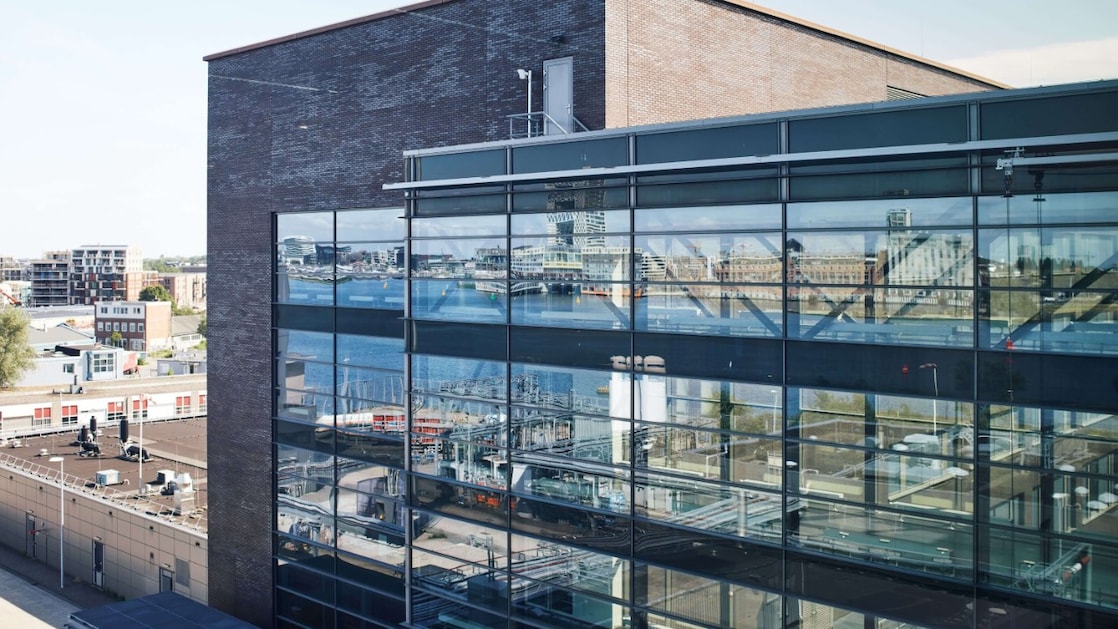
Universiteiten die samenwerken met de ETCA
De ETCA verwelkomt ook stagiairs van universiteiten waarmee zij samenwerkt voor wetenschappelijk onderzoek, direct of via de ETCA-leden. Dit bevestigt Evren Unsal – die het stageprogramma van de campus in Amsterdam leidt. Onder de onderwijsinstellingen waarmee Shell en de ETCA samenwerken zijn de universiteiten van Delft, Eindhoven en Utrecht, het Politecnico di Torino (Italië), ETH Zürich (Zwitserland), de South Finland University, de Universitat Politècnica de Catalunya (Spanje), het CPE Lyon (Frankrijk) en AGH uit Krakau.
“Net als veel andere buitenlandse universiteiten, is AGH niet een voor de hand liggende onderzoekspartner voor Shell,” zegt Unsal. “Maar gezien Shells aanzienlijke aanwezigheid in Polen en de jonge, goed opgeleide bevolking die het land biedt, denk ik dat we toekomstige samenwerkingsmogelijkheden actiever moeten verkennen. Dit recente AGH-evenement was een belangrijke mijlpaal.”
Eerste AGH-stagiairs bij de ETCA
De Poolse studenten Emilia en Anna zullen deze zomer de eerste AGH-stagiairs zijn die op de ETCA-locatie werken. “Amsterdam is een geweldige kans voor ons,” zegt Anna, “een belangrijke ervaring in een internationale omgeving. In 2024 hebben we al samengewerkt met de ETCA via virtuele begeleiding bij project BRISE,” zegt Anna. BRISE staat voor Balancing Renewable Intermittency with Solar Energy Storage. Het project ging over hoe je zonneparken met energieopslag kunt uitrusten, zodat zo’n energieproductielocatie meer continu stroom kan leveren. De zont schijnt immers niet altijd, en tijdens die tussenpozen wekken zonnepanelen geen of minder stroom op.
“De stage bij de ETCA wordt iets nieuws,” stelt Emilia. “Amsterdam en de ETCA bieden een andere leeromgeving. In Polen is wetenschappelijke onderzoek vaak wat beperkter of stricter, in Amsterdam is dit veel opener en flexibeler. Ik verheug me nu al op het uitdenken van hernieuwbare oplossingen voor het energiesysteem.”
De energietransitie van Polen
Net als Nederland zit ook Polen in een energietranstie. Lange tijd was steenkool koning van de elektriciteitsproductie van het land. Maar dat is aan het veranderen, zegt Kasia Konowrocka, Energy Transition Lead – ofwel hoofd Energietransitie – bij Shell in Polen: “In 2015 was 83% van de energieproductie in Polen afkomstig van steenkool. Nu, tien jaar later, is dat op zonnige en winderige dagen gedaald tot onder de 50% – met 29% afkomstig van hernieuwbare energiebronnen en de rest van aardgas.”
Poolse energieplannen
Polen heeft nu 21,5 gigawatt aan piekvermogen in zonnestroom, en 10,8 gigawatt aan windenergieproductie op land. Er wordt gewerkt aan de bouw van nog eens 2,58 gigawatt aan stroom van offshore wind, in de Oostzee, tegen 2030. Ook staat de eerste Poolse kerncentrale gepland, die ten noordwesten van Gdańsk zal worden gebouwd. Voorts denkt Polen aan energie uit biogas en biomethaan, gemaakt van koeienpoep en andere biologisch afval uit de Poolse landbouw.
Cautionary note
Cautionary note
The companies in which Shell plc directly and indirectly owns investments are separate legal entities. In this announcement “Shell”, “Shell Group” and “Group” are sometimes used for convenience where references are made to Shell plc and its subsidiaries in general. Likewise, the words “we”, “us” and “our” are also used to refer to Shell plc and its subsidiaries in general or to those who work for them. These terms are also used where no useful purpose is served by identifying the particular entity or entities. ‘‘Subsidiaries’’, “Shell subsidiaries” and “Shell companies” as used in this announcement refer to entities over which Shell plc either directly or indirectly has control. The term “joint venture”, “joint operations”, “joint arrangements”, and “associates” may also be used to refer to a commercial arrangement in which Shell has a direct or indirect ownership interest with one or more parties. The term “Shell interest” is used for convenience to indicate the direct and/or indirect ownership interest held by Shell in an entity or unincorporated joint arrangement, after exclusion of all third-party interest.
Forward-looking Statements
This announcement contains forward-looking statements (within the meaning of the U.S. Private Securities Litigation Reform Act of 1995) concerning the financial condition, results of operations and businesses of Shell. All statements other than statements of historical fact are, or may be deemed to be, forward-looking statements. Forward-looking statements are statements of future expectations that are based on management’s current expectations and assumptions and involve known and unknown risks and uncertainties that could cause actual results, performance or events to differ materially from those expressed or implied in these statements. Forward-looking statements include, among other things, statements concerning the potential exposure of Shell to market risks and statements expressing management’s expectations, beliefs, estimates, forecasts, projections and assumptions. These forward-looking statements are identified by their use of terms and phrases such as “aim”; “ambition”; ‘‘anticipate’’; ‘‘believe’’; “commit”; “commitment”; ‘‘could’’; ‘‘estimate’’; ‘‘expect’’; ‘‘goals’’; ‘‘intend’’; ‘‘may’’; “milestones”; ‘‘objectives’’; ‘‘outlook’’; ‘‘plan’’; ‘‘probably’’; ‘‘project’’; ‘‘risks’’; “schedule”; ‘‘seek’’; ‘‘should’’; ‘‘target’’; ‘‘will’’; “would” and similar terms and phrases. There are a number of factors that could affect the future operations of Shell and could cause those results to differ materially from those expressed in the forward-looking statements included in this announcement, including (without limitation): (a) price fluctuations in crude oil and natural gas; (b) changes in demand for Shell’s products; (c) currency fluctuations; (d) drilling and production results; (e) reserves estimates; (f) loss of market share and industry competition; (g) environmental and physical risks; (h) risks associated with the identification of suitable potential acquisition properties and targets, and successful negotiation and completion of such transactions; (i) the risk of doing business in developing countries and countries subject to international sanctions; (j) legislative, judicial, fiscal and regulatory developments including regulatory measures addressing climate change; (k) economic and financial market conditions in various countries and regions; (l) political risks, including the risks of expropriation and renegotiation of the terms of contracts with governmental entities, delays or advancements in the approval of projects and delays in the reimbursement for shared costs; (m) risks associated with the impact of pandemics, such as the COVID-19 (coronavirus) outbreak, regional conflicts, such as the Russia-Ukraine war, and a significant cybersecurity breach; and (n) changes in trading conditions. No assurance is provided that future dividend payments will match or exceed previous dividend payments. All forward-looking statements contained in this announcement are expressly qualified in their entirety by the cautionary statements contained or referred to in this section. Readers should not place undue reliance on forward-looking statements. Additional risk factors that may affect future results are contained in Shell plc’s Form 20-F for the year ended December 31, 2024 (available at www.shell.com/investors/news-and-filings/sec-filings.html and www.sec.gov). These risk factors also expressly qualify all forward-looking statements contained in this announcement and should be considered by the reader. Each forward-looking statement speaks only as of the date of this announcement, July 31, 2025. Neither Shell plc nor any of its subsidiaries undertake any obligation to publicly update or revise any forward-looking statement as a result of new information, future events or other information. In light of these risks, results could differ materially from those stated, implied or inferred from the forward-looking statements contained in this announcement.
Shell’s Net Carbon Intensity
Also, in this announcement we may refer to Shell’s “Net Carbon Intensity” (NCI), which includes Shell’s carbon emissions from the production of our energy products, our suppliers’ carbon emissions in supplying energy for that production and our customers’ carbon emissions associated with their use of the energy products we sell. Shell’s NCI also includes the emissions associated with the production and use of energy products produced by others which Shell purchases for resale. Shell only controls its own emissions. The use of the terms Shell’s “Net Carbon Intensity” or NCI are for convenience only and not intended to suggest these emissions are those of Shell plc or its subsidiaries.
Shell’s net-zero emissions target
Shell’s operating plan, outlook and budgets are forecasted for a ten-year period and are updated every year. They reflect the current economic environment and what we can reasonably expect to see over the next ten years. Accordingly, they reflect our Scope 1, Scope 2 and NCI targets over the next ten years. However, Shell’s operating plans cannot reflect our 2050 net-zero emissions target, as this target is currently outside our planning period. In the future, as society moves towards net-zero emissions, we expect Shell’s operating plans to reflect this movement. However, if society is not net zero in 2050, as of today, there would be significant risk that Shell may not meet this target.
Forward-looking non-GAAP measures
This announcement may contain certain forward-looking non-GAAP measures such as cash capital expenditure and divestments. We are unable to provide a reconciliation of these forward-looking non-GAAP measures to the most comparable GAAP financial measures because certain information needed to reconcile those non-GAAP measures to the most comparable GAAP financial measures is dependent on future events some of which are outside the control of Shell, such as oil and gas prices, interest rates and exchange rates. Moreover, estimating such GAAP measures with the required precision necessary to provide a meaningful reconciliation is extremely difficult and could not be accomplished without unreasonable effort. Non-GAAP measures in respect of future periods which cannot be reconciled to the most comparable GAAP financial measure are calculated in a manner which is consistent with the accounting policies applied in Shell plc’s consolidated financial statements.
The contents of websites referred to in this announcement do not form part of this announcement.
We may have used certain terms, such as resources, in this announcement that the United States Securities and Exchange Commission (SEC) strictly prohibits us from including in our filings with the SEC. Investors are urged to consider closely the disclosure in our Form 20-F, File No 1-32575, available on the SEC website www.sec.gov

Welcome in Sustañha, the sustainable city of 2040
31 July 2025
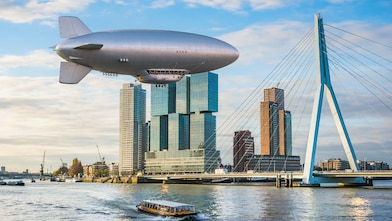
How do you make an entire city energy-sustainable by 2040? To begin with, it requires new technologies and solutions, devised by bright minds and fresh talent. Universities seem to be the right place for those. Like at the AGH University of Science and Technology in Krakow, Poland. This Polish university is one of the higher education institutions in Europe collaborating with Shell and the Energy Transition Campus Amsterdam (ETCA), the Netherlands, on research and development of new concepts. Step into the ideation machine.

Text: Marcel Burger.
Imagery: AI generated image with Adobe Firefly (featured), Marcel Burger (photography in Poland), ETCA.
“It’s not just about various sustainable energy solutions or ideas,” says one of the Sustainable Energy students at AGH in Krakow. “It’s about an entire package. Our concept is a completely new city, a city of change, and we call it Sustañha.”
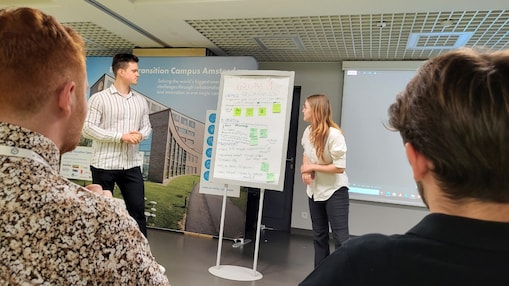
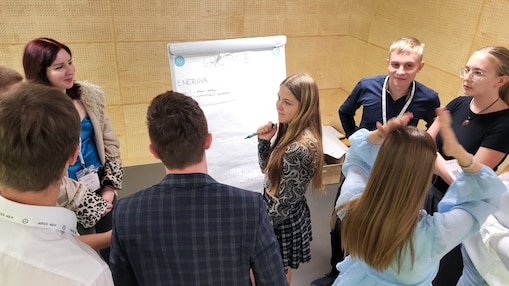
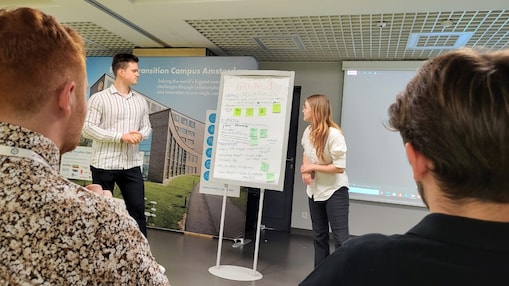
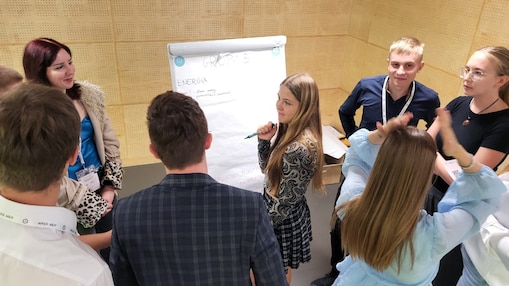
Together with around 40 other academic trainees at AGH, the student has been delving into the challenges of the energy transition for months. In collaboration with the ETCA in Amsterdam – where Shell works with 35 other companies and knowledge institutions – AGH organized a two-day event for the students in June. The goal: to challenge the young talent to come up with new ideas, interspersed with guest lectures from experts, such as Shell’s chief scientific expert Steffen Berg on CO₂ storage.
Back to Sustañha and the student plan for this future city, with the name clearly derived from “Sustainability.” To begin with, there will be no car drivers. Vehicles will be left at the city’s outskirts.
“All motorized mobility in and out of the city will be handled by AI robots. And those vehicles will be powered by fuel cells using renewable hydrogen,” say the students behind the plan.
“But the demand for this kind of automated transport will be low. Everything you need in our city is within a maximum 15-minute bike ride. This also keeps speeds on public roads low. In short: our mobility concept is good for citizens’ health, safety, and keeps insurance costs low.”
Waste incinerators and energy gaps
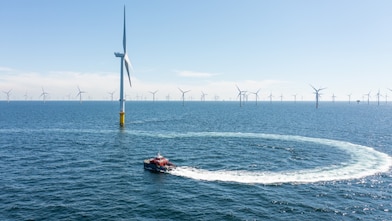
To generate energy, waste incineration plants will provide heat to homes and businesses.
“60% of the energy used in waste processing remains as residual heat. That can be used by the city to heat buildings,” explains the student behind the Sustañha plan.
“Additionally, solar panels, wind energy, and renewable hydrogen are to be fielded to meet the city’s remaining energy needs.”
The student acknowledges that the plan requires a high initial investment. “Nowadays, there are more important things than just money. And regarding cybersecurity: we’ll collaborate with the CIAs and FBIs of the world to secure our energy systems. That way, you too can live in our city happily ever after.”
Shell in Krakow and Poland
Shell is, after Polish government institutions and alongside a major international bank, one of the two largest employers in Krakow (spelled as Kraków in Polish). From the Shell Business Operations campus in the city, more than 5,000 Shell employees support nearly all of the energy company’s activities, including those of Shell Netherlands. The focus is primarily on HR, administration, finance, contracts, and procurement.
Largest after The Hague and London
The Krakow office is Shell’s third-largest in Europe, after The Hague and London. Shell also has a smaller office in Warsaw, with about 200 staff members.
Shell’s energy portfolio in Poland
Shell does not produce energy in Poland, but there are just over 400 Shell fuel stations across the country. About three-quarters of these are company-operated, while the rest are run by individual entrepreneurs through a franchise model.
Small nuclear reactors
During the event at AGH in Krakow, it became clear that many students do not shy away from nuclear energy to achieve energy independence. The focus is mainly on the use of mini nuclear power plants, officially known as Small Modular Reactors (SMRs). These differ from large-scale nuclear power plants: they are expected to be more cost-efficient, produce less radioactive waste, and be safer. SMRs should be no larger than a large shipping container. However, SMRs are still under development and have yet to prove their technical and economic feasibility. Still, several Sustainable Energy students in Krakow believe that small nuclear reactors will be operational by 2040.
European Universities and the Energy Transition Campus Amsterdam
AGH is one of the relatively new members of the Energy Transition Campus Amsterdam (ETCA). Until 2021, ETCA was a fully Shell-operated research and development centre. Alongside Shell’s locations in Houston and Bangalore/Bengaluru, ETCA is one of Shell’s three main R&D centres.
Shell reopened the Amsterdam site to start-ups, scale-ups, established companies, and academic institutions. Since then, it has evolved into a location with even more diverse research, with an added focus on the energy transition. Researchers from 50 different countries now work with one of the 35 members – the companies affiliated with ETCA – including Shell itself. Where possible, they collaborate to find solutions.
Creating test facilities for large-scale application elsewhere
Shell’s work at ETCA often involves developing small-scale test set-ups, which can later be applied on a larger scale elsewhere. Some examples of what has been tested in Amsterdam include the Gas-to-Liquid (GTL) installation for the Shell Pearl facility in Qatar and the Moerdijk Development Upgrader (MDU) for chemical recycling of plastic at Shell Chemicals Park Moerdijk.
Evren Unsal, Program Leader Internships Shell at the Energy Transition Campus Amsterdam"Actively exploring future collaboration opportunities"
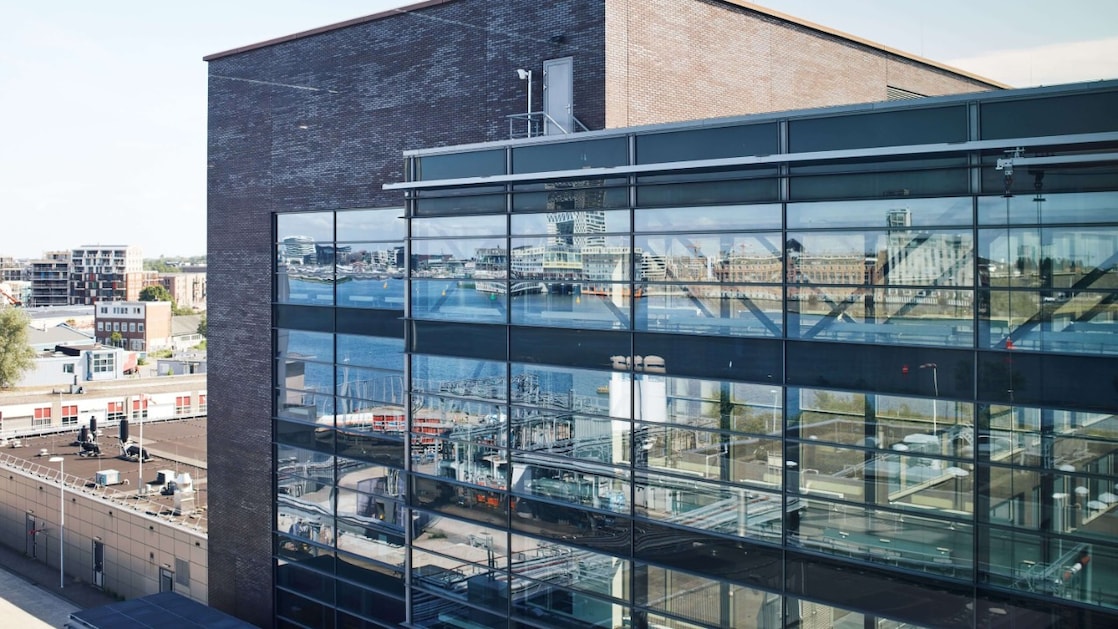
European universities cooperation with the ETCA
ETCA also welcomes interns from universities it collaborates with for scientific research, either directly or through ETCA members. This is confirmed by Evren Unsal, who leads the internship program at the Amsterdam campus. Among the educational institutions Shell and ETCA work with are: Delft University of Technology, Eindhoven University of Technology and Utrecht University in the Netherlands; Politecnico di Torino (Italy), ETH Zurich (Switzerland), South Finland University, Universitat Politècnica de Catalunya (Spain), CPE Lyon (France) and AGH University of Science and Technology in Krakow.
“Like many other foreign universities, AGH is not an obvious research partner for Shell,” says Unsal. “But given Shell’s significant presence in Poland and the country’s young, well-educated population, I believe we should actively explore future collaboration opportunities. This recent AGH event was an important milestone.”
First Polish interns
Polish students Emilia and Anna will be the first AGH interns to work at the ETCA this summer. “Amsterdam is a great opportunity for us,” says Anna, “gaining important experience in an international environment. In 2024, we already collaborated with ETCA through virtual mentoring on project BRISE,” she adds.
BRISE stands for Balancing Renewable Intermittency with Solar Energy Storage. The project focused on how to equip solar parks with energy storage so that such energy production sites can deliver more continuous power. After all, the sun doesn’t always shine, and during those intervals, solar panels generate little or no electricity.
“The internship at ETCA will be something new,” says Emilia. “Amsterdam and the ETCA offer a different learning environment. In Poland, scientific research is often more limited or stricter; in Amsterdam, it’s much more open and flexible. I’m already looking forward to developing renewable solutions for the energy system.”
The energy transition of Poland
Like many countries, Poland is going through an energy transition. For a long time, coal was the dominant source of electricity production in the country. But that is changing, says Kasia Konowrocka, Energy Transition Lead at Shell in Poland: “In 2015, 83% of Poland’s energy production came from coal. Now, ten years later, on sunny and windy days, that has dropped to below 50% – with 29% coming from renewable energy sources and the rest from natural gas.”
Poland’s energy plans
Poland currently has 21.5 gigawatts of peak solar power capacity and 10.8 gigawatts of onshore wind energy production. The country is planning an additional 2.58 gigawatts of offshore wind power in the Baltic Sea by 2030. Moreover, Poland's first nuclear power plant is expected to start operation in the next decade, located northwest of the city of Gdańsk. Additionally, Poland is exploring energy from biogas and biomethane, produced from cow manure and other biological waste from Polish agriculture.
Cautionary note
Cautionary note
The companies in which Shell plc directly and indirectly owns investments are separate legal entities. In this announcement “Shell”, “Shell Group” and “Group” are sometimes used for convenience where references are made to Shell plc and its subsidiaries in general. Likewise, the words “we”, “us” and “our” are also used to refer to Shell plc and its subsidiaries in general or to those who work for them. These terms are also used where no useful purpose is served by identifying the particular entity or entities. ‘‘Subsidiaries’’, “Shell subsidiaries” and “Shell companies” as used in this announcement refer to entities over which Shell plc either directly or indirectly has control. The term “joint venture”, “joint operations”, “joint arrangements”, and “associates” may also be used to refer to a commercial arrangement in which Shell has a direct or indirect ownership interest with one or more parties. The term “Shell interest” is used for convenience to indicate the direct and/or indirect ownership interest held by Shell in an entity or unincorporated joint arrangement, after exclusion of all third-party interest.
Forward-looking Statements
This announcement contains forward-looking statements (within the meaning of the U.S. Private Securities Litigation Reform Act of 1995) concerning the financial condition, results of operations and businesses of Shell. All statements other than statements of historical fact are, or may be deemed to be, forward-looking statements. Forward-looking statements are statements of future expectations that are based on management’s current expectations and assumptions and involve known and unknown risks and uncertainties that could cause actual results, performance or events to differ materially from those expressed or implied in these statements. Forward-looking statements include, among other things, statements concerning the potential exposure of Shell to market risks and statements expressing management’s expectations, beliefs, estimates, forecasts, projections and assumptions. These forward-looking statements are identified by their use of terms and phrases such as “aim”; “ambition”; ‘‘anticipate’’; ‘‘believe’’; “commit”; “commitment”; ‘‘could’’; ‘‘estimate’’; ‘‘expect’’; ‘‘goals’’; ‘‘intend’’; ‘‘may’’; “milestones”; ‘‘objectives’’; ‘‘outlook’’; ‘‘plan’’; ‘‘probably’’; ‘‘project’’; ‘‘risks’’; “schedule”; ‘‘seek’’; ‘‘should’’; ‘‘target’’; ‘‘will’’; “would” and similar terms and phrases. There are a number of factors that could affect the future operations of Shell and could cause those results to differ materially from those expressed in the forward-looking statements included in this announcement, including (without limitation): (a) price fluctuations in crude oil and natural gas; (b) changes in demand for Shell’s products; (c) currency fluctuations; (d) drilling and production results; (e) reserves estimates; (f) loss of market share and industry competition; (g) environmental and physical risks; (h) risks associated with the identification of suitable potential acquisition properties and targets, and successful negotiation and completion of such transactions; (i) the risk of doing business in developing countries and countries subject to international sanctions; (j) legislative, judicial, fiscal and regulatory developments including regulatory measures addressing climate change; (k) economic and financial market conditions in various countries and regions; (l) political risks, including the risks of expropriation and renegotiation of the terms of contracts with governmental entities, delays or advancements in the approval of projects and delays in the reimbursement for shared costs; (m) risks associated with the impact of pandemics, such as the COVID-19 (coronavirus) outbreak, regional conflicts, such as the Russia-Ukraine war, and a significant cybersecurity breach; and (n) changes in trading conditions. No assurance is provided that future dividend payments will match or exceed previous dividend payments. All forward-looking statements contained in this announcement are expressly qualified in their entirety by the cautionary statements contained or referred to in this section. Readers should not place undue reliance on forward-looking statements. Additional risk factors that may affect future results are contained in Shell plc’s Form 20-F for the year ended December 31, 2024 (available at www.shell.com/investors/news-and-filings/sec-filings.html and www.sec.gov). These risk factors also expressly qualify all forward-looking statements contained in this announcement and should be considered by the reader. Each forward-looking statement speaks only as of the date of this announcement, July 31, 2025. Neither Shell plc nor any of its subsidiaries undertake any obligation to publicly update or revise any forward-looking statement as a result of new information, future events or other information. In light of these risks, results could differ materially from those stated, implied or inferred from the forward-looking statements contained in this announcement.
Shell’s Net Carbon Intensity
Also, in this announcement we may refer to Shell’s “Net Carbon Intensity” (NCI), which includes Shell’s carbon emissions from the production of our energy products, our suppliers’ carbon emissions in supplying energy for that production and our customers’ carbon emissions associated with their use of the energy products we sell. Shell’s NCI also includes the emissions associated with the production and use of energy products produced by others which Shell purchases for resale. Shell only controls its own emissions. The use of the terms Shell’s “Net Carbon Intensity” or NCI are for convenience only and not intended to suggest these emissions are those of Shell plc or its subsidiaries.
Shell’s net-zero emissions target
Shell’s operating plan, outlook and budgets are forecasted for a ten-year period and are updated every year. They reflect the current economic environment and what we can reasonably expect to see over the next ten years. Accordingly, they reflect our Scope 1, Scope 2 and NCI targets over the next ten years. However, Shell’s operating plans cannot reflect our 2050 net-zero emissions target, as this target is currently outside our planning period. In the future, as society moves towards net-zero emissions, we expect Shell’s operating plans to reflect this movement. However, if society is not net zero in 2050, as of today, there would be significant risk that Shell may not meet this target.
Forward-looking non-GAAP measures
This announcement may contain certain forward-looking non-GAAP measures such as cash capital expenditure and divestments. We are unable to provide a reconciliation of these forward-looking non-GAAP measures to the most comparable GAAP financial measures because certain information needed to reconcile those non-GAAP measures to the most comparable GAAP financial measures is dependent on future events some of which are outside the control of Shell, such as oil and gas prices, interest rates and exchange rates. Moreover, estimating such GAAP measures with the required precision necessary to provide a meaningful reconciliation is extremely difficult and could not be accomplished without unreasonable effort. Non-GAAP measures in respect of future periods which cannot be reconciled to the most comparable GAAP financial measure are calculated in a manner which is consistent with the accounting policies applied in Shell plc’s consolidated financial statements.
The contents of websites referred to in this announcement do not form part of this announcement.
We may have used certain terms, such as resources, in this announcement that the United States Securities and Exchange Commission (SEC) strictly prohibits us from including in our filings with the SEC. Investors are urged to consider closely the disclosure in our Form 20-F, File No 1-32575, available on the SEC website www.sec.gov