"Marktomstandigheden zijn onstuimig, maar uiteindelijk is wind op zee enorm competitief"
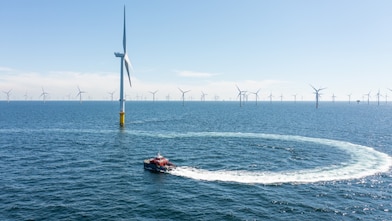
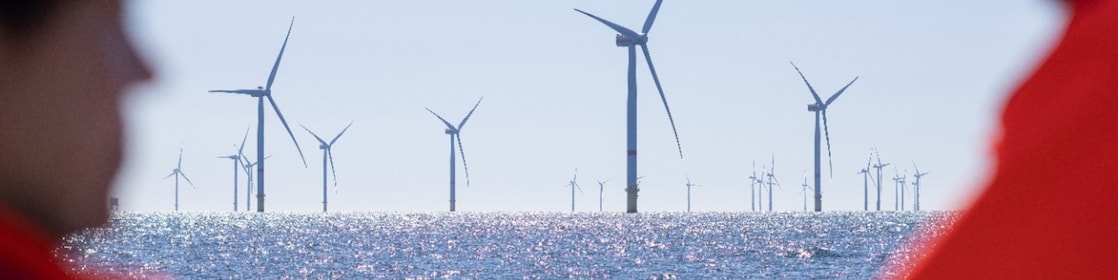
De offshore windsector heeft op dit moment wereldwijd flink wat tegenwind. En nu was het afgelopen zomer ook nog eens historisch windstil op de Noordzee. Hoe kijkt Jenneke Verhoef, Shells general manager Offshore Wind naar deze ontwikkelingen, terwijl voor windpark Hollandse Kust West bijna de eerste paal de zeebodem in gaat?

Tekst: Matthijs Timmers. Beeld: Stuart Conway/Shell plc, Marcel Burger.
Jenneke Verhoef steekt positief van wal, want de ontwikkeling van wind op zee is door een periode van extreme groei gegaan. Het ene na het andere park is ontwikkeld, een aantal zelfs zonder steun van de overheid.
Dat heeft een duw gegeven aan de energietransitie, maar, geeft ze toe: “Er is inmiddels zo veel wind- en zonne-energie beschikbaar dat op veel momenten de stroomprijs laag is geworden. Die zorgen samen voor meer onvoorspelbaarheid in het energiesysteem, omdat het niet altijd waait of zonnig is. Er is op dit moment meer flexibiliteit en opslagcapaciteit nodig om het energiesysteem in balans te brengen. Die balans is er nu niet. Zonder verder groeiende vraag naar groene stroom, stagneert ook de uitbouw van wind op zee. De verwachte elektrificatie van de maatschappij (klein- en grootverbruikers) gaat trager dan verwacht.”
Spelen nog andere factoren mee die deze stagnatie verklaren?
“De omstandigheden in de wereld zijn in korte tijd flink veranderd. Met name de oorlog in Oekraïne heeft de energiesector opgeschud. Door onzekerheden is alles is duurder geworden, in de gehele keten: stroom, staal, personeel, energie en materiaal. Dat werkt door in de totale kosten voor de bouw van een windpark. Het heeft ertoe geleid dat de kostprijs hoger is dan de elektriciteitsprijs.”
Is dit enkel een Nederlands verhaal?
“Nee hoor. Ook in Duitsland, Groot-Brittannië en Denemarken spelen dergelijke ontwikkelingen. Bij de laatste uitgeschreven aanbestedingen voor nieuw te bouwen windparken op zee waren er geen inschrijvingen, omdat bedrijven geen goede businesscase in de projecten zagen. In Amerika is de trend helemaal omgeslagen door het politieke klimaat. Zelfs vergunningen worden ingetrokken. De bouw van windparken is stil komen te liggen, met wekelijks miljoenen verlies voor de industrie.”
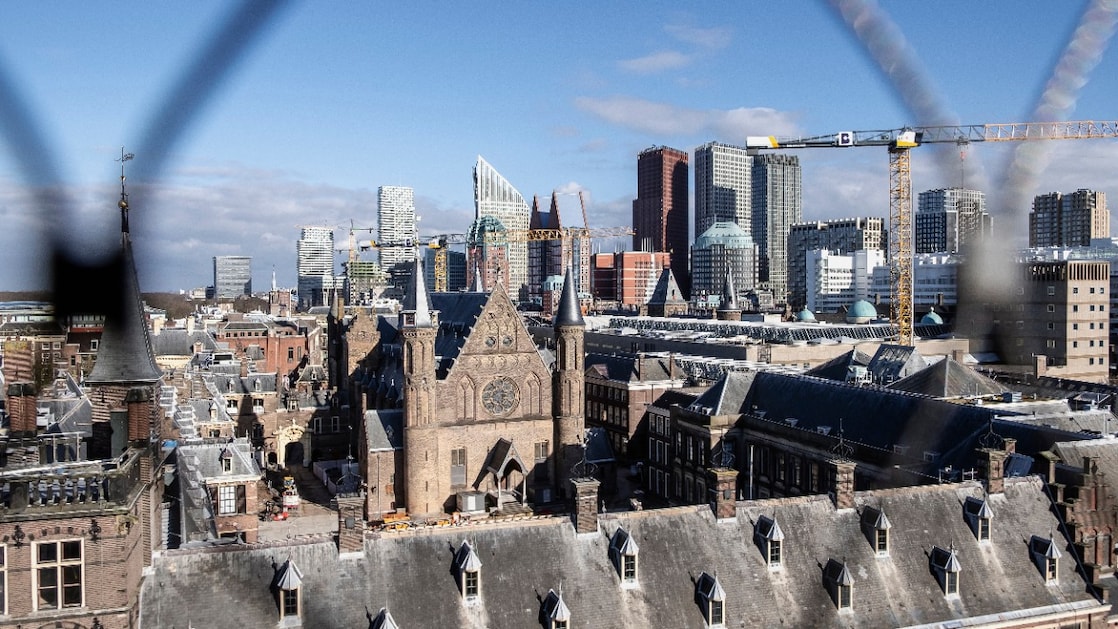
Om in Nederland weer vooruitgang te boeken, is tijdens Prinsjesdag aangekondigd om €900 miljoen euro vrij te maken voor offshore wind. Wel worden de ambities naar beneden bijgesteld: van een beoogde capaciteit van 50 gigawatt naar 30 tot 40 GW in 2040. Ook de doelstelling van 70 GW in 2050 staat daardoor op losse schroeven.
Wat vind je van deze overheidsmaatregelen en voornemens?
“Dat ambities worden teruggeschroefd is jammer, maar ook begrijpelijk en logisch: thema’s als energiezekerheid en defensie zijn hoger op de politieke agenda gekomen. Dat gaat ten koste van de ontwikkeling van duurzame energie. Verder is het fijn dat extra geld wordt uitgetrokken om wind op zee te stimuleren. Dat verdient een compliment aan het ministerie van Klimaat en Groene Groei, dat dit budget heeft weten vrij te maken. Uiteindelijk moeten we toe naar een situatie waarin niet langer structureel subsidie nodig is voor de ontwikkeling van wind op zee. Het is beter dat de markt zijn werk doet, dat de vraag aansluit op het aanbod. En andersom. Dat kost tijd.”
Wie is Jenneke Verhoef?
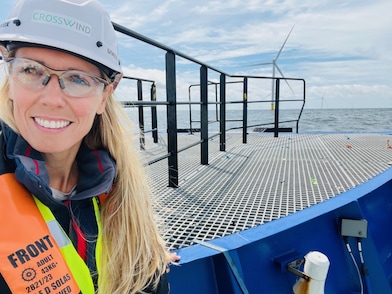
Jenneke Verhoef studeerde werktuigbouwkunde aan de TU Delft en werkt sinds 2019 voor Shell. Ze bouwde mee aan het mondiale technische team voor wind op zee. Sinds dit jaar is ze ook commercieel verantwoordelijk voor wind op zee. Daarvoor werkte ze voor het Duitse energieconcern RWE.
Hoe kijk je naar de voortgang van Hollandse Kust West?
“Dit is een belangrijk project voor ons, een van de grootste energieprojecten van Shell dat in in Nederland op dit moment wordt gebouwd. Met het consortium Ecowende hebben we een omvangrijk pakket aan ecologische maatregelen doorgevoerd. En samen met tal van partners worden onderzoeken verricht. Dat is hartstikke goed voor de ontwikkeling van de offshore windsector, in Nederland én daarbuiten.”
Wat is Shells koers voor wind op zee?
“Voor de toekomst vinden we het vooral belangrijk om onze klanten te helpen om minder CO2 uit te stoten. Daarvoor willen we het optimale uit windenergie halen, zorgen dat we dát goed regelen voor onze klanten. Daar zijn we goed in, en daar hebben we de kennis voor in huis.”
Wat gebeurt er met de kennis die is ontwikkeld?
“Het mooie aan Nederland is dat de overheid eist dat de opgedane kennis ook actief wordt gedeeld. Dat gebeurt volop. We werken met veel organisaties samen, met kennisinstituten, brancheorganisaties en bedrijven. Die bezitten gezamenlijk zó veel kennis, essentieel voor de verdere ontwikkeling van offshore wind.”
“Weet je, bij de ontwikkeling van elk windpark op zee ter wereld is een Nederlands bedrijf betrokken. Wij kunnen bijna alles in Nederland. We kunnen grote pilaren voor windturbines – de monopiles - bouwen, bodemonderzoek verrichten, kabels maken, de installatie en de bouw verzorgen. Dus offshore wind is zo langzamerhand echt een potentieel exportproduct geworden. Dat perspectief wordt nog wel eens vergeten, maar is van groot belang voor onze economie en werkgelegenheid.”
Is er een positieve toekomst voor wind op zee?
“Zeker. De fase waarin de offshore windsector zich momenteel bevindt, zal van tijdelijke aard zijn. Het gaat altijd met pieken en dalen. Uiteindelijk zal wind op zee een enorm competitieve duurzame bron van energie zijn. Zeker de Noordzee is uitermate geschikt voor het opwekken van windenergie. De Noordzee is ondiep, heeft over het algemeen goede windomstandigheden, en bevindt zich relatief dicht bij de afzetmarkt. Wat dat betreft is het voor de kust van Japan en Frankrijk, of in de Middellandse zee, een stuk ingewikkelder, omdat daar de zee meteen heel diep is. Drijvende windtechnologie is hier de volgende stap, maar die moet nog volwassen worden. Dat gaat langer duren, zeker nu de complete sector het lastig heeft.”
Wat is er nodig om offshore wind weer een duw vooruit te geven?
“Voor de ontwikkeling van wind op zee is Europese samenwerking nodig. En een eenduidig Europees beleid. Ecowende heeft een geweldig programma op het gebied van ecologie. Maar een vogel vliegt daarna ook een Duits windpark in, bijvoorbeeld. De natuur houdt niet op bij de landsgrenzen. De economie ook niet: stel dat Nederlandse overheid weer subsidie gaat verstrekken en we onze windenergie zelf niet kwijt kunnen, waardoor de stroom rechtstreeks naar Duitsland of België wordt geëxporteerd. Dan is de Nederlandse belastingbetaler de energietransitie in de buurlanden aan het financieren. Dat lijkt me niet de bedoeling.”
Waar kijk je de komende maanden het meest naar uit?
“Tegen het einde van het jaar gaat naar verwachting voor Hollandse Kust West de eerste paal de grond in. Ik verheug me op dat moment . Dat is letterlijk en figuurlijk een mijlpaal. En voor de komende winter hoop ik op een beetje meer wind op de Noordzee!”
Jenneke Verhoef, general manager Offshore Wind bij Shell"Het mooie is dat de overheid eist dat opgedane kennis actief wordt gedeeld"
Cautionary note
Cautionary note
The companies in which Shell plc directly and indirectly owns investments are separate legal entities. In this announcement “Shell”, “Shell Group” and “Group” are sometimes used for convenience where references are made to Shell plc and its subsidiaries in general. Likewise, the words “we”, “us” and “our” are also used to refer to Shell plc and its subsidiaries in general or to those who work for them. These terms are also used where no useful purpose is served by identifying the particular entity or entities. ‘‘Subsidiaries’’, “Shell subsidiaries” and “Shell companies” as used in this announcement refer to entities over which Shell plc either directly or indirectly has control. The term “joint venture”, “joint operations”, “joint arrangements”, and “associates” may also be used to refer to a commercial arrangement in which Shell has a direct or indirect ownership interest with one or more parties. The term “Shell interest” is used for convenience to indicate the direct and/or indirect ownership interest held by Shell in an entity or unincorporated joint arrangement, after exclusion of all third-party interest.
Forward-looking Statements
This announcement contains forward-looking statements (within the meaning of the U.S. Private Securities Litigation Reform Act of 1995) concerning the financial condition, results of operations and businesses of Shell. All statements other than statements of historical fact are, or may be deemed to be, forward-looking statements. Forward-looking statements are statements of future expectations that are based on management’s current expectations and assumptions and involve known and unknown risks and uncertainties that could cause actual results, performance or events to differ materially from those expressed or implied in these statements. Forward-looking statements include, among other things, statements concerning the potential exposure of Shell to market risks and statements expressing management’s expectations, beliefs, estimates, forecasts, projections and assumptions. These forward-looking statements are identified by their use of terms and phrases such as “aim”; “ambition”; ‘‘anticipate’’; ‘‘believe’’; “commit”; “commitment”; ‘‘could’’; ‘‘estimate’’; ‘‘expect’’; ‘‘goals’’; ‘‘intend’’; ‘‘may’’; “milestones”; ‘‘objectives’’; ‘‘outlook’’; ‘‘plan’’; ‘‘probably’’; ‘‘project’’; ‘‘risks’’; “schedule”; ‘‘seek’’; ‘‘should’’; ‘‘target’’; ‘‘will’’; “would” and similar terms and phrases. There are a number of factors that could affect the future operations of Shell and could cause those results to differ materially from those expressed in the forward-looking statements included in this announcement, including (without limitation): (a) price fluctuations in crude oil and natural gas; (b) changes in demand for Shell’s products; (c) currency fluctuations; (d) drilling and production results; (e) reserves estimates; (f) loss of market share and industry competition; (g) environmental and physical risks; (h) risks associated with the identification of suitable potential acquisition properties and targets, and successful negotiation and completion of such transactions; (i) the risk of doing business in developing countries and countries subject to international sanctions; (j) legislative, judicial, fiscal and regulatory developments including regulatory measures addressing climate change; (k) economic and financial market conditions in various countries and regions; (l) political risks, including the risks of expropriation and renegotiation of the terms of contracts with governmental entities, delays or advancements in the approval of projects and delays in the reimbursement for shared costs; (m) risks associated with the impact of pandemics, such as the COVID-19 (coronavirus) outbreak, regional conflicts, such as the Russia-Ukraine war, and a significant cybersecurity breach; and (n) changes in trading conditions. No assurance is provided that future dividend payments will match or exceed previous dividend payments. All forward-looking statements contained in this announcement are expressly qualified in their entirety by the cautionary statements contained or referred to in this section. Readers should not place undue reliance on forward-looking statements. Additional risk factors that may affect future results are contained in Shell plc’s Form 20-F for the year ended December 31, 2024 (available at www.shell.com/investors/news-and-filings/sec-filings.html and www.sec.gov). These risk factors also expressly qualify all forward-looking statements contained in this announcement and should be considered by the reader. Each forward-looking statement speaks only as of the date of this announcement, October 30, 2025. Neither Shell plc nor any of its subsidiaries undertake any obligation to publicly update or revise any forward-looking statement as a result of new information, future events or other information. In light of these risks, results could differ materially from those stated, implied or inferred from the forward-looking statements contained in this announcement.
Shell’s Net Carbon Intensity
Also, in this announcement we may refer to Shell’s “Net Carbon Intensity” (NCI), which includes Shell’s carbon emissions from the production of our energy products, our suppliers’ carbon emissions in supplying energy for that production and our customers’ carbon emissions associated with their use of the energy products we sell. Shell’s NCI also includes the emissions associated with the production and use of energy products produced by others which Shell purchases for resale. Shell only controls its own emissions. The use of the terms Shell’s “Net Carbon Intensity” or NCI are for convenience only and not intended to suggest these emissions are those of Shell plc or its subsidiaries.
Shell’s net-zero emissions target
Shell’s operating plan, outlook and budgets are forecasted for a ten-year period and are updated every year. They reflect the current economic environment and what we can reasonably expect to see over the next ten years. Accordingly, they reflect our Scope 1, Scope 2 and NCI targets over the next ten years. However, Shell’s operating plans cannot reflect our 2050 net-zero emissions target, as this target is currently outside our planning period. In the future, as society moves towards net-zero emissions, we expect Shell’s operating plans to reflect this movement. However, if society is not net zero in 2050, as of today, there would be significant risk that Shell may not meet this target.
Forward-looking non-GAAP measures
This announcement may contain certain forward-looking non-GAAP measures such as cash capital expenditure and divestments. We are unable to provide a reconciliation of these forward-looking non-GAAP measures to the most comparable GAAP financial measures because certain information needed to reconcile those non-GAAP measures to the most comparable GAAP financial measures is dependent on future events some of which are outside the control of Shell, such as oil and gas prices, interest rates and exchange rates. Moreover, estimating such GAAP measures with the required precision necessary to provide a meaningful reconciliation is extremely difficult and could not be accomplished without unreasonable effort. Non-GAAP measures in respect of future periods which cannot be reconciled to the most comparable GAAP financial measure are calculated in a manner which is consistent with the accounting policies applied in Shell plc’s consolidated financial statements.
The contents of websites referred to in this announcement do not form part of this announcement.
We may have used certain terms, such as resources, in this announcement that the United States Securities and Exchange Commission (SEC) strictly prohibits us from including in our filings with the SEC. Investors are urged to consider closely the disclosure in our Form 20-F, File No 1-32575, available on the SEC website www.sec.gov
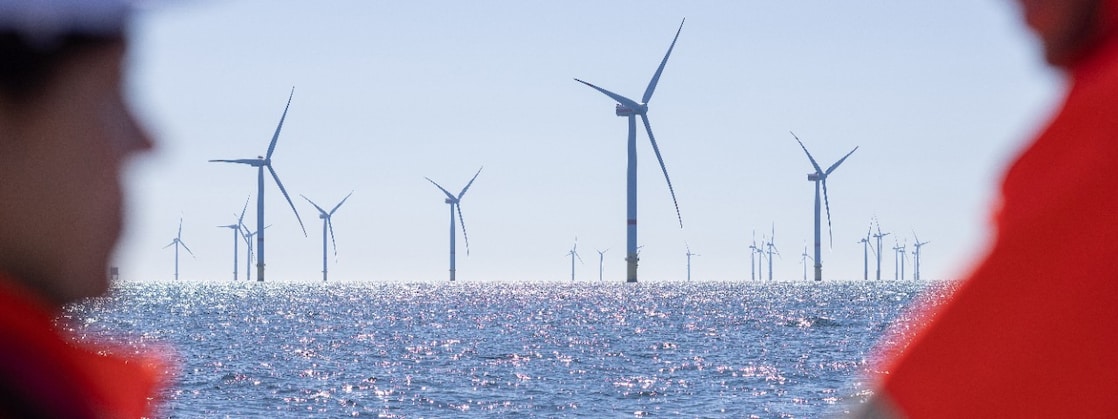
"Market conditions are turbulent, but ultimately offshore wind is extremely competitive"
30 Oct. 2025
"The offshore wind sector is currently facing quite a bit of headwind, globally. And on top of that, this past summer had historically calm weather in the North Sea area. How does Jenneke Verhoef, Shell’s General Manager Offshore Wind, view these developments, especially now that the first monopile for the Hollandse Kust West wind farm is about to be driven into the seabed?"

Text: Matthijs Timmers. Photography: Stuart Conway/Shell plc, Marcel Burger.
Jenneke Verhoef starts off on a positive note, while the development of offshore wind has gone through a period of extreme growth. One wind farm after another has been developed, some even without government subsidies.
This has given a push to the energy transition, but she admits: “There is now so much wind and solar energy available that electricity prices are low at many times. Together, they create more unpredictability in the energy system, because it is not always windy or sunny. Right now, more flexibility and storage capacity are needed to balance the energy system. That balance is currently missing. Without a growing demand for renewable power, the expansion of offshore wind also stagnates. The expected electrification of both small and large consumers is progressing more slowly than anticipated.”
Are there other factors contributing to this stagnation?
“Global conditions have changed significantly in a short period of time. In particular, the war in Ukraine has shaken up the energy sector. Due to uncertainties, everything has become more expensive across the entire production chain: electricity, steel, labor, energy, and materials. This affects the total cost of building a wind farm. It has led to a situation where the cost price is higher than the electricity price.”
Is this only an issue in the Netherlands?
“Not at all. Similar developments are visible in Germany, the United Kingdom, and Denmark. Most recent tenders for new offshore wind farms received no bids because companies did not see a viable business case. In the United States, the trend has completely reversed due to the political climate. Permits are even being revoked. Wind farm construction has come to a halt, with the industry losing millions weekly.”
For the Netherlands, there are new incentives. In September, during the yearly Dutch equivalent of the US "State of the Union", the exiting Dutch government announced that €900 million will be allocated for offshore wind. However, ambitions are being scaled back: from a targeted capacity of 50 gigawatts to 30–40 GW by 2040. Even the goal of 70 GW by 2050 had become uncertain.
What do you think of these government measures and intentions?
“It’s unfortunate that ambitions are being scaled back, but also understandable and logical: topics like energy security and defence are now higher on the political agenda. That comes at the expense of sustainable energy development. On the other hand, it’s good that additional funding is being allocated to stimulate offshore wind. That deserves praise for the Ministry of Climate and Green Growth, which managed to secure this budget. Ultimately, we need to move toward a situation where structural subsidies are no longer needed for offshore wind development. It’s better if the market does its job, with demand aligning with supply—and vice versa. That takes time.”
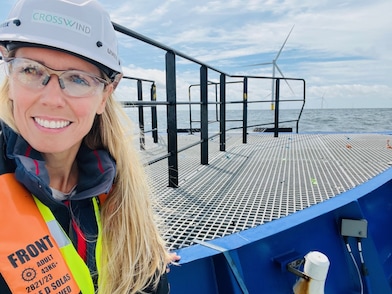
Who is Jenneke Verhoef?
Jenneke Verhoef studied Mechanical Engineering at the Delft Technical University, the Netherlands. She has been working for Shell since 2019. Jenneke helped build the global technical team for offshore wind. Since this year, she has also been commercially responsible for offshore wind. Before all of that, she was employed by German energy company RWE.
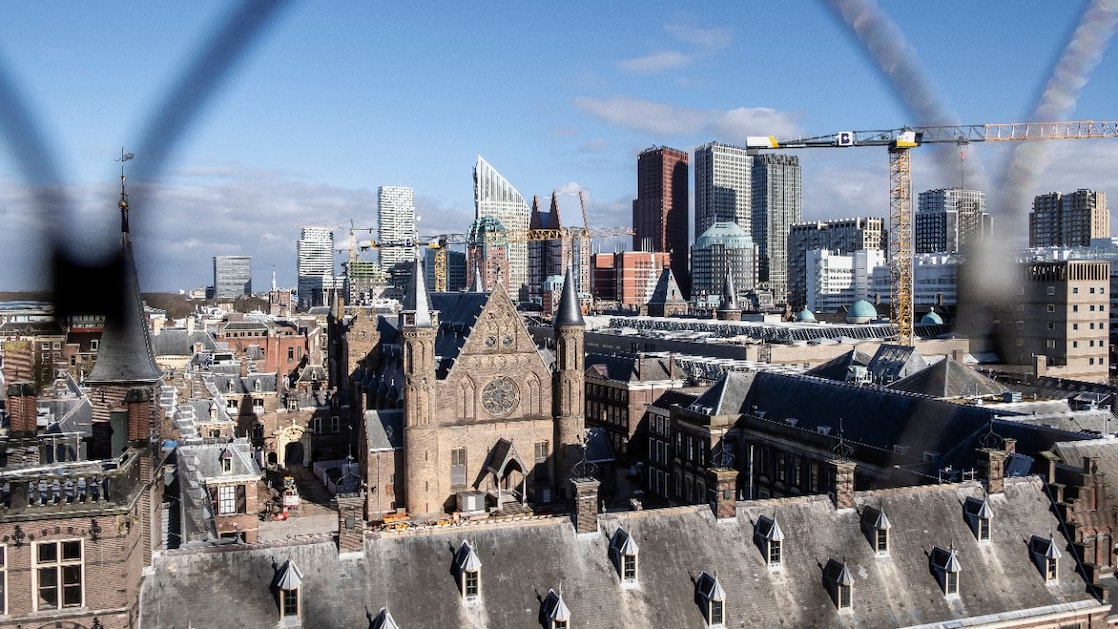
How do you view the progress of Hollandse Kust West?
“This is an important project for us—one of Shell’s largest energy projects currently being built in the Netherlands. With the Ecowende consortium, we’ve implemented a comprehensive package of ecological measures. And together with numerous partners, we’re conducting research. That’s really great for the development of the offshore wind sector, in the Netherlands and beyond.”
What is Shell’s strategy for offshore wind?
“For the future, our main focus is helping our customers reduce their CO₂ emissions. To do that, we want to get the most out of wind energy and ensure we manage it well for our customers. That’s something we’re good at, and we have the expertise in-house.”
What happens to the knowledge that being built up?
“What’s great about the Netherlands is that the government requires that gained knowledge is actively shared. And that’s happening extensively. We collaborate with many organizations—knowledge institutes, industry associations, and companies. Together, they possess a tremendous amount of knowledge, which is essential for further developing offshore wind.”
“You know, in the development of every offshore wind farm in the world, a Dutch company is involved. We can do almost everything in the Netherlands. We can build large turbine foundations—monopiles—conduct seabed surveys, manufacture cables, and handle installation and construction. So, offshore wind has gradually become a potential export product. That perspective is sometimes forgotten, but it’s very important for our economy and employment.”
Is there a positive future for offshore wind?
“Absolutely. The phase the offshore wind sector is currently in will be temporary. It always goes through ups and downs. Ultimately, offshore wind will be a highly competitive and sustainable energy source. The North Sea is especially well-suited for generating wind power. The sea is shallow, generally has good wind conditions, and is relatively close to the market. In contrast, areas off the coasts of Japan and France, or in the Mediterranean, are much more complex because the sea is immediately very deep. Floating wind technology is the next step there, but it still needs to mature. That will take more time, especially now that the entire sector is facing challenges.”
What’s needed to give offshore wind a push forward again?
“European cooperation is needed for the development of offshore wind. And a unified European policy. Ecowende has a fantastic ecological program. But a bird might then fly into a German wind farm, for example. Nature doesn’t stop at national borders. Neither does the economy: imagine the Dutch government starts providing subsidies again, and we can’t use our wind energy ourselves (because of a supply surplus; edit.), then the electricity is exported directly to Germany or Belgium. It would result in Dutch taxpayers financing the energy transition of neighboring countries. That doesn’t seem right to me.”
What are you most looking forward to in the coming months?
“Toward the end of the year, the first monopile for Hollandse Kust West is expected to be installed. I’m really looking forward to that moment. It’s both a literal and figurative milestone. And for the coming winter, I’m hoping for a bit more wind at the North Sea!”
Jenneke Verhoef, General Manager Offshore Wind at Shell"The great thing is that the government requires that gained knowledge is actively shared."
Cautionary note
Cautionary note
The companies in which Shell plc directly and indirectly owns investments are separate legal entities. In this announcement “Shell”, “Shell Group” and “Group” are sometimes used for convenience where references are made to Shell plc and its subsidiaries in general. Likewise, the words “we”, “us” and “our” are also used to refer to Shell plc and its subsidiaries in general or to those who work for them. These terms are also used where no useful purpose is served by identifying the particular entity or entities. ‘‘Subsidiaries’’, “Shell subsidiaries” and “Shell companies” as used in this announcement refer to entities over which Shell plc either directly or indirectly has control. The term “joint venture”, “joint operations”, “joint arrangements”, and “associates” may also be used to refer to a commercial arrangement in which Shell has a direct or indirect ownership interest with one or more parties. The term “Shell interest” is used for convenience to indicate the direct and/or indirect ownership interest held by Shell in an entity or unincorporated joint arrangement, after exclusion of all third-party interest.
Forward-looking Statements
This announcement contains forward-looking statements (within the meaning of the U.S. Private Securities Litigation Reform Act of 1995) concerning the financial condition, results of operations and businesses of Shell. All statements other than statements of historical fact are, or may be deemed to be, forward-looking statements. Forward-looking statements are statements of future expectations that are based on management’s current expectations and assumptions and involve known and unknown risks and uncertainties that could cause actual results, performance or events to differ materially from those expressed or implied in these statements. Forward-looking statements include, among other things, statements concerning the potential exposure of Shell to market risks and statements expressing management’s expectations, beliefs, estimates, forecasts, projections and assumptions. These forward-looking statements are identified by their use of terms and phrases such as “aim”; “ambition”; ‘‘anticipate’’; ‘‘believe’’; “commit”; “commitment”; ‘‘could’’; ‘‘estimate’’; ‘‘expect’’; ‘‘goals’’; ‘‘intend’’; ‘‘may’’; “milestones”; ‘‘objectives’’; ‘‘outlook’’; ‘‘plan’’; ‘‘probably’’; ‘‘project’’; ‘‘risks’’; “schedule”; ‘‘seek’’; ‘‘should’’; ‘‘target’’; ‘‘will’’; “would” and similar terms and phrases. There are a number of factors that could affect the future operations of Shell and could cause those results to differ materially from those expressed in the forward-looking statements included in this announcement, including (without limitation): (a) price fluctuations in crude oil and natural gas; (b) changes in demand for Shell’s products; (c) currency fluctuations; (d) drilling and production results; (e) reserves estimates; (f) loss of market share and industry competition; (g) environmental and physical risks; (h) risks associated with the identification of suitable potential acquisition properties and targets, and successful negotiation and completion of such transactions; (i) the risk of doing business in developing countries and countries subject to international sanctions; (j) legislative, judicial, fiscal and regulatory developments including regulatory measures addressing climate change; (k) economic and financial market conditions in various countries and regions; (l) political risks, including the risks of expropriation and renegotiation of the terms of contracts with governmental entities, delays or advancements in the approval of projects and delays in the reimbursement for shared costs; (m) risks associated with the impact of pandemics, such as the COVID-19 (coronavirus) outbreak, regional conflicts, such as the Russia-Ukraine war, and a significant cybersecurity breach; and (n) changes in trading conditions. No assurance is provided that future dividend payments will match or exceed previous dividend payments. All forward-looking statements contained in this announcement are expressly qualified in their entirety by the cautionary statements contained or referred to in this section. Readers should not place undue reliance on forward-looking statements. Additional risk factors that may affect future results are contained in Shell plc’s Form 20-F for the year ended December 31, 2024 (available at www.shell.com/investors/news-and-filings/sec-filings.html and www.sec.gov). These risk factors also expressly qualify all forward-looking statements contained in this announcement and should be considered by the reader. Each forward-looking statement speaks only as of the date of this announcement, October 30, 2025. Neither Shell plc nor any of its subsidiaries undertake any obligation to publicly update or revise any forward-looking statement as a result of new information, future events or other information. In light of these risks, results could differ materially from those stated, implied or inferred from the forward-looking statements contained in this announcement.
Shell’s Net Carbon Intensity
Also, in this announcement we may refer to Shell’s “Net Carbon Intensity” (NCI), which includes Shell’s carbon emissions from the production of our energy products, our suppliers’ carbon emissions in supplying energy for that production and our customers’ carbon emissions associated with their use of the energy products we sell. Shell’s NCI also includes the emissions associated with the production and use of energy products produced by others which Shell purchases for resale. Shell only controls its own emissions. The use of the terms Shell’s “Net Carbon Intensity” or NCI are for convenience only and not intended to suggest these emissions are those of Shell plc or its subsidiaries.
Shell’s net-zero emissions target
Shell’s operating plan, outlook and budgets are forecasted for a ten-year period and are updated every year. They reflect the current economic environment and what we can reasonably expect to see over the next ten years. Accordingly, they reflect our Scope 1, Scope 2 and NCI targets over the next ten years. However, Shell’s operating plans cannot reflect our 2050 net-zero emissions target, as this target is currently outside our planning period. In the future, as society moves towards net-zero emissions, we expect Shell’s operating plans to reflect this movement. However, if society is not net zero in 2050, as of today, there would be significant risk that Shell may not meet this target.
Forward-looking non-GAAP measures
This announcement may contain certain forward-looking non-GAAP measures such as cash capital expenditure and divestments. We are unable to provide a reconciliation of these forward-looking non-GAAP measures to the most comparable GAAP financial measures because certain information needed to reconcile those non-GAAP measures to the most comparable GAAP financial measures is dependent on future events some of which are outside the control of Shell, such as oil and gas prices, interest rates and exchange rates. Moreover, estimating such GAAP measures with the required precision necessary to provide a meaningful reconciliation is extremely difficult and could not be accomplished without unreasonable effort. Non-GAAP measures in respect of future periods which cannot be reconciled to the most comparable GAAP financial measure are calculated in a manner which is consistent with the accounting policies applied in Shell plc’s consolidated financial statements.
The contents of websites referred to in this announcement do not form part of this announcement.
We may have used certain terms, such as resources, in this announcement that the United States Securities and Exchange Commission (SEC) strictly prohibits us from including in our filings with the SEC. Investors are urged to consider closely the disclosure in our Form 20-F, File No 1-32575, available on the SEC website www.sec.gov