Leveringszekerheid: hebben we genoeg brandstof om Europa veilig te houden?
Het is september 2025. Nederlandse F-35-straaljagers zijn nog maar 10 dagen operationeel in Polen als ze in alle haast Russische drones in het luchtruim van de NAVO-bondgenoot neerhalen. Maar ook in eigen land staan de gevechtstoestellen klaar voor als dat nodig is, en om te trainen voor meer. Al dat vliegen kost wel heel veel brandstof, en die moet ergens vandaan komen.

Tekst: Marcel Burger. Beeld: Marcel Burger, Ernst Bode.
Door de oorlog in Oekraïne en de vlug veranderende wereldpolitiek, en daarmee de gegroeide dreiging, lijkt Nederland weer meer baat te hebben bij een actiever, nog beter luchtwapen. Voor het eerst sinds de hoogtijdagen van de Koude Oorlog. Niet alleen voor missies in “verweggiestan”, maar ook voor patrouilles boven de Noordzee en voor het oefenen in het ondersteunen van NAVO-grondtroepen binnen en buiten de landsgrenzen. Want vrede binnen de grenzen van de Europese Unie lijkt onvoorspelbaarder te zijn geworden. Al snel rijst dan ook de vraag: is er wel genoeg brandstof om Europa veilig te houden?
Van F-35’s tot Apaches
Want de F-35’s die de Konklijke Luchtmacht inzet vanaf het Brabantse Volkel, Leeuwarden en over een paar jaar Lelystad gaan niet vanzelf de lucht in. Hetzelfde geldt voor de transportvloot op Eindhoven: C-130H Hercules-vrachttoestellen, de nieuwe Embraer C-390 die ze gaat vervangen, en de Airbus A330 MRTT voor transport en bijtanken van onder meer de Nederlandse F-35’s in de lucht.
En dan zijn er ook nog de Apache-gevechtshelikopters, de middelgrote Cougar- en de grote Chinook-transporthelikopters op Gilze-Rijen bij Breda — noodzakelijk voor de snelle aanval of verdediging laag bij de grond en om soldaten en materieel razendsnel en beschermd in te kunnen zetten.
Vanaf De Kooy bij Den Helder en vanaf marineschepen op volle zee bieden NH90-helikopters onder meer het hoofd aan onderzeeboten en de dreiging voor kritische infrastructuur als offshore windparken, en onderzeese pijpleidingen en communicatiekabels. En voor hun basistraining zijn Nederlandse piloten deels aangewezen op de PC-7-trainingsvliegtuigen die vanaf Woensdrecht opstijgen.
Dorstige toestellen
De vier grote onbemande MQ-9 Reaper-verkenningsdrones die de luchtmacht vanaf Leeuwarden op afstand bestuurt, zijn nog het meest energiezuinig. Ongewapend kunnen ze tot 27 uur in de lucht blijven. Als de luchtmacht ze gaat bewapen, gepland vanaf 2028, is het nog altijd een respectabele airborne tijd van 14 uur (afhankelijk van de bewapening).
Maar bij de andere vliegtuigen van defensie kost al dat vliegen meer brandstof dan je wellicht denkt. Dat geldt al helemaal voor het speerpunt van het Nederlandse luchtwapen: die F-35. Van deze "dorstige" toestellen heeft Nederland er 52 besteld, staan er acht continu op Luke Air Force Base in het Amerikaanse Arizona voor training van Nederlandse piloten en opereren er inmiddels zeker 32 vanaf Volkel en Leeuwarden. De rest moet nog worden geleverd door fabrikant Lockheed Martin.
Shell en Nederland
Shells bijdrage aan de economie en energiezekerheid in Nederland waren ook in 2024 onmiskenbaar. Dat blijkt uit het nieuwste rapport over de sociaal-economische bijdrage van Shell in Nederland van economisch adviesbureau Oxford Economics.
Hoeveel brandstof gebruikt de F-35?
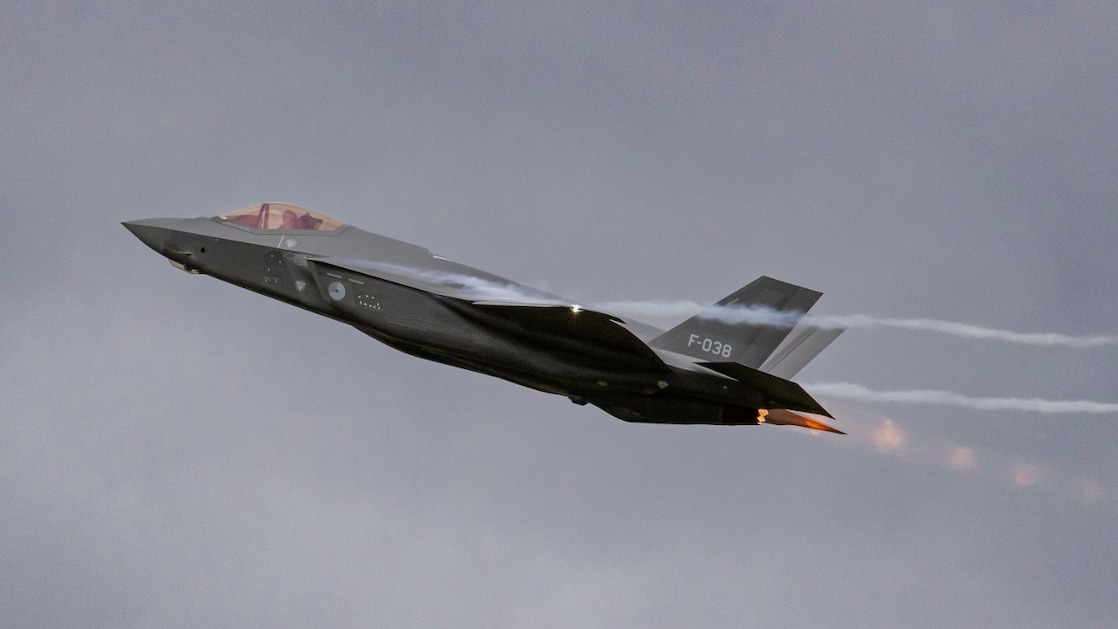
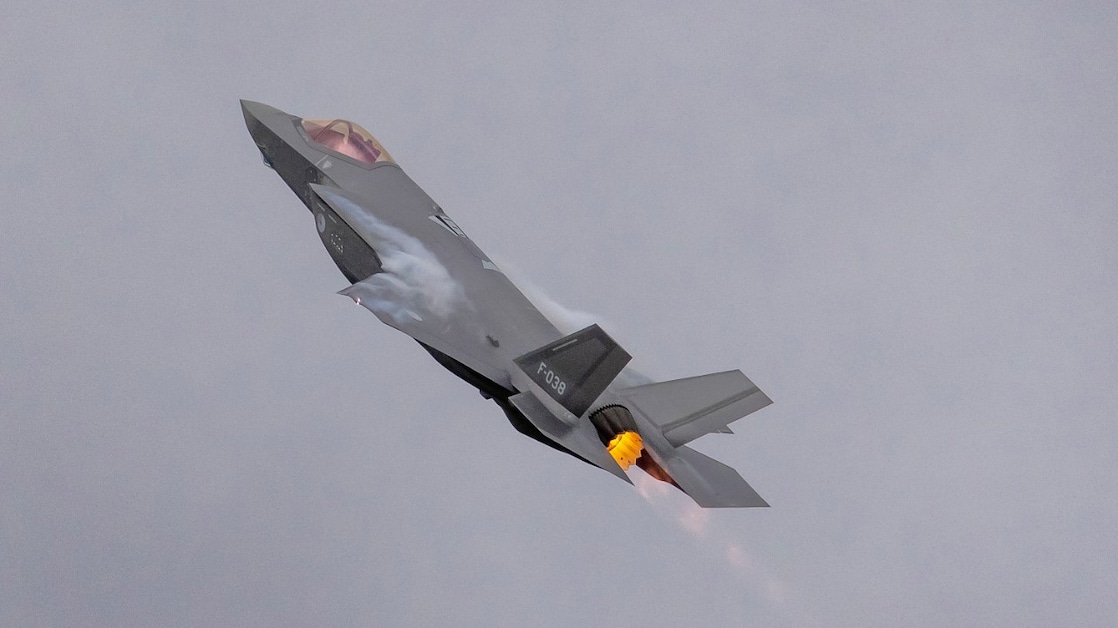
Gemiddeld gebruikt de F-35 zo’n 5.600 liter kerosine per vlieguur, dat gemakkelijk oploopt tot 8.000 liter per uur als het toestel met volle naverbrander (de vlam in de pijp) in actie komt. Dat gebeurt bijvoorbeeld als er een passagiersvliegtuig niet op instructies van de gewone luchtverkeersleiding reageert, of bij het onderscheppen van drones. De F-35’s accelereren dan voor korte tijd naar sneller dan het geluid — de harde knal bij het “breken” van de geluidsbarrière kun je dan op de grond horen.
Op de eigen tank kan de F-35 ongeveer een uur vliegen, maar vaak wordt in de lucht bijgetankt en blijven de straaljagers 2 tot 2,5 uur weg van huis. En dan zit je al gauw op 14.000 liter kerosine of meer; per missie, per vliegtuig. Dat is bijna evenveel als een relatief energiezuinige Boeing 787 Dreamliner met 290 passagiers verbruikt op een enkeltje Amsterdam-Reykjavik (Keflavik).
Shell en de luchtmacht
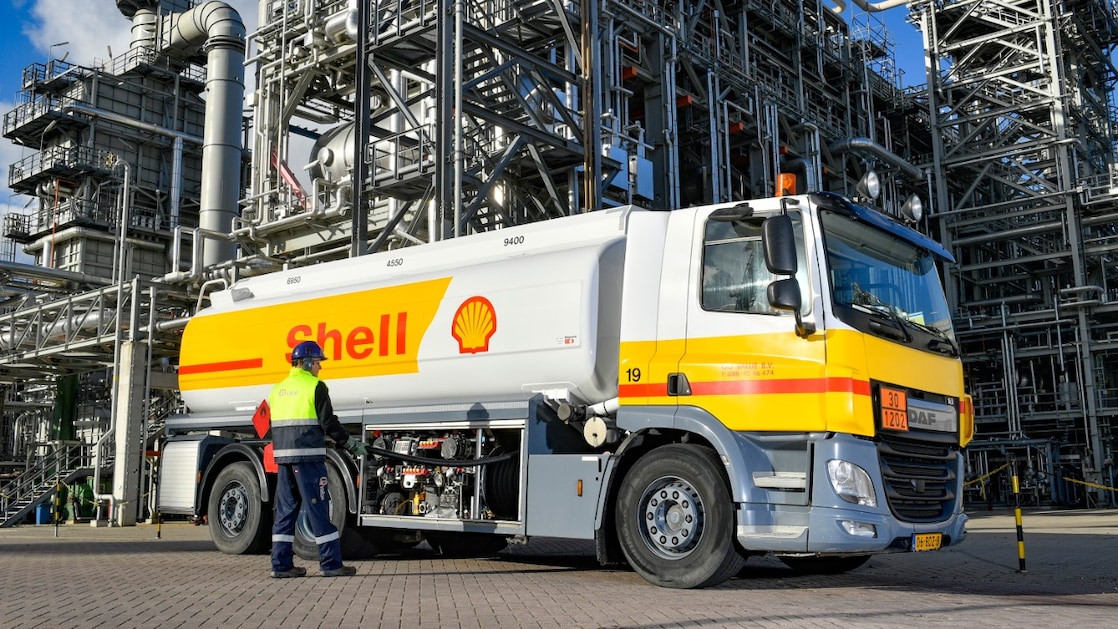
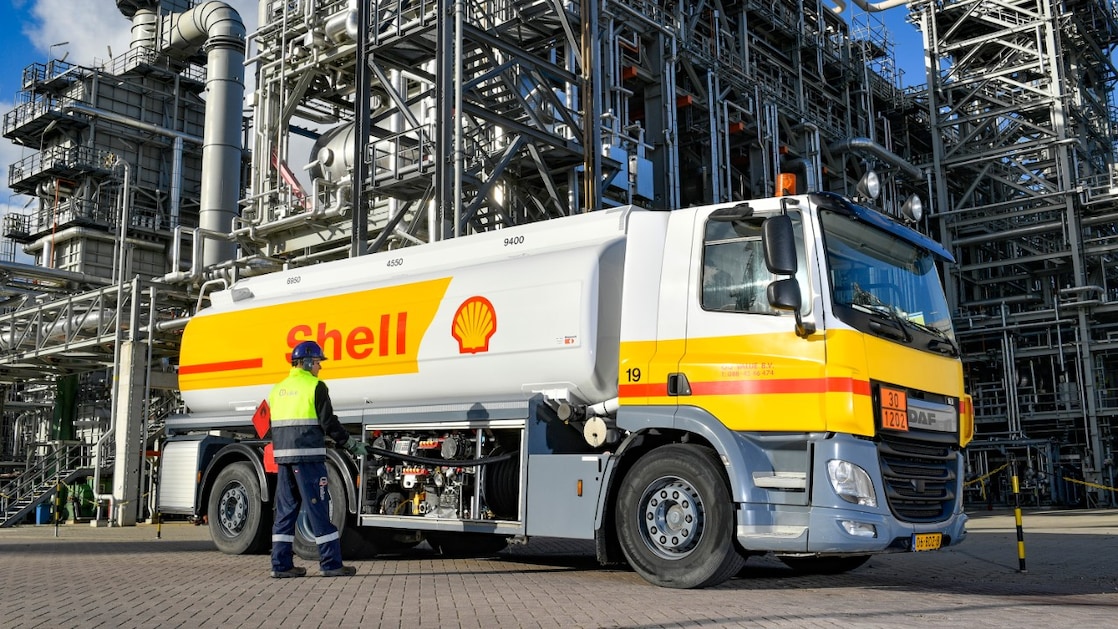
Er is dus heel veel kerosine nodig om altijd paraat te staan. Shell levert al decennialang brandstoffen aan de Nederlandse krijgsmacht. Dat gebeurt met tankwagens, maar ook via een speciale pijpleiding vanaf Shell Pernis, Europa’s grootste raffinaderij. Dat leidingnet gaat dwars door Nederland naar de meeste militaire vliegbases, Schiphol en naar de buurlanden.
En zo is er dus, met de basisindustrie in eigen land zoals de raffinaderij van Shell Pernis, altijd genoeg brandstof voor de Nederlandse luchtmacht om paraat te staan — en te helpen de Benelux en de rest van Europa te beschermen.
Cautionary note
Cautionary note
The companies in which Shell plc directly and indirectly owns investments are separate legal entities. In this story “Shell”, “Shell Group” and “Group” are sometimes used for convenience to reference Shell plc and its subsidiaries in general. Likewise, the words “we”, “us” and “our” are also used to refer to Shell plc and its subsidiaries in general or to those who work for them. These terms are also used where no useful purpose is served by identifying the particular entity or entities. ‘‘Subsidiaries’’, “Shell subsidiaries” and “Shell companies” as used in this storyrefer to entities over which Shell plc either directly or indirectly has control. The terms “joint venture”, “joint operations”, “joint arrangements”, and “associates” may also be used to refer to a commercial arrangement in which Shell has a direct or indirect ownership interest with one or more parties. The term “Shell interest” is used for convenience to indicate the direct and/or indirect ownership interest held by Shell in an entity or unincorporated joint arrangement, after exclusion of all third-party interest.
Forward-Looking statements
This story contains forward-looking statements (within the meaning of the U.S. Private Securities Litigation Reform Act of 1995) concerning the financial condition, results of operations and businesses of Shell. All statements other than statements of historical fact are, or may be deemed to be, forward-looking statements. Forward-looking statements are statements of future expectations that are based on management’s current expectations and assumptions and involve known and unknown risks and uncertainties that could cause actual results, performance or events to differ materially from those expressed or implied in these statements. Forward-looking statements include, among other things, statements concerning the potential exposure of Shell to market risks and statements expressing management’s expectations, beliefs, estimates, forecasts, projections and assumptions. These forward-looking statements are identified by their use of terms and phrases such as “aim”; “ambition”; ‘‘anticipate’’; “aspire”, “aspiration”, ‘‘believe’’; “commit”; “commitment”; ‘‘could’’; “desire”; ‘‘estimate’’; ‘‘expect’’; ‘‘goals’’; ‘‘intend’’; ‘‘may’’; “milestones”; ‘‘objectives’’; ‘‘outlook’’; ‘‘plan’’; ‘‘probably’’; ‘‘project’’; ‘‘risks’’; “schedule”; ‘‘seek’’; ‘‘should’’; ‘‘target’’; “vision”; ‘‘will’’; “would” and similar terms and phrases. There are a number of factors that could affect the future operations of Shell and could cause those results to differ materially from those expressed in the forward-looking statements included in this story, including (without limitation): (a) price fluctuations in crude oil and natural gas; (b) changes in demand for Shell’s products; (c) currency fluctuations; (d) drilling and production results; (e) reserves estimates; (f) loss of market share and industry competition; (g) environmental and physical risks, including climate change; (h) risks associated with the identification of suitable potential acquisition properties and targets, and successful negotiation and completion of such transactions; (i) the risk of doing business in developing countries and countries subject to international sanctions; (j) legislative, judicial, fiscal and regulatory developments including tariffs and regulatory measures addressing climate change; (k) economic and financial market conditions in various countries and regions; (l) political risks, including the risks of expropriation and renegotiation of the terms of contracts with governmental entities, delays or advancements in the approval of projects and delays in the reimbursement for shared costs; (m) risks associated with the impact of pandemics, regional conflicts, such as the Russia-Ukraine war and the conflict in the Middle East, and a significant cyber security, data privacy or IT incident; (n) the pace of the energy transition; and (o) changes in trading conditions. No assurance is provided that future dividend payments will match or exceed previous dividend payments. All forward-looking statements contained in this story are expressly qualified in their entirety by the cautionary statements contained or referred to in this section. Readers should not place undue reliance on forward-looking statements. Additional risk factors that may affect future results are contained in Shell plc’s Form 20-F and amendment thereto for the year ended December 31, 2024 (available at www.shell.com/investors/news-and-filings/sec-filings.html and www.sec.gov). These risk factors also expressly qualify all forward-looking statements contained in this story and should be considered by the reader. Each forward-looking statement speaks only as of the date of this story, January 22, 2026. Neither Shell plc nor any of its subsidiaries undertake any obligation to publicly update or revise any forward-looking statement as a result of new information, future events or other information. In light of these risks, results could differ materially from those stated, implied or inferred from the forward-looking statements contained in this story.
Shell’s net carbon intensity
Also, in this story we may refer to Shell’s “net carbon intensity” (NCI), which includes Shell’s carbon emissions from the production of our energy products, our suppliers’ carbon emissions in supplying energy for that production and our customers’ carbon emissions associated with their use of the energy products we sell. Shell’s NCI also includes the emissions associated with the production and use of energy products produced by others which Shell purchases for resale. Shell only controls its own emissions. The use of the terms Shell’s “net carbon intensity” or NCI is for convenience only and not intended to suggest these emissions are those of Shell plc or its subsidiaries.
Shell’s net-zero emissions target
Shell’s operating plan and outlook are forecasted for a three-year period and ten-year period, respectively, and are updated every year. They reflect the current economic environment and what we can reasonably expect to see over the next three and ten years. Accordingly, the outlook reflects our Scope 1, Scope 2 and NCI targets over the next ten years. However, Shell’s operating plan and outlook cannot reflect our 2050 net-zero emissions target, as this target is outside our planning period. Such future operating plans and outlooks could include changes to our portfolio, efficiency improvements and the use of carbon capture and storage and carbon credits. In the future, as society moves towards net-zero emissions, we expect Shell’s operating plans and outlooks to reflect this movement. However, if society is not net zero in 2050, as of today, there would be significant risk that Shell may not meet this target.
Forward-Looking non-GAAP measures
This story may contain certain forward-looking non-GAAP measures such as adjusted earnings and divestments. We are unable to provide a reconciliation of these forward-looking non-GAAP measures to the most comparable GAAP financial measures because certain information needed to reconcile those non-GAAP measures to the most comparable GAAP financial measures is dependent on future events some of which are outside the control of Shell, such as oil and gas prices, interest rates and exchange rates. Moreover, estimating such GAAP measures with the required precision necessary to provide a meaningful reconciliation is extremely difficult and could not be accomplished without unreasonable effort. Non-GAAP measures in respect of future periods which cannot be reconciled to the most comparable GAAP financial measure are calculated in a manner which is consistent with the accounting policies applied in Shell plc’s consolidated financial statements.
The contents of websites referred to in this story do not form part of this story.
We may have used certain terms, such as resources, in this story that the United States Securities and Exchange Commission (SEC) strictly prohibits us from including in our filings with the SEC. Investors are urged to consider closely the disclosure in our Form 20-F and any amendment thereto, File No 1-32575, available on the SEC website www.sec.gov.
Shell en leveringszekerheid
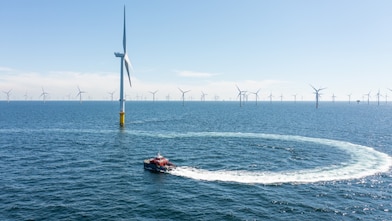
Met basisindustrie binnen de grenzen ben je als land minder afhankelijk van het buitenland. Dat geldt ook voor de leveringszekerheid van allerlei vormen van energie — voor huizen en bedrijven, voor het gewone wegverkeer, maar ook voor ziekenhuizen, hulpdiensten en landsverdediging. Shell heeft met Europa's grootste raffinaderij in Pernis bij Rotterdam, een van Europa's grootste chemiecomplexen in Moerdijk, de joint venture NAM, windparken op zee en meer al tientallen jaren flink ingezet op leveringszekerheid in Nederland.
Meer weten over leveringszekerheid?
Is there enough fuel to keep Europe safe?
22 Jan. 2026
September 2025. Royal Netherlands Air Force (RNLAF) F‑35 fighter jets have been stationed in Poland for barely ten days as part of a NATO protective umbrella operation, when they shoot down intruding Russian drones. Back home, F-35s are ready to be scrambled whenever needed, while their pilots practice for multiple scenarios. All of that flying comes at a cost — and it raises a critical question: where will all the fuel come from?

Text: Marcel Burger. Photography: Marcel Burger, Ernst Bode.
Judging the ongoing discussions in the public domain and in the media in the Netherlands, the war in Ukraine and the rapidly shifting global politics have shown the urgency to have a more active and properly trained air force. Not only for missions in countries far away, but for air policing over the North Sea and for practicing ground support of NATO forces. With peace no longer taken for granted, the question of fuel supply becomes more pressing: is there enough to keep Europe safe?
From F-35s to Apaches
The F‑35s operating from the Dutch airbases of Volkel, Leeuwarden and — soon — Lelystad are not the only ones who are in need. The military transport fleet at Eindhoven also requires a continuos flow of kersone. Not only for the ageing C‑130H Hercules aircraft — to be replaced by modern Embraer C‑390s, but for NATO's own European flying petrol stations as well. These Airbus A330 MRTT long-range in-flight refuelling aircraft are operating from Eindhoven as well.
Add to the order the AH-64 Apache attack helicopters, Cougar and CH-47 Chinook transport helicopters based at Gilze‑Rijen Airbase. They are crucial for rapid ground support and troop deployments. Moreover, NH90 helicopters at De Kooy Naval Airbase and aboard Royal Netherlands Navy vessels are there to guard the seas: to act against submarines and surface vessels, and to protect critical offshore infrastructure such as wind farms, pipelines and subsea communication cables. For pilot training the Dutch armed forces rely on Pilatus PC‑7 turboprop aircraft flying from Woensdrecht Airbase in the southwest of the country.
The thirsty ones
The RNLAF's four MQ‑9 Reaper large unmanned reconnaissance drones, operated remotely from Leeuwarden, are by far the most energy efficient assets of the force. Unarmed, they can stay in the air for up to 27 hours. Even when armed — envisaged from 2028 — they can still achieve an impressive 14 hours of airborne time, depending on the payload.
But for the rest of the Dutch military strength, flying consumes far more fuel than many might expect. That is especially true for the spearhead of the Dutch air arm: the F‑35. The Netherlands has ordered 52 of them. Eight are permanently based at Luke Air Force Base in Arizona (USA) for pilot training, while at least 32 already operate out of Volkel and Leeuwarden in the Netherlands. The remainder are still to be delivered by manufacturer Lockheed Martin.
Shell and the Netherlands
Shell’s contribution to the economy and energy security of the Netherlands remained undeniable in 2024. This is evident from the latest report on Shell’s socioeconomic impact in the Netherlands, published by economic consultancy firm Oxford Economics.
How much fuel does an F‑35 use?
On average, a F‑35 burns around 5,600 litres (1,479 US gal.) of kerosene per flight hour, which can easily rise to 8,000 litres (2,113 US gal.) per hour when flying with full afterburner (that "great ball of fire"). That happens, for example, when a passenger airliner stops responding to air traffic control instructions, or during the interception of drones. In such cases, the F‑35s accelerate briefly to supersonic speeds — with the typical sonic boom audible on the ground.
On internal fuel alone, the F‑35 can fly for about an hour, but mid-air refuelling happens often — allowing missions of 2 to 2.5 hours. That quickly adds up to at least 14,000 litres (3,698 US gal.) of kerosene per mission, per aircraft. This is somewhat similar to what a relatively fuel‑efficient Boeing 787 Dreamliner with 290 passengers consumes on a one‑way flight from Amsterdam-Schiphol, the Netherlands, to Reykjavik (Keflavik) on Iceland.
Shell and the Dutch armed forces
All of this means that a vast amount of jet fuel is required to maintain readiness levels. Shell has been supplying fuels to the Dutch armed forces for decades. Deliveries are made by tanker lorry, but also through a dedicated pipeline from Shell Pernis — Europe’s largest refinery. That pipeline network runs across the Netherlands to most military air bases, to Schiphol Airport, and on to neighbouring countries.
Thanks to this infrastructure, and the industrial base like Shell Pernis, there is always sufficient fuel to keep the Royal Netherlands Air Force flying — and to help safeguard the Benelux and the rest of Europe.
Cautionary note
Cautionary note
The companies in which Shell plc directly and indirectly owns investments are separate legal entities. In this story “Shell”, “Shell Group” and “Group” are sometimes used for convenience to reference Shell plc and its subsidiaries in general. Likewise, the words “we”, “us” and “our” are also used to refer to Shell plc and its subsidiaries in general or to those who work for them. These terms are also used where no useful purpose is served by identifying the particular entity or entities. ‘‘Subsidiaries’’, “Shell subsidiaries” and “Shell companies” as used in this storyrefer to entities over which Shell plc either directly or indirectly has control. The terms “joint venture”, “joint operations”, “joint arrangements”, and “associates” may also be used to refer to a commercial arrangement in which Shell has a direct or indirect ownership interest with one or more parties. The term “Shell interest” is used for convenience to indicate the direct and/or indirect ownership interest held by Shell in an entity or unincorporated joint arrangement, after exclusion of all third-party interest.
Forward-Looking statements
This story contains forward-looking statements (within the meaning of the U.S. Private Securities Litigation Reform Act of 1995) concerning the financial condition, results of operations and businesses of Shell. All statements other than statements of historical fact are, or may be deemed to be, forward-looking statements. Forward-looking statements are statements of future expectations that are based on management’s current expectations and assumptions and involve known and unknown risks and uncertainties that could cause actual results, performance or events to differ materially from those expressed or implied in these statements. Forward-looking statements include, among other things, statements concerning the potential exposure of Shell to market risks and statements expressing management’s expectations, beliefs, estimates, forecasts, projections and assumptions. These forward-looking statements are identified by their use of terms and phrases such as “aim”; “ambition”; ‘‘anticipate’’; “aspire”, “aspiration”, ‘‘believe’’; “commit”; “commitment”; ‘‘could’’; “desire”; ‘‘estimate’’; ‘‘expect’’; ‘‘goals’’; ‘‘intend’’; ‘‘may’’; “milestones”; ‘‘objectives’’; ‘‘outlook’’; ‘‘plan’’; ‘‘probably’’; ‘‘project’’; ‘‘risks’’; “schedule”; ‘‘seek’’; ‘‘should’’; ‘‘target’’; “vision”; ‘‘will’’; “would” and similar terms and phrases. There are a number of factors that could affect the future operations of Shell and could cause those results to differ materially from those expressed in the forward-looking statements included in this story, including (without limitation): (a) price fluctuations in crude oil and natural gas; (b) changes in demand for Shell’s products; (c) currency fluctuations; (d) drilling and production results; (e) reserves estimates; (f) loss of market share and industry competition; (g) environmental and physical risks, including climate change; (h) risks associated with the identification of suitable potential acquisition properties and targets, and successful negotiation and completion of such transactions; (i) the risk of doing business in developing countries and countries subject to international sanctions; (j) legislative, judicial, fiscal and regulatory developments including tariffs and regulatory measures addressing climate change; (k) economic and financial market conditions in various countries and regions; (l) political risks, including the risks of expropriation and renegotiation of the terms of contracts with governmental entities, delays or advancements in the approval of projects and delays in the reimbursement for shared costs; (m) risks associated with the impact of pandemics, regional conflicts, such as the Russia-Ukraine war and the conflict in the Middle East, and a significant cyber security, data privacy or IT incident; (n) the pace of the energy transition; and (o) changes in trading conditions. No assurance is provided that future dividend payments will match or exceed previous dividend payments. All forward-looking statements contained in this story are expressly qualified in their entirety by the cautionary statements contained or referred to in this section. Readers should not place undue reliance on forward-looking statements. Additional risk factors that may affect future results are contained in Shell plc’s Form 20-F and amendment thereto for the year ended December 31, 2024 (available at www.shell.com/investors/news-and-filings/sec-filings.html and www.sec.gov). These risk factors also expressly qualify all forward-looking statements contained in this story and should be considered by the reader. Each forward-looking statement speaks only as of the date of this story, January 22, 2026. Neither Shell plc nor any of its subsidiaries undertake any obligation to publicly update or revise any forward-looking statement as a result of new information, future events or other information. In light of these risks, results could differ materially from those stated, implied or inferred from the forward-looking statements contained in this story.
Shell’s net carbon intensity
Also, in this story we may refer to Shell’s “net carbon intensity” (NCI), which includes Shell’s carbon emissions from the production of our energy products, our suppliers’ carbon emissions in supplying energy for that production and our customers’ carbon emissions associated with their use of the energy products we sell. Shell’s NCI also includes the emissions associated with the production and use of energy products produced by others which Shell purchases for resale. Shell only controls its own emissions. The use of the terms Shell’s “net carbon intensity” or NCI is for convenience only and not intended to suggest these emissions are those of Shell plc or its subsidiaries.
Shell’s net-zero emissions target
Shell’s operating plan and outlook are forecasted for a three-year period and ten-year period, respectively, and are updated every year. They reflect the current economic environment and what we can reasonably expect to see over the next three and ten years. Accordingly, the outlook reflects our Scope 1, Scope 2 and NCI targets over the next ten years. However, Shell’s operating plan and outlook cannot reflect our 2050 net-zero emissions target, as this target is outside our planning period. Such future operating plans and outlooks could include changes to our portfolio, efficiency improvements and the use of carbon capture and storage and carbon credits. In the future, as society moves towards net-zero emissions, we expect Shell’s operating plans and outlooks to reflect this movement. However, if society is not net zero in 2050, as of today, there would be significant risk that Shell may not meet this target.
Forward-Looking non-GAAP measures
This story may contain certain forward-looking non-GAAP measures such as adjusted earnings and divestments. We are unable to provide a reconciliation of these forward-looking non-GAAP measures to the most comparable GAAP financial measures because certain information needed to reconcile those non-GAAP measures to the most comparable GAAP financial measures is dependent on future events some of which are outside the control of Shell, such as oil and gas prices, interest rates and exchange rates. Moreover, estimating such GAAP measures with the required precision necessary to provide a meaningful reconciliation is extremely difficult and could not be accomplished without unreasonable effort. Non-GAAP measures in respect of future periods which cannot be reconciled to the most comparable GAAP financial measure are calculated in a manner which is consistent with the accounting policies applied in Shell plc’s consolidated financial statements.
The contents of websites referred to in this story do not form part of this story.
We may have used certain terms, such as resources, in this story that the United States Securities and Exchange Commission (SEC) strictly prohibits us from including in our filings with the SEC. Investors are urged to consider closely the disclosure in our Form 20-F and any amendment thereto, File No 1-32575, available on the SEC website www.sec.gov.
Shell and energy security
With an industrial base within country borders, a nation is less dependent on foreign supplies. The same applies to energy security — for homes and businesses, for everyday road transport, but also for hospitals, emergency services and the armed forces. With Europe’s biggest refinery in Pernis near Rotterdam, one of Europe’s largest chemical complexes in Moerdijk, the NAM joint venture for natural gas, offshore wind farms and more, Shell has invested heavily for decades in ensuring energy security for the Netherlands.
Want to know more?