Innoveren tussen AI-hype en geopolitiek: raakt klimaat uit beeld?
2025 was wereldwijd een ongekend investeringsjaar: meer dan $512 miljard aan durfkapitaal stroomde naar start-ups — waarvan het meerendeel in de Verenigde Staten werd geïnvesteerd. Terwijl in 2023 klimaattechnologie nog de lieveling was van investeerders, is kunstmatige intelligentie (AI) het nieuwe stralende middelpunt. Dat roept twee vragen op: hoe zorg je dat Europese innovaties hier ook kunnen doorgroeien? En waar staat klimaat op de agenda?

Tekst: Kirsten Gesink. Beeld: Prasit Photo, VonMoos, Wenbin Photo.
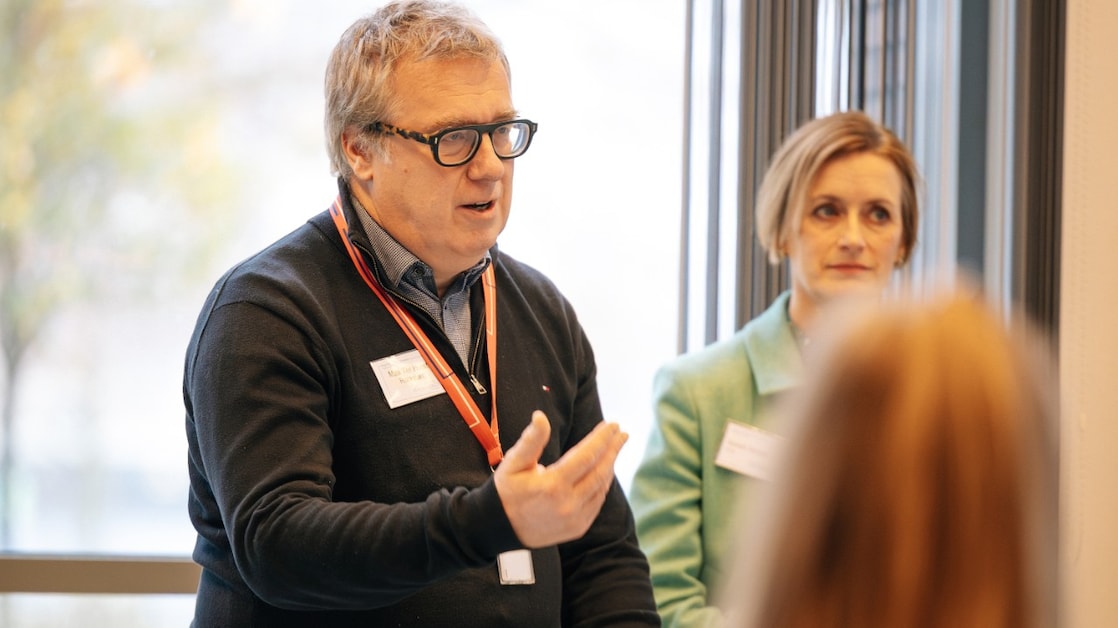
Terwijl 64% van het wereldwijde durfkapitaal voor startende ondernemingen in 2025 naar de VS ging, blijft Europa steken op ongeveer 15%. “Er zijn veel uitvindingen in Nederland. We hebben sterke universiteiten en veelbelovende start-ups. Wat een beetje ontbreekt is voldoende funding”, zegt Max ter Horst van Rockstart. Bij deze internationale, zogenoemde “early-stage” impactinvesteerder is hij verantwoordelijk voor alle energie‑ en klimaatgerelateerde investeringen. “Er is wel kapitaal beschikbaar, bijvoorbeeld bij pensioenfondsen, maar dat wordt nog onvoldoende in start-ups gestoken. Dat is eigenlijk een Europees probleem. De uitvindingen worden hier gedaan maar de innovaties en het intellect verhuizen regelmatig naar de VS, omdat ze daar meer geld kunnen krijgen.”
Versnipperd Europa
“Europa heeft bovendien te maken met versnippering en trage besluitvorming”, vervolgt Ter Horst. “We hebben veel landen met elk hun eigen regels. Daardoor zijn Europese start-ups per definitie minder schaalbaar dan in de VS.” Gelukkig zijn er ook positieve ontwikkelingen. De Critical Raw Materials Act (CRMA) is EU‑wetgeving uit 2024 die tot doel heeft om de Europese afhankelijkheid van andere landen — met name China — voor kritieke grondstoffen drastisch te verkleinen. “De wet stimuleert investeringen in innovatie, onderzoek en circulariteit. Nieuwe initiatieven zoals EU‑Inc, een juridisch regime dat het oprichten en laten groeien van een Europese entiteit eenvoudiger moet maken, helpen ook”, legt ter Horst uit.
De overheid kan ook veel betekenen. “Kijk naar elektrische voertuigen in China. Daar is jarenlang consequent in geïnvesteerd, ook vanuit overheidsprogramma’s met duidelijke en consistente doelstellingen. Inmiddels loopt China voorop — dat halen we niet zomaar meer in.”
De Baltische staten zijn een ander voorbeeld: in bevolkingsaantal kleine landen met opvallend veel start-ups. “Daar is de overheid op alle niveau’s aangehaakt. Software is bijvoorbeeld onderdeel van hun onderwijsprogramma’s. Op het gymnasium van mijn zoon doen ze daar weinig mee. Grieks en Latijn zijn leuk, maar andere vaardigheden hebben de toekomst.”
Wie is Max ter Horst?
Max ter Horst is managing partner Energy bij Rockstart, een internationale early‑stage impactinvesteerder. Opgeleid als chemisch technoloog, begon Ter Horst zijn loopbaan bij consultancybureau McKinsey, waar hij zich specialiseerde in energie en duurzame technologie. In die tijd hielp hij energiebedrijf Essent bij de uitbreiding van de winddivisie in Duitsland. Later stapte hij zelf in het ondernemerschap. Zijn start-up e‑Kite werd bekroond tot European Start‑up of the Year – een prijs die werd toegekend door onder andere Steve Wozniak, mede-oprichter van Apple. Via deze ondernemerservaring rolt Max de wereld van venture capital in. Inmiddels werkt hij al 22 jaar in cleantech, en is hij bij Rockstart verantwoordelijk voor alle energie- en klimaatgerelateerde investeringen.
Nieuwe zwaartepunten: AI, defensie en weerbaarheid
Op techconferenties als Slush in Helsinki is het beeld glashelder: AI, defensietechnologie en weerbaarheid zijn de nieuwe zwaartepunten. Geopolitieke ontwikkelingen duwen investeringen in een nieuwe richting.
Ter Horst: “AI is misschien een tikkie overhyped, maar ik geloof wel dat het grote impact heeft op de economie. Wat opvalt, is hoe snel consumenten AI omarmen. Sneller dan met internet destijds. Met Google Maps duurde het wel even voordat mensen gingen kijken waar een goeie broodjeszaak in de buurt zit.”
Tegelijkertijd zit er een energiecomponent aan AI: modellen en datacenters verbruiken gigantisch veel stroom. “Je kunt AI pas verder opschalen als er voldoende elektriciteit is. Daarom investeren we zowel in AI als oplossing, als in bedrijven die de energie-intensiteit van AI reduceren, zoals met slimme software of efficiëntere chips. Daarmee maak je echt impact.”
De groeiende aandacht voor defensietechnologieën en weerbaarheid wordt aangewakkerd door de oorlog in Oekraïne en geopolitieke onzekerheid. “Europa moet op eigen benen kunnen staan”, zegt Ter Horst. “Zonder robuuste data-en energie-infrastructuur functioneert de maatschappij niet. Start-ups kunnen hier versnellen — zij schakelen sneller wanneer haast is geboden. Daarnaast is Europa voor belangrijke grondstoffen nog te afhankelijk van landen waarmee het geen stabiele relatie heeft. Het vergroten van de eigen productie, meer recycling en alternatieve energiebronnen zijn cruciaal om minder kwetsbaar te zijn.“
En het klimaat dan?
Klimaat stond jarenlang bovenaan de investeringsagenda. In 2023 was ongeveer 30% van de investeringen met venture capital gericht op klimaat — toen het grootste domein. “Sindsdien is dat ingezakt”, zegt Ter Horst. Venture kapitaal is geld dat wordt geïnvesteerd in bedrijven die in een vroeg stadium verkeren en hoge risico's met zich meebrengen, maar ook het potentieel hebben om snel te groeien en aanzienlijke winsten te genereren.
“Maar geopolitiek verandert niets aan klimaatverandering. Bosbranden en overstromingen zullen de urgentie vanzelf weer vergroten. Bovendien draagt cleantech — technologieën voor duurzamere energie en economie — ook bij aan minder afhankelijkheid van import, wat ook de Europese weerbaarheid versterkt.”
Hoewel binnen venture capital-investeringen de thema’s snel verschuiven, blijft Rockstart kijken naar de langere termijn en investeren in klimaatoplossingen. “Technologieën veranderen, maar de energiesector blijft bestaan en ons netwerk is over 10 jaar nog steeds relevant.”
Ter Horst ziet bovendien een opleving in deeptech en hardware. Deeptech is een vakterm voor onderzoeksintensieve hardware/technologie met langere ontwikkeltijd. Software kan veel, maar zonder fysieke technologie — zoals warmtepompen, batterijopslag en elektrische infrastructuur — komt de energietransitie niet van de grond. “Hardware is wel lastiger schaalbaar, maar onmisbaar. De software moet wel iets hebben om aan te sturen. Gelukkig zien we steeds meer ondersteuning, bijvoorbeeld via deeptech-regelingen van de Rijksdienst voor Ondernemend Nederland, ofwel RVO.”
Max ter Horst, Rockstart"Wat opvalt, is hoe snel consumenten AI omarmen. Sneller dan met internet destijds"
Subsidies
Subsidies kunnen een sector in beweging brengen, maar ze moeten volgens Ter Horst wel tijdelijk zijn. “De Europese Unie doet goede dingen, bijvoorbeeld op het gebied van kritieke mineralen. We hebben die grondstoffen nodig, dus steun is welkom. Maar op termijn moet duurzame energie en cleantech zélf competitief worden. Subsidies veranderen continu — daar kun je geen bedrijf op bouwen.”
Een risico is dat start-ups juist te veel op financiële steun van buiten gaan leunen. “Soms zie je dat jonge bedrijven vooral subsidieregelingen najagen, in plaats van nadenken over hun klant en markt. Dan leidt het af. Subsidies moeten passen in je strategie en niet de strategie zijn. Dan is het verspild geld.”
LeapSprong
In de eerste fase van een start-up telt maar één ding: testen, leren, en weer testen. Programma’s zoals het Amsterdamse innovatieprogramma LeapSprong helpen daarbij door start-ups te koppelen aan concrete, lokale problemen — en dat werkt, zegt Ter Horst. “LeapSprong richt zich op vraagstukken die nú spelen in Amsterdam en Nederland, zoals netcongestie. Door gebrek aan capaciteit kunnen energie‑intensieve bedrijven zich soms niet eens meer vestigen. Dat remt de groei, de werkgelegenheid en de huisvesting. Er zitten start-ups bij die dat adresseren.”
“Voor ons als fonds liggen daar parallellen”, vervolgt ter Horst. “Onderzoek van strategieadviesbureau Boston Consulting Group (BCG) laat zien dat netcongestie Nederland jaarlijks tussen de 10 en 40 miljard euro kan kosten. Dat is een urgent maatschappelijk probleem. Zo helpen programma’s zoals LeapSprong niet alleen start-ups, maar pakken ze ook een maatschappelijk probleem aan.”
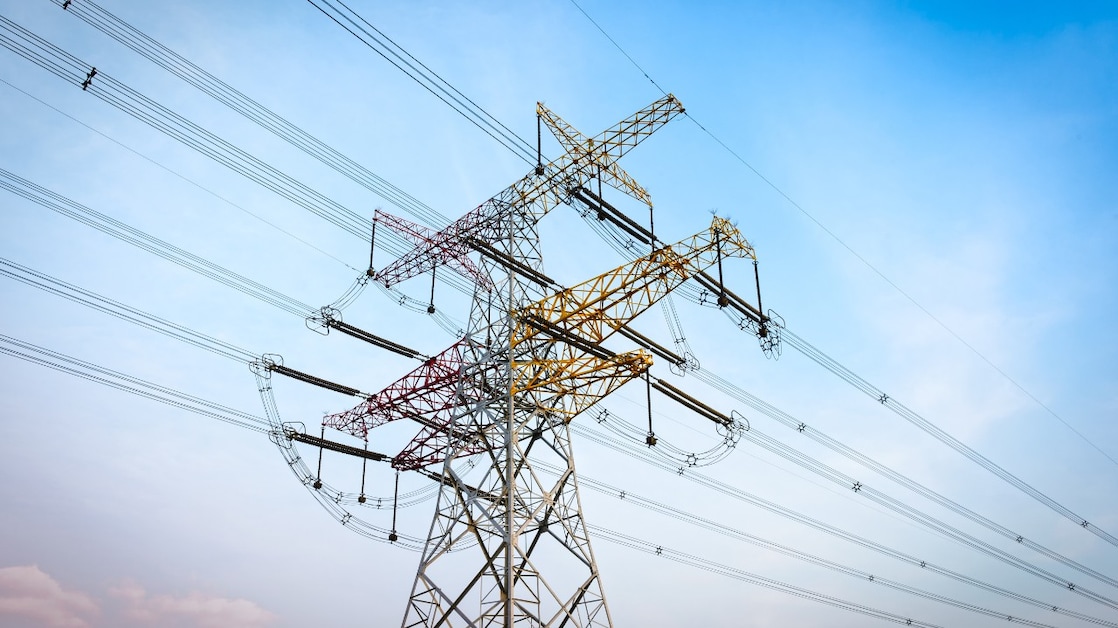
Max ter Horst, Rockstart"Zonder elektrische infrastructuur komt de energietransitie niet van de grond"
Over Rockstart
Rockstart is een early‑stage impactinvesteerder die start-ups helpt groeien met kapitaal, coaching en toegang tot een groot netwerk van experts, bedrijven en investeerders. Shell werkt al jaren samen met Rockstart, onder meer via het Amsterdamse innovatieprogramma LeapSprong, waar startups worden gekoppeld aan urgente vraagstukken in de regio Amsterdam; de New Energy Challenge, voor Europese start-ups die werken aan duurzame energietrechnologieën; en het Shell Impact Fonds, voor impactondernemingen en maatschappelijke organisaties die zich inzetten voor een inclusieve energietransitie.
Over LeapSprong Amsterdam
LeapSprong Amsterdam is een innovatieprogramma van de gemeente Amsterdam, start-upaccelerator Rockstart en de Energy Transition Campus Amsterdam (ETCA). Op de ETCA werkt Shell met ruim 30 andere partijen aan oplossingen in de energietransitie. LeapSprong Amsterdam richt zich op de energietransitie in de haven en industrie. Start-ups kunnen hun oplossing aandragen en de beste ideeën worden geselecteerd om verder te ontwikkelen. De winnende start-ups krijgen indien relevant toegang tot de laboratoria van de ETCA, begeleiding én kans op een proef in de regio. Aan de 2025-editie van LeapSprong — de tweede in het bestaan van het programma — doen de volgende acht start-ups mee: Hexwise, J4Energy, 0Plastic, H2Terminals, HyER Power, SeaO2, Upheat en Snerpa Power.
Innovating between AI hype and geopolitics: is the climate falling out of sight?
22 Jan. 2026
2025 was an unprecedented year for global investments: more than $512 billion in venture capital flowed into start‑ups — the vast majority of into companies in the United States. While climate technology was among investors’ favourites in 2023, artificial intelligence (AI) became the new shining centre of attention last year. That raises two questions: how do we ensure that European innovations can keep up? And what happened to the climate as a theme?

Text: Kirsten Gesink. Photography: Prasit Photo, VonMoos, Wenbin Photo.
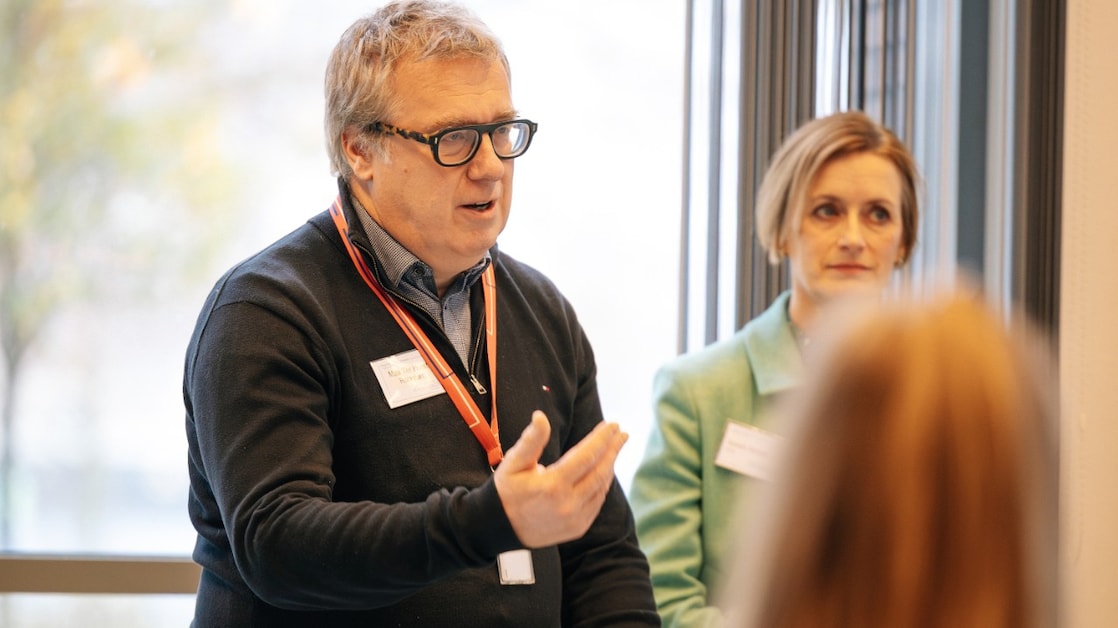
While 64% of global venture capital for start‑ups went to the US in 2025, Europe got stuck at around 15%. “There are many inventions in the Netherlands. We have great universities and promising start‑ups. But sufficient funding is somewhat missing,” says Max ter Horst of Rockstart. At this international “early‑stage” impact investor — based in Amsterdam, the Netherlands — he is responsible for all energy‑ and climate‑related investments. “There is capital available — for example at pension funds — but too little of it is channelled into start‑ups. That’s typical a European problem. The inventions are made here, but the innovations and intellectual property frequently move to the US, because they can get more funding there.”
Fragmented Europe
“Europe also suffers from fragmentation and slow decision‑making,” Ter Horst continues. “We have many countries, each with its own rules. As a result, European start‑ups are by definition less scalable than in the US.”
Fortunately, there are also positive developments. The Critical Raw Materials Act (CRMA) is EU legislation from 2024 aimed at drastically reducing Europe’s dependence on other countries — particularly China — for critical raw materials. “The law encourages investments in innovation, research and circularity. New initiatives such as EU‑Inc, a legal regime designed to make it easier to establish and grow a European entity, also help,” Ter Horst explains.
Governments can play a major role. “Look at electric vehicles in China. There has been consistent investment in them for years — also through government programmes with clear and stable objectives. China is now far ahead — not something we can easily catch up with.”
The Baltic states are another example: countries with relatively small populations but a remarkable number of start‑ups. “There, government is engaged at all levels. Software, for instance, is part of their education programmes. At my son’s grammar school in the Netherlands, there is hardly any of that. Greek and Latin are nice, but other skills will shape the future.”
Who is Max ter Horst?
Max ter Horst is Managing Partner Energy at Rockstart, an international early‑stage impact investor. Trained as a chemical engineer, Ter Horst began his career at consultancy firm McKinsey, where he specialised in energy and sustainable technology. During that time, he supported energy company Essent in expanding its wind division in Germany.
He later moved into entrepreneurship himself. His start‑up e‑Kite was awarded European Start‑up of the Year — a prize judged by, among others, Steve Wozniak, co‑founder of Apple. This entrepreneurial experience led Max into the world of venture capital. He has now worked in cleantech for 22 years and is responsible at Rockstart for all energy‑ and climate‑related investments.
New priorities: AI, defence and resilience
At tech conferences such as Slush in Helsinki, Finland, the picture is crystal clear: AI, defence technology and resilience are the new areas of focus. Geopolitical developments are pushing investments in a new direction.
Ter Horst: “AI may be a bit overhyped, but I do believe it will have a major impact on the economy. What stands out is how quickly consumers are adopting AI — faster than they did with the internet. It took quite a while before people started checking Google Maps for where to get a good sandwich nearby.”
At the same time, AI has an energy component: models and data centres consume enormous amounts of electricity. “You can only scale AI up if there’s sufficient electricity. That’s why we invest both in AI as a solution and in companies that reduce the energy intensity of AI — through smart software or more efficient chips. That’s where one can really make an impact.”
Growing attention for defence technologies and societal resilience is being fuelled by the war in Ukraine and geopolitical uncertainty. “Europe must be able to stand on its own,” says Ter Horst. “Without robust data and energy infrastructure, society cannot function. Start‑ups can accelerate when urgency is required. In addition, Europe is still too dependent on countries with which it has no stable relationship with for key raw materials. Increasing domestic production, more recycling and alternative energy sources are crucial to becoming less vulnerable.”
And what about the climate?
For years, the climate topped the investment agenda. In 2023, around 30% of venture capital investments were climate‑focused — at the time the largest domain. “Since then, the percentage has dropped,” Ter Horst says. (Note that venture capital is money invested in early‑stage companies that involve high risks but also have the potential for rapid growth and significant returns.)
“But geopolitics does nothing to turn climate change itself around. Wildfires and floods will inevitably increase the sense of urgency again. Moreover, cleantech — technologies supporting more sustainable energy and a greener economy — also reduces reliance on imports, which in turn strengthens European resilience.”
Although themes within venture‑capital investment shift quickly, Rockstart continues to focus on the long term and on climate solutions. “Technologies evolve, but the energy sector will stay, and our network will still be relevant in ten years from now.”
Ter Horst also sees a resurgence in deeptech and hardware. Deeptech refers to research‑intensive hardware or technologies with longer development cycles. Software can do a lot, but without physical technologies — such as heat pumps, battery storage and electric infrastructure — the energy transition cannot happen. “Hardware is harder to scale, but indispensable. Software still needs something to control. Fortunately, we are seeing more support, for example through deeptech schemes from the Netherlands Enterprise Agency RVO.”
Max ter Horst, Rockstart"What stands out is how quickly consumers are adopting AI"
Subsidies
Subsidies can set a sector in motion, but according to Ter Horst they must remain temporary. “The European Union is doing good work, for instance on critical minerals. We need those raw materials, thus support is great. But in the long term, sustainable energy and cleantech must become competitive on their own. Subsidies change constantly — you can’t build a business on them.”
One risk is that start‑ups become too dependent on external financial support. “Sometimes young companies are mainly chasing subsidy schemes instead of focusing on their customer and market. That becomes a distraction. Subsidies should fit into one’s company strategy — not be the strategy. Otherwise, it’s wasted money.”
LeapSprong
In the first phase of a start‑up, only one thing matters: testing, learning, and testing again. Programmes such as LeapSprong — the innovation programme in Amsterdam — help by connecting start‑ups to concrete, local problems. And that works, Ter Horst says. “LeapSprong focuses on issues currently affecting Amsterdam and the Netherlands, such as grid congestion. With a lack of grid capacity, it is sometimes impossible for energy‑intensive companies to establish themselves. That slows growth, employment and housing. There are start‑ups in the programme addressing this.”
“For us as a fund, the parallels are clear,” Ter Horst continues. “Research by Boston Consulting Group (BCG) shows that grid congestion could cost the Netherlands between 10 and 40 billion euros per year. That is an urgent societal problem. Programmes like LeapSprong not only support start‑ups but also help tackle a major public challenge.”
Max ter Horst, Rockstart"Without electric infrastructure the energy transition cannot happen"
Over Rockstart
Rockstart is an early‑stage impact investor that helps start‑ups grow through capital, coaching, and access to a large network of experts, businesses and investors. Shell has been working with Rockstart for many years, including through the Amsterdam‑based innovation programme LeapSprong, which connects start‑ups to urgent regional challenges in the Amsterdam area; the New Energy Challenge, for European start‑ups developing sustainable energy technologies; and the Shell Impact Fund, which supports impact‑driven enterprises and social organisations committed to an inclusive energy transition.
Over LeapSprong Amsterdam
LeapSprong Amsterdam is an innovation programme run by the City of Amsterdam, start‑up accelerator Rockstart, and the Energy Transition Campus Amsterdam (ETCA). At the ETCA, Shell works with more than 30 other parties on solutions for the energy transition. LeapSprong Amsterdam focuses on the energy transition in the port and industrial areas. Start‑ups can put forward their solutions, and the best ideas are selected for further development. The winning start‑ups receive, where relevant, access to ETCA’s laboratories, guidance, and the opportunity to run a pilot in the region. The 2025 edition of LeapSprong — the second since the programme began — includes the following eight start‑ups: Hexwise, J4Energy, 0Plastic, H2Terminals, HyER Power, SeaO2, Upheat and Snerpa Power.