Wereldwijde vraag naar LNG zal naar verwachting met 65% groeien tegen 2050
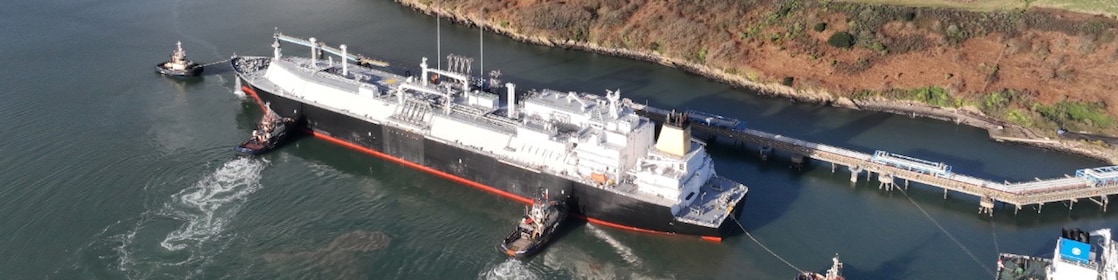
De wereldwijde vraag naar vloeibaar aardgas (LNG) zal naar verwachting stijgen tot bijna 700 miljoen ton per jaar in 2050, een toename van ongeveer 65% ten opzichte van het niveau van 2025¹. Dat blijkt uit Shells LNG Outlook 2026. Landen blijven prioriteit geven aan de flexibele en betrouwbare energiezekerheid die aardgas en LNG bieden.
In 2025 werd in totaal 422 miljoen ton LNG verhandeld en de verwachting was dat dit volume in 2026 aanzienlijk zou toenemen. Door de ernstige verstoringen van de scheepvaart door de Straat van Hormuz is sinds het begin van het conflict in het Midden-Oosten echter ongeveer een vijfde van de maandelijkse wereldwijde LNG-aanvoer weggevallen. Hierdoor stegen de prijzen op de spotmarkt en werden sommige landen in Azië negatief getroffen.
Nieuwe LNG-exportfaciliteiten in Noord-Amerika
De ingebruikname van nieuwe LNG-exportfaciliteiten in Noord-Amerika, betere prestaties van bestaande installaties en een tragere groei van de LNG-import in Azië hebben de impact van de verminderde aanvoer uit het Midden-Oosten deels gecompenseerd. Daardoor kan de totale LNG-handel in 2026 vergelijkbaar uitvallen met die van vorig jaar, mits het scheepvaartverkeer door de Straat van Hormuz deze zomer normaliseert. Daarna wordt verwacht dat de groei in 2027 weer aantrekt.
“Het conflict veroorzaakte een schok die door het hele economische systeem heen werkte, maar de LNG-industrie heeft aangetoond veerkrachtig te zijn en zich aan veranderende marktomstandigheden te kunnen aanpassen”, aldus Cederic Cremers, president Integrated Gas bij Shell plc. “Hoewel er meer investeringen nodig zijn in zowel aanbod- als vraaginfrastructuur, blijven de langetermijnvooruitzichten sterk en zal LNG een stabiliserende kracht blijven binnen het wereldwijde energiesysteem.”
Groei van het aanbod in aantocht
Tegen 2030 zal naar verwachting ongeveer 180 miljoen ton nieuwe jaarlijkse LNG-capaciteit op de markt komen. Dat verbetert de beschikbaarheid en betaalbaarheid van gas en stimuleert de vraag in nieuwe markten.
De mate waarin landen van dit nieuwe aanbod kunnen profiteren, hangt echter af van de beschikbare infrastructuur in importerende landen, waaronder hervergassingscapaciteit en pijpleidingverbindingen, vooral in Zuid- en Zuidoost-Azië.
Volgens prognoses zullen deze regio’s tegen 2050 goed zijn voor ongeveer 40% van de wereldwijde LNG-import, om te voldoen aan een snel groeiende energievraag met lagere emissies dan steenkool. In meer volwassen Aziatische markten, zoals Japan, ontstaan bovendien datacenters als een nieuwe bron van elektriciteitsvraag.
Cruciale rol energiezekerheid Europa
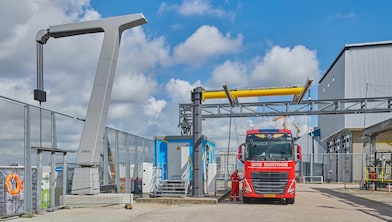
Ook nieuwe vraagsegmenten groeien snel. Naar verwachting zal het gebruik van LNG als scheepsbrandstof (LNG-bunkering) tegen 2035 verzesvoudigen tot zevenmaal het huidige niveau, tot 27 miljoen ton. Dat is meer dan de hoeveelheid LNG die India vorig jaar importeerde.
LNG blijft daarnaast een cruciale rol spelen voor de energiezekerheid van Europa en helpt bij het opvangen van de schommelingen van hernieuwbare energiebronnen terwijl de binnenlandse gasproductie afneemt.
Om aan de stijgende vraag te voldoen, zullen in de jaren 2030 en 2040 aanzienlijke extra investeringen nodig zijn in nieuwe LNG-productiefaciliteiten. Naast de projecten die al in aanbouw zijn, is naar schatting nog eens 200 miljoen ton nieuwe jaarlijkse productiecapaciteit nodig.
Een veerkrachtigere markt
Hoewel de spotprijs van LNG in Azië tijdens het hoogtepunt van de crisis in het Midden-Oosten opliep tot meer dan 20 dollar per miljoen British thermal units (MMBtu), bleef deze aanzienlijk lager dan in 2022, toen de gasvoorziening werd verstoord na de Russische invasie van Oekraïne. Dit weerspiegelt de grotere veerkracht van de LNG-markt vandaag de dag.
Aangezien langlopende leveringscontracten ongeveer twee derde van de totale LNG-handel vertegenwoordigen, lag de gemiddelde prijs die kopers in mei betaalden rond $11 tot $12 per MMBtu, tegenover $7 tot $11 per MMBtu in januari, vóór het uitbreken van het conflict.
Tien jaar Shell LNG Outlook
De Shell LNG Outlook verschijnt inmiddels voor het tiende jaar. Sinds de eerste editie in 2017:
- is de wereldwijde LNG-handel met ongeveer 60% gestegen, van 264 miljoen ton naar 422 miljoen ton;
- is de LNG-import van China met ongeveer 250% toegenomen;
- groeide het aantal LNG-importerende landen van 36 naar 49; en
- steeg het aantal schepen dat op LNG vaart van 77 naar meer dan 800.
¹ Deze berekening is gebaseerd op het gemiddelde van de prognoses voor de LNG-vraag in 2050, namelijk 695 miljoen ton. De bandbreedte ligt tussen 610 en 780 miljoen ton per jaar. Uitgaande van de totale LNG-handel in 2025 komt dit neer op een verwachte groei van ongeveer 65%. Dit zijn dezelfde prognosecijfers die werden gebruikt in Shells Strategic Spotlight on LNG (pdf, 24 MB), gepubliceerd in maart van dit jaar.
Cautionary note
Cautionary note
The companies in which Shell plc directly and indirectly owns investments are separate legal entities. In this announcement “Shell”, “Shell Group” and “Group” are sometimes used for convenience to reference Shell plc and its subsidiaries in general. Likewise, the words “we”, “us” and “our” are also used to refer to Shell plc and its subsidiaries in general or to those who work for them. These terms are also used where no useful purpose is served by identifying the particular entity or entities. ‘‘Subsidiaries’’, “Shell subsidiaries” and “Shell companies” as used in this announcement refer to entities over which Shell plc either directly or indirectly has control. The terms “joint venture”, “joint operations”, “joint arrangements”, and “associates” may also be used to refer to a commercial arrangement in which Shell has a direct or indirect ownership interest with one or more parties. The term “Shell interest” is used for convenience to indicate the direct and/or indirect ownership interest held by Shell in an entity or unincorporated joint arrangement, after exclusion of all third-party interest.
Forward-Looking statements
This announcement contains forward-looking statements (within the meaning of the U.S. Private Securities Litigation Reform Act of 1995) concerning the financial condition, results of operations and businesses of Shell. All statements other than statements of historical fact are, or may be deemed to be, forward-looking statements. Forward-looking statements are statements of future expectations that are based on management’s current expectations and assumptions and involve known and unknown risks and uncertainties that could cause actual results, performance or events to differ materially from those expressed or implied in these statements. Forward-looking statements include, among other things, statements concerning the potential exposure of Shell to market risks and statements expressing management’s expectations, beliefs, estimates, forecasts, projections and assumptions. These forward-looking statements are identified by their use of terms and phrases such as “aim”; “ambition”; ‘‘anticipate’’; “aspire”, “aspiration”, ‘‘believe’’; “commit”; “commitment”; ‘‘could’’; “desire”; ‘‘estimate’’; ‘‘expect’’; ‘‘goals’’; ‘‘intend’’; ‘‘may’’; “milestones”; ‘‘objectives’’; ‘‘outlook’’; ‘‘plan’’; ‘‘probably’’; ‘‘project’’; ‘‘risks’’; “schedule”; ‘‘seek’’; ‘‘should’’; ‘‘target’’; “vision”; ‘‘will’’; “would” and similar terms and phrases. There are a number of factors that could affect the future operations of Shell and could cause those results to differ materially from those expressed in the forward-looking statements included in this announcement, including (without limitation): (a) price fluctuations in crude oil and natural gas; (b) changes in demand for Shell’s products; (c) currency fluctuations; (d) drilling and production results; (e) reserves estimates; (f) loss of market share and industry competition; (g) environmental and physical risks, including climate change; (h) risks associated with the identification of suitable potential acquisition properties and targets, and successful negotiation and completion of such transactions; (i) the risk of doing business in developing countries and countries subject to international sanctions; (j) legislative, judicial, fiscal and regulatory developments including tariffs and regulatory measures addressing climate change; (k) economic and financial market conditions in various countries and regions; (l) political risks, including the risks of expropriation and renegotiation of the terms of contracts with governmental entities, delays or advancements in the approval of projects and delays in the reimbursement for shared costs; (m) risks associated with the impact of pandemics, regional conflicts, such as the Russia-Ukraine war and the conflict in the Middle East, and a significant cyber security, data privacy or IT incident; (n) the pace of the energy transition; and (o) changes in trading conditions. No assurance is provided that future dividend payments will match or exceed previous dividend payments. All forward-looking statements contained in this announcement are expressly qualified in their entirety by the cautionary statements contained or referred to in this section. Readers should not place undue reliance on forward-looking statements. Additional risk factors that may affect future results are contained in Shell plc’s Form 20-F for the year ended December 31, 2025 (available at www.shell.com/investors/news-and-filings/sec-filings.html and www.sec.gov). These risk factors also expressly qualify all forward-looking statements contained in this announcement and should be considered by the reader. Each forward-looking statement speaks only as of the date of this announcement, June 30, 2026. Neither Shell plc nor any of its subsidiaries undertake any obligation to publicly update or revise any forward-looking statement as a result of new information, future events or other information. In light of these risks, results could differ materially from those stated, implied or inferred from the forward-looking statements contained in this announcement.
Shell’s net carbon intensity
Also, in this announcement we may refer to Shell’s “net carbon intensity” (NCI), which includes Shell’s carbon emissions from the production of our energy products, our suppliers’ carbon emissions in supplying energy for that production and our customers’ carbon emissions associated with their use of the energy products we sell. Shell’s NCI also includes the emissions associated with the production and use of energy products produced by others which Shell purchases for resale. Shell only controls its own emissions. The use of the terms Shell’s “net carbon intensity” or NCI is for convenience only and not intended to suggest these emissions are those of Shell plc or its subsidiaries.
Shell’s net-zero emissions target
Shell’s operating plan and outlook are forecasted for a three-year period and ten-year period, respectively, and are updated every year. They reflect the current economic environment and what we can reasonably expect to see over the next three and ten years. Accordingly, the outlook reflects our combined Scope 1 and 2 target, NCI target and our oil products ambition over the next ten years. However, Shell’s operating plan and outlook cannot reflect our 2050 net-zero emissions target, as this target is outside our planning period. Such future operating plans and outlooks could include changes to our portfolio, efficiency improvements and the use of carbon capture and storage and carbon credits. In the future, as society moves towards net-zero emissions, we expect Shell’s operating plans and outlooks to reflect this movement. However, if society is not net zero in 2050, as of today, there would be significant risk that Shell may not meet this target.
Forward-Looking non-GAAP measures
This announcement may contain certain forward-looking non-GAAP measures. We are unable to provide a reconciliation of these forward-looking non-GAAP measures to the most comparable GAAP financial measures because certain information needed to reconcile those non-GAAP measures to the most comparable GAAP financial measures is dependent on future events some of which are outside the control of Shell, such as oil and gas prices, interest rates and exchange rates. Moreover, estimating such GAAP measures with the required precision necessary to provide meaningful reconciliation is extremely difficult and could not be accomplished without unreasonable effort. Non-GAAP measures in respect of future periods which cannot be reconciled to the most comparable GAAP financial measure are calculated in a manner which is consistent with the accounting policies applied in Shell plc’s consolidated financial statements.
The contents of websites referred to in this announcement do not form part of this announcement.
We may have used certain terms, such as resources, in this announcement that the United States Securities and Exchange Commission (SEC) strictly prohibits us from including in our filings with the SEC. Investors are urged to consider closely the disclosure in our Form 20-F, File No 1-32575, available on the SEC website www.sec.gov.
Presentatie LNG Outlook 2026
Cederic Cremers, president Integrated Gas, en Tom Summers, executive vice-president Shell LNG Marketing & Trading, over de Shell LNG Outlook 2026 (in het Engels)