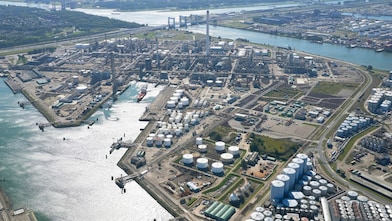
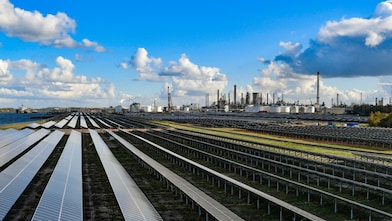
Wie wij zijn
Als een van de meest toonaangevende energiebedrijven ter wereld speelt Shell een sleutelrol in de energievoorziening. Wereldwijd met circa 85.000 werknemers in 70 landen; in Nederland met circa 8.000 medewerkers met 100 nationaliteiten. Lees hier meer over onze activiteiten in Nederland.


Energie voor vandaag, voor morgen en voor jou
Onze strategie
Onze strategie is erop gericht meer waarde te leveren met minder uitstoot. We versnellen de transformatie van Shell naar een slankere organisatie om (nog) beter te concurreren. Daarin richten we ons op veerkrachtige rendementen en belonen we onze aandeelhouders. De kernwoorden van deze transformatie zijn prestatiegericht, discipline en vereenvoudiging.
Ons doel
Shells doel is om samen — met elkaar, onze klanten en onze partners — in energieproducten te voorzien die nodig zijn voor het dagelijks leven en bedrijvigheid. Powering progress together.
Onze visie
Onze visie is om 's werelds toonaangevende geïntegreerde energiebedrijf te zijn — met impact op schaal, door energie en mensen te verbinden, en vraag en aanbod op elkaar af te stemmen.
Onze waarden
Of we nu werken op onze offshore platforms, op onze Shell-stations, op onze kantoren of vanuit huis, we dragen allemaal bij aan het succes van Shell. Terwijl we onze cultuur blijven vormen, zijn we trots op onze kernwaarden: eerlijkheid, integriteit en respect voor mensen.
Onze kernwaarden zijn gewaarborgd in de Shell General Business Principles, de Code of Ethics en de Code of Conduct. Je leest er meer over op Shell.com.
Meer waarde
Meer waarde
Wij zullen zorgen voor betere prestaties, kosten- en kapitaaldiscipline verankeren en fundamentele keuzes maken binnen onze portefeuille om meer waarde te creëren voor onze aandeelhouders. Dat doen we via een progressief dividendbeleid en door prioriteit te geven aan de inkoop van eigen aandelen.
Minder uitstoot
Minder uitstoot
Wij zetten ons in om onze rol te spelen in het helpen verduurzamen van het mondiale energiesysteem. Enkele voorbeelden:
- Eind 2025 hadden we onze operationele Scope 1- en Scope 2-emissies, op nettobasis, met 36% verminderd ten opzichte van het referentiejaar 2016.
- Eind 2025 hadden we de netto koolstofintensiteit (NCI)1 van onze energieproducten met 9% verlaagd ten opzichte van het referentiejaar 2016.
- In 2025 hadden we de uitstoot van klanten als gevolg van het gebruik van onze olieproducten2 met 17,9% verminderd ten opzichte van het referentiejaar 2021.
- In januari 2025 hebben we een einde gemaakt aan routinematig affakkelen in onze upstreamactiviteiten.
- In 2025 realiseerden we een methaanemissie-intensiteit van 0,04% voor door Shell geëxploiteerde olie- en gasactiva met vermarkt gas, en van 0,002% voor door Shell geëxploiteerde olie- en gasactiva zonder vermarkt gas.
- In 2025 behielden we in onze Smeermiddelen-divisie een aandeel van 99% Shell-merkverpakkingen dat als herbruikbaar of recyclebaar is geclassificeerd. In onze Mobility-divisie was dat aandeel 96%, vergeleken met 79% in het referentiejaar 2022.
- Eind 2025 hadden we een aandeel van 21% gerecycled plastic (op gewichtsbasis) bereikt in Shell-merkkunststofverpakkingen, vergeleken met 10% in het referentiejaar 2022.
1. Average intensity, weighted by sales volume, of the energy products we sell, on an equity boundary, net of carbon credits. Estimated total GHG emissions included in NCI reflect well-to-wheel emissions associated with energy products sold by Shell. This includes the well-to-tank emissions associated with the manufacturing of energy products by others that are sold by Shell.
2. Scope 3, Category 11
Het bovenste deel van deze pagina is voor het laatst vernieuwd op 10 september 2026.

Dit is Shell: één merk, vele bedrijven
Shell is één van de grootste energiebedrijven in de wereld. Bij Shell werken wereldwijd zo’n 85.000 mensen in meer dan 70 landen. De meeste Nederlanders kennen ons van de 570 retailstations waar ze tanken, laden en verse broodjes en koffie kunnen kopen. Maar Shell is meer dan de stations. Het bedrijf dat ruim 135 jaar geleden begon, groeide flink. En gedurende die tijd raakten Shell en Nederland met elkaar vervlochten.
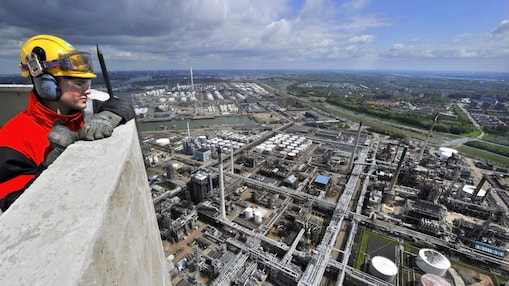
De Shell-keten in eenvoudige taal
Al 135 jaar zorgt Shell in Nederland voor allerlei producten voor alledaags gebruik. Van brandstof voor ieders auto, gas voor ieders verwarming tot aan de bouwstenen van ieders matras. Maar hoe werkt die aaneenschakeling van allerlei bedrijvigheid nu eigenlijk. En wat gebeurt er op de vele locaties waar het Shell-logo op de gevel prijkt? Een verhaal over de keten van Shell, over hoe olie, gas en stroom van de bron bij de eindgebruiker komen. Om het simpel te houden.
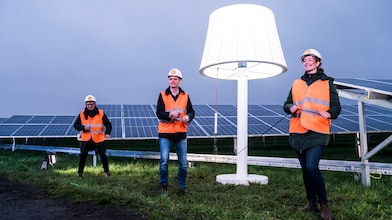
Shell Nederland in vogelvlucht

Personeel
Circa 8.000 medewerkers met 100 nationaliteiten werken bij Shell in Nederland.




Shell Nederland in vogelvlucht is voor het laatst geactualiseerd op 5 oktober 2026.
Cautionary note
Cautionary note
The companies in which Shell plc directly and indirectly owns investments are separate legal entities. In this publication “Shell”, “Shell Group” and “Group” are sometimes used for convenience to reference Shell plc and its subsidiaries in general. Likewise, the words “we”, “us” and “our” are also used to refer to Shell plc and its subsidiaries in general or to those who work for them. These terms are also used where no useful purpose is served by identifying the particular entity or entities. ‘‘Subsidiaries’’, “Shell subsidiaries” and “Shell companies” as used in this publication refer to entities over which Shell plc either directly or indirectly has control. The terms “joint venture”, “joint operations”, “joint arrangements”, and “associates” may also be used to refer to a commercial arrangement in which Shell has a direct or indirect ownership interest with one or more parties. The term “Shell interest” is used for convenience to indicate the direct and/or indirect ownership interest held by Shell in an entity or unincorporated joint arrangement, after exclusion of all third-party interest.
Forward-Looking statements
This publication contains forward-looking statements (within the meaning of the U.S. Private Securities Litigation Reform Act of 1995) concerning the financial condition, results of operations and businesses of Shell. All statements other than statements of historical fact are, or may be deemed to be, forward-looking statements. Forward-looking statements are statements of future expectations that are based on management’s current expectations and assumptions, including (without limitation) those concerning Shell’s strategy and operating plans, macroeconomic conditions, future energy demand, supply and product mix, commodity prices, demand for Shell’s products, production results and reserve estimates, development, execution and management of projects, energy transition and climate change, management of safety and environmental risks, costs, cash capital expenditures, technology advancements, legislative, judicial, fiscal and regulatory developments, regional conflicts and trading conditions, and involve known and unknown risks and uncertainties that could cause actual results, performance or events to differ materially from those expressed or implied in these statements. Forward-looking statements include, among other things, statements concerning the potential exposure of Shell to market risks and statements expressing management’s expectations, beliefs, estimates, forecasts, projections and assumptions. These forward-looking statements are identified by their use of terms and phrases such as “aim”; “ambition”; ‘‘anticipate’’; “aspire”, “aspiration”, ‘‘believe’’; “commit”; “commitment”; ‘‘could’’; “desire”; ‘‘estimate’’; ‘‘expect’’; ‘‘goals’’; ‘‘intend’’; ‘‘may’’; “milestones”; ‘‘objectives’’; ‘‘outlook’’; ‘‘plan’’; ‘‘probably’’; ‘‘project’’; ‘‘risks’’; “schedule”; ‘‘seek’’; ‘‘should’’; ‘‘target’’; “vision”; ‘‘will’’; “would” and similar terms and phrases. There are a number of factors that could affect the future operations of Shell and could cause those results to differ materially from those expressed in the forward-looking statements included in this publication, including (without limitation): (a) price fluctuations in crude oil and natural gas; (b) changes in demand for Shell’s products; (c) currency fluctuations; (d) drilling and production results; (e) reserves estimates; (f) loss of market share and industry competition; (g) environmental and physical risks, including climate change; (h) risks associated with the identification of suitable potential acquisition properties and targets, and successful negotiation and completion of such transactions; (i) the risk of doing business in developing countries and countries subject to international sanctions; (j) legislative, judicial, fiscal and regulatory developments including tariffs and regulatory measures addressing climate change; (k) economic and financial market conditions in various countries and regions; (l) political risks, including the risks of expropriation and renegotiation of the terms of contracts with governmental entities, delays or advancements in the approval of projects and delays in the reimbursement for shared costs; (m) risks associated with the impact of pandemics, regional conflicts, such as the Russia-Ukraine war and the conflict in the Middle East, and a significant cyber security, data privacy or IT incident; (n) the pace of the energy transition; and (o) changes in trading conditions. No assurance is provided that future dividend payments will match or exceed previous dividend payments. All forward-looking statements contained in this publication are expressly qualified in their entirety by the cautionary statements contained or referred to in this section. Readers should not place undue reliance on forward-looking statements. Additional risk factors that may affect future results are contained in Shell plc’s Form 20-F for the year ended December 31, 2025 (available at www.shell.com/investors/news-and-filings/sec-filings.html and www.sec.gov). These risk factors also expressly qualify all forward-looking statements contained in this publication and should be considered by the reader. Each forward-looking statement speaks only as of the date of this publication, October 5, 2026. Neither Shell plc nor any of its subsidiaries undertake any obligation to publicly update or revise any forward-looking statement as a result of new information, future events or other information. In light of these risks, results could differ materially from those stated, implied or inferred from the forward-looking statements contained in this publication.
Shell’s net carbon intensity and net-zero emissions target
In this publication we may refer to Shell’s “net carbon intensity” (NCI), which includes Shell’s carbon emissions from the production of our energy products, our suppliers’ carbon emissions in supplying energy for that production and our customers’ carbon emissions associated with their use of the energy products we sell. Shell’s NCI also includes the emissions associated with the production and use of energy products produced by others which Shell purchases for resale. Shell only controls its own emissions. The use of the terms Shell’s “net carbon intensity” or NCI is for convenience only and not intended to suggest these emissions are those of Shell plc or its subsidiaries.
Shell’s operating plan and outlook are forecasted for a three-year period and ten-year period, respectively, and are updated every year. They reflect the current economic environment and what we can reasonably expect to see over the next three and ten years. Accordingly, the outlook reflects our combined Scope 1 and 2 target, NCI target and our oil products ambition over the next ten years. However, Shell’s operating plan and outlook cannot reflect our 2050 net-zero emissions target, as this target is outside our planning period. Such future operating plans and outlooks could include changes to our portfolio, efficiency improvements and the use of carbon capture and storage and carbon credits. In the future, as society moves towards net-zero emissions, we expect Shell’s operating plans and outlooks to reflect this movement. However, if society is not net zero in 2050, as of today, there would be significant risk that Shell may not meet this target.
The information provided above regarding Shell’s NCI and net zero emissions target are not intended, nor should they be construed as introducing, suggesting or making any claim, target or representation thereof other than what is included in the publicaiton..
Forward-Looking non-GAAP measures
This publication may contain certain forward-looking non-GAAP measures such as free cash flow and underlying operating expenses. We are unable to provide a reconciliation of these forward-looking non-GAAP measures to the most comparable GAAP financial measures because certain information needed to reconcile those non-GAAP measures to the most comparable GAAP financial measures is dependent on future events some of which are outside the control of Shell, such as oil and gas prices, interest rates and exchange rates. Moreover, estimating such GAAP measures with the required precision necessary to provide a meaningful reconciliation is extremely difficult and could not be accomplished without unreasonable effort. Non-GAAP measures in respect of future periods which cannot be reconciled to the most comparable GAAP financial measure are calculated in a manner which is consistent with the accounting policies applied in Shell plc’s consolidated financial statements. These forward-looking non-GAAP measures are provided to assist readers in understanding management’s use and expectations of such measures and may not be appropriate for other purposes.
The contents of websites referred to in this publication do not form part of this publication.
We may have used certain terms, such as resources, in this publication that the United States Securities and Exchange Commission (SEC) strictly prohibits us from including in our filings with the SEC. Investors are urged to consider closely the disclosure in our Form 20-F, File No 1-32575, available on the SEC website www.sec.gov.