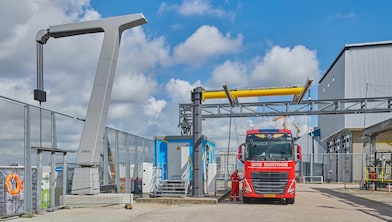
Shells bevoorradingsvloot van 80 vrachtwagens overgestapt naar hernieuwbare brandstof
Alle circa tachtig tankwagens die voor Shell Nederland onderweg zijn, rijden op hernieuwbare brandstof. Het gaat om de tankwagens die de Nederlandse regionale vliegvelden en de Shell-tankstations van kerosine of brandstof voor het wegverkeer voorzien. Daarmee zet Shell actief stappen in het terugdringen van de eigen emissies, de zogenoemde Scope 1, op weg naar netto nul uitstoot in 2050 of eerder.
For English, click here or scroll down
Van de Shell-tankwagenvloot rijden er nu 46 wagens op bio-LNG, de rest op hernieuwbare diesel (HVO). Hernieuwbare diesel tanken de trucks vooral op het depot in Arnhem, met Tessenderlo in België als alternatief. Verder zijn er steunpunten in Oosterhout en Kampen. Shell Energy en Chemicals Park Rotterdam in Pernis heeft haar eigen brandstofdepot. Daar nemen 24 tankwagens voor Shell de bevoorrading van de Nederlandse tankstations, en gedeeltelijk die in België, Duitsland en Frankrijk voor hun rekening.
“Ook zakelijke klanten kozen bewust voor Shell Renewable Diesel en krijgen die direct aangeleverd met een tankwagen die ook op hernieuwbare diesel rijdt”, zegt Freek Gieles, contractmanager NSC Benelux en bij Shell verantwoordelijk voor de tankwagenvloot die vanuit Nederland de locaties bevoorraadt.
Bio-LNG uit Amsterdam
Nederlandse Shell BioLNG komt van de in 2021 met partners Renewi en Nordsol geopende productie-installatie bij Amsterdam en is - aangevuld met buitenlandse productie - ook verkrijgbaar bij alle 14 Shell-trucklocaties in Nederland en België.
De verduurzaming van de vloot tankwagens is al even op gang. In 2020 reden 19 trucks op gewone LNG – dat later bio-LNG werd, een jaar later al 37 trucks. Net als hernieuwbare diesel in gewone dieseltrucks, kan bio-LNG in gewone LNG-trucks worden getankt. Er zijn dus geen motoraanpassingen of nieuwe vrachtwagens voor nodig.
Logistieke puzzel
Gieles: “Het was best een logistieke puzzel, want onze tankwagens zijn twintig uur per dag op de weg. De chauffeurs, die in twee ploegendiensten werken, moeten onderweg kunnen tanken om weer verder te kunnen. Op die locatie moeten dan ook de hernieuwbare brandstoffen aanwezig zijn. Maar het werkt nu goed en het halen van de uitstootreductie van onze eigen vloot was een heel fijn vooruitzicht."
Shell Netherlands' supply fleet of 80 fuel trucks switched to renewable fuel
All approximately eighty tankers running the daily fuel supply for Shell Netherlands run on renewable fuel. These trucks deliver kerosine to the regional airports in the country, and fuel for private and commercial road traffic to the Shell stations. By having our own fleet running on renewable fuels, Shell is actively taking steps to reduce its own emissions (Scope 1), and becoming a net zero emissions company by 2050 or earlier.
Of Shell’s fuel trucks, 46 are now running on bio-LNG, the rest on renewable diesel (HVO). Most of the trucks fill up with renewable diesel at the depot in Arnhem, the Netherlands, with Tessenderlo in Belgium as the main alternative, and filling stations in Oosterhout and Kampen as smaller back-ups. Shell Energy and Chemicals Park Rotterdam (Pernis) has its own fuel depot. Operating out of Pernis, 24 fuel trucks are responsible for supplying the Shell petrol stations in the Netherlands, and partly those in Belgium, Germany and France.
"Business customers also consciously opted for Shell Renewable Diesel and receive it directly with a fuel truck that runs on renewable diesel itself," says Freek Gieles, Contract Manager NSC Benelux and responsible for the Shell Netherlands’ road tanker fleet.
Bio-LNG from Amsterdam
Dutch Shell BioLNG comes from the production plant near Amsterdam, opened in 2021 with partners Renewi and Nordsol. The indigenous production of bio-LNG is – supplemented by production from abroad – also available at all 14 Shell truck locations in the Netherlands and Belgium.
The sustainability of the fuel truck fleet has been underway for some time. Nineteen trucks ran on regular LNG in 2020, reaching 37 trucks the year after. Regular LNG became bio-LNG. Just like regular diesel trucks can run on renewable diesel, regular LNG trucks can run on bio-LNG. Switching to renewable fuel neither requires engine modifications, nor new trucks.
Logistical puzzle
Gieles: "It was quite a logistical puzzle, because our fuel trucks are on the road twenty hours a day. The drivers, who work in two shifts, must be able to refuel on the road to be able to continue. Renewable fuels must therefore also be present at the locations where our trucks fuel up. But it's working well and having our own fleet achieving a reduction of its emissions is just very nice."