Synthetische brandstof
In augustus is de laatste Dutch Grand Prix van de Formule 1 op het circuit van Zandvoort. Voor het eerst rijden de coureurs hun rondes op deze baan op een geheel nieuwe brandstof. Niet meer op basis van fossiele olie, maar op synthetische brandstof. Het is het woord van de maand juli.

Tekst: Matthijs Timmers. Beeld: Eric Shambroom.
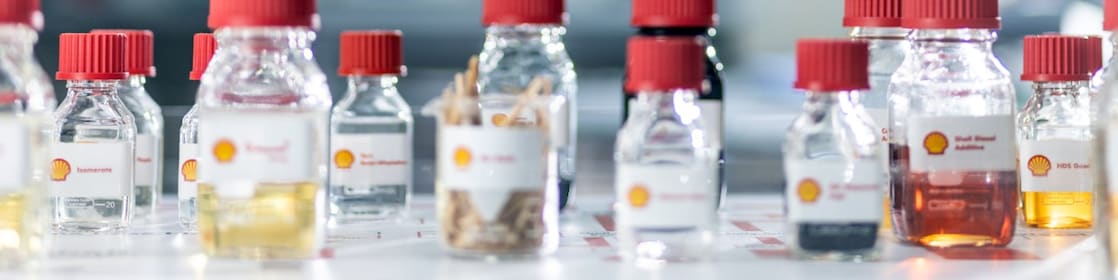
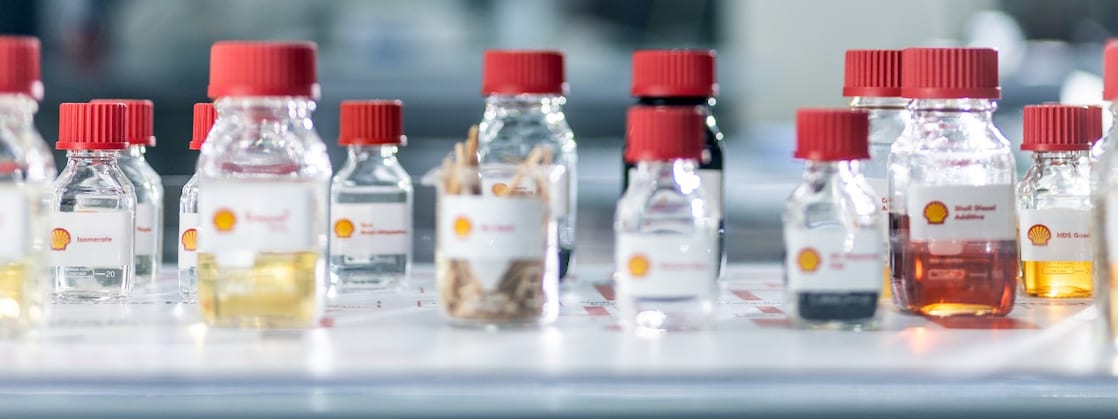
Openingsfoto: proefjes met brandstoffen bij Shell in Hamburg (archieffoto)
Synthetisch, wat betekent dat?
Synthetisch betekent iets kunstmatigs, ofwel door de mens gemaakt. Het woord komt uit het Grieks. Syntithenai betekent letterlijk ‘samengesteld’. Als iets synthetisch is, heeft het dus meerdere bestanddelen die door mensen tot iets nieuws zijn gemengd, in een fabriek of laboratorium. Denk aan al die verschillende soorten kunststoffen voor producten zoals matrassen en meubels, kleding en verpakkingsmateriaal.
Synthetisch kan dus ook met brandstof?
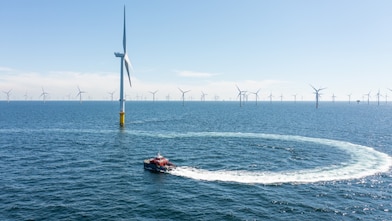
Ja, klopt. Even een lesje scheikunde. Synthetische brandstof bestaat uit een mix van twee bestanddelen. De eerste is groene waterstof, gemaakt met duurzaam opgewekte stroom stroom, bijvoorbeeld met wind van zee. Die groene waterstof moet reageren met CO2 die uit de lucht is gehaald. Dan ontstaat er een gas. Dat is nog steeds geen vloeibare brandstof. Pas na chemische processen en onder hoge druk en hoge temperatuur wordt het gas uiteindelijk vloeibaar en kan het als synthetische brandstof worden gebruikt.
Is deze zelfgemengde brandstof duurzaam?
Dat vraagt wel wat uitleg. Doe deze brandstof in een raceauto, of in een vliegtuig, en bij verbranding komt nog steeds CO2 vrij. Maar omdat er voor het maken van deze brandstof eerst CO2 uit de lucht is gehaald, kun je de uitstoot wegstrepen tegen de afvang. Sommigen noemen dat een CO2-neutrale brandstof.
Dit maakt de Formule 1 een stuk schoner?
Dat is inderdaad de bedoeling. De organisatie achter de racewedstrijden, de FIA, heeft als doel gesteld om uiterlijk in 2030 CO2-neutraal te zijn. Sinds dit raceseizoen rijden de auto’s daarom op zogenoemde Advanced Sustainable Fuels en kunnen de bolides ook een gedeelte van de race volledig elektrisch rijden. Deze speciale Formule 1-brandstoffen zijn synthetische brandstoffen, maar ook biobrandstoffen, gemaakt van afvalstromen.
Klinkt goed, kunnen we bij het tankstation ook synthetische brandstof tanken?
Dat behoort in de toekomst wellicht tot de mogelijkheden, maar vooralsnog is het enkel voorbehouden aan deze snelle raceauto’s. De kosten van de brandstoffen voor de koningsklasse van de racesport worden geschat op honderden euro’s per liter. Dit komt omdat het maken van de brandstof nog écht laboratoriumwerk is, en geen massaproductie. Dat zou een volle tank voor de komende zomervakantie wel erg prijzig maken.

Lees meer!
Van Afschakelen tot Winterbenzine, en van Netcongestie tot Dunkeflaute. De Shell Venster-rubriek Woord van de maand is inmiddels tientallen termen groot.
Jargon buster: Synthetic fuel
16 Jul 2026
In August 2026, the final Dutch Grand Prix of Formula 1 will take place at the Zandvoort circuit. For the first time, the drivers will race around the track using an entirely new fuel. Rather than being based on fossil oil, it is a synthetic fuel. It is Shell Venster's jargon buster of July.

Text: Matthijs Timmers. Photography: Eric Shambroom.
Synthetic – what does it mean?
Synthetic means artificial, or in other words, something made by humans. The word comes from Greek. Syntithenai literally means “to put together” or “to combine”. If something is synthetic, it is made up of several components that people have mixed together to create something new, whether in a factory or a laboratory. Think of the many different types of plastics used in products such as mattresses and furniture, clothing and packaging materials.
So fuel can be synthetic too?
Yes, it can. Here’s a quick chemistry lesson. Synthetic fuel consists of a mixture of two components. The first is green hydrogen, produced using renewable electricity, for example from offshore wind power. That hydrogen is then combined with CO₂ that has been captured from the air. This creates a gas, but not yet a liquid fuel. Only after additional chemical processes, under high pressure and high temperatures, is the gas converted into a liquid that can be used as synthetic fuel.
Is this man-made fuel sustainable?
That requires a bit of explanation. If this fuel is used in a racing car or an aircraft, burning it still releases CO₂. However, because CO₂ was first removed from the atmosphere to produce the fuel, those emissions can be offset against the amount that was captured. Some people therefore describe it as a carbon-neutral fuel.
Does this make Formula 1 much cleaner?
That is certainly the intention. The FIA, Formula 1’s governing body, has set itself the goal of becoming carbon neutral by 2030. Since the start of this racing season, the cars have therefore been running on so-called Advanced Sustainable Fuels, and the power units also allow the cars to complete part of a race using electric power alone. These specialised Formula 1 fuels include both synthetic fuels and biofuels produced from waste streams.
Sounds promising – will we be able to fill up with synthetic fuel at the petrol station?
That may become a possibility in the future, but for now it remains the preserve of these high-performance racing cars. The fuel used in the pinnacle of motorsport is estimated to cost hundreds of euros per litre. This is because producing it is still very much a laboratory process rather than large-scale industrial production. A full tank for this summer’s holiday trip would therefore be rather expensive.