De technische puzzel achter Ecowende-windpark Hollandse Kust West
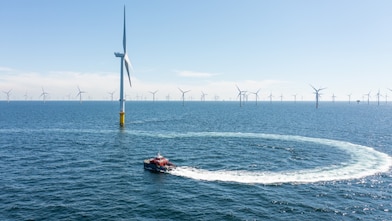
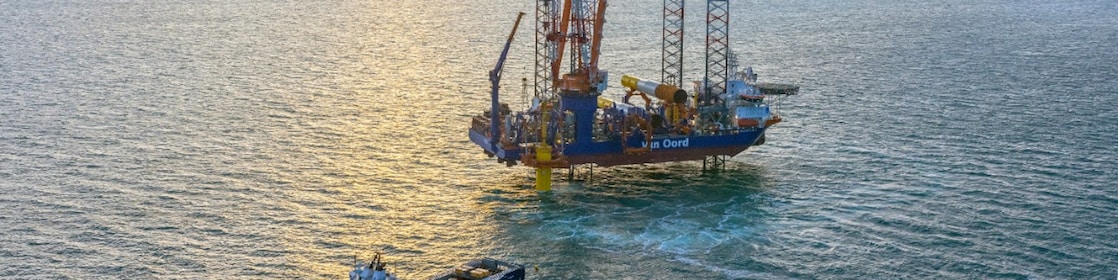
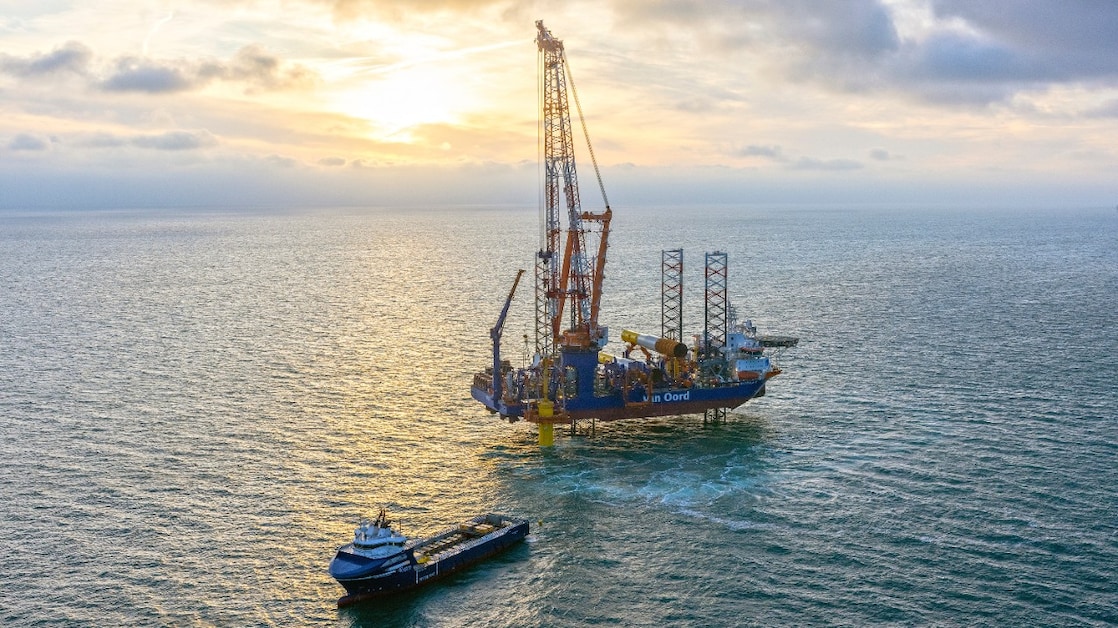
De eerste paal van het Ecowende-windpark (Hollandse Kust West) ging in december de zeebodem in. Een mijlpaal. Projectdirecteur Folkert Visser en technisch manager Jan Maris van Ecowende vertellen over de grootste technische uitdagingen bij het bouwen van wat ’s werelds meest ecologische windpark tot nu toe moet worden.

Tekst: Matthijs Timmers. Beeld: Ecowende / Van Oord.
Folkert Visser was afgelopen jaar op bezoek bij turbinebouwer Vestas. Hij liet zich op een testlocatie in het noorden van Denemarken met een lift in een pilaar zo’n 140 meter naar boven hijsen, richting de gondel van de windturbine. Om daar op grote hoogte de techniek van de machinerie tot zich te nemen. “Indrukwekkend”, noemt hij die ervaring, simpelweg omdat de schaalgrootte toch iedere keer weer verrast.
Groot, groter, grootst
In die indrukwekkende omvang schuilt direct de eerste technische uitdaging. De grootte van de turbines is de laatste jaren verder toegenomen. Werden er voor windpark Hollandse Kust Noord (Crosswind), dat sinds 2023 in bedrijf is, nog turbines van 11 megawatt (MW) gefabriceerd, voor Hollandse Kust West zijn de latest and greatest besteld, aldus Visser: 15 MW. De logica achter de schaalvergroting is helder: hoe hoger het vermogen per turbine, hoe kleiner het aantal windmolens dat hoeft te worden geïnstalleerd. Dat betekent: minder fundamenten, minder verstoringen, minder kabels en minder onderhoud. En dat scheelt in de kosten.
Toch lijkt het plafond in zicht. De diameter van de aansluiting van het voetstuk op de toren gaat voor dit project al richting de 7,5 meter. “Dat gehele fundament schaalt mee met de turbine”, legt technisch manager Jan Maris uit. Deze afmetingen liggen volgens hem voorlopig nog wel binnen het bereikbare. Maar wordt het geheel nóg groter, dan komen de technische grenzen wel dichterbij.
Behoefte aan standaardisatie
Daar komt nog iets bij, volgens Maris. “Bedrijven in de offshore industrie hebben ook behoefte aan een bepaalde standaard.” Want steeds grotere onderdelen vragen op hun beurt om grotere fabricage-opstellingen, nóg grotere schepen voor transport naar zee, en nóg grotere kranen en platforms voor de installatie. De roep om standaardisatie wordt steeds luider. “Al zijn er ook turbinebouwers die er een uitdaging in zien de technische limieten voor schaalvergroting nog nét even verder op te rekken”, aldus de technisch manager.
Bouten van twintig kilo
Maris geeft een voorbeeld van hoe die schaalvergroting in dit project heeft geleid tot een technisch vraagstuk. Neem de flens, een dik stuk staal op het fundament waarop de pilaar van de windmolen wordt vastgeschroefd. Daarvoor zijn bouten nodig, dikke bouten. Nu al zijn deze, met ruim 20 kilo per stuk, door mensenhanden haast niet te hanteren. Laat staan als de turbines in de toekomst nog verder groeien.
Wie zijn Folkert Visser en Jan Maris?
Folkert Visser is als projectdirecteur verantwoordelijk voor het team van Ecowende, al vanaf het begin in 2022. Visser houdt zich vooral bezig met de bouw van het windpark. Hij studeerde civiele techniek aan de TU Delft, werkte vervolgens wereldwijd aan offshore projecten en doet dat sinds 2013 voor Shell, in onder meer Nederland en Qatar.
Jan Maris is als technisch manager verantwoordelijk voor de fundamenten van Hollandse Kust West. Die worden ook wel monopiles genoemd en zijn de pilaren met daarop de werkplatforms waarop de turbines worden geïnstalleerd. Maris studeerde maritieme techniek aan de TU Delft en werkte onder meer in Polen, Aberdeen (Schotland) en Pernis.
Ecologische innovaties en dilemma’s
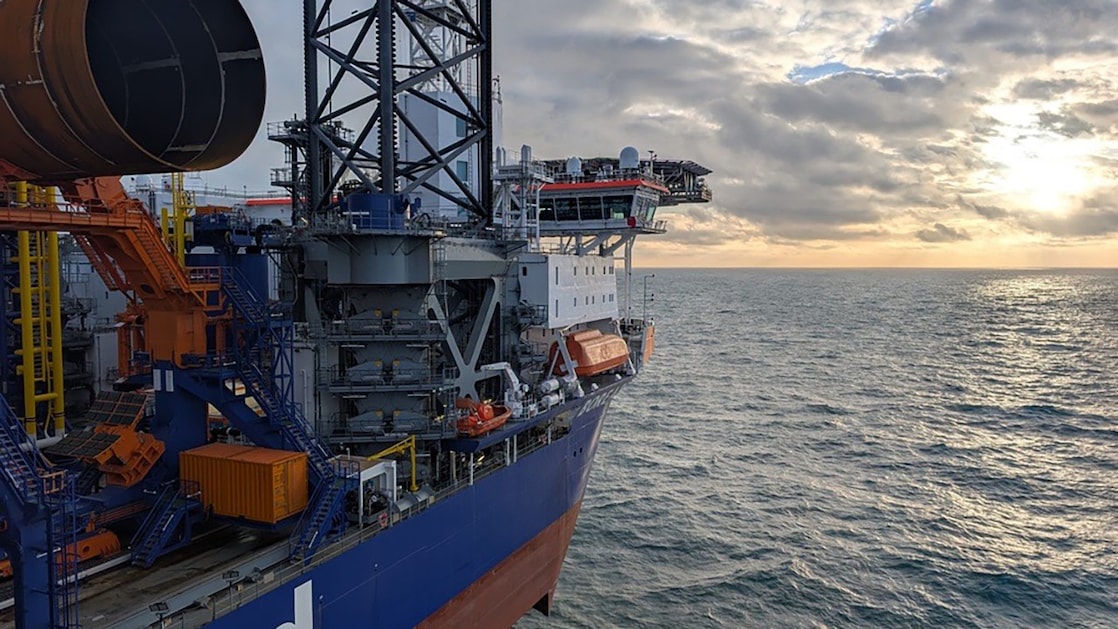
Voor Hollandse Kust West wordt een uitgebreid pakket aan maatregelen doorgevoerd om het dieren- en plantenleven in en rond het windpark zo veel mogelijk te ontzien. Of zelfs positief bijdragen doordat zich onder meer riffen kunnen vormen op de funderingen, die op hun beurt het zeeleven gunnen. De aandacht voor ecologie heeft naast voordelen voor de natuur óók een andere kant: dit soort innovaties brengt weer nieuwe technische uitdagingen met zich mee.
De toekomst is vogelvriendelijk
Zo neemt de vogelradar, die de turbine laat stoppen of vertragen bij naderende vogeltrek, een behoorlijke ruimte in beslag. Bij installatie en onderhoud hangt dit onderdeel zelfs hinderlijk in de weg. Een turbine ontwikkelen zónder rekening te houden met dergelijke radarsystemen is een stuk eenvoudiger.
“We dagen de turbinebouwer uit hier wél in mee te denken”, vertelt Visser. “Uiteindelijk realiseert een fabrikant van windmolens zich heus dat vogelaanvaringen zo veel mogelijk voorkomen moeten worden. Als bouwers daar geen fatsoenlijke oplossing voor hebben, hebben zij ook een probleem. Ook voor een turbinemaker is de toekomst vogelvriendelijk.”
Hoe groot zijn je vissen?
Een ander voorbeeld: onder in de pilaar (monopile) waarop de turbine wordt gezet, vlakbij de zeebodem, zitten gaten voor de bekabeling. “De ecologen in het project vragen of er meer gaten mogelijk zijn en of die tevens een tikkeltje ruimer kunnen, om als schuilplaats voor vissen te dienen. De technici op hun beurt stellen de wedervraag: hoe groot zijn de vissen die daar willen schuilen? Want technisch gezien kunnen die gaten best groot worden gemaakt. Tja, daar kan een ecoloog natuurlijk ook verschillende antwoorden op geven”, zegt Maris.
Samen hebben we heel veel kennis
Om te voorkomen dat inhoudelijke gesprekken tussen techneuten en ecologen in ingewikkelde impasses belanden, zegt Visser: “We hebben in dit project veel energie gestopt in hoe we met elkaar samenwerken.”
Dat betaalt zich volgens hem uit. Naarmate de ecologen en de technici intensiever gingen samenwerken, ontstond meer begrip voor elkaars wereld. En smolten de technische en de ecologische expertise samen. Maris vat samen: “Samen hebben we heel veel kennis. De zoektocht is waar je elkaar tegen komt.”
Jan Maris, technisch manager Hollandse Kust West (Ecowende)"De roep om standaardisatie wordt steeds luider"
Bouwen met partners
De technici bij Ecowende werken met veel verschillende partners samen: de turbinebouwers, de ontwerpers en producenten van de fundamenten, ecologiepartners en maritieme aannemers die alle elementen via de Eemshaven en de Tweede Maasvlakte naar de plek van bestemming brengen. Hollandse Kust West ligt zo’n 53 kilometer uit de kust van IJmuiden. Iedere partner heeft weer zijn eigen ideeën, eigen belangen en invalshoek op het geheel.
Daarbij werkt Ecowende samen met fabrieken die gloednieuw zijn, soms speciaal voor deze aanleiding opgestart. Sif Offshore Foundations, producent van de monopiles, die zich volgens Maris gekscherend betitelt als ‘worstenfabriek’ (vanwege het produceren en lange stalen ronde buizen die in stukken worden gesneden voor transport) bouwde de fabriek pas nadat Ecowende de opdracht kreeg het windpark te gaan realiseren. “Het is een heel nieuwe productielijn, en wij zijn een van de eerste klanten”, vertelt de technisch manager.
Een kroonsteentje, maar dan enorm
Verder zijn voor het Ecowende-windpark een aantal nieuwe technische uitvindingen toegepast, zoals een nog niet eerder gebruikte manier om de turbine aan te sluiten op de stroomkabel. Deze stroomkabel komt via een gat onderaan de monopile binnen en loopt tot aan de bovenkant van het fundament.
Normaal gesproken begint het werk van de aansluiting pas op het moment dat de pilaar, de gondel en de bladen op het voetstuk worden geïnstalleerd. Folkert Visser: “Bij Ecowende hebben we een nieuw stuk technologie toegepast: een koppelstuk.” Dat is in feite een kroonsteentje, maar dan enorm. “Dit maakt het uiteindelijk gemakkelijker én sneller om de kabel uit het fundament aan te sluiten op de turbine. Zodat we de turbine sneller in bedrijf hebben. Klik, klik en door.” Dan, geeft hij toe: “Maar om deze nieuwe techniek goed te integreren in het ontwerp heeft ons wel een boel hoofdpijn bezorgd hoor!”
Zonder slag of stoot?
Tot slot wordt voor de installatie van de monopiles van het nieuwste windpark op de Noordzee een nieuwe funderingstechniek gedemonstreerd, om rekening te houden met het onderwaterleven. Want het heien zorgt voor storende geluiden voor zeezoogdieren.
De eerste monopiles worden met de impacthamer geïnstalleerd, in combinatie met een twee kringen van luchtbubbels en akoestische schermen om de geluidshinder zo veel mogelijk terug te dringen. Er blijft altijd een kans dat de monopiles niet diep genoeg komen, zelfs met innovatieve technieken. In dat geval moet er worden teruggevallen op traditioneel heien. Mocht het zover komen, dan blijft het beperken van geluid een uitgangspunt.
Op naar de volgende fase
Vol energie storten Maris en Visser zich samen met hun collega’s en samenwerkingspartners op de volgende fase van de bouw van Hollandse Kust West. Want na de eerste paal volgt de installatie van nog 51 andere, de bebakeling moet worden toegevoegd en in latere fase volgend an ook de windturbines en de rotorbladen. “Het wordt weer een interessante periode”, blikken Visser en Maris alvast vooruit.
Folkert Visser, projectdirecteur Hollandse Kust West (Ecowende)"(...) de turbine sneller in bedrijf hebben. Klik, klik en door"
Cautionary note
Cautionary note
The companies in which Shell plc directly and indirectly owns investments are separate legal entities. In this story “Shell”, “Shell Group” and “Group” are sometimes used for convenience to reference Shell plc and its subsidiaries in general. Likewise, the words “we”, “us” and “our” are also used to refer to Shell plc and its subsidiaries in general or to those who work for them. These terms are also used where no useful purpose is served by identifying the particular entity or entities. ‘‘Subsidiaries’’, “Shell subsidiaries” and “Shell companies” as used in this storyrefer to entities over which Shell plc either directly or indirectly has control. The terms “joint venture”, “joint operations”, “joint arrangements”, and “associates” may also be used to refer to a commercial arrangement in which Shell has a direct or indirect ownership interest with one or more parties. The term “Shell interest” is used for convenience to indicate the direct and/or indirect ownership interest held by Shell in an entity or unincorporated joint arrangement, after exclusion of all third-party interest.
Forward-Looking statements
This story contains forward-looking statements (within the meaning of the U.S. Private Securities Litigation Reform Act of 1995) concerning the financial condition, results of operations and businesses of Shell. All statements other than statements of historical fact are, or may be deemed to be, forward-looking statements. Forward-looking statements are statements of future expectations that are based on management’s current expectations and assumptions and involve known and unknown risks and uncertainties that could cause actual results, performance or events to differ materially from those expressed or implied in these statements. Forward-looking statements include, among other things, statements concerning the potential exposure of Shell to market risks and statements expressing management’s expectations, beliefs, estimates, forecasts, projections and assumptions. These forward-looking statements are identified by their use of terms and phrases such as “aim”; “ambition”; ‘‘anticipate’’; “aspire”, “aspiration”, ‘‘believe’’; “commit”; “commitment”; ‘‘could’’; “desire”; ‘‘estimate’’; ‘‘expect’’; ‘‘goals’’; ‘‘intend’’; ‘‘may’’; “milestones”; ‘‘objectives’’; ‘‘outlook’’; ‘‘plan’’; ‘‘probably’’; ‘‘project’’; ‘‘risks’’; “schedule”; ‘‘seek’’; ‘‘should’’; ‘‘target’’; “vision”; ‘‘will’’; “would” and similar terms and phrases. There are a number of factors that could affect the future operations of Shell and could cause those results to differ materially from those expressed in the forward-looking statements included in this story, including (without limitation): (a) price fluctuations in crude oil and natural gas; (b) changes in demand for Shell’s products; (c) currency fluctuations; (d) drilling and production results; (e) reserves estimates; (f) loss of market share and industry competition; (g) environmental and physical risks, including climate change; (h) risks associated with the identification of suitable potential acquisition properties and targets, and successful negotiation and completion of such transactions; (i) the risk of doing business in developing countries and countries subject to international sanctions; (j) legislative, judicial, fiscal and regulatory developments including tariffs and regulatory measures addressing climate change; (k) economic and financial market conditions in various countries and regions; (l) political risks, including the risks of expropriation and renegotiation of the terms of contracts with governmental entities, delays or advancements in the approval of projects and delays in the reimbursement for shared costs; (m) risks associated with the impact of pandemics, regional conflicts, such as the Russia-Ukraine war and the conflict in the Middle East, and a significant cyber security, data privacy or IT incident; (n) the pace of the energy transition; and (o) changes in trading conditions. No assurance is provided that future dividend payments will match or exceed previous dividend payments. All forward-looking statements contained in this story are expressly qualified in their entirety by the cautionary statements contained or referred to in this section. Readers should not place undue reliance on forward-looking statements. Additional risk factors that may affect future results are contained in Shell plc’s Form 20-F and amendment thereto for the year ended December 31, 2024 (available at www.shell.com/investors/news-and-filings/sec-filings.html and www.sec.gov). These risk factors also expressly qualify all forward-looking statements contained in this story and should be considered by the reader. Each forward-looking statement speaks only as of the date of this news story, December 18, 2025. Neither Shell plc nor any of its subsidiaries undertake any obligation to publicly update or revise any forward-looking statement as a result of new information, future events or other information. In light of these risks, results could differ materially from those stated, implied or inferred from the forward-looking statements contained in this story.
Shell’s net carbon intensity
Also, in this story we may refer to Shell’s “net carbon intensity” (NCI), which includes Shell’s carbon emissions from the production of our energy products, our suppliers’ carbon emissions in supplying energy for that production and our customers’ carbon emissions associated with their use of the energy products we sell. Shell’s NCI also includes the emissions associated with the production and use of energy products produced by others which Shell purchases for resale. Shell only controls its own emissions. The use of the terms Shell’s “net carbon intensity” or NCI is for convenience only and not intended to suggest these emissions are those of Shell plc or its subsidiaries.
Shell’s net-zero emissions target
Shell’s operating plan and outlook are forecasted for a three-year period and ten-year period, respectively, and are updated every year. They reflect the current economic environment and what we can reasonably expect to see over the next three and ten years. Accordingly, the outlook reflects our Scope 1, Scope 2 and NCI targets over the next ten years. However, Shell’s operating plan and outlook cannot reflect our 2050 net-zero emissions target, as this target is outside our planning period. Such future operating plans and outlooks could include changes to our portfolio, efficiency improvements and the use of carbon capture and storage and carbon credits. In the future, as society moves towards net-zero emissions, we expect Shell’s operating plans and outlooks to reflect this movement. However, if society is not net zero in 2050, as of today, there would be significant risk that Shell may not meet this target.
Forward-Looking non-GAAP measures
This story may contain certain forward-looking non-GAAP measures such as adjusted earnings and divestments. We are unable to provide a reconciliation of these forward-looking non-GAAP measures to the most comparable GAAP financial measures because certain information needed to reconcile those non-GAAP measures to the most comparable GAAP financial measures is dependent on future events some of which are outside the control of Shell, such as oil and gas prices, interest rates and exchange rates. Moreover, estimating such GAAP measures with the required precision necessary to provide a meaningful reconciliation is extremely difficult and could not be accomplished without unreasonable effort. Non-GAAP measures in respect of future periods which cannot be reconciled to the most comparable GAAP financial measure are calculated in a manner which is consistent with the accounting policies applied in Shell plc’s consolidated financial statements.
The contents of websites referred to in this story do not form part of this story.
We may have used certain terms, such as resources, in this story that the United States Securities and Exchange Commission (SEC) strictly prohibits us from including in our filings with the SEC. Investors are urged to consider closely the disclosure in our Form 20-F and any amendment thereto, File No 1-32575, available on the SEC website www.sec.gov.
The technical puzzle of Ecowende’s wind farm Hollandse Kust West
18 Dec. 2025
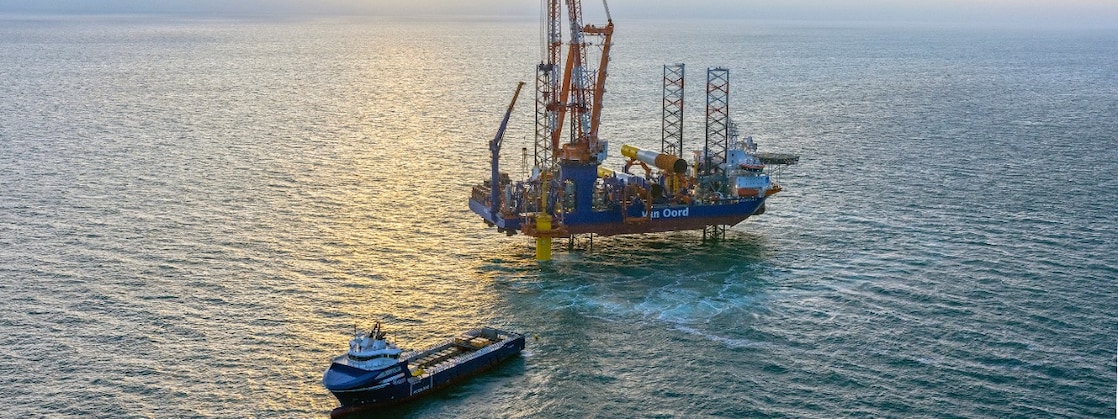
The first pile for the Ecowende wind farm (Hollandse Kust West), off the coast of the Netherlands, was driven into the seabed in December—a major milestone. Project Director Folkert Visser and Technical Manager Jan Maris from Ecowende share insights into the biggest technical challenges in building what is intended to be the world’s most ecological wind farm to date.

Text: Matthijs Timmers. Photography: Ecowende / Van Oord.
Folkert Visser visited turbine manufacturer Vestas last year. At a test site in northern Denmark, he was hoisted about 140 metres (459 feet) up inside a towering pylon by lift, towards the nacelle of the wind turbine, to witness the machinery’s technology at great height. “Impressive,” is how he describes the experience—simply because the sheer scale never fails to surprise.
Big, bigger, biggest
That impressive scale immediately presents the first technical challenge. Turbine size has continued to increase in recent years. For the wind farm Hollandse Kust West, by the Shell co-owned joint venture CrossWind, turbines of 11 megawatts (MW) were installed. It has been operational since 2023. For Hollandse Kust West the latest and greatest have been ordered, Visser says, of 15 MW. The logic behind this upscaling is clear: the higher the capacity per turbine, the fewer wind turbines need to be installed. That means fewer foundations, less disruption, fewer cables and less maintenance. And that saves costs.
Yet the ceiling seems to be in sight. The diametre of the connection between the base and the tower for this project is already approaching 7.5 metres (24.6 feet). “The entire foundation scales up with the turbine,” explains Technical Manager Jan Maris. For now, these dimensions are still within reach, he says. But if things get even bigger, the technical limits will come closer.
Need for standardisation
There is another factor, according to Maris. “Companies in the offshore industry also need a certain level of standardisation.” Ever-larger components in turn require bigger manufacturing setups, even larger ships for transport to sea, and even bigger cranes and platforms for installation. The call for standardisation is growing louder. “Although there are turbine manufacturers that see it as a challenge to push the technical limits of scaling just that little bit further,” the technical manager says.
Bolts weighing twenty kilos
Maris gives an example of how this upscaling has led to a technical issue in this project. Take the flange—a thick piece of steel on the foundation to which the wind turbine tower is bolted. For that, you need bolts—big bolts. Already, at over 20 kilos (44 pounds) each, they are almost impossible to handle manually. Let alone if turbines become even taller in the future.
Who are Folkert Visser and Jan Maris?
Folkert Visser has been Project Director at Ecowende team since the very beginning in 2022. Visser mainly focuses on the construction of the wind farm. He studied Civil Engineering at Delft University of Technology, the Netherlands, then worked on offshore projects worldwide and has been doing so for Shell since 2013, including in the Netherlands and Qatar.
As Technical Manager, Jan Maris is responsible for the foundations of Hollandse Kust West. These are also known as monopiles and serve as the pillars on which the platforms with turbines are installed. Maris studied Maritime Engineering at Delft University of Technology and has been engaged in projects in Poland, Aberdeen (Scotland) and at Shell Pernis near Rotterdam.
Ecological innovations and dilemmas
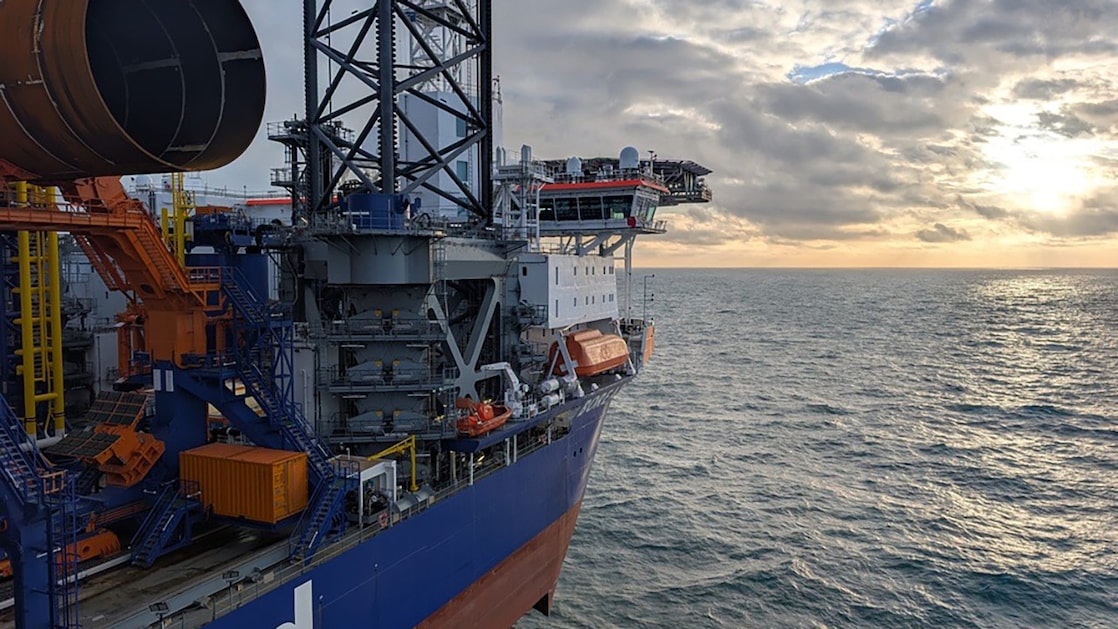
For Hollandse Kust West, an extensive package of measures is being implemented to minimise the impact on animal and plant life in and around the wind farm. Or to even contribute positively—for example with reef build-up at the foundations, which is a gain for sealife. While this focus on ecology benefits nature, it also has another side: these kinds of innovations bring new technical challenges.
The future is bird-friendly
For example, the bird radar—which stops or slows the turbine when migrating birds approach—takes up considerable space. During installation and maintenance, this component can even get in the way. Designing a turbine without taking such radar systems into account would be much simpler.
“We challenge the turbine manufacturer to think along with us,” Visser says. “Ultimately, a wind turbine manufacturer knows that bird collisions are preferably avoided. If builders don’t have a proper solution for that, they have a problem too. Even for a turbine maker, the future is bird-friendly.”
How big are your fish?
Another example: at the bottom of the monopile on which the turbine is mounted, near the seabed, there are holes for cabling. “The ecologists on the project ask whether more holes could be added and whether they could be made slightly larger to serve as shelters for fish. The technicians, in turn, ask: how big are the fish that might want to hide there? Technically, those holes can be made quite large. But of course, an ecologist can give different answers to the question,” Maris says.
Together we have all the knowledge
To prevent technical and ecological discussions from ending in complicated deadlocks, Visser says: “We’ve put a lot of energy into how we work together on this project.”
According to him, that effort pays off. As ecologists and technicians began working more closely together, understanding of each other’s world grew. And technical and ecological expertise merged. Maris sums it up: “Together we have all the knowledge. The challenge is to understand the other.”
Jan Maris, Technical Manager Hollandse Kust West (Ecowende)“The call for standardisation is growing louder"
Building with partners
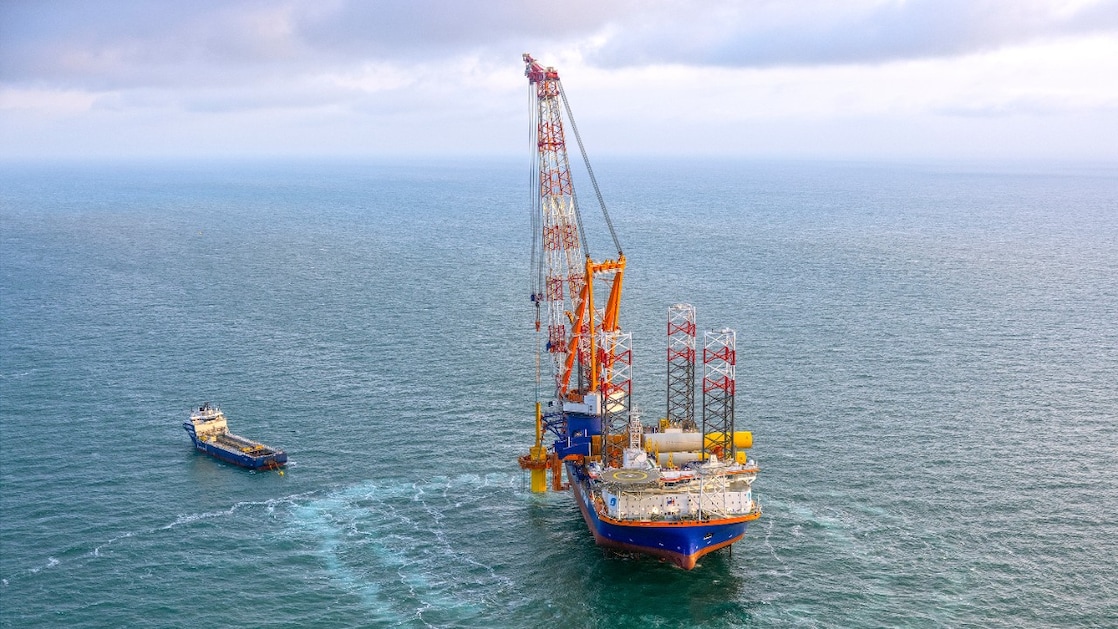
The engineers at Ecowende work with a wide range of partners: turbine manufacturers, designers and producers of foundations, ecology partners, and maritime contractors that transport all elements via Eemshaven harbour (northeast of the Netherlands) and the Tweede Maasvlakte (near Rotterdam in the west) to their destination. Hollandse Kust West is situated about 53 kilometres (33 miles) off the coast of the town of IJmuiden. Each partner brings its own ideas, interests, and perspective to the project.
Ecowende also collaborates with factories that are brand new—sometimes set up specifically for the purpose of building the Ecowende wind farm. Sif Offshore Foundations, the producer of monopiles, jokingly refers to itself as a “sausage factory” (because it produces long steel tubes that are cut into sections for transport), according to Maris. The factory was built only after Ecowende was awarded the contract to realise the wind farm. “It’s an entirely new production line, and we’re one of the first customers,” says the technical manager.
A connector block—but huge
The Ecowende wind farm also uses several new technological inventions, such as a previously unused method for connecting the turbine to the power cable. This cable enters through a hole at the bottom of the monopile and runs up to the top of the foundation.
Normally, the connection work begins once the tower, the nacelle, and blades are installed on the base. Folkert Visser explains: “At Ecowende, we’ve introduced a new piece of technology: a coupling unit.” Essentially, it is like a connector block—but enormous. “This ultimately makes it easier and faster to connect the cable from the foundation to the turbine, so we can get the turbine operational faster. Click, click, and done.” Then he admits: “But integrating this new technology properly into the design gave us plenty of headaches!”
Smooth sailing?
Finally, for installing the monopiles of the newest North Sea wind farm, a new foundation technique is being demonstrated to protect underwater life. Piling creates disruptive noise for marine mammals. With dampers on the piling hammer, acoustic dampers in the water around the pile, and two rings of air bubbles, noise pollution is reduced as much as possible.
The first monopiles are installed using an impact hammer, combined with two rings of air bubbles and acoustic screens to reduce noise disturbance as much as possible. There is always a chance that the monopiles will not reach sufficient depth, even with innovative techniques. In that case, it will be necessary to revert to traditional piling. Should that happen, minimising noise will remain a key priority.
On to the next phase
Full of energy, Maris and Visser, together with their colleagues and partners, are diving into the next phase of constructing Hollandse Kust West. After the first pile 51 more are to be installed, followed by the addition of marking buoys, and later the turbines and rotor blades. “Exciting times are ahead,” Visser and Maris say.
Folkert Visser, Project Director Hollandse Kust West (Ecowende)"We can get the turbine operational faster. Click, click and done"
Cautionary note
Cautionary note
The companies in which Shell plc directly and indirectly owns investments are separate legal entities. In this story “Shell”, “Shell Group” and “Group” are sometimes used for convenience to reference Shell plc and its subsidiaries in general. Likewise, the words “we”, “us” and “our” are also used to refer to Shell plc and its subsidiaries in general or to those who work for them. These terms are also used where no useful purpose is served by identifying the particular entity or entities. ‘‘Subsidiaries’’, “Shell subsidiaries” and “Shell companies” as used in this storyrefer to entities over which Shell plc either directly or indirectly has control. The terms “joint venture”, “joint operations”, “joint arrangements”, and “associates” may also be used to refer to a commercial arrangement in which Shell has a direct or indirect ownership interest with one or more parties. The term “Shell interest” is used for convenience to indicate the direct and/or indirect ownership interest held by Shell in an entity or unincorporated joint arrangement, after exclusion of all third-party interest.
Forward-Looking statements
This story contains forward-looking statements (within the meaning of the U.S. Private Securities Litigation Reform Act of 1995) concerning the financial condition, results of operations and businesses of Shell. All statements other than statements of historical fact are, or may be deemed to be, forward-looking statements. Forward-looking statements are statements of future expectations that are based on management’s current expectations and assumptions and involve known and unknown risks and uncertainties that could cause actual results, performance or events to differ materially from those expressed or implied in these statements. Forward-looking statements include, among other things, statements concerning the potential exposure of Shell to market risks and statements expressing management’s expectations, beliefs, estimates, forecasts, projections and assumptions. These forward-looking statements are identified by their use of terms and phrases such as “aim”; “ambition”; ‘‘anticipate’’; “aspire”, “aspiration”, ‘‘believe’’; “commit”; “commitment”; ‘‘could’’; “desire”; ‘‘estimate’’; ‘‘expect’’; ‘‘goals’’; ‘‘intend’’; ‘‘may’’; “milestones”; ‘‘objectives’’; ‘‘outlook’’; ‘‘plan’’; ‘‘probably’’; ‘‘project’’; ‘‘risks’’; “schedule”; ‘‘seek’’; ‘‘should’’; ‘‘target’’; “vision”; ‘‘will’’; “would” and similar terms and phrases. There are a number of factors that could affect the future operations of Shell and could cause those results to differ materially from those expressed in the forward-looking statements included in this story, including (without limitation): (a) price fluctuations in crude oil and natural gas; (b) changes in demand for Shell’s products; (c) currency fluctuations; (d) drilling and production results; (e) reserves estimates; (f) loss of market share and industry competition; (g) environmental and physical risks, including climate change; (h) risks associated with the identification of suitable potential acquisition properties and targets, and successful negotiation and completion of such transactions; (i) the risk of doing business in developing countries and countries subject to international sanctions; (j) legislative, judicial, fiscal and regulatory developments including tariffs and regulatory measures addressing climate change; (k) economic and financial market conditions in various countries and regions; (l) political risks, including the risks of expropriation and renegotiation of the terms of contracts with governmental entities, delays or advancements in the approval of projects and delays in the reimbursement for shared costs; (m) risks associated with the impact of pandemics, regional conflicts, such as the Russia-Ukraine war and the conflict in the Middle East, and a significant cyber security, data privacy or IT incident; (n) the pace of the energy transition; and (o) changes in trading conditions. No assurance is provided that future dividend payments will match or exceed previous dividend payments. All forward-looking statements contained in this story are expressly qualified in their entirety by the cautionary statements contained or referred to in this section. Readers should not place undue reliance on forward-looking statements. Additional risk factors that may affect future results are contained in Shell plc’s Form 20-F and amendment thereto for the year ended December 31, 2024 (available at www.shell.com/investors/news-and-filings/sec-filings.html and www.sec.gov). These risk factors also expressly qualify all forward-looking statements contained in this story and should be considered by the reader. Each forward-looking statement speaks only as of the date of this news story, December 18, 2025. Neither Shell plc nor any of its subsidiaries undertake any obligation to publicly update or revise any forward-looking statement as a result of new information, future events or other information. In light of these risks, results could differ materially from those stated, implied or inferred from the forward-looking statements contained in this story.
Shell’s net carbon intensity
Also, in this story we may refer to Shell’s “net carbon intensity” (NCI), which includes Shell’s carbon emissions from the production of our energy products, our suppliers’ carbon emissions in supplying energy for that production and our customers’ carbon emissions associated with their use of the energy products we sell. Shell’s NCI also includes the emissions associated with the production and use of energy products produced by others which Shell purchases for resale. Shell only controls its own emissions. The use of the terms Shell’s “net carbon intensity” or NCI is for convenience only and not intended to suggest these emissions are those of Shell plc or its subsidiaries.
Shell’s net-zero emissions target
Shell’s operating plan and outlook are forecasted for a three-year period and ten-year period, respectively, and are updated every year. They reflect the current economic environment and what we can reasonably expect to see over the next three and ten years. Accordingly, the outlook reflects our Scope 1, Scope 2 and NCI targets over the next ten years. However, Shell’s operating plan and outlook cannot reflect our 2050 net-zero emissions target, as this target is outside our planning period. Such future operating plans and outlooks could include changes to our portfolio, efficiency improvements and the use of carbon capture and storage and carbon credits. In the future, as society moves towards net-zero emissions, we expect Shell’s operating plans and outlooks to reflect this movement. However, if society is not net zero in 2050, as of today, there would be significant risk that Shell may not meet this target.
Forward-Looking non-GAAP measures
This story may contain certain forward-looking non-GAAP measures such as adjusted earnings and divestments. We are unable to provide a reconciliation of these forward-looking non-GAAP measures to the most comparable GAAP financial measures because certain information needed to reconcile those non-GAAP measures to the most comparable GAAP financial measures is dependent on future events some of which are outside the control of Shell, such as oil and gas prices, interest rates and exchange rates. Moreover, estimating such GAAP measures with the required precision necessary to provide a meaningful reconciliation is extremely difficult and could not be accomplished without unreasonable effort. Non-GAAP measures in respect of future periods which cannot be reconciled to the most comparable GAAP financial measure are calculated in a manner which is consistent with the accounting policies applied in Shell plc’s consolidated financial statements.
The contents of websites referred to in this story do not form part of this story.
We may have used certain terms, such as resources, in this story that the United States Securities and Exchange Commission (SEC) strictly prohibits us from including in our filings with the SEC. Investors are urged to consider closely the disclosure in our Form 20-F and any amendment thereto, File No 1-32575, available on the SEC website www.sec.gov.