Gamechanger in Formule 1: nieuwe brandstoffen
Er speelt iets groots achter de schermen in de Formule 1. Vanaf het seizoen 2026 zullen racewagens in de koningsklasse van de autosport worden aangedreven door brandstoffen zonder aardolie¹. In plaats daarvan zijn uitsluitend moleculen toegestaan die zijn gemaakt van geavanceerde duurzame grondstoffen – zoals biobrandstoffen uit afvalstromen of synthetische grondstoffen.

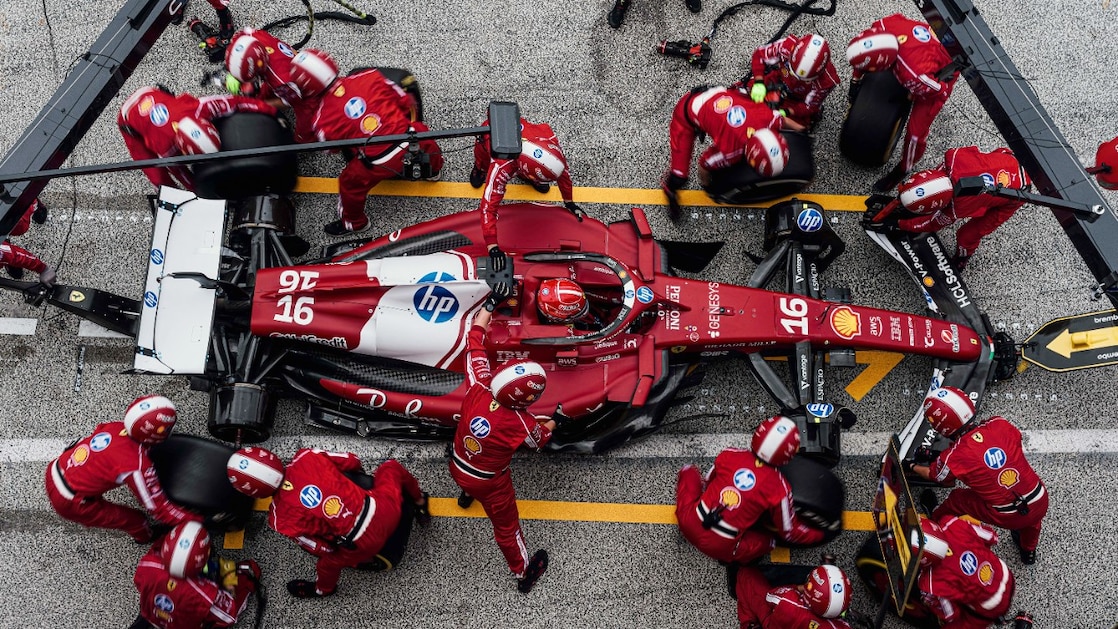
Tekst: Erik van der Velden. Beeld: Scuderia Ferrari HP/Callo Albanese.
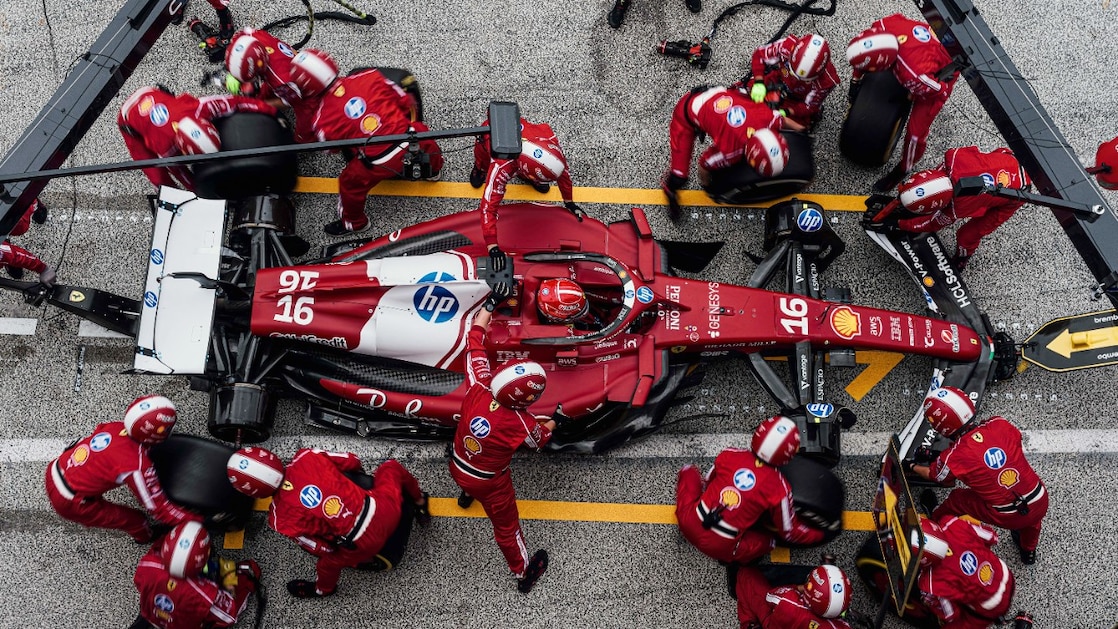
Als onderdeel van het plan van de Formule 1 om tegen 2030 netto nul CO2‑uitstoot te bereiken, zullen nieuwe regels het gebruik van racebrandstoffen met fossiele componenten verbieden. De nieuwe regelgeving geldt vanaf het raceseizoen van 2026. Shell doet ook mee en richt zich op de levering van geavanceerde, duurzame Shell V‑Power-racebrandstof, exclusief voor Scuderia Ferrari HP.
Vier jaar ontwikkeling
De ontwikkeling van de nieuwe racebrandstof begon direct in maart 2022, toen in de Formule 1 werd afgesproken dat er vanaf seizoen 2026 gereden wordt zonder fossiele ingrediënten in de racebrandstof. De afspraak betekende ook dat daarna vier seizoenen lang geen nieuwe of aangepaste racebrandstoffen mochten worden geïntroduceerd. Gelijktijdig gold ook voor de motoren: geen techologische vernieuwingen.
Valeria Loreti, Shells technologiemanager voor dagelijkse activiteiten en marketing binnen de motorsport herinnert zich dat moment nog goed. “We hielden onmiddellijk onze eerste brainstormsessie – om kansen, de strategie en de tijdlijn voor de nieuwe geavanceerde duurzame brandstof te bepalen.”
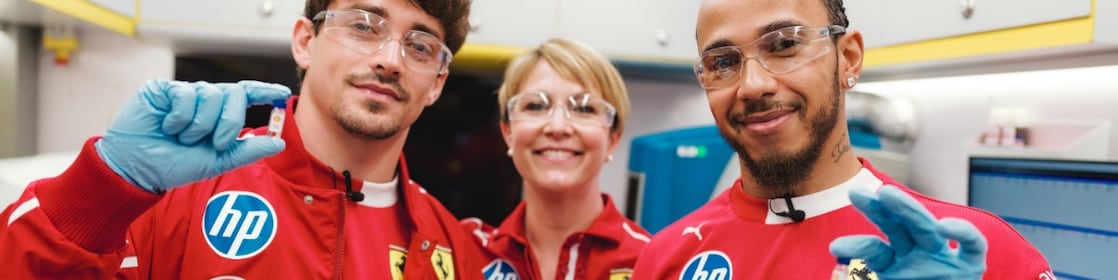
Het ontwikkelen van de nieuwe brandstof bleek veel complexer dan eerdere projecten, vertelt Loreti. Achter elke druppel brandstof schuilt intensieve samenwerking. “We hadden niet alleen chemici nodig, maar ook experts in certificering, CO2‑berekeningen, regelgeving en toeleveringsketen. In 2025 hebben meer dan honderd specialisten samen meer dan 30.000 uur aan dit project besteed.”
Wie is Valeria Loreti?
Geboorteplaats: Padua (Padova), Italië (vlakbij Venetië)
Opleiding: Studie Scheikunde (Universiteit van Pisa) en een PhD (Universiteit van Mainz)
Werkplek: Duitsland, Shell Technology Centre Hamburg
Functie: Technology Manager Motorsports Operations & Marketing
Carrière: Bij Shell sinds 2005, begonnen als brandstofwetenschapper
Krijgt energie van: Moeilijke onderwerpen helder en begrijpelijk maken
Favoriete circuit: Monza
Naast werk: Getrouwd, moeder van twee tieners, houdt van lezen, koken en karate
Het grotere geheel
Naast nieuwe grondstoffen moeten de racebrandstoffen in de Formule 1 ook zorgen voor minder CO2-uitstoot in vergelijking met brandstof met fossiele bestandsdelen².
“Natuurlijk is dat in het grotere geheel een relatief kleine bijdrage, omdat tijdens een Formule 1-race brandstof niet de grootste bron van CO2‑uitstoot”, legt Loreti uit, “maar het is wél een gamechanger in hoe mensen denken en praten over duurzaamheid. Geavanceerde duurzame racebrandstof zou onder het grote publiek een begrip kunnen worden en mensen zien als de toekomst van mobiliteit.”
Met meer dan twintig jaar Shell-ervaring in brandstoftechnologie benadrukt Loreti dat Shells betrokkenheid bij de motorsportwereld van onschatbare waarde is voor innovatie. Veel van de vernieuwingen die zijn terug te vinden in Shell‑brandstoffen voor het gewone wegverkeer begonnen met technologie die is ontwikkeld in de Formule 1. “Het biedt ons een uniek platform om nieuwe ideeën te ontwikkelen en producten op hoge snelheid te testen.”
75 jaar samenwerking
Shell en Scuderia Ferrari HP vierden in 2025 hun 75-jubileum van de iconische samenwerking in de Formule 1. Valeria Loreti schrijft een groot deel van dit succes toe aan een gedeelde cultuur van grenzen verleggen. “De lat ligt altijd hoog, en zodra we die bereiken, wordt hij opnieuw hoger gelegd”, zegt ze. “Daagt Shell Ferrari uit? Absoluut. Net zoals zij ons uitdagen. Samen gaan we vooruit, als één team.”
Voetnoten:
1. Met uitzondering van maximaal 1% fossiele additieven en denaturerende stoffen in de blend
2. De certificering van Geavanceerde Duurzame Brandstof is gebaseerd op een blend die 65% minder CO₂‑equivalent heeft dan de fossiele vergelijkingswaarde zoals gedefinieerd in REDII (94 g CO₂eq/MJ).
Valeria Loreti, technology manager Motorsports Operations & Marketing bij Shell"Duurzame brandstoffen als de toekomst van mobiliteit"
Cautionary note
Cautionary note
The companies in which Shell plc directly and indirectly owns investments are separate legal entities. In this story “Shell”, “Shell Group” and “Group” are sometimes used for convenience to reference Shell plc and its subsidiaries in general. Likewise, the words “we”, “us” and “our” are also used to refer to Shell plc and its subsidiaries in general or to those who work for them. These terms are also used where no useful purpose is served by identifying the particular entity or entities. ‘‘Subsidiaries’’, “Shell subsidiaries” and “Shell companies” as used in this storyrefer to entities over which Shell plc either directly or indirectly has control. The terms “joint venture”, “joint operations”, “joint arrangements”, and “associates” may also be used to refer to a commercial arrangement in which Shell has a direct or indirect ownership interest with one or more parties. The term “Shell interest” is used for convenience to indicate the direct and/or indirect ownership interest held by Shell in an entity or unincorporated joint arrangement, after exclusion of all third-party interest.
Forward-Looking statements
This story contains forward-looking statements (within the meaning of the U.S. Private Securities Litigation Reform Act of 1995) concerning the financial condition, results of operations and businesses of Shell. All statements other than statements of historical fact are, or may be deemed to be, forward-looking statements. Forward-looking statements are statements of future expectations that are based on management’s current expectations and assumptions and involve known and unknown risks and uncertainties that could cause actual results, performance or events to differ materially from those expressed or implied in these statements. Forward-looking statements include, among other things, statements concerning the potential exposure of Shell to market risks and statements expressing management’s expectations, beliefs, estimates, forecasts, projections and assumptions. These forward-looking statements are identified by their use of terms and phrases such as “aim”; “ambition”; ‘‘anticipate’’; “aspire”, “aspiration”, ‘‘believe’’; “commit”; “commitment”; ‘‘could’’; “desire”; ‘‘estimate’’; ‘‘expect’’; ‘‘goals’’; ‘‘intend’’; ‘‘may’’; “milestones”; ‘‘objectives’’; ‘‘outlook’’; ‘‘plan’’; ‘‘probably’’; ‘‘project’’; ‘‘risks’’; “schedule”; ‘‘seek’’; ‘‘should’’; ‘‘target’’; “vision”; ‘‘will’’; “would” and similar terms and phrases. There are a number of factors that could affect the future operations of Shell and could cause those results to differ materially from those expressed in the forward-looking statements included in this story, including (without limitation): (a) price fluctuations in crude oil and natural gas; (b) changes in demand for Shell’s products; (c) currency fluctuations; (d) drilling and production results; (e) reserves estimates; (f) loss of market share and industry competition; (g) environmental and physical risks, including climate change; (h) risks associated with the identification of suitable potential acquisition properties and targets, and successful negotiation and completion of such transactions; (i) the risk of doing business in developing countries and countries subject to international sanctions; (j) legislative, judicial, fiscal and regulatory developments including tariffs and regulatory measures addressing climate change; (k) economic and financial market conditions in various countries and regions; (l) political risks, including the risks of expropriation and renegotiation of the terms of contracts with governmental entities, delays or advancements in the approval of projects and delays in the reimbursement for shared costs; (m) risks associated with the impact of pandemics, regional conflicts, such as the Russia-Ukraine war and the conflict in the Middle East, and a significant cyber security, data privacy or IT incident; (n) the pace of the energy transition; and (o) changes in trading conditions. No assurance is provided that future dividend payments will match or exceed previous dividend payments. All forward-looking statements contained in this story are expressly qualified in their entirety by the cautionary statements contained or referred to in this section. Readers should not place undue reliance on forward-looking statements. Additional risk factors that may affect future results are contained in Shell plc’s Form 20-F and amendment thereto for the year ended December 31, 2024 (available at www.shell.com/investors/news-and-filings/sec-filings.html and www.sec.gov). These risk factors also expressly qualify all forward-looking statements contained in this story and should be considered by the reader. Each forward-looking statement speaks only as of the date of this news story, December 18, 2025. Neither Shell plc nor any of its subsidiaries undertake any obligation to publicly update or revise any forward-looking statement as a result of new information, future events or other information. In light of these risks, results could differ materially from those stated, implied or inferred from the forward-looking statements contained in this story.
Shell’s net carbon intensity
Also, in this story we may refer to Shell’s “net carbon intensity” (NCI), which includes Shell’s carbon emissions from the production of our energy products, our suppliers’ carbon emissions in supplying energy for that production and our customers’ carbon emissions associated with their use of the energy products we sell. Shell’s NCI also includes the emissions associated with the production and use of energy products produced by others which Shell purchases for resale. Shell only controls its own emissions. The use of the terms Shell’s “net carbon intensity” or NCI is for convenience only and not intended to suggest these emissions are those of Shell plc or its subsidiaries.
Shell’s net-zero emissions target
Shell’s operating plan and outlook are forecasted for a three-year period and ten-year period, respectively, and are updated every year. They reflect the current economic environment and what we can reasonably expect to see over the next three and ten years. Accordingly, the outlook reflects our Scope 1, Scope 2 and NCI targets over the next ten years. However, Shell’s operating plan and outlook cannot reflect our 2050 net-zero emissions target, as this target is outside our planning period. Such future operating plans and outlooks could include changes to our portfolio, efficiency improvements and the use of carbon capture and storage and carbon credits. In the future, as society moves towards net-zero emissions, we expect Shell’s operating plans and outlooks to reflect this movement. However, if society is not net zero in 2050, as of today, there would be significant risk that Shell may not meet this target.
Forward-Looking non-GAAP measures
This story may contain certain forward-looking non-GAAP measures such as adjusted earnings and divestments. We are unable to provide a reconciliation of these forward-looking non-GAAP measures to the most comparable GAAP financial measures because certain information needed to reconcile those non-GAAP measures to the most comparable GAAP financial measures is dependent on future events some of which are outside the control of Shell, such as oil and gas prices, interest rates and exchange rates. Moreover, estimating such GAAP measures with the required precision necessary to provide a meaningful reconciliation is extremely difficult and could not be accomplished without unreasonable effort. Non-GAAP measures in respect of future periods which cannot be reconciled to the most comparable GAAP financial measure are calculated in a manner which is consistent with the accounting policies applied in Shell plc’s consolidated financial statements.
The contents of websites referred to in this story do not form part of this story.
We may have used certain terms, such as resources, in this story that the United States Securities and Exchange Commission (SEC) strictly prohibits us from including in our filings with the SEC. Investors are urged to consider closely the disclosure in our Form 20-F and any amendment thereto, File No 1-32575, available on the SEC website www.sec.gov.
The game-changing new fuels in Formula 1
18 Dec. 2025.
Something big is brewing behind the scenes in Formula 1. Starting from the 2026 season, race cars competing in the pinnacle series of motorsport will be powered by fuels with no crude oil content1. In their place, only molecules made from advanced sustainable feedstocks – like biofuels derived from waste or e-fuels – will be permitted.

Text: Erik van der Velden. Photography: Scuderia Ferrari HP/Callo Albanese.
As part of Formula 1’s plan to achieve its net-zero carbon emissions target by 2030, new regulations will ban race fuels containing fossil-derived components in future seasons. For the 2026 racing season, when the new regulations take effect, Shell is focused on the delivery of an advanced sustainable Shell V-Power race fuel exclusively for Scuderia Ferrari HP and its customer teams.
Four years in development
Development of the advanced sustainable Shell V-Power race fuel for 2026 began as soon as the current race fuel formulation hit the track in March 2022, marking the start of a development freeze on racing fluids and power units for four seasons.
“We held our first brainstorm session immediately—to define opportunities, the strategy, and the timeline for the new, advanced sustainable fuel,” recalls Dr Valeria Loreti, Shell’s Technology Manager for Motorsports Operations and Marketing.
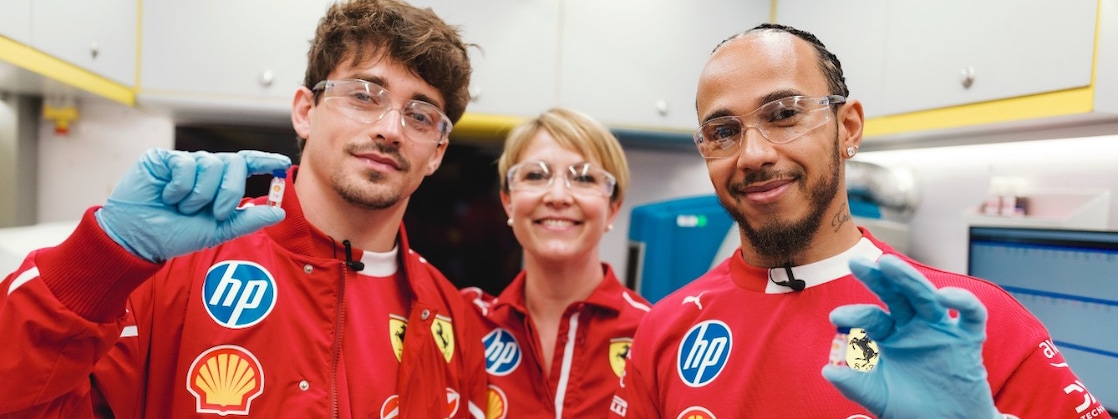
Developing the new fuel turned out to be far more complex than previous projects, Dr Loreti says. Behind every drop of fuel lies a massive scale of intense teamwork. “We didn’t just need chemists, but also experts in certification, CO2 calculations, regulations, and supply chain. In 2025 alone, more than hundred specialists dedicated over 30,000 hours to this project.”
Who is Valeria Loreti?
Born: In Padua (Padova), Italy
Education: Degree in Chemistry (University of Pisa, Italy) and PhD (University of Mainz, Germany)
Work location: Germany, at the Shell Technology Centre in Hamburg
Role: Technology Manager Motorsports Operations & Marketing at Shell
Career: With Shell since 2005, started as a Fuels Scientist
Gets energy from: Making complex topics easy to understand
Favourite circuit: Monza
Besides work: Married, mother of two teenagers, passionate about reading, cooking and karate
The bigger picture
In addition to new feedstocks, the race fuels in Formula 1 will also need to achieve carbon emissions savings compared to fossil-derived petrol.2
Of course, in the bigger picture this is a relatively small contribution, because fuel isn’t the largest source of CO2 emissions during an event,” explains Dr. Loreti, “but it’s a game-changer in how people think and talk about sustainability. Advanced sustainable race fuel could become a concept people recognise and see as the future of mobility.”
A scientist with over twenty years of experience in fuel technology at Shell, Dr. Loreti emphasises that Shell’s involvement in the motorsport world is invaluable for innovation. Much of the innovation that goes into Shell’s fuels offered to customers at Shell stations started with technologies used in Formula 1 racing.
“It offers us a unique platform to develop new ideas and test products at high speeds.”
75 years of collaboration
The iconic partnership between Shell and Scuderia Ferrari HP celebrated its 75th anniversary in Formula 1 in 2025. Dr. Loreti attributes much of the partnership’s success to a shared culture of pushing limits. “The bar is always set high, and once it’s reached, it’s raised again,” she says.
“Do we challenge Ferrari? Absolutely. Just as they challenge us. We grow together because we approach these projects as one team.”
Foot notes:
1. With the exception of up to 1% of fossil additives and denaturants in the blend
2. The certification of Advanced Sustainable fuel is based on the blend being 65% less in CO2e than the fossil comparator as defined in REDII (94 g CO2eq/MJ)
Valeria Loreti, Technology Manager Motorsports Operations & Marketing at Shell"Sustainable fuels as the future of mobility"
Cautionary note
Cautionary note
The companies in which Shell plc directly and indirectly owns investments are separate legal entities. In this story “Shell”, “Shell Group” and “Group” are sometimes used for convenience to reference Shell plc and its subsidiaries in general. Likewise, the words “we”, “us” and “our” are also used to refer to Shell plc and its subsidiaries in general or to those who work for them. These terms are also used where no useful purpose is served by identifying the particular entity or entities. ‘‘Subsidiaries’’, “Shell subsidiaries” and “Shell companies” as used in this storyrefer to entities over which Shell plc either directly or indirectly has control. The terms “joint venture”, “joint operations”, “joint arrangements”, and “associates” may also be used to refer to a commercial arrangement in which Shell has a direct or indirect ownership interest with one or more parties. The term “Shell interest” is used for convenience to indicate the direct and/or indirect ownership interest held by Shell in an entity or unincorporated joint arrangement, after exclusion of all third-party interest.
Forward-Looking statements
This story contains forward-looking statements (within the meaning of the U.S. Private Securities Litigation Reform Act of 1995) concerning the financial condition, results of operations and businesses of Shell. All statements other than statements of historical fact are, or may be deemed to be, forward-looking statements. Forward-looking statements are statements of future expectations that are based on management’s current expectations and assumptions and involve known and unknown risks and uncertainties that could cause actual results, performance or events to differ materially from those expressed or implied in these statements. Forward-looking statements include, among other things, statements concerning the potential exposure of Shell to market risks and statements expressing management’s expectations, beliefs, estimates, forecasts, projections and assumptions. These forward-looking statements are identified by their use of terms and phrases such as “aim”; “ambition”; ‘‘anticipate’’; “aspire”, “aspiration”, ‘‘believe’’; “commit”; “commitment”; ‘‘could’’; “desire”; ‘‘estimate’’; ‘‘expect’’; ‘‘goals’’; ‘‘intend’’; ‘‘may’’; “milestones”; ‘‘objectives’’; ‘‘outlook’’; ‘‘plan’’; ‘‘probably’’; ‘‘project’’; ‘‘risks’’; “schedule”; ‘‘seek’’; ‘‘should’’; ‘‘target’’; “vision”; ‘‘will’’; “would” and similar terms and phrases. There are a number of factors that could affect the future operations of Shell and could cause those results to differ materially from those expressed in the forward-looking statements included in this story, including (without limitation): (a) price fluctuations in crude oil and natural gas; (b) changes in demand for Shell’s products; (c) currency fluctuations; (d) drilling and production results; (e) reserves estimates; (f) loss of market share and industry competition; (g) environmental and physical risks, including climate change; (h) risks associated with the identification of suitable potential acquisition properties and targets, and successful negotiation and completion of such transactions; (i) the risk of doing business in developing countries and countries subject to international sanctions; (j) legislative, judicial, fiscal and regulatory developments including tariffs and regulatory measures addressing climate change; (k) economic and financial market conditions in various countries and regions; (l) political risks, including the risks of expropriation and renegotiation of the terms of contracts with governmental entities, delays or advancements in the approval of projects and delays in the reimbursement for shared costs; (m) risks associated with the impact of pandemics, regional conflicts, such as the Russia-Ukraine war and the conflict in the Middle East, and a significant cyber security, data privacy or IT incident; (n) the pace of the energy transition; and (o) changes in trading conditions. No assurance is provided that future dividend payments will match or exceed previous dividend payments. All forward-looking statements contained in this story are expressly qualified in their entirety by the cautionary statements contained or referred to in this section. Readers should not place undue reliance on forward-looking statements. Additional risk factors that may affect future results are contained in Shell plc’s Form 20-F and amendment thereto for the year ended December 31, 2024 (available at www.shell.com/investors/news-and-filings/sec-filings.html and www.sec.gov). These risk factors also expressly qualify all forward-looking statements contained in this story and should be considered by the reader. Each forward-looking statement speaks only as of the date of this news story, December 18, 2025. Neither Shell plc nor any of its subsidiaries undertake any obligation to publicly update or revise any forward-looking statement as a result of new information, future events or other information. In light of these risks, results could differ materially from those stated, implied or inferred from the forward-looking statements contained in this story.
Shell’s net carbon intensity
Also, in this story we may refer to Shell’s “net carbon intensity” (NCI), which includes Shell’s carbon emissions from the production of our energy products, our suppliers’ carbon emissions in supplying energy for that production and our customers’ carbon emissions associated with their use of the energy products we sell. Shell’s NCI also includes the emissions associated with the production and use of energy products produced by others which Shell purchases for resale. Shell only controls its own emissions. The use of the terms Shell’s “net carbon intensity” or NCI is for convenience only and not intended to suggest these emissions are those of Shell plc or its subsidiaries.
Shell’s net-zero emissions target
Shell’s operating plan and outlook are forecasted for a three-year period and ten-year period, respectively, and are updated every year. They reflect the current economic environment and what we can reasonably expect to see over the next three and ten years. Accordingly, the outlook reflects our Scope 1, Scope 2 and NCI targets over the next ten years. However, Shell’s operating plan and outlook cannot reflect our 2050 net-zero emissions target, as this target is outside our planning period. Such future operating plans and outlooks could include changes to our portfolio, efficiency improvements and the use of carbon capture and storage and carbon credits. In the future, as society moves towards net-zero emissions, we expect Shell’s operating plans and outlooks to reflect this movement. However, if society is not net zero in 2050, as of today, there would be significant risk that Shell may not meet this target.
Forward-Looking non-GAAP measures
This story may contain certain forward-looking non-GAAP measures such as adjusted earnings and divestments. We are unable to provide a reconciliation of these forward-looking non-GAAP measures to the most comparable GAAP financial measures because certain information needed to reconcile those non-GAAP measures to the most comparable GAAP financial measures is dependent on future events some of which are outside the control of Shell, such as oil and gas prices, interest rates and exchange rates. Moreover, estimating such GAAP measures with the required precision necessary to provide a meaningful reconciliation is extremely difficult and could not be accomplished without unreasonable effort. Non-GAAP measures in respect of future periods which cannot be reconciled to the most comparable GAAP financial measure are calculated in a manner which is consistent with the accounting policies applied in Shell plc’s consolidated financial statements.
The contents of websites referred to in this story do not form part of this story.
We may have used certain terms, such as resources, in this story that the United States Securities and Exchange Commission (SEC) strictly prohibits us from including in our filings with the SEC. Investors are urged to consider closely the disclosure in our Form 20-F and any amendment thereto, File No 1-32575, available on the SEC website www.sec.gov.