Hoe werkt LNG nu eigenlijk?
Op 25 februari presenteerde Shell haar bijgewerkte visie over de rol van vloeibaar (aard)gas – ofwel LNG – in de energievoorziening nu en in de nabije toekomst. De Shell LNG Outlook 2025 laat in kleurrijke tabellen de zakelijke visie zien, maar hoe ”werkt” LNG nu eigenlijk? Van het winnen van gas, tot het vloeibaar maken en het verschepen ervan, om het tot slot te leveren aan de gebruikers. Shell-expert Christopher Hay legt het uit.

Tekst: Marcel Burger. Beeld: Queensland Aerial, ANP, Stuart Conway, Shell-beeldarchief.
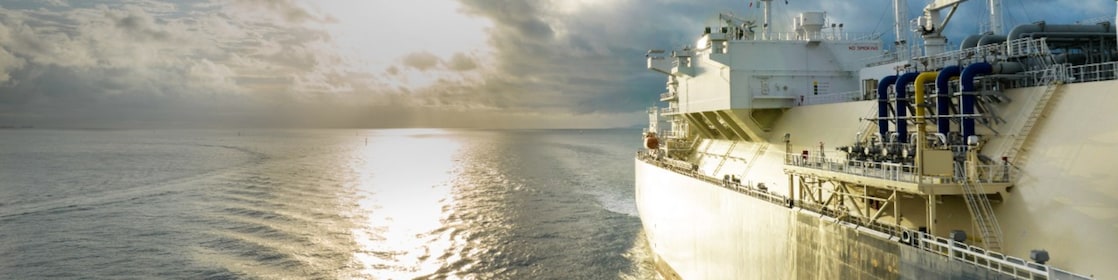
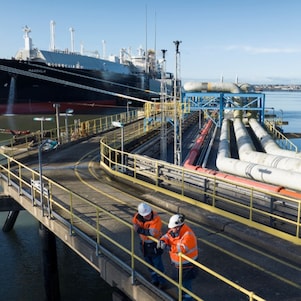
Kook water in een pan en je ontdekt al snel dat de damp die eruit opstijgt moeilijk te beheersen is. Bovendien neemt stoom meer ruimte in beslag dan water. Probeer het te temmen door het deksel erop te doen, en stoom bouwt snel een enorme druk op. Water in vloeibare vorm is veel gemakkelijker te hanteren. Een soortgelijk principe is van toepassing op vloeibaar aardgas, ofwel liquefied natural gas (LNG). In gasvorm is het niet zo gemakkelijk te hanteren, in vloeibare vorm stop je het snel in een grote fles of drijvende opslagtank en verscheep je het over de hele wereld.
"Shell is al 60 jaar een toonaangevende speler op het gebied van LNG. Sinds de eerste internationale LNG-lading werd getransporteerd was Shell erbij betrokken", zegt Christopher Hay. De geboren Schot werkt al sinds 2013 in Nederland voor Shell. Vanuit Den Haag is hij als Integrated Gas Carbon en Environment Lead East binnen Shell verantwoordelijk voor onder meer het verkleinen van de impact van aardgas op het milieu, en daarmee het klimaat.
Hoe wordt aardgas omgezet in LNG?
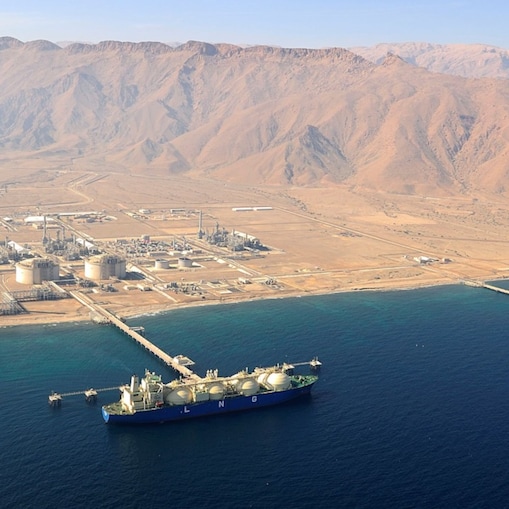
Hay: "Nadat we aardgas uit de grond hebben gewonnen, brengen we het naar de LNG-fabriek. Daar verwijderen we alle onzuiverheden, zoals water of CO2. En dan koelen we het gas af tot -160 graden Celsius om vloeibaar aardgas te krijgen. De LNG-fabriek is dus eigenlijk een grote koelkast." Afgekoeld aardgas, LNG dus, is in vloeibare vorm 600 keer kleiner dan in gasvorm.
LNG voor energiezekerheid
LNG is een hot topic in de media en de politiek. "LNG gaat een nog grotere rol spelen in het bieden van energiezekerheid in Nederland en in veel andere landen,” stelt Hay. “LNG kan relatief gemakkelijk van land naar land worden vervoerd. Het is een betaalbare energiebron in vergelijking met veel alternatieven en het is zeer flexibel. Energie die via LNG wordt geleverd, kan relatief snel worden opgeschaald en afgeschaald en kan een partner zijn voor hernieuwbare energiebronnen in het energiesysteem."
LNG om verduurzaming op gang te brengen
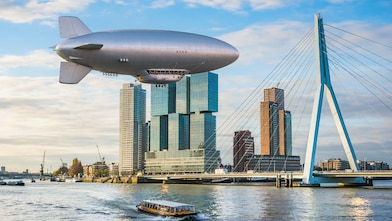
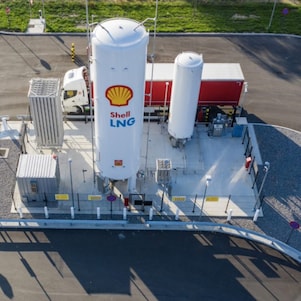
Het gebruik van LNG om de decarbonisatie op gang te brengen, kan vooral in de transportsector snel tot resultaat leiden, zegt Hay. Vooral in de scheepvaart en het zware vrachtvervoer is LNG een troefkaart. "Rotterdam is een goed voorbeeld. De haven heeft veel transportbedrijven. LNG kan worden gebruikt als alternatief voor de traditionele olie- en dieselbrandstoffen die deze industrieën momenteel gebruiken. Als ze nu al overstappen op LNG, kunnen ze hun uitstoot met ongeveer 20% verminderen. Maar het zet hen ook op een decarbonisatiepad voor de langere termijn. Want bio-LNG en synthetisch LNG kunnen die conventionele LNG gemakkelijk vervangen."
Shell LNG Outlook 2025
De wereldwijde vraag naar vloeibaar aardgas (LNG) zal naar verwachting tegen 2040 met ongeveer 60% stijgen, grotendeels als gevolg van de economische groei in Azië, emissiereducties in de zware industrie en het transport en de impact van kunstmatige intelligentie.
De wereldwijde handel in LNG groeide in 2024 met slechts 2 miljoen ton, de laagste jaarlijkse stijging in 10 jaar, tot 407 miljoen ton als gevolg van de beperkte ontwikkeling van het nieuwe aanbod.
Tegen 2030 zal naar verwachting meer dan 170 miljoen ton nieuw LNG beschikbaar zijn, waardoor aan de sterkere vraag naar gas kan worden voldaan, vooral in Azië, maar het tijdstip van het opstarten van nieuwe LNG-projecten is onzeker.
Wat zijn bio-LNG en synthetisch LNG?
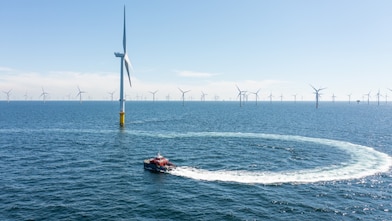
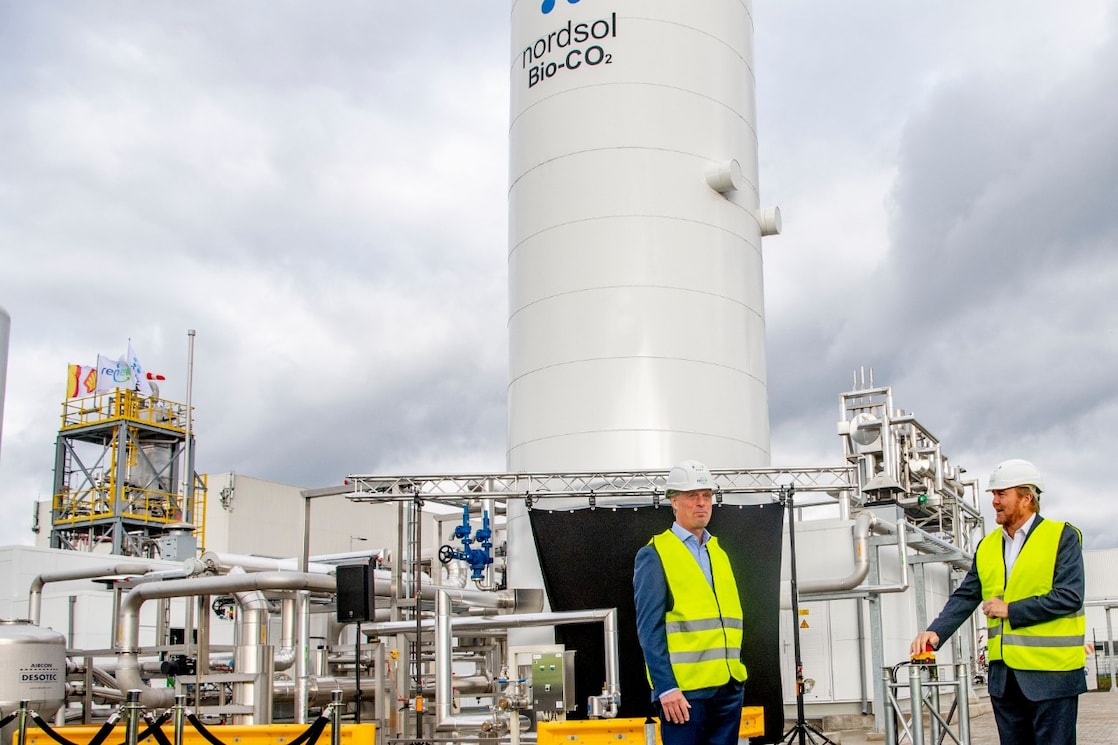
Reguliere LNG is vloeibaar gemaakt aardgas, ofwel van fossiel gas dat uit de aardbodem is gehaald. Voor bio-LNG worden organische bronnen van boven de grond gebruikt, zoals methaan uit mest van een melkveebedrijf. Dit biogas wordt op dezelfde manier vloeibaar gemaakt als gewoon LNG. Synthetisch LNG is iets voor de langere termijn. Daarvoor zal hernieuwbare waterstof, gemaakt met offshore windenergie en water, en CO2 worden gecombineerd om zo op een kunstmatige manier methaan te creëren.
LNG schoner produceren
Het produceren van LNG op een schonere manier is een belangrijk aandachtsgebied. Hay zegt dat de sleutel ligt in het gebruik van energie die de LNG-fabriek nodig heeft om aardgas vloeibaar te maken. "We zoeken naar een manier om de energiebehoefte te verminderen, en ook om ervoor te zorgen dat stroom van koolstofarme vormen van energie komt."
Voor nieuwe LNG-installaties gebruikt Shell nieuwe technologieën om de hoeveelheid elektrificatie van de processen in de fabriek te maximaliseren. Daarnaast komt de stroom dus zo veel mogelijk van hernieuwbare bronnen, zoals wind en zon. "Een mooi voorbeeld hiervan is het Ruwais LNG-project in Abu Dhabi, dat onlangs is aangekondigd. Hier wordt de hele fabriek geëlektrificeerd. LNG dat zo wordt geproduceerd, kan mogelijk ook zijn weg vinden naar Nederland en zo helpen het bredere energiesysteem koolstofvrij te maken", legt de expert uit.
Welke rol speelt methaan?
Een ander onderdeel van het decarbonisatieproces van LNG is niet alleen het verlagen van de CO2-uitstoot, maar ook het beperken van de methaanuitstoot tijdens de productie. Methaan is veel schadelijker voor de ozonlaag en dus ook vervelender voor het klimaat.
Volgens het Internationaal Energieagentschap heeft LNG bij het produceren van stroom ongeveer 50% minder uitstoot dan steenkool, mits het methaanverlies minder dan 1,7% bedraagt. Bij Shell ligt het methaanverlies onder de 0,05%, aldus Hay.
"Het is veel lager dan wat nodig is om concurrerend te zijn ten opzichte van steenkool. Maar het is belangrijk om onze methaanuitstoot nog verder terug te dringen, en Shell is een pionier (op dit gebied, red.).” Sinds de aankondiging van de resultaten van het vierde kwartaal van 2024 is het doel van Shell om tegen 2030 op intensiteitsbasis de uitstoot van methaan tot bijna nul te reduceren.
Wat is de toekomst van LNG?
"LNG heeft een zeer mooie toekomst", zegt Christopher Hay. "We verwachten dat de wereldwijde vraag naar LNG tegen 2040 met nog eens 60% zal toenemen. Het is een belangrijke component in Shells strategie om deel te zijn van die LNG-groei. Als we alleen al naar het komende decennium kijken, verwachten we onze LNG-productie met een derde te verhogen. Met projecten in Canada, Qatar en Abu Dhabi. Ze moeten allemaal meer LNG leveren, maar met een lagere koolstofuitstoot."
Zoals LNG een sterke drijver was voor de Shell-economie de afgelopen 60 jaar, zo zal het ook blijven de komende decennia. Aardgas, of de biologische en synthetische afgeleiden, lijkt voorlopig nog niet weg te denken uit een robuust, goed functionerend energiesysteem.
Christopher Hay, Integrated Gas Carbon en Environment Lead East bij Shell"Projecten in Canada, Qatar en Abu Dhabi moeten allemaal meer LNG leveren, maar met een lagere koolstofuitstoot."
Cautionary note
Cautionary note
The companies in which Shell plc directly and indirectly owns investments are separate legal entities. In this announcement “Shell”, “Shell Group” and “Group” are sometimes used for convenience where references are made to Shell plc and its subsidiaries in general. Likewise, the words “we”, “us” and “our” are also used to refer to Shell plc and its subsidiaries in general or to those who work for them. These terms are also used where no useful purpose is served by identifying the particular entity or entities. ‘‘Subsidiaries’’, “Shell subsidiaries” and “Shell companies” as used in this announcement refer to entities over which Shell plc either directly or indirectly has control. The term “joint venture”, “joint operations”, “joint arrangements”, and “associates” may also be used to refer to a commercial arrangement in which Shell has a direct or indirect ownership interest with one or more parties. The term “Shell interest” is used for convenience to indicate the direct and/or indirect ownership interest held by Shell in an entity or unincorporated joint arrangement, after exclusion of all third-party interest.
Forward-looking Statements
This announcement contains forward-looking statements (within the meaning of the U.S. Private Securities Litigation Reform Act of 1995) concerning the financial condition, results of operations and businesses of Shell. All statements other than statements of historical fact are, or may be deemed to be, forward-looking statements. Forward-looking statements are statements of future expectations that are based on management’s current expectations and assumptions and involve known and unknown risks and uncertainties that could cause actual results, performance or events to differ materially from those expressed or implied in these statements. Forward-looking statements include, among other things, statements concerning the potential exposure of Shell to market risks and statements expressing management’s expectations, beliefs, estimates, forecasts, projections and assumptions. These forward-looking statements are identified by their use of terms and phrases such as “aim”; “ambition”; ‘‘anticipate’’; ‘‘believe’’; “commit”; “commitment”; ‘‘could’’; ‘‘estimate’’; ‘‘expect’’; ‘‘goals’’; ‘‘intend’’; ‘‘may’’; “milestones”; ‘‘objectives’’; ‘‘outlook’’; ‘‘plan’’; ‘‘probably’’; ‘‘project’’; ‘‘risks’’; “schedule”; ‘‘seek’’; ‘‘should’’; ‘‘target’’; ‘‘will’’; “would” and similar terms and phrases. There are a number of factors that could affect the future operations of Shell and could cause those results to differ materially from those expressed in the forward-looking statements included in this announcement, including (without limitation): (a) price fluctuations in crude oil and natural gas; (b) changes in demand for Shell’s products; (c) currency fluctuations; (d) drilling and production results; (e) reserves estimates; (f) loss of market share and industry competition; (g) environmental and physical risks; (h) risks associated with the identification of suitable potential acquisition properties and targets, and successful negotiation and completion of such transactions; (i) the risk of doing business in developing countries and countries subject to international sanctions; (j) legislative, judicial, fiscal and regulatory developments including regulatory measures addressing climate change; (k) economic and financial market conditions in various countries and regions; (l) political risks, including the risks of expropriation and renegotiation of the terms of contracts with governmental entities, delays or advancements in the approval of projects and delays in the reimbursement for shared costs; (m) risks associated with the impact of pandemics, such as the COVID-19 (coronavirus) outbreak, regional conflicts, such as the Russia-Ukraine war, and a significant cybersecurity breach; and (n) changes in trading conditions. No assurance is provided that future dividend payments will match or exceed previous dividend payments. All forward-looking statements contained in this announcement are expressly qualified in their entirety by the cautionary statements contained or referred to in this section. Readers should not place undue reliance on forward-looking statements. Additional risk factors that may affect future results are contained in Shell plc’s Form 20-F for the year ended December 31, 2024 (available at www.shell.com/investors/news-and-filings/sec-filings.html and www.sec.gov). These risk factors also expressly qualify all forward-looking statements contained in this announcement and should be considered by the reader. Each forward-looking statement speaks only as of the date of this announcement, February 28, 2025. Neither Shell plc nor any of its subsidiaries undertake any obligation to publicly update or revise any forward-looking statement as a result of new information, future events or other information. In light of these risks, results could differ materially from those stated, implied or inferred from the forward-looking statements contained in this announcement.
Shell’s Net Carbon Intensity
Also, in this announcement we may refer to Shell’s “Net Carbon Intensity” (NCI), which includes Shell’s carbon emissions from the production of our energy products, our suppliers’ carbon emissions in supplying energy for that production and our customers’ carbon emissions associated with their use of the energy products we sell. Shell’s NCI also includes the emissions associated with the production and use of energy products produced by others which Shell purchases for resale. Shell only controls its own emissions. The use of the terms Shell’s “Net Carbon Intensity” or NCI are for convenience only and not intended to suggest these emissions are those of Shell plc or its subsidiaries.
Shell’s net-zero emissions target
Shell’s operating plan, outlook and budgets are forecasted for a ten-year period and are updated every year. They reflect the current economic environment and what we can reasonably expect to see over the next ten years. Accordingly, they reflect our Scope 1, Scope 2 and NCI targets over the next ten years. However, Shell’s operating plans cannot reflect our 2050 net-zero emissions target, as this target is currently outside our planning period. In the future, as society moves towards net-zero emissions, we expect Shell’s operating plans to reflect this movement. However, if society is not net zero in 2050, as of today, there would be significant risk that Shell may not meet this target.
Forward-looking non-GAAP measures
This announcement may contain certain forward-looking non-GAAP measures such as cash capital expenditure and divestments. We are unable to provide a reconciliation of these forward-looking non-GAAP measures to the most comparable GAAP financial measures because certain information needed to reconcile those non-GAAP measures to the most comparable GAAP financial measures is dependent on future events some of which are outside the control of Shell, such as oil and gas prices, interest rates and exchange rates. Moreover, estimating such GAAP measures with the required precision necessary to provide a meaningful reconciliation is extremely difficult and could not be accomplished without unreasonable effort. Non-GAAP measures in respect of future periods which cannot be reconciled to the most comparable GAAP financial measure are calculated in a manner which is consistent with the accounting policies applied in Shell plc’s consolidated financial statements.
The contents of websites referred to in this announcement do not form part of this announcement.
We may have used certain terms, such as resources, in this announcement that the United States Securities and Exchange Commission (SEC) strictly prohibits us from including in our filings with the SEC. Investors are urged to consider closely the disclosure in our Form 20-F, File No 1-32575, available on the SEC website www.sec.gov