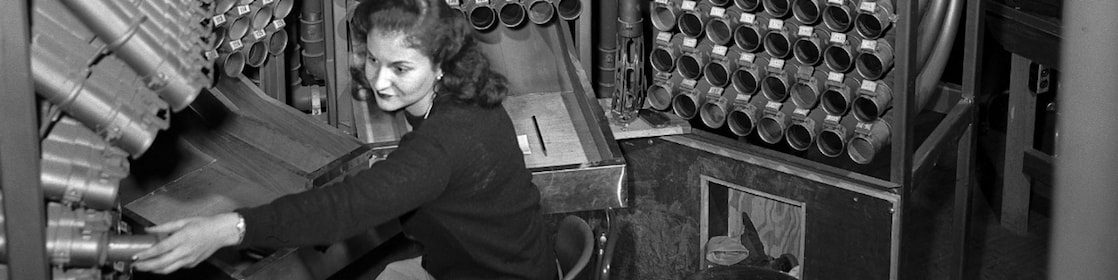
Compressed air: the technology between steam and electricity
Compressed air. In the 19th century, it was seen as the innovation for transport, communication and transmitting power. Step into a forgotten world and discover what became of compressed air. A story in our History of the Future series.

Text: Fanta Voogd. Images: Alamy (opening image), iStockphoto (tunnel-boring machine), Amsterdam City Archives (sewerage).
At a glance
- Compressed air, or pneumatics, was an important technology for transport, communication and power transmission in the 19th century, with applications ranging from pneumatic trains and tube systems to industrial machinery.
- Compressed air offered a safer alternative to steam, particularly in mining, tunnelling and industry, because it produced no heat, exhaust fumes or sparks.
- Electricity largely replaced compressed air as a means of transmitting power in the 20th century, but compressed air is still widely used in industry and construction, as well as in braking systems and pneumatic tools.
Humans have been using compressed air for thousands of years. The blowpipe proved an effective hunting weapon in various Asian and American cultures. During the Bronze Age, the first bellows appeared, allowing furnaces to be heated to the temperatures needed to melt metal.
The Greek scholar Ctesibius of Alexandria (c. 285–222 BCE) is regarded as the father of pneumatics. By around 1600, during the late Renaissance, scientists had resumed their investigation into the properties of air. In 1657, German physicist Otto von Guericke demonstrated the immense power of air pressure in Magdeburg: sixteen horses were unable to pull apart two hemispheres from which the air had been evacuated.
Pneumatic railways
Practical applications, however, did not emerge until the 19th century. In 1812, even before the advent of the first steam railway, British inventor George Medhurst devised a train that would be propelled by compressed air. Air would be carried through cast-iron pipes to the carriages. The concept was never built, but it anticipated the age of compressed air that would begin later that century.
In 1826, inventor John Vallance built a prototype pneumatic carriage in Brighton, carrying passengers through a closely fitting tube. The system worked, but proved too expensive to develop further. The Dalkey Atmospheric Railway (1843–1857), near Dublin, is regarded as the first commercial ‘atmospheric railway’. Air was pumped out of a pipe between the rails, creating a vacuum that allowed a piston to pull the train along at nearly 65 kilometres (40 miles) per hour.
A pneumatic railway was also built in France, between Paris and Saint-Germain-en-Laye. In New York, Alfred E. Beach experimented with an underground pneumatic railway beneath Broadway in 1870. His experiment preceded the arrival of the electric New York City Subway by more than 30 years.
None of these pneumatic railways proved a lasting success. The stationary steam engines that provided the power to compress or evacuate the air had to run continuously to maintain the vacuum. The piston seals were also vulnerable to wear and leakage. And then there was the rise of the increasingly efficient steam locomotive. Locomotive manufacturers, moreover, proved rather better at promoting their technology.
Published earlier in
The History of the Future
Pneumatic tube systems
While transporting extremely heavy passenger trains with air ultimately proved unsuccessful, moving lighter loads through tubes was a different story. The first urban pneumatic tube system dates from 1853 and connected the London Stock Exchange with the telegraph office. Messages and objects were blown or sucked through pipes in capsules.
Initially, pneumatic tubes were used for internal communication within businesses, but following London’s example, many European cities also developed city-wide networks. Some remained in operation well into the 20th century. In Paris, the network grew to 427 kilometres (265 miles) between 1861 and 1934.
Tunnelling and mining
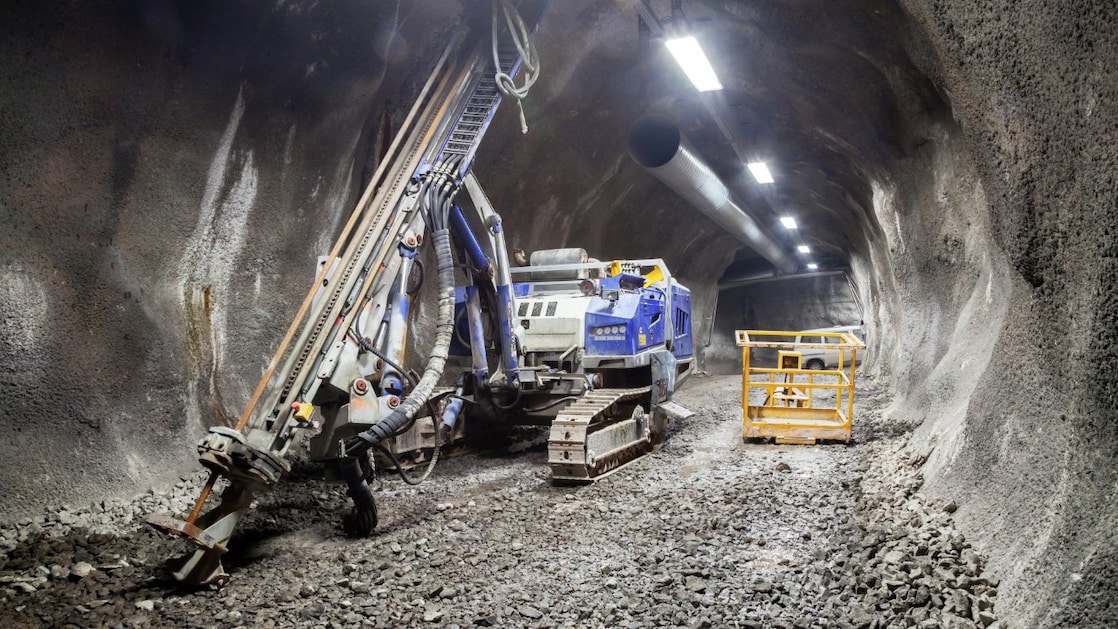
Compressed-air technology was gaining ground underground too. The pneumatic drill provided a major boost to tunnelling and mining. Steam engines posed serious hazards in these environments, including extreme heat, poisonous carbon monoxide and the risk of explosions. Compressed air offered a safer alternative.
During construction of Switzerland’s Gotthard Tunnel (1872–1880), wagons carrying excavated rock were hauled by a pneumatic locomotive. It produced no heat, toxic fumes or sparks.
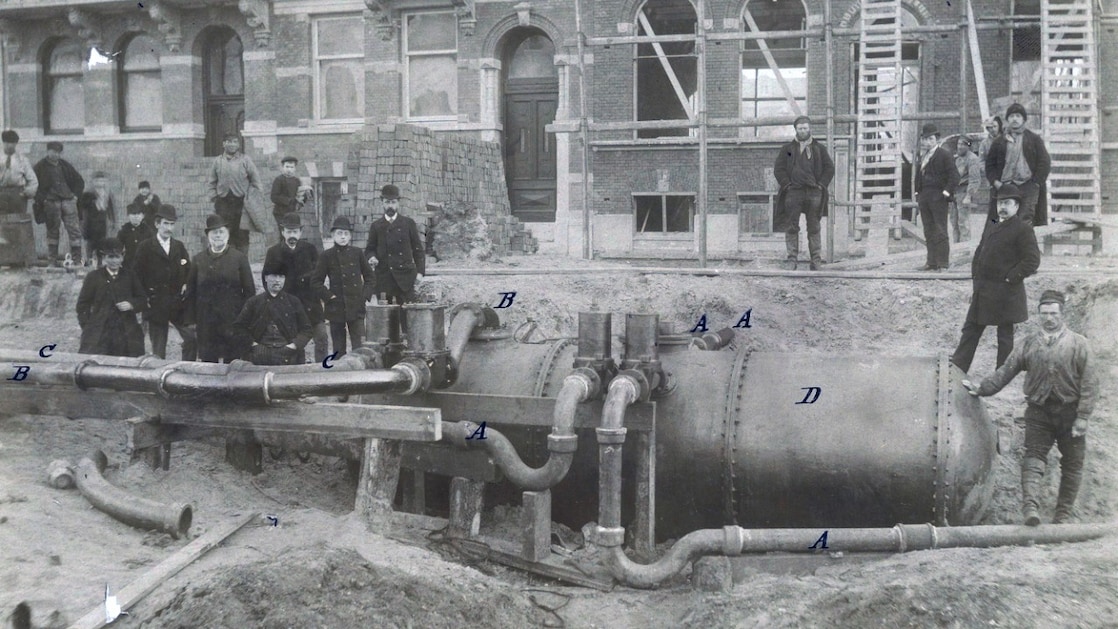
One Dutch application of pneumatic technology was the sewerage system devised by engineer Charles Liernur. Put simply, the Liernur system could be described as a pneumatic tube system for human waste. From 1871 onwards, it was installed in Amsterdam, followed by Leiden and Dordrecht.
By the end of the century, the waste of almost 40% of Amsterdam’s population was being collected this way and sold to farmers as fertiliser. Ultimately, however, this sustainable system lost out to water-flushed sewerage.
Even when electricity began finding practical applications from around 1870, it was by no means certain that it would become the undisputed technology for transmitting power. Dutch newspapers advertised not only electric doorbells but also a ‘pneumatic button’, connected by pipes to a bell activated by air pressure.
Charles Liernur’s pneumatic sewerage system, late 19th centuryThe waste of 40% of Amsterdam’s population collected using compressed air
Transmitting power with compressed air
In the 19th century, compressed air was a serious competitor to steam power. It had an advantage over steam because it produced no heat, pollution or fire hazard at the point of use. A steam engine was still needed to compress the air, but it could operate well away from people on the factory floor. Pipes and hoses made it possible to transmit power over far greater distances than the drive belts of a steam engine.
Alongside its urban pneumatic tube network, Paris began developing a large industrial compressed-air network in 1879. The system, designed by Austrian engineer Victor Popp, was initially intended solely to power accurate pneumatic public clocks. From the late 1880s onwards, however, it evolved into a network serving industrial users.
The Compagnie Parisienne de l’Air Comprimé supplied compressed air to factories and workshops, where it powered everything from sewing machines and lathes to printing presses and lifts. The owner of the fashionable Café de Paris even used compressed air to drive a dynamo that powered 250 incandescent light bulbs. It was a striking example of compressed air serving as the missing link between steam and electricity.
Cities including Birmingham, Dresden and Buenos Aires developed similar networks. Despite electrification, the Paris system remained in use for many decades. By 1969, the network extended for 900 kilometres (560 miles) and served more than 9,000 customers. It was not finally shut down until 1994.
Overtaken by electricity
During the 20th century, compressed air was largely displaced by electricity. Yet pneumatics remain indispensable in a number of important areas.
Compressed air is still widely used in industry, construction, mining and tunnelling because pneumatic tools are light, compact and safe. It is also used in refrigerators, braking systems, paint sprayers, fairground rides and dentists’ drills.
900 kilometres (560 miles) in length, with 9,000 customers in 1969The pneumatic tube mail system of Paris was abolished as late as 1994