
Locatie Emmen: GZI North Star
GZI North Star is onderdeel van GZI Next, de hub voor hernieuwbare energie op het terrein van de oude gaszuiveringsinstallatie van NAM en EBN in Emmen. Daar is al een zonnepark en een Shell-waterstofvulpunt voor regionale bussen en vrachtwagens. Shell Biogas wil er biogasproductie bij plaatsen — samen met partners Engie en EBN.
Locatie
Phileas Foggstraat 45, Emmen
Werkgelegenheid
Verkennen van de mogelijkheden voor (directe) werkgelegenheid en samenwerking met kennisinstellingen
Feedstock
Minimaal 30% vaste reststromen, waaronder graanresten, bietenpuntjes en cacaodoppen.
Verwacht volume
662,5 kiloton per jaar (ingaand)
Productie biogas
39 mln m3 per jaar (verwacht)
CO2-reductie
Vermindering van 160.000 ton CO2 per jaar (verwacht)
Duurzame energie
Waarom Emmen?
De voormalige gaszuiveringsinstallatie van de NAM in Emmen is een perfecte locatie om meerder duurzame energievormen samen te brengen. Daarmee blijft het terrein net als voorheen essentieel voor de energievoorziening in de regio. De bestaande infrastructuur – zoals pijpleidingen en aansluitingen – bleek uitstekend voor een nieuwe functie: een energiehub. Omgedoopt tot GZI Next kent de energiehub inmiddels al een zonnepark en een waterstofvulpunt voor bussen en vrachtwagens. Daarnaast werken Shell, TNO, GroenvermogenNL en DNV aan plannen voor een testcentrum voor elektrolysers, de apparaten waarmee waterstof wordt gemaakt. Het biogasplan GZI North Star is onderdeel van GZI Next, de hub voor hernieuwbare energie op het terrein van de oude gaszuiveringsinstallatie van NAM en EBN in Emmen. GZI Next is een project waarin overheden, bedrijven en kennisinstellingen nauw samenwerken aan de energietransitie.
Voorlopig tijdpad GZI North Star
2023
Aanvraag Milieueffectrapportage, beoordeling, Start WABO-aanvraag en vergunning.
2028
De hoop is dat een investeringsbesluit in 2028 kan worden genomen als de uitkomsten van de verkenningen positief zijn.
2028 of later
Start bouw
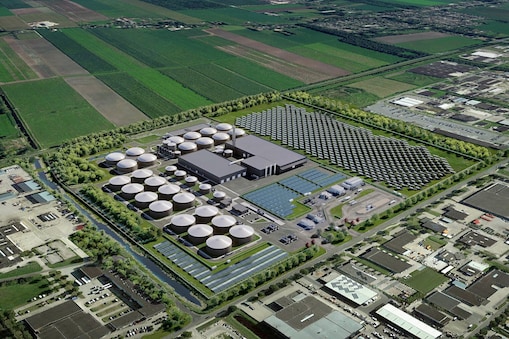
Zo gaat GZI North Star in Emmen er ongeveer uitzien
GZI North Star — een samenwerking van Shell Biogas, Engie en EBN — in Emmen zal volgens het plan er ongeveer zo uitzien. Wijzigingen voorbehouden.
De vergister
12 vergistingstanks in totaal
Aanvoer
Gemiddeld 160 vrachtwagens per dag, ongeveer 1% tot 2% meer verkeer rondom Emmen
Droog digestaat
Droog digestaat wordt als circulaire meststof teruggeleverd aan de agrariërs
Schoon water
Water uit de productie van groen gas komt via een overloopvijver, gefilterd en schoon, in het Bargerkanaal

Neem contact met ons op
Ook met biogas aan de slag?
Shell Biogas heeft haar Nederlandse kantoor in Den Haag. Neem via het invulformulier gemakkelijk contact met ons op.
Veelgestelde vragen GZI North Star
De meestgestelde vragen over Shell Biogas in Coevorden zijn voor het laatst bijgewerkt op 9 september 2026.
Wat gaat er in de installatie voor biogas op het terrein van GZI Next?
Wat gaat er in de installatie voor biogas op het terrein van GZI Next?
662.500 ton aan agrarische reststromen, zoveel mogelijk uit de regio.
Worden er maatregelen voor geurbeperking genomen?
Worden er maatregelen voor geurbeperking genomen?
Ja, er worden uitgebreide maatregelen voor geurbeperking genomen, zoals chemische luchtwassers en een schoorsteen.
Hoe werkt vergisting?
Hoe werkt vergisting?
Heel simpel gezegd: agrarische reststromen + natuurlijke bacteriën = klaar-voor-gebruik biogas.
Is er regelmatig toezicht op de biogasinstallatie van GZI North Star?
Is er regelmatig toezicht op de biogasinstallatie van GZI North Star?
Ja, vergunning en regelmatige toetsing wordt gedaan door bevoegd gezag. We onderzoeken de mogelijkheid tot lokale samenwerking met de buurt, bijvoorbeeld met een klankbordgroep of met een geurprotocol.
Hoeveel biogas gaat er door GZI North Star worden geproduceerd?
Hoeveel biogas gaat er door GZI North Star worden geproduceerd?
GZI North Star zal naar verwachting ongeveer 39 miljoen kuub klaar-voor-gebruik biogas produceren. Als het vloeibaar gemaakt zou worden, dan kunnen 800 trucks er een jaar op rijden (gemiddeld 40.000 kilometer per jaar).
Hoeveel CO2 wordt er bespaard als GZI North Star biogas produceert?
Hoeveel CO2 wordt er bespaard als GZI North Star biogas produceert?
Naar verwachting komt er door de geplande productie van biogas - ook wel groen gas genoemd - door GZI North Star een uitstoot van 160 kiloton minder CO2 in de atmosfeer. Dat is ongeveer gelijk aan wat gemiddeld 13 hectare bos aan CO2 zou kunnen opnemen. De CO2 van GZI North Star wordt opgevangen en die zou kunnen worden hergebruikt in de koelindustrie en de glastuinbouw.
Wat is de feedstock van GZI North Star?
Wat is de feedstock van GZI North Star?
Feedstock is de Engelse verzamelnaam voor de grondstoffen die in de biogasinstallatie gaan.
70% van de feedstock is dierlijke mest. Dit moet voldoen aan de eisten uit de meststoffenwet. De mest komt voornamelijk uit Gelderland, Drenthe en Overijssel.
30% zijn agrarische reststromen. Dat zijn restproducten uit de akkerbouw of melkverwerking, die niet geschikt zijn voor de (dier)voedingsbranche. Denk aan graanresten, cacaodoppen, aardappelrestanten en bietenpuntjes, maisscreenings en maisstoppels, maar ook afgekeurde honden- en kattenbrokjes.
De feedstock van GZI Next komt vooral uit een straal van 100 kilometer rond de biogasinstallatie. Soms komt het ook van over de grens, uit Duitsland, zoals afgekeurde dierenvoeding en bietenpuntjes.
Wat is digestaat?
Wat is digestaat?
Digestaat is een van de eindproducten uit de productie van groen gas. Digestaat wordt in de landbouw als meststof gebruikt. Vooral Franse en Duitse boeren gebruiken digestaat.
Wie zijn de leveranciers van GZI North Star?
Wie zijn de leveranciers van GZI North Star?
De leveranciers van de feedstock van GZI North Star zullen zijn:
- Varkens- en andere veehouders verkopen hun mest aan mesthandelaren, die vervolgens onze leveranciers zijn.
- Landbouwcoöperaties leveren feedstock aan met co-producten of reststromen, via feedstockhandelaren.
- GZI North Star werkt met vaste leveranciers, met meerjarige contracten.
- GZI North Star toetst de leveranciers, om inzichten te krijgen in hun organisaties en prestaties.
Hoe wordt GZI North Star gecontroleerd?
Hoe wordt GZI North Star gecontroleerd?
De mest en de overige vaste reststromen moeten aan strenge eisen voldoen. Om de kwaliteit te waarborgen wordt er op verschillende manieren gecontroleerd.
- Monsterzakje: elke vrachtwagen die mest levert heeft een monster bij zich.
- Eigen steekproef: GZI North Star voert zelf ook steekproeven uit.
- Controles NVWA: de Nederlandse Voedsel- en Warenautoriteit kan proeven komen doen.
- Kwaliteit: er wordt vaak gecontroleerd op vervuiling en gasopbrengst.
- Administratie van de feedstock: van alle vrachten gaat een monster naar een laboratorium en de analyses gaan naar de RVO in Assen. Mestvrachtwagens hebben automatische monsterapparatuur, en zijn niet te beïnvloeden. Van alle feedstock wordt een administratie bijgehouden.
Cautionary note
Cautionary note
The companies in which Shell plc directly and indirectly owns investments are separate legal entities. In this publication “Shell”, “Shell Group” and “Group” are sometimes used for convenience to reference Shell plc and its subsidiaries in general. Likewise, the words “we”, “us” and “our” are also used to refer to Shell plc and its subsidiaries in general or to those who work for them. These terms are also used where no useful purpose is served by identifying the particular entity or entities. ‘‘Subsidiaries’’, “Shell subsidiaries” and “Shell companies” as used in this publication refer to entities over which Shell plc either directly or indirectly has control. The terms “joint venture”, “joint operations”, “joint arrangements”, and “associates” may also be used to refer to a commercial arrangement in which Shell has a direct or indirect ownership interest with one or more parties. The term “Shell interest” is used for convenience to indicate the direct and/or indirect ownership interest held by Shell in an entity or unincorporated joint arrangement, after exclusion of all third-party interest.
Forward-Looking statements
This publication contains forward-looking statements (within the meaning of the U.S. Private Securities Litigation Reform Act of 1995) concerning the financial condition, results of operations and businesses of Shell. All statements other than statements of historical fact are, or may be deemed to be, forward-looking statements. Forward-looking statements are statements of future expectations that are based on management’s current expectations and assumptions, including (without limitation) those concerning Shell’s strategy and operating plans, macroeconomic conditions, future energy demand, supply and product mix, commodity prices, demand for Shell’s products, production results and reserve estimates, development, execution and management of projects, energy transition and climate change, management of safety and environmental risks, costs, cash capital expenditures, technology advancements, legislative, judicial, fiscal and regulatory developments, regional conflicts and trading conditions, and involve known and unknown risks and uncertainties that could cause actual results, performance or events to differ materially from those expressed or implied in these statements. Forward-looking statements include, among other things, statements concerning the potential exposure of Shell to market risks and statements expressing management’s expectations, beliefs, estimates, forecasts, projections and assumptions. These forward-looking statements are identified by their use of terms and phrases such as “aim”; “ambition”; ‘‘anticipate’’; “aspire”, “aspiration”, ‘‘believe’’; “commit”; “commitment”; ‘‘could’’; “desire”; ‘‘estimate’’; ‘‘expect’’; ‘‘goals’’; ‘‘intend’’; ‘‘may’’; “milestones”; ‘‘objectives’’; ‘‘outlook’’; ‘‘plan’’; ‘‘probably’’; ‘‘project’’; ‘‘risks’’; “schedule”; ‘‘seek’’; ‘‘should’’; ‘‘target’’; “vision”; ‘‘will’’; “would” and similar terms and phrases. There are a number of factors that could affect the future operations of Shell and could cause those results to differ materially from those expressed in the forward-looking statements included in this publication, including (without limitation): (a) price fluctuations in crude oil and natural gas; (b) changes in demand for Shell’s products; (c) currency fluctuations; (d) drilling and production results; (e) reserves estimates; (f) loss of market share and industry competition; (g) environmental and physical risks, including climate change; (h) risks associated with the identification of suitable potential acquisition properties and targets, and successful negotiation and completion of such transactions; (i) the risk of doing business in developing countries and countries subject to international sanctions; (j) legislative, judicial, fiscal and regulatory developments including tariffs and regulatory measures addressing climate change; (k) economic and financial market conditions in various countries and regions; (l) political risks, including the risks of expropriation and renegotiation of the terms of contracts with governmental entities, delays or advancements in the approval of projects and delays in the reimbursement for shared costs; (m) risks associated with the impact of pandemics, regional conflicts, such as the Russia-Ukraine war and the conflict in the Middle East, and a significant cyber security, data privacy or IT incident; (n) the pace of the energy transition; and (o) changes in trading conditions. No assurance is provided that future dividend payments will match or exceed previous dividend payments. All forward-looking statements contained in this publication are expressly qualified in their entirety by the cautionary statements contained or referred to in this section. Readers should not place undue reliance on forward-looking statements. Additional risk factors that may affect future results are contained in Shell plc’s Form 20-F for the year ended December 31, 2025 (available at www.shell.com/investors/news-and-filings/sec-filings.html and www.sec.gov). These risk factors also expressly qualify all forward-looking statements contained in this publication and should be considered by the reader. Each forward-looking statement speaks only as of the date of this publication, September 9, 2026. Neither Shell plc nor any of its subsidiaries undertake any obligation to publicly update or revise any forward-looking statement as a result of new information, future events or other information. In light of these risks, results could differ materially from those stated, implied or inferred from the forward-looking statements contained in this publication.
Shell’s net carbon intensity and net-zero emissions target
In this publication we may refer to Shell’s “net carbon intensity” (NCI), which includes Shell’s carbon emissions from the production of our energy products, our suppliers’ carbon emissions in supplying energy for that production and our customers’ carbon emissions associated with their use of the energy products we sell. Shell’s NCI also includes the emissions associated with the production and use of energy products produced by others which Shell purchases for resale. Shell only controls its own emissions. The use of the terms Shell’s “net carbon intensity” or NCI is for convenience only and not intended to suggest these emissions are those of Shell plc or its subsidiaries.
Shell’s operating plan and outlook are forecasted for a three-year period and ten-year period, respectively, and are updated every year. They reflect the current economic environment and what we can reasonably expect to see over the next three and ten years. Accordingly, the outlook reflects our combined Scope 1 and 2 target, NCI target and our oil products ambition over the next ten years. However, Shell’s operating plan and outlook cannot reflect our 2050 net-zero emissions target, as this target is outside our planning period. Such future operating plans and outlooks could include changes to our portfolio, efficiency improvements and the use of carbon capture and storage and carbon credits. In the future, as society moves towards net-zero emissions, we expect Shell’s operating plans and outlooks to reflect this movement. However, if society is not net zero in 2050, as of today, there would be significant risk that Shell may not meet this target.
The information provided above regarding Shell’s NCI and net zero emissions target are not intended, nor should they be construed as introducing, suggesting or making any claim, target or representation thereof other than what is included in the publicaiton..
Forward-Looking non-GAAP measures
This publication may contain certain forward-looking non-GAAP measures such as free cash flow and underlying operating expenses. We are unable to provide a reconciliation of these forward-looking non-GAAP measures to the most comparable GAAP financial measures because certain information needed to reconcile those non-GAAP measures to the most comparable GAAP financial measures is dependent on future events some of which are outside the control of Shell, such as oil and gas prices, interest rates and exchange rates. Moreover, estimating such GAAP measures with the required precision necessary to provide a meaningful reconciliation is extremely difficult and could not be accomplished without unreasonable effort. Non-GAAP measures in respect of future periods which cannot be reconciled to the most comparable GAAP financial measure are calculated in a manner which is consistent with the accounting policies applied in Shell plc’s consolidated financial statements. These forward-looking non-GAAP measures are provided to assist readers in understanding management’s use and expectations of such measures and may not be appropriate for other purposes.
The contents of websites referred to in this publication do not form part of this publication.
We may have used certain terms, such as resources, in this publication that the United States Securities and Exchange Commission (SEC) strictly prohibits us from including in our filings with the SEC. Investors are urged to consider closely the disclosure in our Form 20-F, File No 1-32575, available on the SEC website www.sec.gov.