Waterstof
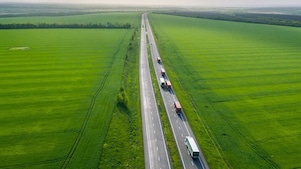
Waterstof speelt een sleutelrol bij het slagen van de Nederlandse energietransitie. En dan bij voorkeur hernieuwbare waterstof, gemaakt met stroom uit wind of zon en zonder uitstoot van CO2. Door het ontwikkelen van bijvoorbeeld waterstof voor de vrachtwagens en streekbussen, en voor de zware industrie, investeert Shell in nieuwe energie voor Nederland.
Op deze pagina:
Shells waterstofprojecten in Nederland
Shells kennis en technologie in waterstof
Shell heeft de kennis, de technologie en de ambitie om een actieve rol te spelen in het realiseren van een waterstofeconomie in Nederland. We pioneerden een tijdje met drie waterstofvulpunten bij drie Shell-stations. Voor het regionale busvervoer openden we in 2021 een waterstofvulpunt in Groningen, gevolgd door een tweede voor bussen en vrachtwagens in Emmen in juni 2022.
Eerste groene waterstoffabriek
In juli 2022 zetten we als eerste in Nederland de grote stap met een definitief besluit om de Holland Hydrogen 1 te bouwen. In deze waterstoffabriek (200 megawatt) op de Tweede Maasvlakte gaat groene waterstof met windenergie van zee worden gemaakt. Lees hieronder meer over Shells waterstofactiviteiten.
Hernieuwbare waterstof met wind van zee
Holland Hydrogen 1
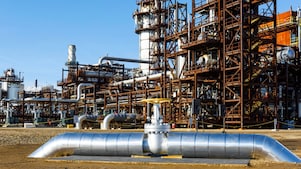
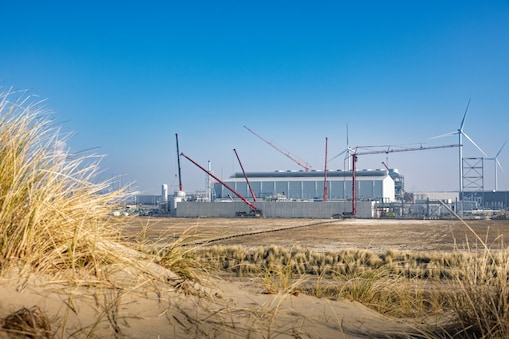
Shell bouwt samen met meer dan 150 aannemers en leveranciers de eerste grote fabriek voor hernieuwbare waterstof in Europa, in het bereik van 200 megawatt. Zodra het in de tweede helft van dit decennium operationeel is, zal het gemiddeld 60 ton waterstof per dag produceren, aangedreven door offshore wind van de Noordzee. De fabriek verrijst achter de duinen van de Nederlandse kust, op de Tweede Maasvlakte.
De hernieuwbare waterstof uit de Holland Hydrogen 1 (HH1) zal een duurzaam antwoord zijn voor de zware industrie en in tweede aanleg het zware vrachtvervoer. Vooral de industrie heeft op dit moment beperkte mogelijkheden voor andere hernieuwbare oplossingen. De HH1-installatie zal worden aangedreven door wind afkomstig van het offshore windpark Hollandse Kust Noord, dat Shell samen met Eneco via de joint venture CrossWind begin 2024 volledig in gebruik nam.
Holland Hydrogen 1 via de Rotterdamse haven naar klanten
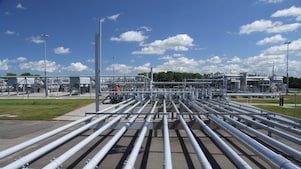
De HH1 gaat de fabrieken van Shell Pernis helpen verduurzamen. De waterstof wordt in Pernis al als grondstof gebruikt, maar dan gemaakt met aardgas ("grijze" waterstof). De hernieuwbare ("groene") waterstof zal via een speciale waterstofleiding de fabriek verbinden met de haven van Rotterdam voor waterstofklanten, inclusief Shells installaties in Pernis.
Slimme elektronica in de waterstoffabriek
Slimme elektronica maakt wel 40% van de Holland Hydrogen 1-fabriek uit, tegen 15% in een conventionele olie- of gasinstallatie. Die zogenoemde power electronics zijn nodig om de constante leverantie van windstroom naar de elektrolysers te regelen. Elektrolysers zijn de apparaten die de waterstof daadwerklijk maken. De elektronica houdt uiteraard ook het elektrolyseproces zelf in de gaten, om een vlotte levering van waterstof aan de gebruikers te garanderen.
Wereldwijde waterstofproductie
Shell en partners schrijven geschiedenis. Wereldwijd was er begin 2022 zo'n 300 megawatt aan elektrolysers voor de productie van hernieuwbare waterstof. Op 6 juli 2022 kondigden Shell en partners aan nog eens 200 megawatt toe te voegen. Echt een grote stap dus!
Waterstofbussen
Regionaal vervoer op waterstof
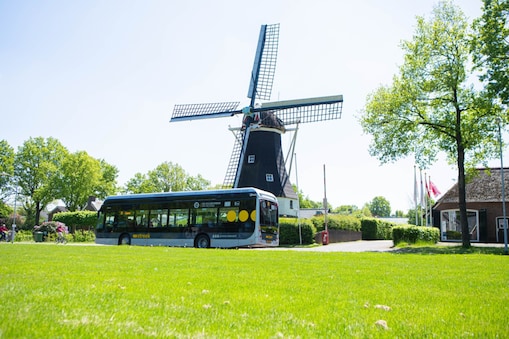
In Noordoost-Nederland heeft Shell twee waterstofvulpunten voor het regionaal busvervoer: in Groningen en in Emmen. Het waterstofvulpunt (Hydrogen Refuelling Station; HRS) Groningen werd in juni 2021 in gebruik genomen. Dit vulpunt werd subsidievrij gebouwd en was het eerste ter wereld voor regionaal busvervoer. Twintig streekbussen van Qbuzz die op waterstof rijden, maakten er direct gebruik van. De bussen rijden in de provincies Groningen en Drenthe.
In juni 2022 opende Shell haar tweede waterstofvulpunt voor grote voertuigen, en Shells eerste in Nederland waar ook het vrachtverkeer kan bijtanken. Dit HRS Emmen is onderdeel van de energiehub GZI Next in Emmen. Het waterstofvulpunt in Emmen is bedoeld als onderdeel in een Europees netwerk waarmee het (inter)nationale goederentransport kan verduurzamen. Op het GZI Next-terrein tanken ook de waterstofbussen van Qbuzz, medegefinancierd door de provincie Drenthe, bij.
Waterdamp is de enige uitstoot
Waterstofbussen bieden een oplossing voor de langere afstanden van het streekvervoer. Het tanken neemt ongeveer 10 minuten in beslag en met een volle tank van 25 kilo waterstof kunnen de bussen zo’n 400 kilometer afleggen. De enige uitstoot die uit de uitlaat van de bus komt, is waterdamp.
Vervoer waterstof naar industriële clusters
Delta-Rijncorridor
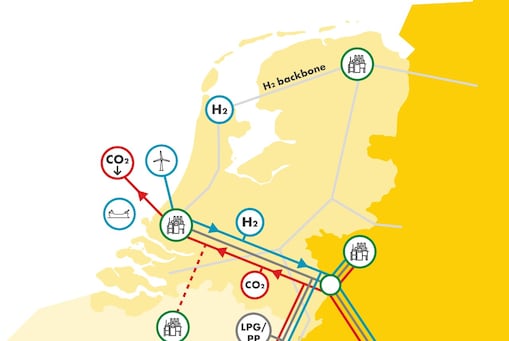
Waterstof via Rotterdam naar Nederlandse en Duitse industriële afnemers die moeten verduurzamen. En kan omgekeerd CO2 vanuit verschillende delen van Nederland en Duitsland via Rotterdam in de bodem van de Noordzee worden opgeslagen. Dat is het plan achter de Delta-Rijncorridor. Het Havenbedrijf Rotterdam en verschillende industriepartners, waaronder Shell, ondersteunen de ontwikkeling dit project dat bestaat uit een bundel van pijpleidingen tussen de Rotterdamse haven, Chemelot in Limburg en in latere fase het Duitse Rijnland.
Razendsnel op waterstof
Forze Hydrogen Racing
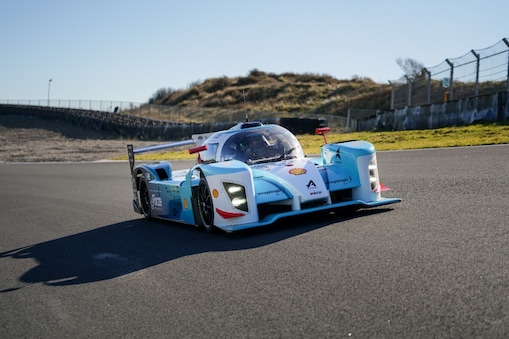
Shell werkt al een paar jaar samen met het Forze Racing Team: 60 slimme techstudenten bouwen aan de snelste waterstofraceauto. Hun ambitie: pionieren bij de innovatie van waterstof voor mobiliteit. Voor Shell is de Forze IX een ideaal platform om bijvoorbeeld de e-Fluids voor elektrische auto’s onder extreme omstandigheden te testen.
Want net als conventionele wagens, heeft een motor en versnellingsbak van een elektrische auto (duurzame) smeermiddelen nodig. Om zo frictie en verhitting te beperken en daarmee schade aan bewegende onderdelen te voorkomen. Het maakt daarbij niet uit of de auto rijdt op een batterij of op (hernieuwbare) waterstof. Technologische vooruitgang in de racesport maakt vaak in een of andere vorm de sprong naar het gewone verkeer.
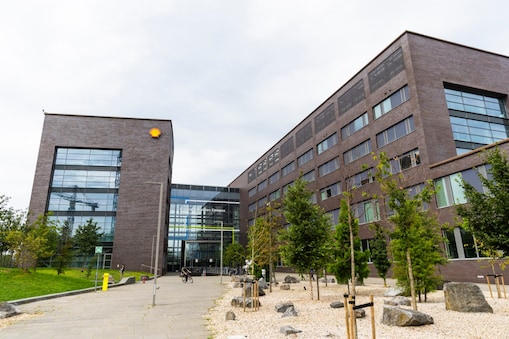
Energy Transition Campus Amsterdam (ETCA)
Onderzoek naar waterstof
Shell en waterstof zijn oude bekenden. Al decennialang onderzoekt Shell de mogelijke toepassingen van waterstof en ook vandaag is er een speciaal team wetenschappers hiermee aan het werk op de Energy Transition Campus Amsterdam (ETCA), waar dagelijks een breed scala aan onderzoeken wordt gedaan. Op de Energy Transition Campus Amsterdam maakt Shell al groene waterstof met stroom uit zonnepanelen. Een deel van de waterstof gaat naar de eigen waterstofpomp en een ander deel wordt gebruikt voor proeven en onderzoek naar de toepassingen van waterstof.
Waterstof in het Nederlandse Klimaatakkoord
De mogelijkheden van waterstof zijn ook vastgelegd in het Nederlandse Klimaatakkoord van juni 2019. In deze mijlpaal hebben meer dan honderd organisaties na lang beraad een pakket maatregelen afgesproken om zo de opwarming van de aarde te beperken. Het Klimaatakkoord ziet voor waterstof een ‘cruciale rol’ weggelegd in de Nederlandse energietransitie, zowel op de middellange (2030) en lange (2050) termijn. Het Klimaatakkoord ziet vijf gebieden waarop waterstof een rol kan spelen: als grondstof voor de procesindustrie, als CO₂-vrije energiedrager voor hogetemperatuurwarmte voor de procesindustrie, als regelbare CO₂-vrije energieopslag, voor mobiliteit en in de gebouwde omgeving.
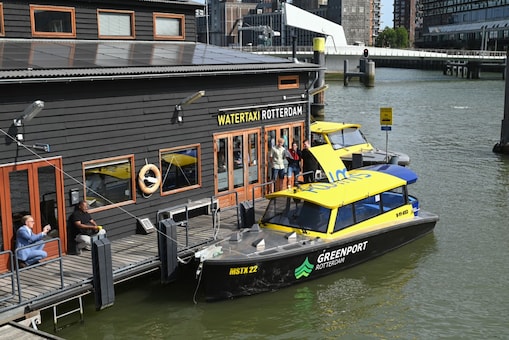
Snel stadsvervoer over het water
's Werelds eerste waterstoftaxi
's Werelds eerste waterstofwatertaxi maakt in augustus 2022 zijn debuut in de haven van Rotterdam en voegde daarmee een duurzaam element toe aan de vloot van 22 watertaxi's die forenzen, zakenreizigers en toeristen elke dag van/naar 50 locaties in de grootste havenstad van Europa brengt. Shell sponsorde de 2022-testfase van de nieuwe watertaxi met groene waterstof gemaakt door in de proefinstallatie van de Energy Transition Campus Amsterdam (ETCA). De taxi zelf was een project van het SWIM-consortium, bestaande uit de partners Enviu, Zepp.solutions, Flying Fish en Watertaxi Rotterdam. Jaarlijks brengt Watertaxi Rotterdam 700.000 passagiers in mum van tijd van de ene naar de andere halte, op maat en op verzoek van de passagier.
6 vragen over waterstof
Wat is waterstof eigenlijk?
Wat is waterstof eigenlijk?
Waterstof is een scheikundig element. Het is het lichtste element in het heelal. Het is kleurloos, geurloos en niet-giftig. Bovendien is waterstof het meest voorkomende chemische element in ons universum. Zo bestaan sterren, zoals de zon, voornamelijk uit waterstof.
In de natuur komt waterstof niet voor en daarom moet het gemaakt worden. Dat kan door waterstofatomen (H2) van andere moleculen af te splitsen; bijvoorbeeld van aardgas (CH4) of van water (H2O). Dat vergt veel energie, maar levert vervolgens ook het zeer energierijke molecuul waterstof op dat op verschillende manieren kan worden toegepast. Over die toepassingen lees je later meer.
Bij Holland Hydrogen 1 maken we hernieuwbare waterstof. Dat doen we door middel van een proces genaamd elektrolyse. Het proces produceert de energiedrager hernieuwbare waterstof, voorheen ook wel "groene" waterstof genoemd.
Wat is elektrolyse?
Wat is elektrolyse?
Bij Holland Hydrogen 1 produceren we waterstof door middel van elektrolyse. Het eindproduct, hernieuwbare of groene waterstof, is namelijk een duurzame energiedrager.
Maar wat maakt de hernieuwbare waterstof die hier wordt geproduceerd dan zo duurzaam? Dat heeft allereerst te maken met de energiebron die we gebruiken om waterstof te produceren. Waterstof wordt bij HH1 namelijk geproduceerd met behulp van de groene stroom die wordt opgewekt bij het nabijgelegen windpark op zee Hollandse Kust Noord. De hernieuwbare elektriciteit die daar wordt geproduceerd, stelt de elektrolysers in staat om het watermolecuul (H2O) te splitsen in waterstof (H2) en zuurstof (O2).
Het gebouw waar de elektrolysers in staan is het kloppende hart van de HH1-fabriek. Daar produceren tien elektrolysers, elk met een capaciteit van 20 megawatt, hernieuwbare waterstof. Eerst stroomt er water, de bron van waterstof, door het waterzuiveringsgebouw. Gevoed door een aansluiting op het 380kV-TenneT-netwerk wordt de centrale vervolgens voorzien van de hernieuwbare stroom die nodig is om het elektrolyseproces uit te voeren. De elektrolysers splitsen het watermolecuul en voeden de gemaakte waterstof in op de backbone, een lange pijpleiding die van de Maasvlakte naar Shell Chemicals and Energy Park Rotterdam (Pernis) leidt. Daar wordt de hernieuwbare energiedrager gebruikt om bestaande industriële processen te verduurzamen. De hernieuwbare, groene waterstof vervangt zijn fossiele tegenhanger grijze waterstof.
Waterstof is kleurloos. Waarom dan toch groen, blauw en grijs?
Waterstof is kleurloos. Waarom dan toch groen, blauw en grijs?
Hoewel waterstof kleurloos is, wordt er vaak gesproken over verschillende kleuren waterstof. Dat heeft niks te maken met de kleur van het chemische element, maar zegt iets over de productiemethode.
Groene of hernieuwbare waterstof
Hernieuwbare waterstof, het type waterstof dat we bij HH1 maken, wordt vervaardigd met behulp van een duurzame energiebron. Hernieuwbare energie wordt gebruikt om watermoleculen te splitsen in waterstof en zuurstof via het hierboven beschreven elektrolyseproces.
Grijze waterstof
Momenteel wordt de meeste waterstof geproduceerd uit fossiele bronnen zoals aardgas of steenkool. Dit productieproces heet reforming en hierbij komt koolstofdioxide (CO2) vrij in de atmosfeer.
Blauwe waterstof
Blauwe waterstof wordt net als grijze waterstof geproduceerd uit aardgas, maar de CO2 die vrijkomt bij de productie wordt afgevangen en opgeslagen. Dat heet Carbon Capture & Storage (CCS). De CO2 kan bijvoorbeeld worden opgeslagen in lege gasvelden onder de zee en komt dan dus niet in onze atmosfeer terecht.
Waarom is waterstof belangrijk?
Waarom is waterstof belangrijk?
Waterstof is een cruciale energiedrager in de energietransitie. Het Nederlandse Klimaatakkoord signaleert verschillende mogelijkheden voor waterstof in de transitie, bijvoorbeeld:
- Als grondstof voor de industrie;
- Als CO2-vrije vervanger van aardgas om hoge temperaturen te maken voor moeilijk te verduurzamen industriële processen;
- Als brandstof voor zwaar vervoer, zoals vrachtwagens, personenauto’s, de scheepvaart en op termijn vliegtuigen;
- Als CO2-vrije energieopslag;
- Als verduurzamingsoptie in de gebouwde omgeving.
Het tegengaan van klimaatverandering is een enorme uitdaging. Wij zijn ervan overtuigd dat hernieuwbare waterstof een cruciale rol kan spelen bij het behalen van de klimaat- en emissiereductiedoelstellingen. Daarom zetten wij ons in voor het opstarten van de wereldwijde waterstofeconomie.
Is het niet zonde om die hernieuwbare elektriciteit door een elektrolyser te halen? Er treedt toch verlies op als je waterstof maakt?
Is het niet zonde om die hernieuwbare elektriciteit door een elektrolyser te halen? Er treedt toch verlies op als je waterstof maakt?
Wij vinden van niet. Allereerst treedt in elke proces dat elektriciteit, benzine of waterstof gebruikt een verlies op. Dat is bij waterstoffabriek niet anders dan bij een verbrandingsmotor van een auto en bij het transport van elektriciteit door het kabelnetwerk.
Omdat er conversieverliezen optreden, is het wel belangrijk om te na te denken over waar we waterstof het best kunnen inzetten. Waterstof zal vooral een rol spelen daar waar hernieuwbare elektriciteit niet toereikend is, bijvoorbeeld als grondstof voor de industrie.
Daarnaast heeft de Europese Unie regels bedacht die moeten voorkomen dat als de wind niet waait, of de zon niet schijnt, onze Rotterdamse waterstoffabriek niet volop "grijze" elektriciteit van het net verbruikt. Daar houden wij ons natuurlijk aan. Zodra ons windpark Hollandse Kust (noord) op de Noordzee — dat we tegelijk met de Rotterdamse waterstoffabriek hebben ontwikkeld — weer harder gaat draaien, gaat onze elektrolyser ook weer harder in bedrijf.
Bovendien vinden we dat we snel moeten beginnen met het bouwen van een waterstofinfrastructuur in Europa; parallel aan de capaciteit van groene stroom en zelfs wanneer de groene stroomcapaciteit nog steeds beperkt is. Waterstof speelt nu eenmaal een te belangrijke rol in de energietransitie. Shell Nederland pleit daarom ook voor meer en grotere aanbestedingen voor wind op zee in Nederland. We nemen actief deel aan deze aanbestedingen.
Wat zijn Shells plannen met waterstof?
Wat zijn Shells plannen met waterstof?
Wij willen steeds meer groene waterstof maken, geproduceerd met duurzame stroom. De bekendste manier daarvoor is door middel van elekrolyse, zoals dat ook gebeurt bij Holland Hydrogen 1. Shell bezit en beheert een elektrolyser van 10 MW in Duitsland. Met de bouw van de Holland Hydrogen 1-fabriek voegen we daar nog eens 200 MW capaciteit aan toe. Daarnaast wordt er in Duitsland een nieuwe elektrolyser voor Shell gebouwd, de Rephyne II.
Op termijn ziet Shell graag dat de hernieuwbare waterstofproductie in heel Europa toeneemt. Holland Hydrogen 1 is een stap in de goede richting en een stap op weg naar de noodzakelijke kostenreductie die het gebruik van hernieuwbare waterstof mogelijk kan maken.
Met onze blik op de toekomst blijven we ons inzetten om onze klanten de koolstofarme oplossingen te bieden die de energietransitie mogelijk maken.
Cautionary note
Cautionary note
The companies in which Shell plc directly and indirectly owns investments are separate legal entities. In this publication “Shell”, “Shell Group” and “Group” are sometimes used for convenience to reference Shell plc and its subsidiaries in general. Likewise, the words “we”, “us” and “our” are also used to refer to Shell plc and its subsidiaries in general or to those who work for them. These terms are also used where no useful purpose is served by identifying the particular entity or entities. ‘‘Subsidiaries’’, “Shell subsidiaries” and “Shell companies” as used in this publication refer to entities over which Shell plc either directly or indirectly has control. The terms “joint venture”, “joint operations”, “joint arrangements”, and “associates” may also be used to refer to a commercial arrangement in which Shell has a direct or indirect ownership interest with one or more parties. The term “Shell interest” is used for convenience to indicate the direct and/or indirect ownership interest held by Shell in an entity or unincorporated joint arrangement, after exclusion of all third-party interest.
Forward-Looking statements
This publication contains forward-looking statements (within the meaning of the U.S. Private Securities Litigation Reform Act of 1995) concerning the financial condition, results of operations and businesses of Shell. All statements other than statements of historical fact are, or may be deemed to be, forward-looking statements. Forward-looking statements are statements of future expectations that are based on management’s current expectations and assumptions, including (without limitation) those concerning Shell’s strategy and operating plans, macroeconomic conditions, future energy demand, supply and product mix, commodity prices, demand for Shell’s products, production results and reserve estimates, development, execution and management of projects, energy transition and climate change, management of safety and environmental risks, costs, cash capital expenditures, technology advancements, legislative, judicial, fiscal and regulatory developments, regional conflicts and trading conditions, and involve known and unknown risks and uncertainties that could cause actual results, performance or events to differ materially from those expressed or implied in these statements. Forward-looking statements include, among other things, statements concerning the potential exposure of Shell to market risks and statements expressing management’s expectations, beliefs, estimates, forecasts, projections and assumptions. These forward-looking statements are identified by their use of terms and phrases such as “aim”; “ambition”; ‘‘anticipate’’; “aspire”, “aspiration”, ‘‘believe’’; “commit”; “commitment”; ‘‘could’’; “desire”; ‘‘estimate’’; ‘‘expect’’; ‘‘goals’’; ‘‘intend’’; ‘‘may’’; “milestones”; ‘‘objectives’’; ‘‘outlook’’; ‘‘plan’’; ‘‘probably’’; ‘‘project’’; ‘‘risks’’; “schedule”; ‘‘seek’’; ‘‘should’’; ‘‘target’’; “vision”; ‘‘will’’; “would” and similar terms and phrases. There are a number of factors that could affect the future operations of Shell and could cause those results to differ materially from those expressed in the forward-looking statements included in this publication, including (without limitation): (a) price fluctuations in crude oil and natural gas; (b) changes in demand for Shell’s products; (c) currency fluctuations; (d) drilling and production results; (e) reserves estimates; (f) loss of market share and industry competition; (g) environmental and physical risks, including climate change; (h) risks associated with the identification of suitable potential acquisition properties and targets, and successful negotiation and completion of such transactions; (i) the risk of doing business in developing countries and countries subject to international sanctions; (j) legislative, judicial, fiscal and regulatory developments including tariffs and regulatory measures addressing climate change; (k) economic and financial market conditions in various countries and regions; (l) political risks, including the risks of expropriation and renegotiation of the terms of contracts with governmental entities, delays or advancements in the approval of projects and delays in the reimbursement for shared costs; (m) risks associated with the impact of pandemics, regional conflicts, such as the Russia-Ukraine war and the conflict in the Middle East, and a significant cyber security, data privacy or IT incident; (n) the pace of the energy transition; and (o) changes in trading conditions. No assurance is provided that future dividend payments will match or exceed previous dividend payments. All forward-looking statements contained in this publication are expressly qualified in their entirety by the cautionary statements contained or referred to in this section. Readers should not place undue reliance on forward-looking statements. Additional risk factors that may affect future results are contained in Shell plc’s Form 20-F for the year ended December 31, 2025 (available at www.shell.com/investors/news-and-filings/sec-filings.html and www.sec.gov). These risk factors also expressly qualify all forward-looking statements contained in this publication and should be considered by the reader. Each forward-looking statement speaks only as of the date of this publication, September 24, 2026. Neither Shell plc nor any of its subsidiaries undertake any obligation to publicly update or revise any forward-looking statement as a result of new information, future events or other information. In light of these risks, results could differ materially from those stated, implied or inferred from the forward-looking statements contained in this publication.
Shell’s net carbon intensity and net-zero emissions target
In this publication we may refer to Shell’s “net carbon intensity” (NCI), which includes Shell’s carbon emissions from the production of our energy products, our suppliers’ carbon emissions in supplying energy for that production and our customers’ carbon emissions associated with their use of the energy products we sell. Shell’s NCI also includes the emissions associated with the production and use of energy products produced by others which Shell purchases for resale. Shell only controls its own emissions. The use of the terms Shell’s “net carbon intensity” or NCI is for convenience only and not intended to suggest these emissions are those of Shell plc or its subsidiaries.
Shell’s operating plan and outlook are forecasted for a three-year period and ten-year period, respectively, and are updated every year. They reflect the current economic environment and what we can reasonably expect to see over the next three and ten years. Accordingly, the outlook reflects our combined Scope 1 and 2 target, NCI target and our oil products ambition over the next ten years. However, Shell’s operating plan and outlook cannot reflect our 2050 net-zero emissions target, as this target is outside our planning period. Such future operating plans and outlooks could include changes to our portfolio, efficiency improvements and the use of carbon capture and storage and carbon credits. In the future, as society moves towards net-zero emissions, we expect Shell’s operating plans and outlooks to reflect this movement. However, if society is not net zero in 2050, as of today, there would be significant risk that Shell may not meet this target.
The information provided above regarding Shell’s NCI and net zero emissions target are not intended, nor should they be construed as introducing, suggesting or making any claim, target or representation thereof other than what is included in the publicaiton..
Forward-Looking non-GAAP measures
This publication may contain certain forward-looking non-GAAP measures such as free cash flow and underlying operating expenses. We are unable to provide a reconciliation of these forward-looking non-GAAP measures to the most comparable GAAP financial measures because certain information needed to reconcile those non-GAAP measures to the most comparable GAAP financial measures is dependent on future events some of which are outside the control of Shell, such as oil and gas prices, interest rates and exchange rates. Moreover, estimating such GAAP measures with the required precision necessary to provide a meaningful reconciliation is extremely difficult and could not be accomplished without unreasonable effort. Non-GAAP measures in respect of future periods which cannot be reconciled to the most comparable GAAP financial measure are calculated in a manner which is consistent with the accounting policies applied in Shell plc’s consolidated financial statements. These forward-looking non-GAAP measures are provided to assist readers in understanding management’s use and expectations of such measures and may not be appropriate for other purposes.
The contents of websites referred to in this publication do not form part of this publication.
We may have used certain terms, such as resources, in this publication that the United States Securities and Exchange Commission (SEC) strictly prohibits us from including in our filings with the SEC. Investors are urged to consider closely the disclosure in our Form 20-F, File No 1-32575, available on the SEC website www.sec.gov.
Wil je iets melden, vragen of heb je een opmerking?
Waterstof
Heb je vragen en/of opmerkingen? Stel deze via het onderstaande contactformulier.
Holland Hydrogen 1
Bij Holland Hydrogen 1 staan wij altijd open voor je vragen of opmerkingen. Je feedback is zeer waardevol en wordt door ons enorm gewaardeerd. Je persoonlijke gegevens worden uiteraard met respect behandeld. Je kunt je mening ook anoniem met ons delen. Ook voor feedback over de Holland Hydrogen 1, kun je ons bereiken via onderstaand contactformulier.