Biobrandstoffen
Biobrandstoffen vormen een hernieuwbare energiebron, gemaakt van organisch materiaal of afval, die een waardevolle rol kunnen spelen bij het verminderen van de uitstoot van CO2. Biobrandstoffen vormen een van de grootste bronnen van hernieuwbare energie die momenteel in gebruik zijn. Shell ontwikkelt en levert biobrandstoffen voor een lagere uitstoot van vrachtvervoer en de luchtvaart.
Op deze pagina:
Shells activiteiten in biobrandstoffen
Wat zijn biobrandstoffen?
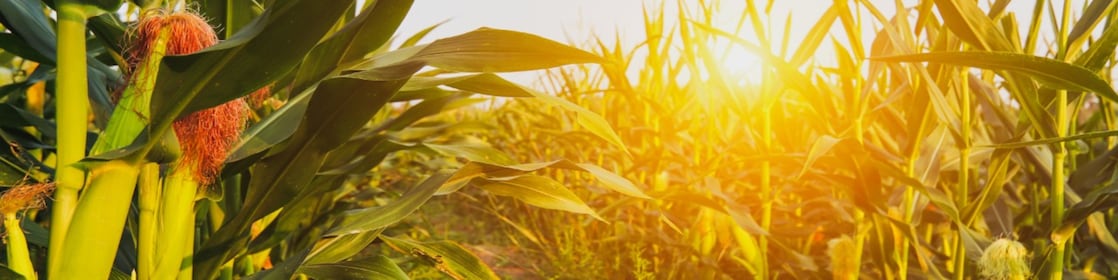
Biobrandstoffen kunnen worden geproduceerd uit organisch materiaal (biomassa) zoals maïs, suiker, plantaardige oliën of afvalgrondstoffen. Biobrandstoffen zijn een van de grootste bronnen van hernieuwbare energie die momenteel in gebruik zijn. Biobrandstoffen als hernieuwbare diesel (zie onderbouwing verderop op deze pagina) stoten minder uit dan conventionele brandstoffen. Ook kunnen ze worden gemengd met fossiele brandstoffen. Dat is vooral handig voor de transportsector, die biobrandstoffen naast elektrisch rijden kan gebruiken.
Shells biobrandstoffen in Nederland
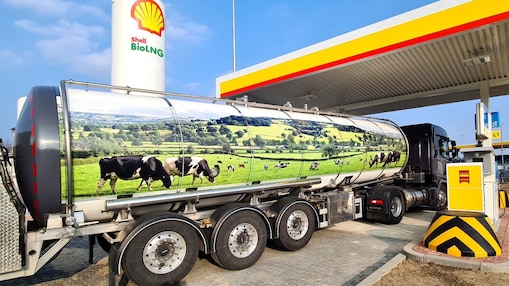
Nederlandse bio-LNG sinds 2022
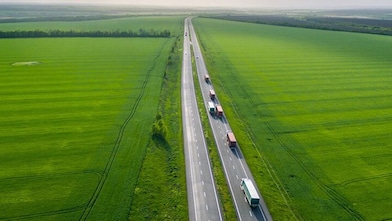
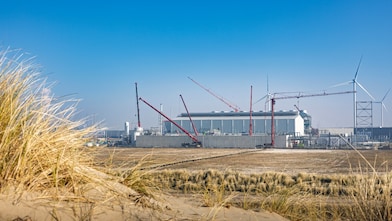
In Nederland is er sinds februari 2022 Shell BioLNG (onze productnaam), een belangrijke stap in het verduurzamen van zwaar wegtransport en het binnenvaarttransport. Voor het vrachtvervoer over de weg is BioLNG een uitkomst als transitiebrandstof, naast de inzet van elektrische trucks. Shell BioLNG wordt eerst nog als bio-LNG (de productsoort wordt met streepje geschreven, de Shell-productnaam zonder streepje) bijgemengd met gewone LNG, maar de bedoeling is dit uiteindelijk op te schalen naar 100% zuivere bio-LNG. Shell levert bio-LNG in Nederland vanuit de installatie die het samen met partners Nordsol en Renewi in de herfst van 2021 in Amsterdam opende. Daar zal op termijn naar schatting 3,4 kiloton bio-LNG worden geproduceerd, waarmee een CO₂-uitstoot vergelijkbaar met die van 13 miljoen wegkilometers wordt voorkomen.
5 vragen over bio-LNG
1. Wat is bio-LNG eigenlijk?
1. Wat is bio-LNG eigenlijk?
De afkorting LNG staat voor Liquefied Natural Gas. Het is vloeibaar gemaakt gas. Meestal is dat aardgas, maar in het geval van bio-LNG gaat het om gas uit organisch materiaal, plantaardige resten bijvoorbeeld. Om bio-LNG te maken, wordt het organisch materiaal eerst omgezet naar biogas. Dat gebeurt in een vergister. Nadat alle vervuiling eruit is gefilterd, wordt het gas afgekoeld. Zo krijgt het een vloeibare vorm. Dat maakt bio-LNG compact en eenvoudig te transporteren.
2. Hoe wordt Shell BioLNG gemaakt?
2. Hoe wordt Shell BioLNG gemaakt?
Shell BioLNG is vloeibaar gas uit organisch afval, denk aan landbouwresten, etensresten en voedsel waarvan de houdbaarheidsdatum is verstreken. In een vergister wordt het organisch afval door bacteriën afgebroken, in zuurstofloze omstandigheden (an-aerobisch). Biogas bestaat voor 30% tot 45% uit CO₂, waterstofsulfide en andere componenten die worden verwijderd, waarna het gas wordt opgewaardeerd naar hoge kwaliteit biomethaan die vloeibaar wordt gemaakt door het af te koelen naar -162 graden Celsius.
Shell BioLNG wordt ook zo gemaakt, en in Nederlands werkt Shell daarvoor samen met Nordsol en Renewi. Shell BioLNG kan in bestaande LNG-motoren en -tankstations worden gebruikt, zonder dat er aanpassingen nodig zijn. Vrachtwagens die op (bio-)LNG rijden zijn stiller en schoner, en mogen daarom in veel steden en dorpen onder meer winkels langer bevoorraden dan traditionele trucks.
3. Hoe draagt bio-LNG bij aan schoner verkeer?
3. Hoe draagt bio-LNG bij aan schoner verkeer?
Vergeleken met diesel heeft bio-LNG een veel lagere CO2-uitstoot. Bovendien wordt bio-LNG gemaakt van organische afvalstoffen, en niet van fossiele bronnen. Dat maakt bioLNG een duurzamere brandstof.
4. Wie kan bio-LNG gebruiken?
4. Wie kan bio-LNG gebruiken?
Bio-LNG is name geschikt als brandstof voor schepen en vrachtauto’s. Doordat de brandstof vloeibaar is gemaakt, is het erg compact. In een tank kan zodoende veel bio-LNG worden opgeslagen en vervoerd. Zo kunnen lange afstanden worden overbrugd. Shell Nederland biedt Shell BioLNG (de productnaam wordt zonder streepje geschreven) met partners aan bij de Shell LNG-stations voor het commercieel wegtransport.
5. Nordsol, Renewi en Shell werken samen aan de productie van bio-LNG. Wat maakt die samenwerking bijzonder?
5. Nordsol, Renewi en Shell werken samen aan de productie van bio-LNG. Wat maakt die samenwerking bijzonder?
Nordsol, Renewi en Shell hebben de handen ineengeslagen om gezamenlijk een bijdrage te leveren aan de energietransitie in de transportsector. Iedere partij heeft zijn eigen rol in de samenwerking. Renewi zamelt in Nederland organische afvalstoffen in bij de voedingsmiddelenindustrie, de horeca en de retail. In een vergister zet Renewi de biomassa om in biogas. Nordsol maakt er vervolgens ter plekke bio-LNG van. Shell op haar beurt investeert in de ontwikkeling van Nordsol en zorgt ervoor dat de brandstof uiteindelijk in de tank van de klant op het tankstation komt.
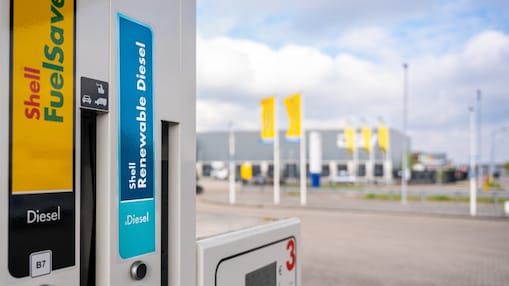
Hernieuwbare diesel (HVO)
Hernieuwbare diesel (HVO) en duurzame vliegtuigbrandstof (SAF) kunnen allebei worden geproduceerd met zogenoemde hydroprocessed esters and fatty acids (HEFA)-processen. Tijdens het productieproces worden onzuiverheden verwijderd uit duurzame plantaardige oliën of afvalgrondstoffen, voordat ze op hoge temperatuur met waterstof worden behandeld. Het resultaat is een kleurloze en reukloze brandstof, waarvan de chemische samenstelling identiek is aan fossiele diesel. Shell biedt sinds april 2022 Shell Renewable Diesel (HVO) aan in haar Nederlandse netwerk. Wie ermee rijdt, heeft tot 90% minder CO2e emissies1 ten opzichte van normale diesel.
Disclaimer Shell Renewable Diesel
Disclaimer Shell Renewable Diesel
- Tussen 80%-90% CO2e (CO2-equivalent verwijst naar CO2, CH4, N2O).
Broeikasgasintensiteitsfactoren voor Shell Renewable Diesel die in onze berekeningen worden gebruikt, zijn in eenheden gram CO2e per MJ, volgens de methodologie die is beschreven in de richtlijn hernieuwbare energie 2018/2001/EU en worden in de hele toeleveringsketen geverifieerdt, zodat het voldoet aan deze norm. De procentuele reductie van broeikasgasemissies wordt berekend door te vergelijken met een broeikasgasbasisintensiteit van 90,2 gCO2e / MJ op een Well-to-Wheel-basis, waarvan aan wordt genomen dat deze representatief is voor een B7 diesel op de markt van de Europese Unie. De koolstofintensiteit van de B7 diesel wordt door Shell berekend aan de hand van emissiefactoren uit het JEC Well-to-Tank rapport v5. (Europese Commissie, Gemeenschappelijk Centrum voor Onderzoek, Prussi, M., Yugo, M., De Prada, L., et al., JEC well-to-tank report V5 : JEC well-to-wheels analysis : well-to-wheels analysis of future automotive fuels and powertrains in the European context, Publications Office, 2020, https://data.europa.eu/doi/10.2760/959137).

Duurzame vliegtuigbrandstof (SAF)
SAF biedt een belangrijke oplossing voor het koolstofvrij maken van de luchtvaart en is een alternatief voor conventionele kerosine als drop-in brandstof. Het kan onder meer worden gemaakt van gebruikt frituurvet en organisch afval uit de landbouw. In Nederland leveren Shell en partners bio-based SAF in hoge bijmening aan vliegvelden als Schiphol en Rotterdam The Hague Airport.
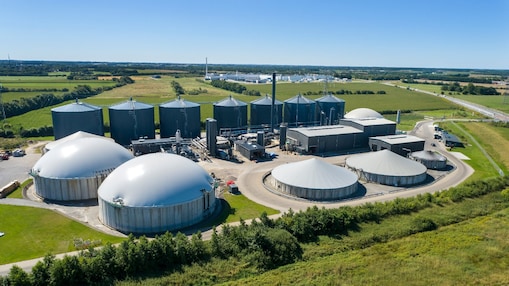
Shell Biogas
Biogas gemaakt van organisch afval, zoals groente- en fruitresten, rioolslib en voornamelijk mest. Kant-en-klaargemaakt biogas (oude naam: "groen gas") kan net als aardgas voor verwarming of elektriciteitsopwekking worden gebruikt. Het maken van biogas voor gebruik gebeurt met een vergister. Daarin wordt de mest van onder meer melkvee- en varkenshouderijen verwerkt, samen met ander organisch afval. Bacteriën breken hier de de resten van planten en gras en de mest af. Wat eruit komt, is biogas. Om biogas geschikt te maken worden onzuiverheden, zoals waterdamp en zwavel, uit het gas gefilterd. Daarna kan het worden gebruikt in bestaande aardgasleidingen.
Biobrandstoffen in de energietransitie
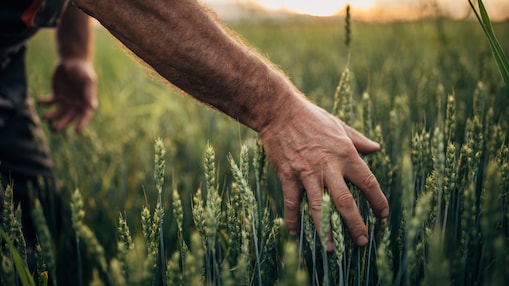
Hoe worden grondstoffen voor biobrandstoffen geselecteerd?
Om biobrandstoffen deel te laten uitmaken van de energietransitie, moeten ze duurzaam worden geproduceerd en leiden tot aanzienlijke verminderingen van de uitstoot van kooldioxide (CO2). Shell hanteert daarom strikte duurzaamheidsrichtlijnen voor de grondstoffen die we voor biobrandstoffen inkopen. Ook sturen we aan op grondstoffen die niet concurreren met voedsel- en veevoerproductie, zoals tussengewassen, vang- en bodembedekkende gewassen en gewassen die worden geteeld op gedegradeerd, verlaten of vervuild land. Hoewel veel van deze grondstoffen momenteel nog niet op grote schaal beschikbaar zijn, werken we samen met klanten en leveranciers om robuuste toeleveringsketens te ontwikkelen.
Cautionary note
Cautionary note
The companies in which Shell plc directly and indirectly owns investments are separate legal entities. In this publication “Shell”, “Shell Group” and “Group” are sometimes used for convenience to reference Shell plc and its subsidiaries in general. Likewise, the words “we”, “us” and “our” are also used to refer to Shell plc and its subsidiaries in general or to those who work for them. These terms are also used where no useful purpose is served by identifying the particular entity or entities. ‘‘Subsidiaries’’, “Shell subsidiaries” and “Shell companies” as used in this publication refer to entities over which Shell plc either directly or indirectly has control. The terms “joint venture”, “joint operations”, “joint arrangements”, and “associates” may also be used to refer to a commercial arrangement in which Shell has a direct or indirect ownership interest with one or more parties. The term “Shell interest” is used for convenience to indicate the direct and/or indirect ownership interest held by Shell in an entity or unincorporated joint arrangement, after exclusion of all third-party interest.
Forward-Looking statements
This publication contains forward-looking statements (within the meaning of the U.S. Private Securities Litigation Reform Act of 1995) concerning the financial condition, results of operations and businesses of Shell. All statements other than statements of historical fact are, or may be deemed to be, forward-looking statements. Forward-looking statements are statements of future expectations that are based on management’s current expectations and assumptions, including (without limitation) those concerning Shell’s strategy and operating plans, macroeconomic conditions, future energy demand, supply and product mix, commodity prices, demand for Shell’s products, production results and reserve estimates, development, execution and management of projects, energy transition and climate change, management of safety and environmental risks, costs, cash capital expenditures, technology advancements, legislative, judicial, fiscal and regulatory developments, regional conflicts and trading conditions, and involve known and unknown risks and uncertainties that could cause actual results, performance or events to differ materially from those expressed or implied in these statements. Forward-looking statements include, among other things, statements concerning the potential exposure of Shell to market risks and statements expressing management’s expectations, beliefs, estimates, forecasts, projections and assumptions. These forward-looking statements are identified by their use of terms and phrases such as “aim”; “ambition”; ‘‘anticipate’’; “aspire”, “aspiration”, ‘‘believe’’; “commit”; “commitment”; ‘‘could’’; “desire”; ‘‘estimate’’; ‘‘expect’’; ‘‘goals’’; ‘‘intend’’; ‘‘may’’; “milestones”; ‘‘objectives’’; ‘‘outlook’’; ‘‘plan’’; ‘‘probably’’; ‘‘project’’; ‘‘risks’’; “schedule”; ‘‘seek’’; ‘‘should’’; ‘‘target’’; “vision”; ‘‘will’’; “would” and similar terms and phrases. There are a number of factors that could affect the future operations of Shell and could cause those results to differ materially from those expressed in the forward-looking statements included in this publication, including (without limitation): (a) price fluctuations in crude oil and natural gas; (b) changes in demand for Shell’s products; (c) currency fluctuations; (d) drilling and production results; (e) reserves estimates; (f) loss of market share and industry competition; (g) environmental and physical risks, including climate change; (h) risks associated with the identification of suitable potential acquisition properties and targets, and successful negotiation and completion of such transactions; (i) the risk of doing business in developing countries and countries subject to international sanctions; (j) legislative, judicial, fiscal and regulatory developments including tariffs and regulatory measures addressing climate change; (k) economic and financial market conditions in various countries and regions; (l) political risks, including the risks of expropriation and renegotiation of the terms of contracts with governmental entities, delays or advancements in the approval of projects and delays in the reimbursement for shared costs; (m) risks associated with the impact of pandemics, regional conflicts, such as the Russia-Ukraine war and the conflict in the Middle East, and a significant cyber security, data privacy or IT incident; (n) the pace of the energy transition; and (o) changes in trading conditions. No assurance is provided that future dividend payments will match or exceed previous dividend payments. All forward-looking statements contained in this publication are expressly qualified in their entirety by the cautionary statements contained or referred to in this section. Readers should not place undue reliance on forward-looking statements. Additional risk factors that may affect future results are contained in Shell plc’s Form 20-F for the year ended December 31, 2025 (available at www.shell.com/investors/news-and-filings/sec-filings.html and www.sec.gov). These risk factors also expressly qualify all forward-looking statements contained in this publication and should be considered by the reader. Each forward-looking statement speaks only as of the date of this publication, September 10, 2026. Neither Shell plc nor any of its subsidiaries undertake any obligation to publicly update or revise any forward-looking statement as a result of new information, future events or other information. In light of these risks, results could differ materially from those stated, implied or inferred from the forward-looking statements contained in this publication.
Shell’s net carbon intensity and net-zero emissions target
In this publication we may refer to Shell’s “net carbon intensity” (NCI), which includes Shell’s carbon emissions from the production of our energy products, our suppliers’ carbon emissions in supplying energy for that production and our customers’ carbon emissions associated with their use of the energy products we sell. Shell’s NCI also includes the emissions associated with the production and use of energy products produced by others which Shell purchases for resale. Shell only controls its own emissions. The use of the terms Shell’s “net carbon intensity” or NCI is for convenience only and not intended to suggest these emissions are those of Shell plc or its subsidiaries.
Shell’s operating plan and outlook are forecasted for a three-year period and ten-year period, respectively, and are updated every year. They reflect the current economic environment and what we can reasonably expect to see over the next three and ten years. Accordingly, the outlook reflects our combined Scope 1 and 2 target, NCI target and our oil products ambition over the next ten years. However, Shell’s operating plan and outlook cannot reflect our 2050 net-zero emissions target, as this target is outside our planning period. Such future operating plans and outlooks could include changes to our portfolio, efficiency improvements and the use of carbon capture and storage and carbon credits. In the future, as society moves towards net-zero emissions, we expect Shell’s operating plans and outlooks to reflect this movement. However, if society is not net zero in 2050, as of today, there would be significant risk that Shell may not meet this target.
The information provided above regarding Shell’s NCI and net zero emissions target are not intended, nor should they be construed as introducing, suggesting or making any claim, target or representation thereof other than what is included in the publicaiton..
Forward-Looking non-GAAP measures
This publication may contain certain forward-looking non-GAAP measures such as free cash flow and underlying operating expenses. We are unable to provide a reconciliation of these forward-looking non-GAAP measures to the most comparable GAAP financial measures because certain information needed to reconcile those non-GAAP measures to the most comparable GAAP financial measures is dependent on future events some of which are outside the control of Shell, such as oil and gas prices, interest rates and exchange rates. Moreover, estimating such GAAP measures with the required precision necessary to provide a meaningful reconciliation is extremely difficult and could not be accomplished without unreasonable effort. Non-GAAP measures in respect of future periods which cannot be reconciled to the most comparable GAAP financial measure are calculated in a manner which is consistent with the accounting policies applied in Shell plc’s consolidated financial statements. These forward-looking non-GAAP measures are provided to assist readers in understanding management’s use and expectations of such measures and may not be appropriate for other purposes.
The contents of websites referred to in this publication do not form part of this publication.
We may have used certain terms, such as resources, in this publication that the United States Securities and Exchange Commission (SEC) strictly prohibits us from including in our filings with the SEC. Investors are urged to consider closely the disclosure in our Form 20-F, File No 1-32575, available on the SEC website www.sec.gov.