Energietransitie — vooruitkijken is niet gemakkelijk
De energietransitie is in volle gang, maar er zijn allerlei geopolitieke ontwikkelingen die veel doen met het energiesysteem. In tegenstelling tot wat sommige media lijken te signaleren, staat de energietransitie niet stil. Dat vinden NVDE-voorzitter Olof van der Gaag en strategiemanager Shell Pernis Danielle Ebentreich.

Tekst: Marcel Burger. Beeld: Maurice van der Meijs, Liike NL/Shell Recharge, Shell NoordzeeWind, Justus de Cuveland, Daniel J. Edelman/Getty Images, Monty Rakusen/Getty Images.
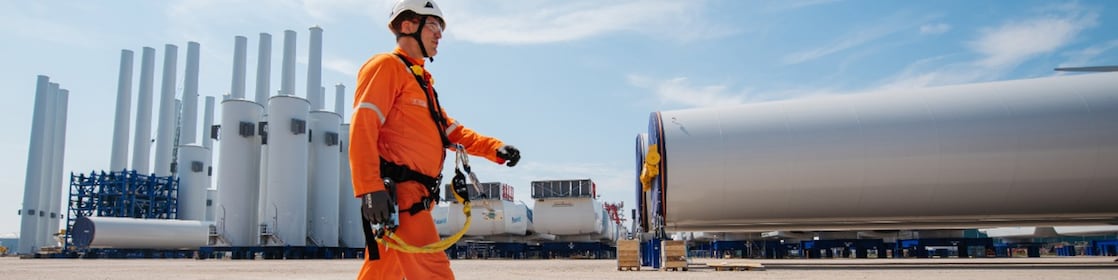
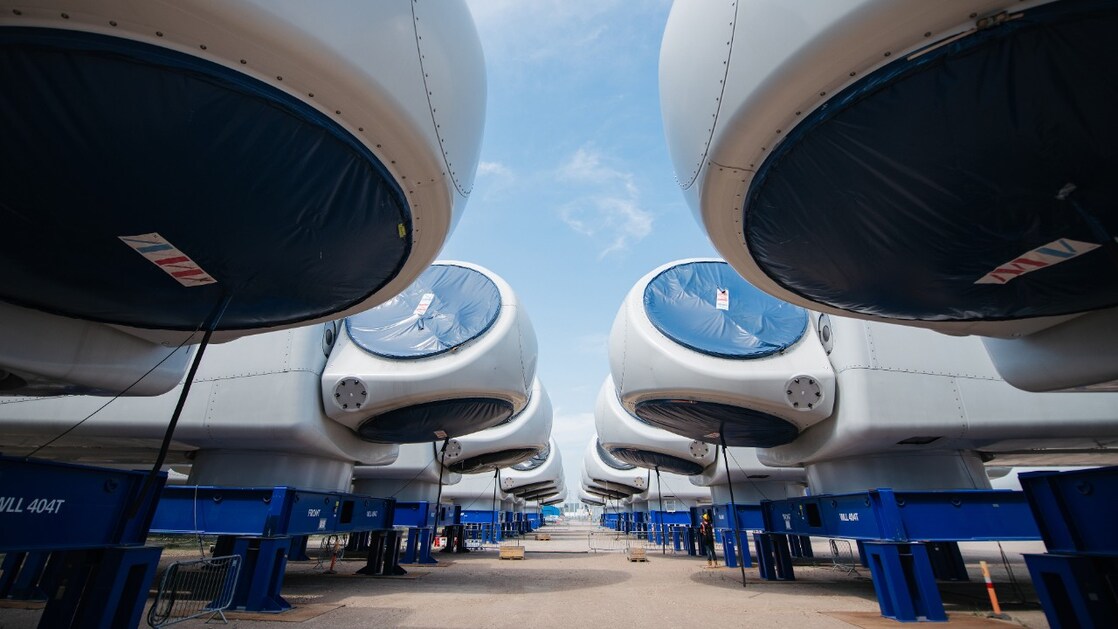
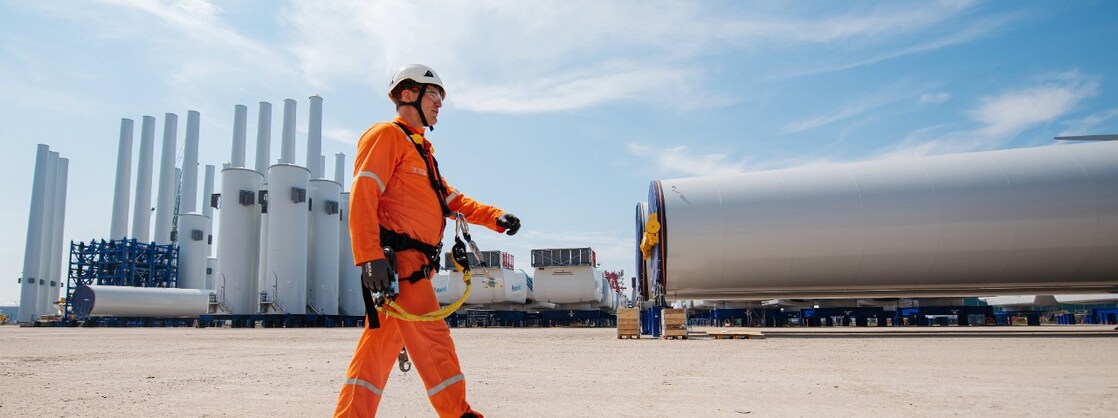
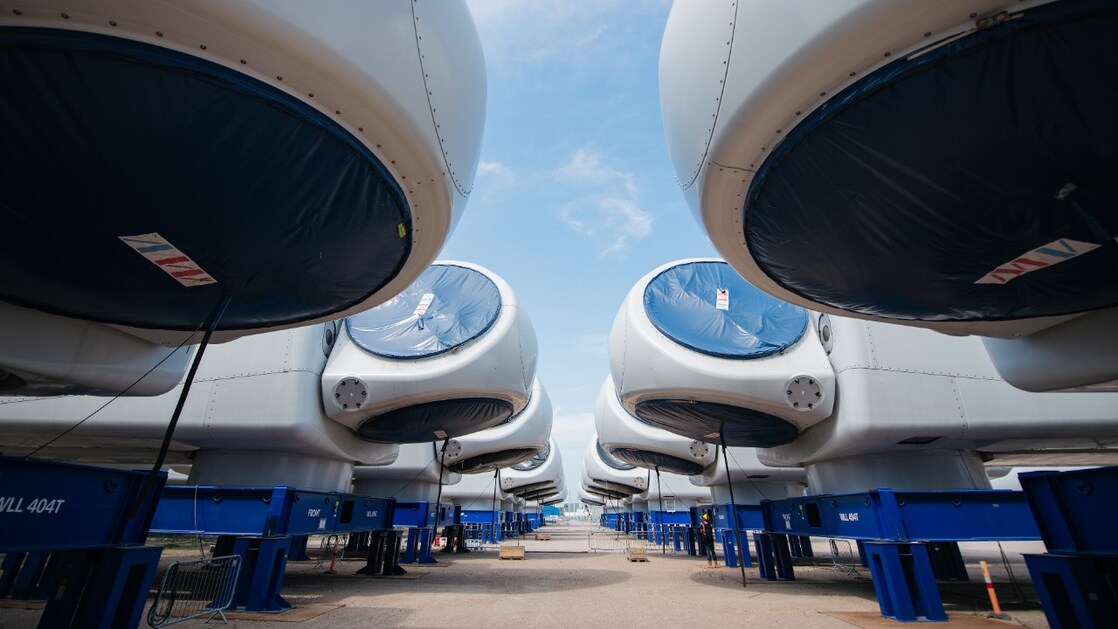
Openingsfoto: Windturbinebladen liggen klaar om op transport naar een windpark op zee te gaan
In dit verhaal:
Tien jaar geleden maakte Nederland geen indruk met haar duurzame prestaties, meent Olof van der Gaag. “Er was nog geen 5% duurzame energie. Maar het was wel het moment dat Nederland voor het eerst systematisch werk ging maken van de energietransitie.”
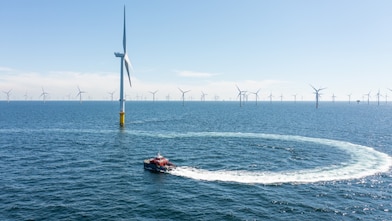
Zo sloten de overheid en ruim 40 organisaties in 2013 het Energieakkoord. Daarin werden onder meer afspraken gemaakt over de uitbouw van wind op zee. “Dat is echt een Nederlands huzarenstukje — een succesnummer — geworden”, stelt Van der Gaag.
Wat is de NVDE?
Van der Gaag is sinds de oprichting van de Nederlandse Vereniging van Duurzame Energie (NVDE) — zo’n 10 jaar geleden — de voorzitter van deze ondernemersvereniging van bedrijven in de duurzame energiesector. Het doel van de NVDE is om zo snel mogelijk een duurzaam energiesysteem te krijgen. Shell is ook lid van deze belangenbehartiger, net als onder meer installateurs van zonnepanelen, bedrijven die windparken op zee bouwen en fabrikanten van warmtepompen.
Van der Gaag: “We proberen politici en andere beleidsmakers te helpen om heel verstandige beslissingen te nemen waardoor het voor bedrijven gemakkelijker wordt om te investeren in verduurzaming.”
Wie is Olof van der Gaag?
Olof van der Gaag is voorzitter van de NVDE. Hij is in Gouda geboren, als kind van een 'treinstel' — zijn ouders leerden elkaar kennen bij de Nederlandse Spoorwegen. Van der Gaag heeft culturele antropologie gestudeerd, "omdat ik de verschillen tussen mensen zo fascinerend vind. En omdat ik het leuk vind om te kijken waar de overeenkomsten zitten". Van der Gaag werkte voorheen onder meer als directeur Marketing & Campagnes voor Natuur & Milieu.
Wie is Danielle Ebentreich?
Danielle Ebentreich is sinds juni 2026 strategiemanager bij Shell Pernis, Europa's grootste raffinaderij. Ze studeerde Internationaal Zakendoen aan de Rotterdam School of Management/Erasmus Universiteit. Ze focuste zich onder meer op het managen van de toeleveringsketen. Ebentreich begon na haar studie bij Shell in Duitsland. ze had verschillende rollen bij onder meer Trading & Supply — de handels- en bevoorradingstak van Shell — en Chemie.
Omslag in 2013
Terugblikkend over de afgelopen 10 jaar zegt de NVDE-voorman dat Nederland de energietransitie begin deze eeuw niet belangrijk leek te vinden. Maar dat is inmiddels veranderd. “Sinds het Energieakkoord van 2013 is het aandeel duurzame energie vervijfvoudigd naar nu zo’n 25%, voor elektriciteit, voor warmte en voor brandstof samen.”
Daarbij is elektriciteit de uitschieter, met inmiddels 57% van de stroomproductie in Nederland uit duurzame bronnen als wind en zon. “Dat is in turbotempo ontwikkeld. Nog zo’n getal: we hebben op dit moment 1,3 miljoen elektrische auto’s in Nederland. Dat is 14% van het totale wagenpark en de meerderheid daarvan is volledig elektrisch.”
Brandstof, raffinaderijen en BG Group
Tien jaar geleden dachten analisten wel dat het nog harder zou gaan met de energietransitie. Strategiemanager van Shell Pernis Danielle Ebentreich zegt daarover: “Er werd gedacht dat de vraag naar brandstof veel sneller terug zou lopen en dat raffinaderijen veel eerder zouden moeten sluiten. Er was een gevoel van zekerheid in Europa, dat energie er altijd zou zijn en dat het nooit oorlog zou zijn op het Europese contintent.”
In dat speelveld van toen werden de handels- en bevoorradingstakken van Shell, Trading & Supply, samengevoegd en ging Trading nauwer samenwerken met klanten. Shell nam in april 2015 de Britse BG Group over. Ebentreich: “Het spel op gas is toen echt begonnen. Shell werd een grotere gas- dan oliespeler. Het was een kantelpunt in waar wij als Shell voor staan en waar we ook in de toekomst naartoe willen.”
Shell bevestigde die koers op gas nog eens in de Energietransitiestrategie 2024 waarin ze voorspelt dat de leidende positie op het gebied van vloeibaar aardgas (LNG) zal worden versterkt door de verkoop tot 2030 met jaarlijks 4-5% te laten groeien. En eind juni 2026 verklaarde Shell-strategen dat de vraag naar vloeibaar gas tot 2050 met 65% zal stijgen naar bijna 700 miljoen ton per jaar. Ook al is de groei er dit jaar even uit door het afsluiten van de Straat van Hormuz door Iran en de Verenigde Staten.
Danielle Ebentreich, strategiemanager Shell Pernis, over de visie in 2015"Er was een gevoel van zekerheid in Europa, dat het nooit oorlog zou zijn"
Ananassen telen in Alaska
Terug naar 2015. Dat was ook het jaar van het Europese Klimaatakkoord. Tegen die achtergrond verbreedde Shell haar portfolio, onder leiding van de toenmalige CEO Ben van Beurden. Zo kwam er een tak Low Carbon Solutions en werden meer investeringen in energietransitieprojecten gedaan — vooral ook in Nederland.
Destijds was niet iedereen ervan overtuigd dat de nieuwe koers van de Europese landen en van Shell de juiste waren. NVDE-voorzitter Van der Gaag: “De topman van het Duitse energiebedrijf RWE zei in die tijd dat zonne-energie in Duitsland net zoiets was als ananassen telen in Alaska. Hij vond het een totaal kansloze business. Maar inmiddels komt in Nederland — met een vergelijkbaar klimaat als Duitsland — 20% van de elektriciteit van zonnepanelen. Daarmee is ook gebleken dat sommige zaken veel sneller zijn gegaan dan gedacht.”
“Gouden driehoek”
Daarmee komt Olof op volgens hem het belangrijkste wapenfeit van de Nederlandse energietransitie van de afgelopen 10 jaar: offshore wind. Hij noemt dit de “gouden driehoek” rond windparken op zee: de overheid beloofde de vergunningen goed te regelen en gaf subsidies, netbeheerder TenneT beloofde stopcontacten op zee te maken, en bouwers/uitbaters van windparken stelden zich tot doel nieuwe offshore windparken tegen 40% lagere kosten te kunnen realiseren. Uiteindelijk lukte het de kosten zelfs met 70% te verminderen. Als tweede wapenfeit noemt Olof de SDE-subsidie (zie hier de uitleg).
Beslissende momenten voor Shell
Voor Shell waren de beslissende momenten het afgelopen decennium volgens Shell Pernis-strateeg Ebentreich: de herstructurering van het hele bedrijf en de €6,5 miljard die Shell de afgelopen jaren in de Nederlandse energietransitie stak.
“Wat we allemaal hebben gedaan en gebouwd in de afgelopen 10 jaar is gigantisch. Windparken voor de kust. Volgend jaar gaan we voor het eerst CO2 opslaan onder de Noordzee. De Holland Hydrogen 1 gaat open, voor het leveren van groene waterstof. En we hebben op Shell Chemicals Park Moerdijk net een turnaround afgesloten waar we met efficiëntere fornuizen en elektrische compressoren de CO2-uitstoot flink verminderen.” (Zie het verhaal Groenere chemie Moerdijk.)
Olof van der Gaag, voorzitter NVDE, over de visie in 2015"Zonne-energie werd (in delen van Europa) gezien als een kansloze business"
Vier keer meer
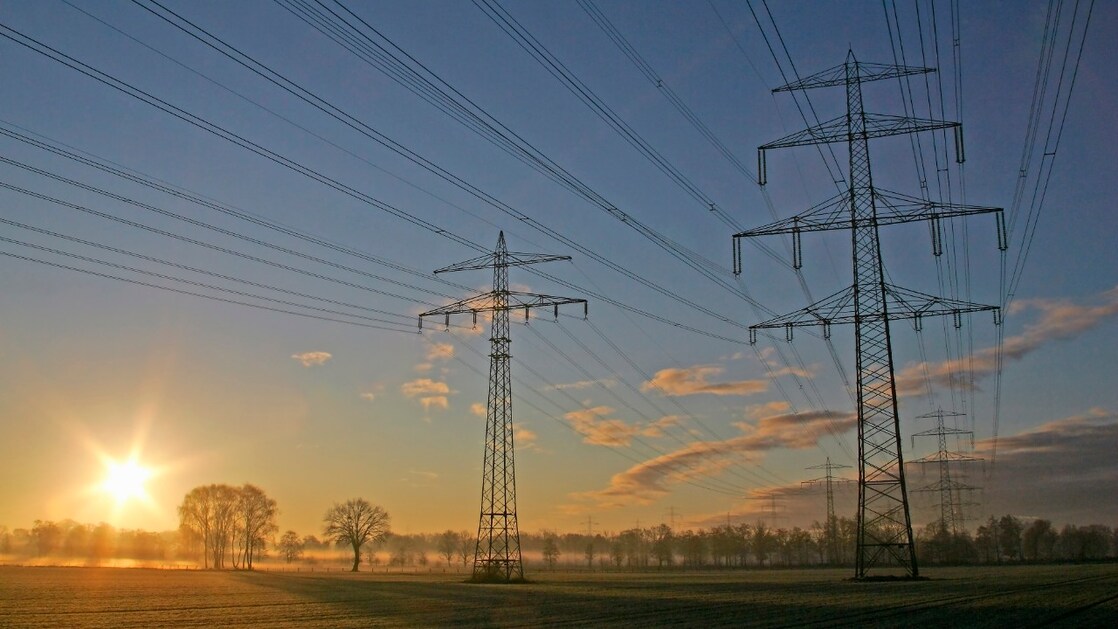
Volgens Van der Gaag is er nog altijd veel te winnen in de energietransitie. “Nieuwe technologieën gaan vaak veel efficiënter om met energie dan hun fossiele voorgangers. Een warmtepomp maakt vier keer meer warmte met dezelfde hoeveelheid energie als een cv-ketel. Een elektrische auto maakt vier keer meer kilometers met dezelfde hoeveelheid energie als een auto met een verbrandingsmotor.”
Hij ziet nog wel veel uitdagingen in het betaalbaar maken van de energietransitie, voor mensen thuis en voor investeringsbeslissingen in de industrie. “Het meest prangend is de uitbreiding van het elektriciteitsnet. De netbeheerders willen graag investeren, maar voordat ze kunnen bouwen hebben ze plek en een vergunning nodig. Neem Utrecht, waar nu door TenneT een aansluitpauze voor het stroomnet is ingelast. Maar tegelijkertijd is de netbeheerder al aan zijn tiende zoeklocatie bezig voor een hoogspanningsstation.”
Dat had volgens de NVDE-voorzitter dus veel eerder gebouwd kunnen worden als de vergunningverlener en de omwonenden het met een eerder locatievoorstel eens waren geweest.
“Het elektricteitsnet is niet vol”
Van der Gaag betwist dat hele elektriciteitsnet vol is. “Gekeken naar heel Nederland zit het stroomnet 200 tot 300 uur per jaar vol. Dat betekent dat er in de daluren best nog meer bijkan. De gemiddelde stroomkabel wordt nog geen 30% benut. Daar kunnen we vanmiddag al mee aan de slag door wat er al ligt slimmer te gebruiken.”
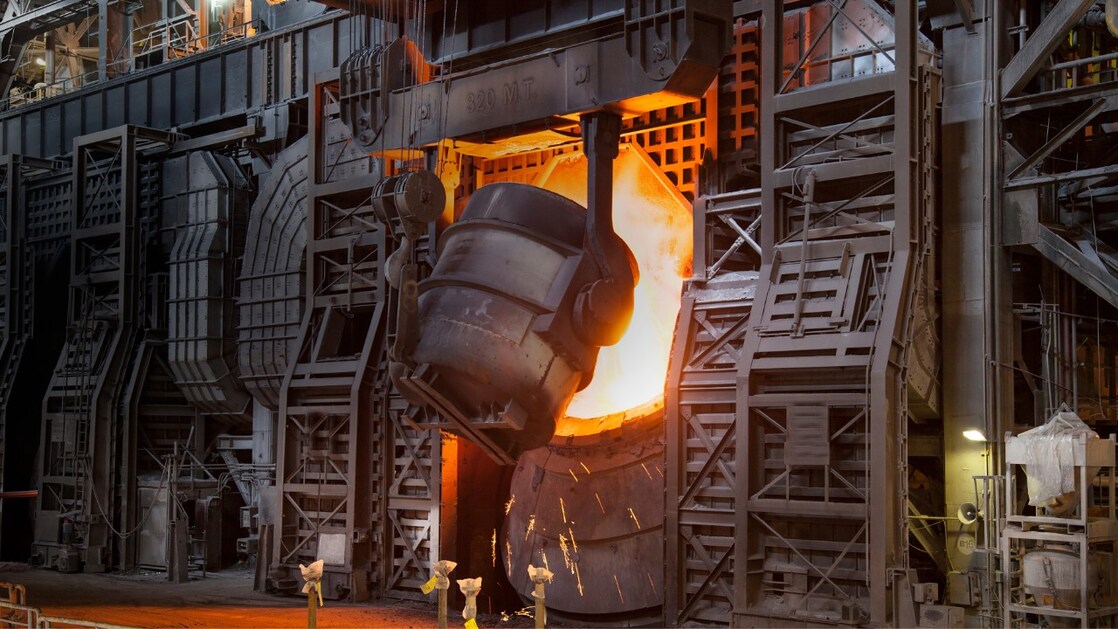
Om de energietransitie sneller tot een succes te maken, pleit hij voor overheidsstimulans op duurzame producten. “Veel van de eindproducten worden maar 1% duurder als je ze groen gaat produceren. Als je bijvoorbeeld een auto met duurzaam in plaats van traditioneel staal maakt, dan wordt die ongeveer €400 duurder. De Europese auto-industrie gebruikt een zesde van de Europese staalproductie. Als je de auto-industrie dwingt tot gebruik van groen geproduceerd staal, dan is dat de sleutel om de industrie een investeringsperspectief te bieden. In Europa is Nederland koploper van die gedachte. Maar we moeten in Brussel nog wel andere landen, zoals Duitsland, zien mee te krijgen.”
Olof van der Gaag, voorzitter NVDE"Dwing tot gebruik van groen geproduceerd staal"
Vraagcreatie en Shell
Volgens Ebentreich geldt die vraagcreatie niet alleen voor staal, maar ook voor Shell. “Als er geen vraag naar schonere producten is, dan kunnen wij als Shell wel geld pompen in een schonere fabriek, maar kunnen we niet verkopen aan een klant.”
Dat weerhield Shell er aanvankelijk niet van om veel geld te steken in de energietransitie. Ebentreich: “We hebben enorm veel geïnvesteerd, in vaak heel grote projecten. Die blijken dan uiteindelijk niet altijd winstgevend te zijn, ook omdat het financiële plaatje verandert. Bijvoorbeeld doordat bouwmaterialen sinds de crisis in Oekraïne veel duurder zijn geworden.” Door dat ‘veranderende plaatje’ besloot Shell in september 2025 de al gestarte bouw van de HEFA-biobrandstoffenfabriek op Shell Pernis niet voort te zetten.
Batterijopslag thuis en elektrisch rijden
Van der Gaag ziet desondanks lichtpunten in de energietransitie. “Batterijopslag is nog nooit zoveel verkocht als op dit moment, van heel grote systemen tot thuisbatterijen. In Nederland zijn er zo vorig jaar 100.000 thuisbatterijen aangeschaft. Je kunt ze nu zelfs bij de supermarkt — plug-en-play — in je karretje gooien voor € 300.”
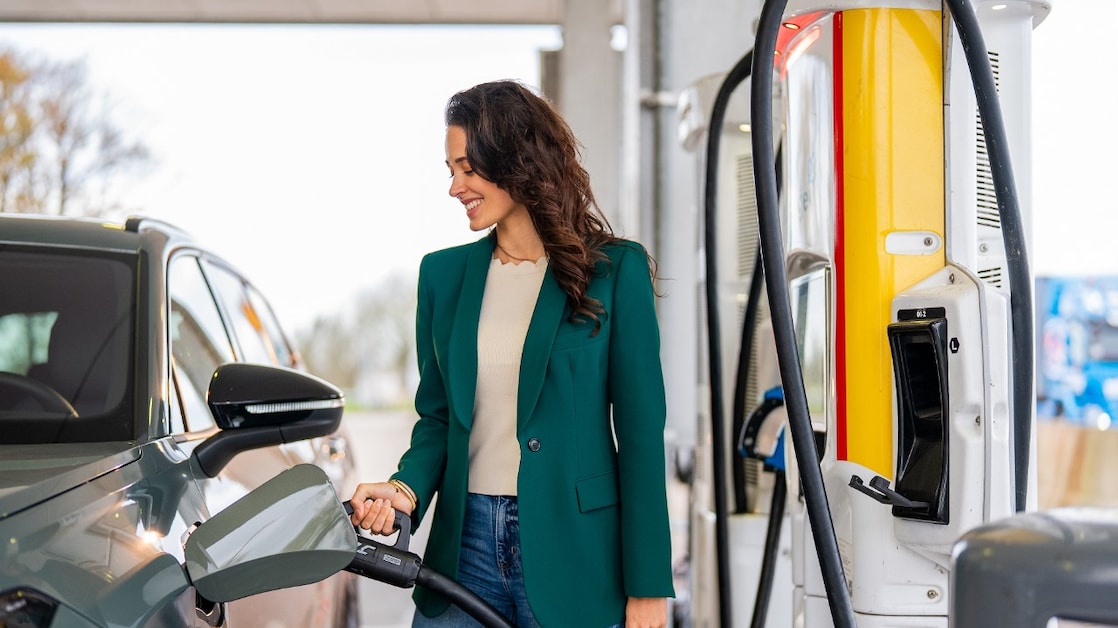
“Elektrische mobiliteit gaat ook ontzettend snel. In april 2026 was 40% van de nieuw gekochte auto’s in Nederland elektrisch.” De NVDE-voorman roemt de investeringen die Shell doet om snelladers nog sneller te maken (zie Ultrasnel laden op Shell-stations). “Die laadervaring voor elektrische rijders gaat steeds meer lijken op de tankervaring: dat je een kopje koffie haalt en dat je klaar bent om verder te gaan.”
Danielle Ebentreich, strategiemanager Shell Pernis"Shell heeft enorm veel geïnvesteerd, in vaak heel grote projecten"
In zwaar weer
De verduurzaming van de industrie zelf ziet Van der Gaag “in zwaar weer zitten”. “Als China haar megaoverschot op de wereldmarkt dumpt, kun je daar dan ooit tegenop concurreren.”
Ebentreich vult aan: “Als je al voor de basisindustrie in Europa het financieel niet rond krijgt om te investeren, dan is verduurzaming zonder wet- en regelgeving óf vraagcreatie nog veel lastiger. Bijna alle grote bedrijven in Nederland hebben internationale aandeelhouders. Die zijn minder aan Nederland of Europa gebonden. Dus die kijken heel objectief: waar kan ik het beste rendement behalen voor het geld dat ik uitgeef.”
Energietransitie moet geen big bang zijn
De energietransitie staat volgens Ebentreich niet stil, ook niet bij Shell. “Er gebeurt nog heel veel, met kleine stappen. Neem Shell Pernis, waar 100 projecten lopen om energie te besparen en de CO2-uitstoot te verkleinen.” Met het Dit is Pernis-programma wil de grootste raffinaderij van Europa in de grootste haven van Europa het maximale in verduurzaming uit de locatie halen dat mogelijk is. “Als het op Pernis niet lukt, dan lukt het nergens. Je moet loslaten dat de energietransitie een big bang moet zijn. Je kunt met duizenden kleine stappen ook een heleboel bereiken.”
Energietransitie, onafhankelijkheid en weerbaarheid als land zijn volgens Van der Gaag heel sterk met elkaar verbonden. “Nederland haalt nu driekwart van haar energie uit het buitenland, bijvoorbeeld uit de Verenigde Staten, Iran, Saoedi-Arabië, maar ook nog steeds uit Rusland. Dat geeft niet echt een relaxed gevoel. We zijn de meeste energietransitietrajecten gestart om klimaatverandering tegen te gaan. Maar alles wat je daarvoor doet, maakt je ook onafhankelijker. Dat is dus ook een hulpmiddel om de overheden in Europa zo ver te krijgen de vraag naar groene industriële producten van eigen bodem te stimuleren.”
Danielle Ebentreich, strategiemanager Shell Pernis"Aandeelhouders kijken heel objectief, waar haal ik het beste rendement"
Nederland kan snel handelen
Volgens Van der Gaag kunnen Nederland en Europa snel handelen als het moet, en dat was te zien tijdens de coronacrisis en na de grootschalige inval van Rusland in Oekraïne. “Een goed voorbeeld is de LNG-terminal in de Eemshaven. Die is in 188 dagen gerealiseerd. Dat kost normaal 10 jaar praten en twee jaar bouwen. Zo zou het ook bij de beheerders van het stroomnet kunnen. Als de politiek zegt: ga maar alvast met je uitbreidingen aan de slag, wij zullen je dekken als het tegenvalt, dan kunnen projecten zoals de LNG-terminal in Groningen ineens sneller.”
Wie in elk geval moet worden ontzien bij tegenvallers zijn de omwonenden, zegt de NVDE-voorzitter. “Voor ingenieurs kan de Excel-sheet wel kloppen, maar dat betekent niet dat een project ook voor omwonenden klopt. Daar is van geleerd door ervaringen in de zonne- en windenergie. Inmiddels gelden sectorbrede manieren van werken, met in projectcontracten afspraken met de omwonenden. Zo krijgen de mensen rond het grootste windpark op land van Nederland, het Prinses Ariane Windpark in de Wieringermeerpolder in Noord-Holland, €100 per jaar vergoeding van het energiebedrijf. Dat is best veel geld, maar heel belangrijk.”
De energietransitie in 2035
Met zoveel kennis en ervaring van de afgelopen 10 jaar op zak, hoe zal de energietransitie er dan over nog eens 10 jaar uitzien? Shell Pernis-strateeg Danielle Ebentreich heeft wel een idee.
“Over tien jaar heeft Pernis sowieso haar maximale potentieel in de energietransitie benut. Heel Nederlands staat dan op een andere plek als het gaat om energie en CO2-uitstoot. Porthos CO2-opslag en de Holland Hydrogen 1 met groene waterstof zijn dan live. En ik hoop dat de volgende projecten daarop aansluiten, zoals Aramis CO2-opslag.”
“Ik denk dat we in 2035 nog meer een can do-mentaliteit hebben dan nu, en dat we voor minder geld veel meer stappen kunnen maken. Ik hoop ook dat we tegen die tijd de vraagcreatie naar duurzame producten voor elkaar hebben gekregen, op Europees niveau. En dat we in Nederland een investeringsklimaat hebben waardoor een golf van nieuwe ideeën een kans krijgt.”
Cautionary note
Cautionary note
The companies in which Shell plc directly and indirectly owns investments are separate legal entities. In this announcement “Shell”, “Shell Group” and “Group” are sometimes used for convenience to reference Shell plc and its subsidiaries in general. Likewise, the words “we”, “us” and “our” are also used to refer to Shell plc and its subsidiaries in general or to those who work for them. These terms are also used where no useful purpose is served by identifying the particular entity or entities. ‘‘Subsidiaries’’, “Shell subsidiaries” and “Shell companies” as used in this announcement refer to entities over which Shell plc either directly or indirectly has control. The terms “joint venture”, “joint operations”, “joint arrangements”, and “associates” may also be used to refer to a commercial arrangement in which Shell has a direct or indirect ownership interest with one or more parties. The term “Shell interest” is used for convenience to indicate the direct and/or indirect ownership interest held by Shell in an entity or unincorporated joint arrangement, after exclusion of all third-party interest.
Forward-Looking statements
This announcement contains forward-looking statements (within the meaning of the U.S. Private Securities Litigation Reform Act of 1995) concerning the financial condition, results of operations and businesses of Shell. All statements other than statements of historical fact are, or may be deemed to be, forward-looking statements. Forward-looking statements are statements of future expectations that are based on management’s current expectations and assumptions and involve known and unknown risks and uncertainties that could cause actual results, performance or events to differ materially from those expressed or implied in these statements. Forward-looking statements include, among other things, statements concerning the potential exposure of Shell to market risks and statements expressing management’s expectations, beliefs, estimates, forecasts, projections and assumptions. These forward-looking statements are identified by their use of terms and phrases such as “aim”; “ambition”; ‘‘anticipate’’; “aspire”, “aspiration”, ‘‘believe’’; “commit”; “commitment”; ‘‘could’’; “desire”; ‘‘estimate’’; ‘‘expect’’; ‘‘goals’’; ‘‘intend’’; ‘‘may’’; “milestones”; ‘‘objectives’’; ‘‘outlook’’; ‘‘plan’’; ‘‘probably’’; ‘‘project’’; ‘‘risks’’; “schedule”; ‘‘seek’’; ‘‘should’’; ‘‘target’’; “vision”; ‘‘will’’; “would” and similar terms and phrases. There are a number of factors that could affect the future operations of Shell and could cause those results to differ materially from those expressed in the forward-looking statements included in this announcement, including (without limitation): (a) price fluctuations in crude oil and natural gas; (b) changes in demand for Shell’s products; (c) currency fluctuations; (d) drilling and production results; (e) reserves estimates; (f) loss of market share and industry competition; (g) environmental and physical risks, including climate change; (h) risks associated with the identification of suitable potential acquisition properties and targets, and successful negotiation and completion of such transactions; (i) the risk of doing business in developing countries and countries subject to international sanctions; (j) legislative, judicial, fiscal and regulatory developments including tariffs and regulatory measures addressing climate change; (k) economic and financial market conditions in various countries and regions; (l) political risks, including the risks of expropriation and renegotiation of the terms of contracts with governmental entities, delays or advancements in the approval of projects and delays in the reimbursement for shared costs; (m) risks associated with the impact of pandemics, regional conflicts, such as the Russia-Ukraine war and the conflict in the Middle East, and a significant cyber security, data privacy or IT incident; (n) the pace of the energy transition; and (o) changes in trading conditions. No assurance is provided that future dividend payments will match or exceed previous dividend payments. All forward-looking statements contained in this announcement are expressly qualified in their entirety by the cautionary statements contained or referred to in this section. Readers should not place undue reliance on forward-looking statements. Additional risk factors that may affect future results are contained in Shell plc’s Form 20-F for the year ended December 31, 2025 (available at www.shell.com/investors/news-and-filings/sec-filings.html and www.sec.gov). These risk factors also expressly qualify all forward-looking statements contained in this announcement and should be considered by the reader. Each forward-looking statement speaks only as of the date of this announcement, July 16, 2026. Neither Shell plc nor any of its subsidiaries undertake any obligation to publicly update or revise any forward-looking statement as a result of new information, future events or other information. In light of these risks, results could differ materially from those stated, implied or inferred from the forward-looking statements contained in this announcement.
Shell’s net carbon intensity
Also, in this announcement we may refer to Shell’s “net carbon intensity” (NCI), which includes Shell’s carbon emissions from the production of our energy products, our suppliers’ carbon emissions in supplying energy for that production and our customers’ carbon emissions associated with their use of the energy products we sell. Shell’s NCI also includes the emissions associated with the production and use of energy products produced by others which Shell purchases for resale. Shell only controls its own emissions. The use of the terms Shell’s “net carbon intensity” or NCI is for convenience only and not intended to suggest these emissions are those of Shell plc or its subsidiaries.
Shell’s net-zero emissions target
Shell’s operating plan and outlook are forecasted for a three-year period and ten-year period, respectively, and are updated every year. They reflect the current economic environment and what we can reasonably expect to see over the next three and ten years. Accordingly, the outlook reflects our combined Scope 1 and 2 target, NCI target and our oil products ambition over the next ten years. However, Shell’s operating plan and outlook cannot reflect our 2050 net-zero emissions target, as this target is outside our planning period. Such future operating plans and outlooks could include changes to our portfolio, efficiency improvements and the use of carbon capture and storage and carbon credits. In the future, as society moves towards net-zero emissions, we expect Shell’s operating plans and outlooks to reflect this movement. However, if society is not net zero in 2050, as of today, there would be significant risk that Shell may not meet this target.
Forward-Looking non-GAAP measures
This announcement may contain certain forward-looking non-GAAP measures. We are unable to provide a reconciliation of these forward-looking non-GAAP measures to the most comparable GAAP financial measures because certain information needed to reconcile those non-GAAP measures to the most comparable GAAP financial measures is dependent on future events some of which are outside the control of Shell, such as oil and gas prices, interest rates and exchange rates. Moreover, estimating such GAAP measures with the required precision necessary to provide meaningful reconciliation is extremely difficult and could not be accomplished without unreasonable effort. Non-GAAP measures in respect of future periods which cannot be reconciled to the most comparable GAAP financial measure are calculated in a manner which is consistent with the accounting policies applied in Shell plc’s consolidated financial statements.
The contents of websites referred to in this announcement do not form part of this announcement.
We may have used certain terms, such as resources, in this announcement that the United States Securities and Exchange Commission (SEC) strictly prohibits us from including in our filings with the SEC. Investors are urged to consider closely the disclosure in our Form 20-F, File No 1-32575, available on the SEC website www.sec.gov.
Olof van der Gaag, voorzitter NVDE"Als de politiek rugdekking geeft, dan gaat alles veel sneller"
Energy transition — looking ahead is not easy
16 Jul 2026
The energy transition is in full swing, but geopolitical developments are having a major impact on the energy system. Contrary to what some media seem to suggest, the energy transition has not ground to a halt. That is the view of NVDE chair Olof van der Gaag and Shell Pernis strategy manager Danielle Ebentreich.

Text: Marcel Burger. Photography: Maurice van der Meijs, Liike NL/Shell Recharge, Shell NoordzeeWind, Justus de Cuveland, Daniel J. Edelman/Getty Images, Monty Rakusen/Getty Images.
Ten years ago, the Netherlands was hardly making an impression with its sustainability performance, says Olof van der Gaag. “Less than 5% of energy was renewable. But it was the moment when the Netherlands first began to work systematically on the energy transition.”
In 2013, the government and more than 40 organisations signed the Energy Agreement. Among other things, it included agreements on expanding offshore wind. “That has truly become a Dutch tour de force — a real success story,” says Van der Gaag.
What is the NVDE?
Van der Gaag has chaired the Dutch Association for Sustainable Energy (NVDE) since it was founded around ten years ago. The NVDE is a business association for companies in the sustainable energy sector. Its aim is to help bring about a sustainable energy system as quickly as possible. Shell is also a member of this advocacy organisation, alongside solar-panel installers, companies building offshore wind farms and manufacturers of heat pumps, among others.
Van der Gaag: “We try to help politicians and other policymakers make very sensible decisions that make it easier for companies to invest in sustainability.”
A turning point in 2013
Looking back over the past ten years, the NVDE chairman says the Netherlands did not seem to regard the energy transition as important at the start of this century. That has now changed. “Since the 2013 Energy Agreement, the share of renewable energy has increased fivefold to around 25% today, for electricity, heat and fuel combined.”
Electricity is the standout, with 57% of power generation in the Netherlands now coming from renewable sources such as wind and solar. “That has developed at turbo speed. Another figure: we currently have 1.3 million electric cars in the Netherlands. That is 14% of the total vehicle fleet, and the majority of them are fully electric.”
Who is Olof van der Gaag?
Olof van der Gaag is Chair of the NVDE. He was born in Gouda. His parents met while working for the Dutch Railways. Van der Gaag studied cultural anthropology, “because I find the differences between people so fascinating. And because I enjoy exploring where the similarities lie.” Previously, Van der Gaag worked as Director of Marketing & Campaigns at Natuur & Milieu, among other roles.
Who is Danielle Ebentreich?
Danielle Ebentreich has been Strategy Manager at Shell Pernis, Europe’s largest refinery, since June 2026. She studied International Business Administration at Rotterdam School of Management / Erasmus University, where she focused, among other things, on supply chain management. After graduating, Ebentreich joined Shell in Germany. She held a variety of roles within Shell, including positions in Trading & Supply, and Chemicals.
Fuel, refineries and BG Group
Ten years ago, analysts thought the energy transition would move even faster. Danielle Ebentreich, strategy manager at Shell Pernis, says: “People thought fuel demand would fall much faster and that refineries would have to close much sooner. There was a sense of certainty in Europe: that energy would always be available and that there would never be war on the European continent.”
In that context, Shell’s trading and supply arms, Trading & Supply, were merged and Trading began working more closely with customers. Shell acquired the British BG Group in April 2015. Ebentreich: “That was when the gas game really began. Shell became a bigger gas player than oil player. It was a turning point in what we as Shell stand for and where we want to go in the future.”
Shell reaffirmed that focus on gas in its 2024 Energy Transition Strategy, in which it forecast that its leading position in liquefied natural gas (LNG) would be strengthened by growing sales by 4-5% annually through to 2030. And in late June 2026, Shell strategists said demand for liquefied gas would rise by 65% by 2050 to almost 700 million tonnes a year, even though growth has stalled this year following the closure of the Strait of Hormuz by Iran and the United States.
Growing pineapples in Alaska
Back to 2015. That was also the year of the European Climate Agreement. Against that backdrop, Shell broadened its portfolio under then CEO Ben van Beurden. A Low Carbon Solutions business was created and more investment went into energy-transition projects — especially in the Netherlands.
At the time, not everyone was convinced that the new direction taken by European countries and by Shell was the right one. NVDE chair Van der Gaag: “The head of the German energy company RWE said at the time that solar energy in Germany was like growing pineapples in Alaska. He thought it was a completely hopeless business. But today, in the Netherlands — which has a similar climate to Germany — 20% of electricity comes from solar panels. That also shows that some things have moved much faster than expected.”
Danielle Ebentreich, Strategy Manager at Shell Pernis, about the general public vision in 2015“There was a feeling of security in Europe — a conviction that war would never happen again.”
“Golden triangle”
That brings Olof to what he sees as the most important achievement of the Dutch energy transition over the past ten years: offshore wind. He calls it the “golden triangle” around offshore wind farms: the government promised to arrange permits properly and provide subsidies, grid operator TenneT promised to build power sockets at sea, and wind-farm developers and operators set themselves the target of building new offshore wind farms at 40% lower cost. In the end, they managed to reduce costs by as much as 70%. Olof names the SDE subsidy as the second major achievement.
Defining moments for Shell
For Shell, the defining moments of the past decade, according to Shell Pernis strategist Ebentreich, were the restructuring of the entire company and the €6.5 billion Shell has invested in the Dutch energy transition in recent years.
“What we have all done and built over the past ten years is enormous. Wind farms off the coast. Next year, we will store CO2 under the North Sea for the first time. Holland Hydrogen 1 will open to supply green hydrogen. And at Shell Chemicals Park Moerdijk we have just completed a turnaround where more efficient furnaces and electric compressors are significantly reducing CO2 emissions.”
Four times more
According to Van der Gaag, there is still much to be gained in the energy transition. “New technologies often use energy far more efficiently than their fossil-based predecessors. A heat pump produces four times more heat with the same amount of energy as a central-heating boiler. An electric car travels four times further on the same amount of energy as a car with a combustion engine.”
He does still see major challenges in making the energy transition affordable, both for people at home and for investment decisions in industry. “The most pressing issue is expansion of the electricity grid. Grid operators are keen to invest, but before they can build they need space and a permit. Take Utrecht, where TenneT has now imposed a connection pause for the power grid. At the same time, the grid operator is already on its tenth search location for a high-voltage substation.”
According to the NVDE chair, that could therefore have been built much earlier if the permitting authority and local residents had agreed to an earlier proposed location.
Olof van der Gaag, NVDE Chair, about the general vision on energy transition in 2015“In parts of Europe, solar power was considered commercially unviable.”
“The electricity grid is not full”
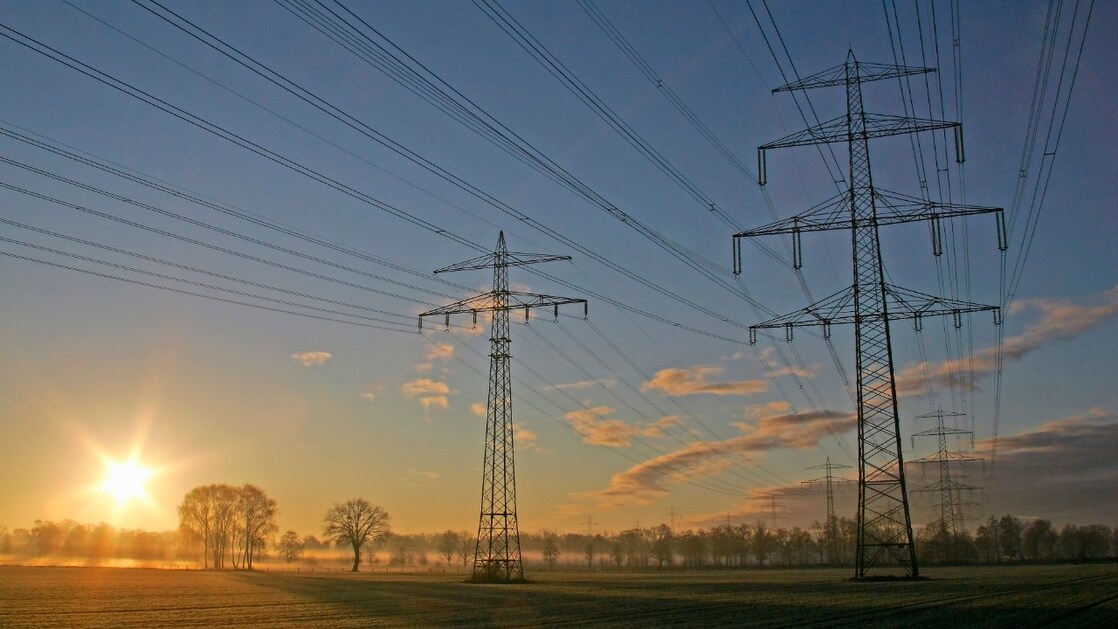
Van der Gaag disputes the idea that the entire electricity grid is full. “Looking at the Netherlands as a whole, the power grid is full for 200 to 300 hours a year. That means there is certainly room for more during off-peak hours. The average power cable is not even 30% utilised. We could start working on that this afternoon by using what is already there more intelligently.”
To make the energy transition a success more quickly, he argues for government incentives for sustainable products. “Many end products become only 1% more expensive if you produce them in a greener way. If, for example, you make a car with sustainable rather than conventional steel, it becomes around €400 more expensive. The European car industry uses one sixth of European steel production. If you require the car industry to use green steel, that is the key to giving industry an investment perspective. In Europe, the Netherlands is leading that line of thinking. But in Brussels, we still need to bring other countries, such as Germany, on board.”
Demand creation and Shell
According to Ebentreich, that demand creation applies not only to steel, but also to Shell. “If there is no demand for cleaner products, we as Shell can pump money into a cleaner plant, but we will not be able to sell to a customer.”
That did not initially stop Shell from investing heavily in the energy transition. Ebentreich: “We have invested an enormous amount, often in very large projects. In the end, those do not always prove profitable, partly because the financial picture change. Shell decided in September 2025 not to continue construction of the HEFA biofuels plant at Shell Pernis, which had already begun.
Home battery storage and electric driving
Even so, Van der Gaag sees bright spots in the energy transition. “Battery storage has never sold as much as it is selling now, from very large systems to home batteries. Last year, 100,000 home batteries were purchased in the Netherlands. You can now even put one in your shopping trolley at the supermarket — plug and play — for €300.”
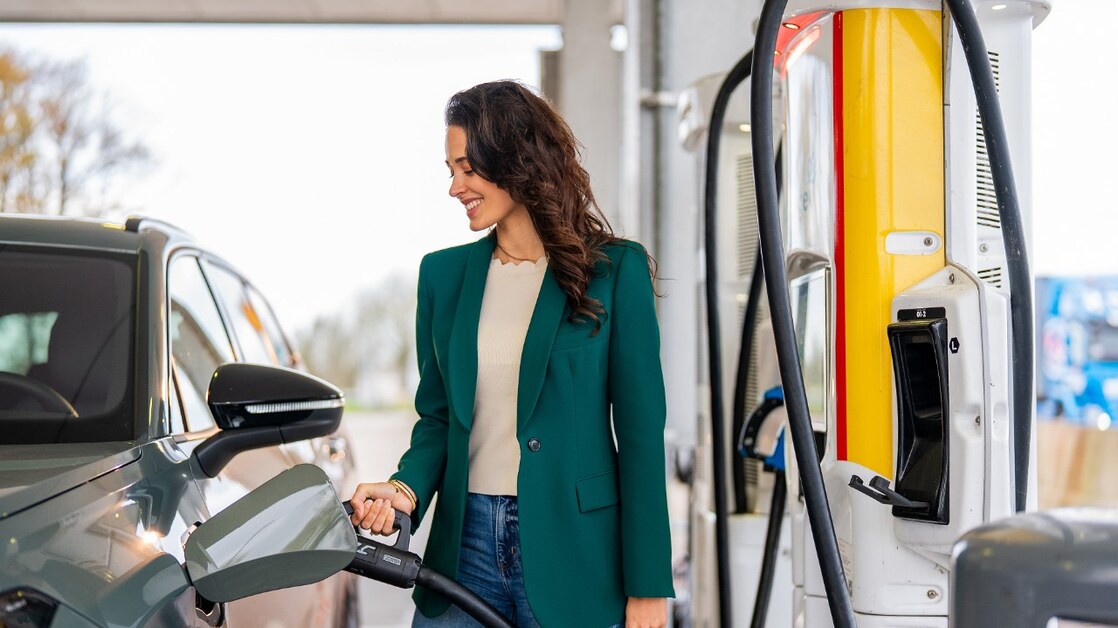
“Electric mobility is also moving incredibly fast. In April 2026, 40% of newly purchased cars in the Netherlands were electric.” The NVDE chairman praises Shell’s investments in making fast chargers even faster. “For electric drivers, the charging experience is increasingly starting to resemble the refuelling experience: you get a cup of coffee and you are ready to continue your journey.”
Danielle Ebentreich, Strategy Manager Shell Pernis"Shell has invested enormously in often major projects"
In troubled waters
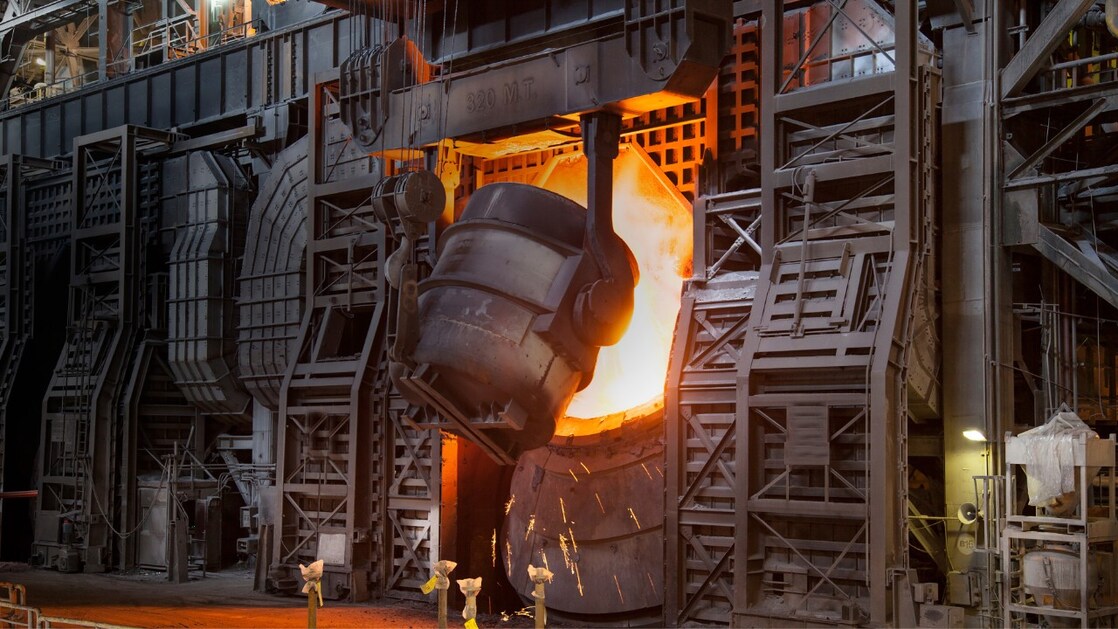
Van der Gaag sees the decarbonisation of industry itself as “in troubled waters”. “If China dumps its enormous surplus on the global market, can you ever compete with that?”
Ebentreich adds: “If you already cannot make the finances stack up for investment in basic industry in Europe, then decarbonisation without legislation and regulation, or demand creation, becomes even more difficult. Almost all large companies in the Netherlands have international shareholders. They are less tied to the Netherlands or Europe. So they look very objectively: where can I achieve the best return on the money I spend?”
The energy transition should not be a big bang
According to Ebentreich, the energy transition has not stopped, including at Shell. “A great deal is still happening, in small steps. Take Shell Pernis, where 100 projects are under way to save energy and reduce CO2 emissions.” Through the This is Pernis programme, Europe’s largest refinery in Europe’s largest port aims to make the most of the sustainability potential at the site. “If it cannot be done at Pernis, it cannot be done anywhere. You have to let go of the idea that the energy transition has to be a big bang. You can also achieve a great deal through thousands of small steps.”
According to Van der Gaag, the energy transition, independence and national resilience are very closely connected. “The Netherlands currently gets three quarters of its energy from abroad, for example from the United States, Iran and Saudi Arabia, but still also from Russia. That does not exactly feel relaxed. We started most energy-transition pathways to tackle climate change. But everything you do for that also makes you more independent. That is therefore also a way to persuade governments in Europe to stimulate demand for green industrial products made closer to home.”
Olof van der Gaag, NVDE Chair"Force the industry to use renewably produced steel"
The Netherlands can act quickly
According to Van der Gaag, the Netherlands and Europe can act quickly when they need to, as was clear during the COVID19 crisis and after Russia’s full-scale invasion of Ukraine. “A good example is the LNG terminal in Eemshaven. It was completed in 188 days. Normally that takes ten years of talking and two years of building. The same could be possible for power-grid operators. If the government says: go ahead and start your expansions, we will cover you if things go wrong, then projects such as the LNG terminal in Groningen can suddenly move faster.”
Those who must in any case be protected if things go wrong are local residents, says the NVDE chair. “For engineers, the Excel sheet may add up, but that does not mean a project also works for local residents. Lessons have been learned from experiences in solar and wind energy. Sector-wide ways of working are now in place, with project contracts including agreements with local residents. People living around the largest onshore wind farm in the Netherlands, Prinses Ariane Wind Farm in the Wieringermeer polder in North Holland, receive €100 a year in compensation from the energy company. That is quite a lot of money, but very important.”
The energy transition in 2035
With so much knowledge and experience from the past ten years in hand, what will the energy transition look like in another ten years’ time? Shell Pernis strategist Danielle Ebentreich has an idea.
“In ten years’ time, Pernis will certainly have made full use of its maximum potential in the energy transition. The whole of the Netherlands will then be in a different place when it comes to energy and CO2 emissions. Porthos CO2 storage and Holland Hydrogen 1 with green hydrogen will be live by then. And I hope the next projects will follow on from those, such as Aramis CO2 storage.”
“I think that by 2035 we will have an even stronger can-do mentality than we do now, and that we will be able to take many more steps for less money. I also hope that by then we will have achieved demand creation for sustainable products at European level. And that in the Netherlands we will have an investment climate that gives a wave of new ideas the chance to succeed.”
Olof van der Gaag, voorzitter NVDE"If the government provides cover, everything goes much faster"