Rotterdam The Hague Airport versnelt bijmengen duurzame vliegtuigbrandstof
English translation below
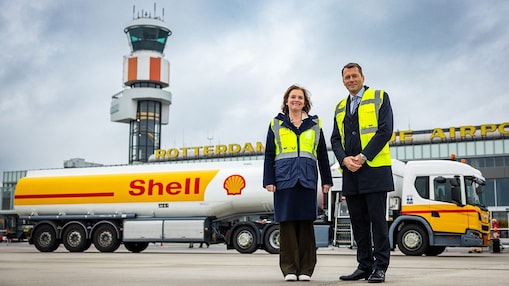
Gisteren hebben Shell en Rotterdam The Hague Airport (RTHA) een langetermijnovereenkomst getekend om met ingang van 2024 in alle vliegtuigen die tanken op RTHA duurzame vliegtuigbrandstof bij te gaan mengen. Op de luchthaven wordt er bovenop de Europese bijmengverplichting van 6%, minimaal 8% extra duurzame vliegtuigbrandstof bijgemengd. Zo kan er versneld doorgegroeid worden om de 14% doelstelling van de Nederlandse luchtvaartsector in 2030 te behalen. Duurzame vliegtuigbrandstof, ook wel Sustainable Aviation Fuel (SAF) genoemd, behoort tot de weinige mogelijkheden die nu beschikbaar zijn om de uitstoot van de internationale luchtvaart terug te dringen.
Wilma van Dijk, algemeen directeur RTHA: ”Duurzame brandstof is essentieel voor de toekomst van de luchtvaart. Dankzij dit langetermijncommitment kan Shell investeren in productiefaciliteiten en kunnen de luchtvaartmaatschappijen zich geleidelijk aanpassen aan de nieuwe werkelijkheid.”
”Fantastisch om Rotterdam The Hague Airport te ondersteunen bij het terugdringen van luchtvaartuitstoot door de inzet van SAF”, aldus Jan Toschka, president van Shell Aviation. “Het is bijzonder om te zien dat een luchthaven zich voor de lange termijn committeert aan SAF percentages die boven de Europese bijmengverplichting liggen. Deze ambitie speelt een belangrijke rol bij het bieden van een sterke, stabiele vraag die nodig is voor het opschalen van het aanbod en het gebruik van SAF.“
Voordelen van SAF
Het toegevoegde deel duurzame brandstof kan leiden tot een CO2-reductie van 80% gemiddeld over de hele keten ten opzichte van reguliere kerosine. Daarnaast zorgen deze brandstoffen tot minder uitstoot van roet en ultrafijnstof, dat bij hogere percentages bijmenging beter is voor de luchtkwaliteit.
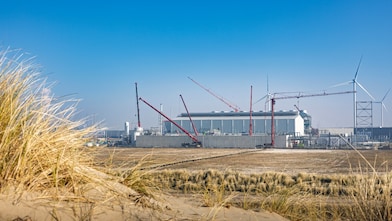
Shell bouwt op het Shell Energy and Chemicals Park Rotterdam een fabriek voor biobrandstoffen met een capaciteit van 820.000 ton per jaar, die uit afvaloliën en -vetten SAF en hernieuwbare diesel zal produceren.
Fasering bijmenging
De prijs van SAF is nu nog veel hoger ten opzichte van fossiele kerosine. Daarnaast moet de productie van SAF op grote schaal nog op gang komen. Daarom is het belangrijk de extra bijmenging gefaseerd in te voeren. RTHA heeft ervoor gekozen om een langetermijnafspraak te maken met Shell zodat voor alle gebruikers het ingroeipad en de kosten duidelijk zijn.
Meer bijmenging noodzakelijk voor behalen doelen
Vanwege de Europese bijmengverplichting moet de luchtvaart in 2025 verplicht 2% SAF bijmengen. Dit neemt toe tot 6% in 2030. Echter, dit is niet genoeg om de ambitieuze doelen van de Nederlandse luchtvaartsector, zoals vastgelegd in het Akkoord Duurzame Luchtvaart, van 14% SAF in 2030 te kunnen behalen. RTHA wil daarom dat er extra bijgemengd wordt en start vervroegd met een ingroeipad van 2% in 2024. Hier komt tot 2030 elk jaar minimaal één procent bij. Op deze manier zal er minimaal 8% extra SAF in 2030 bijgemengd worden, bovenop de wettelijke 6%. Dankzij deze extra bijmenging wordt de doelstelling van 14% SAF op deze luchthaven in ieder geval behaald.
English translation
Rotterdam The Hague Airport accelerates sustainable fuel blending
Yesterday, Shell and Rotterdam The Hague Airport (RTHA) signed a long-term agreement to blend sustainable aviation fuel on all aircraft fuelled at the airport, starting in 2024. On top of the European blending mandate of 6%, the airport will accelerate its efforts by setting itself a minimum extra target of 8% to meet the more ambitious goal of the Dutch aviation sector of 14% by 2030. Using sustainable aviation fuel (SAF) is among the few measures currently available to reduce emissions from international aviation.
“Sustainable fuel is essential for the future of aviation”, says RTHA’s CEO Wilma van Dijk. “This long-term agreement makes it possible for Shell to invest in production facilities while allowing airlines to gradually adapt to a new reality.”
“It’s fantastic to support Rotterdam The Hague Airport on decarbonising flights through the use of SAF,” added Jan Toschka, President of Shell Aviation. “It is particularly encouraging to see an airport committing to long-term SAF agreements, for volumes above the levels required under EU mandates. This type of ambition helps play an important role in providing strong, stable demand that is necessary for scaling up the supply and use of SAF.“
Benefits of SAF
The added part sustainable fuel can lead to a CO2 reduction of on average 80% across the chain compared to regular jet fuel. Besides this, sustainable fuel leads to a reduction of soot and ultrafine particle emissions, which at higher percentages of blending, improves air quality.
Shell is building an 820,000-tonnes-a-year biofuels facility at the Shell Energy and Chemicals Park Rotterdam, which will produce SAF and renewable diesel made from waste oils and fats.
Phasing in SAF
For the moment, SAF is still much more costly than fossil kerosene. For this reason, and because large-scale production of SAF has yet to take off, it is important to phase in additional blending requirements. RTHA has chosen to sign a long-term agreement with Shell in order to offer transparency on the growth path and cost for the users at the airport.
More blending necessary to meet targets
As a result of the European blending mandate, the aviation sector must blend in 2% SAF across the board by 2025. The target for 2030 is 6%. However, this is not enough to meet the Dutch aviation sector’s more ambitious target of 14% SAF by 2030, as set out in the Sustainable Aviation Agreement.
RTHA therefore wants to speed things up by raising the target for 2024 by an additional 2 percentage points. This will be followed by incremental yearly increases of at least one percentage point until 2030, making for a total additional increase of minimal 8 percentage points by 2030, on top of the statutory 6%. Thanks to this extra blending push, the 14% SAF target will be met at Rotterdam The Hague Airport.