Hoe Nederlands eerste windpark op zee langer meegaat
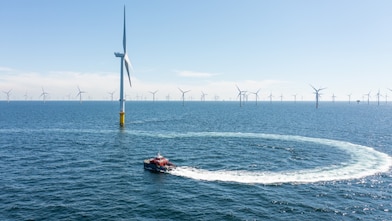
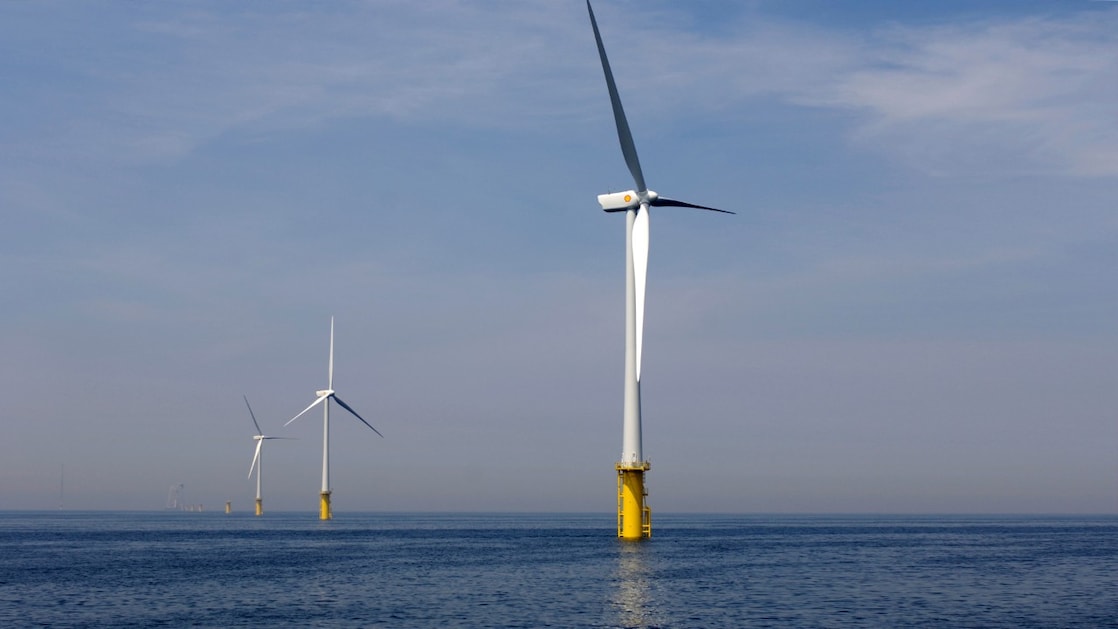
Daar staan ze dan, bij helder weer zichtbaar vanaf het strand van Egmond aan Zee: 36 windturbines. Het is het jaar 2007 en dit zijn de allereerste voor de kust van Nederland. Om aan te tonen dat windkracht van zee niet alleen goed is voor het land, maar ook goed is voor de business. Bijna 20 jaar later mag Shell NoordzeeWind langer blijven dan verwacht. Een succesverhaal over pionieren in duurzame energie.

Tekst: Marcel Burger. Beeld: Edwin Remsberg, Ernst Bode.
In de afgelopen decennia heeft Shell NoordzeeWind zijn waarde voor Nederland en Shell bewezen. Aanvankelijk was het eerste offshore windpark van Nederland een samenwerking met Nuon/Vattenfall, maar Shell werd in 2021 volledig eigenaar. Klaas Keuning is er de directeur van en hij heeft goed nieuws.
”De Nederlandse overheid heeft ons de vergunningen gegeven om nog eens bijna vijf jaar aan energieproductie bij te plakken, tot en met 2031. En bovendien hebben we in Google een partij gevonden die het equivalent van de 108 megawatt aan jaarlijkse piekcapaciteit aan groene stroom wil afnemen,” zegt Keuning. Hij zegt blij te zijn met de overheden die allemaal meewerkten aan de verlenging, inclusief de Rijksdienst voor Ondernemend Nederland en drie ministeries: Landbouw, Visserij, Voedselzekerheid en Natuur, Klimaat en Groene groei, én Economische Zaken.
NoordzeeWind was opmaat naar meer
Keunings blijdschap wordt op het Ministerie van Klimaat en Groene Groei gedeeld. “Na zorgvuldige evaluatie of het windpark technisch en ecologisch voldoet, ben ik blij dat het mogelijk is gebleken om de levensduur met een aantal jaar te verlengen,” zegt Marc Hoenders, die op het departement directeur Realisatie Energietransitie is. “Daarmee blijft dit windpark langer groene stroom leveren aan het Nederlandse elektriciteitsnet en daarmee bijdragen aan de verduurzaming en energieonafhankelijkheid van Nederland.”,
Achttien jaar geleden gaf de toenmalige minister van Onderwijs, Cultuur en Wetenschap, Maria van der Hoeven, al aan dat het windpark uniek was voor Nederland en dat het de opmaat zou zijn voor meer. “We gaan echt niet de hele Nederlandse kust vol met windparken bouwen, maar er komen wel meer windparken. Kan zijn dat we die verder uit de kust gaan bouwen,” zei ze voor de camera tijdens de ingebruikname van NoordzeeWind in 2007.
In volle gang
En dat is ook gebeurd. Net als andere partijen ging ook Shell ging door, met partners. Als joint venture Blauwwind werd Borselle III & IV gebouwd (in werking sinds 2021). Onder de noemer Crosswind draait windpark Hollandse Kust Noord sinds eind 2023 op volle kracht. De bouw van Shells vierde windpark in het Nederlands deel van de Noordzee is inmiddels ook in volle gang: de joint venture Ecowende moet van Hollandse Kust West het toonbeeld maken van een offshore windpark in balans met het leven onder en boven de zeespiegel.
Lees ook Dagmars verhaal
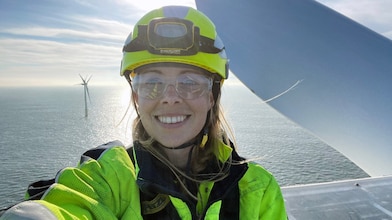
Dagmar Eisses is sinds 2022 de productiemanager van Shell NoordzeeWind. Dat betekent dat ze verantwoordelijk is voor de dagelijkse gang van zaken op het windpark, zoals het onderhoud, of de regelgeving wordt nageleefd en voor het contact met de aannemers. Dat doet ze op afstand.
Power Purchase Agreement
Omdat in Nederland bij wet het Rijk, via TenneT, het monopolie heeft op het hoofd elektriciteitsnet, leveren alle grote windparken daaraan hun stroom. Er zijn dus directe kabels tussen offshore windparken en afnemers. Maar bedrijven kunnen stroom kopen dat gelijk staat aan een deel of het geheel van de capaciteit van een windpark. En zo is het ook voor de verlenging van Shell NoordzeeWind, waar het stroomafnamecontract met Google in 2027 ingaat.
Zo’n contract staat internationaal bekend als een Power Purchase Agreement (PPA). De Amerikaanse techgigant zal de stroom gebruiken voor zijn Nederlandse activiteiten. Dus ook voor stroom die nodig is om Google Search beschikbaar te houden. De online zoekmachine wordt naar schatting door 70% van de Nederlanders dagelijks gebruikt. Maar Google is ook bekend van YouTube, het Android-besturingssysteem op mobiele telefoons en nog veel meer.
Will Conkling is directeur Energy Commercial Structuring bij Google: "We hebben een ambitieus doel om elke Google-campus elk uur van de dag op schone elektriciteit te laten werken, inclusief onze activiteiten in Nederland, kantoren en datacenters. We zijn verheugd over deze samenwerking met Shell om onze Nederlandse activiteiten te ondersteunen met betaalbare, schone energie en om de economische impact in Nederland te blijven behouden."
Met extra expertise, in prima technische staat
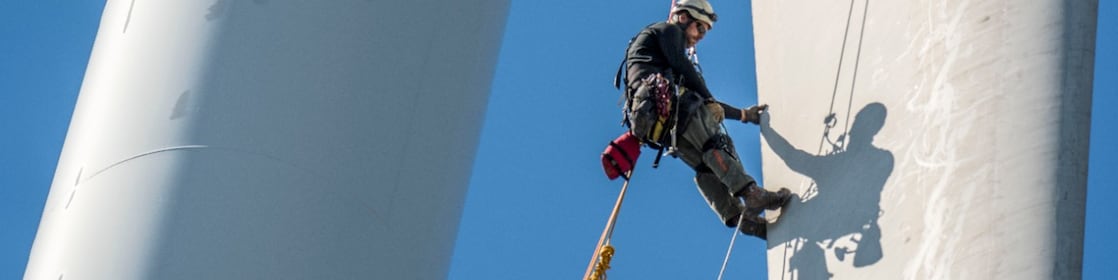
De afgelopen jaren is geïnvesteerd in NoordzeeWind. Een ontdekte kabelbreuk werd gerepareerd, en dat had meer voeten in de aarde dan gedacht (zie de video). De originele leverancier van de turbines, het Deense Vestas, werd in 2021 weer opnieuw aangetrokken voor het onderhoud. Føn werd gecontracteerd voor het onderhoud van zo'n beetje alle andere infrastructuur van NoordzeeWind op zee. Daarnaast doet Equans het onderhoud van het onderstation op het land, waar de stroomkabels van zee zijn verbonden aan het Nederlandse elektriciteitsnet.
Met de extra expertise is het windpark terug in volledige operationele staat en produceert gemiddeld evenveel stroom als 100.000 Nederlandse huishoudens jaarlijks nodig hebben. Ondanks zijn relatieve ouderdom is Shell NoordzeeWind in prima technische staat, zo beaamde ook het Noorse certificeringsbedrijf DNV dat daarvoor de check en certificering uitvoerde.
Capaciteit van Shell NoordzeeWind: 108 megawattEvenveel stroom als 100.000 huishoudens jaarlijks nodig hebben.
Transcriptie NoordzeeWind, het kabelproject
Transcriptie NoordzeeWind, het kabelproject
0:00 Shell NoordzeeWind is the oldest wind farm in the Netherlands.
0:02 It was built in 2007
0:04 and has been supplying renewable energy to the Netherlands since then.
0:08 And obviously the cable project,
0:10 is the repair of one of the three export cables of NoordzeeWind.
0:14 Brilliant.
0:15 Ten out of ten.
0:17 Absolutely fantastic.
0:18 And that counts for everybody, top to bottom.
0:21 So basically everything was done, with underwater robots.
0:25 For example, the cable was buried up to, I think, even three meters
0:28 deep in certain areas.
0:30 And they had all these underwater robots and tools to excavate the cable,
0:34 but also cut the cable subsurface
0:36 and then being able to lift, the cable onto the vessel.
0:39 And the more work is done upfront the more it pays off during the offshore phase.
0:45 It was a fast track project for us.
0:47 It was high pressure because of the importance of the wind farm
0:51 for Shell and its ambition to extend its life.
Vogeltrek en ontmanteling
”Met NoordzeeWind laten we zien dat offshore wind een duidelijk business case had en heeft, zonder subsidie kan bestaan en een alternatief is voor stroom die anders met kolen of gas had moeten worden opgewekt”, zegt Guido Smit die bij Shell Nederland gaat over de communicatie van wind, elektriciteit en plastic recycling. ”Het Nederlandse publiek is inmiddels ook gewend geraakt aan windparken op zee. Er is geen commotie meer over, zoals in 2007.”
Wat is geleerd van NoordzeeWind is toegepast bij de andere Shell-windparken. Zo worden voor nieuwe windparken de turbines verder uit elkaar gezet, en zijn de turbines met zo’n 200 meter veel hoger dan de 90 meter die de NoordzeeWind-turbines de lucht in steken.
Ontmanteling
Bij de aankomende ontmanteling in 2032 zal NoordzeeWind opnieuw de toon zetten voor offshore wind in Nederland. Niet alleen wordt het onderhoudsplan in de laatste fase een mooie blauwdruk voor andere parken, ook de vraag hoe ruim je nou zo’n windpark op natuurvriendelijke en circulaire manier op, zal een goede les zijn.
NoordzeeWind-directeur Klaas Keuning: “Het hoogwaardig staal van de monopiles (de pilaren, red.) kan voor meer dan 90% worden hergebruikt, zoals dat ook voor ander staal geldt. Daarnaast worden de mogelijkheden onderzocht of de turbines – deels – “geretrofit” kunnen worden, zodat ze elders op land opnieuw stroom kunnen maken.”
NoordzeeWind live zien
Voor wie in Egmond aan Zee bij helder weer het strand oploopt, kan NoordzeeWind live zien vanaf de kust. De turbines draaien, leveren 100% groene stroom en het park heeft de CO2-uitstoot van de eigen bouw al ruimschoots gecompenseerd. NoordzeeWind zette de toon voor de toekomst, toen en nu, en maakt na al die jaren nog steeds de energie voor vandaag, voor morgen en voor jou.
Klaas Keuning, directeur NoordzeeWind"Het staal van NoordzeeWind kan voor meer dan 90% worden hergebruikt"
Cautionary note
Cautionary note
The companies in which Shell plc directly and indirectly owns investments are separate legal entities. In this announcement “Shell”, “Shell Group” and “Group” are sometimes used for convenience where references are made to Shell plc and its subsidiaries in general. Likewise, the words “we”, “us” and “our” are also used to refer to Shell plc and its subsidiaries in general or to those who work for them. These terms are also used where no useful purpose is served by identifying the particular entity or entities. ‘‘Subsidiaries’’, “Shell subsidiaries” and “Shell companies” as used in this announcement refer to entities over which Shell plc either directly or indirectly has control. The term “joint venture”, “joint operations”, “joint arrangements”, and “associates” may also be used to refer to a commercial arrangement in which Shell has a direct or indirect ownership interest with one or more parties. The term “Shell interest” is used for convenience to indicate the direct and/or indirect ownership interest held by Shell in an entity or unincorporated joint arrangement, after exclusion of all third-party interest.
Forward-looking Statements
This announcement contains forward-looking statements (within the meaning of the U.S. Private Securities Litigation Reform Act of 1995) concerning the financial condition, results of operations and businesses of Shell. All statements other than statements of historical fact are, or may be deemed to be, forward-looking statements. Forward-looking statements are statements of future expectations that are based on management’s current expectations and assumptions and involve known and unknown risks and uncertainties that could cause actual results, performance or events to differ materially from those expressed or implied in these statements. Forward-looking statements include, among other things, statements concerning the potential exposure of Shell to market risks and statements expressing management’s expectations, beliefs, estimates, forecasts, projections and assumptions. These forward-looking statements are identified by their use of terms and phrases such as “aim”; “ambition”; ‘‘anticipate’’; ‘‘believe’’; “commit”; “commitment”; ‘‘could’’; ‘‘estimate’’; ‘‘expect’’; ‘‘goals’’; ‘‘intend’’; ‘‘may’’; “milestones”; ‘‘objectives’’; ‘‘outlook’’; ‘‘plan’’; ‘‘probably’’; ‘‘project’’; ‘‘risks’’; “schedule”; ‘‘seek’’; ‘‘should’’; ‘‘target’’; ‘‘will’’; “would” and similar terms and phrases. There are a number of factors that could affect the future operations of Shell and could cause those results to differ materially from those expressed in the forward-looking statements included in this announcement, including (without limitation): (a) price fluctuations in crude oil and natural gas; (b) changes in demand for Shell’s products; (c) currency fluctuations; (d) drilling and production results; (e) reserves estimates; (f) loss of market share and industry competition; (g) environmental and physical risks; (h) risks associated with the identification of suitable potential acquisition properties and targets, and successful negotiation and completion of such transactions; (i) the risk of doing business in developing countries and countries subject to international sanctions; (j) legislative, judicial, fiscal and regulatory developments including regulatory measures addressing climate change; (k) economic and financial market conditions in various countries and regions; (l) political risks, including the risks of expropriation and renegotiation of the terms of contracts with governmental entities, delays or advancements in the approval of projects and delays in the reimbursement for shared costs; (m) risks associated with the impact of pandemics, such as the COVID-19 (coronavirus) outbreak, regional conflicts, such as the Russia-Ukraine war, and a significant cybersecurity breach; and (n) changes in trading conditions. No assurance is provided that future dividend payments will match or exceed previous dividend payments. All forward-looking statements contained in this announcement are expressly qualified in their entirety by the cautionary statements contained or referred to in this section. Readers should not place undue reliance on forward-looking statements. Additional risk factors that may affect future results are contained in Shell plc’s Form 20-F for the year ended December 31, 2024 (available at www.shell.com/investors/news-and-filings/sec-filings.html and www.sec.gov). These risk factors also expressly qualify all forward-looking statements contained in this announcement and should be considered by the reader. Each forward-looking statement speaks only as of the date of this announcement, May 22, 2025. Neither Shell plc nor any of its subsidiaries undertake any obligation to publicly update or revise any forward-looking statement as a result of new information, future events or other information. In light of these risks, results could differ materially from those stated, implied or inferred from the forward-looking statements contained in this announcement.
Shell’s Net Carbon Intensity
Also, in this announcement we may refer to Shell’s “Net Carbon Intensity” (NCI), which includes Shell’s carbon emissions from the production of our energy products, our suppliers’ carbon emissions in supplying energy for that production and our customers’ carbon emissions associated with their use of the energy products we sell. Shell’s NCI also includes the emissions associated with the production and use of energy products produced by others which Shell purchases for resale. Shell only controls its own emissions. The use of the terms Shell’s “Net Carbon Intensity” or NCI are for convenience only and not intended to suggest these emissions are those of Shell plc or its subsidiaries.
Shell’s net-zero emissions target
Shell’s operating plan, outlook and budgets are forecasted for a ten-year period and are updated every year. They reflect the current economic environment and what we can reasonably expect to see over the next ten years. Accordingly, they reflect our Scope 1, Scope 2 and NCI targets over the next ten years. However, Shell’s operating plans cannot reflect our 2050 net-zero emissions target, as this target is currently outside our planning period. In the future, as society moves towards net-zero emissions, we expect Shell’s operating plans to reflect this movement. However, if society is not net zero in 2050, as of today, there would be significant risk that Shell may not meet this target.
Forward-looking non-GAAP measures
This announcement may contain certain forward-looking non-GAAP measures such as cash capital expenditure and divestments. We are unable to provide a reconciliation of these forward-looking non-GAAP measures to the most comparable GAAP financial measures because certain information needed to reconcile those non-GAAP measures to the most comparable GAAP financial measures is dependent on future events some of which are outside the control of Shell, such as oil and gas prices, interest rates and exchange rates. Moreover, estimating such GAAP measures with the required precision necessary to provide a meaningful reconciliation is extremely difficult and could not be accomplished without unreasonable effort. Non-GAAP measures in respect of future periods which cannot be reconciled to the most comparable GAAP financial measure are calculated in a manner which is consistent with the accounting policies applied in Shell plc’s consolidated financial statements.
The contents of websites referred to in this announcement do not form part of this announcement.
We may have used certain terms, such as resources, in this announcement that the United States Securities and Exchange Commission (SEC) strictly prohibits us from including in our filings with the SEC. Investors are urged to consider closely the disclosure in our Form 20-F, File No 1-32575, available on the SEC website www.sec.gov