Anno 1989: wind van verandering waait in Europa
1989 gaat de geschiedenisboeken in als legendarisch. Voor veel Europeanen is 1989 namelijk het jaar van vrijheid en hoop: met de val van de Berlijnse Muur en met het verdwijnen van communistische regimes in Oost-Europa. De Koude Oorlog tussen "West" en "Oost" komt ten einde. Het maakt de weg vrij voor investeringen van ook Shell in andere delen van Europa.

Tekst: Marcel Burger. Beeld: Jaco Klamer/ANP (openingsfoto), Marcel Burger, Shell Polska
Publicatie: 13 augustus 2026
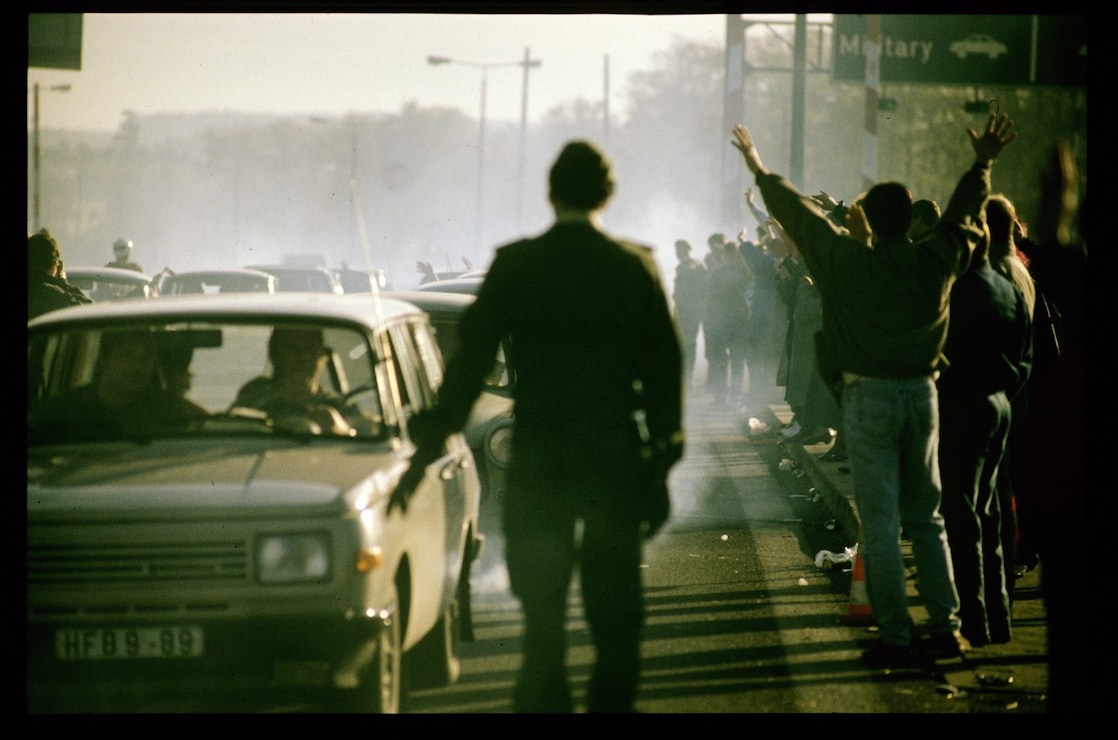
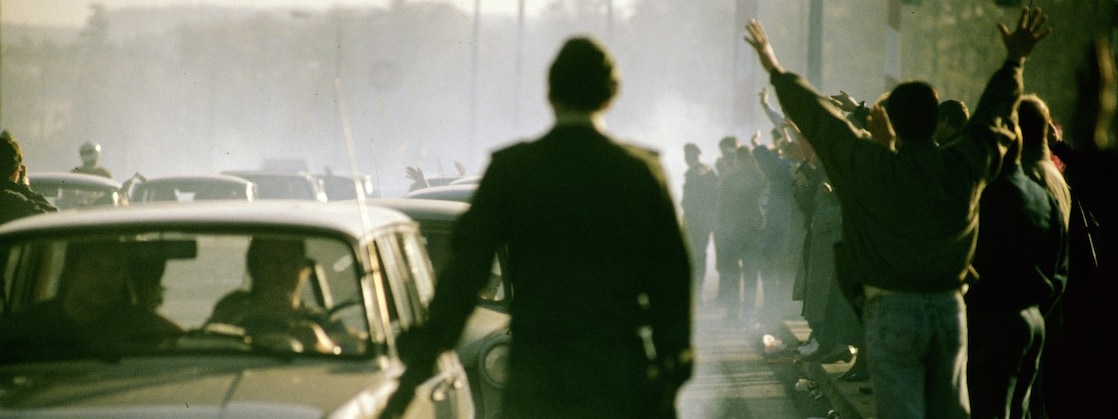
Openingsfoto: Een file van Trabanten trekt van Oost- naar West-Berlijn om de vrijheid van de val van de muur te beleven, 9 november 1989
Het begin van de grote omslag in Europa is in Hongarije op 11 januari 1989, als het Hongaarse parlement de inwoners meer vrijheid geeft, met onder meer het recht op vereniging en het recht om te protesteren.
De veranderingen krijgen daarna in Polen vaart. Op 6 februari gaat de communistische regering van generaal Jaruzelski in gesprek met de vakbondsbeweging Solidarność (Solidariteit) van de charismatische leider Lech Wałęsa. De maandenlange Rondetafelgesprekken volgen op een jaar van proteststakingen tegen het regime in Warschau.
Op 6 april verklaren de partijen dat de functie van secretaris-generaal van de Communistische Partij (Jaruzelski’s positie) wordt afgeschaft en er een gekozen president zal komen. Ook worden vakbonden gelegaliseerd en zal er een gekozen Senaat worden toegevoegd aan het Poolse parlement. Op 4 juni volgen de eerste vrije Poolse parlementsverkiezingen: Solidariteit verovert 99% van de Senaat en alle 35% aan beschikbare zetels in de Sejm — de Poolse volksvertegenwoordiging. Een jaar later wordt Lech Wałęsa president van Polen dankzij vrije presidentsverkiezingen.
IJzeren gordijn
Een stuk naar het zuiden begint de echte fysieke afbraak van het IJzeren gordijn dat West- en Oost-Europa scheidt. Gevoed door de omslag in Polen en massaprotesten in eigen land beginnen de Hongaarse autoriteiten op 2 mei 1989 met het verwijderen van het 240 kilometer lange grenshek met Oostenrijk. Dit maakt de weg vrij voor ook duizenden in Hongarije „vakantievierende” Oost-Duitsers en toenmalige Tsjechoslowaken om naar het westen te reizen.
Dit tegen het zere been van het regime van de Deutsche Demokratische Republik (DDR), zoals Oost-Duitsland op dat moment officieel heet, en landbaas Erich Honecker. Als er in september al 30.000 Oost-Duitsers via Hongarije naar het westen zijn gevlucht, kondigt Berlijn een reisverbod af. Duizenden DDR’ers die naar de West-Duitse ambassade in Praag waren gevlucht, mogen van de West-Duitse regering in Bonn naar West-Duitsland.
Maar de wind van verandering waait niet alleen door de Oost-Duitse en Hongaarse straten. Ook in het Kremlin staan de zaken er anders voor. Sovjet-leider Michail Gorbatsjov reist in oktober persoonlijk naar Berlijn voor de 40e verjaardig van de Deutsche Demokratische Republik. Honecker denkt dat Gorbatsjov hem kunt steunen, maar in werkelijkheid kom de Sovjet-leider langs om te vertellen dat het Oost-Duitse regime veranderingen moet accepteren.
Vuur
Vervolgens komen in de Oost-Duitse stad Leipzig in oktober eerst 70.000 en later 120.000 mensen op de been in anti-regeringsprotesten. De lokale autoriteiten negeren bevel uit Berlijn om het vuur te openen. Honecker hoopt tevergeefs dat Moskou militair ingrijpt, zoals het in Hongarije (1956) en Tsjechoslowakije (Praagse Lente in 1968) tegen volksprotesten deed. Maar de Sovjet-troepen in de Oost-Europese landen krijgen dit keer het uitdrukkelijke bevel om in de kazernes te blijven.
Onder druk van de demonstraties en de inmiddels ook open grenzen met West-Europa in Tsjechoslowakije staat de DDR-regering op 9 november 1989 toe dat Oost-Duitsers naar West-Berlijn en West-Duitsland mogen reizen. „Onmiddellijk, en zonder vertraging”, verklaart regeringswoordvoerder Günter Schabowski op tv.
Neerhameren
Maar de regering verzuimt de grenswachten op de hoogte te stellen, die met geweren op de rug aanvankelijk probeert de groeiende mensenmenigte aan de oostzijde van de Berlijnse Muur tegen te houden. Zonder antwoorden van hogerhand gaan de grenswachten uiteindelijk overstag. Het hek is letterlijk van de dam als Oost- en West-Duitsers samen letterlijk delen van de Muur neerhameren.
In Tsjechoslowakije (in 1993 vreedzaam uiteen als Tsjechië en Slowakije), Bulgarije, Roemenië en Albanië verdwijnen de regimes en Joegoslavië valt in een zeer pijnlijk oorlogsproces uiteen in Slovenië, Kroatië, Bosnië-Herzegowina, Servië, Montenegro, Kosovo en (Noord-)Macedonië. De hele Sovjet-Unie valt in 1991 uiteen; Estland, Letland en Litouwen worden weer vrije landen.
Shell Polska
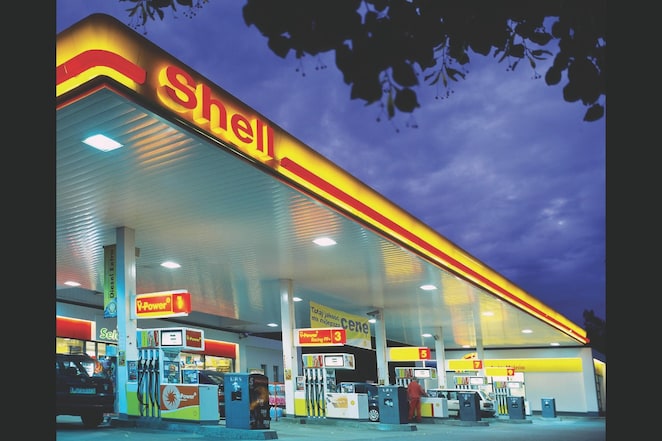
De nieuwe koers in de Oost-Europese landen maakt de weg vrij voor investeringen van het westerse overheden en bedrijven. Ook Shell ziet kansen. In 1992 wordt Shell Polska opgericht en in 1994 gaat in Gdańsk het eerste Poolse Shell-station open. In 2006 start Shell Business Operations (SBO) Kraków, een locatie die in personeelssterkte in twee decennia uitgroeit tot de derde in Europa van de Shell-groep — na Den Haag en Londen. Vandaag de dag ondersteunen bijna 5.000 medewerkers vanuit de Zuid-Poolse stad de Shell-groep wereldwijd — met boekhouding, financiën, logistiek, inkoop en contractbeheer, personeelsadministratie, klantenservice en bedrijfscommunicatie, ook voor Shell Nederland.
Een nieuw thuis
De wind van verandering in 1989 bracht volgens historici de meeste Europese landen dichter bij elkaar; dankzij de toetredingen tot de NAVO en de Europese Unie. Maar ook door economische verbondenheid, vrij reizen binnen het Schengen-gebied en de mogelijkheid voor EU-burgers zich gemakkelijk in andere landen van de Europese Unie te vestigen.
Ook in 1989
- 1 januari: de PTT wordt geprivatiseerd.
- 12 maart: een voorstel bij CERN van Tim Berners-Lee voor het World Wide Web legt de basis van het hedendaagse internet, en dus hoe de mensheid informatie deelt.
- 8 maart: de NMB (voorloper ING) en de Postbank fuseren.
- 31 maart: laatste uitzending van de Fabeltjeskrant, een kinderserie.
- 25 augustus: ruimtesonde Voyager 2 bereikt als enige (ook nu nog) ruimtevaartuig de planeet Neptunus.
- 1 oktober: opening van de Berendrechtsluis in Antwerpen, die tot de opening van de Kieldrechtsluis (ook in Antwerpen) in 2016 de grootste zeesluis ter wereld is.
- 2 oktober: RTL-Véronique begint met uitzenden, als eerste commerciële tv-zender gericht op Nederland.
- 20 november: Universele Verklaring van de Rechten van het Kind wordt aangenomen door de Algemene Vergadering van de Verenigde Naties.
- Muziek: opvallende hits van het jaar zijn Pump up the jam van het Belgische duo Technotronic, Eternal flame van Amerikaanse rockformatie Bangles, de Lambada van de Frans-Braziliaanse groep Kaomo, The Look van het Zweedse duo Roxette, en Alles kan een mens gelukkig maken van René Froger & Het Goede Doel.
- Films: kaskrakers zijn Indiana Jones and the Last Crusade, Batman, Back to the Future Part II, Look who’s talking, Dead Poets Society en The Little Mermaid. Opvallende Nederlandse productie is De kassière (internationale titel: Lily was here).
Anno 1989: the wind of change sweeps through Europe
13 Aug. 2026
1989 has gone down in history as legendary. For many Europeans, 1989 was the year of freedom and hope: the fall of the Berlin Wall and the disappearance of communist regimes in Eastern Europe. The Cold War between "West" and "East" came to an end. It cleared the way for investments of Western companies, Shell included, in the Eastern parts of Europe.

Text: Marcel Burger. Photography: Jaco Klamer/ANP (featured photo), Marcel Burger, Shell Polska.
The first signs of Europe’s great turning point appear in Hungary on 11 January 1989, when the Hungarian parliament gives citizens greater freedom, including the right of association and the right to protest.
Change then gathers pace in Poland. On 6 February, the communist government of General Jaruzelski begins talks with the trade union movement Solidarność (Solidarity), led by the charismatic Lech Wałęsa. The months-long Round Table Talks follow a year of protest strikes against the regime.
On 6 April, the parties declare that the post of secretary-general of the Communist Party — Jaruzelski’s position — will be abolished and that there will be an elected president. Trade unions are also legalised and an elected Senate will be added to the Polish parliament. On 4 June, Poland holds its first free parliamentary elections: Solidarity wins 99% of the Senate and all 35% of the available seats in the Sejm, Poland’s lower house. A year later, Lech Wałęsa becomes president of Poland through free presidential elections.
Iron Curtain
Farther south, the real physical dismantling of the Iron Curtain separating Western and Eastern Europe begins. Spurred on by the change in Poland and mass protests at home, the Hungarian authorities start removing the 240-kilometre (149-miles) long border fence with Austria on 2 May 1989. This also clears the way westwards for thousands of East Germans and Czechoslovaks “on holiday” in Hungary.
This is a sore point for the regime of the Deutsche Demokratische Republik (DDR) — or German Democratic Republic (GDR), as East Germany is officially known at the time, and its ruler Erich Honecker. When, by September, as many as 30,000 East Germans have fled west via Hungary, Berlin announces a travel ban. Thousands of DDR citizens who had fled to the West German embassy in Prague are allowed by the West German government in Bonn to travel to West Germany.
But the wind of change is not only blowing through the streets of East Germany and Hungary. Things are changing in the Kremlin too. Soviet leader Mikhail Gorbachev travels to Berlin in October for the 40th anniversary of the DDR. Honecker thinks Gorbachev will support him, but in reality the Soviet leader has come to say that the East German regime must accept change.
Fire
In October, first 70,000 and later 120,000 people take to the streets in the East German city of Leipzig in anti-government protests. The local authorities ignore orders from Berlin to open fire. Honecker hopes in vain that Moscow will intervene militarily, as it did in Hungary in 1956 and in Czechoslovakia during the Prague Spring of 1968, to suppress popular protests. But this time, Soviet troops in Eastern European countries are given explicit orders to remain in their barracks.
Under pressure from the demonstrations and the now-open borders with Western Europe in Czechoslovakia, the DDR government allows East Germans to travel to West Berlin and West Germany on 9 November 1989. “Immediately, without delay,” government spokesman Günter Schabowski declares on television.
Hammering down
But the government fails to inform the border guards, who initially try, rifles on their backs, to hold back the growing crowds on the eastern side of the Berlin Wall. With no answers from their superiors, the border guards eventually give way. The floodgates literally open as East and West Germans together begin hammering down sections of the Wall.
In Czechoslovakia (they split up peacefully in 1993), Bulgaria, Romania and Albania, the regimes disappear. While in a deeply painful process of war Yugoslavia breaks apart into Slovenia, Croatia, Bosnia and Herzegovina, Serbia, Montenegro, Kosovo and (North) Macedonia. The entire Soviet Union collapses in 1991; Estonia, Latvia and Lithuania become independent countries once again.
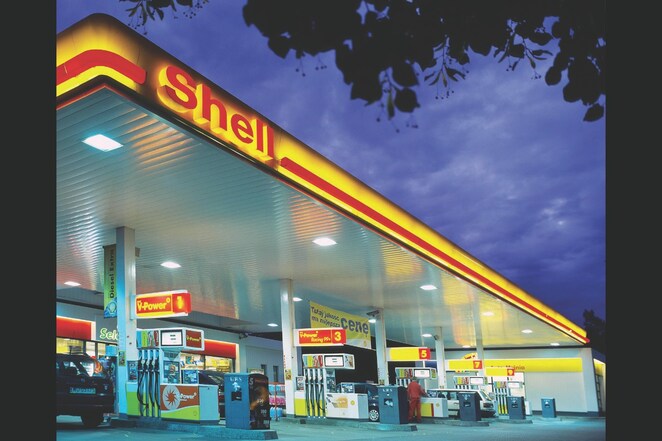
Shell Polska
The new direction taken by Eastern European countries paves the way for investment by Western governments and companies. Shell also sees opportunities. In 1992, Shell Polska is established, and in 1994 the first Polish Shell service station opens in Gdańsk. In 2006, Shell Business Operations (SBO) Kraków opens. Within the two decades that follow, the campus in Poland's second largest city grows into the Shell Group’s third biggest location in Europe, after the Shell Campus The Hague and London Centre.
Today in Kraków, almost 5,000 employees support the Shell Group worldwide — with accounting, finance, logistics, procurement and contract management, HR administration, customer service and corporate communications, including for Shell Netherlands.
A new home
According to historians, the wind of change of 1989 brought most European countries closer together through accession to NATO and the European Union, but also through economic ties, free travel within the Schengen area and the easier opportunity for EU citizens to settle in other countries.
This also happened in 1989
- 12 March: a proposal at CERN by Tim Berners-Lee for the World Wide Web lays the foundations for today’s internet, and therefore for the way humanity shares information.
- 25 August: space probe Voyager 2 becomes the only spacecraft — still today — to reach the planet Neptune.
- 1 October: the Berendrecht Lock opens in Antwerp, Belgium, remaining the world’s largest sea lock until the opening of the Kieldrecht Lock, also in Antwerp, in 2016.
- 20 November: the United Nations General Assembly adopts the Convention on the Rights of the Child.
- Music: notable hits of the year include Pump Up the Jam by Belgian duo Technotronic, Eternal Flame by American rock band The Bangles, Lambada by French-Brazilian group Kaoma, and The Look by Swedish duo Roxette.
- Films: box-office hits include Indiana Jones and the Last Crusade, Batman, Back to the Future Part II, Look Who’s Talking, Dead Poets Society and The Little Mermaid.