Kritieke grondstoffen
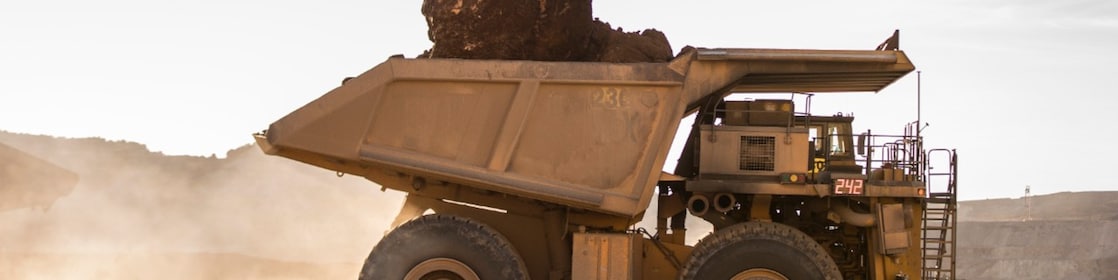
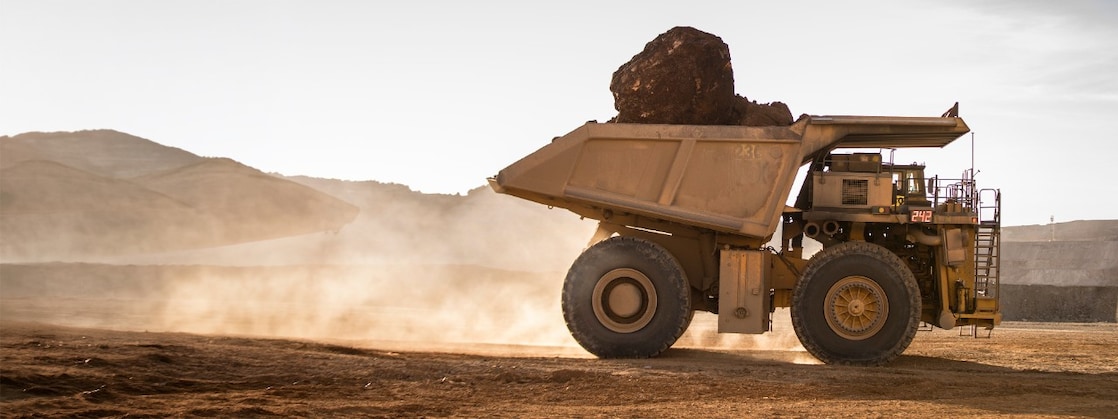
Duurzame energie zorgt voor minder CO2-uitstoot. Dat is positief. Maar om een windmolen, waterstoffabriek of een zonnepaneel te maken, zijn veel grondstoffen nodig. Zoals silicium voor zonnepanelen. Of zware aardmetalen als neodymium en dysprosium voor de magneten in de windturbine. Dit zijn voorbeelden van zogenoemde kritieke grondstoffen, Vensters “woord” van de maand oktober 2026.

Tekst: Matthijs Timmers. Beeld: Stuart Conway.
In dit verhaal:
Kritiek dus. Vanwaar die kritiek?
Niet dat er sprake is van kritiek op het gebruik van deze grondstoffen. Of dat ze een negatief imago hebben. In dit verband betekent kritiek dat de grondstoffen behoorlijk zeldzaam zijn én tegelijkertijd een belangrijke rol vervullen in onze economie. In het Engels lijkt de term net iets beter zijn betekenis te beschrijven: critical raw materials.
Wat zijn dan deze kritieke grondstoffen?
In Europa is er een lijst opgesteld met daarop 34 kritieke grondstoffen. Precies de helft ervan wordt daarnaast aangemerkt als strategische grondstoffen. Dat houdt in dat ze onmisbaar zijn voor de energietransitie en de toekomstige economie. Ook bestaat een grote kans op problemen met de aanvoer van die grondstoffen, omdat ze maar in een beperkt aantal landen worden geproduceerd. Oorlog en politieke onrust kunnen grote gevolgen hebben voor de levering van deze materialen. Bovendien zijn deze grondstoffen lastig te vervangen door andere met dezelfde eigenschappen.
Noem eens een paar voorbeelden.
De eerder genoemde silicium en de zware aardmetalen zijn voorbeelden van kritieke grondstoffen. Andere voorbeelden zijn lithium, kobalt en nikkel. Die zijn nodig voor het maken van batterijen. Koper staat bekend om haar geleidende werking, perfect voor stroomdraad. En mangaan wordt onder andere gebruikt voor de productie van metaal. Titanium, fosfor en aluminium staan óók op de lijst. De verwachting is dat de vraag naar die laatste grondstof de komende jaren flink gaat stijgen in Europa, juist vanwege de energietransitie. De hele lijst staat op een website van de Europese Unie. Nederland heeft daarnaast een eigen lijst, met daarop 17 kritieke grondstoffen.
Waar komen deze grondstoffen allemaal vandaan?
De kritieke grondstoffen worden overal ter wereld gewonnen. Congo is rijk aan kobalt. Chili heeft veel koper. Rusland en Indonesië nikkel. Veel van de kritieke materialen komen uit China. Daar wordt een groot deel gewonnen, maar het land is ook verantwoordelijk voor de verwerking en de productie van het leeuwendeel van de kritieke grondstoffen die elders uit de bodem worden gehaald. Bijna alle zware aardmetalen (dit zijn onder andere dysprosium, erbium en europium) komen uit China. Datzelfde geldt voor magnesium.
Hoe zorgt Europa voor voldoende kritieke grondstoffen?
Dat is inderdaad een heikel punt. In Europa zitten heus de nodige kritieke grondstoffen in de bodem. Polen heeft bijvoorbeeld koper en België arseen. Maar verder is Europa voor de toelevering best afhankelijk van met name China. Een nieuwe wet, de verordening kritieke grondstoffen, moet ervoor zorgen dat Europa minder afhankelijk wordt van andere landen als het om deze grondstoffen gaat. Zo moet een minimumpercentage kritieke grondstoffen uit eigen winning en productie komen. Ook zullen we in Europa nóg meer moeten recyclen.
Voor onze eigen neodymium zorgen dus?
Precies! Onder andere. Nu is de industrie voor magneten, waarvoor neodymium essentieel voor is, bijna volledig in handen van China — dat de markt voor veel kritieke bodemschatten domineert. Er is ook goed nieuws voor Europa, want vorig jaar opende in Estland een grote fabriek voor magneten. Daarnaast zijn Europeanen goed in recyclen, dus ook uit afgeschreven windmolens kunnen kritieke grondstoffen worden ‘teruggewonnen’ voor nieuwe.
Lees meer!
Van Afschakelen tot Winterbenzine, en van Netcongestie tot Dunkeflaute. De Shell Venster-rubriek Woord van de maand is inmiddels tientallen termen groot.
Meer nieuws uit Shell Venster

Jargon buster: critical raw materials
30 Oct. 2026
Renewable energy helps reduce CO2 emissions. That is positive. But building a wind turbine, hydrogen plant or solar panel requires large quantities of raw materials. Silicon, for example, is needed for solar panels. And heavy rare-earth elements such as neodymium and dysprosium are used in wind-turbine magnets. These are examples of so-called critical raw materials, Shell Vensters’ jargon buster of October 2026.
Critical, then. Why ‘critical’?
It is not that there is criticism of the use of these raw materials, or that they have a negative image. In this context, ‘critical’ means that the raw materials are relatively scarce while at the same time playing an important role in our economy.
So what are these critical raw materials?
Europe has drawn up a list of 34 critical raw materials. Exactly half of them are also classified as strategic raw materials. This means they are indispensable to the energy transition and the economy of the future. There is also a significant risk of supply problems because they are produced in only a limited number of countries. War and political unrest can have major consequences for the supply of these materials. What is more, these raw materials are difficult to replace with alternatives that have the same properties.
Can you give a few examples?
The silicon and heavy rare-earth elements mentioned earlier are examples of critical raw materials. Other examples include lithium, cobalt and nickel, which are needed to make batteries. Copper is known for its conductivity, making it ideal for electrical wiring. Manganese is used, among other things, in metal production. Titanium, phosphorus and aluminium are also on the list. Demand for the latter is expected to rise sharply in Europe in the coming years, precisely because of the energy transition. The full list can be found on a European Union website. The Netherlands also has its own list, comprising 17 critical raw materials.
Where do all these raw materials come from?
Critical raw materials are extracted all over the world. Congo is rich in cobalt. Chile has large copper resources, while Russia and Indonesia have nickel. Many critical materials come from China. A large proportion is mined there, but the country is also responsible for processing and producing the lion’s share of critical raw materials extracted elsewhere. Almost all heavy rare-earth elements, including dysprosium, erbium and europium, come from China. The same applies to magnesium.
How does Europe ensure it has enough critical raw materials?
That is indeed a thorny issue. Europe certainly has critical raw materials of its own. Poland, for example, has copper and Belgium has arsenic. But beyond that, Europe is quite dependent on China in particular for its supplies. A new law, the Critical Raw Materials Act, is intended to make Europe less dependent on other countries for these raw materials. A minimum proportion of critical raw materials, for example, will have to come from European extraction and production. Europe will also have to recycle even more.
So we need to secure our own neodymium?
Exactly! Among other things. At present, the magnet industry, for which neodymium is essential, is almost entirely in Chinese hands, with China dominating the market for many critical mineral resources. There is good news for Europe too, however: last year, a large magnet factory opened in Estonia. Europeans are also good at recycling, so critical raw materials can be ‘recovered’ from decommissioned wind turbines and reused in new ones.
Last month's jargon buster: seasonal storage
The Christmas decorations go into the loft, and the caravan goes into storage. Seasonal storage is all about putting something away until you need it again. The same principle applies to energy.