
Vijf jaar Shell Café: het verlangen naar een vertrouwde smaak
Stel, je reist door een land waar je nog nooit bent geweest. Je hebt geproefd van het nieuwe eten, kennisgemaakt met een andere cultuur en genoten van spectaculaire bezienswaardigheden. Het is allemaal spannend, maar uiteindelijk raakt het nieuwe er een beetje vanaf. Even wil je terug naar wat je al kent en verlang je naar een vertrouwde smaak.

Tekst: Przemek Drewniak. Beeld: GED Films Ltd, Shell Foodservice, Richard Clatworthy.
In dit verhaal:
Of je nu in Bangkok, São Paulo of Rome bent, je lekker op je gemak voelen met een vertrouwde smaak van bekende kwaliteit is waarom je ook ver weg van huis soms toch kiest voor wat je kent.
Dat is ook de ambitie achter Shell Café. Vijf jaar na de introductie is dit Shell- nevenmerk uitgegroeid tot veel meer dan alleen een kop koffie. Het team achter Shell Café ziet graag dat klanten bewust ervoor kiezen om even langs te gaan, waar ter wereld ze ook zijn.
Hippe stadscafés
Terug naar 2019. Wat begint in hippe stadscafés verspreidt zich over de hele wereld: koffie wordt net als wijn door een groep liefhebbers tot ambachtelijk product verheven. Consumenten tonen meer belangstelling voor de herkomst van de koffiebonen, de manier waarop die worden ingekocht en hoe de koffie word gezet. Recepten voor specialiteitskoffie raken in de mode; de koffiebrouwer wordt voortaan barista genoemd en zijn, haar of hen vaardigheden zijn belangrijk.
Zeven jaar geleden was Shell al een grote speler op de koffiemarkt en verkocht jaarlijks meer dan 100 miljoen kopjes koffie op de eigen tankstations. Maar het aanbod was versnipperd: Shell had zeven verschillende nevenmerken voor haar koffie- en eetassortiment, met negen koffiemelanges en gezet met machines van twaalf verschillende fabrikanten. Daardoor kon je ochtendkoffie bij het ene Shell-station heel anders smaken dan het kopje dat je diezelfde middag bij een ander station kocht.
Stijgende verwachtingen van koffieklanten
Volgens Evelien Vreeke-Davidse, hoofd Foodservice voor Shell wereldwijd, was het besluit om het volledige aanbod van eten en koffie onder te brengen bij het merk Shell Café een keerpunt. Voordat ze bij Shell kwam, werkte ze voor Douwe Egberts, waar ze van dichtbij zag hoe de stijgende verwachtingen van klanten de koffiemarkt veranderden.
“We moesten de stap maken van simpelweg aanbieder van eten en koffie naar het opbouwen van een professioneel foodservicebedrijf”, zegt Vreeke-Davidse, “een die eruit springt — niet alleen door wat we verkopen, maar ook op de manier waarop we onze klanten bedienen.”

Shell en koffie
Shell Recharge doet jaarlijks een groot klantenonderzoek. Het meest recente Shell Recharge Drivers’ Survey (PDF, 4 MB) onderstreept het belang van koffie en eten. Ruim 20% van de klanten wil graag tanken of laden waar ook goede koffie te krijgen is. Onder EV-rijders is koffie de populairste “brandstof”: het meest gekochte product naast het met kilowatts “volgooien” van de batterij van hun auto.
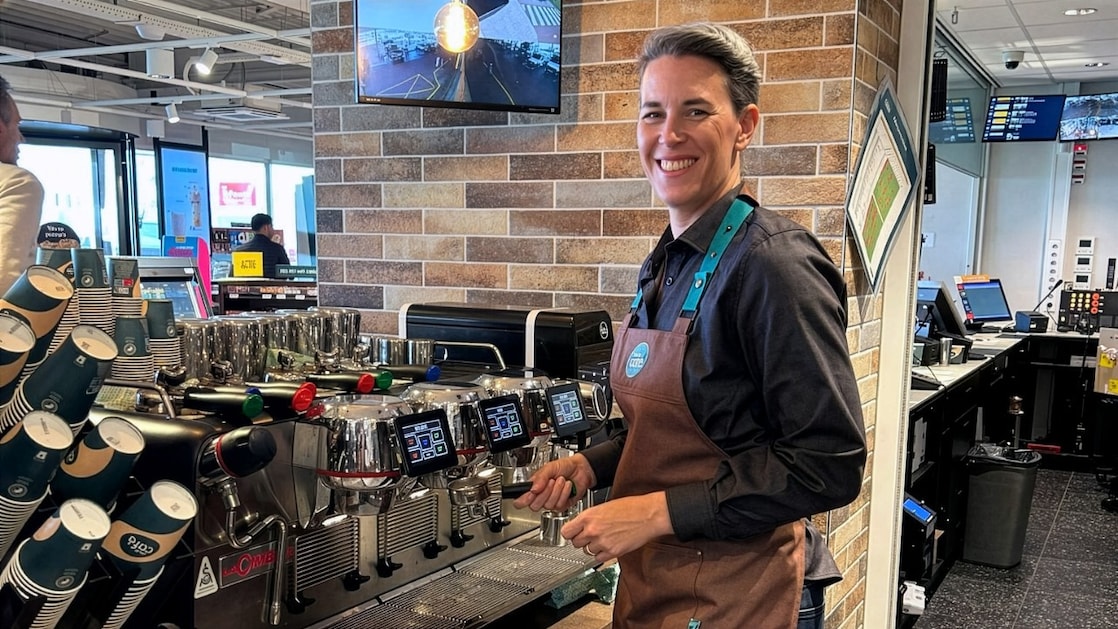
3.000 Shell Cafés
Vijf jaar later stelt Vreeke-Davidse dat de koerswijziging duidelijk haar vruchten heeft afgeworpen. “Wereldwijd hebben we nu meer dan 3.000 Shell Cafés. Dat is ongeveer de helft van de 6.000 locaties waar Shell eten en koffie aanbiedt. Er komen er steeds meer bij.”
Shell Café is nu één herkenbaar merk, maar wel met de mogelijkheid van regionale smaakafwijkingen. Zo houden Nederlanders van een broodje bal, Polen van hun pizzabrood zapikanka en ook op koffie- en theevlak kan de lokale smaak afwijken. “Het Shell Café hoeft niet in elke markt exact hetzelfde aanbod te hebben, maar we willen wel een sterke wereldwijde basis neerzetten voor een herkenbare ervaring”, aldus Shells Food Services hoofd.
Inmiddels trekt Shell Café jaarlijks meer dan 150 miljoen klanten. Die komen dikwijls uiteraard omdat ze op een station komen tanken of laden, maar soms ook gewoon omdat ze trek hebben in iets lekkers.
Kenmerkende melanges
Shell Café biedt nu twee kenmerkende melanges: een zachte lungo van 100% arabica-bonen en een vollere espressomelange met bonen uit Latijns-Amerika en Vietnam, afgestemd op de uiteenlopende smaken van klanten over de hele wereld. Alle bonen zijn Rainforest Alliance Certified, een oorsprongskeurmerk.
Hoewel koffie de kern van het aanbod van Shell Café vormt, benadrukt Vreeke-Davidse dat het om meer gaat. “Een klant die binnenkomt voor een cappuccino neemt er misschien een versgebakken broodje, een sandwich of een warme maaltijd bij. Een aanbeveling van de barista kan van de aankoop van één product een completer moment maken. Koffie is dus niet alleen belangrijk vanwege het product zelf, maar ook omdat het een kans biedt om gastvrijheid te tonen, vertrouwen op te bouwen en klanten nog een extra reden te geven om terug te komen.”



Cautionary note
Cautionary note
The companies in which Shell plc directly and indirectly owns investments are separate legal entities. In this publication “Shell”, “Shell Group” and “Group” are sometimes used for convenience to reference Shell plc and its subsidiaries in general. Likewise, the words “we”, “us” and “our” are also used to refer to Shell plc and its subsidiaries in general or to those who work for them. These terms are also used where no useful purpose is served by identifying the particular entity or entities. ‘‘Subsidiaries’’, “Shell subsidiaries” and “Shell companies” as used in this publication refer to entities over which Shell plc either directly or indirectly has control. The terms “joint venture”, “joint operations”, “joint arrangements”, and “associates” may also be used to refer to a commercial arrangement in which Shell has a direct or indirect ownership interest with one or more parties. The term “Shell interest” is used for convenience to indicate the direct and/or indirect ownership interest held by Shell in an entity or unincorporated joint arrangement, after exclusion of all third-party interest.
Forward-Looking statements
This publication contains forward-looking statements (within the meaning of the U.S. Private Securities Litigation Reform Act of 1995) concerning the financial condition, results of operations and businesses of Shell. All statements other than statements of historical fact are, or may be deemed to be, forward-looking statements. Forward-looking statements are statements of future expectations that are based on management’s current expectations and assumptions, including (without limitation) those concerning Shell’s strategy and operating plans, macroeconomic conditions, future energy demand, supply and product mix, commodity prices, demand for Shell’s products, production results and reserve estimates, development, execution and management of projects, energy transition and climate change, management of safety and environmental risks, costs, cash capital expenditures, technology advancements, legislative, judicial, fiscal and regulatory developments, regional conflicts and trading conditions, and involve known and unknown risks and uncertainties that could cause actual results, performance or events to differ materially from those expressed or implied in these statements. Forward-looking statements include, among other things, statements concerning the potential exposure of Shell to market risks and statements expressing management’s expectations, beliefs, estimates, forecasts, projections and assumptions. These forward-looking statements are identified by their use of terms and phrases such as “aim”; “ambition”; ‘‘anticipate’’; “aspire”, “aspiration”, ‘‘believe’’; “commit”; “commitment”; ‘‘could’’; “desire”; ‘‘estimate’’; ‘‘expect’’; ‘‘goals’’; ‘‘intend’’; ‘‘may’’; “milestones”; ‘‘objectives’’; ‘‘outlook’’; ‘‘plan’’; ‘‘probably’’; ‘‘project’’; ‘‘risks’’; “schedule”; ‘‘seek’’; ‘‘should’’; ‘‘target’’; “vision”; ‘‘will’’; “would” and similar terms and phrases. There are a number of factors that could affect the future operations of Shell and could cause those results to differ materially from those expressed in the forward-looking statements included in this publication, including (without limitation): (a) price fluctuations in crude oil and natural gas; (b) changes in demand for Shell’s products; (c) currency fluctuations; (d) drilling and production results; (e) reserves estimates; (f) loss of market share and industry competition; (g) environmental and physical risks, including climate change; (h) risks associated with the identification of suitable potential acquisition properties and targets, and successful negotiation and completion of such transactions; (i) the risk of doing business in developing countries and countries subject to international sanctions; (j) legislative, judicial, fiscal and regulatory developments including tariffs and regulatory measures addressing climate change; (k) economic and financial market conditions in various countries and regions; (l) political risks, including the risks of expropriation and renegotiation of the terms of contracts with governmental entities, delays or advancements in the approval of projects and delays in the reimbursement for shared costs; (m) risks associated with the impact of pandemics, regional conflicts, such as the Russia-Ukraine war and the conflict in the Middle East, and a significant cyber security, data privacy or IT incident; (n) the pace of the energy transition; and (o) changes in trading conditions. No assurance is provided that future dividend payments will match or exceed previous dividend payments. All forward-looking statements contained in this publication are expressly qualified in their entirety by the cautionary statements contained or referred to in this section. Readers should not place undue reliance on forward-looking statements. Additional risk factors that may affect future results are contained in Shell plc’s Form 20-F for the year ended December 31, 2025 (available at www.shell.com/investors/news-and-filings/sec-filings.html and www.sec.gov). These risk factors also expressly qualify all forward-looking statements contained in this publication and should be considered by the reader. Each forward-looking statement speaks only as of the date of this publication, October 30, 2026. Neither Shell plc nor any of its subsidiaries undertake any obligation to publicly update or revise any forward-looking statement as a result of new information, future events or other information. In light of these risks, results could differ materially from those stated, implied or inferred from the forward-looking statements contained in this publication.
Shell’s net carbon intensity and net-zero emissions target
In this publication we may refer to Shell’s “net carbon intensity” (NCI), which includes Shell’s carbon emissions from the production of our energy products, our suppliers’ carbon emissions in supplying energy for that production and our customers’ carbon emissions associated with their use of the energy products we sell. Shell’s NCI also includes the emissions associated with the production and use of energy products produced by others which Shell purchases for resale. Shell only controls its own emissions. The use of the terms Shell’s “net carbon intensity” or NCI is for convenience only and not intended to suggest these emissions are those of Shell plc or its subsidiaries.
Shell’s operating plan and outlook are forecasted for a three-year period and ten-year period, respectively, and are updated every year. They reflect the current economic environment and what we can reasonably expect to see over the next three and ten years. Accordingly, the outlook reflects our combined Scope 1 and 2 target, NCI target and our oil products ambition over the next ten years. However, Shell’s operating plan and outlook cannot reflect our 2050 net-zero emissions target, as this target is outside our planning period. Such future operating plans and outlooks could include changes to our portfolio, efficiency improvements and the use of carbon capture and storage and carbon credits. In the future, as society moves towards net-zero emissions, we expect Shell’s operating plans and outlooks to reflect this movement. However, if society is not net zero in 2050, as of today, there would be significant risk that Shell may not meet this target.
The information provided above regarding Shell’s NCI and net zero emissions target are not intended, nor should they be construed as introducing, suggesting or making any claim, target or representation thereof other than what is included in the publicaiton..
Forward-Looking non-GAAP measures
This publication may contain certain forward-looking non-GAAP measures such as free cash flow and underlying operating expenses. We are unable to provide a reconciliation of these forward-looking non-GAAP measures to the most comparable GAAP financial measures because certain information needed to reconcile those non-GAAP measures to the most comparable GAAP financial measures is dependent on future events some of which are outside the control of Shell, such as oil and gas prices, interest rates and exchange rates. Moreover, estimating such GAAP measures with the required precision necessary to provide a meaningful reconciliation is extremely difficult and could not be accomplished without unreasonable effort. Non-GAAP measures in respect of future periods which cannot be reconciled to the most comparable GAAP financial measure are calculated in a manner which is consistent with the accounting policies applied in Shell plc’s consolidated financial statements. These forward-looking non-GAAP measures are provided to assist readers in understanding management’s use and expectations of such measures and may not be appropriate for other purposes.
The contents of websites referred to in this publication do not form part of this publication.
We may have used certain terms, such as resources, in this publication that the United States Securities and Exchange Commission (SEC) strictly prohibits us from including in our filings with the SEC. Investors are urged to consider closely the disclosure in our Form 20-F, File No 1-32575, available on the SEC website www.sec.gov.
Meer nieuws uit Shell Venster


Five years of Shell Café: the longing for a familiar taste
30 Oct. 2026
Imagine travelling through a country you have never visited before. You have sampled the local cuisine, experienced a different culture and marvelled at spectacular sights. It is all exciting, but eventually the novelty begins to wear off. For a moment, you want to return to what you know and find yourself longing for a familiar taste.

Text: Przemek Drewniak. Photography: GED Films Ltd, Shell Foodservice, Richard Clatworthy.
Whether you're in Bangkok, São Paulo or Rome, the world's most successful coffee and food chains give customers confidence that they'll get the same quality experience every time.
That is also the ambition behind Shell Café. Five years after its launch, this Shell sub-brand has grown into much more than just a cup of coffee. The team behind Shell Café wants customers to make a conscious choice to stop by, wherever they are in the world.
Trendy urban cafés
Back to 2019. What began in trendy urban cafes was spreads across the globe: among a growing group of enthusiasts, coffee, like wine, is elevated to the status of a craft product. Consumers become more interested in where their coffee beans come from, how they are sourced and how the coffee is prepared. Speciality coffee recipes come into fashion; coffee makers are now known as baristas, and their skills matter.
Shell was already a major player in the coffee business, selling more than 100 million cups at its company-owned service stations every year. But the offer was fragmented. We sold coffee and food under seven different brands, using nine coffee blends that were brewed on machines from 12 different manufacturers. As a result, your morning coffee at one Shell station could have tasted very different from the cup you bought that afternoon at another.
Rising expectations among coffee customers
According to Evelien Vreeke-Davidse, Shell’s Global Head of Food Service, the decision to bring the entire food and coffee offering under the Shell Café brand marked a turning point. Before joining Shell, she worked for Douwe Egberts, a coffee brand wellknown in the Netherlands, where she saw first-hand how customers’ rising expectations were transforming the coffee market.
“We had to move from simply having a food and coffee offer to building a professional food service business," says Vreeke-Davidse, "where excellence is defined as much by how we serve as by what we sell."

Shell and coffee
Yearly, Shell Recharge polls motorists' opinions. In the most recent Shell Recharge Drivers’ Survey (PDF, 4 MB) more than 20% of the customers wishes to fuel up or recharge their EV at a place which has tasty coffee. Among EV drivers coffee is the most popular “fuel”: the most bought product second to the kilowatts for their EV batteries.
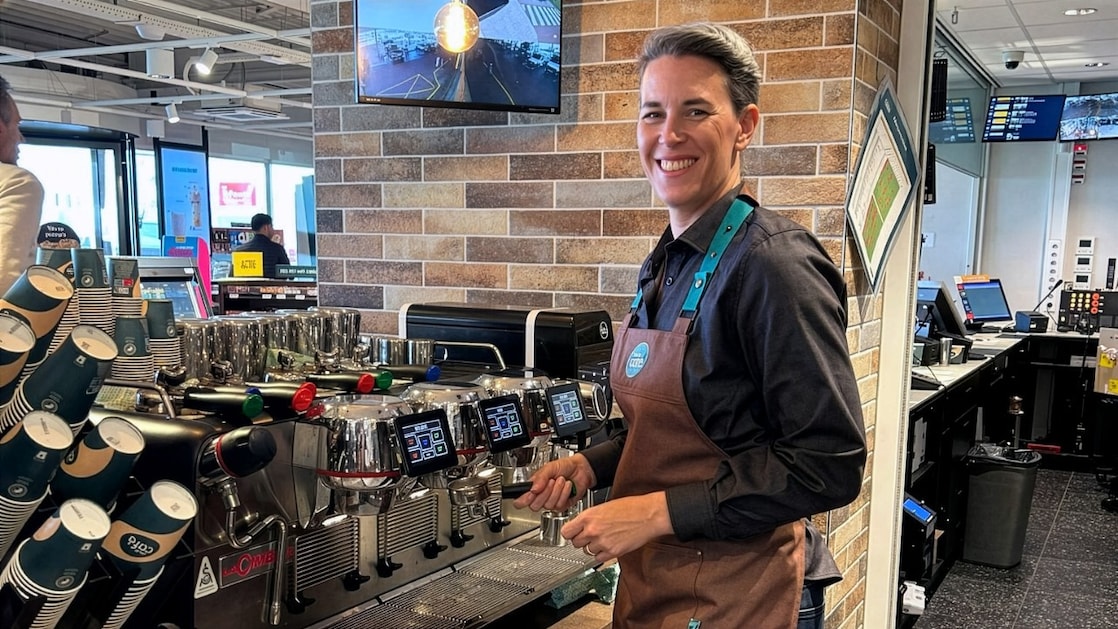
3,000 Shell Cafés
Five years on, Vreeke-Davidse says the change in direction has clearly paid off. “We now have more than 3,000 Shell Cafés worldwide. That’s around half of the 6,000 locations where Shell offers food and coffee. And the number continues to grow.”
Shell Café is now a single, recognisable brand, while still allowing for regional differences in taste. The Dutch, for example, enjoy a meatball sandwich, while Poles are partial to their zapiekanka, a pizza-style baguette, and local preferences can also vary when it comes to coffee and tea. “The goal isn’t to make every market identical; it’s to create a strong global foundation that delivers a recognisable experience while still allowing local teams to adapt to customer preferences.,” says Shell’s Global Head of Foodservice.
Shell Café now attracts more than 150 million customers a year. Many of them, of course, stop by because they are at a station to refuel or recharge, but some simply come in because they fancy something tasty.
Signature blends
Shell Café now offers two signature blends: a smooth lungo made from 100% Arabica beans and a fuller-bodied espresso blend using beans from Latin America and Vietnam, catering to the differing tastes of customers around the world. All the beans are Rainforest Alliance Certified, a certification relating to their origin.
While coffee is at the heart of Shell Café’s offering, Vreeke-Davidse insists it is about more than that. “A customer who comes in for a cappuccino might also pick up a freshly baked roll, a sandwich or a hot meal. A recommendation from the barista can turn the purchase of a single product into a more complete experience. So coffee isn’t just important because of the product itself; it also provides an opportunity to show hospitality, build trust and give customers yet another reason to come back," she says.


Cautionary note
Cautionary note
The companies in which Shell plc directly and indirectly owns investments are separate legal entities. In this publication “Shell”, “Shell Group” and “Group” are sometimes used for convenience to reference Shell plc and its subsidiaries in general. Likewise, the words “we”, “us” and “our” are also used to refer to Shell plc and its subsidiaries in general or to those who work for them. These terms are also used where no useful purpose is served by identifying the particular entity or entities. ‘‘Subsidiaries’’, “Shell subsidiaries” and “Shell companies” as used in this publication refer to entities over which Shell plc either directly or indirectly has control. The terms “joint venture”, “joint operations”, “joint arrangements”, and “associates” may also be used to refer to a commercial arrangement in which Shell has a direct or indirect ownership interest with one or more parties. The term “Shell interest” is used for convenience to indicate the direct and/or indirect ownership interest held by Shell in an entity or unincorporated joint arrangement, after exclusion of all third-party interest.
Forward-Looking statements
This publication contains forward-looking statements (within the meaning of the U.S. Private Securities Litigation Reform Act of 1995) concerning the financial condition, results of operations and businesses of Shell. All statements other than statements of historical fact are, or may be deemed to be, forward-looking statements. Forward-looking statements are statements of future expectations that are based on management’s current expectations and assumptions, including (without limitation) those concerning Shell’s strategy and operating plans, macroeconomic conditions, future energy demand, supply and product mix, commodity prices, demand for Shell’s products, production results and reserve estimates, development, execution and management of projects, energy transition and climate change, management of safety and environmental risks, costs, cash capital expenditures, technology advancements, legislative, judicial, fiscal and regulatory developments, regional conflicts and trading conditions, and involve known and unknown risks and uncertainties that could cause actual results, performance or events to differ materially from those expressed or implied in these statements. Forward-looking statements include, among other things, statements concerning the potential exposure of Shell to market risks and statements expressing management’s expectations, beliefs, estimates, forecasts, projections and assumptions. These forward-looking statements are identified by their use of terms and phrases such as “aim”; “ambition”; ‘‘anticipate’’; “aspire”, “aspiration”, ‘‘believe’’; “commit”; “commitment”; ‘‘could’’; “desire”; ‘‘estimate’’; ‘‘expect’’; ‘‘goals’’; ‘‘intend’’; ‘‘may’’; “milestones”; ‘‘objectives’’; ‘‘outlook’’; ‘‘plan’’; ‘‘probably’’; ‘‘project’’; ‘‘risks’’; “schedule”; ‘‘seek’’; ‘‘should’’; ‘‘target’’; “vision”; ‘‘will’’; “would” and similar terms and phrases. There are a number of factors that could affect the future operations of Shell and could cause those results to differ materially from those expressed in the forward-looking statements included in this publication, including (without limitation): (a) price fluctuations in crude oil and natural gas; (b) changes in demand for Shell’s products; (c) currency fluctuations; (d) drilling and production results; (e) reserves estimates; (f) loss of market share and industry competition; (g) environmental and physical risks, including climate change; (h) risks associated with the identification of suitable potential acquisition properties and targets, and successful negotiation and completion of such transactions; (i) the risk of doing business in developing countries and countries subject to international sanctions; (j) legislative, judicial, fiscal and regulatory developments including tariffs and regulatory measures addressing climate change; (k) economic and financial market conditions in various countries and regions; (l) political risks, including the risks of expropriation and renegotiation of the terms of contracts with governmental entities, delays or advancements in the approval of projects and delays in the reimbursement for shared costs; (m) risks associated with the impact of pandemics, regional conflicts, such as the Russia-Ukraine war and the conflict in the Middle East, and a significant cyber security, data privacy or IT incident; (n) the pace of the energy transition; and (o) changes in trading conditions. No assurance is provided that future dividend payments will match or exceed previous dividend payments. All forward-looking statements contained in this publication are expressly qualified in their entirety by the cautionary statements contained or referred to in this section. Readers should not place undue reliance on forward-looking statements. Additional risk factors that may affect future results are contained in Shell plc’s Form 20-F for the year ended December 31, 2025 (available at www.shell.com/investors/news-and-filings/sec-filings.html and www.sec.gov). These risk factors also expressly qualify all forward-looking statements contained in this publication and should be considered by the reader. Each forward-looking statement speaks only as of the date of this publication, October 30, 2026. Neither Shell plc nor any of its subsidiaries undertake any obligation to publicly update or revise any forward-looking statement as a result of new information, future events or other information. In light of these risks, results could differ materially from those stated, implied or inferred from the forward-looking statements contained in this publication.
Shell’s net carbon intensity and net-zero emissions target
In this publication we may refer to Shell’s “net carbon intensity” (NCI), which includes Shell’s carbon emissions from the production of our energy products, our suppliers’ carbon emissions in supplying energy for that production and our customers’ carbon emissions associated with their use of the energy products we sell. Shell’s NCI also includes the emissions associated with the production and use of energy products produced by others which Shell purchases for resale. Shell only controls its own emissions. The use of the terms Shell’s “net carbon intensity” or NCI is for convenience only and not intended to suggest these emissions are those of Shell plc or its subsidiaries.
Shell’s operating plan and outlook are forecasted for a three-year period and ten-year period, respectively, and are updated every year. They reflect the current economic environment and what we can reasonably expect to see over the next three and ten years. Accordingly, the outlook reflects our combined Scope 1 and 2 target, NCI target and our oil products ambition over the next ten years. However, Shell’s operating plan and outlook cannot reflect our 2050 net-zero emissions target, as this target is outside our planning period. Such future operating plans and outlooks could include changes to our portfolio, efficiency improvements and the use of carbon capture and storage and carbon credits. In the future, as society moves towards net-zero emissions, we expect Shell’s operating plans and outlooks to reflect this movement. However, if society is not net zero in 2050, as of today, there would be significant risk that Shell may not meet this target.
The information provided above regarding Shell’s NCI and net zero emissions target are not intended, nor should they be construed as introducing, suggesting or making any claim, target or representation thereof other than what is included in the publicaiton..
Forward-Looking non-GAAP measures
This publication may contain certain forward-looking non-GAAP measures such as free cash flow and underlying operating expenses. We are unable to provide a reconciliation of these forward-looking non-GAAP measures to the most comparable GAAP financial measures because certain information needed to reconcile those non-GAAP measures to the most comparable GAAP financial measures is dependent on future events some of which are outside the control of Shell, such as oil and gas prices, interest rates and exchange rates. Moreover, estimating such GAAP measures with the required precision necessary to provide a meaningful reconciliation is extremely difficult and could not be accomplished without unreasonable effort. Non-GAAP measures in respect of future periods which cannot be reconciled to the most comparable GAAP financial measure are calculated in a manner which is consistent with the accounting policies applied in Shell plc’s consolidated financial statements. These forward-looking non-GAAP measures are provided to assist readers in understanding management’s use and expectations of such measures and may not be appropriate for other purposes.
The contents of websites referred to in this publication do not form part of this publication.
We may have used certain terms, such as resources, in this publication that the United States Securities and Exchange Commission (SEC) strictly prohibits us from including in our filings with the SEC. Investors are urged to consider closely the disclosure in our Form 20-F, File No 1-32575, available on the SEC website www.sec.gov.