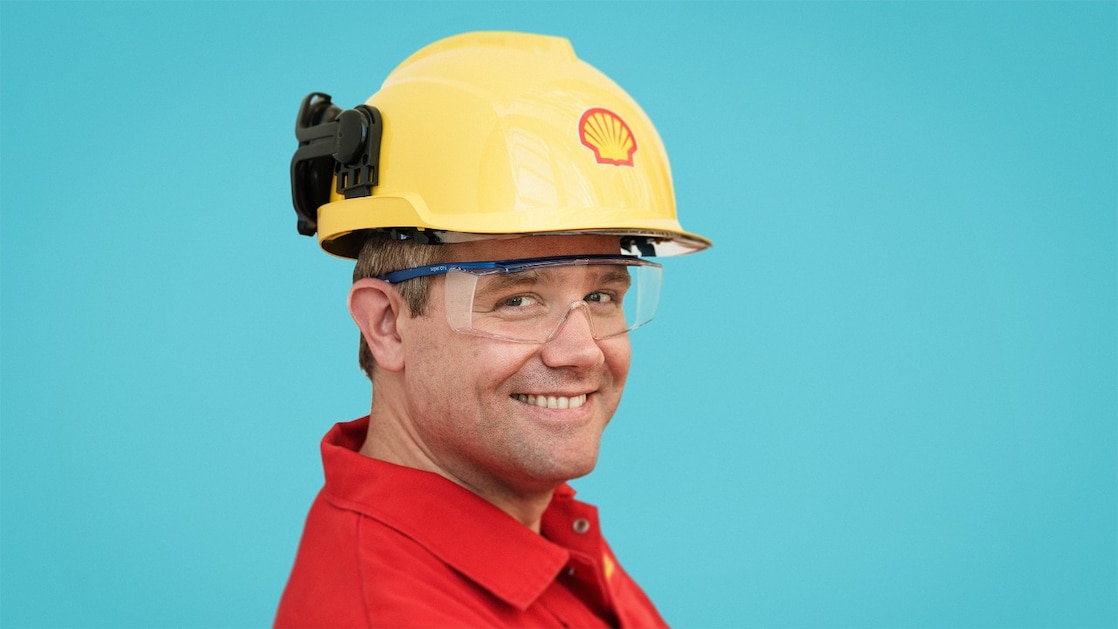
Biobrandstoffenfabriek: Davids verhaal
Shell bouwt een van Europa’s grootste biobrandstoffenfabrieken. Daar maken we van afval duurzame vliegtuigbrandstof en hernieuwbare diesel om straks schoner te vliegen en te vervoeren. David maakt de nieuwe generatie biobrandstoffenfabriek klaar voor de start
Transcript
Transcript
Titel: Biobrandstoffen| Wij bouwen 2024
Tijd: 00m52s
Beschrijving
Iedereen kent Shell van olie en gas. Intussen investeren we op steeds meer plekken in Nederland in schonere energie. Ontdek wat we bouwen om schonere energie bereikbaar te maken.
[video]
David: Ja, hier gaat hij komen. Ik ben heel benieuwd.
Voice-over: Hier wordt gebouwd aan één van Europa's grootste biobrandstof fabrieken. Een fabriek die brandstof maakt uit rest en afvalproducten. Denk aan frituurvet en plantaardige oliën. De biobrandstof kan worden gebruikt in vrachtwagens en vliegtuigen.
Zo kunnen we helpen om de uitstoot van vliegen en vrachtvervoer te verlagen.
David: Deze fabriek is een mooie stap op weg naar een nieuw tijdperk.
Voice-over: Samen bouwen we aan schonere energie.
David maakt de nieuwe generatie biobrandstoffenfabriek klaar voor de start
Natúúrlijk was David erbij toen het zwaarste fabrieksdeel deze zomer naar zijn plek werd gereden. “Een heel mooi moment. En dit is nog maar een stuk van het complete complex”, stelt hij verwachtingsvol. David Damming is de manager voor de ingebruikneming en het opstarten van de biobrandstoffenfabriek op het Shell Energy and Chemicals Park Rotterdam en moet ervoor zorgen dat de nieuwe fabriek straks soepel draait.
Het genoemde fabrieksdeel vormt het hart van het nieuwe biobrandstoffencomplex. Het is de waterstofunit, waar waterstof wordt gemaakt die nodig is om gebruikt frituurvet en andere restoliën chemisch om te zetten naar biobrandstoffen. Dit proces is samengevat in de afkorting HEFA, die staat voor Hydroprocessed Esters and Fatty Acids.
Tekst gaat verder onder de afbeeldingen.


Nieuwe generatie biobrandstof direct te gebruiken
“En dat is het mooie, én het nieuwe”, vertelt David, “deze nieuwe generatie biobrandstoffen die we hier gaan maken, zijn chemisch identiek aan de conventionele fossiele brandstoffen. Bij normale biobrandstoffen is dat niet zo. Dat maakt dat onze biobrandstoffen direct te gebruiken zijn in bestaande auto’s en vliegtuigen. Als we deze fabriek straks aanzetten, zorgt dat meteen voor een emissiereductie die gelijkstaat aan die van een miljoen auto’s. Daarom is deze nieuwe fabriek zo’n belangrijke stap in de energietransitie.”
CO2-neutraal biobrandstof produceren
Natuurlijk is elektrificatie voor wegvervoer een belangrijk einddoel, geeft David toe, maar daar ben je niet meteen, niet in één keer.” Hij gaat verder, met lichte trots. “We maken de waterstof voor het proces met restgassen uit onze eigen fabriek, dus het is groene waterstof. En de CO2--emissies van de fabriek vangen we af en slaan we op. We kunnen daarmee CO2-neutraal biobrandstof produceren.”
Bouw er maar tweehonderd van
Als David op zijn aanstekelijke manier aan anderen vertelt over de HEFA-biobrandstoffenfabriek krijgt hij geregeld de reactie: klinkt goed, bouw er maar meteen tweehonderd van! “En ja, dat is niet realistisch”, antwoordt hij dan. “Want daar is gewoonweg niet genoeg grondstof voor. We gebruiken gebruikt frituurvet, plus dierlijke en plantaardige restoliën. Afvalstromen dus.” Deze fabriek is onderdeel van de totale energiemix van de toekomst.
Voorbereiding op de operatie
Als commissioning en start-up manager is David op dit moment druk bezig een team met operators samen te stellen dat straks de fabriek soepel en rendabel moet laten draaien. In de fase van de bouw geeft hij daarnaast zijn bevindingen over het ontwerp. Ook het testen en opstarten van de fabriek vallen onder zijn verantwoordelijkheid. Uiteindelijk wordt David operationeel manager als de fabriek eenmaal draait.
Raakvlakken met eerdere projecten
David heeft Drentse, Twentse en Rotterdamse wortels, groeide op in Italië, zat in de Verenigde Staten op de high school en studeerde Scheikundige in het Verenigd Koninkrijk. Sinds 2005 werkt hij voor Shell in uiteenlopende functies in Qatar, Zuid-Afrika, Moerdijk en Pernis. In zijn nieuwe functie kan hij al zijn ervaringen combineren. “Ik heb in de chemie gewerkt, in de olie, en in een gas-to-liquid-project”, somt de manager op. “Hartstikke mooi om nu de stap te maken naar hernieuwbare brandstoffen, ik ben er direct op gesprongen. Het bijzondere is, als je kijkt naar de processen die we nu toepassen, lijken die enorm op wat we doen aan de fossiele kant van ons bedrijf. Technologie waar we als Shell jarenlang ervaring in hebben opgedaan, technologie die we hebben geoptimaliseerd, kunnen we nu inzetten voor hernieuwbare energie.”
Nieuwe gesprekspartners
Naast de raakvlakken met de fossiele industrie, zitten er ook tal van nieuwe aspecten aan zijn taak. Hij noemt een voorbeeld: “Voor het eerst in mijn loopbaan, maar ook voor het eerst in de historie van Shell Pernis, hebben we nu een afvalverwerkingsvergunning. Omdat we afvalstromen gaan verwerken. Daar hoort allemaal nieuwe wet- en regelgeving bij.” Ook zit David voor het eerst aan tafel met samenwerkingspartners, zoals de Nederlandse Voedsel- en Warenautoriteit. “Interessant, en uitdagend.”
En nieuwe fabrieksonderdelen
Het schoonmaken van de reststromen, voordat ze omgezet naar brandstoffen, is eveneens nieuw voor Shell. “Het is bestaande technologie, die vooral wordt gebruikt in de voedselindustrie, maar nog niet eerder door ons. Om dit gedeelte van de fabriek goed te leren kennen, hebben we training nodig. Daarom laten we een simulator bouwen waarmee onze toekomstige operators kunnen leren om de fabriek te besturen.” In aanloop naar de oplevering van de HEFA-biobrandstoffenfabriek in Pernis wordt niets aan het toeval overgelaten. “We moeten optimaal voorbereid zijn.”
Biobrandstof en CO2-uitstoot, hoe zit dat?
David wil nog iets toevoegen over biobrandstof. Omdat hij geregeld mensen spreekt die zich afvragen waarom biobrandstof beter is dan fossiele brandstof. Er komt toch nog steeds CO2 uit de uitlaat? “Dat klopt”, geeft hij toe. “Maar dat is dezelfde CO2 die het plantje waarvan het frituurvet is gemaakt gedurende de levensduur heeft opgenomen uit de lucht. Er komt dus geen extra CO2 bij in de atmosfeer. Netto nul. Dáárom is biobrandstof beter dan fossiele brandstof.”
Cautionary Note
Cautionary Note
The companies in which Shell plc directly and indirectly owns investments are separate legal entities. In this webpage “Shell”, “Shell Group” and “Group” are sometimes used for convenience where references are made to Shell plc and its subsidiaries in general. Likewise, the words “we”, “us” and “our” are also used to refer to Shell plc and its subsidiaries in general or to those who work for them. These terms are also used where no useful purpose is served by identifying the particular entity or entities. ‘‘Subsidiaries’’, “Shell subsidiaries” and “Shell companies” as used in this webpage refer to entities over which Shell plc either directly or indirectly has control. Entities and unincorporated arrangements over which Shell has joint control are generally referred to as “joint ventures” and “joint operations”, respectively. “Joint ventures” and “joint operations” are collectively referred to as “joint arrangements”. Entities over which Shell has significant influence but neither control nor joint control are referred to as “associates”. The term “Shell interest” is used for convenience to indicate the direct and/or indirect ownership interest held by Shell in an entity or unincorporated joint arrangement, after exclusion of all third-party interest.
Forward-Looking Statements
This webpage contains forward-looking statements (within the meaning of the U.S. Private Securities Litigation Reform Act of 1995) concerning the financial condition, results of operations and businesses of Shell. All statements other than statements of historical fact are, or may be deemed to be, forward-looking statements. Forward-looking statements are statements of future expectations that are based on management’s current expectations and assumptions and involve known and unknown risks and uncertainties that could cause actual results, performance or events to differ materially from those expressed or implied in these statements. Forward-looking statements include, among other things, statements concerning the potential exposure of Shell to market risks and statements expressing management’s expectations, beliefs, estimates, forecasts, projections and assumptions. These forward-looking statements are identified by their use of terms and phrases such as “aim”, “ambition”, ‘‘anticipate’’, ‘‘believe’’, ‘‘could’’, ‘‘estimate’’, ‘‘expect’’, ‘‘goals’’, ‘‘intend’’, ‘‘may’’, “milestones”, ‘‘objectives’’, ‘‘outlook’’, ‘‘plan’’, ‘‘probably’’, ‘‘project’’, ‘‘risks’’, “schedule”, ‘‘seek’’, ‘‘should’’, ‘‘target’’, ‘‘will’’ and similar terms and phrases. There are a number of factors that could affect the future operations of Shell and could cause those results to differ materially from those expressed in the forward-looking statements included in this webpage, including (without limitation): (a) price fluctuations in crude oil and natural gas; (b) changes in demand for Shell’s products; (c) currency fluctuations; (d) drilling and production results; (e) reserves estimates; (f) loss of market share and industry competition; (g) environmental and physical risks; (h) risks associated with the identification of suitable potential acquisition properties and targets, and successful negotiation and completion of such transactions; (i) the risk of doing business in developing countries and countries subject to international sanctions; (j) legislative, judicial, fiscal and regulatory developments including regulatory measures addressing climate change; (k) economic and financial market conditions in various countries and regions; (l) political risks, including the risks of expropriation and renegotiation of the terms of contracts with governmental entities, delays or advancements in the approval of projects and delays in the reimbursement for shared costs; (m) risks associated with the impact of pandemics, such as the COVID-19 (coronavirus) outbreak, regional conflicts, such as Russia’s invasion of Ukraine, and a significant cybersecurity breach; and (n) changes in trading conditions. No assurance is provided that future dividend payments will match or exceed previous dividend payments. All forward-looking statements contained in this [report] are expressly qualified in their entirety by the cautionary statements contained or referred to in this section. Readers should not place undue reliance on forward-looking statements. Additional risk factors that may affect future results are contained in Shell plc’s Form 20-F for the year ended December 31, 2022 (available at www.shell.com/investors/news-and-filings/sec-filings.html and www.sec.gov). These risk factors also expressly qualify all forward-looking statements contained on this webpage and should be considered by the reader. Each forward-looking statement speaks only as of the date of this webpage. February 23 2024. Neither Shell plc nor any of its subsidiaries undertake any obligation to publicly update or revise any forward-looking statement as a result of new information, future events or other information. In light of these risks, results could differ materially from those stated, implied or inferred from the forward-looking statements contained in this webpage.
Shell’s net carbon intensity
Also, on this webpage we may refer to Shell’s “Net Carbon Intensity”, which includes Shell’s carbon emissions from the production of our energy products, our suppliers’ carbon emissions in supplying energy for that production and our customers’ carbon emissions associated with their use of the energy products we sell. Shell only controls its own emissions. The use of the term Shell’s “Net Carbon Intensity” is for convenience only and not intended to suggest these emissions are those of Shell plc or its subsidiaries.
Shell’s net-Zero Emissions Target
Shell’s operating plan, outlook and budgets are forecasted for a ten-year period and are updated every year. They reflect the current economic environment and what we can reasonably expect to see over the next ten years. Accordingly, they reflect our Scope 1, Scope 2 and Net Carbon Intensity (NCI) targets over the next ten years. However, Shell’s operating plans cannot reflect our 2050 net-zero emissions target and 2035 NCI target, as these targets are currently outside our planning period. In the future, as society moves towards net-zero emissions, we expect Shell’s operating plans to reflect this movement. However, if society is not net zero in 2050, as of today, there would be significant risk that Shell may not meet this target.
Shell expects to publish its 2024 Energy Transition Strategy on March 14, 2024, which will include an update on Shell’s energy transition strategy and set out Shell’s climate targets and ambitions for the future.
Forward Looking Non-GAAP measures
This webpage may contain certain forward-looking non-GAAP measures such as cash capital expenditure and divestments. We are unable to provide a reconciliation of these forward-looking Non-GAAP measures to the most comparable GAAP financial measures because certain information needed to reconcile those Non-GAAP measures to the most comparable GAAP financial measures is dependent on future events some of which are outside the control of Shell, such as oil and gas prices, interest rates and exchange rates. Moreover, estimating such GAAP measures with the required precision necessary to provide a meaningful reconciliation is extremely difficult and could not be accomplished without unreasonable effort. Non-GAAP measures in respect of future periods which cannot be reconciled to the most comparable GAAP financial measure are calculated in a manner which is consistent with the accounting policies applied in Shell plc’s consolidated financial statements.
The contents of websites referred to in this webpage do not form part of this webpage.
We may have used certain terms, such as resources, on this webpage that the United States Securities and Exchange Commission (SEC) strictly prohibits us from including in our filings with the SEC. Investors are urged to consider closely the disclosure in our Form 20-F, File No 1-32575, available on the SEC website www.sec.gov.


