Carbon Capture and Storage (CCS)
Naast elektrificatie, windturbines en schone waterstof, is ook het afvangen en opslaan van CO2, ofwel Carbon Capture and Storage (CCS), een manier om op korte termijn stappen te zetten in het verminderen van de CO2-uitstoot in de atmosfeer.1
(1) Uitleg bij claim dat CCS een goede manier is voor CO2-uitstootreductie
(1) Uitleg bij claim dat CCS een goede manier is voor CO2-uitstootreductie
In de SDE++ worden projecten gerangschikt op subsidie-intensiteit, oftewel het aantal euro subsidie per vermeden ton CO₂. Daardoor kun je CCS rechtstreeks vergelijken met andere CO₂-reducerende technieken. [rvo.nl], [rvo.nl] (PDF)
Op basis van de SDE++ 2024-systematiek en de PBL-doorrekening zit CCS (CO₂-afvang en opslag) doorgaans in de bandbreedte van ongeveer €40-80 per vermeden ton CO₂, afhankelijk van de bron, afvangconcentratie en transport/opslagkosten. Daarmee behoort CCS nog steeds tot de relatief goedkope CO₂-reductieopties binnen de regeling. [pbl.nl], [rijksoverheid.nl]
Ter vergelijking liggen veel andere technieken hoger:
Elektrische boilers: vaak circa €20-60/tCO₂, dus vergelijkbaar met of soms goedkoper dan CCS. [pbl.nl]
Restwarmtebenutting en sommige industriële warmtepompen: vaak €30-100/tCO₂. [pbl.nl]
CCU (CO₂-afvang en gebruik): vaak €50-150/tCO₂. [rvo.nl] (PDF), [pbl.nl]
Groene waterstof via elektrolyse: veelal €150-300+/tCO₂. [pbl.nl], [rvo.nl] (PDF)
Geavanceerde hernieuwbare brandstoffen: regelmatig boven €200/tCO₂. [pbl.nl], [rvo.nl] (PDF)
Strategisch betekent dit dat CCS binnen de SDE++ vooral aantrekkelijk is omdat het:
grote volumes CO₂ kan reduceren;
een relatief lage subsidie per ton vraagt;
daardoor hoog eindigt in de rangschikking op kosteneffectiviteit. [rvo.nl], [tweedekamer.nl]
Interessant is dat het ministerie bij de evaluatie van de SDE++ 2024 expliciet meldde dat de projecten die subsidie kregen gemiddeld een relatief lage kostprijs per vermeden ton CO₂ hadden, wat past bij het feit dat kosteneffectieve technieken zoals CCS goed concurreren binnen de regeling. [vemw.nl] (PDF), [zoek.offic...akingen.nl]
Kort antwoord: CCS zit in de laatste SDE++-rondes meestal in de voorhoede qua kosteneffectiviteit. Alleen enkele elektrificatie-opties (zoals elektrische boilers en sommige warmtepompen/restwarmteprojecten) kunnen goedkoper zijn per ton CO₂. Vergeleken met groene waterstof, e-fuels en veel geavanceerde brandstoffen is CCS aanzienlijk goedkoper per vermeden ton CO₂. [pbl.nl], [vemw.nl] (PDF)
Op deze pagina:
Shells CCS-projecten in Nederland
Transcriptie CO2, wat moeten we ermee
Transcriptie CO2, wat moeten we ermee
0:02 Om de klimaatdoelen te halen moet er veel gebeuren,
0:05 maar sommige sectoren zijn nog niet zo ver dat ze kunnen produceren zonder
0:09 CO2 uit te stoten, zoals bijvoorbeeld een groot deel van de industrie.
0:13 Alleen al in 2023 was de uitstoot van de industrie
0:16 in Nederland bijna 47 miljoen ton CO2.
0:20 Even ter vergelijking al het wegverkeer stoot samen
0:23 26, 9 miljoen ton CO2 uit.
0:26 Je zou zeggen kunnen we die CO2 niet afvangen
0:29 en ergens opslaan zodat het niet in onze atmosfeer komt?
0:33 Dat kan onder de Noordzee.
0:36 Energiebedrijven als Gasunie, EBN
0:38 en Shell zijn betrokken bij Project Porthos.
0:41 Daar wordt de CO2 die is afgevangen bij fabrieken in Nederland,
0:45 veilig opgeslagen in lege gasvelden onder de zeebodem.
0:49 Als alles volgens plan gaat, gaat project Porthos vanaf 2026
0:54 2,5 miljoen ton CO2 opslaan per jaar.
0:57 Dat lijkt een kleine bijdrage, maar is
0:59 een belangrijke tussenstap om meer uitstoot te voorkomen.
1:03 Ondertussen wordt er hard gewerkt aan nieuwe innovaties die
1:06 de CO2 uitstoot van de industrie verder moeten verminderen.
1:10 En hopelijk volgt straks ook het volgende grote project
1:14 Aramis, dat nu in de ontwerpfase zit.
1:17 Tot de volgende.
Northern Lights
Bij CCS wordt de CO2 de schoorsteen afgevangen en vervolgens via een pijpleiding in lege gasvelden kilometers diep onder de zeebodem opgeslagen. Shell heeft de kennis, kent de bestaande technologieën en wil een actieve rol te spelen in het opslaan van CO2. Zo doet Shell dit al sinds 2015 in Canada en is Shell partner in het Northern Lights-project in Noorwegen. Daarnaast is Shell betrokken bij het Porthos-project in Rotterdam. Ook neemt Shell als ontwikkelaar van CO2-opslag met meerdere partners deel aan nieuw CCS-project, genaamd Aramis.
Nederland uniek voor opslag CO2
Nederland is uitermate geschikt voor de opslag van CO2. Onsland heeft lege gasvelden onder de Noordzee waarin de CO2 veilig kan worden opgeslagen. Ook zitten er veel fabrieken bij elkaar in onder meer Rotterdam, Zeeland en Limburg. Tussen deze fabrieken liggen er een hoop pijpleidingen om andere producten veilig en snel te transporteren. Een extra pijpleiding voor CO2 is relatief snel aangelegd. Deze mogelijkheden maken Nederland uniek in Europa.
Shells CCS-projecten in Nederland
Porthos
Porthos ontwikkelt een project waarbij CO2 van de industrie in de Rotterdamse haven wordt getransporteerd en opgeslagen in lege gasvelden onder de Noordzee. Porthos gaat circa 37 Mton CO2 opslaan, dat is circa 2,5 Mton CO2 per jaar gedurende 15 jaar. Shell is een van de vier partijen die als klant van Porthos gebruik gaat maken.
Delta-Rijncorridor
De Delta-Rijncorridor moet de industrie gaan verbinden met schone waterstof en opslag van CO2 onder zee. Shell, TotalEnergies EP Nederland, Energie Beheer Nederland (EBN), Eni Netherlands CCUS, Gasunie en Open Grid Europe (OGE) willen de ontwikkeling van het Nederlands-Duits netwerk voor CO2-opslag versnellen. Daarvoor tekenden de partijen een intentieverklaring, die ook de steun krijgt van het Havenbedrijf Rotterdam.
Het grensoverschrijdende, ondergronds CO2‑pijpleidingnetwerk moet de industriële clusters in Noordrijn-Westfalen — in het westen van Duitsland — verbinden met offshore opslaglocaties in het Nederlandse deel van de Noordzee, inclusief de integratie met het Aramis‑project.
De betrokken partijen willen dat het grensoverschrijdende CCS-pijpleidingnetwerk vanaf 2033 in bedrijf kan worden genomen, met in Nederland al onderdelen in gebruik in 2032. Tot die tijd kunnen bedrijven gebruikmaken van CO2-transport met treinen en schepen naar de onderzeese opslag van het Aramis-project.
Aramis
Aramis is een initiatief van EBN, Gasunie, TotalEnergies EP Nederland en Shell. Daarbij richten de EBN en Gasunie zich op de infrastructuur. TotalEnergies en Shell houden zich bezig met het ontwikkelen van de CO2-opslag. Het aanleveren van de CO2 van West-Europese industriële klanten kan per schip of via transportleiding aan een centraal verzamelpunt dat voorzien is op de Maasvlakte. Hier wordt de CO2 op druk gebracht voordat het naar een leeg gasveld wordt getransporteerd en geïnjecteerd. Voor het Aramis-project wordt de definitieve investeringsbeslissing in 2027 verwacht, en de ingebruikname in 2030.
SOCS NL
Shell Offshore Carbon Storage Solutions NL (SOCS NL) gaat CO2-opslagcapaciteit en transportoplossingen aanbieden in het Nederlandse deel van de Noordzee met behulp van Aramis-infrastructuur. De eerste tranche aan capaciteit (1 mtpa in onze eerste opslag) wordt momenteel aangeboden aan alle geïnteresseerde klanten. Dit kan een belangrijke bijdrage leveren aan de CO2-reductiedoelstellingen zoals vastgelegd in het Nederlandse Klimaatakkoord en de Europese Green Deal.
CO2next
Via CO2next gaan projectpartners Gasunie, Vopak, TotalEnergies en Shell een terminal voor vloeibare CO2 bouwen op de Maasvlakte in de haven van Rotterdam. Dankzij CO2next bestaat er straks de mogelijkheid om vloeibare CO2 per schip aan te leveren, naast de bestaande toevoer via pijpleiding. Vanaf de terminal wordt de aangeleverde CO2 via de Aramis-pijpleiding getransporteerd en opgeslagen in lege gasvelden onder de Noordzee.
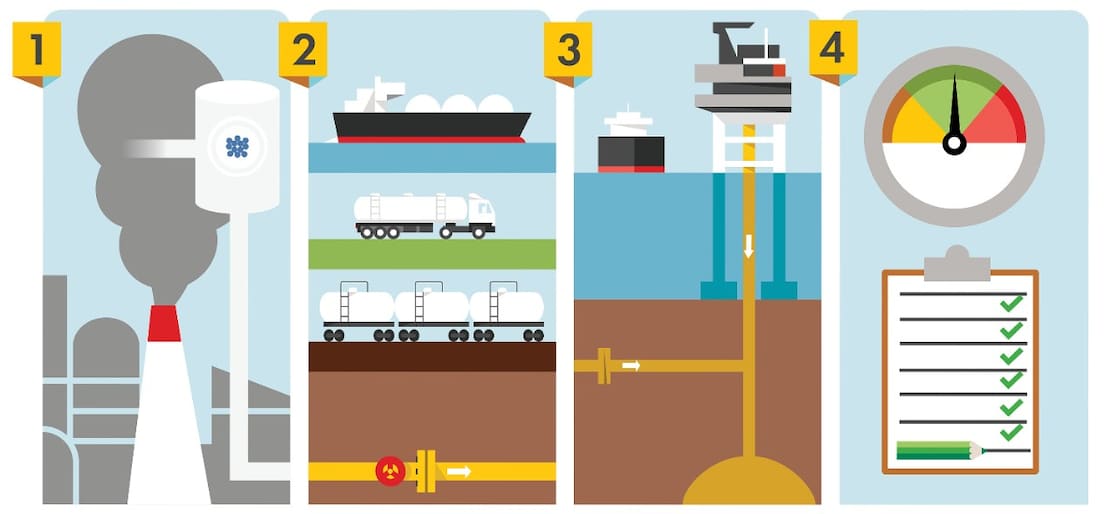
Hoe werkt CCS?
Afvangen van CO2
Bij CO2-afvang wordt CO2 van gas gescheiden voordat het wordt uitgestoten. Vervolgens wordt de afgevangen CO2 gecomprimeerd naar een vloeibare dan wel gasvorm voor transport.
Transport van CO2
De afgevangen CO2 kan, gekoeld en daardoor compacter dan als gas, vervolgens per schip, trein, vrachtwagen of per pijpleiding worden vervoerd.
Opslag van CO2
De CO2 wordt diep onder de grond geïnjecteerd in de microscopische ruimtes in poreuze gesteenten, bijvoorbeeld in lege reservoirs onder de zee. Een laag ondoordringbaar gesteente dat dient als afsluitingslaag, ligt direct boven de poreuze gesteenten en zorgt ervoor dat de CO2 daar permanent blijft.
Veelgestelde vragen over het afvangen en gebruiken van CO₂ in Nederland
CO₂ onder de grond opslaan is toch alleen maar een excuus om door te kunnen gaan met de productie van fossiele brandstoffen?
CO₂ onder de grond opslaan is toch alleen maar een excuus om door te kunnen gaan met de productie van fossiele brandstoffen?
Het afvangen van CO2 is een goede manier om op korte termijn stappen te zetten in het reduceren van de CO2-uitstoot in de atmosfeer.1 Daarom is Shell een voorstander van CO2 en investeert het wereldwijd in deze techniek, onder meer in Rotterdam.
Het investeren in hernieuwbare energie alleen, is niet voldoende om de klimaatdoelen te halen. Het is een geval van “én…én” en niet “óf...óf” om de doelen te bereiken. CCS is hierin een onmisbare schakel. Tegelijkertijd komen de Nederlandse industrie én Shell ook met andere oplossingen, zoals elektrificatie en hernieuwbare waterstof.
1. In de SDE++ worden projecten gerangschikt op subsidie-intensiteit, oftewel het aantal euro subsidie per vermeden ton CO₂. Daardoor kun je CCS rechtstreeks vergelijken met andere CO₂-reducerende technieken. [rvo.nl], [rvo.nl] (PDF)
Op basis van de SDE++ 2024-systematiek en de PBL-doorrekening zit CCS (CO₂-afvang en opslag) doorgaans in de bandbreedte van ongeveer €40-80 per vermeden ton CO₂, afhankelijk van de bron, afvangconcentratie en transport/opslagkosten. Daarmee behoort CCS nog steeds tot de relatief goedkope CO₂-reductieopties binnen de regeling. [pbl.nl], [rijksoverheid.nl]
Ter vergelijking liggen veel andere technieken hoger:
Elektrische boilers: vaak circa €20-60/tCO₂, dus vergelijkbaar met of soms goedkoper dan CCS. [pbl.nl]
Restwarmtebenutting en sommige industriële warmtepompen: vaak €30-100/tCO₂. [pbl.nl]
CCU (CO₂-afvang en gebruik): vaak €50-150/tCO₂. [rvo.nl] (PDF), [pbl.nl]
Groene waterstof via elektrolyse: veelal €150-300+/tCO₂. [pbl.nl], [rvo.nl] (PDF)
Geavanceerde hernieuwbare brandstoffen: regelmatig boven €200/tCO₂. [pbl.nl], [rvo.nl] (PDF)
Strategisch betekent dit dat CCS binnen de SDE++ vooral aantrekkelijk is omdat het:
grote volumes CO₂ kan reduceren;
een relatief lage subsidie per ton vraagt;
daardoor hoog eindigt in de rangschikking op kosteneffectiviteit. [rvo.nl], [tweedekamer.nl]
Interessant is dat het ministerie bij de evaluatie van de SDE++ 2024 expliciet meldde dat de projecten die subsidie kregen gemiddeld een relatief lage kostprijs per vermeden ton CO₂ hadden, wat past bij het feit dat kosteneffectieve technieken zoals CCS goed concurreren binnen de regeling. [vemw.nl] (PDF), [zoek.offic...akingen.nl]
Kort antwoord: CCS zit in de laatste SDE++-rondes meestal in de voorhoede qua kosteneffectiviteit. Alleen enkele elektrificatie-opties (zoals elektrische boilers en sommige warmtepompen/restwarmteprojecten) kunnen goedkoper zijn per ton CO₂. Vergeleken met groene waterstof, e-fuels en veel geavanceerde brandstoffen is CCS aanzienlijk goedkoper per vermeden ton CO₂. [pbl.nl], [vemw.nl] (PDF)
CCS is toch juist heel duur? Het slurpt het grootste deel van de beschikbare subsidies voor hernieuwbare energie op en daardoor komt de ontwikkeling van echte duurzame energie in het gedrang.
CCS is toch juist heel duur? Het slurpt het grootste deel van de beschikbare subsidies voor hernieuwbare energie op en daardoor komt de ontwikkeling van echte duurzame energie in het gedrang.
Integendeel, CCS is nog steeds de meest kosten effectieve grootschalige reductietetechnologie.1 Vergeleken met alternatieven zijn de kosten per vermeden ton CO2 beduidend lager.
In het Nederlandse Klimaatakkoord is afgesproken dat subsidie beschikbaar is voor CO2-opslag. In de SDE++-subsidie-systematiek zijn maatregelen genomen om er enerzijds voor te zorgen dat CCS enkel wordt gesubsidieerd zolang het de meest kosteneffectieve technologie is en er anderzijds ook nieuwere duurdere technologieën in aanmerking kunnen komen.
1. In de SDE++ worden projecten gerangschikt op subsidie-intensiteit, oftewel het aantal euro subsidie per vermeden ton CO₂. Daardoor kun je CCS rechtstreeks vergelijken met andere CO₂-reducerende technieken. [rvo.nl], [rvo.nl] (PDF)
Op basis van de SDE++ 2024-systematiek en de PBL-doorrekening zit CCS (CO₂-afvang en opslag) doorgaans in de bandbreedte van ongeveer €40-80 per vermeden ton CO₂, afhankelijk van de bron, afvangconcentratie en transport/opslagkosten. Daarmee behoort CCS nog steeds tot de relatief goedkope CO₂-reductieopties binnen de regeling. [pbl.nl], [rijksoverheid.nl]
Ter vergelijking liggen veel andere technieken hoger:
Elektrische boilers: vaak circa €20-60/tCO₂, dus vergelijkbaar met of soms goedkoper dan CCS. [pbl.nl]
Restwarmtebenutting en sommige industriële warmtepompen: vaak €30-100/tCO₂. [pbl.nl]
CCU (CO₂-afvang en gebruik): vaak €50-150/tCO₂. [rvo.nl] (PDF), [pbl.nl]
Groene waterstof via elektrolyse: veelal €150-300+/tCO₂. [pbl.nl], [rvo.nl] (PDF)
Geavanceerde hernieuwbare brandstoffen: regelmatig boven €200/tCO₂. [pbl.nl], [rvo.nl] (PDF)
Strategisch betekent dit dat CCS binnen de SDE++ vooral aantrekkelijk is omdat het:
grote volumes CO₂ kan reduceren;
een relatief lage subsidie per ton vraagt;
daardoor hoog eindigt in de rangschikking op kosteneffectiviteit. [rvo.nl], [tweedekamer.nl]
Interessant is dat het ministerie bij de evaluatie van de SDE++ 2024 expliciet meldde dat de projecten die subsidie kregen gemiddeld een relatief lage kostprijs per vermeden ton CO₂ hadden, wat past bij het feit dat kosteneffectieve technieken zoals CCS goed concurreren binnen de regeling. [vemw.nl] (PDF), [zoek.offic...akingen.nl]
Kort antwoord: CCS zit in de laatste SDE++-rondes meestal in de voorhoede qua kosteneffectiviteit. Alleen enkele elektrificatie-opties (zoals elektrische boilers en sommige warmtepompen/restwarmteprojecten) kunnen goedkoper zijn per ton CO₂. Vergeleken met groene waterstof, e-fuels en veel geavanceerde brandstoffen is CCS aanzienlijk goedkoper per vermeden ton CO₂. [pbl.nl], [vemw.nl] (PDF)
Kunnen we niet beter meteen investeren in hernieuwbare waterstof in plaats van 'gewone' waterstof; waar de CO₂ van wordt opgeslagen?
Kunnen we niet beter meteen investeren in hernieuwbare waterstof in plaats van 'gewone' waterstof; waar de CO₂ van wordt opgeslagen?
Ja, en dat doen we ook. Dat is waarom Shell investeert in de 200 MW electrolyser Holland Hydrogen 1, voor het maken van hernieuwbare waterstof (ook wel "groene" waterstof genoemd). Maar de hernieuwbare waterstofproductie is nog relatief klein om in de volledige vraag naar waterstof te voorzien.
Is CCS wel veilig genoeg? Kan de CO₂ niet via de grond naar boven komen door de ondergrond en uiteindelijk gaan lekken?
Is CCS wel veilig genoeg? Kan de CO₂ niet via de grond naar boven komen door de ondergrond en uiteindelijk gaan lekken?
CCS is een combinatie van bestaande, bewezen technologieën die al tientallen jaren in gebruik zijn. In het ondergrondse gasveld is lekkage vrijwel onmogelijk. De druk buiten het gasveld is namelijk hoger dan in het veld.
Cautionary note
Cautionary note
The companies in which Shell plc directly and indirectly owns investments are separate legal entities. In this publication “Shell”, “Shell Group” and “Group” are sometimes used for convenience to reference Shell plc and its subsidiaries in general. Likewise, the words “we”, “us” and “our” are also used to refer to Shell plc and its subsidiaries in general or to those who work for them. These terms are also used where no useful purpose is served by identifying the particular entity or entities. ‘‘Subsidiaries’’, “Shell subsidiaries” and “Shell companies” as used in this publication refer to entities over which Shell plc either directly or indirectly has control. The terms “joint venture”, “joint operations”, “joint arrangements”, and “associates” may also be used to refer to a commercial arrangement in which Shell has a direct or indirect ownership interest with one or more parties. The term “Shell interest” is used for convenience to indicate the direct and/or indirect ownership interest held by Shell in an entity or unincorporated joint arrangement, after exclusion of all third-party interest.
Forward-Looking statements
This publication contains forward-looking statements (within the meaning of the U.S. Private Securities Litigation Reform Act of 1995) concerning the financial condition, results of operations and businesses of Shell. All statements other than statements of historical fact are, or may be deemed to be, forward-looking statements. Forward-looking statements are statements of future expectations that are based on management’s current expectations and assumptions, including (without limitation) those concerning Shell’s strategy and operating plans, macroeconomic conditions, future energy demand, supply and product mix, commodity prices, demand for Shell’s products, production results and reserve estimates, development, execution and management of projects, energy transition and climate change, management of safety and environmental risks, costs, cash capital expenditures, technology advancements, legislative, judicial, fiscal and regulatory developments, regional conflicts and trading conditions, and involve known and unknown risks and uncertainties that could cause actual results, performance or events to differ materially from those expressed or implied in these statements. Forward-looking statements include, among other things, statements concerning the potential exposure of Shell to market risks and statements expressing management’s expectations, beliefs, estimates, forecasts, projections and assumptions. These forward-looking statements are identified by their use of terms and phrases such as “aim”; “ambition”; ‘‘anticipate’’; “aspire”, “aspiration”, ‘‘believe’’; “commit”; “commitment”; ‘‘could’’; “desire”; ‘‘estimate’’; ‘‘expect’’; ‘‘goals’’; ‘‘intend’’; ‘‘may’’; “milestones”; ‘‘objectives’’; ‘‘outlook’’; ‘‘plan’’; ‘‘probably’’; ‘‘project’’; ‘‘risks’’; “schedule”; ‘‘seek’’; ‘‘should’’; ‘‘target’’; “vision”; ‘‘will’’; “would” and similar terms and phrases. There are a number of factors that could affect the future operations of Shell and could cause those results to differ materially from those expressed in the forward-looking statements included in this publication, including (without limitation): (a) price fluctuations in crude oil and natural gas; (b) changes in demand for Shell’s products; (c) currency fluctuations; (d) drilling and production results; (e) reserves estimates; (f) loss of market share and industry competition; (g) environmental and physical risks, including climate change; (h) risks associated with the identification of suitable potential acquisition properties and targets, and successful negotiation and completion of such transactions; (i) the risk of doing business in developing countries and countries subject to international sanctions; (j) legislative, judicial, fiscal and regulatory developments including tariffs and regulatory measures addressing climate change; (k) economic and financial market conditions in various countries and regions; (l) political risks, including the risks of expropriation and renegotiation of the terms of contracts with governmental entities, delays or advancements in the approval of projects and delays in the reimbursement for shared costs; (m) risks associated with the impact of pandemics, regional conflicts, such as the Russia-Ukraine war and the conflict in the Middle East, and a significant cyber security, data privacy or IT incident; (n) the pace of the energy transition; and (o) changes in trading conditions. No assurance is provided that future dividend payments will match or exceed previous dividend payments. All forward-looking statements contained in this publication are expressly qualified in their entirety by the cautionary statements contained or referred to in this section. Readers should not place undue reliance on forward-looking statements. Additional risk factors that may affect future results are contained in Shell plc’s Form 20-F for the year ended December 31, 2025 (available at www.shell.com/investors/news-and-filings/sec-filings.html and www.sec.gov). These risk factors also expressly qualify all forward-looking statements contained in this publication and should be considered by the reader. Each forward-looking statement speaks only as of the date of this publication, September 22, 2026. Neither Shell plc nor any of its subsidiaries undertake any obligation to publicly update or revise any forward-looking statement as a result of new information, future events or other information. In light of these risks, results could differ materially from those stated, implied or inferred from the forward-looking statements contained in this publication.
Shell’s net carbon intensity and net-zero emissions target
In this publication we may refer to Shell’s “net carbon intensity” (NCI), which includes Shell’s carbon emissions from the production of our energy products, our suppliers’ carbon emissions in supplying energy for that production and our customers’ carbon emissions associated with their use of the energy products we sell. Shell’s NCI also includes the emissions associated with the production and use of energy products produced by others which Shell purchases for resale. Shell only controls its own emissions. The use of the terms Shell’s “net carbon intensity” or NCI is for convenience only and not intended to suggest these emissions are those of Shell plc or its subsidiaries.
Shell’s operating plan and outlook are forecasted for a three-year period and ten-year period, respectively, and are updated every year. They reflect the current economic environment and what we can reasonably expect to see over the next three and ten years. Accordingly, the outlook reflects our combined Scope 1 and 2 target, NCI target and our oil products ambition over the next ten years. However, Shell’s operating plan and outlook cannot reflect our 2050 net-zero emissions target, as this target is outside our planning period. Such future operating plans and outlooks could include changes to our portfolio, efficiency improvements and the use of carbon capture and storage and carbon credits. In the future, as society moves towards net-zero emissions, we expect Shell’s operating plans and outlooks to reflect this movement. However, if society is not net zero in 2050, as of today, there would be significant risk that Shell may not meet this target.
The information provided above regarding Shell’s NCI and net zero emissions target are not intended, nor should they be construed as introducing, suggesting or making any claim, target or representation thereof other than what is included in the publicaiton..
Forward-Looking non-GAAP measures
This publication may contain certain forward-looking non-GAAP measures such as free cash flow and underlying operating expenses. We are unable to provide a reconciliation of these forward-looking non-GAAP measures to the most comparable GAAP financial measures because certain information needed to reconcile those non-GAAP measures to the most comparable GAAP financial measures is dependent on future events some of which are outside the control of Shell, such as oil and gas prices, interest rates and exchange rates. Moreover, estimating such GAAP measures with the required precision necessary to provide a meaningful reconciliation is extremely difficult and could not be accomplished without unreasonable effort. Non-GAAP measures in respect of future periods which cannot be reconciled to the most comparable GAAP financial measure are calculated in a manner which is consistent with the accounting policies applied in Shell plc’s consolidated financial statements. These forward-looking non-GAAP measures are provided to assist readers in understanding management’s use and expectations of such measures and may not be appropriate for other purposes.
The contents of websites referred to in this publication do not form part of this publication.
We may have used certain terms, such as resources, in this publication that the United States Securities and Exchange Commission (SEC) strictly prohibits us from including in our filings with the SEC. Investors are urged to consider closely the disclosure in our Form 20-F, File No 1-32575, available on the SEC website www.sec.gov.