“Ik kwam binnen als commercial graduate. De kennis van toen is nog altijd relevant en actueel”
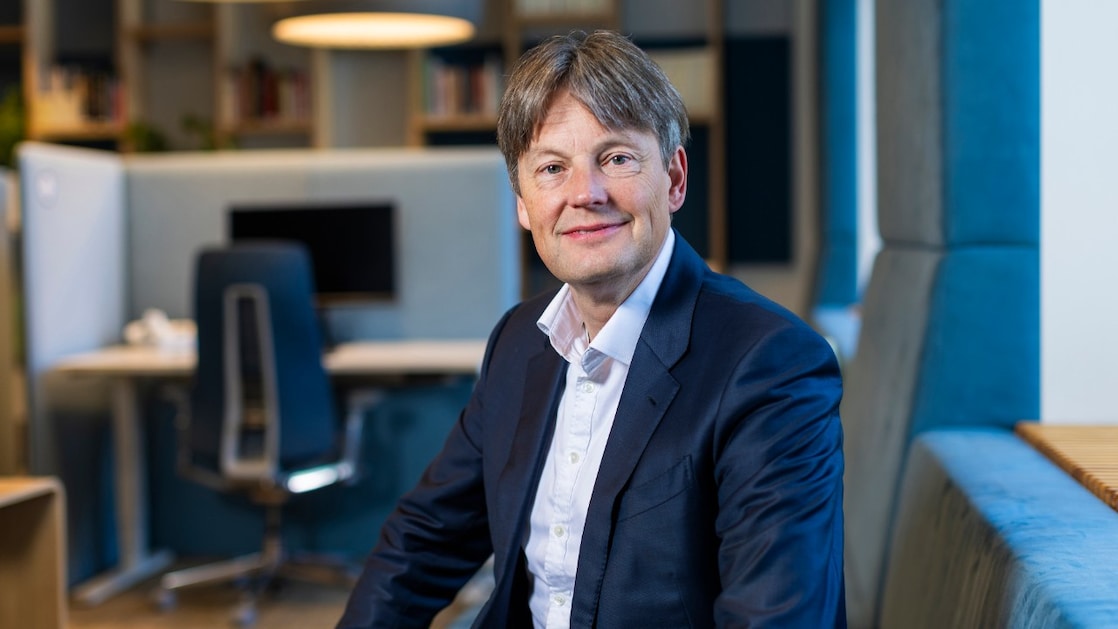
Na 37 jaar neemt Frans Everts afscheid van Shell. De laatste bijna 3,5 jaar was hij president-directeur van Shell Nederland, bijna de leukste baan uit zijn loopbaan. “De ingebruikname van onze groene waterstoffabriek had ik nog wel willen meemaken.” Zijn volgende baan wacht: per 1 november wordt hij CEO van netbeheerder TenneT.

Tekst: Matthijs Timmers. Beeld: Jiri Büller.
Rotterdam, waar het begon
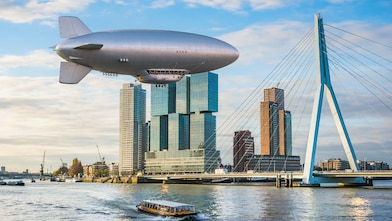
Het gesprek met de scheidend president-directeur vindt plaats op de 25e etage van de Rotterdamse kantoorkolos Delftse Poort, waar onder meer Shell Trading & Supply, Shell Fleet Solutions en Shell Mobility tegenwoordig huizen. De locatie is bewust gekozen, omdat Frans Everts in deze stad zijn carrière startte op de handelsafdeling. Niet precies in dit kantoor overigens, maar twee Rotterdamse locaties eerder. Met een wang tegen het raam is een reepje te zien van het markante oude Shell-gebouw aan het Hofplein. “Ik kwam binnen als commercial graduate. Dat was best bijzonder, want dat waren er maar een handvol per jaar. De meeste jonge professionals waren technisch geschoold; ik had een opleiding bedrijfskunde.”
Een baan met drie ingrediënten
De in Groningen afgestudeerde Everts was op zoek naar een baan met drie ingrediënten. Hij wilde een baan in een sector die ertoe doet. “Voor mij stond energie zó centraal in de maatschappij. En nog steeds: het leven staat letterlijk stil als er geen energie is.” Ten tweede wilde Everts iets doen op schaal, waar hij op termijn het verschil kon maken. En ten derde zocht Everts een functie bij een internationaal bedrijf, om ook ervaring in het buitenland op te kunnen doen. Shell voldeed aan deze drie wensen. “Het verklaart waarom ik er nog steeds werk."
Wanneer ik met ministers spreek
Met een team van vier was Everts verantwoordelijk voor de inkoop van ruwe olie voor de raffinaderij van Shell Pernis. Hij herinnert zich nog: “Die beginperiode was een supertijd. We hadden een geweldig team met jonge mensen. Wat me toen opviel, was hoeveel verantwoordelijkheid je bij Shell kreeg, op jonge leeftijd al. En vertrouwen. Natuurlijk, Shell helpt je, traint je, maar je moet het uiteindelijk zelf doen. Wat ik op de handelsafdeling geleerd heb, het doorgronden van hoe een raffinaderij functioneert en hoe de oliemarkten precies werken, gebruik ik nog steeds. Wanneer ik met ministers en ambtenaren spreek, bijvoorbeeld over de recente blokkades van de Straat van Hormuz, kan ik leunen op de kennis van toen. Die is nog altijd relevant en actueel.”
Frans Everts in 10 stellingen
Ik presteer het beste onder hoogspanning
Formule E (elektrificatie) is de toekomst van de racesport
Een stilte valt… Hij peinst. “Interessante stelling. Ik vind het lastig. Uiteindelijk wel.”
Netcongestie is een groter probleem dan de files op de weg
“Ja, zonder twijfel.” Hoewel Everts de ochtend van het interview gehinderd werd door een lange file richting Rotterdam.
Het stopzetten van de bouw van de biobrandstoffenfabriek is de grootste teleurstelling uit mijn carrière
Zijn herinneringen razen pijlsnel langs de meest uitdagende momenten uit zijn carrière. “Van de afgelopen jaren wel", besluit Frans.
Mijn laatste functie binnen Shell was de leukste
”Ik heb in mijn carrière bij Shell veel mooie banen gehad, anders blijf je niet zo lang trouw aan een bedrijf. Ik kijk er met trots op terug. De baan waar ik met ontzettend veel plezier aan terugdenk, is mijn tijd als baas van de Nederlandse tankstations. Ik had veel vrijheid om in te spelen op de veranderingen in de markt. We hadden een jong team met ontzettend veel talent. Het was de eerste keer dat ik de verantwoordelijkheid had over zo’n groot bedrijfsonderdeel: 600 tankstations, 3.000 mensen in dienst, 24 uur per dag, 7 dagen in de week actief.”
Binnen Shell is energietransitie stilgevallen
“Nee, zeker niet.” Zie ook het overzicht op Wie wij zijn.
Ik heb nooit bij Esso getankt
“Haha, helaas weleens." ... "In het buitenland”, haast hij zich erbij te zeggen.
TenneT speelt een sleutelrol in de energietransitie, en ik ben de juiste persoon ervoor
“Ja, absoluut. En met dezelfde drijfveren als 37 jaar geleden.” (Toen Everts bij Shell aan de slag ging.)
Ik heb overwogen om met pensioen te gaan.
“Nee.” Zonder blikken of blozen. “Ik heb nog té veel energie.”
Ik laat Shell Nederland beter achter dan ik Shell bij mijn aantreden als president-directeur aantrof.
“Ja. Want veel projecten zijn af of bijna af.”
Hoe gaat het nu met de handel?
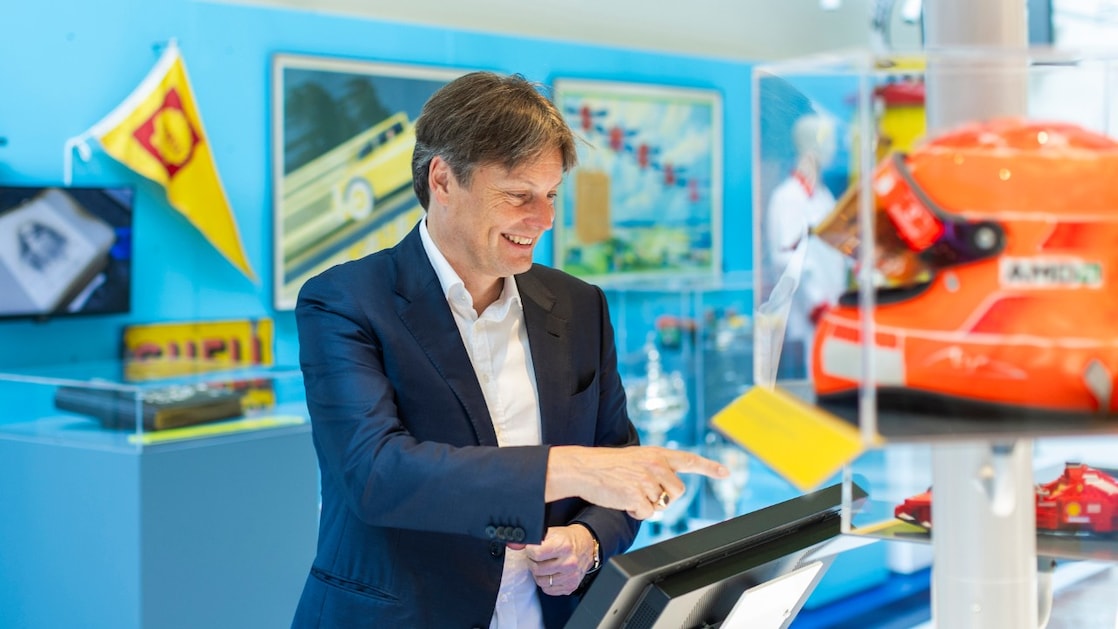
“Toen ik aantrad, was het bedrijfsonderdeel trading in Nederland vooral gericht op onze eigen raffinaderij en een beetje voor de handel richting Duitsland. Nu is de handelsimpact van Shell gigantisch. Het is geweldig om te zien hoe hier vanuit Rotterdam, met zo’n 500 collega’s, een enorm succesvolle handelsorganisatie is opgebouwd, voor heel Europa. De handel in biobrandstoffen is een van de meest winstgevende activiteiten uit onze business. Dus ook in de nieuwe brandstoffen zijn we succesvol. We zijn een van de grootste verkopers van Sustainable Aviation Fuel voor vliegtuigen in de wereld.”
“Handel zit in ons DNA en voert terug naar de kern van ons bedrijf, toen in 1907 de Nederlandse Koninklijke Olie en het Britse Shell Transport and Trading samen verder gingen. Nieuwe klanten en markten ontwikkelen, en die slim koppelen aan onze producten, daar zijn we gewoon erg goed in.”
Toen je begon als president-directeur gaf je aan dat diversiteit, gelijkheid en inclusie speerpunten zouden worden. Waarom was dat en hoe staat het ervoor?
“Shell staat voor gelijkheid en inclusiviteit. Dat kenmerkt ons bedrijf, wereldwijd. Iedereen wordt gelijk behandeld en talent wordt beloond, ongeacht afkomst, seksuele voorkeur, geloof of geslacht. Het diepe geloof om alle mensen een stem te geven, hebben we ook in Nederland overeind proberen te houden. Dat was soms lastig, want Shell Nederland heeft een aantal reorganisaties achter de rug, waarbij collega’s zijn vertrokken. In een moeilijke tijd waarin je keuzes moet maken over wie blijft en wie vertrekt, is het belangrijk om de diversiteit binnen het bedrijf te bewaken.”
“De afgelopen jaren is daar aandacht voor geweest. Dat hebben we wel per locatie gedaan. Bij Shell Pernis bijvoorbeeld is slechts 10% vrouw. In selectieprocessen voor technische functies hebben we geprobeerd vrouwelijke professionals aan te trekken. Wat uitdagend bleek hoor, want er komen gewoonweg minder meisjes van de technische opleidingen. In Den Haag, het kantoor met veel meer staffuncties, hebben we weer relatief veel vrouwelijke medewerkers. Daar mag af en toe ook wel weer 'ns een man bij. Bij de chemiefabriek van Shell in Moerdijk hebben we ingezet op diversiteit in ethnische achtergrond. Een deel van de diversiteit kun je meten: het percentage vrouwen binnen Shell Nederland is een klein beetje verbeterd, maar niet veel. Een ander deel is meer gevoelsmatig: wat zie je op de werkvloer? Zijn dat teams waarin meerdere perspectieven en achtergronden zijn vertegenwoordigd? Wordt ieders perspectief betrokken bij de discussies? Uiteindelijk ben ik niet ontevreden over onze resultaten op dit vlak.”
Het jaar dat je aantrad, moest het jaar van bouwen worden. Wat is daarvan terechtgekomen?
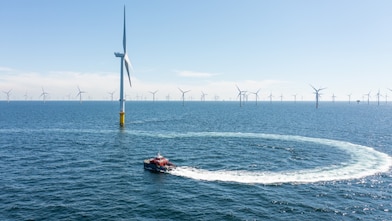
“Bouwen, bouwen, bouwen inderdaad. Het derde offshore windpark is opgeleverd, via de joint venture CrossWind. Deze zomer kwam de eerste stroom aan land van ons vierde windpark op zee via de joint venture Ecowende. Shell Nederland heeft veel geïnvesteerd in de groene waterstoffabriek Holland Hydrogen 1, een first-of-a-kind-project op schaal. Eind dit jaar, begin volgend jaar hopen we daar de eerste groene waterstof te produceren. Het laadnetwerk voor elektrische voertuigen is verder uitgebreid. Er zijn investeringen gedaan in de raffinaderij in Pernis en in de chemiefabriek in Moerdijk, zodat ze aan hun eigen emissiereductie kunnen werken. Met het CO2-opslagproject Porthos kunnen we straks meer dan een miljoen ton CO2 afvangen en opslaan, bijna een kwart van de emissies van de raffinaderij. Op Moerdijk zijn nieuwe fornuizen geplaatst en elektrische motoren in plaats van stoom. Net afgerond. Die projecten samen geven 20% CO2-reductie en een efficiëntere productie. Dat is echt fors.”
Aan de andere kant is de bouw van de biobrandstoffenfabriek stopgezet.
“Ja, helaas. Na een pauze hebben we geprobeerd het project van de grond te trekken, maar uiteindelijk besloten we met de bouw te stoppen. We hebben onszelf de vraag gesteld: hoe competitief kan deze fabriek zijn in een veranderende wereld? Het project bleek duurder en complexer dan gedacht. En de markt voor biobrandstoffen verslechterde. De kwestie is tot drie keer toe met de executive committee van Shell besproken, wat al aangeeft dat het een moeilijk besluit is geweest. Onderaan de streep kon het niet uit. Er is een zorgvuldig proces doorlopen…”
Was je teleurgesteld?
“Natuurlijk, je bent mens. Je denkt ook aan iedereen die hier jarenlang zijn ziel en zaligheid in heeft gelegd. Je denkt aan de klanten, je bedrijf, je reputatie. Natuurlijk ben je dan teleurgesteld. Ik was onderdeel van de besluitvorming. En terwijl je misschien iets anders wil, begrijp ik de beslissing. Dat maakt het nog niet makkelijk om uit te leggen. Maar dat is wél mijn taak. En dat heb ik gedaan, zo persoonlijk mogelijk. Ik heb het besluit uitgelegd aan ministers, klanten, de CEO van Schiphol en de CEO van KLM en onze eigen mensen. Voor het beeld van ons bedrijf maakt het een boel uit of iets uit de krant bekend wordt, of uit een persoonlijk gesprek.”
Het stopzetten van de biobrandstoffenfabriek was niet de grootste teleurstelling uit je carrière?
“Persoonlijk vind ik de verplaatsing van het hoofdkantoor van Den Haag naar Londen een heel grote teleurstelling. Ik zat in de kamer waar Ben van Beurden (destijds CEO van Shell; red.) en de board destijds de beslissing namen. Vanuit Nederlands oogpunt is het eeuwig zonde. Ik begrijp de keuze, ik steunde het, maar dat deed echt pijn. Nederland heeft in Shell een iconisch bedrijf tussen de vingers laten glippen, wat denk ik onnodig was. Maar goed, na 15 jaar discussie over dividendbelasting in een wereld waarin bedrijven sneller en flexibeler moeten kunnen handelen, was het onvermijdelijk dat die beslissing genomen moest worden.”
Op welke bouwwerken ben je het meest trots?
“Voor de hand liggen natuurlijk de in het oog springende projecten: onze groene waterstoffabriek. Of een enorm windpark. Natuurlijk ben ik daar trots op. Maar ik vind het geweldig hoe onze industrieparken in Pernis en Moerdijk investeren in hun eigen toekomst om energie-efficiënter te zijn, met minder CO2-uitstoot. Niet heel shiny misschien, best moeilijk zichtbaar voor de buitenwereld, maar op die fabrieken gebeurt ontstellend veel. En het werk daar is nog niet klaar: er ligt een lange lijst aan ideeën om nog energie-efficiënter te worden.” Maar ook NAM die nu op een hele innovatieve manier bezig is om vorm te geven aan een gigantische opruim- en restauratie-opgave is knap om te zien.
De rechtszaken met Milieudefensie waren een heet hangijzer. Hoe kijk je terug op deze klimaatzaken?
“Met een zekere voldoening toch wel. De eerste uitspraak was natuurlijk best een klap. Wij dachten: hoe kan een rechter de wereld nu compleet anders zien dan hoe wij die zien? In het hoger beroep hebben we het anders aangepakt: we hebben meer uitleg gegeven over het energiesysteem, de rol van energiebedrijven hierin en hoe afhankelijk wij zijn van onze klanten. Shell heeft hoge ambities voor het terugdringen van de eigen uitstoot, maar is wel onderdeel van een systeem, waarin de overheden voor het grootste deel de spelregels bepalen. Eén bedrijf eruit pikken dat als enige alles anders moet doen, is niet de oplossing. Dat kan zelfs averechts werken. We hebben gelijk gekregen.”
“Voor de eventuele tweede klimaatzaak moeten we nog maar afwachten of die er echt komt. Het is natuurlijk best raar dat al met de tweede zaak is begonnen, terwijl de eerste nog niet is afgerond; er komt nog een uitspraak van de Hoge Raad. De tweede zaak gaat over de productie van olie en gas. Daarvoor geldt hetzelfde. De eigendommen van de reserves liggen bij overheden. Wij krijgen van staten een licentie om te produceren. Je kunt wel zeggen: die licentie moet Shell inleveren , maar dan neemt een ander energiebedrijf die gewoon weer over.”
Een van de hoofdrolspelers in de klimaatzaak was Donald Pols. Keek je op van zijn transfer naar Tata Steel, die maar van korte duur bleek?
“Ja! Ik was zeer verrast. Ik dacht in eerste instantie: het is een grap. Maar ik vond het een bold move. En misschien was het wel goed geweest om iemand van buiten – iemand die alleen maar kritiek heeft – aan te trekken om van binnenuit het verschil te maken. Het stopte nog voordat het begonnen was.”
Mondiaal lijkt de interesse voor duurzame energie wat te zijn afgenomen. Hoe verklaar je dat?
“Wereldwijd investeerde Shell meer dan 20 miljard dollar in koolstofarme oplossingen. Maar in de praktijk blijkt het moeilijk om deze projecten echt rendabel te krijgen. Vooropgesteld: ik ben heel trots op onze wind-op-zee-projecten, maar de rendementen zijn lager dan die in traditionele olie- en gasprojecten. En de projecten zijn niet zonder risico’s. Daarbij vragen onze aandeelhouders een gezond rendement op investeringen die Shell doet.”
“De realiteit is dat we nu minder investeren dan eerder, maar wel in de projecten waarin we écht geloven. Als we daar dan een goed rendement op maken, wordt het makkelijker om in de volgende te investeren, en de volgende… Dat is de opdracht nu: laten zien dat het wel kan. We hebben niet voor niets onze waterstoffabriek Holland Hydrogen 1 genoemd. Het bouwterrein ernaast ligt klaar voor een tweede. Uiteindelijk moeten er in de werelwijde energietransitie door alle partijen geen miljarden, maar triljarden worden geïnvesteerd. Dat komt niet los zonder een gezond rendement.”
Het beeld van Shell lijkt gedraaid ten opzichte van toen je begon als president-directeur. Heb je dat gemerkt, in de zalen en zaaltjes waar je met mensen sprak?
“De wereld is, door bijvoorbeeld de oorlog in Oekraïne, in de afgelopen jaren veranderd. De publieke opinie is gaan schuiven. Beschikbaarheid en betaalbaarheid van energie zijn steeds nadrukkelijker thema’s geworden, terwijl ze dat vijf jaar geleden niet waren. De enige lens was toen duurzaamheid. Nu moet energie duurzaam zijn, maar óók betaalbaar en beschikbaar."
"Ik denk dat Shell daarin een goede rol speelt. We hebben gas geleverd en maakten het mede mogelijk dat er een LNG-terminal in de Eemshaven kwam. De afgelopen maanden hebben we alles op alles gezet om kerosine te produceren. Europa moet competitief zijn met de rest van de wereld; dat inzicht is er meer en meer gekomen. Onlangs sprak ik in Groningen, waar ik ooit studeerde, voor een groep studenten. De sfeer, de manier van vragen stellen: het was écht anders dan meer dan drie jaar geleden, toen ik er ook was.”
Je laat Shell beter achter dan dat je het aantrof, gaf je aan. Waarom vind je dat?
“Veel van de projecten waaraan we zijn begonnen, zijn af of bijna af. Al had ik de opstart van de waterstoffabriek nog wel willen meemaken. Die had ik nog over de finishlijn willen zien komen. Ik heb serieus overwogen nog even te wachten met mijn overstap naar TenneT. Gelukkig is het project in goede handen.”
“En hoewel ik het industrieklimaat in Nederland nog niet verbeterd vind, lijkt het besef ingedaald dat er ander overheidsbeleid nodig is. Samen met andere bedrijven hebben we ons hard gemaakt voor het verwijderen van de extra CO2-heffing, die bovenop de Europese heffing alleen gold voor bedrijven in Nederland. Verder verwacht ik veel steun voor het omlaag brengen van de elektriciteitsprijzen voor de industrie. Ook de ontwikkelingen rond Aramis voor CO2-transport en -opslag stemmen positief.”
Hoe zie je de toekomst voor Shell in Nederland?
“Ik vind dat we moeten doorgaan op de weg die we zijn ingeslagen. We zullen met onze klanten moeten blijven optrekken door ze een mozaïek aan verschillende energieoplossingen te bieden. Shell zal altijd bij de eerste paar bedrijven horen die met de modernste, beste, schoonste energie-oplossingen komen. Mijn opvolger heeft veel ervaring met biogas. In Nederland is een aantal mooie mogelijkheden voor nieuwe projecten met biogas. Hoe mooi zou het zijn om in Nederland biogasinstallaties toe te voegen aan onze portefeuille.”
Je gaf aan beter te presteren onder hoogspanning. Waarom?
“Mijn nieuwe rol bij TenneT, de beheerder van het hoogspanningsnet, bouwt voort op waar ik bij Shell aan heb gewerkt. Ik wil graag werken in een sector die ertoe doet, en elektriciteit doet ertoe. Ik ga aan de slag met de allergrootste veranderingen in ons energiesysteem. Dat moet meer elektrisch worden. Nu is het 20%, het moet richting 50%. De infrastructuur is daarin leidend, maar we lopen ook tegen capaciteitsgrenzen aan. Daarbij is er kritiek op TenneT: de transitie moet sneller en goedkoper. Deze uitdaging aangaan in deze sector, op schaal én internationaal, want de infrastructuur reikt verder dan de landsgrenzen, komt overeen met de ambities die ik 37 jaar geleden had toen ik bij Shell in dienst kwam.”
“En ja, daarvoor is gezonde druk nodig om gezond te presteren. Ik denk dat ik in staat ben om op de momenten die ertoe doen extra scherp te zijn. Gelukkig heb ik in de loop van de jaren wel geleerd om te ontspannen. Pensioen, of op zijn minst iets rustiger vaarwater, behoorde niet tot de opties. Ik heb nog te veel energie en de ambitie om een bijdrage te leveren aan het energiesysteem. CEO bij TenneT is dan ook een mooi nieuw hoofdstuk.”
Tot slot, de toekomst van de Formule 1 is elektrisch, verwacht je.
“Het is een interessante vraag. In de Formule 1 zijn de laatste jaren grote stappen gezet, met rijden op biobrandstof en een gedeelte elektrisch. Niet iedereen is er even blij mee, haha. Misschien blijft de combinatie nog een lange tijd naast elkaar bestaan. Maar als ik mijn ogen dichtdoe en ik denk aan 2040, is het personenvervoer in Nederland waarschijnlijk bijna volledig elektrisch. Uiteindelijk gaat iedereen elektrisch rijden, ook in de motorsport.”
Projecten van Shell Nederland 2023-2026
- Biobrandstoffen: Shell Biogas in Nederland; uitbreiding netwerk Shell BioLNG
- Carbon Capture and Storage: Porthos, Aramis en Delta-Rijncorridor
- Chemie: 20% CO2-reductie Shell Chemicals Park Moerdijk; circulaire plastic recycling
- Elektrisch rijden: naar 800+ EV-snelladers; Shell-laadplein zwaar transport Amsterdam
- Energie voor bedrijven: Shell Energy Nederland
- Olie en gas: uitbreiding LNG-leveringen na sluiten Groningen-veld
- Waterstof: Holland Hydrogen 1
- Wind: HKN/Crosswind (2024), HKW/Ecowende (verwacht 2026)
- Zon: Koegorspolder (2023)
- Zon & wind: Pottendijk (2023)
Cautionary note
Cautionary note
The companies in which Shell plc directly and indirectly owns investments are separate legal entities. In this announcement “Shell”, “Shell Group” and “Group” are sometimes used for convenience to reference Shell plc and its subsidiaries in general. Likewise, the words “we”, “us” and “our” are also used to refer to Shell plc and its subsidiaries in general or to those who work for them. These terms are also used where no useful purpose is served by identifying the particular entity or entities. ‘‘Subsidiaries’’, “Shell subsidiaries” and “Shell companies” as used in this announcement refer to entities over which Shell plc either directly or indirectly has control. The terms “joint venture”, “joint operations”, “joint arrangements”, and “associates” may also be used to refer to a commercial arrangement in which Shell has a direct or indirect ownership interest with one or more parties. The term “Shell interest” is used for convenience to indicate the direct and/or indirect ownership interest held by Shell in an entity or unincorporated joint arrangement, after exclusion of all third-party interest.
Forward-Looking statements
This announcement contains forward-looking statements (within the meaning of the U.S. Private Securities Litigation Reform Act of 1995) concerning the financial condition, results of operations and businesses of Shell. All statements other than statements of historical fact are, or may be deemed to be, forward-looking statements. Forward-looking statements are statements of future expectations that are based on management’s current expectations and assumptions and involve known and unknown risks and uncertainties that could cause actual results, performance or events to differ materially from those expressed or implied in these statements. Forward-looking statements include, among other things, statements concerning the potential exposure of Shell to market risks and statements expressing management’s expectations, beliefs, estimates, forecasts, projections and assumptions. These forward-looking statements are identified by their use of terms and phrases such as “aim”; “ambition”; ‘‘anticipate’’; “aspire”, “aspiration”, ‘‘believe’’; “commit”; “commitment”; ‘‘could’’; “desire”; ‘‘estimate’’; ‘‘expect’’; ‘‘goals’’; ‘‘intend’’; ‘‘may’’; “milestones”; ‘‘objectives’’; ‘‘outlook’’; ‘‘plan’’; ‘‘probably’’; ‘‘project’’; ‘‘risks’’; “schedule”; ‘‘seek’’; ‘‘should’’; ‘‘target’’; “vision”; ‘‘will’’; “would” and similar terms and phrases. There are a number of factors that could affect the future operations of Shell and could cause those results to differ materially from those expressed in the forward-looking statements included in this announcement, including (without limitation): (a) price fluctuations in crude oil and natural gas; (b) changes in demand for Shell’s products; (c) currency fluctuations; (d) drilling and production results; (e) reserves estimates; (f) loss of market share and industry competition; (g) environmental and physical risks, including climate change; (h) risks associated with the identification of suitable potential acquisition properties and targets, and successful negotiation and completion of such transactions; (i) the risk of doing business in developing countries and countries subject to international sanctions; (j) legislative, judicial, fiscal and regulatory developments including tariffs and regulatory measures addressing climate change; (k) economic and financial market conditions in various countries and regions; (l) political risks, including the risks of expropriation and renegotiation of the terms of contracts with governmental entities, delays or advancements in the approval of projects and delays in the reimbursement for shared costs; (m) risks associated with the impact of pandemics, regional conflicts, such as the Russia-Ukraine war and the conflict in the Middle East, and a significant cyber security, data privacy or IT incident; (n) the pace of the energy transition; and (o) changes in trading conditions. No assurance is provided that future dividend payments will match or exceed previous dividend payments. All forward-looking statements contained in this announcement are expressly qualified in their entirety by the cautionary statements contained or referred to in this section. Readers should not place undue reliance on forward-looking statements. Additional risk factors that may affect future results are contained in Shell plc’s Form 20-F for the year ended December 31, 2025 (available at www.shell.com/investors/news-and-filings/sec-filings.html and www.sec.gov). These risk factors also expressly qualify all forward-looking statements contained in this announcement and should be considered by the reader. Each forward-looking statement speaks only as of the date of this announcement, August 13, 2026. Neither Shell plc nor any of its subsidiaries undertake any obligation to publicly update or revise any forward-looking statement as a result of new information, future events or other information. In light of these risks, results could differ materially from those stated, implied or inferred from the forward-looking statements contained in this announcement.
Shell’s net carbon intensity
Also, in this announcement we may refer to Shell’s “net carbon intensity” (NCI), which includes Shell’s carbon emissions from the production of our energy products, our suppliers’ carbon emissions in supplying energy for that production and our customers’ carbon emissions associated with their use of the energy products we sell. Shell’s NCI also includes the emissions associated with the production and use of energy products produced by others which Shell purchases for resale. Shell only controls its own emissions. The use of the terms Shell’s “net carbon intensity” or NCI is for convenience only and not intended to suggest these emissions are those of Shell plc or its subsidiaries.
Shell’s net-zero emissions target
Shell’s operating plan and outlook are forecasted for a three-year period and ten-year period, respectively, and are updated every year. They reflect the current economic environment and what we can reasonably expect to see over the next three and ten years. Accordingly, the outlook reflects our combined Scope 1 and 2 target, NCI target and our oil products ambition over the next ten years. However, Shell’s operating plan and outlook cannot reflect our 2050 net-zero emissions target, as this target is outside our planning period. Such future operating plans and outlooks could include changes to our portfolio, efficiency improvements and the use of carbon capture and storage and carbon credits. In the future, as society moves towards net-zero emissions, we expect Shell’s operating plans and outlooks to reflect this movement. However, if society is not net zero in 2050, as of today, there would be significant risk that Shell may not meet this target.
Forward-Looking non-GAAP measures
This announcement may contain certain forward-looking non-GAAP measures. We are unable to provide a reconciliation of these forward-looking non-GAAP measures to the most comparable GAAP financial measures because certain information needed to reconcile those non-GAAP measures to the most comparable GAAP financial measures is dependent on future events some of which are outside the control of Shell, such as oil and gas prices, interest rates and exchange rates. Moreover, estimating such GAAP measures with the required precision necessary to provide meaningful reconciliation is extremely difficult and could not be accomplished without unreasonable effort. Non-GAAP measures in respect of future periods which cannot be reconciled to the most comparable GAAP financial measure are calculated in a manner which is consistent with the accounting policies applied in Shell plc’s consolidated financial statements.
The contents of websites referred to in this announcement do not form part of this announcement.
We may have used certain terms, such as resources, in this announcement that the United States Securities and Exchange Commission (SEC) strictly prohibits us from including in our filings with the SEC. Investors are urged to consider closely the disclosure in our Form 20-F, File No 1-32575, available on the SEC website www.sec.gov.
“I joined as a commercial graduate. The knowledge I gained then is still relevant and current today”
Interview with Frans Everts, departing President Director of Shell Netherlands
13 Aug 2026
After 37 years, Frans Everts is leaving Shell. For the past 3.5 years he has been President Director of Shell Netherlands — almost the most enjoyable job of his career. “I would have liked to see our renewable hydrogen plant come online.” His next role awaits: from 1 November, he will become CEO of the Dutch national grid operator TenneT.

Text: Matthijs Timmers. Photograpy: Jiri Büller.
Rotterdam, where it all started
The conversation with the departing President Director takes place on the 25th floor of the Rotterdam office tower Delftse Poort, where Shell's Rotterdam offices currently are and include Shell Trading & Supply, Shell Fleet Solutions and Shell Mobility. The location of the interview has been chosen deliberately, as Frans Everts began his career in this Dutch city, in the trading department. Back then it was located nearby — a sliver of the striking former office is visible from the Delftse Poort tower when one presses the cheek against the window. "I joined Shell as a commercial graduate. That was quite something, because there were only a handful of them each year. Most young professionals had a technical background; I had studied business administration.”
A job with three ingredients
Everts, who graduated in Groningen in the northeast of the country, was looking for a job with three ingredients. He wanted a job in a sector that mattered. “For me, energy was very central to society. And it still is: life literally comes to a standstill if there is no energy.” Secondly, Everts wanted to do something at scale, where he could eventually make a difference. And thirdly, he was looking for a role at an international company, so he could also gain experience abroad. Shell has all these three ingredients. “That explains why I still work here.”
Speaking with government officials
With a team of four, Everts was responsible for purchasing crude oil for the Shell Pernis refinery. He still remembers it well: “That early period was a fantastic time. We had a great team of young people. What struck me then was how much responsibility Shell gave you, even at a young age. And trust. Of course, Shell helps you and trains you, but ultimately you have to do it yourself. What I learned in the trading department — understanding how a refinery works and exactly how the oil markets operate — I still use today. When I speak with government officials, for example about the recent blockades of the Strait of Hormuz, I can draw on the knowledge I gained then. It is still relevant and current today.”
Frans Everts in 10 statements
I perform best under high pressure
“Haha, without hesitation, yes.”
Formula E, with its electrification, is the future of motor racing
A silence … He thinks for a moment. “Interesting statement. And difficult to answer. Ultimately, yes.”
Grid congestion is a bigger problem than traffic congestion on the roads
“Yes, without a doubt.” Even though, on the morning of the interview, Everts himself was held up in a substantial traffic jam on the way to Rotterdam.
Halting construction of the biofuels plant at Shell Pernis is the greatest disappointment of my career
His memories race past the most challenging moments of his career. “Of the past few years, yes,” he concludes.
My last role at Shell was the most enjoyable
“I have had many wonderful roles during my career at Shell; otherwise one does not stay loyal to a company for such a long time. I look back on my career with pride. The job that gave me a lot of satisfaction was when I was leading the management of the Dutch fuel stations. I had a lot of freedom to respond to changes in the market. We had a young team with a tremendous amount of talent. It was the first time I was responsible for such a large part of the business: 600 retail stations, 3,000 employees, operating 24 hours a day, seven days a week.”
Shell’s energy transition has come to a standstill
“No, certainly not.” Check the overview at About Shell in the Netherlands.
I have never filled up at Esso.
“Haha, unfortunately I have, occasionally." ... "Abroad,” he hastens to add.
TenneT plays a key role in the energy transition, and I am the right person for the job.
“Yes, absolutely. And driven by the same motivations as 37 years ago.” (When Everts joined Shell.)
I have considered to retire
“No.” Without batting an eyelid. “I still have way too much energy.”
I am leaving Shell Netherlands in better shape than what it was in when I became President Director.
“Yes. Because many projects have been completed, or are almost complete.”
How is trading doing now?
“When I started, the trading business in the Netherlands was mainly focused on our own refinery and, to a limited extent, on trade towards Germany. Today, Shell’s trading impact is enormous. It is wonderful to see how a hugely successful trading organisation has been built here in Rotterdam, with around 500 colleagues, serving the whole of Europe. Trading in biofuels is one of the most profitable activities in our business. So we are also successful in the new fuels. We are one of the world’s largest sellers of Sustainable Aviation Fuel for aircraft.”
“Trading is in our DNA and goes back to the core of our company, when in 1907 the Dutch Royal Oil company and Britain’s Shell Transport and Trading joined forces. Attracting new customers and developing new market markets, and cleverly linking them to our products — that is something we are simply very good at.”
When you started as President Director, you said diversity, equity and inclusion would become priorities. Why was that, and where do things stand now?
“Shell stands for equality and inclusiveness. That characterises our company worldwide. Everyone is treated equally and talent is rewarded, regardless of origin, sexual orientation, religion or gender. We have also tried to maintain that deep belief in giving everyone a voice here in the Netherlands. That was sometimes difficult, because Shell Netherlands has gone through a number of reorganisations in which colleagues have left. In difficult times, when you have to make choices about who stays and who leaves, it is important to safeguard diversity within the company.”
“There has been attention for this in recent years. We have approached it location by location. At Shell Pernis, for example, only 10% of employees are women. In selection processes for technical roles, we have tried to attract female professionals. That proved challenging, of course, because there are simply fewer girls coming out of technical education. In The Hague, the office with many more staff roles, we have a relatively high number of female employees. There, we could occasionally do with another man joining. At Shell’s chemicals plant in Moerdijk, we have focused on diversity in ethnic background. Part of diversity can be measured: the percentage of women within Shell Netherlands has improved slightly, but not by much. Another part is more about what you sense: what do you see on the shop floor? Are these teams in which multiple perspectives and backgrounds are represented? Is everyone’s perspective included in the discussions? Ultimately, I am not dissatisfied with our results in this area.”
The year you started was meant to be the year of building. What has come of that?
“Build, build, build, indeed. The third offshore wind farm has been delivered, through the CrossWind joint venture. This summer, the first power from our fourth offshore wind farm came ashore through the Ecowende joint venture. Shell Netherlands has invested heavily in the renewable hydrogen plant Holland Hydrogen 1, a first-of-a-kind project at scale. By the end of this year, early next year, we hope to produce the first renewable hydrogen there. The electric vehilce charging network has been expanded. Investments have been made in the refinery in Pernis and the chemicals plant in Moerdijk, enabling them to work on their own emissions reductions. With the Porthos CO2 storage project, we will soon be able to capture and store more than one million tonnes of CO2, almost a quarter of the refinery’s emissions. At Moerdijk, new furnaces have been installed and electric motors have replaced steam. That has just been completed. Together, those projects deliver a 20% CO2 reduction and more efficient production. That is substantial.”
On the other hand, construction of the biofuels plant at Shell Pernis was stopped
“Yes, unfortunately. After a pause, we tried to get the project off the ground, but ultimately decided to stop construction. We asked ourselves: how competitive can this plant be in a changing world? The project turned out to be more expensive and more complex than expected. And the biofuels market deteriorated. The matter was discussed three times with Shell’s Executive Committee, which in itself shows that it was a difficult decision. At the end of the day, the numbers did not add up. A careful ending process followed…”
Were you disappointed?
“Of course — I am human. I was also thinking of everyone who poured their heart and soul into the biofuels plant project for years. I was thinking about the customers, our company, and our reputation. Of course, I was disappointed. I was part of the decision-making process; I understand the decision. That does not make it easy to explain. But that is my job. And I did that, as personally as possible. I explained the decision to ministers, customers, the CEOs of Schiphol and KLM, and to our own employees. As for the image of our company, it makes a huge difference whether something becomes known through the newspaper or through a personal conversation.”
So halting the biofuels plant was not the greatest disappointment of your career?
“Personally, I consider the relocation of the headquarters from The Hague to London a very great disappointment. I was in the room where Ben van Beurden (then CEO of Shell; ed.) and the board made the decision at the time. From a Dutch perspective, it remains a real shame. I understand the choice, I supported it, but it really hurt. With Shell, the Netherlands allowed an iconic company to slip through its fingers, which I reckon was unnecessary. But after 15 years of debate about dividend tax, in a world where companies need to be able to act faster and more flexibly, it was inevitable that the decision had to be made.”
Which construction projects are you most proud of?
“The obvious ones are, of course, the eye-catching projects: our renewable hydrogen plant. Or a huge wind farm. Of course I am proud of those. But I feel it is fantastic how our industrial sites in Pernis and Moerdijk are investing in their own future to become more energy-efficient, with lower CO2 emissions. Perhaps not very shiny, and quite hard for the outside world to see, but an enormous amount is happening at those plants. And this work is not finished: there is a long list of ideas that will lead to even higher energy-efficiency.” At NAM (50/50 natural gas exploration joint venture of Shell and ExxonMobil; ed.) too, now shaping a huge clean-up and restoration task of the Groningen gas fields; it is impressive to see."
The court cases filed by Milieudefensie were a hot topic. How do you look back on these climate cases?
“With a certain degree of satisfaction, actually. The first ruling was, of course, quite a blow. We thought: how can a judge see the world in such a completely different way from how we see it? In the appeal, we took a different approach: we explained more about the energy system, the role energy companies play in it, and how dependent we are on our customers. Shell has high ambitions to reduce its own emissions, but it is part of a system in which governments largely determine the rules of the game. Singling out one company as the only one that has to do everything differently is not the solution. It can even have a counterproductive effect. We were proved right.”
“As for any potential second climate case, we will simply have to wait and see whether it actually happens. It is, of course, quite strange that a second case has already begun while the first has not yet been concluded; a ruling from the Supreme Court is still to come. The second case concerns the production of oil and gas. The same applies there. Ownership of the reserves lies with governments. States grant us a licence to produce. You can say: Shell should hand back that licence, but then another energy company will simply take it over.”
One of the key figures in the Climate Case was Donald Pols. Were you surprised by his move to Tata Steel, which turned out to be short-lived?
“Yes! I was very surprised. At first I thought: this must be a joke. But then I reckoned it was a bold move. And perhaps it would have been a good thing to bring in someone from outside — someone who had only ever criticised — to make a difference from within. It ended before it had even begun.”
Globally, interest in sustainable energy seems to have waned somewhat. How do you explain that?
“Worldwide, Shell invested more than $20 billion in low-carbon solutions. But in practice, it is proving difficult to make these projects truly profitable. First of all: I am very proud of our offshore wind projects, but the returns are lower than those from traditional oil and gas projects. And the projects are not without risks. At the same time, our shareholders expect a healthy return on the investments Shell makes.”
“The reality is that we are now investing less than before, but in the projects we really believe in. If we then make a good return on those, it becomes easier to invest in the next one, and the next… That is the task now: to show that it can be done. There is a reason we called our hydrogen plant Holland Hydrogen 1. The construction site next door is ready for a second one. Ultimately, in the global energy transition, all parties will need to invest not billions, but trillions. That will only happen without a healthy return-on-investment.”
Shell’s image seems to have shifted compared with when you started as President Director. Did you notice that when you spoke with people?
“The world has changed in recent years, for example because of the war in Ukraine. Public opinion has shifted. The availability and affordability of energy have become increasingly prominent themes, whereas five years ago they were not. Back then, sustainability was the only lens. Now energy has to be sustainable, but also affordable and available. I think Shell plays a proper role in that. We supply natural gas and helped making it possible to construct a LNG terminal in the Eemshaven in the north of the Netherlands. Over the past few months, we went to lengths to produce kerosene. Europe has to be competitive with the rest of the world — that realisation has become stronger. Recently, I spoke in Groningen, where I once studied, to a group of students. The atmosphere, the way questions were asked — it was genuinely different from more than three years ago, when I was there too.”
You said you are leaving Shell in better shape than when started as President-Director. Why do you think that?
“Many of the projects we started are complete or almost complete. Although I would have liked to have seen the hydrogen plant starting up — to help bring it across the finish line. I seriously considered waiting a little longer before moving to TenneT. Fortunately, the project is in good hands.”
“And although I do not yet reckon the industrial climate in the Netherlands has improved, there does seem to be a growing realisation that different government policy is needed. Together with other companies, we have pushed hard for the removal of the additional CO2 levy, which applied only to companies in the Netherlands on top of the European levy. I also expect strong support for lowering electricity prices for industry. Developments around Aramis for CO2 transport and storage are also encouraging.”
How do you see the future for Shell in the Netherlands?
“I think we should continue on the path we have taken. We will need to keep working alongside our customers by offering them a mosaic of different energy solutions. Shell will always be among the first few companies to come forward with the most modern, best and cleanest energy solutions. My successor has a great deal of experience with biogas. In the Netherlands, there are a number of promising opportunities for new biogas projects. How cool will it be to add biogas plants in the Netherlands to our portfolio?”
You said you perform better under high pressure. Why?
“My new role at TenneT, the operator of the high-voltage grid, builds on the work I have done at Shell. I want to work in a sector that matters, and electricity matters. I will be working on the biggest changes in our energy system. It has to become more electric. Today it is 20%; it needs to move towards 50%. Infrastructure is leading in this, but we are also running up against capacity limits. At the same time, TenneT faces criticism: the transition has to be faster and cheaper. Taking on this challenge in this sector, at scale and internationally — because the infrastructure extends beyond national borders — matches the ambitions I had 37 years ago when I joined Shell. And yes, it takes healthy pressure to perform well. I think I am able to be extra sharp at the moments that matter. Fortunately, over the years I have learned how to relax. Retirement, or at least slightly calmer waters, was not an option. I still have too much energy and the ambition to contribute to the energy system. CEO at TenneT is therefore a wonderful new chapter.”
Finally, you expect the future of Formula 1 to be electric.
“It is an interesting question. In Formula 1, major steps have been taken in recent years, with cars running on biofuel and partly electric power. Not everyone is equally happy about that. Perhaps the combination will continue to exist side by side for a long time. But if I close my eyes and think of 2040, passenger transport in the Netherlands will probably be almost fully electric. Ultimately, everyone will drive electric, including in motor sport.”
Projects of Shell in the Netherlands 2023-2026
- Bio fuels: Shell Biogas in the Nederland; expansion of Shell BioLNG
- Carbon Capture and Storage: Porthos, Aramis and the Delta-Rhine Corridor
- Chemicals: 20% CO2 emissions reduction at Shell Chemicals Park Moerdijk; circulair plastic recycling
- Electric vehicles: expansion to 800+ EV fast chargers; Shell eDepot for heavy-duty transport in Amsterdam
- Energy for businesses: Shell Energy in the Netherlands
- Oil and gas: expansion of LNG deliveries after closing the Groningen natural gas field
- Hydrogen: Holland Hydrogen 1
- Wind: HKN/Crosswind (2024), HKW/Ecowende (expected 2026)
- Solar: Koegorspolder (2023)
- Solar & wind: Pottendijk (2023)
Cautionary note
Cautionary note
The companies in which Shell plc directly and indirectly owns investments are separate legal entities. In this announcement “Shell”, “Shell Group” and “Group” are sometimes used for convenience to reference Shell plc and its subsidiaries in general. Likewise, the words “we”, “us” and “our” are also used to refer to Shell plc and its subsidiaries in general or to those who work for them. These terms are also used where no useful purpose is served by identifying the particular entity or entities. ‘‘Subsidiaries’’, “Shell subsidiaries” and “Shell companies” as used in this announcement refer to entities over which Shell plc either directly or indirectly has control. The terms “joint venture”, “joint operations”, “joint arrangements”, and “associates” may also be used to refer to a commercial arrangement in which Shell has a direct or indirect ownership interest with one or more parties. The term “Shell interest” is used for convenience to indicate the direct and/or indirect ownership interest held by Shell in an entity or unincorporated joint arrangement, after exclusion of all third-party interest.
Forward-Looking statements
This announcement contains forward-looking statements (within the meaning of the U.S. Private Securities Litigation Reform Act of 1995) concerning the financial condition, results of operations and businesses of Shell. All statements other than statements of historical fact are, or may be deemed to be, forward-looking statements. Forward-looking statements are statements of future expectations that are based on management’s current expectations and assumptions and involve known and unknown risks and uncertainties that could cause actual results, performance or events to differ materially from those expressed or implied in these statements. Forward-looking statements include, among other things, statements concerning the potential exposure of Shell to market risks and statements expressing management’s expectations, beliefs, estimates, forecasts, projections and assumptions. These forward-looking statements are identified by their use of terms and phrases such as “aim”; “ambition”; ‘‘anticipate’’; “aspire”, “aspiration”, ‘‘believe’’; “commit”; “commitment”; ‘‘could’’; “desire”; ‘‘estimate’’; ‘‘expect’’; ‘‘goals’’; ‘‘intend’’; ‘‘may’’; “milestones”; ‘‘objectives’’; ‘‘outlook’’; ‘‘plan’’; ‘‘probably’’; ‘‘project’’; ‘‘risks’’; “schedule”; ‘‘seek’’; ‘‘should’’; ‘‘target’’; “vision”; ‘‘will’’; “would” and similar terms and phrases. There are a number of factors that could affect the future operations of Shell and could cause those results to differ materially from those expressed in the forward-looking statements included in this announcement, including (without limitation): (a) price fluctuations in crude oil and natural gas; (b) changes in demand for Shell’s products; (c) currency fluctuations; (d) drilling and production results; (e) reserves estimates; (f) loss of market share and industry competition; (g) environmental and physical risks, including climate change; (h) risks associated with the identification of suitable potential acquisition properties and targets, and successful negotiation and completion of such transactions; (i) the risk of doing business in developing countries and countries subject to international sanctions; (j) legislative, judicial, fiscal and regulatory developments including tariffs and regulatory measures addressing climate change; (k) economic and financial market conditions in various countries and regions; (l) political risks, including the risks of expropriation and renegotiation of the terms of contracts with governmental entities, delays or advancements in the approval of projects and delays in the reimbursement for shared costs; (m) risks associated with the impact of pandemics, regional conflicts, such as the Russia-Ukraine war and the conflict in the Middle East, and a significant cyber security, data privacy or IT incident; (n) the pace of the energy transition; and (o) changes in trading conditions. No assurance is provided that future dividend payments will match or exceed previous dividend payments. All forward-looking statements contained in this announcement are expressly qualified in their entirety by the cautionary statements contained or referred to in this section. Readers should not place undue reliance on forward-looking statements. Additional risk factors that may affect future results are contained in Shell plc’s Form 20-F for the year ended December 31, 2025 (available at www.shell.com/investors/news-and-filings/sec-filings.html and www.sec.gov). These risk factors also expressly qualify all forward-looking statements contained in this announcement and should be considered by the reader. Each forward-looking statement speaks only as of the date of this announcement, August 13, 2026. Neither Shell plc nor any of its subsidiaries undertake any obligation to publicly update or revise any forward-looking statement as a result of new information, future events or other information. In light of these risks, results could differ materially from those stated, implied or inferred from the forward-looking statements contained in this announcement.
Shell’s net carbon intensity
Also, in this announcement we may refer to Shell’s “net carbon intensity” (NCI), which includes Shell’s carbon emissions from the production of our energy products, our suppliers’ carbon emissions in supplying energy for that production and our customers’ carbon emissions associated with their use of the energy products we sell. Shell’s NCI also includes the emissions associated with the production and use of energy products produced by others which Shell purchases for resale. Shell only controls its own emissions. The use of the terms Shell’s “net carbon intensity” or NCI is for convenience only and not intended to suggest these emissions are those of Shell plc or its subsidiaries.
Shell’s net-zero emissions target
Shell’s operating plan and outlook are forecasted for a three-year period and ten-year period, respectively, and are updated every year. They reflect the current economic environment and what we can reasonably expect to see over the next three and ten years. Accordingly, the outlook reflects our combined Scope 1 and 2 target, NCI target and our oil products ambition over the next ten years. However, Shell’s operating plan and outlook cannot reflect our 2050 net-zero emissions target, as this target is outside our planning period. Such future operating plans and outlooks could include changes to our portfolio, efficiency improvements and the use of carbon capture and storage and carbon credits. In the future, as society moves towards net-zero emissions, we expect Shell’s operating plans and outlooks to reflect this movement. However, if society is not net zero in 2050, as of today, there would be significant risk that Shell may not meet this target.
Forward-Looking non-GAAP measures
This announcement may contain certain forward-looking non-GAAP measures. We are unable to provide a reconciliation of these forward-looking non-GAAP measures to the most comparable GAAP financial measures because certain information needed to reconcile those non-GAAP measures to the most comparable GAAP financial measures is dependent on future events some of which are outside the control of Shell, such as oil and gas prices, interest rates and exchange rates. Moreover, estimating such GAAP measures with the required precision necessary to provide meaningful reconciliation is extremely difficult and could not be accomplished without unreasonable effort. Non-GAAP measures in respect of future periods which cannot be reconciled to the most comparable GAAP financial measure are calculated in a manner which is consistent with the accounting policies applied in Shell plc’s consolidated financial statements.
The contents of websites referred to in this announcement do not form part of this announcement.
We may have used certain terms, such as resources, in this announcement that the United States Securities and Exchange Commission (SEC) strictly prohibits us from including in our filings with the SEC. Investors are urged to consider closely the disclosure in our Form 20-F, File No 1-32575, available on the SEC website www.sec.gov.