Moerdijk in turnaround: 3.500 klussen, duizenden draadjes en minder CO2-uitstoot
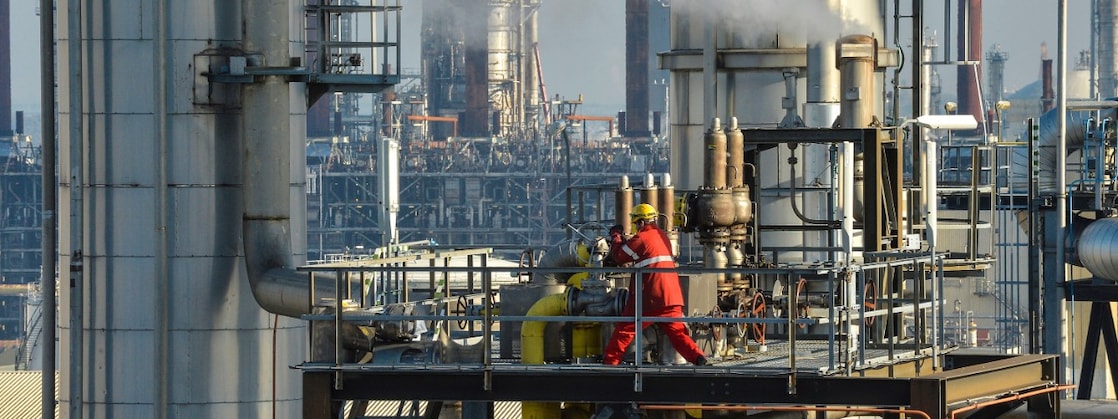
Shell Chemicals Park Moerdijk is in maart begonnen aan een turnaround, ofwel een mega-onderhoudsklus aan de fabrieken. Dat klinkt simpel, maar is verre van dat, zegt Rick de Bruijn die de turnaround samen met anderen coördineert.

Tekst: Linda Andrik en Marcel Burger. Beeld: Ernst Bode.
Video: Shell Chemicals Park Moerdijk.
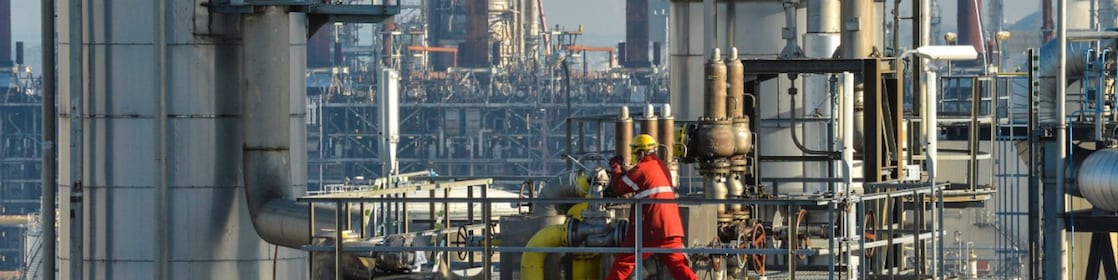
Tijdens de onderhoudsklus worden fabrieken tijdelijk gestopt, zodat hun installaties veilig kunnen worden schoongemaakt en inspecties kunnen worden uitgevoerd. Als een fabriek in bedrijf is, kan dat namelijk niet op alle plekken. Ook wordt er gewerkt aan het klaarstomen van fabrieken voor de toekomst.
2.000 vakmensen erbij
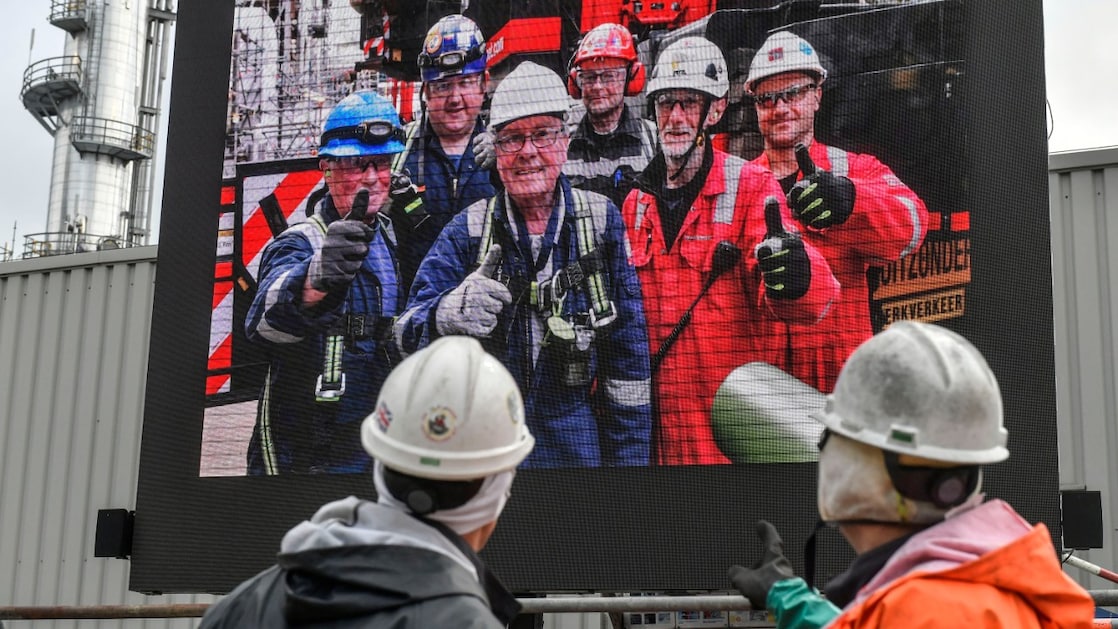
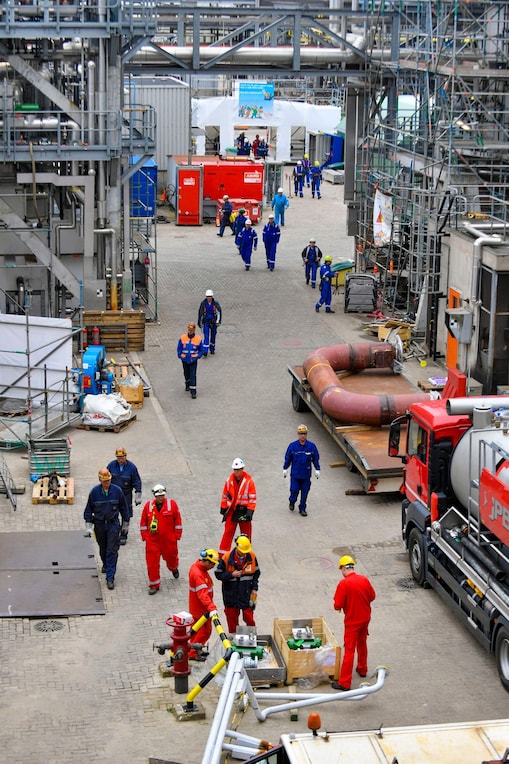
Shell in Moerdijk bestaat uit vier fabrieken met tal van installaties. Normaal werken er zo’n 850 mensen. Tijdens het hoogtepunt van de turnaround komen er dagelijks tot wel 2.000 vakmensen van aannemers bij .
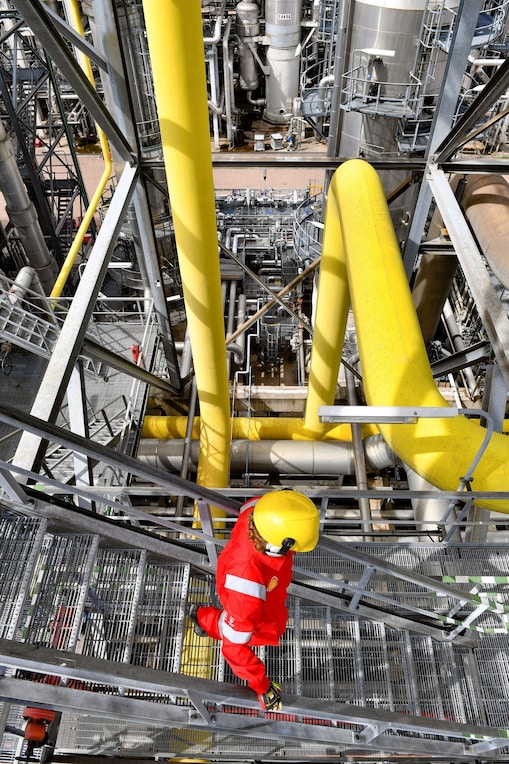
“We voeren 3.500 onderhoudstaken uit en vervangen vele kilometers aan leidingen”, zegt De Bruijn. “We inspecteren daarbij ook nog honderden warmtewisselaars. Dit alles in meer dan 100.000 activiteiten, verdeeld over tientallen aannemers. Daarvoor gebruiken we duizenden tonnen aan materiaal.”
10% minder CO2-uitstoot
Shells chemiecomplex in Moerdijk zet ook in op minder CO2-uitstoot. “Zo verwisselen we twee stoomgedreven turbines voor elektromotoren. Alleen al dit project verlaagt de uitstoot van de locatie met 10%. Dat is vergelijkbaar met de jaarlijkse uitstoot van 50.000 auto's op de Nederlandse snelwegen”, stelt De Bruijn.
Minder zichtbaar, maar volgens de De Bruijn minstens zo belangrijk is het project dat in de kelder van een van de fabrieken wordt uitgevoerd. “We vernieuwen de complete bekabeling om een gigantische fabriek aan te sturen. Duizenden draadjes worden vervangen. Een minutieus klusje, want alle draadjes moeten natuurlijk wel weer op de juiste plek aan elkaar worden geknoopt.”
Lees ook!
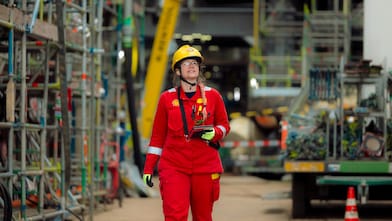
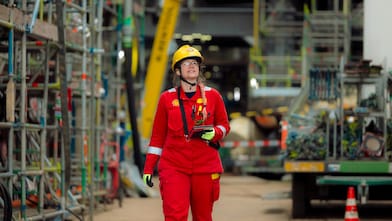
Dit is Maaike. Op de grootste fabriek van Shell Chemicals Park Moerdijk ondersteunt zij Shell-medewerkers en aannemers bij het veilig uitvoeren van hun werk. En dat is best uitdagend als er, zoals nu, bijna duizend extra werknemers toewerken naar een grote onderhoudsklus van de installaties op het terrein. “Veiligheid krijg je niet in je eentje — dat doen we samen.”
Fakkelen
Tijdens het uit bedrijf nemen en het weer opstarten van de fabriek, is het nodig om te fakkelen. Dat betekent het gecontroleerd verbranden van brandbare gassen. Gebeurt dat niet, dan zouden die in de fabriek blijven hangen. “Fakkelen is nodig om de installatie veilig en drukvrij te maken voor onderhoud. Dat proces kan enkele dagen duren.”
Tijdens het fakkelen is een vlam zichtbaar en — afhankelijk van hoe ver je er vandaan bent — hoorbaar, ook voor wie in de buurt woont. De Bruijn: “ We doen er altijd alles aan om de duur en zichtbaarheid van de fakkel tot een minimum te beperken, en dus de hinder voor omwonenden zo klein mogelijk te houden.”
Vandaag en morgen
De turnaround is een heel grote klus, zegt De Bruijn. “Maar na afloop zijn we klaar om onze fabriek veilig en betrouwbaar te blijven draaien. En zo kunnen we de producten maken die de samenleving vandaag en morgen nodig heeft.”
Meer weten van wat Shell Chemicals Park Moerdijk als basisindustrie maakt voor jou? Kijk op www.shell.nl/moerdijk
Cautionary note
Cautionary note
The companies in which Shell plc directly and indirectly owns investments are separate legal entities. In this announcement “Shell”, “Shell Group” and “Group” are sometimes used for convenience to reference Shell plc and its subsidiaries in general. Likewise, the words “we”, “us” and “our” are also used to refer to Shell plc and its subsidiaries in general or to those who work for them. These terms are also used where no useful purpose is served by identifying the particular entity or entities. ‘‘Subsidiaries’’, “Shell subsidiaries” and “Shell companies” as used in this announcement refer to entities over which Shell plc either directly or indirectly has control. The terms “joint venture”, “joint operations”, “joint arrangements”, and “associates” may also be used to refer to a commercial arrangement in which Shell has a direct or indirect ownership interest with one or more parties. The term “Shell interest” is used for convenience to indicate the direct and/or indirect ownership interest held by Shell in an entity or unincorporated joint arrangement, after exclusion of all third-party interest.
Forward-Looking statements
This announcement contains forward-looking statements (within the meaning of the U.S. Private Securities Litigation Reform Act of 1995) concerning the financial condition, results of operations and businesses of Shell. All statements other than statements of historical fact are, or may be deemed to be, forward-looking statements. Forward-looking statements are statements of future expectations that are based on management’s current expectations and assumptions and involve known and unknown risks and uncertainties that could cause actual results, performance or events to differ materially from those expressed or implied in these statements. Forward-looking statements include, among other things, statements concerning the potential exposure of Shell to market risks and statements expressing management’s expectations, beliefs, estimates, forecasts, projections and assumptions. These forward-looking statements are identified by their use of terms and phrases such as “aim”; “ambition”; ‘‘anticipate’’; “aspire”, “aspiration”, ‘‘believe’’; “commit”; “commitment”; ‘‘could’’; “desire”; ‘‘estimate’’; ‘‘expect’’; ‘‘goals’’; ‘‘intend’’; ‘‘may’’; “milestones”; ‘‘objectives’’; ‘‘outlook’’; ‘‘plan’’; ‘‘probably’’; ‘‘project’’; ‘‘risks’’; “schedule”; ‘‘seek’’; ‘‘should’’; ‘‘target’’; “vision”; ‘‘will’’; “would” and similar terms and phrases. There are a number of factors that could affect the future operations of Shell and could cause those results to differ materially from those expressed in the forward-looking statements included in this announcement, including (without limitation): (a) price fluctuations in crude oil and natural gas; (b) changes in demand for Shell’s products; (c) currency fluctuations; (d) drilling and production results; (e) reserves estimates; (f) loss of market share and industry competition; (g) environmental and physical risks, including climate change; (h) risks associated with the identification of suitable potential acquisition properties and targets, and successful negotiation and completion of such transactions; (i) the risk of doing business in developing countries and countries subject to international sanctions; (j) legislative, judicial, fiscal and regulatory developments including tariffs and regulatory measures addressing climate change; (k) economic and financial market conditions in various countries and regions; (l) political risks, including the risks of expropriation and renegotiation of the terms of contracts with governmental entities, delays or advancements in the approval of projects and delays in the reimbursement for shared costs; (m) risks associated with the impact of pandemics, regional conflicts, such as the Russia-Ukraine war and the conflict in the Middle East, and a significant cyber security, data privacy or IT incident; (n) the pace of the energy transition; and (o) changes in trading conditions. No assurance is provided that future dividend payments will match or exceed previous dividend payments. All forward-looking statements contained in this announcement are expressly qualified in their entirety by the cautionary statements contained or referred to in this section. Readers should not place undue reliance on forward-looking statements. Additional risk factors that may affect future results are contained in Shell plc’s Form 20-F for the year ended December 31, 2025 (available at www.shell.com/investors/news-and-filings/sec-filings.html and www.sec.gov). These risk factors also expressly qualify all forward-looking statements contained in this announcement and should be considered by the reader. Each forward-looking statement speaks only as of the date of this announcement, March 26, 2026. Neither Shell plc nor any of its subsidiaries undertake any obligation to publicly update or revise any forward-looking statement as a result of new information, future events or other information. In light of these risks, results could differ materially from those stated, implied or inferred from the forward-looking statements contained in this announcement.
Shell’s net carbon intensity
Also, in this announcement we may refer to Shell’s “net carbon intensity” (NCI), which includes Shell’s carbon emissions from the production of our energy products, our suppliers’ carbon emissions in supplying energy for that production and our customers’ carbon emissions associated with their use of the energy products we sell. Shell’s NCI also includes the emissions associated with the production and use of energy products produced by others which Shell purchases for resale. Shell only controls its own emissions. The use of the terms Shell’s “net carbon intensity” or NCI is for convenience only and not intended to suggest these emissions are those of Shell plc or its subsidiaries.
Shell’s net-zero emissions target
Shell’s operating plan and outlook are forecasted for a three-year period and ten-year period, respectively, and are updated every year. They reflect the current economic environment and what we can reasonably expect to see over the next three and ten years. Accordingly, the outlook reflects our combined Scope 1 and 2 target, NCI target and our oil products ambition over the next ten years. However, Shell’s operating plan and outlook cannot reflect our 2050 net-zero emissions target, as this target is outside our planning period. Such future operating plans and outlooks could include changes to our portfolio, efficiency improvements and the use of carbon capture and storage and carbon credits. In the future, as society moves towards net-zero emissions, we expect Shell’s operating plans and outlooks to reflect this movement. However, if society is not net zero in 2050, as of today, there would be significant risk that Shell may not meet this target.
Forward-Looking non-GAAP measures
This announcement may contain certain forward-looking non-GAAP measures. We are unable to provide a reconciliation of these forward-looking non-GAAP measures to the most comparable GAAP financial measures because certain information needed to reconcile those non-GAAP measures to the most comparable GAAP financial measures is dependent on future events some of which are outside the control of Shell, such as oil and gas prices, interest rates and exchange rates. Moreover, estimating such GAAP measures with the required precision necessary to provide meaningful reconciliation is extremely difficult and could not be accomplished without unreasonable effort. Non-GAAP measures in respect of future periods which cannot be reconciled to the most comparable GAAP financial measure are calculated in a manner which is consistent with the accounting policies applied in Shell plc’s consolidated financial statements.
The contents of websites referred to in this announcement do not form part of this announcement.
We may have used certain terms, such as resources, in this announcement that the United States Securities and Exchange Commission (SEC) strictly prohibits us from including in our filings with the SEC. Investors are urged to consider closely the disclosure in our Form 20-F, File No 1-32575, available on the SEC website www.sec.gov.
How to turn around a giant plant? Moerdijk shows what it is like
26 Mar 2026
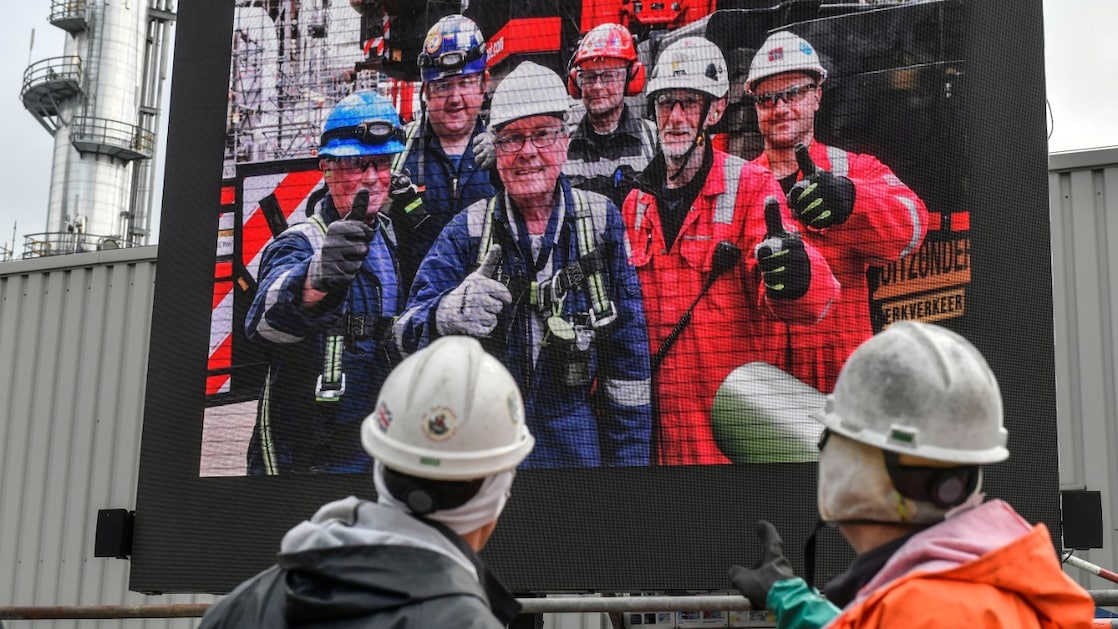
In March, Shell Chemicals Park Moerdijk, the Netherlands started its turnaround. This means a major maintenance operation on the plants of one of Europe’s key facilities that produces basic components for everyday products — ranging from soap to sneakers to car interior. The maintenance job may sound straightforward, but it is anything but, says Rick de Bruijn, who is coordinating the turnaround together with others.

Text: Linda Andrik en Marcel Burger. Photography: Ernst Bode.
Video: Shell Chemicals Park Moerdijk.
During the maintenance work, the plants are temporarily shut down so that their installations can be safely cleaned and inspected. This cannot be done in all areas while a factory is running. Work is also being carried out to prepare the plant for a more sustainable future.
2,000 additional specialists
Shell in Moerdijk consists of four factories with numerous installations. Normally, around 850 people work at the site. But, at the peak of this turnaround, up to 2,000 contractor specialists join the workforce. Each day.
“We are carrying out 3,500 maintenance tasks and replacing many kilometres of piping,” says Rick. “We are also inspecting hundreds of heat exchangers. Altogether, this involves more than 100,000 activities, divided among dozens of contractors. We use thousands of tonnes of material for this.”
10% reduction in CO₂ emissions
Shell’s chemical complex in Moerdijk is also aiming to reduce its CO₂ emissions. “For example, we are replacing two steam‑driven turbines with electric motors. This project alone reduces the site’s emissions by 10%. That’s comparable to the annual emissions of 50,000 cars on Dutch motorways,” Rick explains.
Less visible — but equally important, according to Rick — is the project in the basement of one of the plants. “We are renewing all the cabling that controls the massive plant. Thousands of wires are being replaced. It’s meticulous work, because all those wires must be reconnected the right way.”
Flaring
When shutting a plant down and starting it back up again, flaring is necessary. This means the controlled burning of flammable gases. If this does not happen, those gases would remain inside the plant. “Flaring is needed to make the installation safe and depressurised for maintenance. That process can take several days.”
During flaring, a flame is visible and — depending on how far away you are — audible, including for people living nearby. Rick says: “We always do everything we can to minimise the duration and visibility of the flare, and therefore keep any inconvenience for local residents as low as possible.”
Today and tomorrow
The turnaround is a very large operation, says Rick. “But once it’s completed, we’ll be ready to keep operating our plant safely and reliably for years to come. And that enables us to produce the products society needs today and tomorrow.”
Cautionary note
Cautionary note
The companies in which Shell plc directly and indirectly owns investments are separate legal entities. In this announcement “Shell”, “Shell Group” and “Group” are sometimes used for convenience to reference Shell plc and its subsidiaries in general. Likewise, the words “we”, “us” and “our” are also used to refer to Shell plc and its subsidiaries in general or to those who work for them. These terms are also used where no useful purpose is served by identifying the particular entity or entities. ‘‘Subsidiaries’’, “Shell subsidiaries” and “Shell companies” as used in this announcement refer to entities over which Shell plc either directly or indirectly has control. The terms “joint venture”, “joint operations”, “joint arrangements”, and “associates” may also be used to refer to a commercial arrangement in which Shell has a direct or indirect ownership interest with one or more parties. The term “Shell interest” is used for convenience to indicate the direct and/or indirect ownership interest held by Shell in an entity or unincorporated joint arrangement, after exclusion of all third-party interest.
Forward-Looking statements
This announcement contains forward-looking statements (within the meaning of the U.S. Private Securities Litigation Reform Act of 1995) concerning the financial condition, results of operations and businesses of Shell. All statements other than statements of historical fact are, or may be deemed to be, forward-looking statements. Forward-looking statements are statements of future expectations that are based on management’s current expectations and assumptions and involve known and unknown risks and uncertainties that could cause actual results, performance or events to differ materially from those expressed or implied in these statements. Forward-looking statements include, among other things, statements concerning the potential exposure of Shell to market risks and statements expressing management’s expectations, beliefs, estimates, forecasts, projections and assumptions. These forward-looking statements are identified by their use of terms and phrases such as “aim”; “ambition”; ‘‘anticipate’’; “aspire”, “aspiration”, ‘‘believe’’; “commit”; “commitment”; ‘‘could’’; “desire”; ‘‘estimate’’; ‘‘expect’’; ‘‘goals’’; ‘‘intend’’; ‘‘may’’; “milestones”; ‘‘objectives’’; ‘‘outlook’’; ‘‘plan’’; ‘‘probably’’; ‘‘project’’; ‘‘risks’’; “schedule”; ‘‘seek’’; ‘‘should’’; ‘‘target’’; “vision”; ‘‘will’’; “would” and similar terms and phrases. There are a number of factors that could affect the future operations of Shell and could cause those results to differ materially from those expressed in the forward-looking statements included in this announcement, including (without limitation): (a) price fluctuations in crude oil and natural gas; (b) changes in demand for Shell’s products; (c) currency fluctuations; (d) drilling and production results; (e) reserves estimates; (f) loss of market share and industry competition; (g) environmental and physical risks, including climate change; (h) risks associated with the identification of suitable potential acquisition properties and targets, and successful negotiation and completion of such transactions; (i) the risk of doing business in developing countries and countries subject to international sanctions; (j) legislative, judicial, fiscal and regulatory developments including tariffs and regulatory measures addressing climate change; (k) economic and financial market conditions in various countries and regions; (l) political risks, including the risks of expropriation and renegotiation of the terms of contracts with governmental entities, delays or advancements in the approval of projects and delays in the reimbursement for shared costs; (m) risks associated with the impact of pandemics, regional conflicts, such as the Russia-Ukraine war and the conflict in the Middle East, and a significant cyber security, data privacy or IT incident; (n) the pace of the energy transition; and (o) changes in trading conditions. No assurance is provided that future dividend payments will match or exceed previous dividend payments. All forward-looking statements contained in this announcement are expressly qualified in their entirety by the cautionary statements contained or referred to in this section. Readers should not place undue reliance on forward-looking statements. Additional risk factors that may affect future results are contained in Shell plc’s Form 20-F for the year ended December 31, 2025 (available at www.shell.com/investors/news-and-filings/sec-filings.html and www.sec.gov). These risk factors also expressly qualify all forward-looking statements contained in this announcement and should be considered by the reader. Each forward-looking statement speaks only as of the date of this announcement, March 26, 2026. Neither Shell plc nor any of its subsidiaries undertake any obligation to publicly update or revise any forward-looking statement as a result of new information, future events or other information. In light of these risks, results could differ materially from those stated, implied or inferred from the forward-looking statements contained in this announcement.
Shell’s net carbon intensity
Also, in this announcement we may refer to Shell’s “net carbon intensity” (NCI), which includes Shell’s carbon emissions from the production of our energy products, our suppliers’ carbon emissions in supplying energy for that production and our customers’ carbon emissions associated with their use of the energy products we sell. Shell’s NCI also includes the emissions associated with the production and use of energy products produced by others which Shell purchases for resale. Shell only controls its own emissions. The use of the terms Shell’s “net carbon intensity” or NCI is for convenience only and not intended to suggest these emissions are those of Shell plc or its subsidiaries.
Shell’s net-zero emissions target
Shell’s operating plan and outlook are forecasted for a three-year period and ten-year period, respectively, and are updated every year. They reflect the current economic environment and what we can reasonably expect to see over the next three and ten years. Accordingly, the outlook reflects our combined Scope 1 and 2 target, NCI target and our oil products ambition over the next ten years. However, Shell’s operating plan and outlook cannot reflect our 2050 net-zero emissions target, as this target is outside our planning period. Such future operating plans and outlooks could include changes to our portfolio, efficiency improvements and the use of carbon capture and storage and carbon credits. In the future, as society moves towards net-zero emissions, we expect Shell’s operating plans and outlooks to reflect this movement. However, if society is not net zero in 2050, as of today, there would be significant risk that Shell may not meet this target.
Forward-Looking non-GAAP measures
This announcement may contain certain forward-looking non-GAAP measures. We are unable to provide a reconciliation of these forward-looking non-GAAP measures to the most comparable GAAP financial measures because certain information needed to reconcile those non-GAAP measures to the most comparable GAAP financial measures is dependent on future events some of which are outside the control of Shell, such as oil and gas prices, interest rates and exchange rates. Moreover, estimating such GAAP measures with the required precision necessary to provide meaningful reconciliation is extremely difficult and could not be accomplished without unreasonable effort. Non-GAAP measures in respect of future periods which cannot be reconciled to the most comparable GAAP financial measure are calculated in a manner which is consistent with the accounting policies applied in Shell plc’s consolidated financial statements.
The contents of websites referred to in this announcement do not form part of this announcement.
We may have used certain terms, such as resources, in this announcement that the United States Securities and Exchange Commission (SEC) strictly prohibits us from including in our filings with the SEC. Investors are urged to consider closely the disclosure in our Form 20-F, File No 1-32575, available on the SEC website www.sec.gov.
Recommended read
Meet Maaike. At the largest factory of the Shell Chemicals Park Moerdijk site in the Netherlands, she supports Shell employees and contractors in carrying out their work safely. And that can be quite a challenge when, as is the case now, nearly a thousand additional workers are preparing for a major maintenance job on the site’s installations.