Ode aan de zon: Shells zonnestroom in Nederland
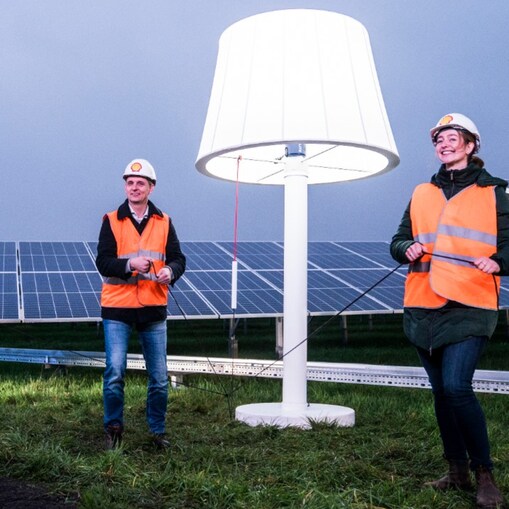
“Tussen duim en wijsvinger, houd ik de zon even vast en knijp zacht.” Met deze en meer woorden bracht de Friese dichter Arjan Hut een ode aan de zon voor de opening van Heerenveen-Zuid in november 2020. Het noordelijke zonnepark gaat over van Shell naar het Franse TotalEnergies, net als de andere zonne- en windparken van Shell op land in Nederland. De verkoop, aangekondigd in augustus en naar verwachting eind 2026 voltooid, is deel van de herschikking van Shells energieportfolio op land en omvat ook hernieuwbare energieprojecten in Italië, Spanje en het Verenigd Koninkrijk.

Tekst: Marcel Burger. Beeld: Thomas Fasting (openingsfoto/Pottendijk), Wendel Broere (Sas van Gent-Zuid), Shell Nederland
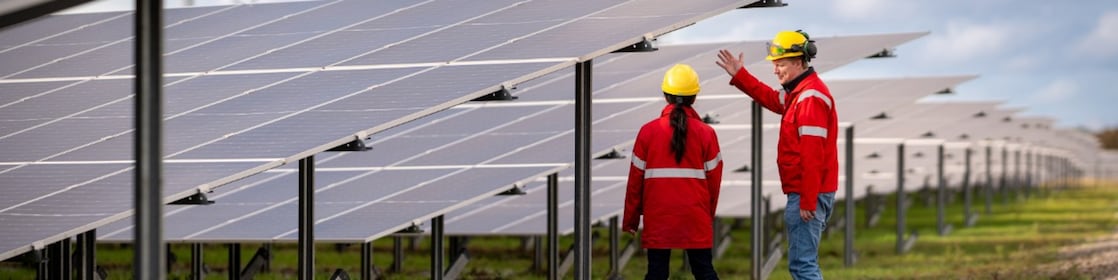
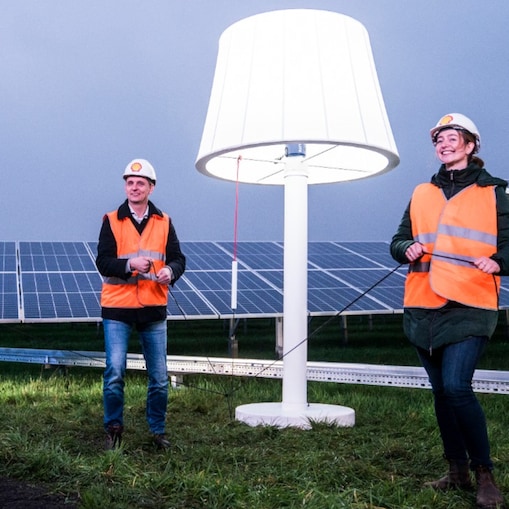
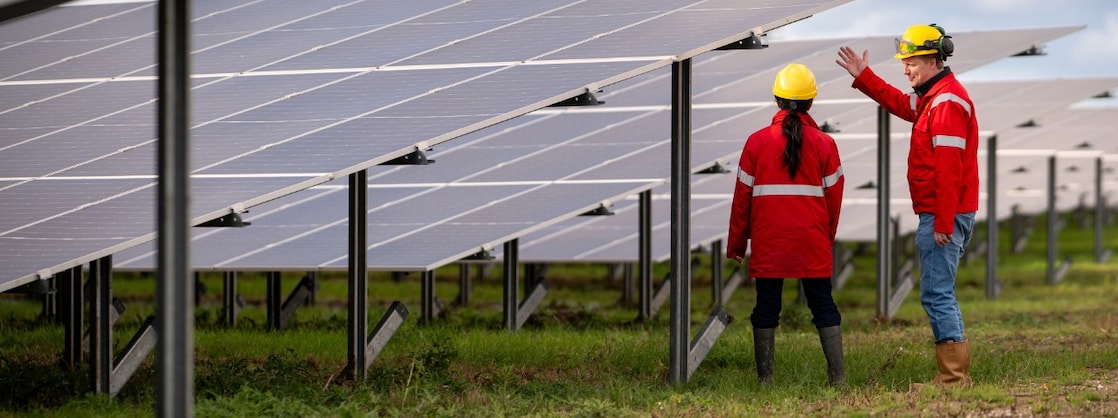
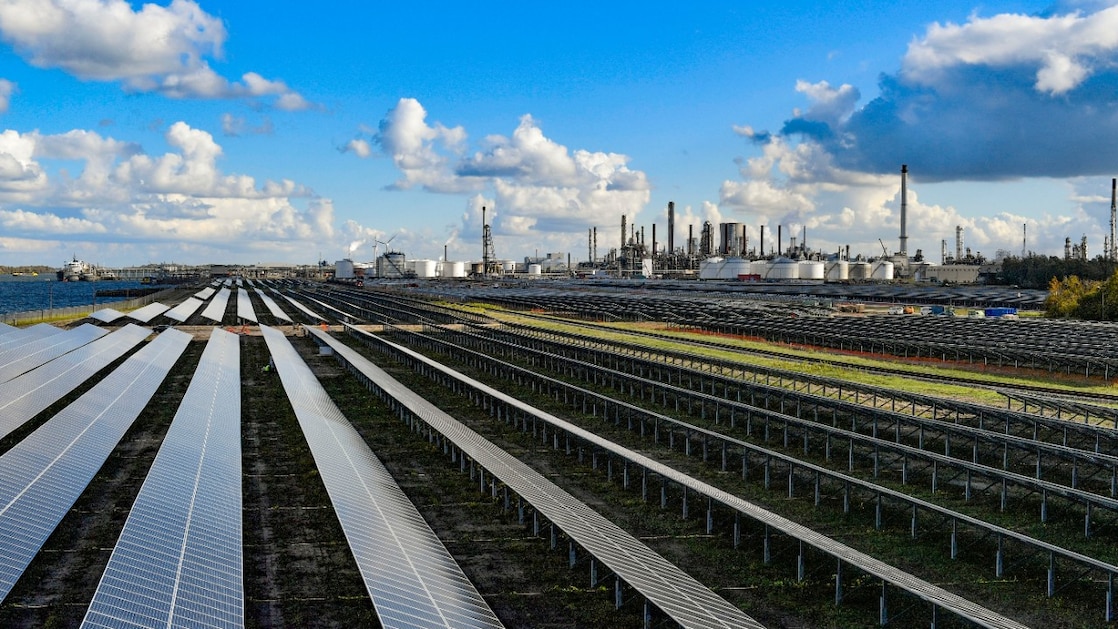
Openingsfoto: uitleg bij zonnepanelen op energiepark Pottendijk, 2023
Voor Nederland betekent dit dat Shell al haar vijf zonneparken en het gecombineerde wind- en zonnepark Pottendijk in Emmen van de hand heeft gedaan. Daarmee komt er na ruim 7 jaar een einde aan Shells eigen zonnestroomproductie in Nederland.
“Maar we gaan onverminderd door met de inkoop en verkoop van zonnestroom voor Nederlandse zakelijke klanten, via onze handelstak Trading & Supply en via Shell Energy”, zegt Frans Everts in zijn laatste maand als president-directeur van Shell Nederland.
Voorwaarts in de energietransitie
Ook de energietransitie gaat gewoon door, benadrukt Frans. “Ik ben trots op al het werk dat we de afgelopen jaren in onze onshore zon- en windbusiness hebben gestoken. Daarmee hebben we als bedrijf en voor delen van Nederland een flinke stap voorwaarts gezet in de energietransitie. We gaan in Nederland daarmee ook gewoon door: bijvoorbeeld met de groene waterstoffabriek Holland Hydrogen 1 en met het afvangen en opslaan van CO2.”
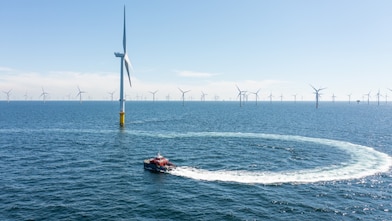
Voor dit carbon capture and storage (CCS) is Shell samen met TotalEnergies onder meer een van de partners voor de onderzeese CO2-opslag in het Aramis-project voor de Nederlandse kust. Elders in de Noordzee staan er bovendien nog drie windparken van Shell en haar partners, en is het vierde — Hollandse Kust West van de joint venture Ecowende — in aanbouw.
Shell verkoopt Nederlandse zonneparken, deel van overdracht hernieuwbare energie Europa
Shell heeft een koop- en verkoopovereenkomst (Sale and Purchase Agreement, SPA) ondertekend met TotalEnergies voor de verkoop van haar Europese portefeuille van hernieuwbare energieprojecten op land. Voor Nederland gaat het daarbij om Shells vijf zonneparken en het gecombineerde wind- en zonnepark Pottendijk in Emmen.
Van Moerdijk naar schaal
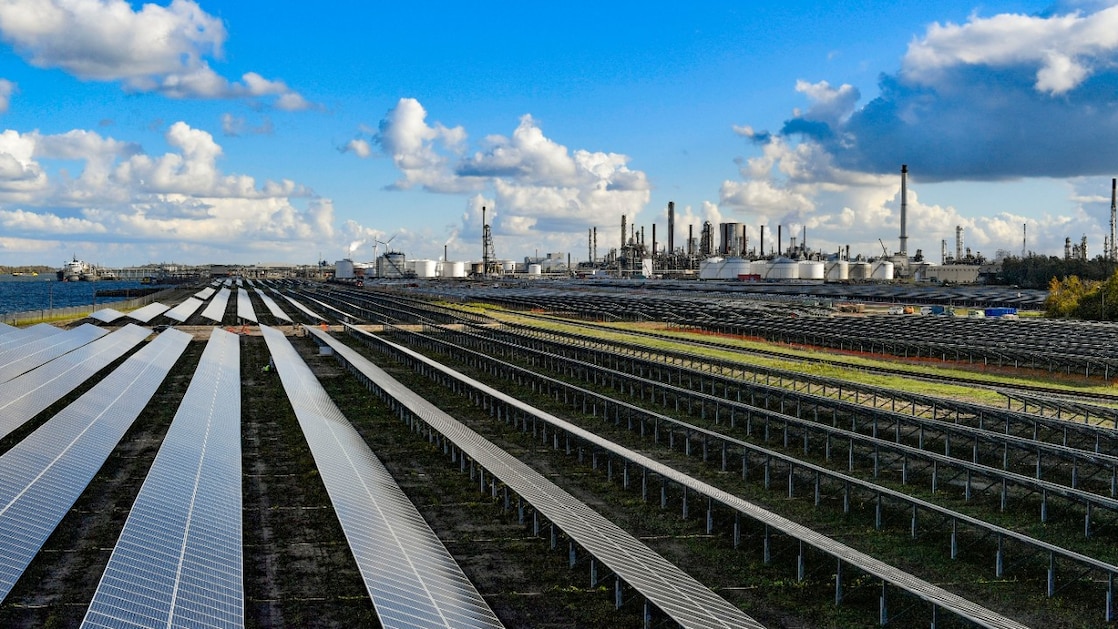
Terug naar land, en het jaar 2019. De winter is nog niet verdwenen of Shell zet in 35 dagen haar eerste zonnepark neer, op het terrein van haar eigen chemiepark in Moerdijk. Als het op 14 maart van dat jaar opengaat, is het met 76.000 zonnepanelen en 27 megawatt piekcapaciteit direct een van de grootste van het land.
Sindsdien is er veel gebeurd in de energietransitie van Nederland, ook in de schaal van de projecten. In april 2026 opende het tot nu toe het grootste zonnepark: in de Eekerpolder in Groningen, met maar liefst 311.742 panelen en 7,2 keer meer stroomproductie dan het zonnepark Moerdijk. Dat blijft overigens na de overname gewoon leveren aan Shell Chemicals Park Moerdijk, en zo bijdragen aan het beperken van de CO2-uitstoot van de productielocatie.
Shells grootste zonnepark in Nederland
Shell zat zelf na 2019 eveneens niet stil: Heerenveen-Zuid en Emmen-GZI Next openen in 2020. In Terneuzen bouwt Shell twee zonneparken: Sas van Gent-Zuid (2022) en Koegorspolder (2023) — samen leveren ze aanvankelijk meer dan de helft van de 200 megawatt die de gemeente Terneuzen had gepland aan zonnestroomproductie. Ofwel, ruim een derde van wat heel Zeeland voor het jaar 2030 aanvankelijk had afgesproken. Pas later zijn die cijfers verder opgekrikt.
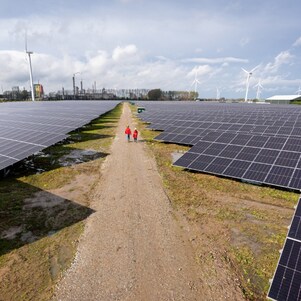
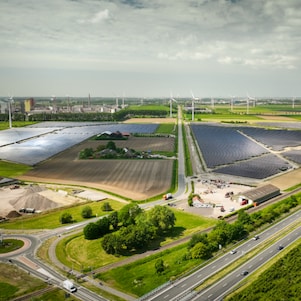
Koegorspolder is uiteindelijk Shells grootste zonnepark in Nederland, met 128.304 zonnepanelen en 71,2 megawatt piekvermogen. Het is bovendien het eerste zonnepark dat rekening houdt met netcongestie. Het noordoostelijke deel van het zonnepark (Tractaatweg) is gekoppeld aan de stroomnetaansluiting van het nabijgelegen Windpark Koegorspolder, terwijl het zuidwestelijke deel (Sluiskil) stroom levert via de verbinding van Yara Sluiskil. Dat is in 2023 uniek en technisch een uitdaging.
Uniek: energiepark Pottendijk
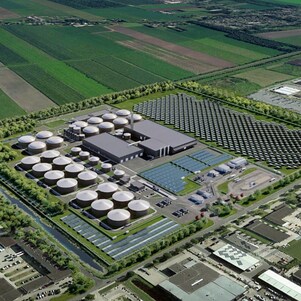
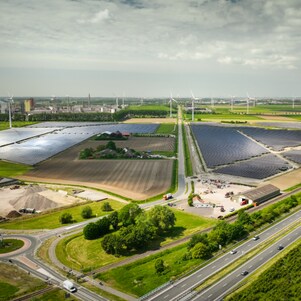
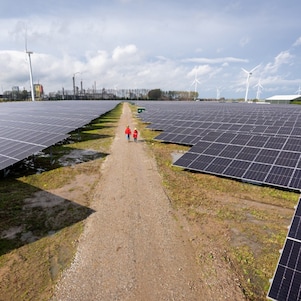
Uniek geldt ook voor energiepark Pottendijk, dat in 2023 in Emmen opengaat. Het is Shells enige Nederlandse windpark op land en bovendien gecombineerd met een zonnepark. Met 14 windturbines en 90.000 zonnepanelen heeft het een piekvermogen van 100 megawatt, met elk deel verantwoordelijk voor de helft daarvan.
Bij energiepark Pottendijk wordt rekening gehouden met de leefgebieden en broedseizoenen van vogels, vissen en amfibieën. Een ecologische deskundige met kennis van de poelkikker en modderkruiper begeleidde de bouw van het park. Een brug tussen de Motodrome en het zonnepark zorgt ervoor dat de watergang blijft fungeren als vliegroute van vleermuizen. Een aantal keren per jaar grazen schapen op het energiepark, om het gras bij te houden.
Frans Everts, president-directeur Shell Nederland"Ik ben trots op al het werk dat we de afgelopen jaren in onze onshore zon- en windbusiness hebben gestoken"
Canadese ganzen en reeën
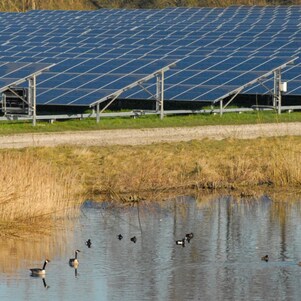
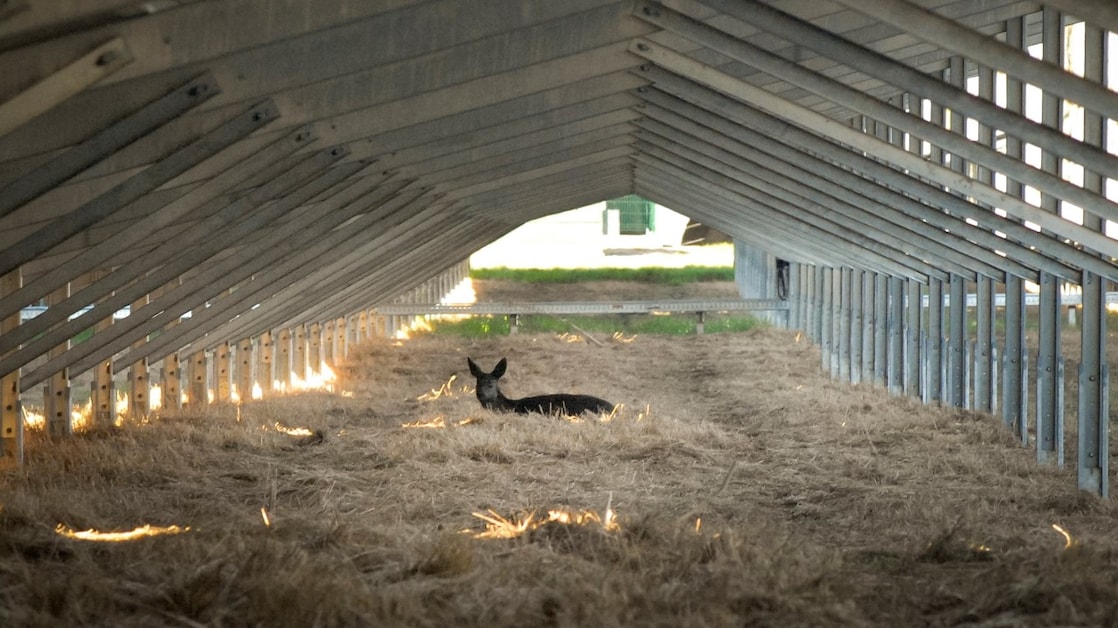
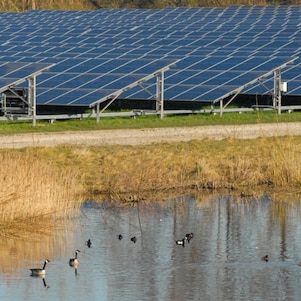
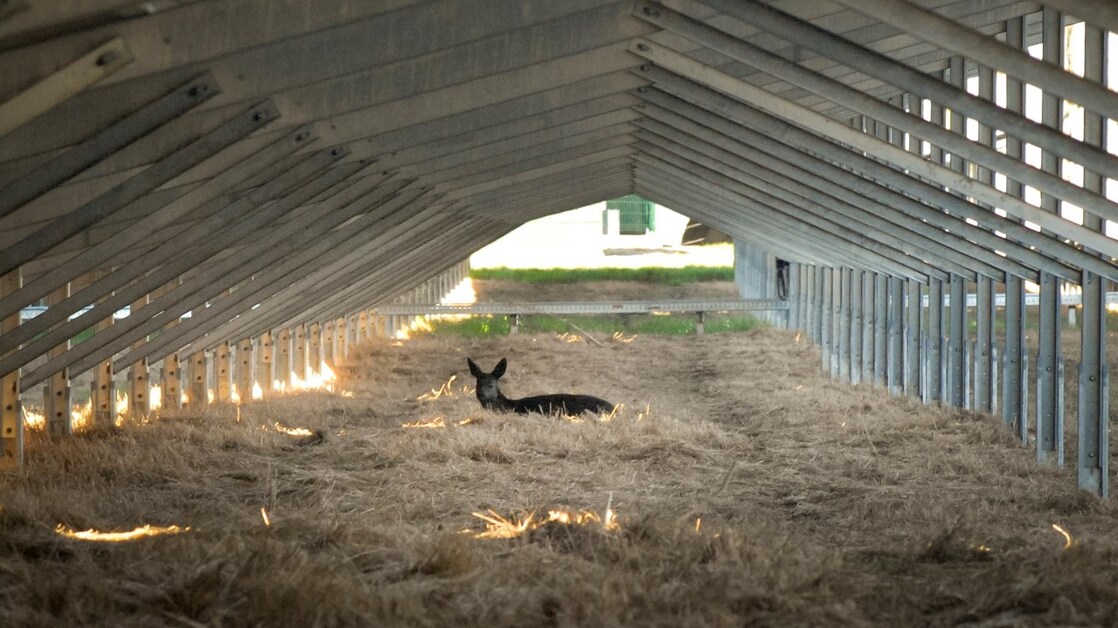
Shell probeert waar mogelijk de zonneparken op te laten gaan in het landschap, zoals bij Sas van Gent-Zuid in Zeeland. Ook werkte Shell bij haar eerste zonneparken samen met Naturalis om de biodiversiteit op die zonneparken te onderzoeken en te bevorderen. Wat daarvan is geleerd, wordt toegepast op alle parken. Zo krijgt op Sas van Gent-Zuid zelfs groot wild de ruimte, zo ontdekte toenmalig Shell-woordvoerder en hobbyfotograaf Wendel Broere bij een vroeg winters werkbezoek.
“Ik maakte een paar foto’s van de vijver in het midden van het park, waarbij ik de contouren van de Canadese ganzen kan onderscheiden die mij bij aankomst hadden begroet. Ik loop zo stil mogelijk verder, terwijl bevroren grassprieten onder mijn voeten kraken. De zon begint de boomtoppen rond het zonnepark te verlichten en verdrijft de mist. Plots ontdek ik twee reeën, die me vanonder de zonnepanelen recht aankijken.”
Relatief beperkt in Nederland en Europa
Met uiteindelijk 204,2 megawatt in zon en 50 megawatt in wind op land, blijft het Shell-aandeel in groene stroom van zon en wind op land relatief beperkt in Nederland. In heel Europa gaat het om circa 500 megawatt. Ter vergelijking: een stad als Rotterdam of Amsterdam heeft jaarlijks 685 tot 915 megawatt aan opwekcapaciteit nodig. Het is nu aan TotalEnergies om bij te dragen aan de Europese zon- en windproductie op land.
“De overdracht weerspiegelt de meer gefocuste benadering van Shell in het hele energiesysteem, met de handel in allerlei energievormen — ook hernieuwbaar — als prioriteit,” zegt Frans Everts. “Shell heeft veel geïnvesteerd in de energietransitie, ook in Nederland, dus de transactie is zeker geen stap terug. Wel geeft ze blijk van het maken van duidelijkere keuzes binnen die energietransitie.”
Meer over Shell en zon
Het volledige overzicht van Shells zonnneparken in Nederland staat nog op Shell.nl/zon. Die pagina zal later dit jaar, als de overdracht naar TotalEnergies helemaal is afgerond, uiteindelijk verdwijnen.
Cautionary note
Cautionary note
The companies in which Shell plc directly and indirectly owns investments are separate legal entities. In this announcement “Shell”, “Shell Group” and “Group” are sometimes used for convenience to reference Shell plc and its subsidiaries in general. Likewise, the words “we”, “us” and “our” are also used to refer to Shell plc and its subsidiaries in general or to those who work for them. These terms are also used where no useful purpose is served by identifying the particular entity or entities. ‘‘Subsidiaries’’, “Shell subsidiaries” and “Shell companies” as used in this announcement refer to entities over which Shell plc either directly or indirectly has control. The terms “joint venture”, “joint operations”, “joint arrangements”, and “associates” may also be used to refer to a commercial arrangement in which Shell has a direct or indirect ownership interest with one or more parties. The term “Shell interest” is used for convenience to indicate the direct and/or indirect ownership interest held by Shell in an entity or unincorporated joint arrangement, after exclusion of all third-party interest.
Forward-Looking statements
This announcement contains forward-looking statements (within the meaning of the U.S. Private Securities Litigation Reform Act of 1995) concerning the financial condition, results of operations and businesses of Shell. All statements other than statements of historical fact are, or may be deemed to be, forward-looking statements. Forward-looking statements are statements of future expectations that are based on management’s current expectations and assumptions and involve known and unknown risks and uncertainties that could cause actual results, performance or events to differ materially from those expressed or implied in these statements. Forward-looking statements include, among other things, statements concerning the potential exposure of Shell to market risks and statements expressing management’s expectations, beliefs, estimates, forecasts, projections and assumptions. These forward-looking statements are identified by their use of terms and phrases such as “aim”; “ambition”; ‘‘anticipate’’; “aspire”, “aspiration”, ‘‘believe’’; “commit”; “commitment”; ‘‘could’’; “desire”; ‘‘estimate’’; ‘‘expect’’; ‘‘goals’’; ‘‘intend’’; ‘‘may’’; “milestones”; ‘‘objectives’’; ‘‘outlook’’; ‘‘plan’’; ‘‘probably’’; ‘‘project’’; ‘‘risks’’; “schedule”; ‘‘seek’’; ‘‘should’’; ‘‘target’’; “vision”; ‘‘will’’; “would” and similar terms and phrases. There are a number of factors that could affect the future operations of Shell and could cause those results to differ materially from those expressed in the forward-looking statements included in this announcement, including (without limitation): (a) price fluctuations in crude oil and natural gas; (b) changes in demand for Shell’s products; (c) currency fluctuations; (d) drilling and production results; (e) reserves estimates; (f) loss of market share and industry competition; (g) environmental and physical risks, including climate change; (h) risks associated with the identification of suitable potential acquisition properties and targets, and successful negotiation and completion of such transactions; (i) the risk of doing business in developing countries and countries subject to international sanctions; (j) legislative, judicial, fiscal and regulatory developments including tariffs and regulatory measures addressing climate change; (k) economic and financial market conditions in various countries and regions; (l) political risks, including the risks of expropriation and renegotiation of the terms of contracts with governmental entities, delays or advancements in the approval of projects and delays in the reimbursement for shared costs; (m) risks associated with the impact of pandemics, regional conflicts, such as the Russia-Ukraine war and the conflict in the Middle East, and a significant cyber security, data privacy or IT incident; (n) the pace of the energy transition; and (o) changes in trading conditions. No assurance is provided that future dividend payments will match or exceed previous dividend payments. All forward-looking statements contained in this announcement are expressly qualified in their entirety by the cautionary statements contained or referred to in this section. Readers should not place undue reliance on forward-looking statements. Additional risk factors that may affect future results are contained in Shell plc’s Form 20-F for the year ended December 31, 2025 (available at www.shell.com/investors/news-and-filings/sec-filings.html and www.sec.gov). These risk factors also expressly qualify all forward-looking statements contained in this announcement and should be considered by the reader. Each forward-looking statement speaks only as of the date of this announcement, August 13, 2026. Neither Shell plc nor any of its subsidiaries undertake any obligation to publicly update or revise any forward-looking statement as a result of new information, future events or other information. In light of these risks, results could differ materially from those stated, implied or inferred from the forward-looking statements contained in this announcement.
Shell’s net carbon intensity
Also, in this announcement we may refer to Shell’s “net carbon intensity” (NCI), which includes Shell’s carbon emissions from the production of our energy products, our suppliers’ carbon emissions in supplying energy for that production and our customers’ carbon emissions associated with their use of the energy products we sell. Shell’s NCI also includes the emissions associated with the production and use of energy products produced by others which Shell purchases for resale. Shell only controls its own emissions. The use of the terms Shell’s “net carbon intensity” or NCI is for convenience only and not intended to suggest these emissions are those of Shell plc or its subsidiaries.
Shell’s net-zero emissions target
Shell’s operating plan and outlook are forecasted for a three-year period and ten-year period, respectively, and are updated every year. They reflect the current economic environment and what we can reasonably expect to see over the next three and ten years. Accordingly, the outlook reflects our combined Scope 1 and 2 target, NCI target and our oil products ambition over the next ten years. However, Shell’s operating plan and outlook cannot reflect our 2050 net-zero emissions target, as this target is outside our planning period. Such future operating plans and outlooks could include changes to our portfolio, efficiency improvements and the use of carbon capture and storage and carbon credits. In the future, as society moves towards net-zero emissions, we expect Shell’s operating plans and outlooks to reflect this movement. However, if society is not net zero in 2050, as of today, there would be significant risk that Shell may not meet this target.
Forward-Looking non-GAAP measures
This announcement may contain certain forward-looking non-GAAP measures. We are unable to provide a reconciliation of these forward-looking non-GAAP measures to the most comparable GAAP financial measures because certain information needed to reconcile those non-GAAP measures to the most comparable GAAP financial measures is dependent on future events some of which are outside the control of Shell, such as oil and gas prices, interest rates and exchange rates. Moreover, estimating such GAAP measures with the required precision necessary to provide meaningful reconciliation is extremely difficult and could not be accomplished without unreasonable effort. Non-GAAP measures in respect of future periods which cannot be reconciled to the most comparable GAAP financial measure are calculated in a manner which is consistent with the accounting policies applied in Shell plc’s consolidated financial statements.
The contents of websites referred to in this announcement do not form part of this announcement.
We may have used certain terms, such as resources, in this announcement that the United States Securities and Exchange Commission (SEC) strictly prohibits us from including in our filings with the SEC. Investors are urged to consider closely the disclosure in our Form 20-F, File No 1-32575, available on the SEC website www.sec.gov.
Ode to the sun: Shell's historic solar power in the Netherlands
“Between thumb and forefinger, I hold on to the sun for a moment and squeeze softly.” With these and other words, Frisian poet Arjan Hut paid tribute to the sun at the opening of Heerenveen-Zuid in November 2020. The northern solar park was transferred from Shell to France’s TotalEnergies in August, along with Shell’s other onshore solar and wind parks in the Netherlands. The sale is part of the reshaping of Shell’s onshore energy portfolio and also includes onshore renewable energy projects in Italy, Spain and the United Kingdom.

Text: Marcel Burger. Photography: Thomas Fasting (featured photo/Pottendijk), Wendel Broere (Sas van Gent-Zuid), Shell Netherlands
For the Netherlands, this means Shell has divested all five of its solar parks and the combined wind and solar park Pottendijk in Emmen. This brings an end to Shell’s own solar power production in the Netherlands after more than seven years.
“But we will continue unabated with the procurement and sale of solar power for Dutch business customers, through our trading arm Trading & Supply and via Shell Energy,” says Frans Everts, in his final month as President Director of Shell Netherlands.
Moving forwards in the energy transition
The energy transition is continuing too, Frans emphasises. “I am proud of all the work we have put into our onshore solar and wind business in recent years. As a company, and for parts of the Netherlands, we have taken a major step forwards in the energy transition. And we will simply continue to do so in the Netherlands: with the Holland Hydrogen 1 renewable hydrogen plant and with the capture and storage of CO2, for example.”
For this carbon capture and storage (CCS), Shell — together with TotalEnergies — is one of the partners in the Aramis project for subsea CO2 storage off the Dutch coast. Elsewhere in the North Sea, there are also three wind farms operated by Shell and its partners, while a fourth — Hollandse Kust West, developed by the Ecowende joint venture — is under construction.
Shell signs agreement to sell European onshore renewables portfolio to TotalEnergies
Shell has signed a Sale and Purchase Agreement (SPA) with TotalEnergies for the sale of its European onshore renewables portfolio. The portfolio includes development-stage and operational assets across Italy, the Netherlands, Spain and the UK.
From Moerdijk to scale
Back to land, and to the year 2019. Winter had barely loosened its grip when Shell built its first solar park in 35 days, on the site of its own chemicals park in Moerdijk. When it opened on 14 March that year, its 76,000 solar panels and 27 megawatts of peak capacity immediately made it one of the largest in the country.
Since then, much has happened in the Netherlands’ energy transition, including in the scale of projects. In April 2026, the largest solar park to date opened in the Eekerpolder in Groningen, with no fewer than 311,742 panels and 7.2 times more power production than the Moerdijk solar park. After the takeover, the latter will continue to supply Shell Chemicals Park Moerdijk, helping to reduce the production site’s CO2 emissions.
Shell’s largest solar park in the Netherlands
Shell continued to move in the solar power sector after 2019: solar park Heerenveen-Zuid and Emmen-GZI Next were opened in 2020 — both in the north of the country. In the southwest, inTerneuzen, Shell built two solar parks: Sas van Gent-Zuid (2022) and Koegorspolder (2023). Together, they initially supplied more than half of the 200 megawatts of solar power production planned by the municipality. Or, more than a third of what the whole Province of Zeeland had originally agreed for 2030. Those figures were only later revised upwards.
Koegorspolder ultimately became Shell’s largest solar park in the Netherlands, with 128,304 solar panels and 71.2 megawatts of peak capacity. It was also the first solar park to take grid congestion into account. The north-eastern part of the solar park (Tractaatweg) is connected to the grid connection of the nearby Koegorspolder wind farm, while the south-western part (Sluiskil) supplies power via Yara Sluiskil’s connection. In 2023, that was unique and technically challenging.
Unique: energy park Pottendijk
Unique also applies to energy park Pottendijk, which opens in Emmen in 2023. It is Shell’s only onshore wind farm in the Netherlands and is has been built in combination with a solar park. With 14 wind turbines and 90,000 solar panels, it has a peak capacity of 100 megawatts, with each part accounting for 50%.
At energy park Pottendijk, the habitats and breeding seasons of birds, fish and amphibians are taken into account. An ecological expert with knowledge of the pool frog and weatherfish supervised construction of the park. A bridge between the Motodrome and the solar park ensures that the watercourse continues to serve as a flight route for bats. Several times a year, sheep graze on the energy park to keep the grass down.
Frans Everts, President Director Shell Netherlands“I am proud of all the work we have put into our onshore solar and wind business in recent years"
Canada geese and roe deer
Wherever possible, Shell tries to blend its solar parks into the landscape, as with Sas van Gent-Zuid in Zeeland. In Shell's first solar parks, the company worked with Dutch national knowledge centre Naturalis to study and promote biodiversity at those sites. What was learned from this is being applied to all parks. At Sas van Gent-Zuid, even larger wildlife has room to roam, as then Shell spokesperson and hobby photographer Wendel Broere discovered during an early winter work visit.
“I took a few photos of the pond in the middle of the park, where I could make out the outlines of the Canada geese that had greeted me on arrival. I walked on as quietly as possible, while frozen blades of grass cracked under my feet. The sun began to light up the treetops around the solar park and drive away the mist. Suddenly, I spotted two roe deer, looking straight at me from beneath the solar panels.”
Relatively limited in the Netherlands and Europe
With an eventual 204.2 megawatts in onshore solar and 50 megawatts in onshore wind, Shell’s share of renewable power from onshore solar and wind remained relatively limited in the Netherlands. Across Europe, the figure is around 500 megawatts. By comparison, a city such as Rotterdam or Amsterdam needs 685 to 915 megawatts of generation capacity each year. It is now up to TotalEnergies to contribute to Europe’s onshore solar and wind production.
“The transfer reflects Shell’s more focused approach across the energy system, with trading in all kinds of energy — including renewable energy — as a priority,” says Frans Everts. “Shell has invested heavily in the energy transition, including in the Netherlands, so the transaction is certainly not a step backwards. It does, however, demonstrate that clearer choices are being made within that energy transition.”
Cautionary note
Cautionary note
The companies in which Shell plc directly and indirectly owns investments are separate legal entities. In this announcement “Shell”, “Shell Group” and “Group” are sometimes used for convenience to reference Shell plc and its subsidiaries in general. Likewise, the words “we”, “us” and “our” are also used to refer to Shell plc and its subsidiaries in general or to those who work for them. These terms are also used where no useful purpose is served by identifying the particular entity or entities. ‘‘Subsidiaries’’, “Shell subsidiaries” and “Shell companies” as used in this announcement refer to entities over which Shell plc either directly or indirectly has control. The terms “joint venture”, “joint operations”, “joint arrangements”, and “associates” may also be used to refer to a commercial arrangement in which Shell has a direct or indirect ownership interest with one or more parties. The term “Shell interest” is used for convenience to indicate the direct and/or indirect ownership interest held by Shell in an entity or unincorporated joint arrangement, after exclusion of all third-party interest.
Forward-Looking statements
This announcement contains forward-looking statements (within the meaning of the U.S. Private Securities Litigation Reform Act of 1995) concerning the financial condition, results of operations and businesses of Shell. All statements other than statements of historical fact are, or may be deemed to be, forward-looking statements. Forward-looking statements are statements of future expectations that are based on management’s current expectations and assumptions and involve known and unknown risks and uncertainties that could cause actual results, performance or events to differ materially from those expressed or implied in these statements. Forward-looking statements include, among other things, statements concerning the potential exposure of Shell to market risks and statements expressing management’s expectations, beliefs, estimates, forecasts, projections and assumptions. These forward-looking statements are identified by their use of terms and phrases such as “aim”; “ambition”; ‘‘anticipate’’; “aspire”, “aspiration”, ‘‘believe’’; “commit”; “commitment”; ‘‘could’’; “desire”; ‘‘estimate’’; ‘‘expect’’; ‘‘goals’’; ‘‘intend’’; ‘‘may’’; “milestones”; ‘‘objectives’’; ‘‘outlook’’; ‘‘plan’’; ‘‘probably’’; ‘‘project’’; ‘‘risks’’; “schedule”; ‘‘seek’’; ‘‘should’’; ‘‘target’’; “vision”; ‘‘will’’; “would” and similar terms and phrases. There are a number of factors that could affect the future operations of Shell and could cause those results to differ materially from those expressed in the forward-looking statements included in this announcement, including (without limitation): (a) price fluctuations in crude oil and natural gas; (b) changes in demand for Shell’s products; (c) currency fluctuations; (d) drilling and production results; (e) reserves estimates; (f) loss of market share and industry competition; (g) environmental and physical risks, including climate change; (h) risks associated with the identification of suitable potential acquisition properties and targets, and successful negotiation and completion of such transactions; (i) the risk of doing business in developing countries and countries subject to international sanctions; (j) legislative, judicial, fiscal and regulatory developments including tariffs and regulatory measures addressing climate change; (k) economic and financial market conditions in various countries and regions; (l) political risks, including the risks of expropriation and renegotiation of the terms of contracts with governmental entities, delays or advancements in the approval of projects and delays in the reimbursement for shared costs; (m) risks associated with the impact of pandemics, regional conflicts, such as the Russia-Ukraine war and the conflict in the Middle East, and a significant cyber security, data privacy or IT incident; (n) the pace of the energy transition; and (o) changes in trading conditions. No assurance is provided that future dividend payments will match or exceed previous dividend payments. All forward-looking statements contained in this announcement are expressly qualified in their entirety by the cautionary statements contained or referred to in this section. Readers should not place undue reliance on forward-looking statements. Additional risk factors that may affect future results are contained in Shell plc’s Form 20-F for the year ended December 31, 2025 (available at www.shell.com/investors/news-and-filings/sec-filings.html and www.sec.gov). These risk factors also expressly qualify all forward-looking statements contained in this announcement and should be considered by the reader. Each forward-looking statement speaks only as of the date of this announcement, August 13, 2026. Neither Shell plc nor any of its subsidiaries undertake any obligation to publicly update or revise any forward-looking statement as a result of new information, future events or other information. In light of these risks, results could differ materially from those stated, implied or inferred from the forward-looking statements contained in this announcement.
Shell’s net carbon intensity
Also, in this announcement we may refer to Shell’s “net carbon intensity” (NCI), which includes Shell’s carbon emissions from the production of our energy products, our suppliers’ carbon emissions in supplying energy for that production and our customers’ carbon emissions associated with their use of the energy products we sell. Shell’s NCI also includes the emissions associated with the production and use of energy products produced by others which Shell purchases for resale. Shell only controls its own emissions. The use of the terms Shell’s “net carbon intensity” or NCI is for convenience only and not intended to suggest these emissions are those of Shell plc or its subsidiaries.
Shell’s net-zero emissions target
Shell’s operating plan and outlook are forecasted for a three-year period and ten-year period, respectively, and are updated every year. They reflect the current economic environment and what we can reasonably expect to see over the next three and ten years. Accordingly, the outlook reflects our combined Scope 1 and 2 target, NCI target and our oil products ambition over the next ten years. However, Shell’s operating plan and outlook cannot reflect our 2050 net-zero emissions target, as this target is outside our planning period. Such future operating plans and outlooks could include changes to our portfolio, efficiency improvements and the use of carbon capture and storage and carbon credits. In the future, as society moves towards net-zero emissions, we expect Shell’s operating plans and outlooks to reflect this movement. However, if society is not net zero in 2050, as of today, there would be significant risk that Shell may not meet this target.
Forward-Looking non-GAAP measures
This announcement may contain certain forward-looking non-GAAP measures. We are unable to provide a reconciliation of these forward-looking non-GAAP measures to the most comparable GAAP financial measures because certain information needed to reconcile those non-GAAP measures to the most comparable GAAP financial measures is dependent on future events some of which are outside the control of Shell, such as oil and gas prices, interest rates and exchange rates. Moreover, estimating such GAAP measures with the required precision necessary to provide meaningful reconciliation is extremely difficult and could not be accomplished without unreasonable effort. Non-GAAP measures in respect of future periods which cannot be reconciled to the most comparable GAAP financial measure are calculated in a manner which is consistent with the accounting policies applied in Shell plc’s consolidated financial statements.
The contents of websites referred to in this announcement do not form part of this announcement.
We may have used certain terms, such as resources, in this announcement that the United States Securities and Exchange Commission (SEC) strictly prohibits us from including in our filings with the SEC. Investors are urged to consider closely the disclosure in our Form 20-F, File No 1-32575, available on the SEC website www.sec.gov.