Power electronics zijn de sleutel naar waterstof met windkracht
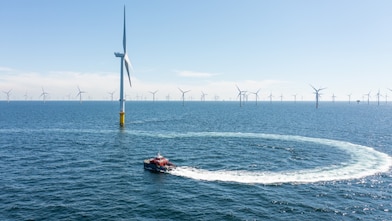
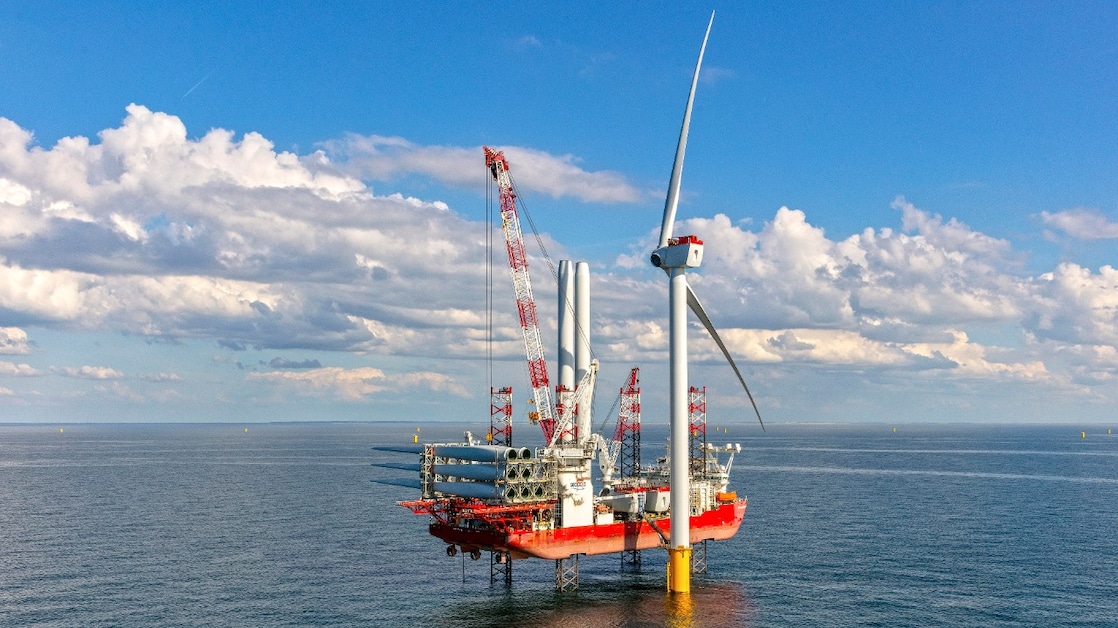
Windenergie lijkt eenvoudig. Zet een turbine op zee, leg een kabel naar land aan en sluit die aan op het net. Maar zonder power electronics, ofwel, vermogenselektronica, zou de energietransitie snel vaart verliezen. De netcongestie zou alleen maar groter worden doordat meerdere transformatorhuisjes in rook zouden opgaan. Er is een grote vraag naar slimme koppen die weten hoe je alles optimaal op elkaar afstemt zijn. Ook voor Shell, dat windparken op zee heeft om daarmee groene waterstof te gaan maken en bedrijven helpen te verduurzamen.

Tekst: Marcel Burger. Beeld: Flying Focus, MatZwart Fotografie, Christian Kalse.
In dit verhaal:
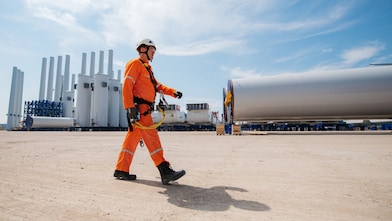
Uitdenken hoe power electronics moeten werken, lijkt op het plannen van je vakantie naar Spanje. Welk vliegtuig of welke trein neem je, welke busverbinding brengt je naar het centrum en hoe loop je van de bushalte naar je hostel of hotel? Yin Sun, offshore windexpert bij Shell: “Hoe zet je aerodynamisch koppel van een windturbine om in elektriciteit en lever je die stroom vervolgens aan het net, met de eindgebruiker in gedachten? Dat is de algemene uitdaging waar we voor staan.”
Een van de oplossingen is Flex H2, waarover je al eerder in Venster kon lezen. Voor de technisch extra geïnteresseerden nog even de basisuitleg hieronder.
‘Vertalingen’ van stroom
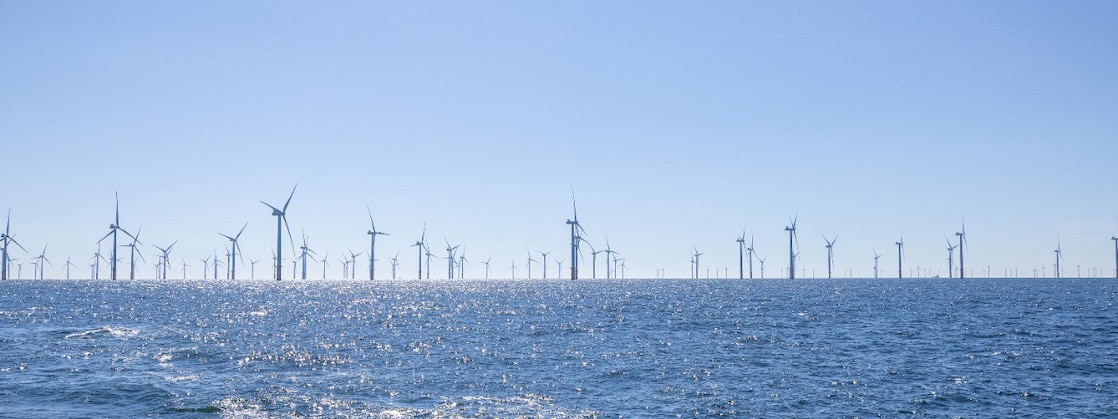
Van de wieken van de windturbine tot het moment waarop jij thuis je favoriete Netflix-serie kijkt: de stroom die je gebruikt moet heel wat ‘vertalingen’ ondergaan. Als eerste verhoogt de transformator van de windturbine de spanning die de molen via de onderzeese kabel naar het eerste offshore transformatorstation stuurt.
Van daar gaat de stroom via een efficiëntere 220 kV-hoogspanningskabel naar land, waar het transformatorstation op land de spanning verder verhoogt naar 380 kV-hoogspanning. Dat maakt transport over langere afstanden mogelijk met minimale stroomverliezen. Het 380 kV-net wordt in Europa veel gebruikt als de elektriciteitssnelweg voor zowel binnenlands als grensoverschrijdend transport.
“De kunst is om onderweg zo min mogelijk verlies te hebben”, zegt Sun, “en te kiezen wat het beste werkt: de gelijkstroom bedacht door Thomas Edison of de wisselstroom van Nikola Tesla. Beide hebben verschillende voor- en nadelen, afhankelijk van de afstand van het offshore windpark tot de kust.”
Verder van de kust
Het basisprincipe: wisselstroom (AC) is het vertrekpunt en werkt normaal gesproken het best. Het biedt de meest kosteneffectieve oplossing voor offshore windprojecten dicht bij land. Maar omdat de windgebieden dicht bij de kust snel uitgeput raken, door de beperkte ruimte en maatschappelijke weerstand tegen windturbines bij het strand, worden nieuwe projecten steeds verder uit de kust gepland.
Gelijkstroom is dan een aantrekkelijke oplossing, maar de benodigde infrastructuur is duurder. En je hebt een converter nodig om de risico’s op systeemuitval te beperken. Dat klinkt simpel, maar vraagt om precieze berekeningen per windpark; standaardinstellingen zijn er niet. Als de elektrotechnische ingenieurs de boel verkeerd uitrekenen, kunnen de gevolgen groot zijn. Ook omdat verschillende locaties van energieopwekking vaak aan elkaar gekoppeld zijn in het energiesysteem van een land. Zo leidde een foutieve opzet bij windpark Hornsea One, 120 kilometer uit de kust van Yorkshire in het Verenigd Koninkrijk, op 9 augustus 2019 tot een systeemblack-out.
Elektrotechnici in beeld
Zoals zo vaak in het leven is berekenen wat je het best kunt gebruiken geen kwestie van zwart-wit. Daar komen elektrotechnici in beeld. “Om windenergie goed te laten functioneren, moet je een zeer complex besturingssysteem bouwen. Je moet het ontwerpen met de technologie van vandaag, maar het moet over tien tot twintig jaar nog steeds de meest haalbare oplossing zijn.”
De kernboodschap: als je het vanaf het begin niet goed doet, heb je een probleem. Sun vat het samen: “Het is geen abstracte wetenschap. De keuze voor het beste systeem moet per geval worden bepaald. Bij korte afstanden, zoals 20 tot 30 kilometer: ja tegen gelijkstroom! Maar bij alles boven de 70 tot 80 kilometer moeten experts in power electronics bewijzen wat het beste werkt, onder alle omstandigheden.”
Sun vervolgt: “Hoe briljant de apparatuur zelf ook is, een ingenieur moet het systeem begrijpen en zo aanvoelen dat hij, zij of hen weet wat het beste gedijt. Als het verkeerde concept wordt toegepast, kan de werkgever zelfs de vergunning voor het bouwen van windparken kwijtraken. Dus veel meer dan alleen een financiële schade van enkele honderden miljoenen euro’s.”
Yin Sun, offshore windexpert bij Shell"Experts in power electronics bewijzen wat het beste werkt, onder alle omstandigheden"
Nieuwe generatie tovenaars
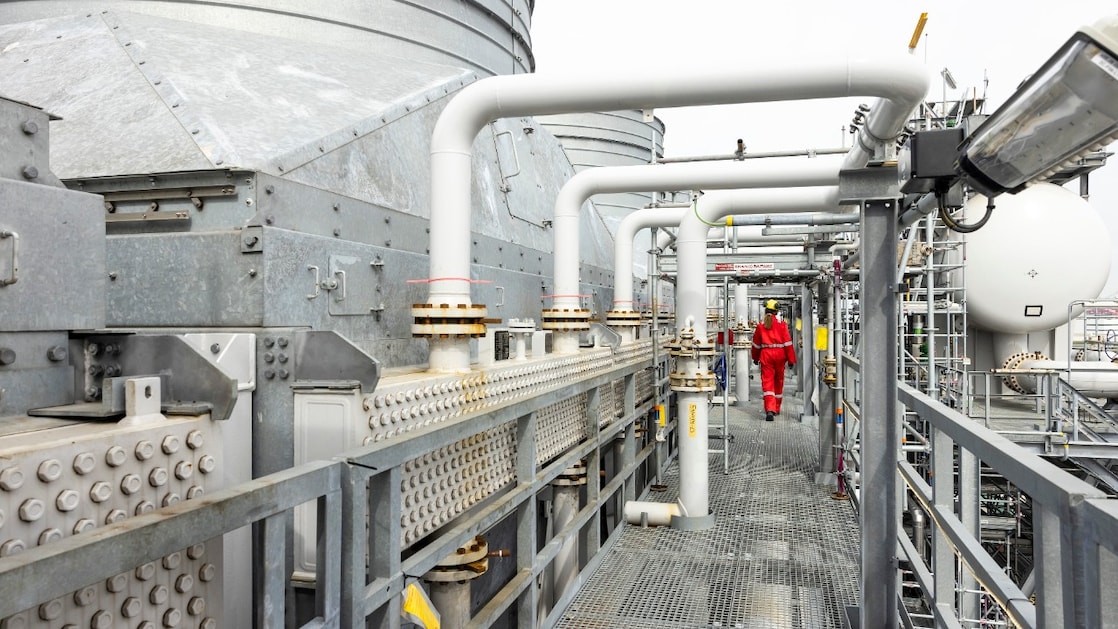
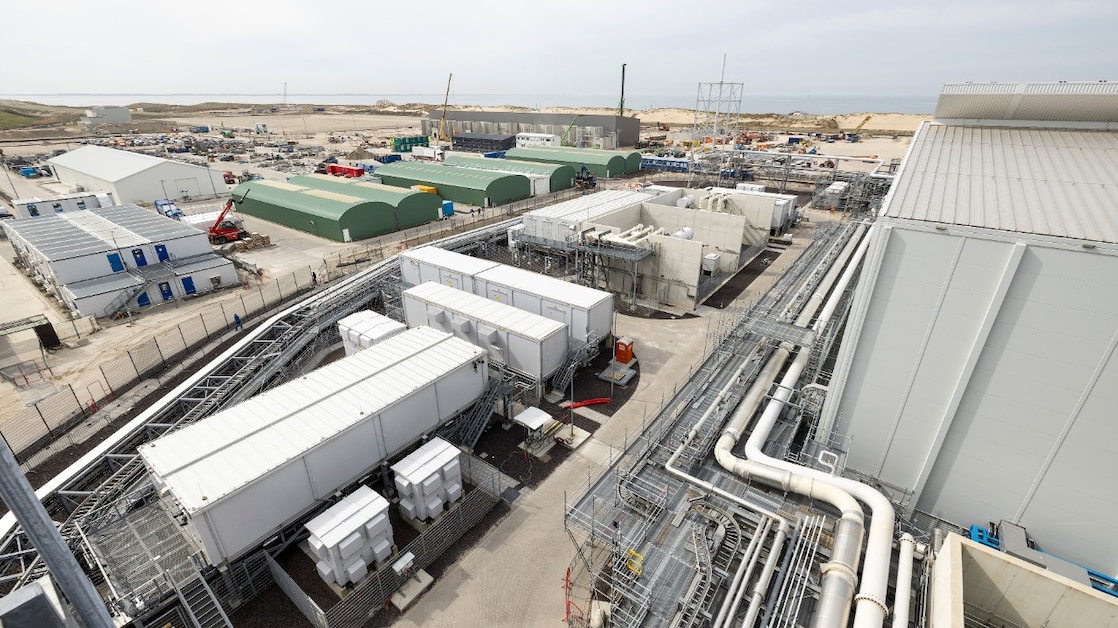
“Om vaart te maken in de energietransitie is een nieuwe generatie ‘tovenaars’ in power electronics nodig. Hun taak is om hernieuwbare bronnen efficiënt om te zetten in stroom en die te koppelen aan productie-installaties.” Zoals het Shell-project Holland Hydrogen 1. Met een geïnstalleerd vermogen van 200 megawatt wordt deze nieuwe installatie op de Maasvlakte bij Rotterdam een van Europa’s grootste fabrieken voor groene waterstof. Opstarten van de fabriek staat voor eind 2026 gepland, om in 2027 naar volledige productie te gaan.
Martijn Lunshof weet alles van systeemintegratie en de elektronica van de Holland Hydrogen 1. Die is gebouwd rond 20 elektrolysers, de apparaten die stroom van zee en gedestilleerd water (H2O) gebruiken om waterstof (H2)te maken. Feitelijk scheiden die elektrolysers het zuurstof (O) van de waterstof (H2).
“Elektrolysefabrieken hebben veel meer elektrische apparatuur nodig dan conventionele olie- en gasinstallaties; het verschil is ongeveer 40% tegenover 15%,” zegt Lunshof. Voor bedrijven als Shell is het in huis hebben van gedegen kennis van vermogenselektronica daarom geen nice-to-have, maar een must-have.
Veel uitzoekwerk
Elektrolysers hebben een specifieke spannings-/stroomcurve: bij een bepaalde stroomsterkte (H2-productie) hoort een overeenkomstige spanning. Draait de elektrolyser bijvoorbeeld op 20%, dan is daarvoor een ander voltage gelijkstroom nodig dan wanneer die op 100% draait. Dat wordt met zogenoemde vermogensregelaars en power elektronics geregeld.
Lunshof zegt dat er veel uitzoekwerk bij komt kijken. “Helpt het om batterijen toe te voegen voor energieopslag, of is het beter om ze weg te laten? Hoe kunnen we ’s nachts het best in bedrijf blijven, wanneer er geen zon is? Welke hardware en software moet worden aangepast, en hoe kan de beste installatie worden ingezet met minimale omvang en maximale efficiëntie.”
Kortom, hoe eenvoudig windenergie en het koppelen ervan aan waterstofproductie op het eerste gezicht ook lijkt, er komt veel meer bij kijken dan alleen een windturbine op het net aansluiten. Power electronics en — vooral — slimme, creatieve denkers die uitzoeken hoe je die het best laat werken, kunnen zo de energietransitie en daarmee de toekomst breken of maken.
Cautionary note
Cautionary note
The companies in which Shell plc directly and indirectly owns investments are separate legal entities. In this announcement “Shell”, “Shell Group” and “Group” are sometimes used for convenience to reference Shell plc and its subsidiaries in general. Likewise, the words “we”, “us” and “our” are also used to refer to Shell plc and its subsidiaries in general or to those who work for them. These terms are also used where no useful purpose is served by identifying the particular entity or entities. ‘‘Subsidiaries’’, “Shell subsidiaries” and “Shell companies” as used in this announcement refer to entities over which Shell plc either directly or indirectly has control. The terms “joint venture”, “joint operations”, “joint arrangements”, and “associates” may also be used to refer to a commercial arrangement in which Shell has a direct or indirect ownership interest with one or more parties. The term “Shell interest” is used for convenience to indicate the direct and/or indirect ownership interest held by Shell in an entity or unincorporated joint arrangement, after exclusion of all third-party interest.
Forward-Looking statements
This announcement contains forward-looking statements (within the meaning of the U.S. Private Securities Litigation Reform Act of 1995) concerning the financial condition, results of operations and businesses of Shell. All statements other than statements of historical fact are, or may be deemed to be, forward-looking statements. Forward-looking statements are statements of future expectations that are based on management’s current expectations and assumptions and involve known and unknown risks and uncertainties that could cause actual results, performance or events to differ materially from those expressed or implied in these statements. Forward-looking statements include, among other things, statements concerning the potential exposure of Shell to market risks and statements expressing management’s expectations, beliefs, estimates, forecasts, projections and assumptions. These forward-looking statements are identified by their use of terms and phrases such as “aim”; “ambition”; ‘‘anticipate’’; “aspire”, “aspiration”, ‘‘believe’’; “commit”; “commitment”; ‘‘could’’; “desire”; ‘‘estimate’’; ‘‘expect’’; ‘‘goals’’; ‘‘intend’’; ‘‘may’’; “milestones”; ‘‘objectives’’; ‘‘outlook’’; ‘‘plan’’; ‘‘probably’’; ‘‘project’’; ‘‘risks’’; “schedule”; ‘‘seek’’; ‘‘should’’; ‘‘target’’; “vision”; ‘‘will’’; “would” and similar terms and phrases. There are a number of factors that could affect the future operations of Shell and could cause those results to differ materially from those expressed in the forward-looking statements included in this announcement, including (without limitation): (a) price fluctuations in crude oil and natural gas; (b) changes in demand for Shell’s products; (c) currency fluctuations; (d) drilling and production results; (e) reserves estimates; (f) loss of market share and industry competition; (g) environmental and physical risks, including climate change; (h) risks associated with the identification of suitable potential acquisition properties and targets, and successful negotiation and completion of such transactions; (i) the risk of doing business in developing countries and countries subject to international sanctions; (j) legislative, judicial, fiscal and regulatory developments including tariffs and regulatory measures addressing climate change; (k) economic and financial market conditions in various countries and regions; (l) political risks, including the risks of expropriation and renegotiation of the terms of contracts with governmental entities, delays or advancements in the approval of projects and delays in the reimbursement for shared costs; (m) risks associated with the impact of pandemics, regional conflicts, such as the Russia-Ukraine war and the conflict in the Middle East, and a significant cyber security, data privacy or IT incident; (n) the pace of the energy transition; and (o) changes in trading conditions. No assurance is provided that future dividend payments will match or exceed previous dividend payments. All forward-looking statements contained in this announcement are expressly qualified in their entirety by the cautionary statements contained or referred to in this section. Readers should not place undue reliance on forward-looking statements. Additional risk factors that may affect future results are contained in Shell plc’s Form 20-F for the year ended December 31, 2025 (available at www.shell.com/investors/news-and-filings/sec-filings.html and www.sec.gov). These risk factors also expressly qualify all forward-looking statements contained in this announcement and should be considered by the reader. Each forward-looking statement speaks only as of the date of this announcement, July 16, 2026. Neither Shell plc nor any of its subsidiaries undertake any obligation to publicly update or revise any forward-looking statement as a result of new information, future events or other information. In light of these risks, results could differ materially from those stated, implied or inferred from the forward-looking statements contained in this announcement.
Shell’s net carbon intensity
Also, in this announcement we may refer to Shell’s “net carbon intensity” (NCI), which includes Shell’s carbon emissions from the production of our energy products, our suppliers’ carbon emissions in supplying energy for that production and our customers’ carbon emissions associated with their use of the energy products we sell. Shell’s NCI also includes the emissions associated with the production and use of energy products produced by others which Shell purchases for resale. Shell only controls its own emissions. The use of the terms Shell’s “net carbon intensity” or NCI is for convenience only and not intended to suggest these emissions are those of Shell plc or its subsidiaries.
Shell’s net-zero emissions target
Shell’s operating plan and outlook are forecasted for a three-year period and ten-year period, respectively, and are updated every year. They reflect the current economic environment and what we can reasonably expect to see over the next three and ten years. Accordingly, the outlook reflects our combined Scope 1 and 2 target, NCI target and our oil products ambition over the next ten years. However, Shell’s operating plan and outlook cannot reflect our 2050 net-zero emissions target, as this target is outside our planning period. Such future operating plans and outlooks could include changes to our portfolio, efficiency improvements and the use of carbon capture and storage and carbon credits. In the future, as society moves towards net-zero emissions, we expect Shell’s operating plans and outlooks to reflect this movement. However, if society is not net zero in 2050, as of today, there would be significant risk that Shell may not meet this target.
Forward-Looking non-GAAP measures
This announcement may contain certain forward-looking non-GAAP measures. We are unable to provide a reconciliation of these forward-looking non-GAAP measures to the most comparable GAAP financial measures because certain information needed to reconcile those non-GAAP measures to the most comparable GAAP financial measures is dependent on future events some of which are outside the control of Shell, such as oil and gas prices, interest rates and exchange rates. Moreover, estimating such GAAP measures with the required precision necessary to provide meaningful reconciliation is extremely difficult and could not be accomplished without unreasonable effort. Non-GAAP measures in respect of future periods which cannot be reconciled to the most comparable GAAP financial measure are calculated in a manner which is consistent with the accounting policies applied in Shell plc’s consolidated financial statements.
The contents of websites referred to in this announcement do not form part of this announcement.
We may have used certain terms, such as resources, in this announcement that the United States Securities and Exchange Commission (SEC) strictly prohibits us from including in our filings with the SEC. Investors are urged to consider closely the disclosure in our Form 20-F, File No 1-32575, available on the SEC website www.sec.gov.
Martijn Lunshof, expert systeemintegratie bij Shell"Hoe kunnen we ’s nachts het best in bedrijf blijven, wanneer er geen zon is?"
Power electronics key in getting offshore wind to renewable hydrogen
16 Jul 2026
Wind energy may seem straightforward: install a turbine offshore, lay a cable to shore and connect it to the grid. But without power electronics, the energy transition would quickly lose momentum. Grid congestion would only worsen as multiple transformer substations would quite literally go up in smoke. There is strong demand for talented engineers who know how to optimise and coordinate these complex systems. Shell is one of many organisations seeking such expertise, as it develops offshore wind farms to produce green hydrogen and help businesses decarbonise.

Text: Marcel Burger. Photography: Flying Focus, MatZwart Fotografie, Christian Kalse.
Designing how power electronics should work is a bit like planning a holiday to Spain. Which plane or train will you take? Which bus connection will get you to the city centre? And how do you get from the bus stop to your hostel or hotel? Yin Sun, an offshore wind specialist at Shell, explains: “How do you convert the aerodynamic torque generated by a wind turbine into electricity and then deliver that electricity to the grid, with the end user in mind? That is the overarching challenge we face.”
One of the solutions is FlexH2, which we have covered before in FlexH2. For those with a deeper technical interest, here is a brief explanation of the fundamentals.
Translating electricity
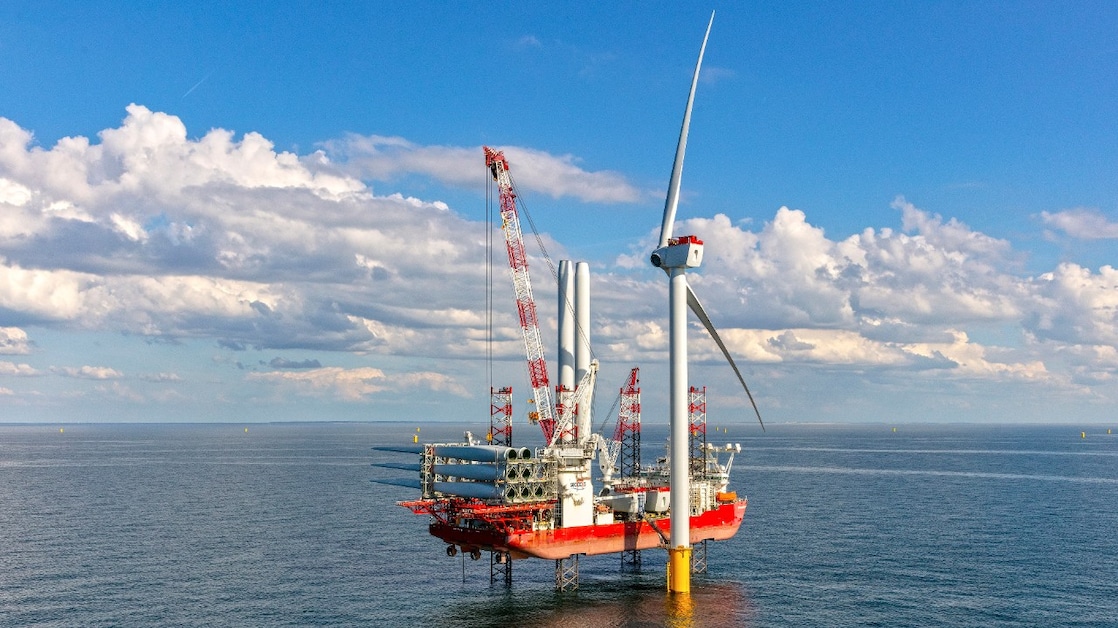
From the turbine blades of a wind farm to the moment you sit down to watch your favourite Netflix series at home, the electricity you use must undergo a series of ‘translations’. First, the turbine’s transformer increases the voltage of the electricity generated by the wind turbine before it is sent via a subsea cable to the first offshore substation.
From there, the electricity travels through a more efficient 220 kV high-voltage cable to shore, where an onshore substation further increases the voltage to 380 kV. This enables long-distance transmission with minimal energy losses. Across Europe, the 380 kV network is widely used as the electricity motorway for both domestic and cross-border power transport.
“The challenge is to minimise losses along the way,” says Sun, “and to choose the technology that works best: the direct current championed by Thomas Edison or the alternating current developed by Nikola Tesla. Each has its own advantages and disadvantages, depending on how far the offshore wind farm is located from the coast.”
Further offshore
The basic principle is that alternating current (AC) is usually the preferred starting point. It provides the most cost-effective solution for offshore wind projects located relatively close to shore. However, as suitable wind areas nearer the coast are rapidly being used up — due to limited space and public opposition to turbines visible from beaches — new projects are being planned further and further offshore.
In such cases, direct current (DC) becomes an attractive alternative, although the required infrastructure is more expensive. It also requires a converter to reduce the risk of system failures. That may sound straightforward, but it demands precise calculations for each individual wind farm; there is no one-size-fits-all solution.
If electrical engineers get their calculations wrong, the consequences can be significant. This is partly because different sources of power generation are often interconnected within a country's energy system. One example occurred on 9 August 2019, when faults associated with the Hornsea One wind farm, located 120 kilometres off the Yorkshire coast in the United Kingdom, contributed to a widespread power outage.
Electrical engineers step into the spotlight
As is often the case in life, determining the optimal solution is not a matter of black and white. That is where electrical engineers come in.
“To make wind power work effectively, you need to build an extremely sophisticated control system. You have to design it using today's technology, while ensuring that it remains the most viable solution ten to twenty years from now.”
The key message is simple: if you do not get it right from the outset, you will face problems later. Sun summarises it this way: “It is not an abstract science. The choice of the best system must be determined on a case-by-case basis. For shorter distances, such as 20 to 30 kilometres, AC is generally the preferred option. But once you go beyond 70 to 80 kilometres offshore, experts in power electronics must demonstrate which solution performs best under all operating conditions.”
Sun continues: “No matter how brilliant the equipment itself may be, an engineer must understand the entire system and develop an intuitive feel for what will work best. If the wrong concept is applied, a developer could even lose its licence to build offshore wind farms. So the consequences extend far beyond financial losses of several hundred million euros.”
Yin Sun, offshore wind expert at Shell"Experts in power electronics prove what works best, under all circumstances"
A new generation of wizards
“To accelerate the energy transition, we need a new generation of ‘wizards’ in power electronics. Their task is to convert renewable energy sources into electricity efficiently and connect them to production facilities.”
One such facility is Shell’s Holland Hydrogen 1 project. With an installed capacity of 200 megawatts, this new plant on the Maasvlakte near Rotterdam is set to become one of Europe’s largest green hydrogen production facilities. Start of commissioning is planned late 2026, with production ramp-up in 2027.
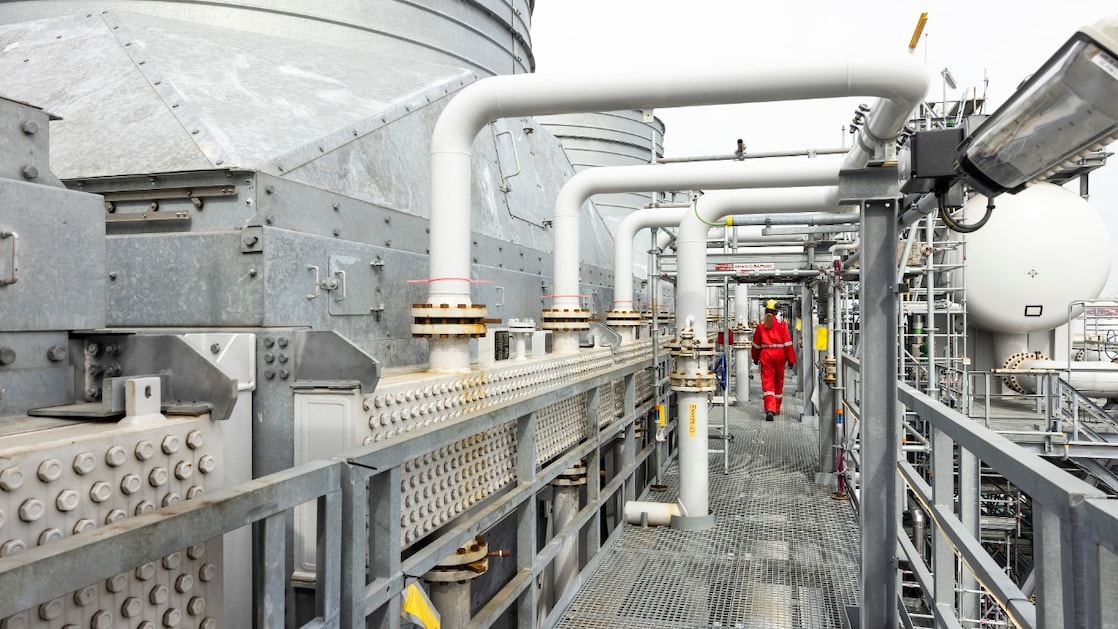
Martijn Lunshof knows everything about system integration and the electrical systems behind Holland Hydrogen 1. The plant is built around 20 electrolysers — devices that use electricity generated offshore and purified water (H₂O) to produce hydrogen (H₂). In essence, these electrolysers separate oxygen from hydrogen.
“Electrolysis plants require far more electrical equipment than conventional oil and gas installations — around 40% compared with roughly 15%,” says Lunshof. For companies such as Shell, having strong expertise in power electronics is therefore not a nice-to-have, but a must-have.
A great deal of problem-solving
Electrolysers operate according to a specific voltage-current curve: for every level of electrical current (and therefore hydrogen production), there is a corresponding voltage requirement. For example, an electrolyser operating at 20% capacity requires a different direct-current voltage than one running at 100% capacity. This is controlled through power converters and power electronics.
Lunshof explains that a great deal of analysis and optimisation is involved. “Would it help to add batteries for energy storage, or would it be better not to? How can we keep operations running most effectively at night, when there is no solar power available? Which hardware and software need to be adapted, and how can we achieve the best possible installation with the smallest footprint and the highest efficiency?”
In short, while wind power and its integration with hydrogen production may appear straightforward at first glance, there is far more to it than simply connecting a wind turbine to the grid. Power electronics — and, above all, the intelligent and creative minds who determine how to make them work most effectively — could ultimately determine the success or failure of the energy transition and, with it, our energy future.
Cautionary note
Cautionary note
The companies in which Shell plc directly and indirectly owns investments are separate legal entities. In this announcement “Shell”, “Shell Group” and “Group” are sometimes used for convenience to reference Shell plc and its subsidiaries in general. Likewise, the words “we”, “us” and “our” are also used to refer to Shell plc and its subsidiaries in general or to those who work for them. These terms are also used where no useful purpose is served by identifying the particular entity or entities. ‘‘Subsidiaries’’, “Shell subsidiaries” and “Shell companies” as used in this announcement refer to entities over which Shell plc either directly or indirectly has control. The terms “joint venture”, “joint operations”, “joint arrangements”, and “associates” may also be used to refer to a commercial arrangement in which Shell has a direct or indirect ownership interest with one or more parties. The term “Shell interest” is used for convenience to indicate the direct and/or indirect ownership interest held by Shell in an entity or unincorporated joint arrangement, after exclusion of all third-party interest.
Forward-Looking statements
This announcement contains forward-looking statements (within the meaning of the U.S. Private Securities Litigation Reform Act of 1995) concerning the financial condition, results of operations and businesses of Shell. All statements other than statements of historical fact are, or may be deemed to be, forward-looking statements. Forward-looking statements are statements of future expectations that are based on management’s current expectations and assumptions and involve known and unknown risks and uncertainties that could cause actual results, performance or events to differ materially from those expressed or implied in these statements. Forward-looking statements include, among other things, statements concerning the potential exposure of Shell to market risks and statements expressing management’s expectations, beliefs, estimates, forecasts, projections and assumptions. These forward-looking statements are identified by their use of terms and phrases such as “aim”; “ambition”; ‘‘anticipate’’; “aspire”, “aspiration”, ‘‘believe’’; “commit”; “commitment”; ‘‘could’’; “desire”; ‘‘estimate’’; ‘‘expect’’; ‘‘goals’’; ‘‘intend’’; ‘‘may’’; “milestones”; ‘‘objectives’’; ‘‘outlook’’; ‘‘plan’’; ‘‘probably’’; ‘‘project’’; ‘‘risks’’; “schedule”; ‘‘seek’’; ‘‘should’’; ‘‘target’’; “vision”; ‘‘will’’; “would” and similar terms and phrases. There are a number of factors that could affect the future operations of Shell and could cause those results to differ materially from those expressed in the forward-looking statements included in this announcement, including (without limitation): (a) price fluctuations in crude oil and natural gas; (b) changes in demand for Shell’s products; (c) currency fluctuations; (d) drilling and production results; (e) reserves estimates; (f) loss of market share and industry competition; (g) environmental and physical risks, including climate change; (h) risks associated with the identification of suitable potential acquisition properties and targets, and successful negotiation and completion of such transactions; (i) the risk of doing business in developing countries and countries subject to international sanctions; (j) legislative, judicial, fiscal and regulatory developments including tariffs and regulatory measures addressing climate change; (k) economic and financial market conditions in various countries and regions; (l) political risks, including the risks of expropriation and renegotiation of the terms of contracts with governmental entities, delays or advancements in the approval of projects and delays in the reimbursement for shared costs; (m) risks associated with the impact of pandemics, regional conflicts, such as the Russia-Ukraine war and the conflict in the Middle East, and a significant cyber security, data privacy or IT incident; (n) the pace of the energy transition; and (o) changes in trading conditions. No assurance is provided that future dividend payments will match or exceed previous dividend payments. All forward-looking statements contained in this announcement are expressly qualified in their entirety by the cautionary statements contained or referred to in this section. Readers should not place undue reliance on forward-looking statements. Additional risk factors that may affect future results are contained in Shell plc’s Form 20-F for the year ended December 31, 2025 (available at www.shell.com/investors/news-and-filings/sec-filings.html and www.sec.gov). These risk factors also expressly qualify all forward-looking statements contained in this announcement and should be considered by the reader. Each forward-looking statement speaks only as of the date of this announcement, July 16, 2026. Neither Shell plc nor any of its subsidiaries undertake any obligation to publicly update or revise any forward-looking statement as a result of new information, future events or other information. In light of these risks, results could differ materially from those stated, implied or inferred from the forward-looking statements contained in this announcement.
Shell’s net carbon intensity
Also, in this announcement we may refer to Shell’s “net carbon intensity” (NCI), which includes Shell’s carbon emissions from the production of our energy products, our suppliers’ carbon emissions in supplying energy for that production and our customers’ carbon emissions associated with their use of the energy products we sell. Shell’s NCI also includes the emissions associated with the production and use of energy products produced by others which Shell purchases for resale. Shell only controls its own emissions. The use of the terms Shell’s “net carbon intensity” or NCI is for convenience only and not intended to suggest these emissions are those of Shell plc or its subsidiaries.
Shell’s net-zero emissions target
Shell’s operating plan and outlook are forecasted for a three-year period and ten-year period, respectively, and are updated every year. They reflect the current economic environment and what we can reasonably expect to see over the next three and ten years. Accordingly, the outlook reflects our combined Scope 1 and 2 target, NCI target and our oil products ambition over the next ten years. However, Shell’s operating plan and outlook cannot reflect our 2050 net-zero emissions target, as this target is outside our planning period. Such future operating plans and outlooks could include changes to our portfolio, efficiency improvements and the use of carbon capture and storage and carbon credits. In the future, as society moves towards net-zero emissions, we expect Shell’s operating plans and outlooks to reflect this movement. However, if society is not net zero in 2050, as of today, there would be significant risk that Shell may not meet this target.
Forward-Looking non-GAAP measures
This announcement may contain certain forward-looking non-GAAP measures. We are unable to provide a reconciliation of these forward-looking non-GAAP measures to the most comparable GAAP financial measures because certain information needed to reconcile those non-GAAP measures to the most comparable GAAP financial measures is dependent on future events some of which are outside the control of Shell, such as oil and gas prices, interest rates and exchange rates. Moreover, estimating such GAAP measures with the required precision necessary to provide meaningful reconciliation is extremely difficult and could not be accomplished without unreasonable effort. Non-GAAP measures in respect of future periods which cannot be reconciled to the most comparable GAAP financial measure are calculated in a manner which is consistent with the accounting policies applied in Shell plc’s consolidated financial statements.
The contents of websites referred to in this announcement do not form part of this announcement.
We may have used certain terms, such as resources, in this announcement that the United States Securities and Exchange Commission (SEC) strictly prohibits us from including in our filings with the SEC. Investors are urged to consider closely the disclosure in our Form 20-F, File No 1-32575, available on the SEC website www.sec.gov.
Martijn Lunshof, system integration expert at Shell"How can we keep the plant operational at night, when there is no sun?"