Chemie
Chemische bestandsdelen zijn er overal: in telefoons, kleding, matrassen en schoonmaakmiddelen. In fabrieken, ziekenhuizen en thuis. In (elektrische) auto's en vliegtuigen. Ook in zonnepanelen, windturbines, sneakers en geneesmiddelen vinden we ze terug. Dankzij de chemie zijn veel materialen lichter, sterker en beter.
Op deze pagina:
Shells chemie-activiteiten in Nederland

Omslag naar duurzamere chemie
Nederland maakt niet alleen een omslag naar duurzamere energie, maar ook een transitie naar circulaire en duurzamere chemie. Vooralsnog kan de chemie niet zonder olie- en gasproducten. Maar daaraan werken we wel, onder meer op het Shell Chemicals Park Moerdijk en op de Energy Transition Campus Amsterdam. Zo werd in Moerdijk in november 2024 de MDU-installatie in gebruik genomen. Daarmee kan de locatie chemisch gerecycled plastic als grondstof voor nieuw plastic gebruiken.
Shells chemie in Nederland
Shell Chemicals Park Moerdijk
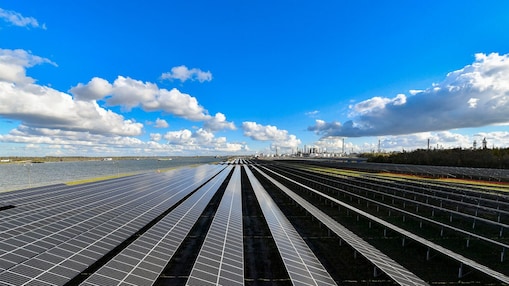
Shell Chemicals Park Moerdijk maakt chemische producten op basis van aardolie. Het is een van de grootste chemische complexen van Nederland en Europa. Op Moerdijk worden stappen gezet naar een duurzame toekomst, onder meer met de ingebruikneming van een fabriek voor chemische recycling. Daarmee kan ook moeilijk te recyclen plastic worden hergebruikt. Ook zijn er nieuwe krakerfornuizen, die zorgen voor een vermindering van de CO2-uitstoot gelijk aan die van een stad als Den Bosch.
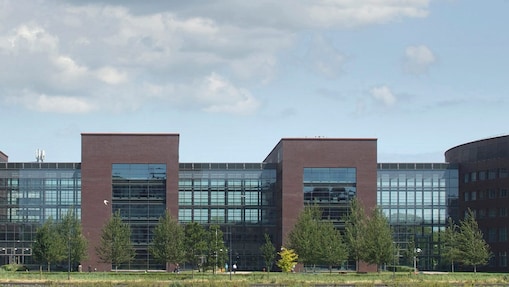
Energy Transition Campus Amsterdam (ETCA)
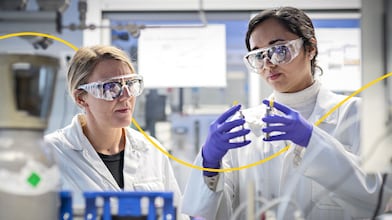
De Energy Transition Campus Amsterdam (ETCA) is in meer dan 110 jaar uitgegroeid tot een toonaangevend instituut voor research & development. Het is een van de drie grootste onderzoekscentra van Shell wereldwijd, en sinds 2022 zijn start-ups, scale-ups en kennisinstituten er ook neergestreken om samen te werken aan de omschakeling naar duurzamere energie.
Chemie in de prakijk
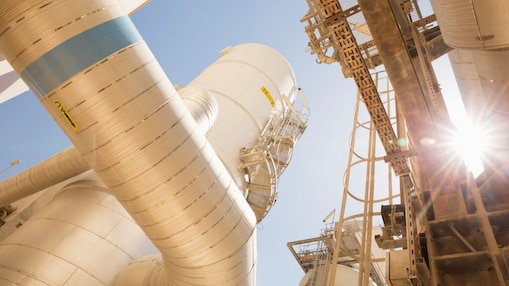
Chemie met nafta voor de kraker
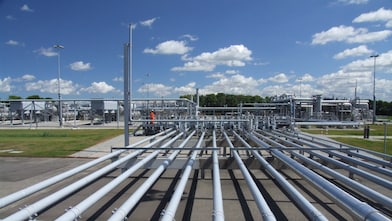
De meeste chemie gebruikt nog altijd fossiele grondstoffen. Door ruwe olie te verhitten, wordt nafta gedestilleerd. Die dient op haar beurt als voeding voor een zogenoemde krakerinstallatie, die uit de nafta chemische bouwstenen maakt voor onder meer polymeren, benzeen, etheen en propeen. Die stoffen vind je vervolgens in veel producten terug, producten die we dagelijks gebruiken zonder dat we erbij stil staan. In België en Nederland is veel van de grote Europese chemische industrie te vinden, vooral in Antwerpen, Terneuzen, Geleen en op Shell Chemicals Park Moerdijk.

Duurzamere chemie
Duurzame chemie vervangt de fossiele grondstoffen van de traditionele petrochemie zo veel mogelijk met biologische, circulaire of synthetische componenten. Onderzoek hiernaar doen we onder meer met onze partners in ons lab op de Energy Transition Campus Amsterdam (ETCA) en daarbuiten, zoals bij universiteiten en kennisinstellingen. De uitvoering doen we bijvoorbeeld op ons Chemicals Park Moerdijk.
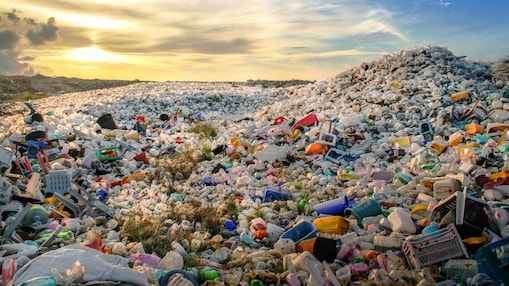
Circulaire chemie & chemische recycling
Het hergebruik van plastic is nu nog beperkt. Zo kan de verpakking van je eten (nog) niet als voedingsverpakking worden hergebruikt. Dat komt omdat bacteriën met de huidige machinale (mechanische) recycling kunnen overleven. Hier gaat circulaire recycling helpen, en daar wordt op Shell Chemicals Park Moerdijk hard aan gewerkt.

Chemietransitie
Chemie is overal. De chemische industrie levert basischemicaliën voor allerlei producten. Zonder die producten zou het leven er heel anders uitzien. De grondstof van al die basischemicaliën is nog bijna geheel fossiel. Daarom verduurzaamt de chemiesector.
Cautionary note
Cautionary note
The companies in which Shell plc directly and indirectly owns investments are separate legal entities. In this publication “Shell”, “Shell Group” and “Group” are sometimes used for convenience to reference Shell plc and its subsidiaries in general. Likewise, the words “we”, “us” and “our” are also used to refer to Shell plc and its subsidiaries in general or to those who work for them. These terms are also used where no useful purpose is served by identifying the particular entity or entities. ‘‘Subsidiaries’’, “Shell subsidiaries” and “Shell companies” as used in this publication refer to entities over which Shell plc either directly or indirectly has control. The terms “joint venture”, “joint operations”, “joint arrangements”, and “associates” may also be used to refer to a commercial arrangement in which Shell has a direct or indirect ownership interest with one or more parties. The term “Shell interest” is used for convenience to indicate the direct and/or indirect ownership interest held by Shell in an entity or unincorporated joint arrangement, after exclusion of all third-party interest.
Forward-Looking statements
This publication contains forward-looking statements (within the meaning of the U.S. Private Securities Litigation Reform Act of 1995) concerning the financial condition, results of operations and businesses of Shell. All statements other than statements of historical fact are, or may be deemed to be, forward-looking statements. Forward-looking statements are statements of future expectations that are based on management’s current expectations and assumptions, including (without limitation) those concerning Shell’s strategy and operating plans, macroeconomic conditions, future energy demand, supply and product mix, commodity prices, demand for Shell’s products, production results and reserve estimates, development, execution and management of projects, energy transition and climate change, management of safety and environmental risks, costs, cash capital expenditures, technology advancements, legislative, judicial, fiscal and regulatory developments, regional conflicts and trading conditions, and involve known and unknown risks and uncertainties that could cause actual results, performance or events to differ materially from those expressed or implied in these statements. Forward-looking statements include, among other things, statements concerning the potential exposure of Shell to market risks and statements expressing management’s expectations, beliefs, estimates, forecasts, projections and assumptions. These forward-looking statements are identified by their use of terms and phrases such as “aim”; “ambition”; ‘‘anticipate’’; “aspire”, “aspiration”, ‘‘believe’’; “commit”; “commitment”; ‘‘could’’; “desire”; ‘‘estimate’’; ‘‘expect’’; ‘‘goals’’; ‘‘intend’’; ‘‘may’’; “milestones”; ‘‘objectives’’; ‘‘outlook’’; ‘‘plan’’; ‘‘probably’’; ‘‘project’’; ‘‘risks’’; “schedule”; ‘‘seek’’; ‘‘should’’; ‘‘target’’; “vision”; ‘‘will’’; “would” and similar terms and phrases. There are a number of factors that could affect the future operations of Shell and could cause those results to differ materially from those expressed in the forward-looking statements included in this publication, including (without limitation): (a) price fluctuations in crude oil and natural gas; (b) changes in demand for Shell’s products; (c) currency fluctuations; (d) drilling and production results; (e) reserves estimates; (f) loss of market share and industry competition; (g) environmental and physical risks, including climate change; (h) risks associated with the identification of suitable potential acquisition properties and targets, and successful negotiation and completion of such transactions; (i) the risk of doing business in developing countries and countries subject to international sanctions; (j) legislative, judicial, fiscal and regulatory developments including tariffs and regulatory measures addressing climate change; (k) economic and financial market conditions in various countries and regions; (l) political risks, including the risks of expropriation and renegotiation of the terms of contracts with governmental entities, delays or advancements in the approval of projects and delays in the reimbursement for shared costs; (m) risks associated with the impact of pandemics, regional conflicts, such as the Russia-Ukraine war and the conflict in the Middle East, and a significant cyber security, data privacy or IT incident; (n) the pace of the energy transition; and (o) changes in trading conditions. No assurance is provided that future dividend payments will match or exceed previous dividend payments. All forward-looking statements contained in this publication are expressly qualified in their entirety by the cautionary statements contained or referred to in this section. Readers should not place undue reliance on forward-looking statements. Additional risk factors that may affect future results are contained in Shell plc’s Form 20-F for the year ended December 31, 2025 (available at www.shell.com/investors/news-and-filings/sec-filings.html and www.sec.gov). These risk factors also expressly qualify all forward-looking statements contained in this publication and should be considered by the reader. Each forward-looking statement speaks only as of the date of this publication, September 22, 2026. Neither Shell plc nor any of its subsidiaries undertake any obligation to publicly update or revise any forward-looking statement as a result of new information, future events or other information. In light of these risks, results could differ materially from those stated, implied or inferred from the forward-looking statements contained in this publication.
Shell’s net carbon intensity and net-zero emissions target
In this publication we may refer to Shell’s “net carbon intensity” (NCI), which includes Shell’s carbon emissions from the production of our energy products, our suppliers’ carbon emissions in supplying energy for that production and our customers’ carbon emissions associated with their use of the energy products we sell. Shell’s NCI also includes the emissions associated with the production and use of energy products produced by others which Shell purchases for resale. Shell only controls its own emissions. The use of the terms Shell’s “net carbon intensity” or NCI is for convenience only and not intended to suggest these emissions are those of Shell plc or its subsidiaries.
Shell’s operating plan and outlook are forecasted for a three-year period and ten-year period, respectively, and are updated every year. They reflect the current economic environment and what we can reasonably expect to see over the next three and ten years. Accordingly, the outlook reflects our combined Scope 1 and 2 target, NCI target and our oil products ambition over the next ten years. However, Shell’s operating plan and outlook cannot reflect our 2050 net-zero emissions target, as this target is outside our planning period. Such future operating plans and outlooks could include changes to our portfolio, efficiency improvements and the use of carbon capture and storage and carbon credits. In the future, as society moves towards net-zero emissions, we expect Shell’s operating plans and outlooks to reflect this movement. However, if society is not net zero in 2050, as of today, there would be significant risk that Shell may not meet this target.
The information provided above regarding Shell’s NCI and net zero emissions target are not intended, nor should they be construed as introducing, suggesting or making any claim, target or representation thereof other than what is included in the publicaiton..
Forward-Looking non-GAAP measures
This publication may contain certain forward-looking non-GAAP measures such as free cash flow and underlying operating expenses. We are unable to provide a reconciliation of these forward-looking non-GAAP measures to the most comparable GAAP financial measures because certain information needed to reconcile those non-GAAP measures to the most comparable GAAP financial measures is dependent on future events some of which are outside the control of Shell, such as oil and gas prices, interest rates and exchange rates. Moreover, estimating such GAAP measures with the required precision necessary to provide a meaningful reconciliation is extremely difficult and could not be accomplished without unreasonable effort. Non-GAAP measures in respect of future periods which cannot be reconciled to the most comparable GAAP financial measure are calculated in a manner which is consistent with the accounting policies applied in Shell plc’s consolidated financial statements. These forward-looking non-GAAP measures are provided to assist readers in understanding management’s use and expectations of such measures and may not be appropriate for other purposes.
The contents of websites referred to in this publication do not form part of this publication.
We may have used certain terms, such as resources, in this publication that the United States Securities and Exchange Commission (SEC) strictly prohibits us from including in our filings with the SEC. Investors are urged to consider closely the disclosure in our Form 20-F, File No 1-32575, available on the SEC website www.sec.gov.