25 jaar in de haven: Jan-Kees Logmans van Shell Pernis
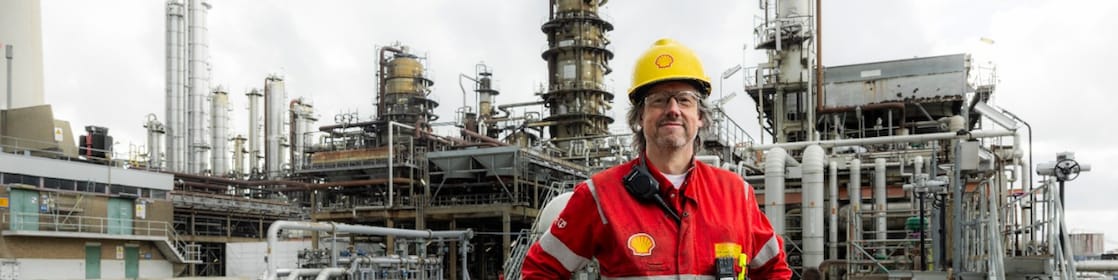
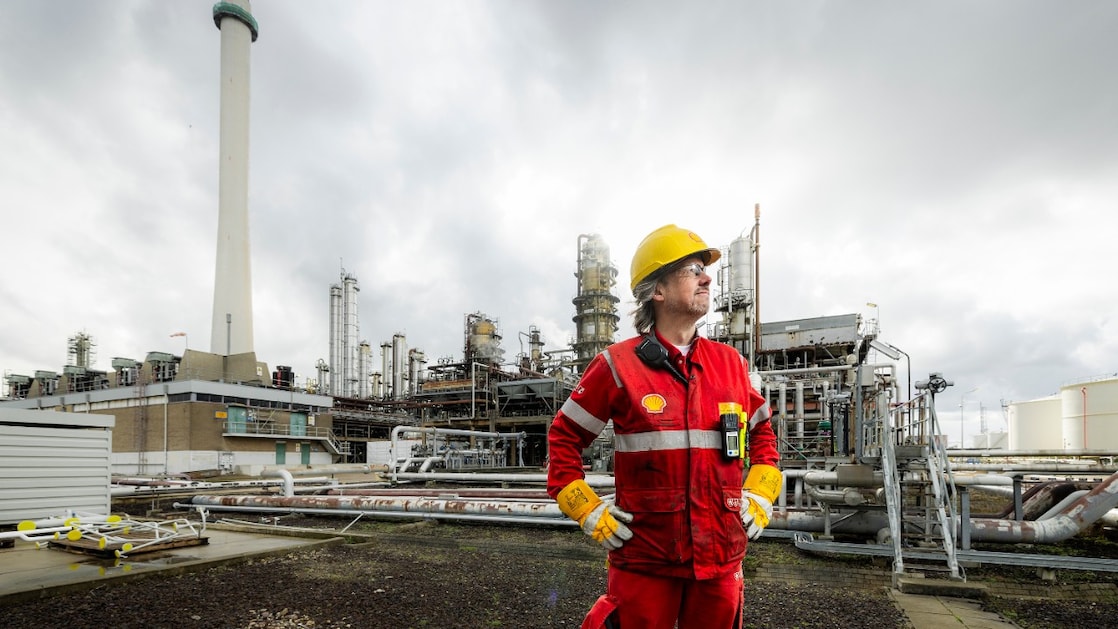
Het gaf me een enorme kick, weet Jan-Kees Logmans nog, toen hij 25 jaar geleden als jonge procesoperator voor het eerst de Shell-raffinaderij in Pernis in het Rotterdamse havengebied binnenstapte. “De installaties, de techniek, de omvang… Indrukwekkend en gigantisch. De grootste in Europa.” In 25 jaar is veel veranderd. De kick is altijd gebleven.

Tekst: Matthijs Timmers. Beeld: Christian Kalse.
Het is begin 2001. In New York staan de Twin Towers er nog, memoreert Jan-Kees Logmans (51) wanneer hij bij Shell Pernis aan de slag gaat als procesoperator. In zijn eerste jaar werkt Jan-Kees als leerling op de crude distillation unit. Daar komt de ruwe olie binnen, waar deze wordt gedistilleerd tot de fracties nafta, kerosine en diesel. “Ik kreeg een klembord, papier en potlood mee. Dan liep ik alle leidingen na en tekende ik het complete systeem na: de leidingen, de warmtewisselaars, de kleppen, pompen en fornuizen. Dat is de beste manier om de fabriek te leren kennen.” Daarna volgt nog een serie theoretische trainingen. “Dat eerste jaar was best pittig”, weet de jubilaris nog. “Maar ik vond het geweldig. Dit was precies wat ik wilde.”
Technisch walhalla
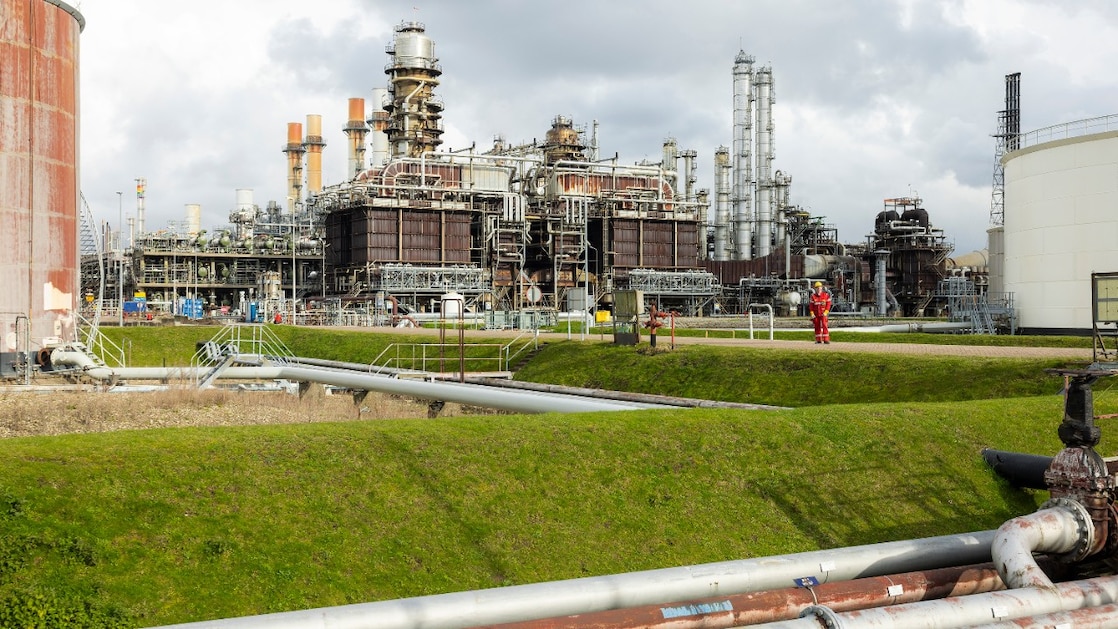
Een uitgebreide inwerkperiode is nodig, vindt Jan-Kees. “Het duurt gewoon een tijdje voordat het kwartje valt, voordat je de fabriek écht hebt doorgrond.” Hij is lyrisch over het technisch ontwerp van de installaties (“schitterend”), het proces van koken en de manier waarop de warmte wordt benut.
“Distilleren is niets nieuws, de Schotten maken zo al eeuwen whisky. Maar de manier waarop deze fabriek is ingericht, vind ik ingenieus. Ik ben een techneut; dit alles bij elkaar is gewoon een technisch walhalla.”
Met de tijd mee
De Shell-raffinaderij in Pernis is in de loop der jaren flink veranderd. “We moeten met onze tijd mee, de wereld verandert en wij ook.” Hij doelt op scherpere milieuregelgeving en de energietransitie. Vroeger stookte hij nog asfalt op de fornuizen. Dat zorgde voor flinke uitstoot. “Dat doen we niet meer.” De branders zijn vervangen en stoten minder stikstof uit. Ook zijn ontzwavelingsinstallaties gebouwd, die de zwavel uit de brandstoffen halen. Jan-Kees wordt vrolijk van de ontwikkeling van groene waterstof. “Binnenkort krijgen we de eerste groene waterstof vanuit onze waterstoffabriek op de Tweede Maasvlakte.”
Wie is Jan-Kees Logmans?
Jan-Kees Logmans (51) is geboren en getogen in Hellevoetsluis en woont de laatste vier jaar in “de pittoreske en gezellige vesting” van Brielle. “Ik zit hier goud.” Daar deed hij ook de middelbare technische school. In zijn vrije tijd fietst, rent en roeit hij. Jan-Kees heeft twee zonen. De een wordt lasser, de ander is machinist op een goederentrein die geregeld langs de raffinaderij van zijn vader raast.
Onthouden en opzoeken
Ook de cultuur op de werkvloer is nauwelijks te vergelijken met die van 25 jaar geleden. Destijds was hij een broekie, nu is hij de oude rot . “In mijn ploeg zitten vooral twintigers. Pernis draait op die generatie.”
Hij ziet een interessant verschil. “M maal C maal delta T — de formule van warmteoverdracht — is er bij mij op school echt ingestampt. Daarmee leg ik de werking van een warmtewisselaar uit. De jongere generatie denkt helemaal niet zo. Ze kan weinig onthouden, maar is wel ontzettend goed in dingen opzoeken. Daar ben ik weer niet zo goed in. Die mix maakt het werken in een divers team leuk en interessant.”
Industrie onder druk
Ook het gehele Rotterdamse havengebied is veranderd. Er is een transitie gaande, terrijl het vestigingsklimaat is verslechterd. “Dat hebben we deels aan onszelf te wijten. Energie is hier het duurste van heel Europa. Om ons heen zien we bedrijven vertrekken of stoppen. Daar maak ik me zorgen over.”
Natuurlijk moet de industrie schoner, vindt Jan Kees. Denk aan elektrificatie, groene stroom in plaats van fossiele brandstoffen. Maar mede door het overvolle stroomnet loopt de industrie tegen grenzen aan. Ook in de toekomst zullen er nog auto’s rijden, schepen varen en vliegtuigen vliegen, zegt Jan Kees. “De raffinaderij blijft haar functie voorlopig houden”, voorspelt hij. Wel moet de overheid volgens hem goede randvoorwaarden scheppen en helder beleid uitstippelen. Die zijn nodig om als basisindustrie in Nederland niet volledig afhankelijk te worden van het buitenland.
Jan-Kees Logmans, assistant production team lead, Shell Pernis"Als kind groeide ik op met Shell"
Twee jubilarissen
Zo onderstreept Jan-Kees ook het belang van die andere jubilaris: Deltalinqs. Hij kent de belangenvereniging nog uit de tijd dat deze EBWheette: Stichting Europoort Botlek Belangen. “Deltalinqs zorgt ervoor dat overal in de haven dezelfde regels worden toegepast. Zeker als je met verschillende onderaannemers werkt, is dat handig.” Ook deelt Deltalinqs nuttige informatie. “Bijvoorbeeld over incidenten, om van elkaar te leren. Hartstikke goed.”
Omgevlogen
De afgelopen 25 jaar zijn omgevlogen. Jan-Kees werkt nog steeds op dezelfde fabriek en is.inmiddels is hij assistent-productieteamlead. “Ik ben medeverantwoordelijk voor het goed draaien van de fabrieken ”, vat hij zijn werk samen. Een zo’n fabriek kan bij maximale capaciteit wel 31.500 ton ruwe olie per dag verwerken.
Soms springt hij bij als operator en “loopt een kantje”: een controleronde langs een deel van de fabriek. “Draaien de pompen goed, zijn er lekkages, is er genoeg smeerolie, hoe zien de vlammen bij de fornuizen eruit?” somt Jan-Kees op. Die combinatie van verantwoordelijkheid en operationeel werk maakt zijn baan nog steeds waanzinnig leuk. “Het zijn inmiddels een beetje ‘mijn’ crude distillers geworden.”
Cautionary note
Cautionary note
The companies in which Shell plc directly and indirectly owns investments are separate legal entities. In this announcement “Shell”, “Shell Group” and “Group” are sometimes used for convenience to reference Shell plc and its subsidiaries in general. Likewise, the words “we”, “us” and “our” are also used to refer to Shell plc and its subsidiaries in general or to those who work for them. These terms are also used where no useful purpose is served by identifying the particular entity or entities. ‘‘Subsidiaries’’, “Shell subsidiaries” and “Shell companies” as used in this announcement refer to entities over which Shell plc either directly or indirectly has control. The terms “joint venture”, “joint operations”, “joint arrangements”, and “associates” may also be used to refer to a commercial arrangement in which Shell has a direct or indirect ownership interest with one or more parties. The term “Shell interest” is used for convenience to indicate the direct and/or indirect ownership interest held by Shell in an entity or unincorporated joint arrangement, after exclusion of all third-party interest.
Forward-Looking statements
This announcement contains forward-looking statements (within the meaning of the U.S. Private Securities Litigation Reform Act of 1995) concerning the financial condition, results of operations and businesses of Shell. All statements other than statements of historical fact are, or may be deemed to be, forward-looking statements. Forward-looking statements are statements of future expectations that are based on management’s current expectations and assumptions and involve known and unknown risks and uncertainties that could cause actual results, performance or events to differ materially from those expressed or implied in these statements. Forward-looking statements include, among other things, statements concerning the potential exposure of Shell to market risks and statements expressing management’s expectations, beliefs, estimates, forecasts, projections and assumptions. These forward-looking statements are identified by their use of terms and phrases such as “aim”; “ambition”; ‘‘anticipate’’; “aspire”, “aspiration”, ‘‘believe’’; “commit”; “commitment”; ‘‘could’’; “desire”; ‘‘estimate’’; ‘‘expect’’; ‘‘goals’’; ‘‘intend’’; ‘‘may’’; “milestones”; ‘‘objectives’’; ‘‘outlook’’; ‘‘plan’’; ‘‘probably’’; ‘‘project’’; ‘‘risks’’; “schedule”; ‘‘seek’’; ‘‘should’’; ‘‘target’’; “vision”; ‘‘will’’; “would” and similar terms and phrases. There are a number of factors that could affect the future operations of Shell and could cause those results to differ materially from those expressed in the forward-looking statements included in this announcement, including (without limitation): (a) price fluctuations in crude oil and natural gas; (b) changes in demand for Shell’s products; (c) currency fluctuations; (d) drilling and production results; (e) reserves estimates; (f) loss of market share and industry competition; (g) environmental and physical risks, including climate change; (h) risks associated with the identification of suitable potential acquisition properties and targets, and successful negotiation and completion of such transactions; (i) the risk of doing business in developing countries and countries subject to international sanctions; (j) legislative, judicial, fiscal and regulatory developments including tariffs and regulatory measures addressing climate change; (k) economic and financial market conditions in various countries and regions; (l) political risks, including the risks of expropriation and renegotiation of the terms of contracts with governmental entities, delays or advancements in the approval of projects and delays in the reimbursement for shared costs; (m) risks associated with the impact of pandemics, regional conflicts, such as the Russia-Ukraine war and the conflict in the Middle East, and a significant cyber security, data privacy or IT incident; (n) the pace of the energy transition; and (o) changes in trading conditions. No assurance is provided that future dividend payments will match or exceed previous dividend payments. All forward-looking statements contained in this announcement are expressly qualified in their entirety by the cautionary statements contained or referred to in this section. Readers should not place undue reliance on forward-looking statements. Additional risk factors that may affect future results are contained in Shell plc’s Form 20-F for the year ended December 31, 2025 (available at www.shell.com/investors/news-and-filings/sec-filings.html and www.sec.gov). These risk factors also expressly qualify all forward-looking statements contained in this announcement and should be considered by the reader. Each forward-looking statement speaks only as of the date of this announcement, May 13, 2026. Neither Shell plc nor any of its subsidiaries undertake any obligation to publicly update or revise any forward-looking statement as a result of new information, future events or other information. In light of these risks, results could differ materially from those stated, implied or inferred from the forward-looking statements contained in this announcement.
Shell’s net carbon intensity
Also, in this announcement we may refer to Shell’s “net carbon intensity” (NCI), which includes Shell’s carbon emissions from the production of our energy products, our suppliers’ carbon emissions in supplying energy for that production and our customers’ carbon emissions associated with their use of the energy products we sell. Shell’s NCI also includes the emissions associated with the production and use of energy products produced by others which Shell purchases for resale. Shell only controls its own emissions. The use of the terms Shell’s “net carbon intensity” or NCI is for convenience only and not intended to suggest these emissions are those of Shell plc or its subsidiaries.
Shell’s net-zero emissions target
Shell’s operating plan and outlook are forecasted for a three-year period and ten-year period, respectively, and are updated every year. They reflect the current economic environment and what we can reasonably expect to see over the next three and ten years. Accordingly, the outlook reflects our combined Scope 1 and 2 target, NCI target and our oil products ambition over the next ten years. However, Shell’s operating plan and outlook cannot reflect our 2050 net-zero emissions target, as this target is outside our planning period. Such future operating plans and outlooks could include changes to our portfolio, efficiency improvements and the use of carbon capture and storage and carbon credits. In the future, as society moves towards net-zero emissions, we expect Shell’s operating plans and outlooks to reflect this movement. However, if society is not net zero in 2050, as of today, there would be significant risk that Shell may not meet this target.
Forward-Looking non-GAAP measures
This announcement may contain certain forward-looking non-GAAP measures. We are unable to provide a reconciliation of these forward-looking non-GAAP measures to the most comparable GAAP financial measures because certain information needed to reconcile those non-GAAP measures to the most comparable GAAP financial measures is dependent on future events some of which are outside the control of Shell, such as oil and gas prices, interest rates and exchange rates. Moreover, estimating such GAAP measures with the required precision necessary to provide meaningful reconciliation is extremely difficult and could not be accomplished without unreasonable effort. Non-GAAP measures in respect of future periods which cannot be reconciled to the most comparable GAAP financial measure are calculated in a manner which is consistent with the accounting policies applied in Shell plc’s consolidated financial statements.
The contents of websites referred to in this announcement do not form part of this announcement.
We may have used certain terms, such as resources, in this announcement that the United States Securities and Exchange Commission (SEC) strictly prohibits us from including in our filings with the SEC. Investors are urged to consider closely the disclosure in our Form 20-F, File No 1-32575, available on the SEC website www.sec.gov.
Meer verhalen van Pernis
25 years in the Port of Rotterdam: Jan-Kees Logmans of Shell Pernis
26 May 2026
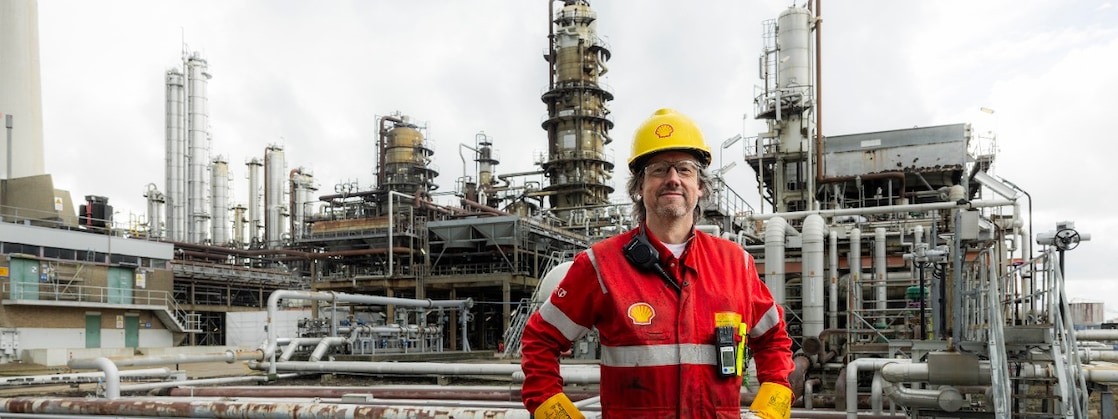
It gave me an enormous thrill, Jan-Kees Logmans recalls about 25 years ago. As a young process operator, he stepped into the Shell Pernis refinery in the Port of Rotterdam, the Netherlands, for the first time. “The installations, the technology, the sheer scale… impressive and enormous. The largest in Europe.” A great deal has changed in a quarter of a century. The thrill has always remained.

Text: Matthijs Timmers. Photography: Christian Kalse.
It is early 2001. In New York City, the Twin Towers are still standing when Jan-Kees Logmans (51) starts working at Shell Pernis as a process operator. In his first year, Jan-Kees works as a trainee on the crude distillation unit. This is where naphtha, kerosene and diesel are made.
“I was given a clipboard, paper and a pencil. Then I went for a round along all the pipelines and redrew the entire system: the tubes, the heat exchangers, the valves, the pumps and the furnaces. That’s the best way to get to know the plant.” A series of theoretical training courses followed. “The first year was quite tough,” the jubilarian recalls. “But I loved it. This was exactly what I wanted.”
A technical paradise
An extensive induction period is necessary, Jan-Kees believes. “It simply takes time for everything to click, before you truly understand the plant.” He speaks enthusiastically about the technical design of the installations (“magnificent”), the process of heating, and the way heat is utilised.
“Distillation isn’t new – the Scots have been making whisky like this for centuries. But the way this plant is designed, I find ingenious. I’m an engineer by nature; the site is simply a technical paradise.”
Who is Jan-Kees Logmans?
Jan-Kees Logmans (51) was born and raised in Hellevoetsluis, a town in the famous delta in the southwest of the Netherlands, and has lived in the "picturesque and charming fortified town" of Brielle for the past four years. “I’ve landed on my feet here.” He also attended the secondary technical school there. In his free time, he enjoys cycling, running, and rowing. Jan-Kees has two sons: one is training to become a welder, the other is a freight train driver who regularly thunders past his father’s refinery.
Remembering and looking things up
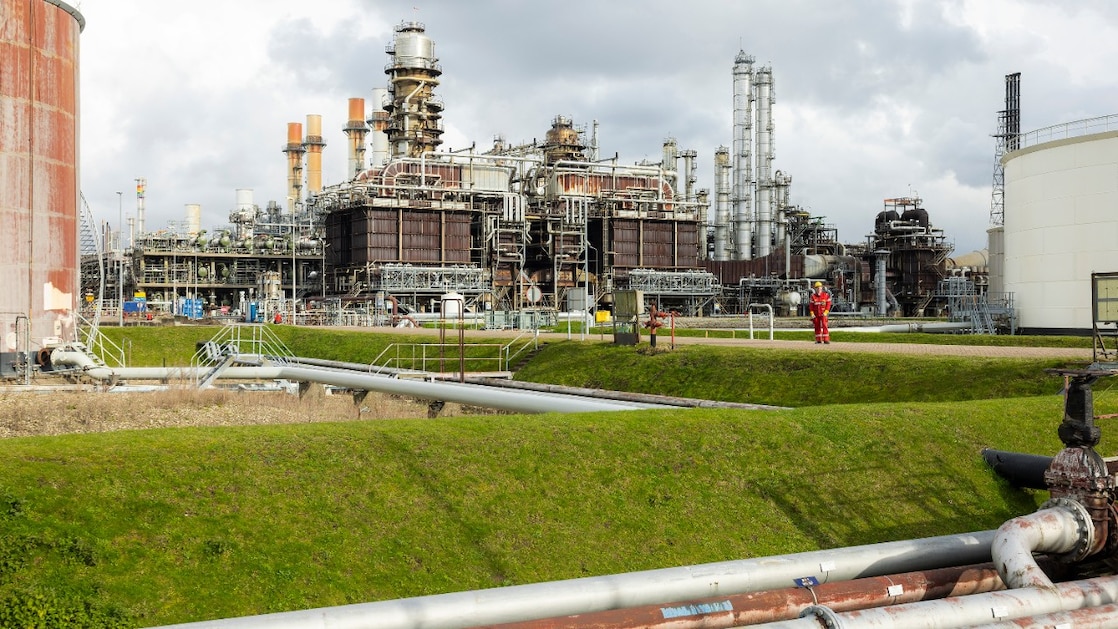
The workplace culture is also hardly comparable to what it was 25 years ago. Back then he was a rookie; now he is the old hand. “My shift mainly consists of people in their twenties. Pernis runs on that generation.”
He notices an interesting difference. “M times C times delta T — the formula for heat transfer — was really drummed into me at school. That’s how I explain a heat exchanger works. The younger generation doesn’t think like that at all. They can memorise less, but they’re extremely good at looking things up. I’m not very good at that. That mix makes working in a diverse team enjoyable and interesting.”
Industry under pressure
The entire Rotterdam harbour area has also changed. A transition is under way, while the business climate has deteriorated. “The Netherlands is partly to blame for that. Energy here is the most expensive in all of Europe. Around us, we see companies leaving or shutting down. That worries me.”
Of course, industry must become cleaner, Jan-Kees believes — through electrification, for example, and using renewable electricity instead of fossil fuels. But partly due to the overloaded power grid, industry is reaching its limits. In the future, there will still be cars on the road, ships at sea and planes in the air, Jan-Kees says. “The refinery will continue to play a role for the time being,” he predicts. However, the government must, in his view, create the right conditions and set out clear policies. These are necessary to ensure that the Netherlands’ core industries do not become entirely dependent on other countries.
Jan-Kees Logmans, Assistant Production Team Lead, Shell Pernis, the Netherlands"I grew up with Shell"
Two jubilees
In doing so, Jan-Kees also emphasises the importance of the other jubilarian: the interest group Deltalinqs. “Deltalinqs ensures that the same rules are applied throughout the port. That’s particularly useful when you’re working with different subcontractors.” Deltalinqs also shares useful information. “For example about incidents, so that we can learn from one another. Very good indeed.”
Time has flown by
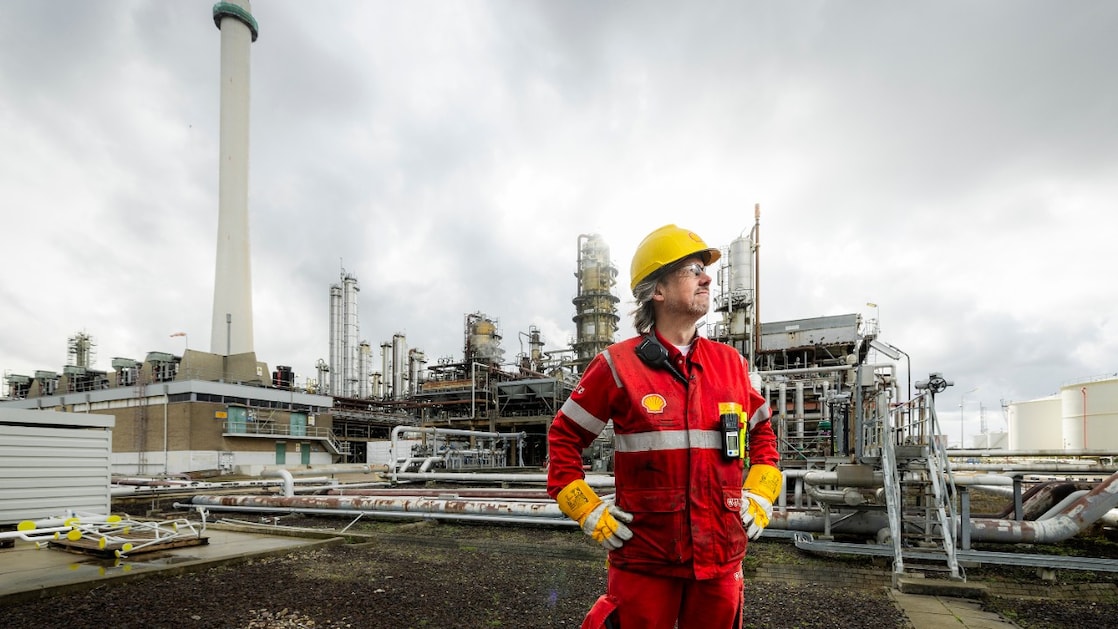
The past 25 years have flown by. Jan-Kees still works at the same plant and is now assistant production team lead. “I’m partly responsible for keeping the plants running smoothly,” he summarises. One such plant can process as much as 31,500 tonnes of crude oil per day at full capacity.
Sometimes he steps in as an operator and “does a round”: a control check along part of the plant. “Are the pumps running properly? Are there any leaks? Is there enough lubricating oil? What do the flames at the furnaces look like?” Jan-Kees lists. This combination of responsibility and hands-on operational work still makes his job tremendously enjoyable. “The factory has become ‘my’ crude distillation unit over time.”