Groene waterstof stroomt straks naar Shell Pernis
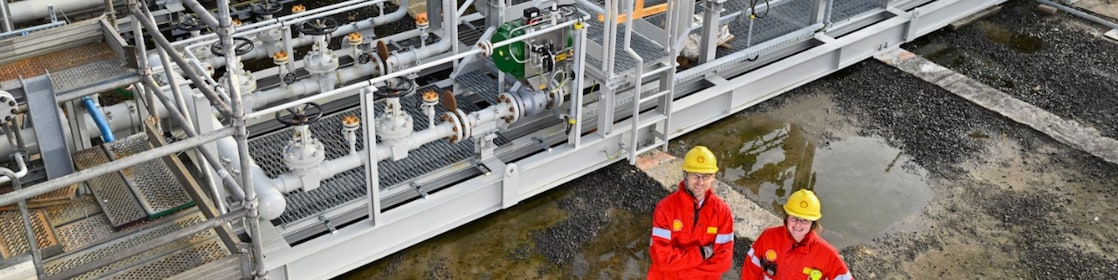
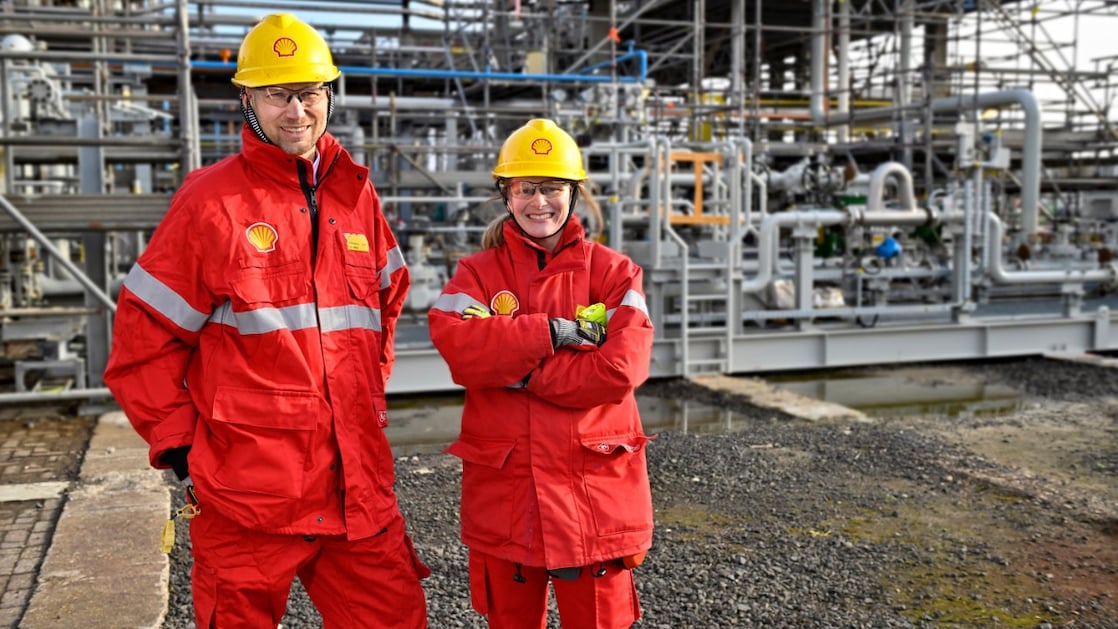
Voor een schonere productie draait de Shell-raffinaderij in Pernis binnenkort gedeeltelijk op de groene waterstof die in Holland Hydrogen 1 wordt gemaakt. Met een pijpleiding van 32 kilometer wordt dat mogelijk. Vera Wissel aan de kant van de raffinaderij en Thijs Bosboom aan de kant van de waterstoffabriek zorgen voor de aansluiting. Dat is voor technologen niet heel ingewikkeld. En toch ook weer wel.

Tekst: Matthijs Timmers. Beeld: Ernst Bode.
Onder het stalen hek van de raffinaderij in Pernis komt sinds kort een nieuwe pijplijn tevoorschijn. Het is de leiding, 61 centimeter in diameter, die binnenkort de groene waterstof van Holland Hydrogen 1 op de Tweede Maasvlakte naar de raffinaderij in Pernis transporteert. De groene waterstof — gemaakt met windenergie — vervangt een deel van de grijze waterstof — gemaakt met aardgas — die momenteel gebruikt wordt voor de raffinage van olie. Thijs Bosboom: “Gemiddeld gaat er dagelijks 55 ton aan groene waterstof door de nieuwe leiding, op een totale waterstofvraag van 550 ton per dag.”
Waar is de waterstof voor nodig?
Waterstof wordt gebruikt in een aantal van de kraakinstallaties op de Shell-raffinaderij. Met het kraken worden de moleculen van de ruwe olie opgebroken voor het maken van kerosine, diesel en benzine. In het kraakproces wordt de olie bij hoge druk en temperatuur in contact gebracht met waterstof, die wordt verbruikt in de chemische reacties. Ook in het proces om zwavel uit de brandstoffen te halen, is waterstof de belangrijkste grondstof.
Relatief eenvoudig, vinden de technologen
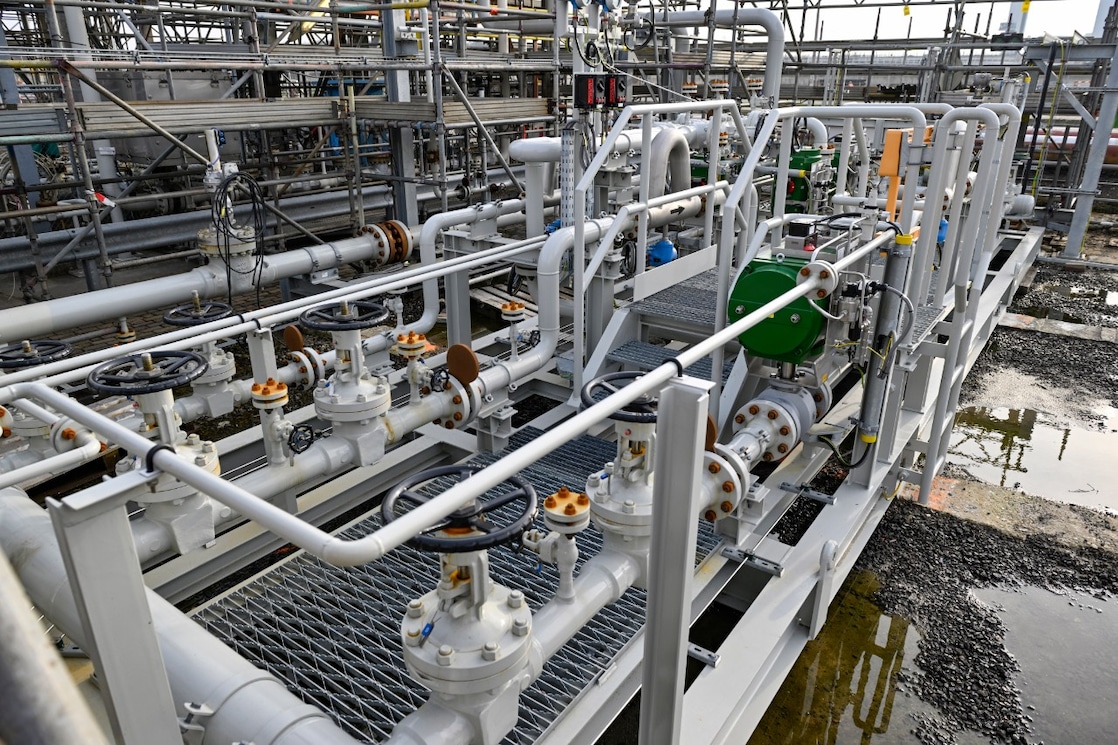
Eerst over het relatief eenvoudige gedeelte van deze aansluiting tussen Holland Hydrogen 1 en Shell Pernis. Dat is de aansluiting zelf. Een kwestie van de pijpleiding op de fabriek “schroeven”, is de meest simpele uitleg. “En een meetstation installeren waarmee we de druk, de kwaliteit en de hoeveelheid waterstof kunnen meten. Dat is allemaal niet zo heel ingewikkeld, voor een technoloog”, zeggen Bosboom en productiespecialist Vera Wissel. “Het is als je gasmeter thuis”, maken ze de parallel.
Wie zijn Thijs Bosboom en Vera Wissel?
Thijs Bosboom studeerde Chemische Technologie aan de TU Delft. Hij begon zijn Shell-loopbaan in 2015 bij de Energy Transition Campus Amsterdam [[link]]. Hij werkte aan het ontwerpen van ontzwavelingsfabrieken. Vervolgens werd hij technoloog bij Shell Pernis en raakte hij betrokken bij de ontwikkeling van een grijze waterstoffabriek aldaar. Nu is Bosboom technoloog bij Holland Hydrogen 1 en bewaakt hij ook de economische kant van de waterstofproductie.
Vera Wissel studeerde ook Chemische Technologie aan de TU Delft. Ze begon in 2019 als technoloog bij Shell Pernis. De laatste jaren is ze productiespecialist en samen met haar team operationeel verantwoordelijk voor een aantal fabrieken op de raffinaderij. Ze richt zich onder meer op de waterstofaanvoer.
‘Meebewegen met het windprofiel’
Dan komt het complexe gedeelte. Wissel: “Voor de aanvoer van waterstof geldt dat we houden van stabiliteit en voorspelbaarheid.” Die stabiliteit is er op nu, omdat voor de grijze waterstofde gaskraan aan en uit kan worden gezet wanneer gewenst.
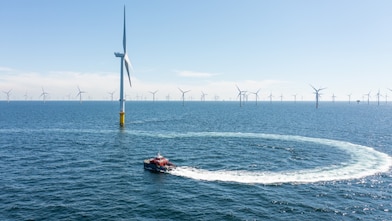
Voor het gebruik van groene waterstof ligt dat net even anders. Er is namelijk bij wet afgesproken dat die moet ‘meebewegen met het windprofiel’ van een windpark relatief in de buurt. Met andere woorden: er mag pas groene waterstof geproduceerd worden als het waait. De waterstoffabriek op de Tweede Maasvlakte gebruikt stroom gemaakt door Hollandse Kust Noord, een windpark 18,5 kilometer voor de kust van Noord-Holland gebouwd en gerund door de joint venture CrossWind (Shell 60%, Chubu 30%, Eneco 10%) Nu waait het niet altijd even hard. Soms is het zelfs windstil. “Dat levert dus een continu veranderende stroom aan groene waterstof op”, legt Wissel uit. “Dat is een uitdaging.”
Grijs past zich aan op groen
Concreet: momenteel kan Wissel een dag van tevoren aangeven hoeveel waterstof ze voor de fabrieken op Pernis nodig heeft. Met de wisselende aanvoer van de nieuwe groene waterstof zal dat op regelmatige basis moeten. Wissel over de oplossing: “We hebben onderzocht welke producenten van grijze waterstof goed kunnen inspelen op die nieuwe, veranderende instroom van groene waterstof. En díe gaan hun productie daarop aanpassen, om het hele systeem in balans te houden.” Als het hard waait, is er veel groene waterstof en hoeft er minder grijze waterstof bij. Is het windstil, dan moet er weer meer grijze waterstof richting de raffinaderij.
Veel meer rekenkracht nodig
Het vereist veel extra rekenkracht om die steeds maar veranderende instroom goed op de vraag af te stemmen. “Het lijkt een soort magie”, vertelt Wissel. “Maar er zijn veel aanpassingen in de software nodig om de aansturing in Pernis aan te passen.” Shell Nederland werkt samen met de Duitse Shell-dochter Next Kraftwerke, specialist op dit gebied, om dat soepel samenspel van groen en grijs goed te regelen. “Het is uitdagend om een deel van de controle uit handen te geven, maar het wordt ook heel leuk en interessant”, blikt Wissel vooruit. “De raffinaderij van Pernis bestaat al meer dan 90 jaar. En daar gaan we nu weer iets nieuws aan toevoegen. Dat is mooi!”
Vera Wissel, productiespecialist Shell Pernis"De raffinaderij van Pernis bestaat al meer dan 90 jaar. En daar gaan we nu weer iets nieuws aan toevoegen"
Werken aan samenwerking
Zo denkt Bosboom van de nieuwe waterstoffabriek er ook over. “We gaan nu de details uitwerken, onderzoeken hoe we reageren op onvoorziene omstandigheden en leren hoe we gaan samenwerken met de operators van Shell Pernis, die van Holland Hydrogen 1 en andere betrokken partijen. Dat is allemaal finetunen.” Het is uiteindelijk een teamprestatie om de waterstofvoorziening van de raffinaderij goed te regelen.
De eerste klant, volgen er meer?
Bosboom: “De raffinaderij van Pernis is vooralsnog de enige klant van Holland Hydrogen 1. Shell levert aan Shell, dat klinkt misschien wat schizofreen.” Het past echter binnen de afspraken over de raffinageroute met de Europese Unie en de Nederlandse overheid. En de waterstof leidt dus tot CO2-uitstootvermindering op Pernis.
Op den duur moet deze eerste stap leiden tot een uitgebreider waterstofnetwerk door het Rotterdamse havengebied, met allerlei vertakkingen, en uiteindelijk doorlopen naar het achterland: Limburg, Duitsland en Groningen. Dat is dan voor zware industrieën voor wie de verduurzaming op andere manieren moeilijker is. Vooralsnog willen Wissel en Bosboom eerst hun onderlinge aansluiting goed regelen. De levering van de eerste groene waterstof komt inmiddels langzaam in zicht.
Meer verhalen over Shell en waterstof
Cautionary note
Cautionary note
The companies in which Shell plc directly and indirectly owns investments are separate legal entities. In this story “Shell”, “Shell Group” and “Group” are sometimes used for convenience to reference Shell plc and its subsidiaries in general. Likewise, the words “we”, “us” and “our” are also used to refer to Shell plc and its subsidiaries in general or to those who work for them. These terms are also used where no useful purpose is served by identifying the particular entity or entities. ‘‘Subsidiaries’’, “Shell subsidiaries” and “Shell companies” as used in this storyrefer to entities over which Shell plc either directly or indirectly has control. The terms “joint venture”, “joint operations”, “joint arrangements”, and “associates” may also be used to refer to a commercial arrangement in which Shell has a direct or indirect ownership interest with one or more parties. The term “Shell interest” is used for convenience to indicate the direct and/or indirect ownership interest held by Shell in an entity or unincorporated joint arrangement, after exclusion of all third-party interest.
Forward-Looking statements
This story contains forward-looking statements (within the meaning of the U.S. Private Securities Litigation Reform Act of 1995) concerning the financial condition, results of operations and businesses of Shell. All statements other than statements of historical fact are, or may be deemed to be, forward-looking statements. Forward-looking statements are statements of future expectations that are based on management’s current expectations and assumptions and involve known and unknown risks and uncertainties that could cause actual results, performance or events to differ materially from those expressed or implied in these statements. Forward-looking statements include, among other things, statements concerning the potential exposure of Shell to market risks and statements expressing management’s expectations, beliefs, estimates, forecasts, projections and assumptions. These forward-looking statements are identified by their use of terms and phrases such as “aim”; “ambition”; ‘‘anticipate’’; “aspire”, “aspiration”, ‘‘believe’’; “commit”; “commitment”; ‘‘could’’; “desire”; ‘‘estimate’’; ‘‘expect’’; ‘‘goals’’; ‘‘intend’’; ‘‘may’’; “milestones”; ‘‘objectives’’; ‘‘outlook’’; ‘‘plan’’; ‘‘probably’’; ‘‘project’’; ‘‘risks’’; “schedule”; ‘‘seek’’; ‘‘should’’; ‘‘target’’; “vision”; ‘‘will’’; “would” and similar terms and phrases. There are a number of factors that could affect the future operations of Shell and could cause those results to differ materially from those expressed in the forward-looking statements included in this story, including (without limitation): (a) price fluctuations in crude oil and natural gas; (b) changes in demand for Shell’s products; (c) currency fluctuations; (d) drilling and production results; (e) reserves estimates; (f) loss of market share and industry competition; (g) environmental and physical risks, including climate change; (h) risks associated with the identification of suitable potential acquisition properties and targets, and successful negotiation and completion of such transactions; (i) the risk of doing business in developing countries and countries subject to international sanctions; (j) legislative, judicial, fiscal and regulatory developments including tariffs and regulatory measures addressing climate change; (k) economic and financial market conditions in various countries and regions; (l) political risks, including the risks of expropriation and renegotiation of the terms of contracts with governmental entities, delays or advancements in the approval of projects and delays in the reimbursement for shared costs; (m) risks associated with the impact of pandemics, regional conflicts, such as the Russia-Ukraine war and the conflict in the Middle East, and a significant cyber security, data privacy or IT incident; (n) the pace of the energy transition; and (o) changes in trading conditions. No assurance is provided that future dividend payments will match or exceed previous dividend payments. All forward-looking statements contained in this story are expressly qualified in their entirety by the cautionary statements contained or referred to in this section. Readers should not place undue reliance on forward-looking statements. Additional risk factors that may affect future results are contained in Shell plc’s Form 20-F and amendment thereto for the year ended December 31, 2024 (available at www.shell.com/investors/news-and-filings/sec-filings.html and www.sec.gov). These risk factors also expressly qualify all forward-looking statements contained in this story and should be considered by the reader. Each forward-looking statement speaks only as of the date of this story, February 25, 2026. Neither Shell plc nor any of its subsidiaries undertake any obligation to publicly update or revise any forward-looking statement as a result of new information, future events or other information. In light of these risks, results could differ materially from those stated, implied or inferred from the forward-looking statements contained in this story.
Shell’s net carbon intensity
Also, in this story we may refer to Shell’s “net carbon intensity” (NCI), which includes Shell’s carbon emissions from the production of our energy products, our suppliers’ carbon emissions in supplying energy for that production and our customers’ carbon emissions associated with their use of the energy products we sell. Shell’s NCI also includes the emissions associated with the production and use of energy products produced by others which Shell purchases for resale. Shell only controls its own emissions. The use of the terms Shell’s “net carbon intensity” or NCI is for convenience only and not intended to suggest these emissions are those of Shell plc or its subsidiaries.
Shell’s net-zero emissions target
Shell’s operating plan and outlook are forecasted for a three-year period and ten-year period, respectively, and are updated every year. They reflect the current economic environment and what we can reasonably expect to see over the next three and ten years. Accordingly, the outlook reflects our Scope 1, Scope 2 and NCI targets over the next ten years. However, Shell’s operating plan and outlook cannot reflect our 2050 net-zero emissions target, as this target is outside our planning period. Such future operating plans and outlooks could include changes to our portfolio, efficiency improvements and the use of carbon capture and storage and carbon credits. In the future, as society moves towards net-zero emissions, we expect Shell’s operating plans and outlooks to reflect this movement. However, if society is not net zero in 2050, as of today, there would be significant risk that Shell may not meet this target.
Forward-Looking non-GAAP measures
This story may contain certain forward-looking non-GAAP measures such as adjusted earnings and divestments. We are unable to provide a reconciliation of these forward-looking non-GAAP measures to the most comparable GAAP financial measures because certain information needed to reconcile those non-GAAP measures to the most comparable GAAP financial measures is dependent on future events some of which are outside the control of Shell, such as oil and gas prices, interest rates and exchange rates. Moreover, estimating such GAAP measures with the required precision necessary to provide a meaningful reconciliation is extremely difficult and could not be accomplished without unreasonable effort. Non-GAAP measures in respect of future periods which cannot be reconciled to the most comparable GAAP financial measure are calculated in a manner which is consistent with the accounting policies applied in Shell plc’s consolidated financial statements.
The contents of websites referred to in this story do not form part of this story.
We may have used certain terms, such as resources, in this story that the United States Securities and Exchange Commission (SEC) strictly prohibits us from including in our filings with the SEC. Investors are urged to consider closely the disclosure in our Form 20-F and any amendment thereto, File No 1-32575, available on the SEC website www.sec.gov.
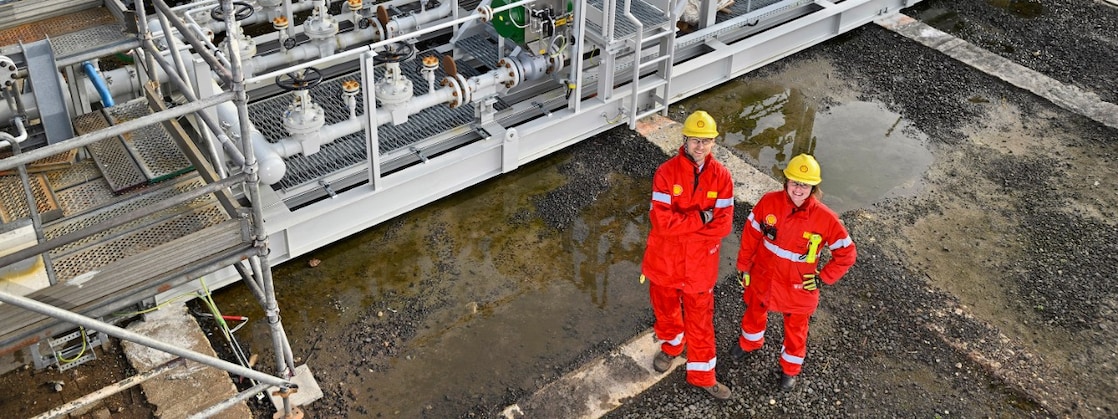
Renewable hydrogen will soon start flowing to Europe's biggest refinery at Shell Pernis
25 Feb 2026
To enable cleaner production, Europe's biggest refinery of Shell Pernis will soon run partly on the renewable hydrogen produced at Holland Hydrogen 1. A 32‑kilometre pipeline will make this possible. Vera Wissel of the refinery and Thijs Bosboom of HH1 are in the lead for this connection. For technologists, it is not particularly complicated — and yet, in some ways, it is.

Text: Matthijs Timmers. Photography: Ernst Bode.
A new pipeline has recently appeared underneath the steel fence of the Pernis refinery. It is this pipe, 61 centimetres (24 inch) in diameter, that will soon transport renewable hydrogen from Holland Hydrogen 1 near the coast of the Netherlands to the refinery in Pernis near Rotterdam. The renewable hydrogen — produced using offshore wind power — will replace part of the grey hydrogen — produced using natural gas — currently used for refining oil.
Thijs Bosboom explains: “On average, 55 tonnes of renewable hydrogen will flow through the new pipeline each day, out of a total hydrogen demand at Pernis of 550 tonnes per day.”
What is the hydrogen used for?
Hydrogen is used in several of the cracking units at the Shell refinery. Cracking breaks down the molecules in crude oil to produce kerosene, diesel and petrol. During the cracking process, the oil is exposed to hydrogen at high pressure and temperature, and the hydrogen is consumed in the chemical reactions. Hydrogen is also the key feedstock in the process of removing sulphur from fuels.
Relatively simple, according to the technologists
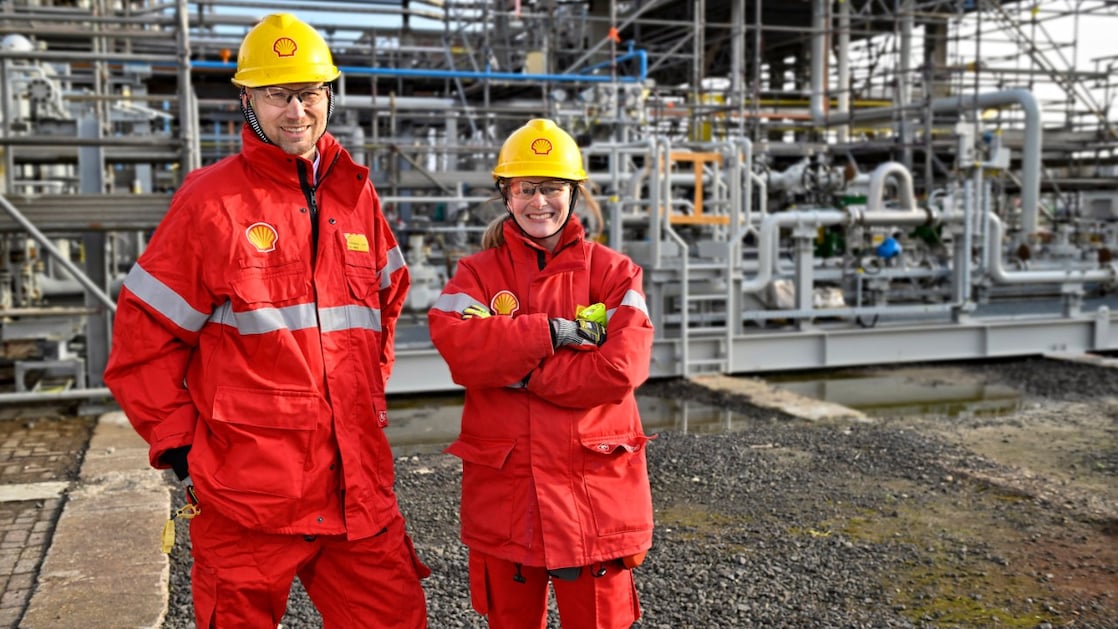
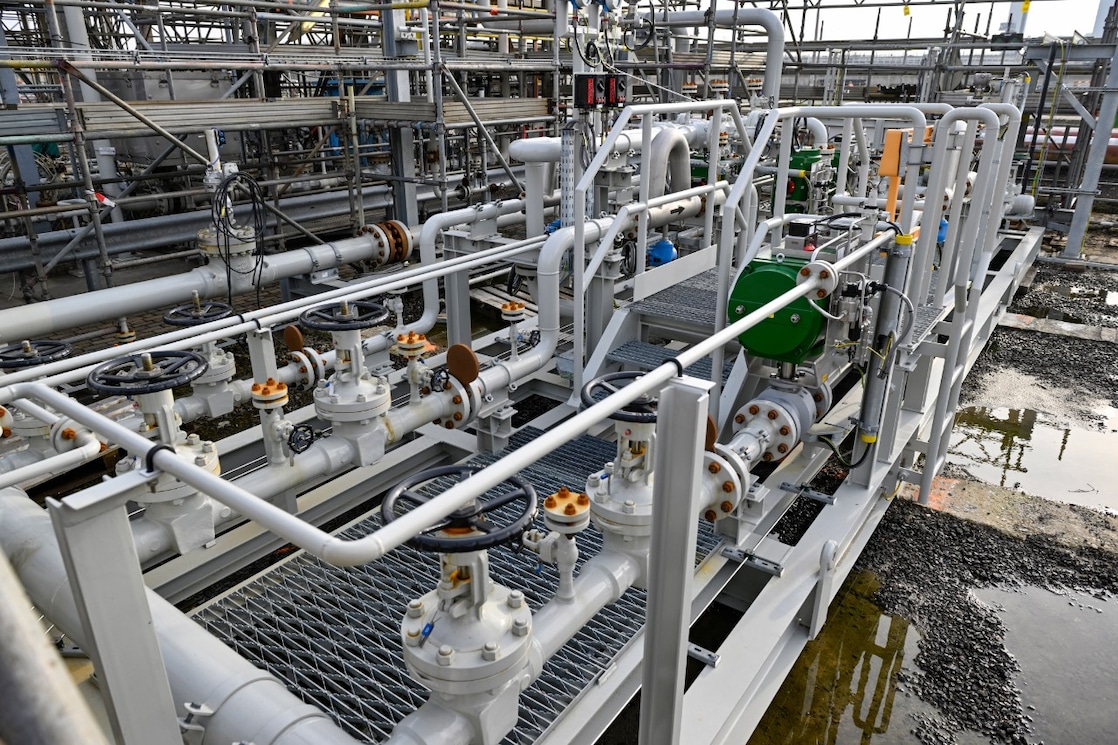
First, the relatively easy part of this connection between Holland Hydrogen 1 and Shell Pernis: the connection itself. In the simplest terms, it’s a matter of “bolting” the pipeline onto the facility. “And installing a metering station to measure the pressure, quality and volume of the hydrogen. None of that is particularly complicated for a technologist,” say Bosboom and production specialist Vera Wissel. “It’s like your gas meter at home,” they add by way of comparison.
Who are Thijs Bosboom and Vera Wissel?
Thijs Bosboom studied Chemical Engineering at Delft University of Technology, the Netherlands. He began his career at Shell in 2015 at the Energy Transition Campus Amsterdam. He worked on designing desulphurisation units. He then became a technologist at Shell Pernis and became involved in the development of a grey hydrogen plant there. Bosboom is now a Technologist at Holland Hydrogen 1 and also oversees the economic aspects of hydrogen production.
Vera Wissel also studied Chemical Engineering at Delft University of Technology. She started in 2019 as a technologist at Shell Pernis. In recent years, she has been a Production Specialist and, together with her team, is operationally responsible for several units at the refinery. Among other things, she focuses on the hydrogen supply.
“Moving in line with the wind profile”
And then comes the complex part. Wissel explains: “When it comes to supplying hydrogen, we like stability and predictability.” That stability is currently guaranteed, because with grey hydrogen the natural gas supply can simply be turned on and off whenever needed.
Things are slightly different when using renewable hydrogen. By law, it has been agreed that production must ‘move in line with the wind profile’ of a nearby wind farm. In other words: renewable hydrogen may only be produced when the wind is blowing.
The hydrogen plant on the Tweede Maasvlakte plains uses electricity generated by Hollandse Kust Noord, a wind farm located 18.5 kilometres (11.5 miles) further north off the coast of the Dutch coast, built and operated by the CrossWind joint venture (Shell 60%, Chubu 30%, Eneco 10%).
But of course, the wind does not always have at the same strength. Sometimes there is no wind at all. “That means a continuously changing supply of renewable hydrogen,” Wissel explains. “That’s a challenge.”
Grey adapts to green
In practical terms: at the moment, Wissel can indicate a day in advance how much hydrogen she needs for the plants at Pernis. With the fluctuating supply of the new renewable hydrogen, this will need to be done on a much more regular basis. Wissel explains the solution: “We have investigated which producers of grey hydrogen are best able to respond to this new, variable inflow of green hydrogen. And they will adjust their production accordingly, to keep the entire system in balance.”
When the wind is strong, there is plenty of renewable hydrogen and less grey hydrogen is needed. When there is no wind, more grey hydrogen must once again be directed to the refinery.
Much more computing power required
A great deal of additional computing power is needed to properly match this constantly changing inflow to demand. “It seems almost like magic,” says Wissel. “But it requires many software adjustments to adapt the control systems in Pernis.” Shell Netherlands is working with Next Kraftwerke, Shell’s German subsidiary and a specialist in this field, to ensure the smooth interplay between green and grey hydrogen.
“It’s challenging to hand over part of the control, but it’s also going to be really fun and interesting,” Wissel says, looking ahead. “The Pernis refinery has been around for more than 90 years. And now we’re adding something completely new. That’s wonderful!”
Vera Wissel, Production Specialist at Shell Pernis"The Pernis refinery has been around for more than 90 years. And now we’re adding something completely new."
Working on collaboration
Bosboom from the new hydrogen plant shares this view. “We are now going to work out the details, explore how we respond to unforeseen circumstances, and learn how to collaborate with the operators at Shell Pernis, those at Holland Hydrogen 1, and other involved parties. It’s all about fine‑tuning.” In the end, ensuring the refinery’s hydrogen supply runs smoothly is a team effort.
The first customer—will more follow?
Bosboom: “For now, the Pernis refinery is the only customer of Holland Hydrogen 1. Shell supplying Shell — it may sound a bit schizophrenic.” However, it fits within the agreements made with the European Union and the Dutch government about the refinery transition pathway. And importantly, the hydrogen results in CO₂ emission reductions at Pernis.
In time, this first step should lead to a more extensive hydrogen network throughout the Port of Rotterdam, with various branches, eventually extending inland to the Dutch provinces of Limburg and Groningen, and to Germany. This network is intended for heavy industries for whom decarbonisation is more challenging by other means.
For now, Wissel and Bosboom primarily want to ensure their mutual connection is operating properly. The delivery of the first renewable hydrogen is slowly coming into view.
More stories on Shell and hydrogen
Cautionary note
Cautionary note
The companies in which Shell plc directly and indirectly owns investments are separate legal entities. In this story “Shell”, “Shell Group” and “Group” are sometimes used for convenience to reference Shell plc and its subsidiaries in general. Likewise, the words “we”, “us” and “our” are also used to refer to Shell plc and its subsidiaries in general or to those who work for them. These terms are also used where no useful purpose is served by identifying the particular entity or entities. ‘‘Subsidiaries’’, “Shell subsidiaries” and “Shell companies” as used in this storyrefer to entities over which Shell plc either directly or indirectly has control. The terms “joint venture”, “joint operations”, “joint arrangements”, and “associates” may also be used to refer to a commercial arrangement in which Shell has a direct or indirect ownership interest with one or more parties. The term “Shell interest” is used for convenience to indicate the direct and/or indirect ownership interest held by Shell in an entity or unincorporated joint arrangement, after exclusion of all third-party interest.
Forward-Looking statements
This story contains forward-looking statements (within the meaning of the U.S. Private Securities Litigation Reform Act of 1995) concerning the financial condition, results of operations and businesses of Shell. All statements other than statements of historical fact are, or may be deemed to be, forward-looking statements. Forward-looking statements are statements of future expectations that are based on management’s current expectations and assumptions and involve known and unknown risks and uncertainties that could cause actual results, performance or events to differ materially from those expressed or implied in these statements. Forward-looking statements include, among other things, statements concerning the potential exposure of Shell to market risks and statements expressing management’s expectations, beliefs, estimates, forecasts, projections and assumptions. These forward-looking statements are identified by their use of terms and phrases such as “aim”; “ambition”; ‘‘anticipate’’; “aspire”, “aspiration”, ‘‘believe’’; “commit”; “commitment”; ‘‘could’’; “desire”; ‘‘estimate’’; ‘‘expect’’; ‘‘goals’’; ‘‘intend’’; ‘‘may’’; “milestones”; ‘‘objectives’’; ‘‘outlook’’; ‘‘plan’’; ‘‘probably’’; ‘‘project’’; ‘‘risks’’; “schedule”; ‘‘seek’’; ‘‘should’’; ‘‘target’’; “vision”; ‘‘will’’; “would” and similar terms and phrases. There are a number of factors that could affect the future operations of Shell and could cause those results to differ materially from those expressed in the forward-looking statements included in this story, including (without limitation): (a) price fluctuations in crude oil and natural gas; (b) changes in demand for Shell’s products; (c) currency fluctuations; (d) drilling and production results; (e) reserves estimates; (f) loss of market share and industry competition; (g) environmental and physical risks, including climate change; (h) risks associated with the identification of suitable potential acquisition properties and targets, and successful negotiation and completion of such transactions; (i) the risk of doing business in developing countries and countries subject to international sanctions; (j) legislative, judicial, fiscal and regulatory developments including tariffs and regulatory measures addressing climate change; (k) economic and financial market conditions in various countries and regions; (l) political risks, including the risks of expropriation and renegotiation of the terms of contracts with governmental entities, delays or advancements in the approval of projects and delays in the reimbursement for shared costs; (m) risks associated with the impact of pandemics, regional conflicts, such as the Russia-Ukraine war and the conflict in the Middle East, and a significant cyber security, data privacy or IT incident; (n) the pace of the energy transition; and (o) changes in trading conditions. No assurance is provided that future dividend payments will match or exceed previous dividend payments. All forward-looking statements contained in this story are expressly qualified in their entirety by the cautionary statements contained or referred to in this section. Readers should not place undue reliance on forward-looking statements. Additional risk factors that may affect future results are contained in Shell plc’s Form 20-F and amendment thereto for the year ended December 31, 2024 (available at www.shell.com/investors/news-and-filings/sec-filings.html and www.sec.gov). These risk factors also expressly qualify all forward-looking statements contained in this story and should be considered by the reader. Each forward-looking statement speaks only as of the date of this story, February 25, 2026. Neither Shell plc nor any of its subsidiaries undertake any obligation to publicly update or revise any forward-looking statement as a result of new information, future events or other information. In light of these risks, results could differ materially from those stated, implied or inferred from the forward-looking statements contained in this story.
Shell’s net carbon intensity
Also, in this story we may refer to Shell’s “net carbon intensity” (NCI), which includes Shell’s carbon emissions from the production of our energy products, our suppliers’ carbon emissions in supplying energy for that production and our customers’ carbon emissions associated with their use of the energy products we sell. Shell’s NCI also includes the emissions associated with the production and use of energy products produced by others which Shell purchases for resale. Shell only controls its own emissions. The use of the terms Shell’s “net carbon intensity” or NCI is for convenience only and not intended to suggest these emissions are those of Shell plc or its subsidiaries.
Shell’s net-zero emissions target
Shell’s operating plan and outlook are forecasted for a three-year period and ten-year period, respectively, and are updated every year. They reflect the current economic environment and what we can reasonably expect to see over the next three and ten years. Accordingly, the outlook reflects our Scope 1, Scope 2 and NCI targets over the next ten years. However, Shell’s operating plan and outlook cannot reflect our 2050 net-zero emissions target, as this target is outside our planning period. Such future operating plans and outlooks could include changes to our portfolio, efficiency improvements and the use of carbon capture and storage and carbon credits. In the future, as society moves towards net-zero emissions, we expect Shell’s operating plans and outlooks to reflect this movement. However, if society is not net zero in 2050, as of today, there would be significant risk that Shell may not meet this target.
Forward-Looking non-GAAP measures
This story may contain certain forward-looking non-GAAP measures such as adjusted earnings and divestments. We are unable to provide a reconciliation of these forward-looking non-GAAP measures to the most comparable GAAP financial measures because certain information needed to reconcile those non-GAAP measures to the most comparable GAAP financial measures is dependent on future events some of which are outside the control of Shell, such as oil and gas prices, interest rates and exchange rates. Moreover, estimating such GAAP measures with the required precision necessary to provide a meaningful reconciliation is extremely difficult and could not be accomplished without unreasonable effort. Non-GAAP measures in respect of future periods which cannot be reconciled to the most comparable GAAP financial measure are calculated in a manner which is consistent with the accounting policies applied in Shell plc’s consolidated financial statements.
The contents of websites referred to in this story do not form part of this story.
We may have used certain terms, such as resources, in this story that the United States Securities and Exchange Commission (SEC) strictly prohibits us from including in our filings with the SEC. Investors are urged to consider closely the disclosure in our Form 20-F and any amendment thereto, File No 1-32575, available on the SEC website www.sec.gov.