Zo ziet de productie van groene waterstof er van binnen uit
Waterstoffabriek Holland Hydrogen 1 laat zich niet direct vinden, zo tussen de talrijke vierkante logistieke gebouwen aan de rand van de Tweede Maasvlakte bij Rotterdam. Dat zit zo: deze fabriek líjkt helemaal niet op een fabriek in de traditionele zin van het woord. Holland Hydrogen 1 vertoont eerder gelijkenissen met haar logistieke buren. Wie binnenkijkt, weet beter! Een reportage.

Tekst: Matthijs Timmers. Beeld: Wendel Broere, Eric van Vuuren, Plotvis.
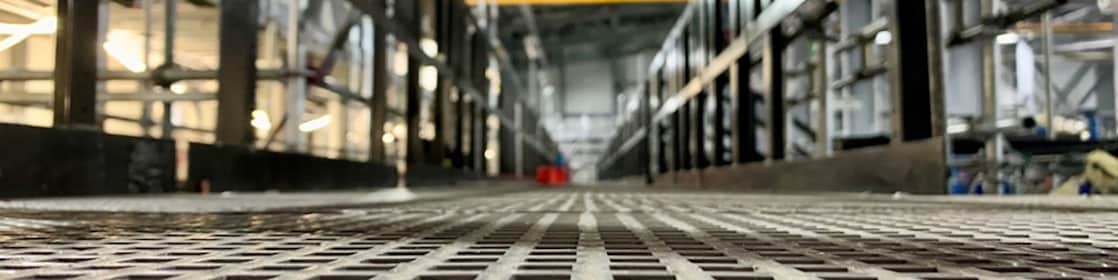
De openingsfoto bovenaan dit artikel toont het gangpad van de hal met elektrolysers van de Holland Hydrogen 1.
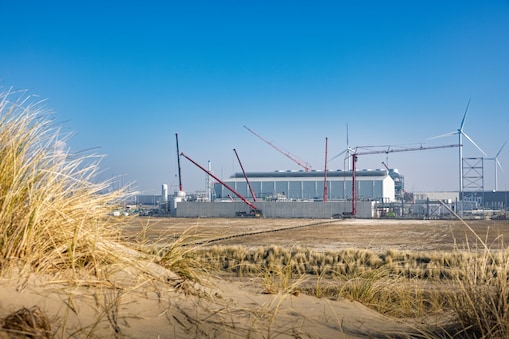
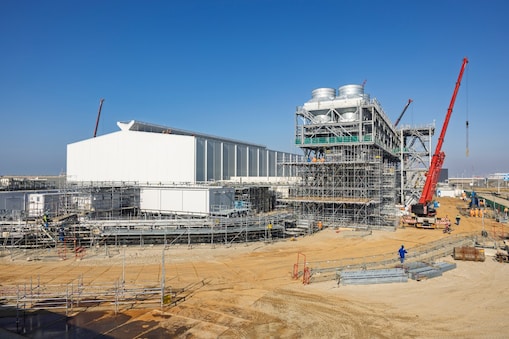
Vanaf het bescheiden balkonnetje van de tijdelijke bouwkeet annex kantoor – een flinke rij gestapelde units – van Holland Hydrogen 1 is de omvang van de waterstoffabriek in aanbouw goed te zien. Het is een witte vierkante bak van, voorzien van een vals schuin dak. De wind slaat er fanatiek omheen, zoals het hier bijna altijd fors kan waaien.
Het winderige bouwkeetbalkon is het startpunt van een rondgang over het fabrieksterrein. Die volgt een route vanaf de plek waar de stroom binnenkomt in dikke kabels tot aan het punt waar de groene waterstof het fabrieksterrein verlaat. De helmen en brillen van Lydia Boktor, waterstofbeleidsexpert bij Shell Nederland, en projectingenieur Florine Le Coultre gaan op, en de veiligheidskleding aan. Let wel: waterstof is kleurloos. Waarom dan toch groen, blauw of grijs? Zie de Zes vragen over waterstof op shell.nl/waterstof.
Dikke stroomkabels bij binnenkomst
Zie daar die dikke grijze stroomkabels, elk welhaast een bovenbeen in omtrek. Het uitrollen daarvan is al een uitdaging op zich. Met een stroomspanning van 380 kilovolt (kV) bereiken ze de eerste transformatorstations van de fabriek. “Zo’n 1.700 keer sterker dan wat er thuis uit het stopcontact komt”, benadrukt Le Coultre de verhoudingen.
De spanning wordt omgezet naar 33 kV, en verderop, wanneer de bekabeling onder de grond is gedoken, in kleinere transformatoren naar de uiteindelijke 400 volt, die voor het maken van de waterstof wordt gebruikt. Deze hoge spanning vraagt om gedegen bescherming. Voor de isolatie zijn de transformatorstations elk voorzien van een bassin met 72.000 liter isolatieolie. Het duurde een aantal dagen om de stations te vullen.
Luxe luchtkoelers uit Italië
Strak naast de fabriekshal is een even zo imposante koelinstallatie verrezen, het hoogste punt van de installatie. Tien grote luchtkoelers zijn vanuit Italië naar Rotterdam verscheept, met naar verluidt de zorgvuldigheid als ware het Ferrari’s. Machtige mammoetkranen hebben ze bovenop de installatie getakeld. Ze vormen nu de markante hoogtepunten van het fabrieksterrein. De luchtkoelers houden de temperatuur van de geproduceerde waterstof op orde.
Lees meer over Holland Hydrogen 1
Shell Venster heeft inmiddels een serie verhalen over de komst van groene waterstof en de Holland Hydrogen 1 gepubliceerd. Dit zijn ze van 2025, lees ze allemaal!
De hal waar de magie plaatsvindt
Eenmaal in de centrale fabriekshal benadrukken Boktor en Le Coultre hoe bijzonder het is hier te staan. Ze houden met een hand de balustrade vast en kijken uit over de tien rechthoekige blokken die in de hal zijn geïnstalleerd. Dat zijn de elektrolysers, waarbinnen de magie gaat gebeuren. Daar wordt het molecuul water gesplitst in waterstof en zuurstof en vindt de productie van groene waterstof plaats. Eén elektrolyser levert 20 megawatt (MW), dus de tien bij elkaar is goed voor 200 MW capaciteit in totaal. Wanneer de fabriek eenmaal in bedrijf is, is een dergelijke rondgang in deze hal niet meer mogelijk.
De bijna 3.000 celmembranen worden overigens pas op het allerlaatste moment geïnstalleerd, net voordat Holland Hydrogen 1 gaat draaien. Het materiaal is zo kwetsbaar dat het snel ‘slijt’. Voor de levensduur van de cellen is het daarom zaak ze zo kort mogelijk voor het moment dat ze hun werk moeten doen te installeren.
Aan de kleppen zitten
De complexiteit van een groene waterstoffabriek is heel wat. Al die buizen, glimmende bouten, schroeven, systeemkasten met metertjes en kleppen. Een puzzel die bij oplevering helemaal in elkaar moet passen. Florine Le Coultre vestigt de aandacht op het Instrument Air Systeem, een luchtsysteem dat alle kleppen in de fabriek regelt. Le Coultre is verantwoordelijk voor dit onderdeel van Holland Hydrogen 1.
Druk dataverkeer om de productie te reguleren
Even verderop in de hal, beschermd achter een dikke betonnen muur, voorzien van een even zo dikke deur, bevindt zich het informatieve hart van Holland Hydrogen 1. Kasten vol computers gaan in samenhang de productie van de groene waterstof aansturen en reguleren. Dat is geen sinecure, legt Boktor uit. “De grote uitdaging bij dit project is om het ‘windprofiel’ te volgen van Hollandse Kust Noord.”
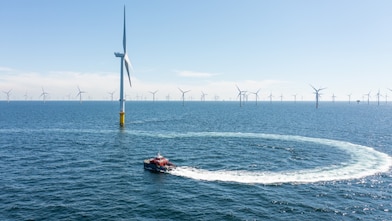
Dat is een wettelijke verplichting. Het komt erop neer dat de productie van waterstof uit Holland Hydrogen 1 moet meebewegen met hoe hard of zacht het waait en hoeveel wind het windpark Hollandse Kust Noord omzet in stroom. Want dat windpark van Shell en Eneco, 70 kilometer noordelijker, levert via het landelijke stroomnet de elektriceit die de waterstoffabriek nodig heeft. En dát moet weer worden afgestemd op hoeveel waterstof er van de Holland Hydrogen 1 naar de afnemer gaat: de raffinaderij van Shell Pernis. Die is vooralsnog de eerste klant.
Boktor: “Ingewikkeld en uitdagend hoor, want de buffercapaciteit van de waterstoffabriek is ongeveer net zo groot en lang als de waterstofleiding van Holland Hydrogen 1 naar de raffinaderij, zo’n 37 kilometer. Dat is omgerekend 10 minuten waterstofproductie.”
Dit alles verklaart de immense computerkracht die nodig is. Holland Hydrogen 1 gaat gemiddeld zo’n 60 ton waterstof per dag maken. Daarmee vervangt de fabriek zo’n 5 tot 10% van de grijze waterstof die de raffinaderij nu gebruikt. Dat klinkt bescheiden, terwijl Holland Hydrogen 1 met een capaciteit van 200 MW bij de opening de grootste waterstoffabriek van Europa zal zijn.
Te volgen 'windprofiel' van Holland Hydrogen 1 is wettelijke verplichtingDe productie van waterstof moet meebewegen met de wind van windpark Hollandse Kust Noord
Volop drukte op de bouwplaats
Gedurende de wandeling over het fabrieksterrein duiken geregeld werklui op vanuit allerlei kieren en deuren, en vanaf hoge steigers en aangebrachte wandelpaden, met op hun bont gekleurde overals verschillende bedrijfslogo’s. Het tikt, klopt, bonkt, schroeft en gonst van de bedrijvigheid, getuige ook de volle parkeerplaats voor de entree.
“Wanneer de fabriek operationeel is, zullen slechts een handvol medewerkers hier rondlopen”, zegt Boktor, “maar nu zijn het er zo’n 500 per dag. We werken met ongeveer 150 verschillende partners samen aan Holland Hydrogen 1. Dat is kenmerkend voor energietransitieprojecten, waarvoor veel nieuwe en specifieke kennis en kunde nodig is.”
Het bescheiden bezoekerscentrum
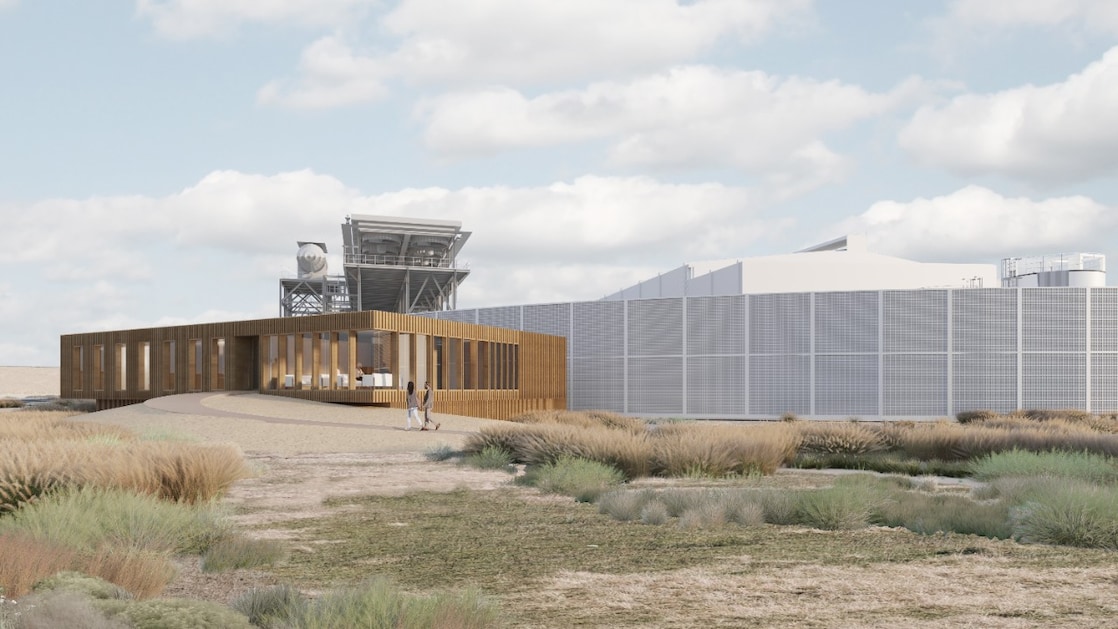
Naast de fabriekshal en de grote luchtkoelinstallatie is het toekomstige kantoor annex bezoekerscentrum gesitueerd. Er zijn geen concessies gedaan aan de duurzame ontwerpprincipes van het gebouw, dat met hout omlijst is en waarvoor gerecyclede materialen zijn gebruikt.
Via water en druk
Verwachtingsvol voert de route verder richting uiteindelijk dé pijplijn van waaruit het gedemineraliseerde water het terrein van Holland Hydrogen 1 binnenkomt. Dit komt uit het Brielse Meer, dat 13 kilometer naar het oosten ligt. Een installatie deminiraliseerd het water en voorziet het van een zoutsoort, waardoor het geschikt is voor de groene waterstofproductie.
En via een compressor van formaat, die de waterstof op een druk van 50 bar brengt. Ter vergelijking: dat is ruim 10 keer meer dan de druk van een racefietsband. Het is een huzarenstukje waar menig civiel ingenieur de vingers bij aflikt, zo verzekeren Le Coultre en Boktor. Laagje voor laagje is de installatie opgebouwd, bovenop het opgespoten zand van de Tweede Maasvlakte. “Zo’n compressor trilt en beweegt en heeft de neiging om zich te verplaatsen.” Maar deze torenhoge buizenkluwe doet dat dus niet.
In de richting van de mooiste
Nog uitdagender dan dat de fabriek zich liet vinden, is de zoektocht naar dé pijplijn waar het allemaal om gaat. “Waarvoor dit hele circus is opgetuigd”, lacht Lydia Boktor. Daar, kijk daar. Een witte pijplijn, net iets meer dan 20 centimeter in diameter, verscholen in een stellage, die daar bescheiden de bocht om piept richting de uitgang. Via dat buisje gaat de groene waterstof de wijde wereld in, naar Shell Pernis. “Het is daarmee de mooiste pijplijn van de hele fabriek”, besluit Florine Le Coultre, die ook voor die pijp verantwoordelijk is.
Compressoren van formaat op opgespoten zand van de Tweede MaasvlakteHet is een huzarenstukje waar menig civiel ingenieur de vingers bij aflikt
Cautionary note
Cautionary note
The companies in which Shell plc directly and indirectly owns investments are separate legal entities. In this announcement “Shell”, “Shell Group” and “Group” are sometimes used for convenience where references are made to Shell plc and its subsidiaries in general. Likewise, the words “we”, “us” and “our” are also used to refer to Shell plc and its subsidiaries in general or to those who work for them. These terms are also used where no useful purpose is served by identifying the particular entity or entities. ‘‘Subsidiaries’’, “Shell subsidiaries” and “Shell companies” as used in this announcement refer to entities over which Shell plc either directly or indirectly has control. The term “joint venture”, “joint operations”, “joint arrangements”, and “associates” may also be used to refer to a commercial arrangement in which Shell has a direct or indirect ownership interest with one or more parties. The term “Shell interest” is used for convenience to indicate the direct and/or indirect ownership interest held by Shell in an entity or unincorporated joint arrangement, after exclusion of all third-party interest.
Forward-looking Statements
This announcement contains forward-looking statements (within the meaning of the U.S. Private Securities Litigation Reform Act of 1995) concerning the financial condition, results of operations and businesses of Shell. All statements other than statements of historical fact are, or may be deemed to be, forward-looking statements. Forward-looking statements are statements of future expectations that are based on management’s current expectations and assumptions and involve known and unknown risks and uncertainties that could cause actual results, performance or events to differ materially from those expressed or implied in these statements. Forward-looking statements include, among other things, statements concerning the potential exposure of Shell to market risks and statements expressing management’s expectations, beliefs, estimates, forecasts, projections and assumptions. These forward-looking statements are identified by their use of terms and phrases such as “aim”; “ambition”; ‘‘anticipate’’; ‘‘believe’’; “commit”; “commitment”; ‘‘could’’; ‘‘estimate’’; ‘‘expect’’; ‘‘goals’’; ‘‘intend’’; ‘‘may’’; “milestones”; ‘‘objectives’’; ‘‘outlook’’; ‘‘plan’’; ‘‘probably’’; ‘‘project’’; ‘‘risks’’; “schedule”; ‘‘seek’’; ‘‘should’’; ‘‘target’’; ‘‘will’’; “would” and similar terms and phrases. There are a number of factors that could affect the future operations of Shell and could cause those results to differ materially from those expressed in the forward-looking statements included in this announcement, including (without limitation): (a) price fluctuations in crude oil and natural gas; (b) changes in demand for Shell’s products; (c) currency fluctuations; (d) drilling and production results; (e) reserves estimates; (f) loss of market share and industry competition; (g) environmental and physical risks; (h) risks associated with the identification of suitable potential acquisition properties and targets, and successful negotiation and completion of such transactions; (i) the risk of doing business in developing countries and countries subject to international sanctions; (j) legislative, judicial, fiscal and regulatory developments including regulatory measures addressing climate change; (k) economic and financial market conditions in various countries and regions; (l) political risks, including the risks of expropriation and renegotiation of the terms of contracts with governmental entities, delays or advancements in the approval of projects and delays in the reimbursement for shared costs; (m) risks associated with the impact of pandemics, such as the COVID-19 (coronavirus) outbreak, regional conflicts, such as the Russia-Ukraine war, and a significant cybersecurity breach; and (n) changes in trading conditions. No assurance is provided that future dividend payments will match or exceed previous dividend payments. All forward-looking statements contained in this announcement are expressly qualified in their entirety by the cautionary statements contained or referred to in this section. Readers should not place undue reliance on forward-looking statements. Additional risk factors that may affect future results are contained in Shell plc’s Form 20-F for the year ended December 31, 2024 (available at www.shell.com/investors/news-and-filings/sec-filings.html and www.sec.gov). These risk factors also expressly qualify all forward-looking statements contained in this announcement and should be considered by the reader. Each forward-looking statement speaks only as of the date of this announcement, November 27, 2025. Neither Shell plc nor any of its subsidiaries undertake any obligation to publicly update or revise any forward-looking statement as a result of new information, future events or other information. In light of these risks, results could differ materially from those stated, implied or inferred from the forward-looking statements contained in this announcement.
Shell’s Net Carbon Intensity
Also, in this announcement we may refer to Shell’s “Net Carbon Intensity” (NCI), which includes Shell’s carbon emissions from the production of our energy products, our suppliers’ carbon emissions in supplying energy for that production and our customers’ carbon emissions associated with their use of the energy products we sell. Shell’s NCI also includes the emissions associated with the production and use of energy products produced by others which Shell purchases for resale. Shell only controls its own emissions. The use of the terms Shell’s “Net Carbon Intensity” or NCI are for convenience only and not intended to suggest these emissions are those of Shell plc or its subsidiaries.
Shell’s net-zero emissions target
Shell’s operating plan, outlook and budgets are forecasted for a ten-year period and are updated every year. They reflect the current economic environment and what we can reasonably expect to see over the next ten years. Accordingly, they reflect our Scope 1, Scope 2 and NCI targets over the next ten years. However, Shell’s operating plans cannot reflect our 2050 net-zero emissions target, as this target is currently outside our planning period. In the future, as society moves towards net-zero emissions, we expect Shell’s operating plans to reflect this movement. However, if society is not net zero in 2050, as of today, there would be significant risk that Shell may not meet this target.
Forward-looking non-GAAP measures
This announcement may contain certain forward-looking non-GAAP measures such as cash capital expenditure and divestments. We are unable to provide a reconciliation of these forward-looking non-GAAP measures to the most comparable GAAP financial measures because certain information needed to reconcile those non-GAAP measures to the most comparable GAAP financial measures is dependent on future events some of which are outside the control of Shell, such as oil and gas prices, interest rates and exchange rates. Moreover, estimating such GAAP measures with the required precision necessary to provide a meaningful reconciliation is extremely difficult and could not be accomplished without unreasonable effort. Non-GAAP measures in respect of future periods which cannot be reconciled to the most comparable GAAP financial measure are calculated in a manner which is consistent with the accounting policies applied in Shell plc’s consolidated financial statements.
The contents of websites referred to in this announcement do not form part of this announcement.
We may have used certain terms, such as resources, in this announcement that the United States Securities and Exchange Commission (SEC) strictly prohibits us from including in our filings with the SEC. Investors are urged to consider closely the disclosure in our Form 20-F, File No 1-32575, available on the SEC website www.sec.gov