De zee als grondstof
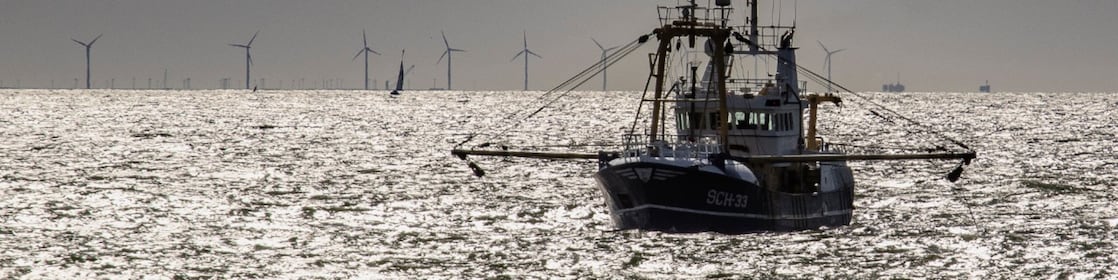
De zee. Heerlijk om in te zwemmen, om te bevaren of om van het uitzicht te genieten. De zee inspireert en intrigeert. Maar ze is ook een soort “grondstof”, en niet alleen voor vissers. Een vierluik over maritieme energie.

Tekst: Fanta Voogd. Beeld: Marcel Burger (openingsillustratie), Tswgb, Ole-Marius Skulbru, Flying Focus, Plotvis.
In dit verhaal:
1. Getijden
Zoals je in Shell Venster van september kon lezen, was er ooit een wild plan om de Middellandse Zee af te sluiten. Dit “Antlantropa” bleek onuitvoerbaar, maar delen van de zee zijn zeker tembaar. De Maasvlaktes bij Rotterdam zijn er een goed voorbeeld van. Maar al in de vroege middeleeuwen bewezen getijdenmolens dat de kracht van eb en vloed gevangen kon worden. Onder meer in de zevende eeuw in de Theemsmonding bij Londen en in de tiende eeuw aan de monding van de Eufraat en de Tigris in Mesopotamië — in het huidige Irak.
Het aantal getijdenmolens dat destijds rond de Britse eilanden in bedrijf was, wordt geschat op tweehonderd, langs de Franse kust op honderd. Ook in de Nederlanden werd het getij ingezet om graan te malen. In Zierikzee was in 1220 al een getijden(koren)molen werkzaam. In Middelburg, Goes, Sas van Gent en Bergen op Zoom zijn die getijdenmolens bewaard gebleven. Evenals in Antwerpen en Rupelmonde.
Getijdenstroom in moderne tijd
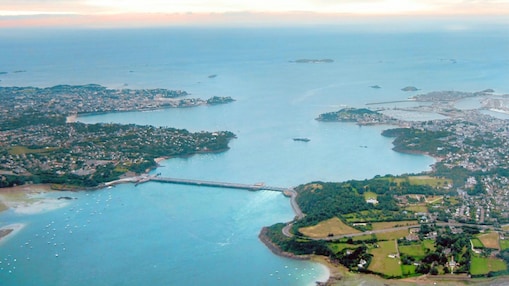
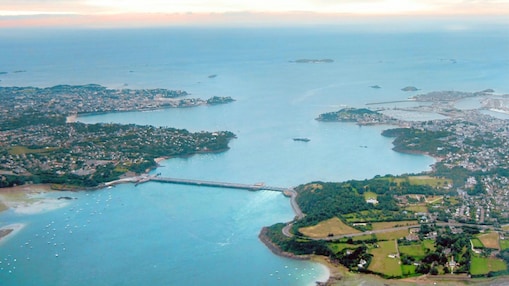
In de jaren zestig van de vorige eeuw kreeg het eeuwenoude principe van de getijdenmolen een moderne opvolger voor de opwekking van elektriciteit. De Rance-waterkrachtcentrale bij het Bretonse Saint-Malo (foto) markeerde in 1966 de start van dat nieuwe tijdperk. In 2012 werd de Sihwa Lake Tidal Power Station bij de Zuid-Koreaanse hoofdstad Seoel in gebruik genomen als de grootste getijdencentrale ter wereld. In de Zeeuwse zeearmen worden sinds 2009 op bescheiden schaal proeven gedaan met getijdencentrales.
Beperkte levensvatbaarheid
Dat de Franse energiecentrale in de monding van de Rance na zestig jaar wereldwijd nog altijd geldt als de op één na grootste getijdencentrale, is tekenend voor de beperkte levensvatbaarheid van getijdenenergie. Dat houdt deels verband met het feit dat de technologie het best is te verwezenlijken in estuaria. In deze trechtervormige riviermondingen kan een kleine ingreep al grote gevolgen hebben voor het veelal hoogwaardige en kwetsbare ecosysteem. Ook de hoge aanloopkosten van een getijdencentrale en het succes van zonne- en windenergie hebben verdere toepassing van getijdenstroomtechnologie tot dusver in de weg gestaan.
2. Mijnbouw (olie en gas uit zee)
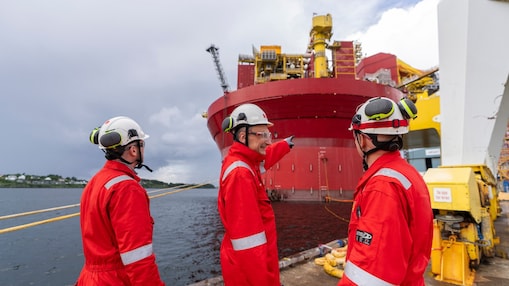
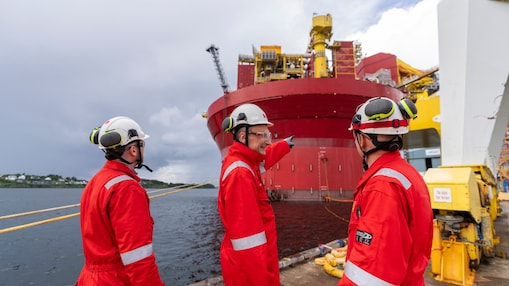
Net toen in de jaren 1930 waterkracht dé toekomstige energiebron bleek te worden, veroverde aardolie de wereld. De snelle opkomst van de auto en het gemotoriseerde transport zorgde voor een enorme vraag naar benzine en olie, waarop oliemaatschappijen hun zoektocht voorzichtig uitbreidden naar locaties op zee.
De eerste oliewinning op zee vond plaats rond 1896 in Santa Barbara Channel, de zeestraat tussen de Zuid-Californische kust en de Channel Islands. De oliebronnen werden geëxploiteerd vanaf pieren die bij het kustplaatsje Summerland de zee in staken. Vanaf de jaren 1910 werd er in de getijdengebieden langs de Golfkust van Texas en Louisiana olie gewonnen.
In de jaren 1920 waren De Koninklijke/Shell-groep samen met het Amerikaanse Standard Oil (Esso/ExxonMobil) nauw betrokken bij de vroege offshore olie-exploitatie in Lago de Maracaibo aan de kust van Venezuela. In 1938 begonnen de voorlopers van Chevron en ExxonMobil vanaf een op 4,3 meter diepte verankerd, vrijstaand offshore-platform met de oliewinning op anderhalve kilometer van het kustplaatsje Creole in Louisiana.
Offshore olie- en gaswinning na de Tweede Wereldoorlog
Maar de offshore-mijnbouw koos pas na de Tweede Wereldoorlog op grote schaal het ruime sop. De Amerikaanse oliemaatschappij Kerr-McGee boorde in oktober 1947 naar olie in de Golf van Mexico. Het was het eerste boorplatform op open zee, buiten het zicht van de kust. De ontdekking van het enorme South Pass Block 24-olieveld, voor de kust van Louisiana, in 1950, bood Shell de mogelijkheid zich verder te bekwamen in oliewinning op zee.
NAM in de Noordzee
In 1959 begon de Nederlandse Aardolie Maatschappij (50% Shell / 50% ExxonMobil (Esso), in samenwerking met de Staat) met seismisch onderzoek in de bodem van de Noordzee, in 1963 gevolgd door de eerste proefboring. Niet naar aardolie, maar naar aardgas.
De eerste commerciële oliewinning op de Noordzee begon in 1971 in het Noorse Ekofisk-olieveld. De NAM begon in 1977, op ongeveer 120 kilometer noordwestelijk van Den Helder, met de aardgaswinning.
3. Wind op zee
De energierevolutie van de 21ste eeuw danken we niet aan enorme dammen, zoals in de jaren 1930 voorzien, maar aan een vertrouwde klassieker die op zee een grandioze comeback maakt: de windmolen.
's Werelds eerste windmolenpark op zee ging in 1991 van start twee kilometer noordelijk van het dorp Vindeby, op het Deense eiland Lolland. Windenergie op zee ging traag van start, maar groeide vanaf het begin van deze eeuw vliegensvlug — zowel in aantal turbines als in vermogen per turbine.
Windenergie in Nederland
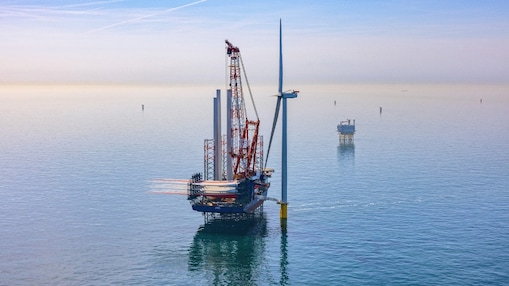
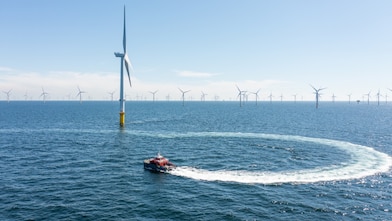
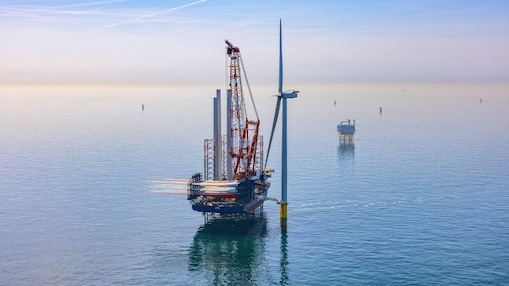
Het eerste grote Nederlandse windpark voor de Nederlandse kust, windpark Egmond aan Zee, is in 2007 opgeleverd op initiatief van Nuon (Vattenfall) en Shell. Sinds 2021 is het consortium NoordzeeWind volledig in handen van Shell. En net als andere aanbieders ging ook Shell daarna door. Zo hoopt later dit jaar Shell haar vierde windpark op zee, Hollandse Kust West (foto), in gebruik te nemen. Shell bouwt dit samen met Eneco en het Japanse Chubu als consortium Ecowende.
4. De toekomst van energie van zee
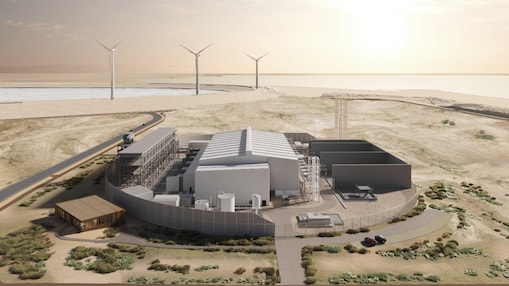
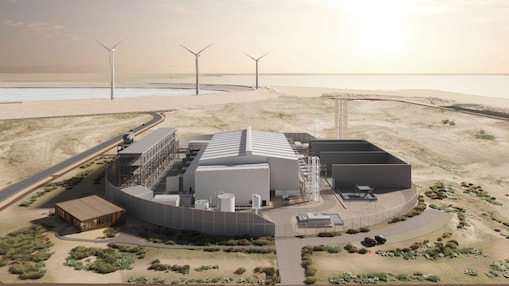
Dat de zee ook in de toekomst een belangrijke leverancier van energie blijft, staat wel vast. De geschiedenis leert evenwel dat het een hachelijke zaak is om iets te zeggen over de technologie van morgen. De eerste veelbelovende stappen zijn genomen met hernieuwbare waterstof, geproduceerd met stroom van offshore windparken. Shell speelt daarbij een innovatieve pioniersrol en hoopt eind 2026 te beginnen met het opstarten van haar Holland Hydrogen 1 (zie afbeelding). Dat is dan de eerste fabriek voor hernieuwbare waterstof op schaal in Nederland en gelijk een van de grootste van Europa.
Golfslagenergie en osmose-elektriciteit
Maar er zijn meer kanshebbers voor toekomstige maritieme energie. Wereldwijd worden proeven gedaan met golfslagenergie, met drijvende zonneparken en met osmose-elektriciteit. Bij dat laatste wordt stroom opgewekt uit zoet en zout water. Zo is er sinds 2014 op de Afsluitdijk een testopstelling in bedrijf. Elektriciteit maken uit het temperatuurverschil tussen warm oppervlaktewater en koud diepzeewater is weer een andere manier van mogelijk toekomstige energieopwekking.
Over de zee als “grondstof” zijn ingenieurs, landen en energiebedrijven voorlopig nog niet uitgepraat. De zee geeft en de zee neemt — welke vorm van maritieme energie de echte toekomst heeft, zal de tijd uitwijzen.
Cautionary note
Cautionary note
The companies in which Shell plc directly and indirectly owns investments are separate legal entities. In this publication “Shell”, “Shell Group” and “Group” are sometimes used for convenience to reference Shell plc and its subsidiaries in general. Likewise, the words “we”, “us” and “our” are also used to refer to Shell plc and its subsidiaries in general or to those who work for them. These terms are also used where no useful purpose is served by identifying the particular entity or entities. ‘‘Subsidiaries’’, “Shell subsidiaries” and “Shell companies” as used in this publication refer to entities over which Shell plc either directly or indirectly has control. The terms “joint venture”, “joint operations”, “joint arrangements”, and “associates” may also be used to refer to a commercial arrangement in which Shell has a direct or indirect ownership interest with one or more parties. The term “Shell interest” is used for convenience to indicate the direct and/or indirect ownership interest held by Shell in an entity or unincorporated joint arrangement, after exclusion of all third-party interest.
Forward-Looking statements
This publication contains forward-looking statements (within the meaning of the U.S. Private Securities Litigation Reform Act of 1995) concerning the financial condition, results of operations and businesses of Shell. All statements other than statements of historical fact are, or may be deemed to be, forward-looking statements. Forward-looking statements are statements of future expectations that are based on management’s current expectations and assumptions, including (without limitation) those concerning Shell’s strategy and operating plans, macroeconomic conditions, future energy demand, supply and product mix, commodity prices, demand for Shell’s products, production results and reserve estimates, development, execution and management of projects, energy transition and climate change, management of safety and environmental risks, costs, cash capital expenditures, technology advancements, legislative, judicial, fiscal and regulatory developments, regional conflicts and trading conditions, and involve known and unknown risks and uncertainties that could cause actual results, performance or events to differ materially from those expressed or implied in these statements. Forward-looking statements include, among other things, statements concerning the potential exposure of Shell to market risks and statements expressing management’s expectations, beliefs, estimates, forecasts, projections and assumptions. These forward-looking statements are identified by their use of terms and phrases such as “aim”; “ambition”; ‘‘anticipate’’; “aspire”, “aspiration”, ‘‘believe’’; “commit”; “commitment”; ‘‘could’’; “desire”; ‘‘estimate’’; ‘‘expect’’; ‘‘goals’’; ‘‘intend’’; ‘‘may’’; “milestones”; ‘‘objectives’’; ‘‘outlook’’; ‘‘plan’’; ‘‘probably’’; ‘‘project’’; ‘‘risks’’; “schedule”; ‘‘seek’’; ‘‘should’’; ‘‘target’’; “vision”; ‘‘will’’; “would” and similar terms and phrases. There are a number of factors that could affect the future operations of Shell and could cause those results to differ materially from those expressed in the forward-looking statements included in this publication, including (without limitation): (a) price fluctuations in crude oil and natural gas; (b) changes in demand for Shell’s products; (c) currency fluctuations; (d) drilling and production results; (e) reserves estimates; (f) loss of market share and industry competition; (g) environmental and physical risks, including climate change; (h) risks associated with the identification of suitable potential acquisition properties and targets, and successful negotiation and completion of such transactions; (i) the risk of doing business in developing countries and countries subject to international sanctions; (j) legislative, judicial, fiscal and regulatory developments including tariffs and regulatory measures addressing climate change; (k) economic and financial market conditions in various countries and regions; (l) political risks, including the risks of expropriation and renegotiation of the terms of contracts with governmental entities, delays or advancements in the approval of projects and delays in the reimbursement for shared costs; (m) risks associated with the impact of pandemics, regional conflicts, such as the Russia-Ukraine war and the conflict in the Middle East, and a significant cyber security, data privacy or IT incident; (n) the pace of the energy transition; and (o) changes in trading conditions. No assurance is provided that future dividend payments will match or exceed previous dividend payments. All forward-looking statements contained in this publication are expressly qualified in their entirety by the cautionary statements contained or referred to in this section. Readers should not place undue reliance on forward-looking statements. Additional risk factors that may affect future results are contained in Shell plc’s Form 20-F for the year ended December 31, 2025 (available at www.shell.com/investors/news-and-filings/sec-filings.html and www.sec.gov). These risk factors also expressly qualify all forward-looking statements contained in this publication and should be considered by the reader. Each forward-looking statement speaks only as of the date of this publication, October 30, 2026. Neither Shell plc nor any of its subsidiaries undertake any obligation to publicly update or revise any forward-looking statement as a result of new information, future events or other information. In light of these risks, results could differ materially from those stated, implied or inferred from the forward-looking statements contained in this publication.
Shell’s net carbon intensity and net-zero emissions target
In this publication we may refer to Shell’s “net carbon intensity” (NCI), which includes Shell’s carbon emissions from the production of our energy products, our suppliers’ carbon emissions in supplying energy for that production and our customers’ carbon emissions associated with their use of the energy products we sell. Shell’s NCI also includes the emissions associated with the production and use of energy products produced by others which Shell purchases for resale. Shell only controls its own emissions. The use of the terms Shell’s “net carbon intensity” or NCI is for convenience only and not intended to suggest these emissions are those of Shell plc or its subsidiaries.
Shell’s operating plan and outlook are forecasted for a three-year period and ten-year period, respectively, and are updated every year. They reflect the current economic environment and what we can reasonably expect to see over the next three and ten years. Accordingly, the outlook reflects our combined Scope 1 and 2 target, NCI target and our oil products ambition over the next ten years. However, Shell’s operating plan and outlook cannot reflect our 2050 net-zero emissions target, as this target is outside our planning period. Such future operating plans and outlooks could include changes to our portfolio, efficiency improvements and the use of carbon capture and storage and carbon credits. In the future, as society moves towards net-zero emissions, we expect Shell’s operating plans and outlooks to reflect this movement. However, if society is not net zero in 2050, as of today, there would be significant risk that Shell may not meet this target.
The information provided above regarding Shell’s NCI and net zero emissions target are not intended, nor should they be construed as introducing, suggesting or making any claim, target or representation thereof other than what is included in the publicaiton..
Forward-Looking non-GAAP measures
This publication may contain certain forward-looking non-GAAP measures such as free cash flow and underlying operating expenses. We are unable to provide a reconciliation of these forward-looking non-GAAP measures to the most comparable GAAP financial measures because certain information needed to reconcile those non-GAAP measures to the most comparable GAAP financial measures is dependent on future events some of which are outside the control of Shell, such as oil and gas prices, interest rates and exchange rates. Moreover, estimating such GAAP measures with the required precision necessary to provide a meaningful reconciliation is extremely difficult and could not be accomplished without unreasonable effort. Non-GAAP measures in respect of future periods which cannot be reconciled to the most comparable GAAP financial measure are calculated in a manner which is consistent with the accounting policies applied in Shell plc’s consolidated financial statements. These forward-looking non-GAAP measures are provided to assist readers in understanding management’s use and expectations of such measures and may not be appropriate for other purposes.
The contents of websites referred to in this publication do not form part of this publication.
We may have used certain terms, such as resources, in this publication that the United States Securities and Exchange Commission (SEC) strictly prohibits us from including in our filings with the SEC. Investors are urged to consider closely the disclosure in our Form 20-F, File No 1-32575, available on the SEC website www.sec.gov.
Meer nieuws uit Shell Venster

The sea as a resource
30 Oct. 2026
The sea. Wonderful for swimming, sailing or simply enjoying the view. The sea inspires and intrigues. But it is also a kind of “resource”, and not just for fishermen. A four-part series on maritime energy.

Text: Fanta Voogd. Imagery: Marcel Burger (featured photo), Tswgb, Ole-Marius Skulbru, Flying Focus, Plotvis.
1. Tides
As you may have read in the September edition of Shell Venster, there was once a wildly ambitious plan to dam off the Mediterranean Sea. This ‘Atlantropa’ scheme proved unfeasible, but parts of the sea can certainly be tamed. The Maasvlakte developments near Rotterdam are a good example. Yet as early as the Early Middle Ages, tidal mills demonstrated that the power of the ebb and flow could be harnessed. Examples could be found in the Thames Estuary near London in the seventh century, and at the mouth of the Euphrates and Tigris in Mesopotamia — in present day Iraq.
The number of tidal mills operating around the British Isles at the time is estimated at two hundred, with another hundred along the French coast. The tides were also harnessed to grind grain in the "Low Countries". In the Netherlands, Zierikzee had a tidal grain mill as early as 1220. Tidal mills have survived in Middelburg, Goes, Sas van Gent and Bergen op Zoom, as well as in Antwerp and Rupelmonde — the latter two in Belgium.
Tidal power in the modern era
In the 1960s, the centuries-old principle of the tidal mill acquired a modern successor for generating electricity. The Rance tidal power station near Saint-Malo in Brittany (pictured), France, marked the beginning of this new era in 1966. In 2012, the Sihwa Lake Tidal Power Station near the South Korean capital Seoul began operating as the world’s largest tidal power station. Since 2009, small-scale trials with tidal power installations have also been carried out in tidal inlets in Zeeland, the Netherlands..
Limited viability
The fact that, sixty years on, the French power station at the mouth of the Rance is still considered the world’s second-largest tidal power station illustrates the limited viability of tidal energy. This is partly because the technology is best suited to estuaries. In these funnel-shaped river mouths, even relatively minor interventions can have major consequences for what are often valuable and vulnerable ecosystems. The high upfront costs of tidal power stations, together with the success of solar and wind energy, have also hindered the wider adoption of tidal power technology to date.
2. Mining (offshore oil and gas extraction)
Just as hydropower seemed poised to become the energy source of the future in the 1930s, oil began its conquest of the world. The rapid rise of the car and motorised transport created enormous demand for petrol and oil, prompting oil companies to cautiously extend their search to offshore locations.
The first offshore oil production took place around 1896 in the Santa Barbara Channel, the strait between the Southern Californian coast and the Channel Islands. The oil wells were operated from piers extending into the sea from the coastal town of Summerland. From the 1910s onwards, oil was also produced in the tidal areas along the Gulf Coast of Texas and Louisiana.
In the 1920s, the Royal Dutch/Shell Group, together with the American company Standard Oil (Esso/ExxonMobil), was closely involved in the early development of offshore oil production in Lake Maracaibo, off the coast of Venezuela. In 1938, the predecessors of Chevron and ExxonMobil began producing oil from a freestanding offshore platform anchored in water 4.3 metres (14.1 feet) deep, some 1.5 kilometres (0.9 miles) off the coastal town of Creole, Louisiana.
Offshore oil and gas production after the Second World War
But it was only after the Second World War that offshore extraction really began to venture out to sea on a large scale. In October 1947, the American oil company Kerr-McGee drilled for oil in the Gulf of Mexico. It was the first drilling platform in the open sea, beyond sight of the coast. The discovery of the enormous South Pass Block 24 oil field off the coast of Louisiana in 1950 gave Shell the opportunity to further develop its expertise in offshore oil production.
NAM in the North Sea
In 1959, Nederlandse Aardolie Maatschappij (NAM, 50% Shell / 50% ExxonMobil (Esso), in partnership with the Dutch State) began conducting seismic surveys of the North Sea seabed, followed by its first exploratory drilling in 1963. The target was not oil, but natural gas. The first commercial oil production in the North Sea began in 1971 at Norway’s Ekofisk oil field. NAM began producing natural gas in 1977, around 120 kilometres (75 miles) north-west of Den Helder.
3. Offshore wind
The energy revolution of the 21st century is not being driven by enormous dams, as envisaged in the 1930s, but by a familiar classic making a spectacular comeback at sea: the wind mill.
The world’s first offshore wind farm began operating in 1991, two kilometres (1.2 miles) north of the village of Vindeby on the Danish island of Lolland. Offshore wind got off to a slow start, but from the beginning of this century it expanded at breakneck speed, both in the number of turbines and in the generating capacity of each turbine.
Wind power in the Netherlands
The first large Dutch wind farm off the Netherlands coast, the Egmond aan Zee wind farm, was completed in 2007 on the initiative of Nuon (Vattenfall) and Shell. Since 2021, the NoordzeeWind consortium has been wholly owned by Shell. And like other developers, Shell continued to expand its offshore wind activities. Later this year, for example, Shell hopes to bring its fourth offshore wind farm, Hollandse Kust West (pictured), into operation. Shell is developing the wind farm together with Eneco and Japan’s Chubu as part of the Ecowende consortium.
4. The future of energy from the sea
There is little doubt that the sea will continue to be an important source of energy in the future. History teaches us, however, that predicting the technology of tomorrow is a risky business. The first promising steps have been taken with renewable hydrogen, produced using electricity from offshore wind farms. Shell is playing an innovative, pioneering role in this field and hopes to begin commissioning its Holland Hydrogen 1 plant (see image) by the end of 2026. It will be the first large-scale renewable hydrogen plant in the Netherlands and one of the largest in Europe.
Wave energy and osmotic power
But there are other contenders for the future of marine energy. Trials are being conducted around the world with wave energy, floating solar farms and osmotic power. The latter generates electricity from fresh water and salt water. A pilot installation, for example, has been operating on the Afsluitdijk — a 1930s groundbreaking dam in the north of the Netherlands — since 2014. Another potential way of generating energy in the future is to produce electricity using the temperature difference between warm surface water and cold deep-sea water.
There is still plenty to be said about the sea as a ‘resource’ by engineers, countries and energy companies. The sea gives and the sea takes. Time will tell which form of marine energy truly represents the future.
Cautionary note
Cautionary note
The companies in which Shell plc directly and indirectly owns investments are separate legal entities. In this publication “Shell”, “Shell Group” and “Group” are sometimes used for convenience to reference Shell plc and its subsidiaries in general. Likewise, the words “we”, “us” and “our” are also used to refer to Shell plc and its subsidiaries in general or to those who work for them. These terms are also used where no useful purpose is served by identifying the particular entity or entities. ‘‘Subsidiaries’’, “Shell subsidiaries” and “Shell companies” as used in this publication refer to entities over which Shell plc either directly or indirectly has control. The terms “joint venture”, “joint operations”, “joint arrangements”, and “associates” may also be used to refer to a commercial arrangement in which Shell has a direct or indirect ownership interest with one or more parties. The term “Shell interest” is used for convenience to indicate the direct and/or indirect ownership interest held by Shell in an entity or unincorporated joint arrangement, after exclusion of all third-party interest.
Forward-Looking statements
This publication contains forward-looking statements (within the meaning of the U.S. Private Securities Litigation Reform Act of 1995) concerning the financial condition, results of operations and businesses of Shell. All statements other than statements of historical fact are, or may be deemed to be, forward-looking statements. Forward-looking statements are statements of future expectations that are based on management’s current expectations and assumptions, including (without limitation) those concerning Shell’s strategy and operating plans, macroeconomic conditions, future energy demand, supply and product mix, commodity prices, demand for Shell’s products, production results and reserve estimates, development, execution and management of projects, energy transition and climate change, management of safety and environmental risks, costs, cash capital expenditures, technology advancements, legislative, judicial, fiscal and regulatory developments, regional conflicts and trading conditions, and involve known and unknown risks and uncertainties that could cause actual results, performance or events to differ materially from those expressed or implied in these statements. Forward-looking statements include, among other things, statements concerning the potential exposure of Shell to market risks and statements expressing management’s expectations, beliefs, estimates, forecasts, projections and assumptions. These forward-looking statements are identified by their use of terms and phrases such as “aim”; “ambition”; ‘‘anticipate’’; “aspire”, “aspiration”, ‘‘believe’’; “commit”; “commitment”; ‘‘could’’; “desire”; ‘‘estimate’’; ‘‘expect’’; ‘‘goals’’; ‘‘intend’’; ‘‘may’’; “milestones”; ‘‘objectives’’; ‘‘outlook’’; ‘‘plan’’; ‘‘probably’’; ‘‘project’’; ‘‘risks’’; “schedule”; ‘‘seek’’; ‘‘should’’; ‘‘target’’; “vision”; ‘‘will’’; “would” and similar terms and phrases. There are a number of factors that could affect the future operations of Shell and could cause those results to differ materially from those expressed in the forward-looking statements included in this publication, including (without limitation): (a) price fluctuations in crude oil and natural gas; (b) changes in demand for Shell’s products; (c) currency fluctuations; (d) drilling and production results; (e) reserves estimates; (f) loss of market share and industry competition; (g) environmental and physical risks, including climate change; (h) risks associated with the identification of suitable potential acquisition properties and targets, and successful negotiation and completion of such transactions; (i) the risk of doing business in developing countries and countries subject to international sanctions; (j) legislative, judicial, fiscal and regulatory developments including tariffs and regulatory measures addressing climate change; (k) economic and financial market conditions in various countries and regions; (l) political risks, including the risks of expropriation and renegotiation of the terms of contracts with governmental entities, delays or advancements in the approval of projects and delays in the reimbursement for shared costs; (m) risks associated with the impact of pandemics, regional conflicts, such as the Russia-Ukraine war and the conflict in the Middle East, and a significant cyber security, data privacy or IT incident; (n) the pace of the energy transition; and (o) changes in trading conditions. No assurance is provided that future dividend payments will match or exceed previous dividend payments. All forward-looking statements contained in this publication are expressly qualified in their entirety by the cautionary statements contained or referred to in this section. Readers should not place undue reliance on forward-looking statements. Additional risk factors that may affect future results are contained in Shell plc’s Form 20-F for the year ended December 31, 2025 (available at www.shell.com/investors/news-and-filings/sec-filings.html and www.sec.gov). These risk factors also expressly qualify all forward-looking statements contained in this publication and should be considered by the reader. Each forward-looking statement speaks only as of the date of this publication, October 30, 2026. Neither Shell plc nor any of its subsidiaries undertake any obligation to publicly update or revise any forward-looking statement as a result of new information, future events or other information. In light of these risks, results could differ materially from those stated, implied or inferred from the forward-looking statements contained in this publication.
Shell’s net carbon intensity and net-zero emissions target
In this publication we may refer to Shell’s “net carbon intensity” (NCI), which includes Shell’s carbon emissions from the production of our energy products, our suppliers’ carbon emissions in supplying energy for that production and our customers’ carbon emissions associated with their use of the energy products we sell. Shell’s NCI also includes the emissions associated with the production and use of energy products produced by others which Shell purchases for resale. Shell only controls its own emissions. The use of the terms Shell’s “net carbon intensity” or NCI is for convenience only and not intended to suggest these emissions are those of Shell plc or its subsidiaries.
Shell’s operating plan and outlook are forecasted for a three-year period and ten-year period, respectively, and are updated every year. They reflect the current economic environment and what we can reasonably expect to see over the next three and ten years. Accordingly, the outlook reflects our combined Scope 1 and 2 target, NCI target and our oil products ambition over the next ten years. However, Shell’s operating plan and outlook cannot reflect our 2050 net-zero emissions target, as this target is outside our planning period. Such future operating plans and outlooks could include changes to our portfolio, efficiency improvements and the use of carbon capture and storage and carbon credits. In the future, as society moves towards net-zero emissions, we expect Shell’s operating plans and outlooks to reflect this movement. However, if society is not net zero in 2050, as of today, there would be significant risk that Shell may not meet this target.
The information provided above regarding Shell’s NCI and net zero emissions target are not intended, nor should they be construed as introducing, suggesting or making any claim, target or representation thereof other than what is included in the publicaiton..
Forward-Looking non-GAAP measures
This publication may contain certain forward-looking non-GAAP measures such as free cash flow and underlying operating expenses. We are unable to provide a reconciliation of these forward-looking non-GAAP measures to the most comparable GAAP financial measures because certain information needed to reconcile those non-GAAP measures to the most comparable GAAP financial measures is dependent on future events some of which are outside the control of Shell, such as oil and gas prices, interest rates and exchange rates. Moreover, estimating such GAAP measures with the required precision necessary to provide a meaningful reconciliation is extremely difficult and could not be accomplished without unreasonable effort. Non-GAAP measures in respect of future periods which cannot be reconciled to the most comparable GAAP financial measure are calculated in a manner which is consistent with the accounting policies applied in Shell plc’s consolidated financial statements. These forward-looking non-GAAP measures are provided to assist readers in understanding management’s use and expectations of such measures and may not be appropriate for other purposes.
The contents of websites referred to in this publication do not form part of this publication.
We may have used certain terms, such as resources, in this publication that the United States Securities and Exchange Commission (SEC) strictly prohibits us from including in our filings with the SEC. Investors are urged to consider closely the disclosure in our Form 20-F, File No 1-32575, available on the SEC website www.sec.gov.