Parttime militair bij Shell
Bijklussen bij landmacht, luchtmacht, marine of marechaussee. Dankzij een speciale afspraak tussen Shell Nederland en het Ministerie van Defensie kan dat. Dennis Notenboom (Moerdijk) en Larissa Terdu (Pernis) zijn twee Shell-ers die zo de tijd krijgen om Nederland weerbaar te houden.

Tekst: Marcel Burger.
Beeld: ANP/ Hollandse Hoogte / Laurens van Putten, Dennis Notenboom/Kramer Fotografeert, Larissa Terdu.
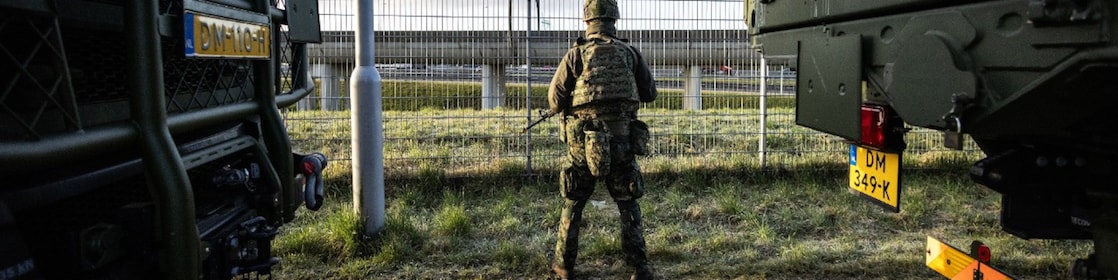
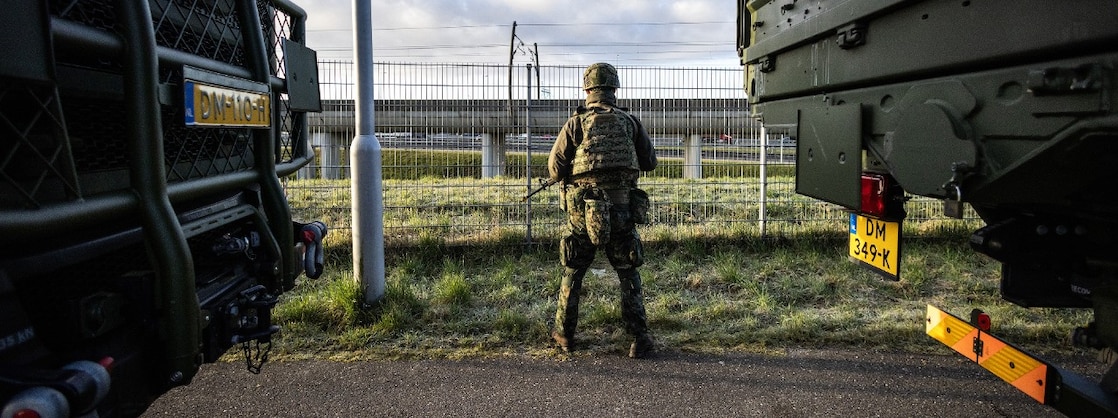
Openingsfoto: Oefening 20 Infanteriebataljon Bewaken en Beveiligen Korps Nationale Reserve op het terrein van Alstom in Rotterdam, maart 2025
In dit verhaal
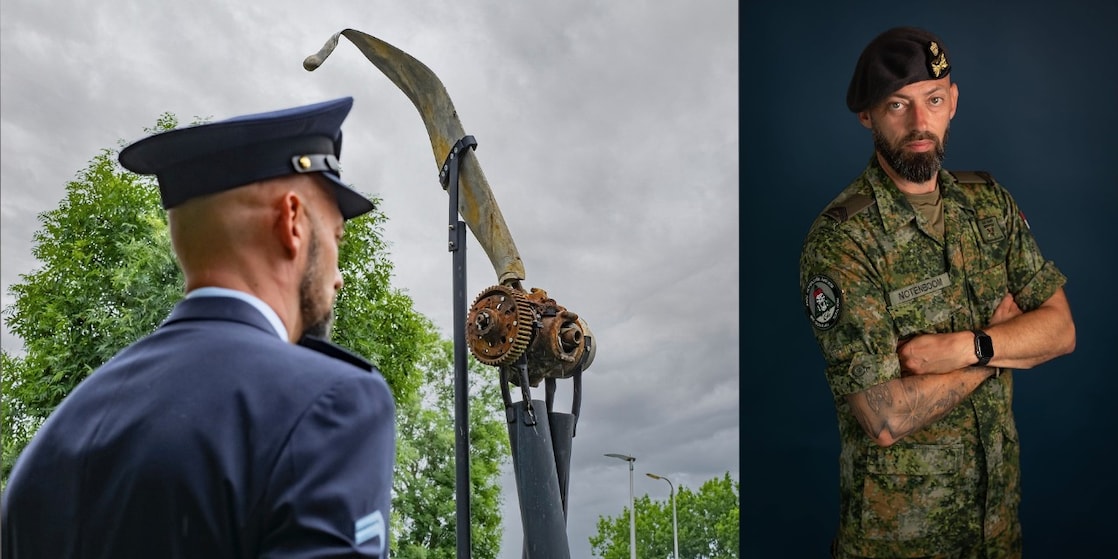
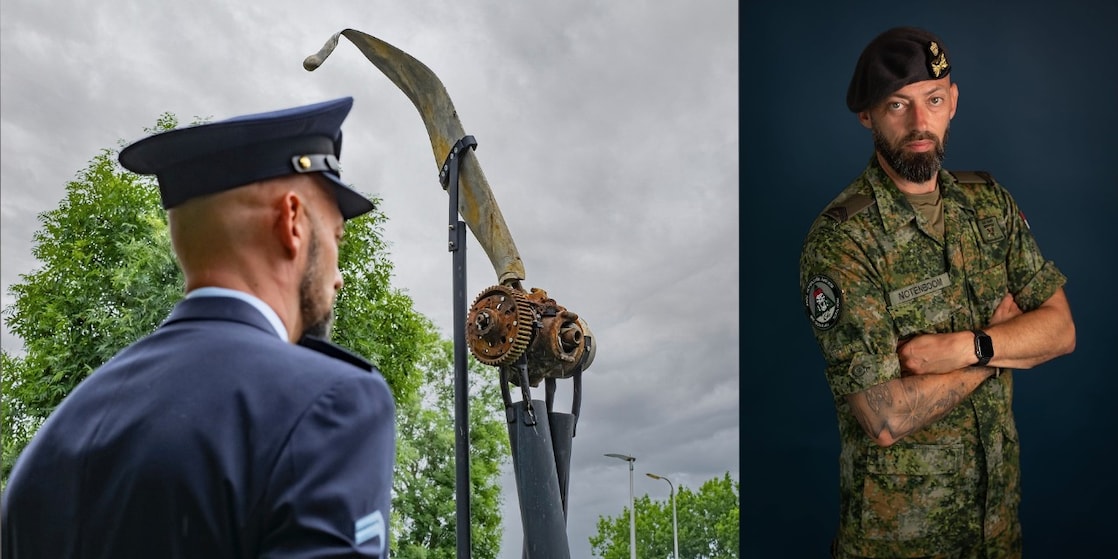
Op zijn thuishonk Goeree-Overflakkee is Dennis Notenboom (50) een bekende. Hij houdt de herinneringen aan de Tweede Wereldoorlog op het Zuid-Hollandse schiereiland levendig. Ook begeleidt hij nabestaanden van hen die omkwamen in de jaren 1940-1945 tijdens hun bezoek aan het gebied.
Voor zijn jarenlange inzet kreeg de Middelharnisser in april een officieel lintje: Lidmaatschap in de Orde van Oranje-Nassau met de Zwaarden, een militair ereteken. Dennis is namelijk niet alleen assistent-productieteamleider op de MLO, een van de belangrijkste fabrieken van Shell Chemicals Park Moerdijk, hij is ook parttime militair. Voorheen bij de Nationale Reserve (NATRES), maar sinds 5 jaar bij de Koninklijke Luchtmacht.
“Shell en de krijgsmacht hebben best veel gemeen met elkaar”, zegt Dennis. “Allebei zijn ze gek op afkortingen, allebei hebben ze een vaste structuur en een geordende manier van werken.”
Van oefenvijand naar satellietbesturing
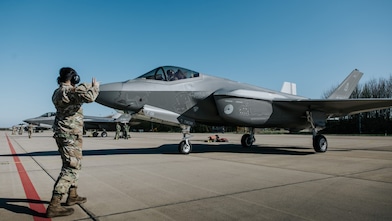
In zijn militaire reservistencarrière heeft Dennis veelzijdig werk gedaan. Zo is hij getraind in vredesbewaking, ondersteunt hij de Apache- en Chinook-helikoptersquadrons op vliegbasis Gilze-Rijen in Noord-Brabant en is hij oefenvijand (OPFOR) voor het Korps Commandotroepen.
Zijn nieuwe reservistenrol is bij Space Operaties van de luchtmacht, waarbij Dennis Nederlandse defensiesatellieten gaat bijsturen (indien nodig). “Dat is toch wel wat anders dan de drones die ik voor de bedrijfsbrandweer van Shell in Moerdijk bestuur”, glimlacht Dennis.
Convenant Shell en defensie
In 2021 tekenden Shell Nederland en het Ministerie van Defensie een convenant, waardoor je als Shell-medewerker betaald verlof kunt krijgen om je in te zetten als reservist bij een van de Nederlandse krijgsmachtonderdelen. Dit moet mede helpen om de Nederlandse weerbaarheid te laten groeien van 6.500 (2021) naar 20.000 reservisten in 2035. Momenteel zijn er ruim 8.500 reservisten bij de Nederlandse krijgsmacht actief.
Bewaking vitale objecten
De Middelharnisser zegt dat reservist zijn geen hachelijke onderneming is. “Het dagelijks wegverkeer is gevaarlijker. Je wordt niet zomaar naar het front gestuurd, tenzij je dat zelf wilt. En zelfs als er oorlog zou uitbreken aan de NAVO-oostgrens, dan trekt het reguliere leger naar Polen of Litouwen, en zullen de reservisten in eerste instantie in Nederland de bewaking van vitale objecten voor hun rekening nemen.”
Over wat hij aan defensiekennis meeneemt naar Shell, zegt Dennis: “Mensenkennis. Bij defensie moet je samenwerken met mensen met zoveel verschillende culturele achtergronden in zulke uiteenlopende situaties, dat je daardoor steeds beter wordt om een goed team te smeden.”
Civieltechnisch ingenieur en reservist
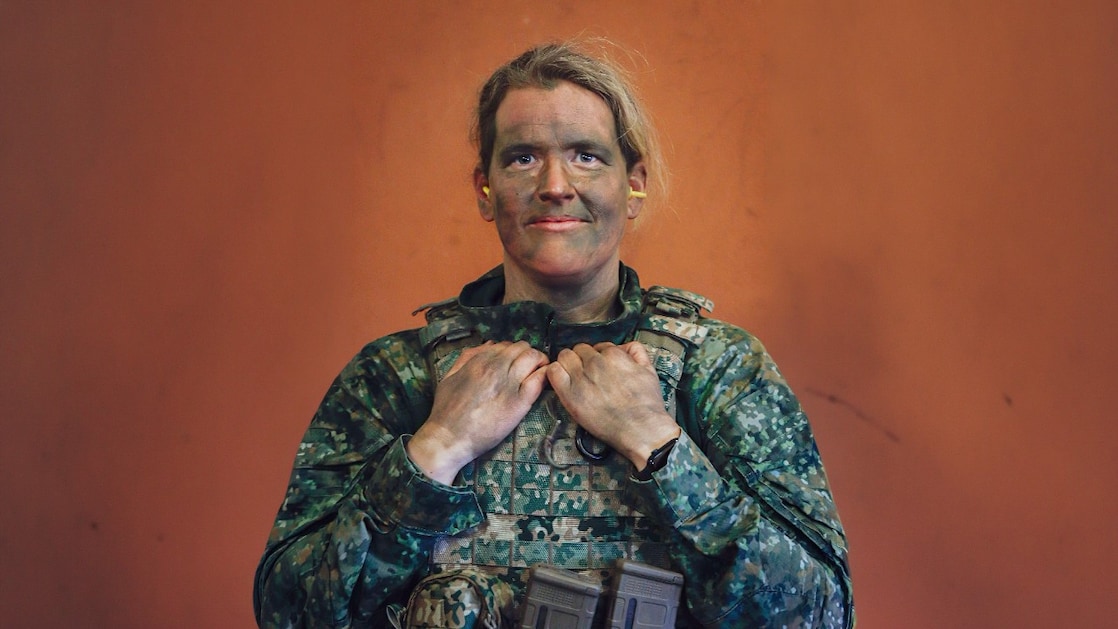
Zaken aan elkaar smeden, daar heeft Larissa Terdu (40), ook kaas van gegeten. Bijna letterlijk, want de civieltechnische ingenieur bij Shell Pernis gebruikt haar kennis als genist bij de landmacht.
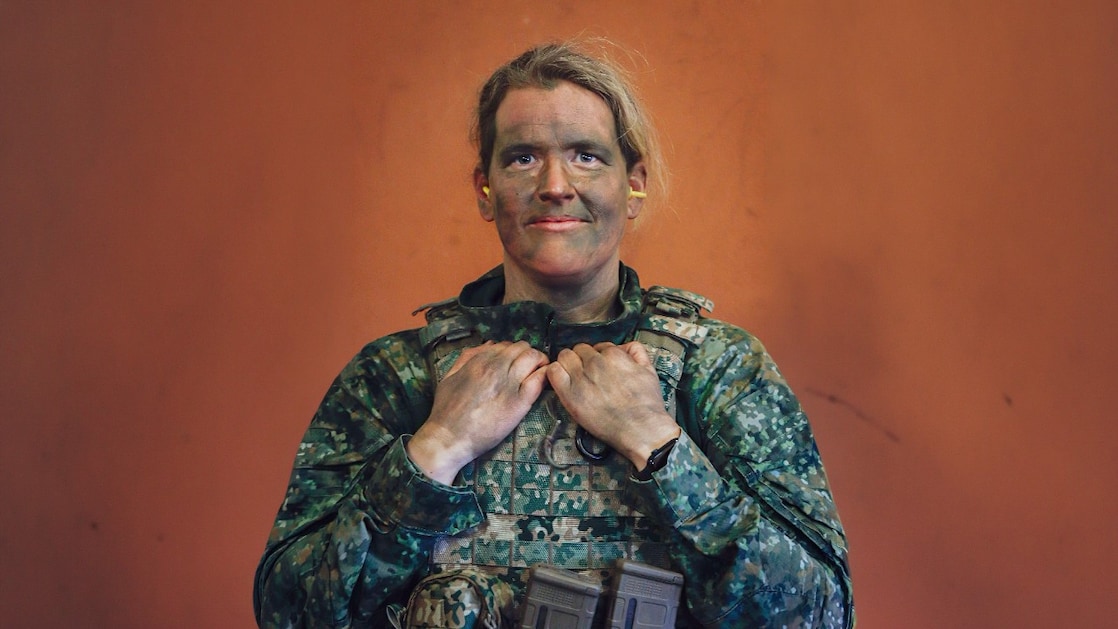
Ze is net klaar met de opleiding tot reserve-officier bij de Koninklijke Militaire Academie (KMA) in Breda en daarmee standaard bij afstuderen bevordert tot tweede luitenant. “Mijn kinderen vroegen wel: ‘mam, als het nu oorlog is, word je dan doodgeschoten’. Maar ze vinden het ook wel stoer en noemen me nu snipermama.”
Larissa meldde zich anderhalf jaar geleden als aspirant-reservist bij het leger na een intern verhaal van een andere reservist bij Shell. “Er was zo’n enthousiaste militair die brieste: ‘Welke kleur ben jij? Groen, blauw, grijs?’* Ik wilde gewoon wat meer doen als ingenieur in weg- en waterbouwkunde, en dat bleek uiteindelijk bij de landmacht het beste te kunnen.”
Dennis Notenboom, Shell-er en luchtmachtreservist"Je wordt niet zomaar naar het front gestuurd"
Algemene Militaire Opleiding
Als reservist volg je eerst een verkorte versie van de AMO, de Algemene Militaire Opleiding. Je wordt getraind op weerbaarheid, internationaal recht en oorlogsrecht, hoe je een wapen hanteert en hoe je je als militair moet gedragen in zowel oorlogs- als vredessituaties.
“Die AMO is zo leuk”, zegt ze. “En uitdagend! De hedendaagse stormbaan is echt wel even iets anders. Er wordt over je hoofd heen geschoten, er gaan oefenexplosieven af en de instructeur staat te schreeuwen ‘kont naar beneden!’. Geloof mij, je wilt ook echt wel zo laag mogelijk bij de grond blijven tijgeren.” Voor een reserve-officier in opleiding is die AMO na twee weken voorbij, waarna de functionele opleiding (FO) volgt en dat was voor Larissa dus bij de officiersopleiding bij de KMA op het Kasteel van Breda.
Zware tanks
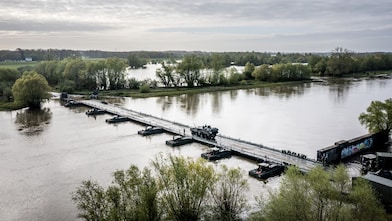
En wat als het nu echt oorlog wordt? “Ik ben al meer dan twintig jaar civieltechnisch ingenieur. Die ervaring komt niet alleen bij Shell, maar dan ook als reservist goed van pas. Ik beoordeel bijvoorbeeld welke scheepskades wel en welke niet het uitladen van zware tanks aankunnen en waar wel en niet tijdelijke bruggen kunnen worden gebouwd. Of hoe sluizen en dijken kunnen worden gerepareerd. Of hoe we het transport per spoor snel kunnen regelen.”
Zeker voor Nederland als ontvangend gastland van NAVO-versterkingen per zee is die kennis goud waard. Want, mocht het echt crisis worden op de deurmat van het NAVO-bondgenootschap, dan zal zwaar militair materieel via onder meer de havens van Rotterdam, Vlissingen en Antwerpen naar Polen, Litouwen en Slowakije moeten gaan.
Onwijs goed
Mocht het toch zover komen, dan kun je maar beter goed voorbereid zijn, vindt Larissa. Ze is ook ontzettend blij met de reservistenregeling (zie kader) die Shell en Defensie met elkaar sloten. “Die is onwijs goed. Tot 40% van je inzet voor de krijgsmacht wordt jaarlijks vergoed door Shell. Hopelijk is het nooit nodig, maar als de dreiging daar is, zijn wij er klaar voor.”
* Groen, blauw, grijs zijn de jargonkleuren voor landmacht (KL), marine (KM) en luchtmacht (KLu). Overigens is de Koninklijke Marechaussee — met nassaublauw als kleur — sinds 1998 ook een zelfstandig krijgsmachtonderdeel, al vallen veel van de taken van de “KMar” onder de Politiewet.
Larissa Terdu, Shell-er en landmachtreservist (genie)"Tot 40% van je inzet voor de krijgsmacht wordt jaarlijks vergoed door Shell"
Meer over leveringszekerheid en weerbaarheid
Part-time soldier at Shell
17 Jun 2026
Taking on a side role in the army, air force, navy or military police. Thanks to a special agreement between Shell Netherlands and the Ministry of Defence, that is possible. Dennis Notenboom and Larissa Terdu are two Shell employees who are given the time to help keep the Netherlands resilient.

Text: Marcel Burger.
Photography: ANP/ Hollandse Hoogte / Laurens van Putten, Dennis Notenboom/Kramer Fotografeert, Larissa Terdu.
On his home turf of the peninsula of Goeree-Overflakkee, Dennis Notenboom (50) is a familiar face. Here in the southwest of the Netherlands, he keeps the memories of the Second World War alive. He also supports visiting relatives of those who died in the years 1940–1945.
For his many years of dedication, the Middelharnis resident received an official honour in April: appointment as a Member of the Order of Orange-Nassau with the Swords, a military distinction. Dennis is not only an assistant production team leader at the MLO, one of the key plants at Shell Chemicals Park Moerdijk, but also a part-time soldier. He previously served with the National Reserve (NATRES), but for the past five years has been with the Royal Netherlands Air Force (RNLAF).
“Shell and the armed forces actually have quite a lot in common,” says Dennis. “They both love abbreviations, they both have a clear structure, and an orderly way of working.”
From opposing force to satellite control
During his career in the military reserves, Dennis has carried out a wide range of duties. He has been trained in peacekeeping, supports the Apache and Chinook helicopter squadrons at RNLAF Gilze-Rijen Air Base, and acts as an opposing force (OPFOR) for Dutch Commandos during exercises.
His new reservist role is within the Air Force’s Space Operations, where Dennis will help control Dutch defence satellites (when required). “That’s quite different from the drones I operate for Shell’s industrial fire brigade in Moerdijk,” Dennis says with a smile.
Covenant Shell and the Dutch Ministry of Defence
In 2021, Shell Netherlands and the Dutch Ministry of Defence signed an agreement allowing Shell employees to take paid leave to serve as reservists in one of the branches of the Dutch armed forces. This is intended to help increase the Netherlands’ resilience by expanding the number of reservists from 6,500 (in 2021) to 20,000 by 2035. At present, more than 8,500 reservists are active within the Dutch armed forces.
Guarding critical infrastructure
Dennis says that being a reservist is not a risky undertaking. “Daily traffic is more dangerous. You’re not simply sent to the front line unless you volunteer. And even if war were to break out on NATO’s eastern flank, the regular armed forces would deploy to Poland or Lithuania, while reservists would initially be responsible for guarding critical infrastructure in the Netherlands.”
On what defence experience he brings back to Shell, Dennis says: “People skills. In the armed forces you work with people from so many different cultural backgrounds in such varied situations that you become better and better at building a strong team.”
Civil engineer and reservist
Building things—and bringing people together — is also something Larissa Terdu (40) knows a great deal about. Almost literally, because the civil engineer at Shell Pernis applies her expertise as a combat engineer in the army.
She has just completed her training as a reserve officer at the Royal Military Academy (KMA) in Breda and, upon graduation, was commissioned as a second lieutenant. “My children did ask: ‘Mum, if there’s a war now, will you be shot?’ But they also think it’s quite cool and now call me ‘sniper mama’.”
Larissa signed up as a trainee for the reserves a year and a half ago after hearing about it from another Shell reservist. “When I joined a follow-up meeting there was this incredibly enthusiastic serviceman who exclaimed: ‘What colour are you? Green, blue, grey?’* I simply wanted to do more with my background as a civil engineer in infrastructure, and it turned out the Royal Netherlands Army was the best place to do just that.”
Dennis Notenboom, Assistent Productie Team Lead at Shell Chemicals Park Moerdijk, and part of the Royal Netherlands Air Force reserves“You are not simply sent to the front line.”
General Military Training
As a reservist, one first completes a shortened version of the General Military Training. In includes training in resilience, international and military law, how to handle a weapon, and how to conduct oneselve as a soldier in both wartime and peacetime situations.
“That basic training is so much fun,” Larissa says. “And challenging! The modern obstacle course is really something else. Bullets are fired over your head, training explosives go off, and the instructor is shouting ‘get your butt down!’. Believe me, you really do want to crawl as low to the ground as possible.” For a reserve officer in training, the basic training lasts two weeks, after which the functional training follows. For Larissa, that meant officer training at the Royal Military Academy (KMA) at Breda Castle.
Heavy tanks
And what if war really breaks out? “I’ve been a civil engineer for more than twenty years. That experience is valuable not only at Shell, but also to the armed forces. For example, I assess which quays can handle the unloading of heavy tanks and which cannot, where temporary bridges can or cannot be built, how locks and dykes can be repaired, or how we can organise rail transport quickly.”
For the Netherlands, as a host nation receiving NATO reinforcements by sea, that expertise is invaluable. If a crisis were to reach NATO’s doorstep, heavy military equipment would have to be transported via ports such as Rotterdam and Vlissingen in the southwest of the Netherlands, or Antwerp in Belgium, to countries like Poland, Lithuania and Slovakia.
Extremely good
Should it ever come to that, it is best to be well prepared, Larissa believes. She is also very pleased with the reservists covenant (see box) of Shell and the Ministry of Defence. “It’s extremely good. Up to 40% of your time spent serving in the armed forces is reimbursed by Shell each year. Hopefully it will never be necessary, but if a threat arises, we’ll be ready.”
* Green, blue and grey are the jargon colours for the army (Royal Netherlands Army), navy (Royal Netherlands Navy) and air force (Royal Netherlands Air Force). The Royal Netherlands Marechaussee — whose colour is Nassau blue — has also been an independent branch of the armed forces since 1998, although many of its duties fall under the Police Act.
Larissa Terdu, Civil Engineer at Shell Pernis, and part of the Royal Netherlands Army engineer reserves“Up to 40% of your time spent serving in the armed forces is reimbursed by Shell each year.”