Hoe Nederland autonoom in energie kan worden
“Autonoom zijn, betekent dat je het vermogen hebt om zelf beslissingen te nemen. Dat vermogen is cruciaal. We moeten verantwoordelijkheid nemen voor onze eigen veiligheid. Dit geldt voor defensie net zozeer als voor de energiesector.”

Tekst: Marcel Burger. Beeld: Remco de Waal (ANP), Shell International, Rob Engelaar (ANP/Hollandse Hoogte).
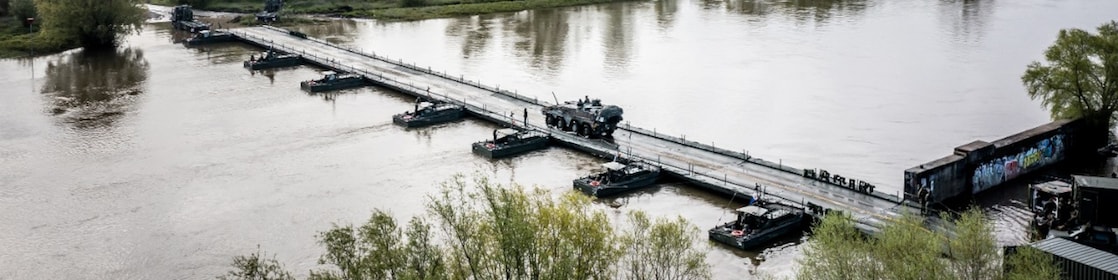
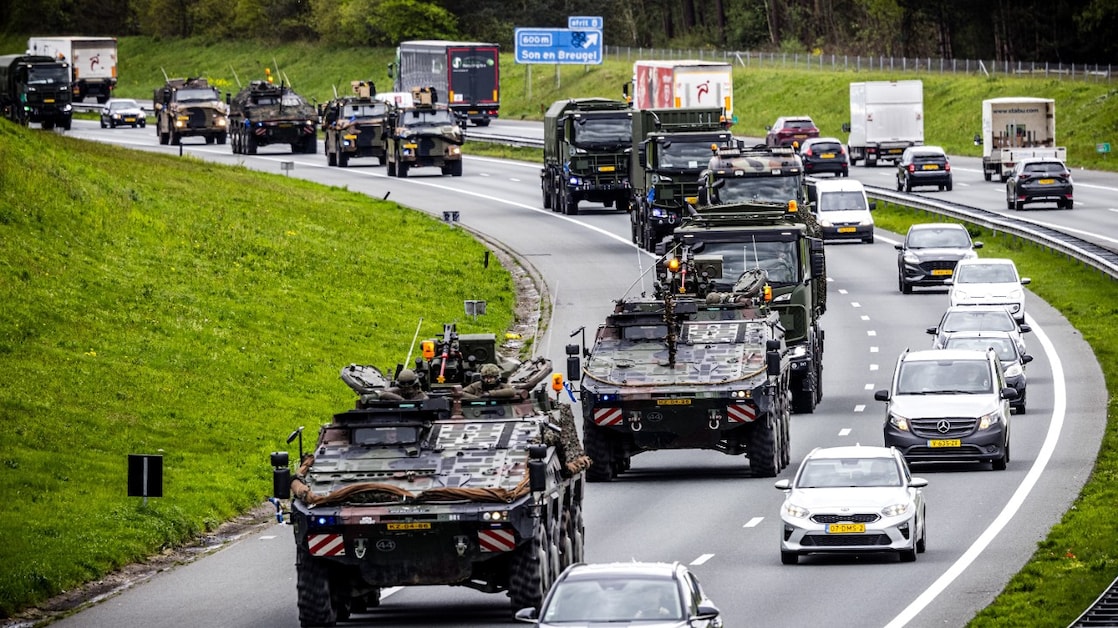
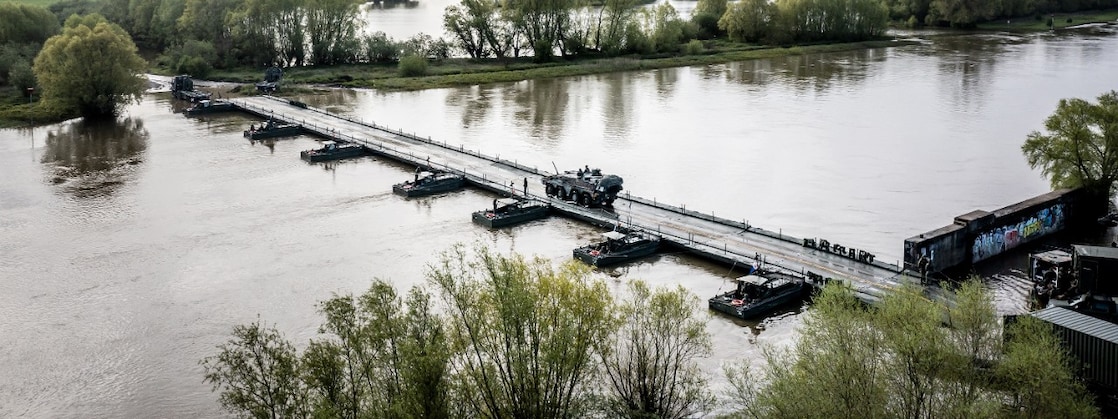
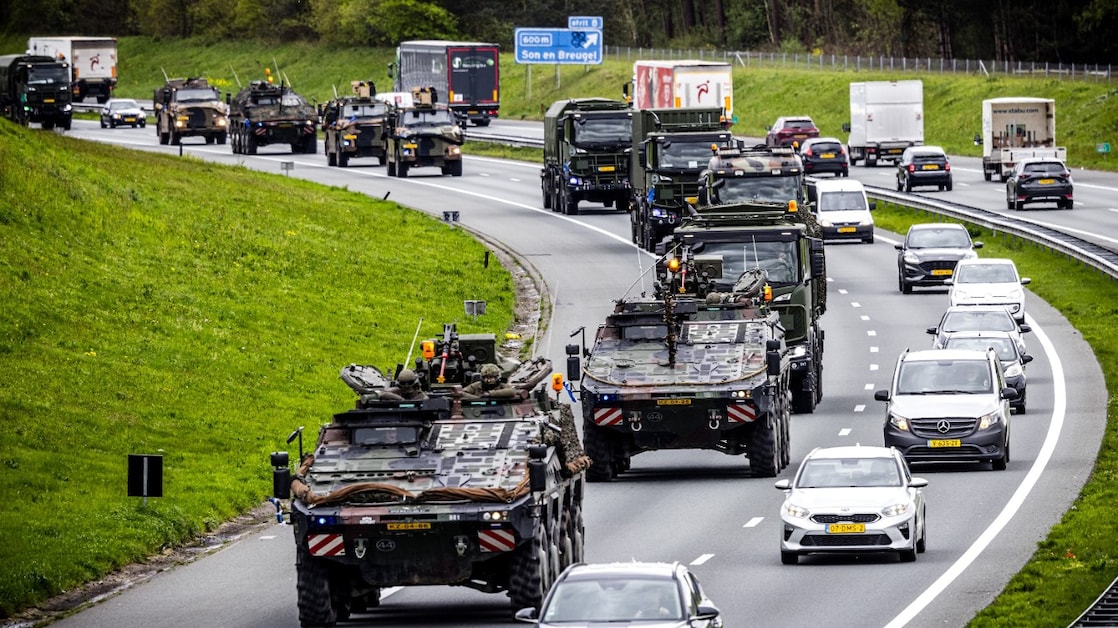
Openingsfoto: Militairen steken met voertuigen van de landmacht de IJssel over onderweg naar Duitsland voor de NAVO-oefening Steadfast Defender, april 2024
Met die woorden opent Rob Bauer, voormalig Commandant der Strijdkrachten en voormalig voorzitter van het Militair Comité van de NAVO, het in maart verschenen rapport “Autonoom en veilig: hoe Nederland zijn energiepositie kan versterken (PDF)”. Een bijzonder relaas. Niet vanwege Bauer’s enigszins voorspelbare militair-geopolitieke inleiding over de afsluiting van de Straat van Hormuz door Iran, de oorlog in Oekraïne en het opblazen van de Nord Stream-gaspijpleidingen in de Oostzee. Maar wel opvallend door de 22 gerenommeerde experts die aan het rapport meewerkten.
Het resultaat: 32 aanbevelingen over hoe Nederland zichzelf beter kan redden op energievlak. Daar zitten open deuren bij, zoals Maak vaart met de energietransitie (1e aanbeveling), Maak haast met de verzwaring van het elektriciteitsnet (2e) en Adresseer traagheid in besluitvorming (6e). Maar belangrijke waarschuwingen staan eveneens hoog in de lijst: Identificeer en adresseer alle “single points of failure” in de energievoorziening (3e) en Overweeg overtollige gascentrales, biomassacentrales en kolencentrales technisch operationeel te houden (5e).
Strategische voorraden
De oproep van de rapportmakers om te Investeren in strategische voorraden (7e) van benzine, diesel en aardgas was te verwachten, maar ze willen die ook voor kritische grondstoffen en halffabricaten, waterstof en getorrificeerde biomassapellets. En de groep van 23 experts pleit er voor dat Nederland de kar trekt in opslag van aardgas en waterstof om België en wellicht Duitsland te helpen. “Buurlanden met minder geschikte mogelijkheden”, verduidelijken ze.
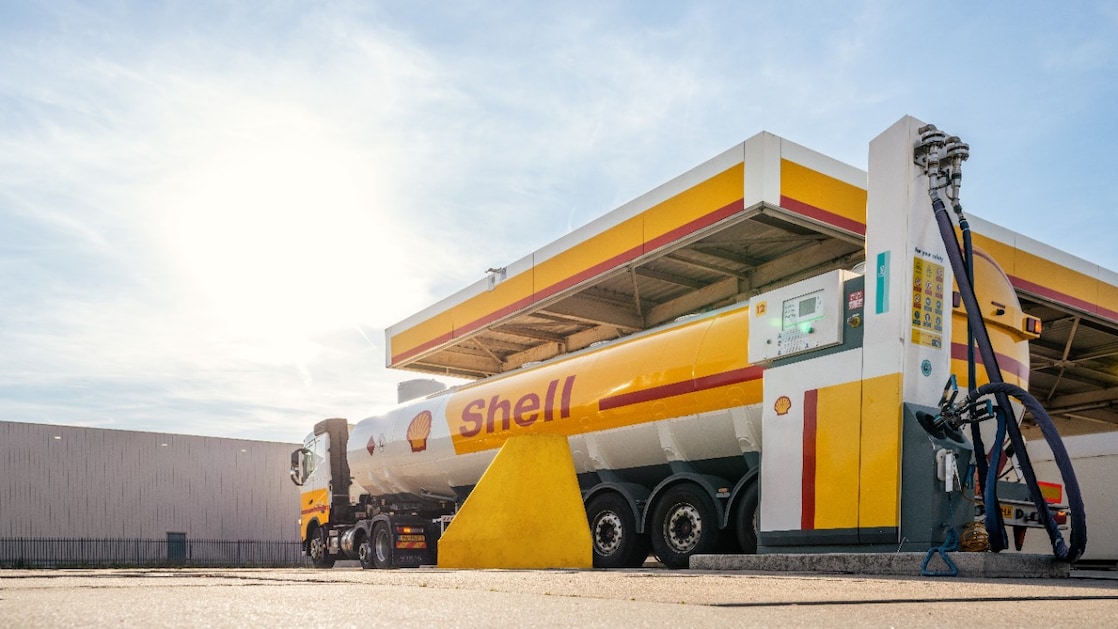
De rapportmakers zien ook graag Investeringen in kleinschalige back-up-capaciteit (21e). “Zoals een stopcontact op bussen en vrachtwagens (zodat die) een rol kunnen vervullen in noodstroomvoorziening bij maatschappelijk belangrijke punten.” Een rollende aggregaat dus. En ze zien graag hybride energieoplossingen: “Als het ene systeem faalt, kan het andere systeem de functie overnemen”. De hybride warmtepomp die kan kiezen tussen stroom of gas als aandrijving, vinden ze een goed voorbeeld.
Genoeg energie voor Europa?
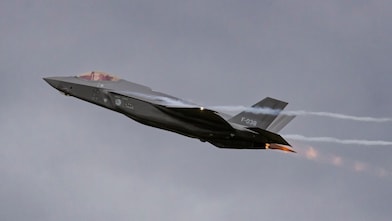
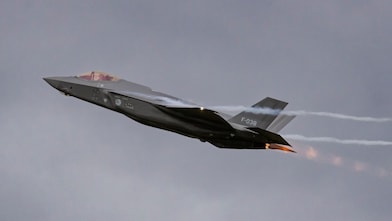
Nederlandse F-35-straaljagers helpen het NAVO-luchtruim te beveiligen. Maar ook in eigen land staan de gevechtstoestellen klaar voor als dat nodig is, en om te trainen voor meer. Al dat vliegen kost wel heel veel brandstof, en die moet ergens vandaan komen.
Brandstofaccijns en elektrisch rijden
Autonoom en veilig gaat in op actuele dilemma’s, zoals de recente discussies rond de hogere brandstofprijzen en het al dan niet aanpassen van de staatsbelasting (accijns en btw) daarop. In 2022 verlaagde de overheid energiebelastingen, maar die zijn volgens de rapportmakers ook in 2026 niet geschikt om burgers te ontzien.
“De verlaging van benzineaccijns, met als gehanteerd argument het ontzien van lage inkomens, kwam voor het overgrote deel terecht bij mensen die het niet nodig hadden”, stelt Kees van der Leun, van de denktank Common Futures. “Handhaven van voldoende hoge brandstofaccijnzen is bovendien belangrijk voor het behoud van een voldoende sterke financiële drijfveer voor elektrificatie van het wegverkeer.”
Een tandje bijzetten
Andere Europese landen gingen in maart en april dit jaar wel over tot maatregelen. Zo stak Spanje 5 miljard euro in btw-verlaging en gaf Polen er in eerste instantie 347 miljoen aan uit.
Maar de denkers achter Autonoom en veilig vinden juist dat de Nederlandse overheid er nog wel een tandje bij kan zetten in brandstoftax — mits het samengaat met verdere elektrificatie van het wegverkeer. “Zorg voor voldoende fast chargers langs de wegen en subsidieer het elektrisch rijden naast juist extra beprijzing voor benzine”, stelt Rene Peters, energie-expert bij TNO.
Rapport Autonoom en veilig, april 2026"Een stopcontact op bussen en vrachtwagens (als) noodvoorziening"
Buurtbatterijen en slimme hubs
Met meer elektrische voertuigen (EV) zouden er meer thuis- en wijkbatterijen moeten komen, met flexibel laden en teruggeven van het wagenpark, zo redeneren de rapportmakers. Relatief simpele buurtbatterijen om die EV’s te kunnen laden zouden de weerbaarheid van het hele land vergroten. “Lowtech-energieopslag hoort zeker in dit scala”, aldus Bob van der Zwaan van de Universiteit van Amsterdam.
Slimme manieren om drukte op het elektriciteitsnet (netcongestie) te verkleinen, horen ook bij de aanbevelingen in het document. Shell heeft dit onder meer geregeld voor DHL in Brussel en Nieuw-Vennep, maar past het ook toe op de eigen locaties als Shell Pernis en zonnepark Koegorspolder.
“Start met enkele overtuigende best practices, zoals bedrijventerrein Zwolle–Hessenpoort, met experimenteerstatus en tijdelijke regelruimte om snel te leren. Vertaal die lessen naar gestandaardiseerde hub-typologieën, contracten en technische ontwerpen”, schrijft Tom Middendorp van het International Military Council on Climate and Security.
Duurzaam of veilig?
Het pleidoo van de groep van 23 heeft nog tientallen andere voorbeelden en adviezen die de moeite waard zijn. Ze zijn volgens ex-defensiebaas Bauer geen keuze tussen of duurzaam of veilig. “Dit is niet een tijdperk om te wachten tot iemand anders onze problemen gaat oplossen. Dit is een tijdperk voor strategisch leiderschap, ook in de energiesector. Als we autonoom en veilig willen worden en blijven, zullen we moeten prioriteren en investeren. Dit rapport laat zien waarom en hoe we dat moeten doen”, vindt hij.
“Autonoom en veilig: hoe Nederland zijn energiepositie kan versterken”, uitgegeven door innovatieplatform Topsector Energie, is in zijn geheel hier te lezen (PDF).
Rob Bauer, voormalig Commandant der Strijdkrachten"Dit is niet een tijdperk om te wachten tot iemand anders onze problemen gaat oplossen"
How the Netherlands Can Become Energy Self-Sufficient
11 May 2026
“Being autonomous means having the capacity to make decisions independently. That capacity is crucial. We must take responsibility for our own security. This applies just as much to defence as it does to the energy sector.”

Text: Marcel Burger. Photography: Remco de Waal (ANP), Shell International, Rob Engelaar (ANP/Hollandse Hoogte).
With those words, Rob Bauer, former Commander-in-Chief of the Netherlands Armed Forces and former Chair of NATO’s Military Committee, opens the report published in March, Autonomous and Secure: How the Netherlands can strengthen its energy position. It is a remarkable account. Not because of Bauer’s somewhat predictable military‑geopolitical introduction about Iran’s closure of the Strait of Hormuz, the war in Ukraine and the blowing up of the Nord Stream gas pipelines in the Baltic Sea, but because of the 22 renowned experts who contributed to the report.
The result: 32 recommendations on how the Netherlands can better fend for itself in energy terms. Some of these are obvious, such as Accelerate the energy transition (1st recommendation), Speed up the reinforcement of the electricity grid (2nd), and Address slow decision‑making (6th). But the list also contains important warnings high up the agenda: Identify and address all “single points of failure” in the energy supply (3rd) and Consider keeping surplus gas‑fired power stations, biomass plants and coal‑fired plants technically operational (5th).
Strategic reserves
The authors’ call to Invest in strategic reserves (7th) of petrol, diesel and natural gas was to be expected, but they also want this for critical raw materials and semi‑finished products, hydrogen and torrefied biomass pellets. The group of 23 experts also argues that the Netherlands should take the lead in the storage of natural gas and hydrogen in order to help Belgium and possibly Germany. “Neighbouring countries with fewer suitable options,” they explain.
The authors are also keen to see Investments in small‑scale back‑up capacity (21st), “such as a socket on buses and lorries (so that they) can play a role in emergency power supply at socially important locations”. In other words, a mobile generator. They also advocate hybrid energy solutions: “If one system fails, the other can take over the function.” They cite the hybrid heat pump, which can choose between electricity or gas as its power source, as a good example.
Enough energy for Europe?
Royal Netherlands Air Force F-35 fighter jets help protect NATO's aerospace. But also at home, these combat aircraft are ready for when needed, and to train for more. All that flying needs a lot of fuel, and that has to come from somewhere.
Fuel excise duty and electric driving
Autonomous and Secure addresses current dilemmas, such as the recent debates around higher fuel prices and whether or not to adjust state taxation (excise duty and VAT) on them. In 2022 the government reduced energy taxes, but according to the authors these remain unsuitable even in 2026 as a way of protecting citizens.
“The reduction in petrol excise duty, justified on the grounds of protecting low‑income households, largely ended up benefiting people who did not need it,” says Kees van der Leun of the think tank Common Futures. “Maintaining sufficiently high fuel duties is also important to preserve a strong enough financial incentive to electrify road transport.”
Stepping things up
Other European countries did introduce measures in March and April this year. Spain, for example, spent €5 billion on VAT reductions, while Poland initially spent €347 million.
However, the thinkers behind Autonomous and Secure believe that the Dutch government could actually go a step further on fuel taxation — provided it goes hand in hand with further electrification of road transport. “Ensure there are sufficient fast chargers along the roads and subsidise electric driving alongside additional pricing for petrol,” says René Peters, energy expert at TNO — The Netherlands Organization for Applied Scientific Research.
Report Autonomous and safe, April 2026"A power socket on buses and trucks (to serve as) emergency power supply"
Neighbourhood batteries and smart hubs
With more electric vehicles (EVs), there should also be more home and neighbourhood batteries, with flexible charging and feed‑back from vehicle fleets, the authors argue. Relatively simple neighbourhood batteries to charge these EVs could increase the resilience of the entire country. “Low‑tech energy storage certainly belongs in this mix,” says Bob van der Zwaan of the University of Amsterdam.
Smart ways of reducing pressure on the electricity grid (grid congestion) are also among the recommendations in the document. Shell has arranged this, among other things, for DHL in Brussels and Nieuw‑Vennep, but also applies it at its own locations such as Shell Pernis and the Koegorspolder solar park.
“Start with a few convincing best practices, such as the Zwolle–Hessenpoort industrial estate, with experimental status and temporary regulatory leeway to learn quickly. Translate those lessons into standardised hub typologies, contracts and technical designs,” writes Tom Middendorp of the International Military Council on Climate and Security.
Sustainable or secure?
The plea by the group of 23 contains dozens of other examples and recommendations worth considering. According to former armed forces chief Bauer, they do not represent a choice between sustainability or security. “This is not an era in which to wait for someone else to solve our problems. This is an era for strategic leadership, including in the energy sector. If we want to become and remain autonomous and secure, we will have to set priorities and invest. This report shows why and how we must do so,” he says.
Rob Bauer, former Commander-in-chief of the Netherlands Armed Forces"This is not an era in which to wait for others to solve our problems"